


What Can We Learn from Greek Mythology and Hadestown?
When the 2019 Tony award nominations were announced, Hadestown was included–not surprisingly. Today I want to talk about what can we learn from Greek mythology?


Are you familiar with the musical? It’s awesome, but don’t take my word for it.
https://www.youtube.com/watch?v=NfNHgSsammc
Here is the plot in a nutshell. From Broadway.com:
“The plot of Hadestown follows the overall framework of the narrative that we know from antiquity, established most thoroughly by Vergil in Book 4 of the Georgics and Ovid in Book 10 of his Metamorphoses. Orpheus and Eurydice are in love and preparing for marriage. She ends up in the underworld, here referred to as “Hadestown.”


Orpheus goes before Hades and Persephone and manages to win Eurydice’s freedom with his song on the condition that he not look back as she follows him out. At the last minute he looks back and loses her forever. The most significant departure that Mitchell makes from the traditional narrative concerns the reason for Eurydice’s presence in the underworld, or “Hadestown.”
In place of the traditional snake-bitten ankle Mitchell explicitly draws attention to the ambiguity of her narrative, challenging her listeners to draw their own conclusions.”
What is Hadestown?

Hadestown is a 2016 stage musical adaptation of the 2010 folk opera concept album by Anais Mitchell. It tells the intertwining of two love stories—Eurydice and Orpheus and King Hades and his wife, Persephone. As in the 2010 album, Hadestown adapts the myth of Orpheus and Eurydice to a Great Depression-era inspired post-apocalyptic setting.
One of the messages of the production defends beauty and the importance of music and love to the soul, even in an increasingly commercialized world.
Such an important message. If you know anything about me, you know I think the arts are vitally importance.

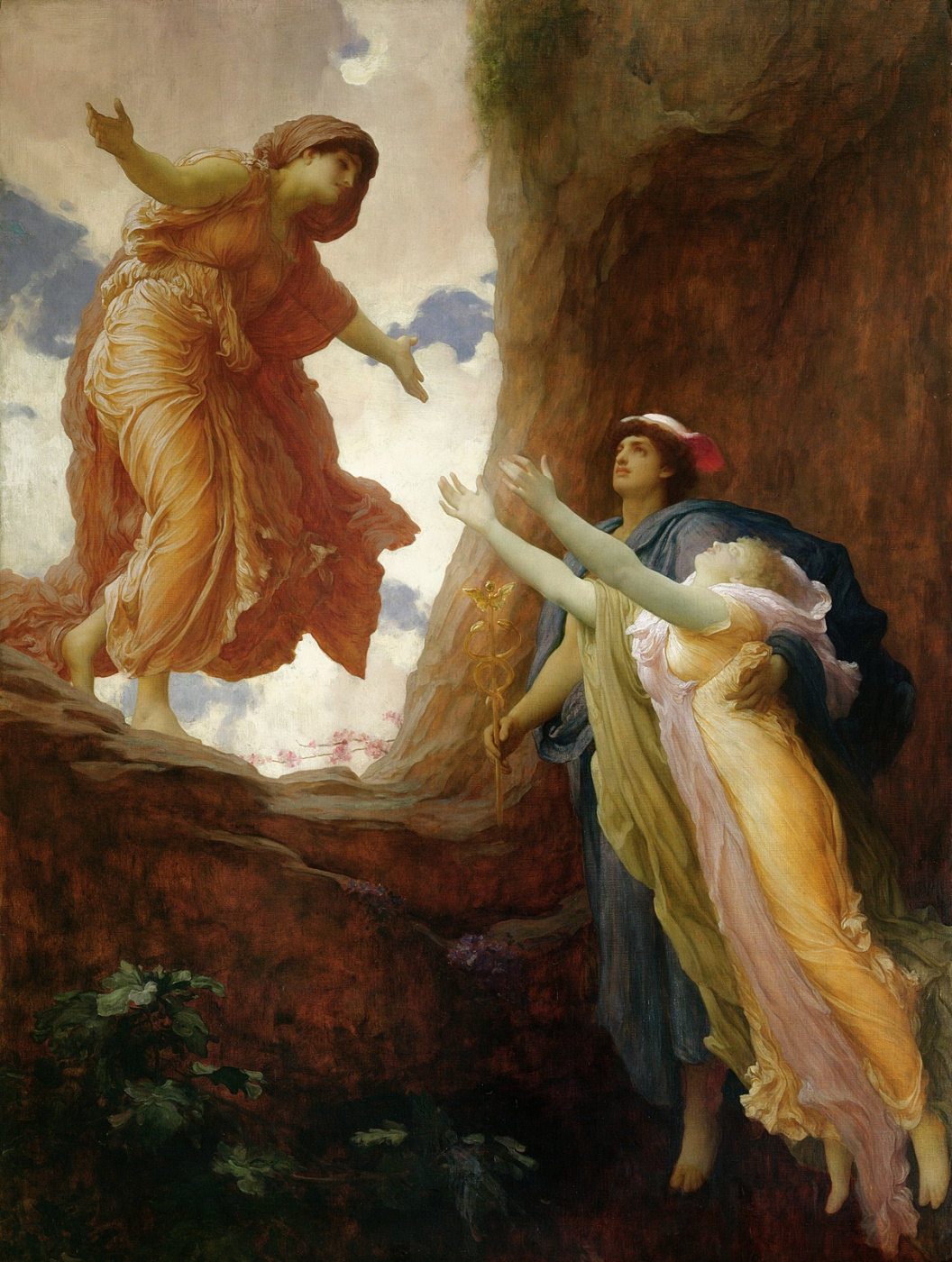
What is Mythology?
I was looking around for answers to this question and found this at reference.com:
“Mythology is studied because myths are ways in which cultures attempt to explain the world and answer questions of human concern. For instance, mythology delves into such basic debates as good versus evil or looks into the nature of man.
Mythology also illustrates different cultures and their narratives. The mythology of each culture is the accumulation of that culture’s knowledge, wisdom and experience. Although mythologies differ, they often follow the same basic themes. For instance, several cultures have myths that deal with the afterlife and great floods.


The World of Mythology
Many Middle Eastern cultures also have virgin-birth myths. Some archetypal themes deal with women of power, heroes, paradise and quests. The hero myth is about figures performing unbelievable feats. Heroes are in the mythology of most cultures. Hercules, the son of Zeus, is one of the most popular of these mythological figures.
Kutoyis is a Native American Blackfoot hero who also has supernatural origins. In Britain there is the King Arthur myth. Heroes also come from religious mythology, such as Jesus Christ, Muhammad and Buddha.
Mythology is still prominent in aspects of modern culture, especially advertising, because of its universality and vibrant metaphors. For instance, the Trojan horse is still a metaphor for gifts that are not really gifts. When Camelot is referred to, it denotes a golden age of prosperity.”
What Can We Learn from Greek Mythology?


Five Reasons We Study Greek Mythology
When I decided to blog about the importance of mythology, I had a devil of a time (no pun intended) finding adequate articles discussing it. However, this mother did a fantastic job of defending the need for studying myths with our students. Here are a few excerpts from the blog post which can be found at www.thekennedyadventures.com, a home school blog under Five Reasons We Study Greek Mythology:
- One of the hidden benefits of studying Greek myths is to explore virtues. With these classic stories, the lines between righteous and immoral behavior are clear cut, so that even young children can recognize examples of the 4 cardinal virtues: prudence, justice, fortitude and temperance.
- In Greek mythology, the lines between good and evil are very clear cut. Monsters are monsters, while heroes are heroes. When you take a look at Heracles (Hercules is his Roman name), there’s no doubt in children’s mind that he’s a good guy, performing noble deeds.
- Ever deal with character issues in your home?
- The best way I’ve found to tackle these tough topics? Reading stories about them, especially ones found in the Greek myths.


5 Reasons to Study Greek Mythology
- Children can recognize an element of negativity in a story much better than they can emulate it to you. It’s a great way to role play and discuss reasons behind bad behavior
- Do you expect your children to study Shakespeare or other English literature as they grow older? They will need at least a basic understanding of Greek mythology to assist them in studying these great works.
- Allusions to Greek myths (and their Roman counterparts) are everywhere, both in modern literature and the classics. Think about these examples:
- Mary Shelley incorporated the myth of Prometheus into her book Frankenstein. (also known as The Modern Day Prometheus) C.S. Lewis’ Till We Have Faces is a retelling of the story of Cupid and Psyche.
The Avengers films are an excellent example of mythology in action. Obviously, it works–it’s made a billion dollars in the first weekend!
If you are studying mythology with your students, you might appreciate my Page to Stage lesson on Hadestown.
What Can We Learn from Greek Mythology?
Check it out here: Hadestown, the Broadway Musical


This Resource is Comprehensive
This is a two or three day lesson about the musical which includes a warm up exercise, the history of the Greek mythological characters, the plot of the musical, a mini lesson on the Tony Awards, hot links to video examples of the musical, a separate set of slides to teach the lesson, quotes, trivia and extension activities.
Here’s a blog post about other Page to Stage Lessons: Why Do You Need a Mission Statement for Your Teacherspayteachers Store?
Do you teach younger students? Check out my readers theater lesson, the Legend of the Sunflower.


I agree with this statement by author, Ashwin Sanghi,
“It is not history, theology or mythology that interest me. It is the fact that history, theology or mythology could have alternative interpretations or explanations. I try to connect the dots between the past and the present.”
I try to connect the dots, too. We all do whether we are aware of it or not. That’s why we need to study Greek mythology and so do our students.
What are your favorite myths? I’d love to hear about them.
Contact me at dhcbaldwin@gmail.com or DeborahBaldwin.net
