• Skip to primary navigation
  • Skip to main content
  • Skip to footer

Join Me in my new Facebook Group! https://www.facebook.com/groups/417126059784261

Menu
  • Meet Deb – The Heart Behind DramaMommaSpeaks
    • Work with Me! 
    • Photo Gallery of DramaMommaSpeaks
    • Directorial Credits
  • I Give Book Talks! 
    • Book Talk Through Skype
    • Books
  • Freebies!
  • Bumbling Bea
  • Teaching Resume
  • Acting Resume
  • Contact Me
  • Blog
    • Drama Education
    • Arts Education
    • Youth Theatre
    • Middle Grades
    • Musical Theatre
    • Teaching
  • Meet Deb – The Heart Behind DramaMommaSpeaks
    • Work with Me! 
    • Photo Gallery of DramaMommaSpeaks
    • Directorial Credits
  • I Give Book Talks! 
    • Book Talk Through Skype
    • Books
  • Freebies!
  • Bumbling Bea
  • Teaching Resume
  • Acting Resume
  • Contact Me
  • Blog
    • Drama Education
    • Arts Education
    • Youth Theatre
    • Middle Grades
    • Musical Theatre
    • Teaching

creative dramatics

Nine Drama Lessons for Black History Month Which Increase Student Engagement

January 5, 2021 By dhcbaldwin 2 Comments

Nine Drama Lessons for Black History Month Which Increase Student Engagement

Most of us are aware that February is Black History Month.  I’m so glad we give people of color a spotlight.  They certainly deserve it. Today I’m going to discuss Nine Drama Lessons for Black History Month Which Increase Student Engagement.

What is Black History Month?

Good question.

Black History Month is an annual observance originating in the United States, where it is also known as African-American History Month. It has received official recognition from governments in the United States and Canada, and more recently has been observed in Ireland, the Netherlands, and the United Kingdom.

Black History Month began as a way of remembering important people and events in the history of the African diaspora. Celebrated in February in the United States and Canada, while in Ireland, the Netherlands, and the United Kingdom it is observed in October.

If you are looking for My Black History Month Famous Theatre Artists Biography e-book, go here: Black History Month Famous Theatre Artists Biography


When did February become Black History month?

According to www.history.com, President Gerald Ford officially recognized Black History Month in 1976, calling upon the public to “seize the opportunity to honor the too-often neglected accomplishments of black Americans in every area of endeavor throughout our history.”

Do you need some help in the classroom?  Pick up this FREE guide and Lesson Here 

How Can We Celebrate Black History Month in My  Classroom?

Usually, during this time a drama teacher will read a few plays written about black Americans or playwrights. (Check out:  Concord Theatricals for their offerings.) If you need a list, a group of drama teachers compiled this list.  (I take no responsibility for them other than to share the list. I have not vetted them either.)

  • Intimate Apparel by Lynn Nottage.
  • Anna in the Tropics by Nilo Cruz
  • Vietgone by Qui Nguyen
  • Good Grief by Ngozi Anyanwu,
  • Our Lady of Kibeho by Katori Hall
  • Choir Boy by Tarell Alvin Mccraney
  • BLKS by Aziza Barnes
  • Shoe by Marisela Tevino Orta
  • Disengaged by Milta Ortiz
  • The Thanksgiving Play by Larissa Fasthorse,
  •  Durango by Julia Cho
  • Fade by Tanya Saracho
  • Caught by Christopher Chen
  • Behind the Sheet by Charly Evan Simpson

Powerful Voices: Contemporary Plays Exploring Identity, Culture, and Resilience

  •  Sender by Ike Holte
  • Obama-ology by Aurin Squire
  • Edith Can Shoot Things and Hit Them by A. Rey Pamatmat
  • Anonymous by Naomi Lizuka
  • Middle School Girls or The African Mean Girls Play by Jocelyn Biohazards
  • Saturday Night/Sunday Morning by Dominique Morriseau
  • Hoodoo Love by Dominique Morriseau
  • We are Proud to Present a Presentation About the Herero of Namibia...by Jackie Sibblies Drury.
  • Vietgone by Ngozie Anyanwu
  • Our Lady Kibeho by Kato Hall
  • Choir Boy by Tarrell Alvin Mccraney
  • Listen to Your Parents by Benjamin Zephaniah

Amazing list, huh?

Want a FREE biography lesson about Audra McDonald? Click here: Audra McDonald

Videos to View for Black History Month

Another activity a drama class would appreciate is to view a play or movie with a black cast.  If students are in high school, I first suggest Ma Rainey’s Black Bottom with Viola Davis and Chadwick Boseman.  Just excellent!

I compiled this list of videos as a quick way to give you ideas.  Check out: https://redtri.com for more suggestions.

High School–

  • Harriet 
  • Ragtime, the Musical (I’ve only found a student version of Ragtime on youtube.com)
  • Fences
  • Raisin in the Sun
  • Lilies of the Field

Elementary and Middle Grades– 

  • Akeelah and the Bee
  • And the Children Shall Lead
  • Remember the Titans
  • Harriet
  • Hidden Figures
  • Sounder 
  • The Wiz (P.S.  I have a Broadway musical lesson about this production.  If you are interested, check it out The Wiz Broadway Musical Lesson

Drama Lessons Celebrating Black History Month

If you want something unique, I have famous theater artist biographies available.  First, these are great for a substitute provided you have access to the internet and youtube.com.  Primarily, I developed these short lessons as a way for students to learn about successful theater artists journey to Broadway–a growth mindset sort of lesson.

They include:

I add to this group all the time, so if you don’t follow me you might want to do so.  FOLLOW ME

Here is an example of a product’s description:

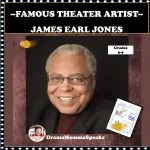
This distance learning lesson focuses on actor Oscar, Emmy and Tony award-winning James Earl Jones. The student researches questions about his life, journey to Broadway, and various accolades he’s received while practicing growth mindset. Finally, using a One Pager assignment, the student designs his life.

This lesson takes sixty to ninety minutes to complete. Now they come in a digital book!  Pick them up here!

Need something for a substitute? All is needed is the internet.
A Suggestion for You

HOW DO I USE THIS IN MY CLASSROOM? Many teachers combine these biographies with other DramaMommaSpeaks artists Lin Manuel Miranda, actresses Audra McDonald, Cynthia Erivo, Meryl Streep or designer Ming Cho Lee, composers Tim Minchin, Pasek and Paul. Or they tie it to a lesson about the Tony Awards, Tony Awards Lesson

Now they come as a book!

Have you considered the importance of students reading biographies?  If not, check out Should Students Read Biographies?

I’m hoping that 2023 will be a year of celebrating diversity.  Let’s face it–we have a problem and the only way to fix it is discussions concerning our differences and more importantly, how we all deserve respect and understanding.

Want to better understand drama integration and how to use it in your classroom?  Pick up my FREE guide and lesson Here

 What better place than in our classrooms?

What do you do for Black History Month in your classroom?  I’d love to know about it.  Contact me at dhcbaldwin@gmail.com or DeborahBaldwin.net


Share this:

  • Share on Tumblr (Opens in new window) Tumblr
  • More
  • Share on X (Opens in new window) X
  • Share on Facebook (Opens in new window) Facebook
  • Share on Pinterest (Opens in new window) Pinterest
  • Share on LinkedIn (Opens in new window) LinkedIn
  • Email a link to a friend (Opens in new window) Email
  • Share on Reddit (Opens in new window) Reddit
  • Share on Telegram (Opens in new window) Telegram
  • Share on WhatsApp (Opens in new window) WhatsApp

Like this:

Like Loading...

Filed Under: acting, arts education, arts integration, Broadway, creative dramatics, drama education, Education, excellence in teaching, High School, middle grades, performing arts, Teacherspayteachers, Teaching, teaching strategies, theater, theatre, youth theatre Tagged With: black actors, black history month, black playwrights, diversity, high school, Middle school, people of color, racism

Teacherpayteachers.com Sales Expectation Versus Reality

December 23, 2020 By dhcbaldwin 1 Comment

Teacherpayteachers.com Sales Expectation Versus Reality

Can you make money on Teacherspayteachers.com?

This question has been asked of me several times and I decided to address it today.

Simply put, the answer is yes.  You can make money on Teacherspayteachers.com

However, it is absolutely NOT a get-rich scheme.  If it was, I’d never be involved in it.

If you are looking for quick cash, you will have better luck with selling some used items on a website.  Do us a favor, and stay away if that’s your goal–in my opinion, you just muck up the website and confuse the buyer. Teacherspayteachers sellers understand this is a marathon, not a sprint.  We spend an inordinate amount of time creating a product and keeping it updated. If you become a long term seller, we are super serious about it.  We pride ourselves on our resources.

Who sells on Teacherspayteachers.com?

Generally, sellers are classroom teachers, retired teachers and graphic artists.  No offense, but unless you’ve been a teacher you don’t really understand what is needed in the classroom.  Occasionally, you see someone trying to sell a product which they think educators would want.  The product sticks out like a sore thumb and I’ve noticed over time the seller drifts away.  That’s a good idea.

These sellers who stick around have resources are either time-tested (like mine for thirty-eighty plus years of teaching) or brand spending new straight from the classroom.

These are professional educators.  They have studied in college and universities, many with advanced degrees (even doctorates), or trained in a particular area such as reading, math, STEM or the arts.

Teachers must re-certify their license to continue teaching during their career.  In other words, they don’t just receive their teaching certificate and that’s the end of learning.  Quite the opposite–they take classes about every six years to stay fresh.  They are required to keep their license up just like other professions such as medicine, law enforcement, hairstyling, etc. Consequently, the Teacherspayteachers sellers know their stuff!

Occasionally, someone will grumble about the lesson they purchased was poor. It is hardly fair to blame the entire website just because one person didn’t receive what they expected.

Haven’t you read a book you didn’t like for whatever reason?

In defense of TPT sellers, perhaps the buyer didn’t look closely at the product.  The buyer needs to check out the previews because the choice is always on the buyer.  So just because one buyer doesn’t like something doesn’t mean all TPT products are below average.

I’ve been a Teacherspayteachers seller for two and a half years.  From time to time, I review seller’s products that I’ve purchased or found for free. Let me tell you folks, be happy if your child’s teacher purchases a Teacherspayteachers lesson.  I can say with absolutely honesty I review more excellent products than not so.

Are there free lessons?

There are many free lessons and resources available on Teacherspayteachers.  Sellers are very generous. Sometimes too generous.  If you are interested in something free, check out: Free Teaching Resources Blog Hop.

Or check out my freebies at Free Stuff!

We Are Here to Help

We don’t claim to be the foremost authority in our subject area.  We offer one perspective for teaching a concept.  There are many angles a teacher takes to complete a benchmark.

We are offering help, period.  At least, that’s where I come from.

Do we make money?  Yes.

Is it a lot of money?

It can be, however that’s subjective to the person selling.  It depends upon the seller’s goal–to make a little extra cash for vacations and gifts?  To make enough to stay home once their baby is born? To send their child to college?  The reasons are many.

My Why

image.png

I stayed home with our daughters when they were young.  Because of this decision, I lost half of my pension by making this decision.  Now that I’m retired, my hope was to catch up that pension by selling through my DramaMommaSpeaks store.  I’m pleased to say my products sell well. I’m constantly comforted and pleased knowing I’ve helped some overly busy teacher saving them some time and their sanity.

If you think you may want to begin a store on Teacherspayteachers, check out my post How to Make Things to Sell on Teacherspayteachers This post will give you insight about the various steps I take when creating a product.

Boom Learning

Understandedly, on-line businesses are booming now.  There is another company you not be know–Boom Learning.  Boom Learning is an educational marketplace where teachers sell digital task cards.  If you’d like more information about them, check out my post How Do I Use Boom Cards in My Drama Class? I have several Boom cards sets–drama vocabulary, set design, hybrid lesson for the Broadway musical Wicked with more to come.  Check out my Boom lessons at:  Dramamommaspeaks at Boom Learning

Boom Learning is fairly new and growing like a weed.  Most of the Boom cards are created with elementary students in mind, however I’m beginning to see more secondary grade level resources.

I’ll leave you with this thought, Steve Maraboli says, “Get-rich-quick schemes are for the lazy and unambitious.  Respect your dreams enough to pay the full price for them.” Steve Maraboli is a life-changing Speaker, bestselling Author, and Behavioral Scientist who lends his popular voice to various topics.

I so agree.  Respect your dreams enough to pay the full price for them.  It is always worth it.  Everything I’ve ever accomplished which took work and dedication has paid off handsomely for me.  My teacherspayteachers.com store is my latest example. 

Do you have an idea for a lesson?  I’d love to know more about it.  Contact me at DhcBaldwin@gmail.com or DeborahBaldwin.net

Hamilton, the Broadway Musical


Share this:

  • Share on Tumblr (Opens in new window) Tumblr
  • More
  • Share on X (Opens in new window) X
  • Share on Facebook (Opens in new window) Facebook
  • Share on Pinterest (Opens in new window) Pinterest
  • Share on LinkedIn (Opens in new window) LinkedIn
  • Email a link to a friend (Opens in new window) Email
  • Share on Reddit (Opens in new window) Reddit
  • Share on Telegram (Opens in new window) Telegram
  • Share on WhatsApp (Opens in new window) WhatsApp

Like this:

Like Loading...

Filed Under: arts education, creative dramatics, creative movement, Distance Learning, drama education, e-learning, Education, elementary, hybrid learning, Teacherspayteachers, Teaching, teaching strategies, theater, youth theatre Tagged With: Boom Learning, dramamommaspeaks, educational marketplace, on-line business, Teacherspayteachers.com

The Only NBC Television Special to See on December 10

November 25, 2020 By dhcbaldwin Leave a Comment

The Only NBC Television Special to See on December 10

Everyone has shed light on many industries who are suffering during this pandemic and rightfully so.

There is one group of people, however, no one has mentioned too much–those in the entertainment industry.  In particular, I am speaking about those who work on Broadway. Thursday, December 10 on the NBC network, a wonderful fundraising event will occur for those people who entertain us whether its on the Broadway stage, backstage in a regional theater, dancing on a cruise ship or a host of other performance venues. Among many others, this includes the technical, front of house and box office, too.

Will there be actual performances?  Yes!

I heard about this event on Sirius and began looking for information about it.  According to Broadwaydirect.com,

“Several of Broadway’s best shows will take over the streets of New York City with special performances from the casts of Ain’t Too Proud – The Life and Times of The Temptations, Chicago, Jagged Little Pill, Diana: The Musical, Jersey Boys, Mean Girls, Rent and an appearance by the cast of Harry Potter and the Cursed Child. The night will also showcase special sneak peeks at Broadway shows coming in 2021.

The Only NBC Television Special to See on December 10

“One Night Only: The Best of Broadway” will feature performances by Kelly Clarkson, Brett Eldredge, Patti LaBelle and appearances from Annaleigh Ashford, Lance Bass, Kristen Bell, Ron Cephas Jones, Jesse Tyler Ferguson, Peter Gallagher, Josh Groban, Jake Gyllenhaal, Sean Hayes, Nathan Lane, Camryn Manheim, Alanis Morissette, Jerry O’Connell, Leslie Odom Jr., Billy Porter, John Stamos, Aaron Tveit, Blair Underwood, Vanessa Williams, Susan Kelechi Watson and more.

Donations during this special will help provide groceries and medication, health care, and emergency financial assistance to those in the Broadway community who are struggling through a pandemic that threatens their health and will shutter their industry for more than a year.

For more than 25 years, Broadway Cares/Equity Fights AIDS has been helping to support and strengthen The Actors Fund’s safety net of social services, enabling thousands in the entertainment industry receive lifesaving medications, health care, nutritious meals, counseling, and emergency financial assistance.”

If you need assistance and you are in the entertainment industry, I’d suggest check them out:  Actor’s Fund

Radio City Music Hall

With Broadway being crippled by current events, it’s never been more vital to showcase these incredible performers and remind audiences of their extraordinary talents for when they return to the stage,” said Doug Vaughan, Executive Vice President, Special Programs, NBC Entertainment. “We’re proud to partner with Broadway Cares and do our part to help those in that tight-knit community during these difficult times.”

I know these organizations are a God send to those in the entertainment industry.  A student of mine was very ill several years ago with colon cancer.  Luckily, she lived through it and is healthy today. She wanted to keep her performing job and never divulged to the company she was ill.  Can you imagine?  Afraid to tell the company you are sick, for fear of being let go?  The Actors Fund came to her rescue during this time and supported her through all of her doctor visits, surgery and rehabilitation.  It took a year to get her back on her feet.  Soon she will be starring on Broadway again.

Arts Risk Losing their Soul

Several years ago, I blogged about this quote,  Arts Quote We Love #7–Society Risks Losing its Soul

Arts And Society

Have you ever considered what the world would be like without the arts?

I think we found out during this quarantine, haven’t we?  Back in the summer, there were no live concerts, ballets, art shows, new movies, television shows, etc.  Luckily, the entertainment industry is figuring how to keep their employees safe. I understand they are creating bubbles for their staff just as the sports teams have done.

We know the pandemic has affected our restaurants, but no one is speaking about movie theaters closed up for. months. I would imagine this will change the movie industry far more than we realize. It’s affected everyone in some way–I can’t think of a time that has occurred before in my lifetime.

Unsung Heroes Our Teachers

Let’s just consider our arts teachers for a moment.  Can you imagine how difficult this time has been for them? Although an arts teacher can teach using Zoom for instance, some of our instruction must be done in “in the flesh.”  Teaching and directing actors can be done virtually, but it doesn’t have the same power as working in real time.  Many at-risk students depend upon their arts classes to help them feel connected to school. I wonder how those students are coping with the lack of time in their schools. We must continue having arts classes, period.

Broadway and West 34th St.

This pandemic affects me in this fashion.  I really need the arts.  They are like a vitamin for me.  I have to see movies, concerts, stream plays and musicals and dance concerts. But live theater?  There is simply nothing like it.

What can you do to help?

Open up your laptop and search on-line for theater companies, art galleries, concert halls and the like.  Everyone of them will have a place for you to donate.  When they say “not for profit”–that’s exactly what they are.  A not for profit company uses their profits to sustain the organization.

There is such value in donating, too! People who donate to charities, in this case arts organizations, experience more pleasure, bring more meaning to their life, promote generosity in children (if they are parents).  Of course, there is a plus because donating to a not for profit gives the donor a tax deduction.

The Actors Fund, Broadway Cares and a host of other arts organizations need our help.  I promise you will be glad you did.

I am looking forward to the “One Night Only: The Best of Broadway” television special on NBC December 10.

What is your favorite Broadway play or musical?  I have many, but I lean toward musicals because more people are familiar with them.  Check out this blog post about them: The Reasons These Shows are My Favorite Broadway Musicals

Contact me at DhcBaldwin@gmail.com or DeborahBaldwin.net.  I’d love to know more about you!

Deborah Baldwin of DramaMommaSpeaks


Share this:

  • Share on Tumblr (Opens in new window) Tumblr
  • More
  • Share on X (Opens in new window) X
  • Share on Facebook (Opens in new window) Facebook
  • Share on Pinterest (Opens in new window) Pinterest
  • Share on LinkedIn (Opens in new window) LinkedIn
  • Email a link to a friend (Opens in new window) Email
  • Share on Reddit (Opens in new window) Reddit
  • Share on Telegram (Opens in new window) Telegram
  • Share on WhatsApp (Opens in new window) WhatsApp

Like this:

Like Loading...

Filed Under: arts education, Broadway, community theater, creative dramatics, creative movement, DeborahBaldwin.net, drama education, Education, excellence in teaching, Musical Theatre, performing arts, Play, theater, Uncategorized, youth theatre Tagged With: Actors Fund, Broadway Cares, charities, NBC Television, not for profit organizations

370 Million Indigenous People Want You to Know About Their Cultures

October 28, 2020 By dhcbaldwin 4 Comments

370 MILLION INDIGENOUS PEOPLE WANT YOU TO KNOW ABOUT THEIR CULTURE

370 Million Indigenous People Want You to Know About Their Cultures

Today I want to speak about 370 million Indigenous people want you to know about their cultures. That’s a heady number–370 million people.

370 Million Indigenous People Want You to Know About Their Cultures

“Navajo Rug” by teofilo

My Navajo Rug

When I was a child, I contracted pneumonia at the beginning of a vacation while we traveled in the southwest.  Instead of going home early, my parents bedded me down in the car to sleep at night to get out of the cold while they slept in a very primitive tent trailer. During that unusual vacation I learned how to swallow huge pills for the pneumonia.  Because of this adventure, I can still take lots of pills all at once because of that fateful vacation.

While we traveled on that trip, we stopped somewhere in New Mexico and purchased a Navajo rug.  Many years later, when my dad died, my mother gave it to me because they used it to keep me warm in the car during the pneumonia.  I will never forget that.

To this day, that Navajo rug lays in our cedar chest protected from the elements.  It occurred to me as I worked on this blog post that I have never learned much about the Navajo nation.  Why didn’t I learn about them when I was in school?

I’m a Trailer Blazer

I am a person who sees a problem and sets out to fix it in some way. Whenever I see the need, I set to it.  Generally, I started youth theater programs for community theaters.  I’ve also co-created a national playwriting contest for youth theater plays, developed an ESL drama club and a few programs. My friend said I’m a trail blazer–I create, get the program up and running and then I’m ready to move on.  Yup, that’s me! Want to learn about my ESL Drama Club:  go to Overcoming Fear and Anxiety When Speaking English As A Second Language

Four years ago, I opened a drama education store (Dramamommaspeaks at TeacherspayTeachers.com)  to provide drama education resources for grades three to twelve.  I teach differently, not staying with the tried and true, because there are many opinions about what a student should learn about theater arts. In general, my teacher’s lessons or units are supplemental.

370 Million Indigenous People Want You to Know About Their Cultures

370 Million Indigenous People Want You to Know About Their Cultures

Recently I saw the movie,  Hunt for the Wilder People.  If you have seen it yet, I strongly suggest that you do.  It’s marvelous in so many ways. As I watching this funny and bittersweet story about a Maori boy in New Zealand and his unique relationship to his foster father, I realized I knew very little about the Maori culture.

Who are Indigenous People?

I can’t be the only person who thinks this way.  Truth be told, as children we never studied various cultures in social studies.  I was a student in the 1960s.  I’m sure our current social studies education includes learning about other cultures, but I don’t know how much they are studied.

The world is a mess right now.  We have lost our sense of compassion for people who are different from ourselves.  Could I help? Maybe a teeny bit.

My research began by seeking information about indigenous people.  Looking for facts and details about indigenous people, I found the UnitedNations.org website.

How many people identify as indigenous?

“It is estimated that there are more than 370 million indigenous people spread across 70 countries worldwide.
Practicing unique traditions, they retain social, cultural, economic and political characteristics that are distinct
from those of the dominant societies in which they live. Spread across the world from the Arctic to the South
Pacific, they are the descendants – according to a common definition – of those who inhabited a country or a
geographical region at the time when people of different cultures or ethnic origin. ”

370 Million Indigenous People Want You to Know About Their Cultures

Should I call them Indigenous People? 

The UnitedNations.org post continues, “The term ‘indigenous’ has prevailed as a generic term for many years. In some countries, there may be preference for other terms including  first peoples/nations, aboriginals, ethnic groups, adivasi,
janajati. Occupational and geographical terms like hunter-gatherers, nomads, peasants, hill people, etc.,
also exist and for all practical purposes can be used interchangeably with “indigenous peoples”.

My masters in education focused on arts integration infused in core subjects.  Nothing makes me happier than to discover a way to integrate drama into a core subject classroom.

Because arts integration reaches and engages students, I am always on the hunt for learning opportunities using drama integration to support the core subjects.

370 Million Indigenous People Want You to Know About Their Cultures

370 Million Indigenous People Want You to Know About Their Cultures

Enter Indigenous People Units

I collect international folk tales to use in drama class or arts integration lessons.  To date, my plays and readers theater units concern about China, Mexico, Peru,  the Cherokee Indian, Italy, Pakistan, Germany, Romania, Alaska, Japan and a Jewish story.  I believe multiculturalism is very important.  See what I mean.  The Reasons Teaching Multiculturalism in the Classroom is Vitally Important If you are interested in any of these units below, please check them out in my Teacherspayteachers.com store, or my store at Payhip.com or my store at MadebyTeachers.


SEDNA UPDATED
MAGIC LAKE READERS THEATER COVER UPDATED
HOW THE HONEY BEE GOT ITS STINGER COVER YDP 1.9
LEGEND OF THE SUNFLOWER COVER YDP UPDATED 1.9
MAIDENS OF THE CORN COVER

370 Millions People

In light of the world and the racial conflicts which have come to the forefront, I’ve turned my attention people of different cultures–namely indigenous people and their legend and folk tales.  I hope social studies, language arts, reading and drama teachers will appreciate the lessons and use them in their classroom.  They are enjoying the above mentioned ones I’ve developed.

Here’s a video preview of Sedna, An Inuit Tale

Indigenous People Units

As of this writing, I have two lessons available.  I’m hoping in time to have around ten, but of course I can create as many as I can find to share.


The products include some of the following depending upon the resource:

  • Two warm ups–one physical and one imaginative, both boost energy
  • Original version of the Legend of Corn Maidens or Magic Lake–great for comparison and contrast
  • Teacher’s script–what I say and how I say it!
  • Advice in directing reader’s theater
  • Blocking plot for performance
  • Kachina Dolls or Machu Picchu Information
  • Vocabulary and pronunciation
  • Who are the Zuni or Inca people?
  • Eleven to Thirteen page scripts with roles for 20+
  • Original song reminiscent of the Zuni music
  • Sheet music (optional for performance)
  • Sound bytes of music
  • Enrichment activities–designing a costume, designing a set, study of other Native American creation myths or a drama exercise using tableaux

As you can see, there is plenty of material for a lesson or two.

I hope you’ll check out these lessons and the rest to come.  Honestly, I don’t know what will be next, but I know one thing–I’m going to help educate our students about indigenous people through dramatic arts. If you are interested in the reasons for using readers theater as a way to integrate drama into your classroom, go to  The Reasons Reader’s Theater is Successful with Our Students or  How to Excite Students With Drama Integration

What arts integration lessons are your favorite?  I’d love to hear.  Contact me at DhcBaldwin@gmail.com or DeborahBaldwin.net

370 Million Indigenous People Want You to Know About Their Cultures

Share this:

  • Share on Tumblr (Opens in new window) Tumblr
  • More
  • Share on X (Opens in new window) X
  • Share on Facebook (Opens in new window) Facebook
  • Share on Pinterest (Opens in new window) Pinterest
  • Share on LinkedIn (Opens in new window) LinkedIn
  • Email a link to a friend (Opens in new window) Email
  • Share on Reddit (Opens in new window) Reddit
  • Share on Telegram (Opens in new window) Telegram
  • Share on WhatsApp (Opens in new window) WhatsApp

Like this:

Like Loading...

Filed Under: acting, arts education, arts integration, creative dramatics, creative movement, DeborahBaldwin.net, Distance Learning, drama education, e-learning, Education, elementary, excellence in teaching, High School, middle grades, reading skills, storytelling, Teacherspayteachers, Teaching, teaching strategies, youth theatre Tagged With: aboriginal, ethnic groups, first people, hill people, indigenous people, native americans, nomads, social studies, tribes, Unitednations.org

How Do I Use Arts Integration in the Classroom?

September 23, 2020 By dhcbaldwin 3 Comments

How Do I Use Arts Integration in the Classroom?

When I was a little girl, I spent a lot of time playing out on the east porch of our huge old house. Usually, I pretended I was a princess.  I’d drape a towel over my head and promenade around the porch and make my castle under the ping pong table.

As you can tell, I am a naturally creative person.  Are you?  I bet so.  In fact, all of us are to some extent.  Although I have one friend who says she doesn’t have a creative bone in her body.  She thinks if you are creative it means you easily draw a life-like picture, can sing an aria, tap dance or sculpt with clay.

I feel badly for her when she says this, because she is very creative!  She is an excellent cook and has a beautiful decorated home.  However even with those talents, she doesn’t think she’s creative.

That’s a real pity in my book. Had she learned through arts integration when she was a student, I think she would see how creative she really is.

What is Arts Integration?

What is arts integration? Simply put according to Scholastic.com it is, “Arts integration is the use of the arts in core curriculum classrooms. When used well, arts integration is seamless — the interplay between the art and subject is fluid as one flows into the other.”

When I was a youngster, my favorite part of reading class was the projects we would do after reading the book.  I loved drawing a picture about the book.  Sometimes I didn’t even finish the book, I wanted to draw so badly.  Ha!

As I began researching the arts integration subject, one that is very dear to me, I wanted some research to back my thesis. My Masters in Education is in arts integration.  Integrating the arts in to a lesson comes naturally for me.

How Integrating Arts Into Other Subjects Makes Learning Come Alive | KQED

What skills does arts integration learning nurture in your class?

  • Test scores increase
  • Classroom engagement intensifies
  • Teacher effectiveness increase
  • 21st century life skills are developed
  • Students’ innate abilities are unleashed
  • Creativity permeates each subject

What else can arts integration do?

Engagement: Arts integration facilitates personal motivation to learn through problem
solving, and strengthens best practices in teaching as a result of increased student
investment.

Collaboration: Participation in arts integration practice promotes learning partnerships
that evolve through respectful relationships that value the strengths of each individual.

Pick up my FREE guide and ten page drama integration lesson here: FREE Drama Integration Guide

Agility: Learners are engaged in rigorous arts integration practice that teaches flexibility,
embraces change, and invites multiple perspectives.

Knowledge Construction: Arts integration is relevant to the learner as it promotes and
supports the use of critical thinking skills and inquiry.

Congruence: Effective arts integration practice upholds deliberate alignment between
academic content and the arts.

Check out Little Girl and the Winter Whirlwinds Readers Theater

Integrity: Mindful synthesis of arts and content learning promotes best practices in arts
integration, which hold true to the art form(s).

Insight: Best practices in arts integration embrace the symbiotic relationships between
ideas, content and the arts.

Skillful assessment: Mindfully designed authentic evaluation of content, process and
product in arts integration ensures that all levels of learning are synthesized, transferred
and applied through art to relevant and related academic concepts.

Resiliency: Arts integration learning experiences foster healthy risk-taking through personal growth, transformation, and empowerment.

Visionary Leadership: Confident leadership, demonstrated through collaboration, communication, and consistency, facilitates arts integration practice that is transformational to a learning community. It teaches growth mindset, too.  Check out this blog post about my thoughts on growth mindset: Growth Mindset in the Study of Famous Theater Artists

Arts Integration Ideas in the Core Subjects

“Okay” you say, “but how do I use it in my social studies classroom?”

If it’s drama you want to incorporate, a really easy way is to read a readers theater script of the subject you are teaching.  For instance, if you are teaching about Nigeria, you could incorporate a Nigerian folk tale.  Or if it’s the Civil War, create a radio play of a particular moment in the Civil War.  Talk about immersion!

Maybe it’s a math class and you want to integrate art into the lesson.   Maybe the students are challenged to create a multiplication problem in a design which also shows the answer, but unobtrusively.

Not many people think about this–when you approach the learning through the arts, students are relaxed and don’t feel the pressure of “I have to learn this right now and it has to be perfect.”  By applying arts into the learning, it gives students an opportunity to sort of live with the learning concept.  I promise, they will remember the concept much better if you apply the arts. Even the most challenged student will have success because the arts allow for differentiation so easily.

Arts Ingration Lesson

In my DramamommaSpeaks store, I many lessons and units which a teacher could incorporate into their arts integration collection.  Recently, I created a unit on the Zuni legend, The Maidens of the Corn. It was a fascinating experience.

This 47 page product includes:

  • Two warm ups–one physical and one imaginative, both boost energy
  • Original version of the Legend of Corn Maidens–great for comparison and contrast
  • Teacher’s script–what I say and how I say it!
  • Advice in directing reader’s theater
  • Blocking plot for performance
  • Kachina Dolls Information
  • Vocabulary
  • Who are the Zuni people?
  • Eleven page script with roles for 20+
  • Original song reminiscent of the Zuni music
  • Sheet music (optional for performance)
  • Sound bytes of music
  • Enrichment activities–designing a costume, designing a set, study of other Native American creation myths or a drama exercise using tableaux

This is a good example of arts integration in the social studies classroom.  In time, I plan to create more arts integration lessons for teachers, so do look for those.

Teaching humor?  This radio play will do the trick for you. It’s best with secondary level students.   Mark Twain’s The Invalid’s Story Radio Play

Do you have a suggestion of a lesson you’d like created?  I create lessons for teachers if they request them.  I really enjoy this, because I see immediate results as the teacher uses the lesson and I take any suggestions they may have or we work it together.  It’s awesome.

What arts integration have used in your classroom?  I’d love to hear.  Contact me at DhcBaldwin@gmail.com or DeborahBaldwin.net

Dramamommaspeaks Blog Author Deborah Baldwin


Share this:

  • Share on Tumblr (Opens in new window) Tumblr
  • More
  • Share on X (Opens in new window) X
  • Share on Facebook (Opens in new window) Facebook
  • Share on Pinterest (Opens in new window) Pinterest
  • Share on LinkedIn (Opens in new window) LinkedIn
  • Email a link to a friend (Opens in new window) Email
  • Share on Reddit (Opens in new window) Reddit
  • Share on Telegram (Opens in new window) Telegram
  • Share on WhatsApp (Opens in new window) WhatsApp

Like this:

Like Loading...

Filed Under: arts education, arts integration, creative dramatics, drama education, Education, Education, elementary, excellence in teaching, middle grades, Teacherspayteachers, theater, youth theatre Tagged With: language arts, math, reading, social studies

How Do I Use Boom Cards in My Drama Class?

August 3, 2020 By dhcbaldwin 1 Comment

How Do I Use Boom Cards in My Drama Class?

Teachers are creative beings and love an intriguing teaching method.  They are busy searching out new ways to reach students on a day-to-day basis. “To build a better mouse trap.” I always say. 

When the pandemic closed our schools, teachers scrambled for digital lessons.  Folks, they were amazing!  While everyone is extolling the virtues of our front line workers (and they are amazing), teachers should almost be included with them!

Did anyone even notice how quickly, smoothly and expertly the teachers pivoted to on-line learning? I even shifted gears in record time and I’m not in the classroom.  See how: Drama Lessons for Home-Bound Students or During the Corona Virus Quarantine

Teachers are rock stars!

What are Boom Cards?

Boom cards are self-grading that are gamified and provide teachers and parents the data they want. A teacher can use them for remedial instruction, review for a test or direct instruction.  They are awesome.  If you haven’t seen Boom Cards, check them out here: Boomcards.com

What are their strengths?

  • Digital task cards (in this case Boom Cards) build a skill base for the twenty-first century learning tools.
  • Digital task cards are flexible.
  • They can be used on a wide variety of devices.
  • They are a paperless resource–save those trees and ink.
  • They are similar to all other digital task cards or digital apps.–they are easy to use and understand.
  • Digital task cards are easy to share, give feedback and grade.

Teaching with Games

How Do I Use Boom Cards in My Drama Class?

How Do I Use Boom Cards in My Drama Class?

While I was researching this post, I found this rationale for teaching with games from ACD.org a website for administrators, principals and teachers says:

In classrooms showing the greatest gains, teachers did specific things. To get similar results, teachers should games for these reasons.

Use inconsequential competition. In general, students like to compete as long as the stakes are not high. During a two-week unit of instruction, a teacher might organize students into teams of four students each. Teams might play games four or five times during that unit. Each time they play, the first three teams to complete the game receive points (for example, 3 points for the first team to finish, 2 points for the second team, and 1 point for the third team). At the end of the unit, the teacher adds up the points for each team, and the three teams with the highest number of points get some inconsequential but fun reward, such as coupons to buy juice from the vending machines in the cafeteria.
Throughout the year, the teacher should reorganize the teams so all students have the experience of winning and losing. However, teachers must not factor game points into students’ grades for the unit. The points and rewards are simply for fun.

Target essential academic content. If games do not focus on important academic content, they will have little or no effect on student achievement and waste valuable classroom time. The most efficient way to maintain an academic focus is to organize games around important terms and phrases. For example, during a unit on dance moves, a dance teacher might identify terms and phrases such as axial movement, line of gravity, movement phrase, and nonlocomotor movement. Questions and answers would involve information important to these terms and phrases.

How Do I Use Boom Cards in My Drama Class?

How Do I Use Boom Cards in My Drama Class

Debrief the game. The most common error teachers make when using games is to add up team points and move on. The whole point of playing academic games in the classroom is to provide opportunities for students to examine important content in a lively and enjoyable venue. To stimulate analysis of important terms and phrases, a teacher can ask students which questions were difficult to answer and why.
For example, suppose that during a game of Pictionary in a mathematics class, students had difficulty drawing an image to represent the Fibonacci sequence. At the conclusion of the game, the teacher would ask students about their difficulties with this item. The discussion would serve as a brief review of the defining characteristics of a Fibonacci sequence.

Have students revise their notes. One generalization that applies to learning all types of content is that students must have opportunities to revise their understanding of the content as time goes by. When a game has ended and the class has discussed difficult terms and concepts related to the content, the teacher should give students time to revise their notes. A teacher might ask students to look over what they have previously written about this content in their notes and make any necessary changes. This might involve correcting misconceptions or adding new information that the students were unaware of.

Pretty wonderful, huh? Here is another post about using games in the classroom: Games + Teaching Method= Our Students Win!

HOW DO I USE BOOM CARDS IN MY DRAMA CLASSROOM?  If I were you, I’d assign Boom Cards for distance learning or use them as differentiated instruction in the classroom. These are suitable for middle grade students.  You could introduce the unit with the Boom Cards, assign them as homework for those with WiFi access or make them part of the lesson for the day.

As of this writing, I have nine sets of Boom Cards and hybrid blended classroom lessons.


Boom Cards
Drama Vocabulary

Each set includes:

  • 20-40 Cards
  • Questions for Each Section

The hybrid boom cards PDF include:

  • Letter to Teacher
  • Rationale
  • Warm up
  • Procedure
  • Links
  • Enrichment Activities and more!

I was a little hesitant to embark on the digital task card wagon.  Theater is usually taught in real time on a stage.  Plus, it’s very experiential.  We learn on our feet so to speak.

When I discovered Boom Cards I really had to think outside of the box and consider how a drama teacher could use digital card instruction.  Honestly, it wasn’t difficult to see how to use them–there are a myriad of ways as I mentioned above.

As a student, I would have enjoyed and appreciated learning through Boom Cards, especially with math concepts.  Beginning at about third grade, I was rotten at math. Our teacher became sick and the substitute who finished the school year took over.  When I didn’t understand multiplication, she left me in the dust pretty fast.  I understand why, though.  She was overwhelmed with the responsibility of finishing the year for someone.

Just think what these Boom Cards might have done for me?

Bookmark this post, because if you know me, you know I’ll add more sets as I have time.  

Have you taught with Boom Cards?  I’d love to hear about it.  Contact me DhcBaldwin@gmail.com or DeborahBaldwin.net

Share this:

  • Share on Tumblr (Opens in new window) Tumblr
  • More
  • Share on X (Opens in new window) X
  • Share on Facebook (Opens in new window) Facebook
  • Share on Pinterest (Opens in new window) Pinterest
  • Share on LinkedIn (Opens in new window) LinkedIn
  • Email a link to a friend (Opens in new window) Email
  • Share on Reddit (Opens in new window) Reddit
  • Share on Telegram (Opens in new window) Telegram
  • Share on WhatsApp (Opens in new window) WhatsApp

Like this:

Like Loading...

Filed Under: arts education, Boom Cards, Broadway, creative dramatics, Distance Learning, drama education, e-learning, Education, middle grades, reading skills, Teacherspayteachers, youth theatre Tagged With: blended classroom, Boom Cards, costume design, digital task cards, DISTANCE LEARNING, Drama Lessons for Distance Learning, grade 7, grade 8, Grade6, Halloween Costume Design, History of Set Design, hybrid blended classroom, hybrid drama lessons, Middle Grade Boom Cards, set design

« Previous Page
Next Page »

Footer

Follow Us

logo3.png

FOLLOW US

Facebook X-twitter Pinterest Instagram Envelope Rss

Goodreads: read

Malibu Rising
Malibu Rising
by Taylor Jenkins Reid
People We Meet on Vacation
by Emily Henry
The Last Thing He Told Me
by Laura Dave
Faking It
Faking It
by Cora Carmack
Losing It
Losing It
by Cora Carmack

goodreads.com
Copyright © 2024 · Wellness Pro on Genesis Framework · WordPress.com.Log in
 

Loading Comments...
 

    %d