• Skip to primary navigation
  • Skip to main content
  • Skip to footer

Join Me in my new Facebook Group! https://www.facebook.com/groups/417126059784261

Menu
  • Meet Deb – The Heart Behind DramaMommaSpeaks
    • Work with Me! 
    • Photo Gallery of DramaMommaSpeaks
    • Directorial Credits
  • I Give Book Talks! 
    • Book Talk Through Skype
    • Books
  • Freebies!
  • Bumbling Bea
  • Teaching Resume
  • Acting Resume
  • Contact Me
  • Blog
    • Drama Education
    • Arts Education
    • Youth Theatre
    • Middle Grades
    • Musical Theatre
    • Teaching
  • Meet Deb – The Heart Behind DramaMommaSpeaks
    • Work with Me! 
    • Photo Gallery of DramaMommaSpeaks
    • Directorial Credits
  • I Give Book Talks! 
    • Book Talk Through Skype
    • Books
  • Freebies!
  • Bumbling Bea
  • Teaching Resume
  • Acting Resume
  • Contact Me
  • Blog
    • Drama Education
    • Arts Education
    • Youth Theatre
    • Middle Grades
    • Musical Theatre
    • Teaching

music education

The Resonance of Stereophonic: A Tony Award Nominee

May 28, 2024 By dhcbaldwin Leave a Comment

Blog post concerning Stereophonic, a new Broadway musical

The Resonance of Stereophonic: A Tony Award Nominee

Humans like to reminisce. Currently, the 1970s are popular. Did you know the 1970s fashion is a throw back in 2024? Clothes such as bell bottoms, flowy dresses.  In fact, even the furniture and housewares remind me of the 1970s.  How fortuitous for a new musical, Stereophonic, set in the 1970s to have opened on Broadway recently. Let’s discuss the resonance of Stereophonic: a Tony Award Nominee.

Stereophonic falls into the genre of a play with music.  Although they are considered musicals, they are different from most musicals.  However, they are just as important as others. First, let’s dive into what makes Stereophonic a standout production and why it has garnered such prestigious recognition.

The Resonance of Stereophonic: A Tony Award Nominee

This is my good friend and R and B player @kelleyhuntmusic, circa 1979.

I am part of the Baby Boomer echo generation. The term “Baby Boomer echo” refers to the demographic phenomenon that followed the post-World War II baby boom generation. Baby boomers are those born roughly between 1946 and 1964, a period characterized by a significant increase in birth rates. 

My generation saw many changes in our society which were reflected in the music of the times as well.  Groups such as Fleetwood Mac, Journey and America were extremely popular bands of the times. The 1970s saw hard rock get harder, soft rock get softer, and artists frustrated with standard musical forms tossing them aside and starting their own styles.  This phenomena is part of the mystique of a new play with music, Stereophonic.

The Resonance of Stereophonic, a Play with Music

Stereophonic stands out with its unique blend of music, storytelling, and innovation. Set in the 1970s,  Stereophonic has captivated audiences and critics alike. It has all ready earned its place among the most celebrated theatrical works of the season.

The Resonance of Stereophonic: A Tony Award Nominee

Stereophonic, a Symphony of Sound and Story

At its core, Stereophonic is a celebration of music and its profound impact on our lives. What makes Stereophonic different from other musicals is the way the play ingeniously intertwines an evocative narrative with a rich, immersive soundscape.  This intertwining creates an experience that is both sensory and emotional. The story follows a group of characters whose lives are intricately connected through music, exploring themes of love, loss, and the search for identity.

Stereophonic is the inside story of a Fleetwood Mac-style band Stereophonic, which tracks the volatile creation of a rock and roll album over the course of a year in the 1970s. The title, Stereophonic, itself hints at the dual nature of the story – one that resonates on multiple levels. The use of stereophonic sound technology within the production adds a unique layer of depth.  The score makes the audience feel as though they are part of the musical journey. This innovative use of sound design is one of the reasons Stereophonic stands out in a season filled with remarkable productions.


The Resonance of Stereophonic: A Tony Award Nominee

Stellar Cast and Direction

As you might expect, a production is only as strong as its cast and crew.  Stereophonic boasts some of the finest talents in the industry. The ensemble cast delivers powerful performances that bring the intricate characters to life. Each actor’s ability to convey the emotional depth and complexity of their role adds to the overall impact of the story.

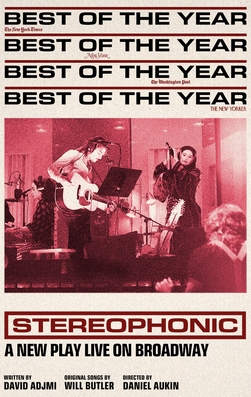
The direction of Stereophonic is masterful, seamlessly blending the elements of music and narrative. I viewed a video clip of the production which was on Jimmy Farrell’s Late Night Show.  It’s fascinating, because although we know they are acting it feels like you are sitting in on a band’s recording session. The cast appears unaware of the audience–that’s so intriguing. The director, Daniel Aukin’s vision to create an immersive experience has paid off, with audiences often describing the play as a visceral and transformative journey. The meticulous attention to detail in both the staging, a recording studio, and the sound design is evident.
230px

Critical Acclaim and Audience Reception

Stereophonic mines the agony and the ecstasy of creation as it zooms in on a music studio in 1976. Here, an up-and-coming rock band recording a new album finds itself suddenly on the cusp of superstardom. The ensuing pressures could spark their breakup — or their breakthrough. As someone who lived during the 1970s when the production is placed, I hear my high school days in their music!

Not surprisingly, Stereophonic has received rave reviews from critics, who have praised its innovative approach and emotional depth. Many have noted the seamless integration of the musical and narrative elements.  The production pushes the boundaries of traditional theater. The critical acclaim is matched by audience reactions. Reports from media say that many theatergoers describing the show as an unforgettable experience. And the show hasn’t even been featured on the Tony awards yet!

The production’s nomination for multiple Tony Awards is a testament to its excellence. Categories include Best Play, Best Direction, Best Sound Design, and several acting nominations, reflecting the all-around strength of the show. Winning a Tony is one of the highest honors in the theater world, and Stereophonic’s multiple nominations underscore its impact and quality.

undefined

The Musical Play Genre: Other Noteworthy Examples

You may not have realized that Stereophonic is part of a rich tradition of plays that incorporate music to enhance storytelling.

Here are some other notable examples:

  • Fela! – This vibrant musical play tells the story of Fela Kuti, the Nigerian musician and political activist. Known for its dynamic choreography and powerful music, Fela! immerses the audience in the world of Afrobeat and Kuti’s fight against oppression.
  • Once – Based on the Academy Award-winning film, Once is a poignant love story set in Dublin. The play features actors who double as musicians, playing instruments live on stage, creating an intimate and immersive experience that highlights the power of music in bringing people together.
  • The Band’s Visit – This Tony Award-winning musical tells the story of an Egyptian police band stranded in a small Israeli town. Through its hauntingly beautiful score and heartfelt narrative, The Band’s Visit explores themes of connection and the universality of human experience.
  • Passing Strange – A semi-autobiographical musical by Stew, Passing Strange follows a young African American’s journey to find “the real” through music and art. The play is noted for its rock concert-like atmosphere and its exploration of identity and self-discovery.
  • Spring Awakening – This rock musical adaptation of Frank Wedekind’s 1891 play tackles the struggles of adolescence and sexual awakening. The integration of modern rock music with a period setting creates a powerful and resonant experience for contemporary audiences.

Plays with Music for Students to Perform

If you are looking for a play with music for your students to perform.  I suggest checking out:

  • Bridge to Terabithia–-This powerful adaptation, supported by a lyrical score, focuses the humor, warmth and emotional intensity of Katherine Paterson’s Newbery Award winning novel. Jesse, alienated from the pragmatism of his family and rural Virginia culture, draws and dreams of becoming something special. Leslie, the new girl from the city and the ultimate outsider, opens a world of imagination, art and literature for him. Together they create Terabithia, a fantasy kingdom where they are safe from those who don’t understand them. Their friendship grows as Jesse’s world expands.

Looking for a lesson concerning the Tony awards?  Go here.

 The Future of Theatrical Innovation

I had never heard Stereophonic ‘s music until recently when I was listening to the Sirius station, Broadway.  Wow!  Whenever a theatrical production is unique, it paves the way for others to do the same.  It sort of whets a potential audience’s appetite,  demonstrating how traditional storytelling can be enhanced through modern technology and creative sound design. As audiences continue to seek out new and immersive experiences, productions like Stereophonic encourage others to follow.

As I mentioned previously, the 1970s are all the rage again.  It’s fun for me to reminisce about that important time in my life.  If for no other reason, I’d like to see Stereophonic and watch it winds its way through my memories.   As we await the results of the Tony Awards, one thing is clear: Stereophonic has made an indelible mark on the world of theater, and its influence will be felt for years to come.

Were you a student in the 1970s?  If not, do you enjoy listening to 70s music?  I’d love to hear from you.  Just email me at DhcBaldwin@gmail.com

The Transformative Power When Students Apply Stage Makeup
Graduation photo, 1974

Dramamommaspeaks** is dedicated to exploring the vibrant world of theater, offering insights and reviews on the latest productions, trends, and industry news. Stay tuned for more updates and in-depth analyses of your favorite shows and emerging talents.

Share this:

  • Click to share on Tumblr (Opens in new window) Tumblr
  • More
  • Click to share on X (Opens in new window) X
  • Click to share on Facebook (Opens in new window) Facebook
  • Click to share on Pinterest (Opens in new window) Pinterest
  • Click to share on LinkedIn (Opens in new window) LinkedIn
  • Click to email a link to a friend (Opens in new window) Email
  • Click to share on Reddit (Opens in new window) Reddit
  • Click to share on Pocket (Opens in new window) Pocket
  • Click to share on Telegram (Opens in new window) Telegram
  • Click to share on WhatsApp (Opens in new window) WhatsApp

Like this:

Like Loading...

Filed Under: arts education, Broadway, drama education, Education, Education, music education, Musical Theatre, plays, Teacherspayteachers, theater, theatre, Tony Awards Tagged With: 1970s, baby boomer echo, broadway musical, musical theater, plays with music, theater, tony award

Showtime Chronicles: History of Musical Theater Unveiled

December 20, 2023 By dhcbaldwin Leave a Comment

A photo of a red top hat and red stage curtains

Today, I want to give you a brief history of showtime chronicles: history of musical theater unveiled. Musical theater is one of my favorite genres to teach to theater students.  It’s fascinating!

Honestly, I  shouldn’t be surprised by my love of musical theater.  It’s in the family genes. Permit me to explain.

Showtime Chronicles: History of Musical Theater Unveiled

Musical Theater Talent is in the Genes

My grandparents were missionaries in Japan in the 1900s to late 1930s.  My mother was born and raised there.  At that time,  there were few Americans living in Japan.  Additionally, my grandparent’s presence was always in the public eye. My grandfather was a minister; my grandmother created the very first kindergarten in Japan.  Consequently, the Japanese government was familiar with them.

When my mother was eleven years old, she was invited to sing the Japanese national anthem at a prestigious ceremony for Emperor Hirohito. I’m sure it was an amazing experience for everyone, including my grandparents.  However, throughout my mother’s life, she had many regrets for her performance. She should have basked in the once in a lifetime experience as a fond memory.

Unfortunately,  she forgot the words to the anthem. Sadly, that’s all she remembered about the experience. Did I mention she was singing in Japanese? That was a big ask of a little shy girl to sing for important people and the public. She had a lovely voice.

Showtime Chronicles: History of Musical Theater Unveiled

Musical Theater is Our Family’s Jam

My elementary music teacher, who also a member of our church, noticed my singing voice when I was about the same age. She planned for me to sing “Oh Holy Night” for a Christmas service. As you’d expect, I was ecstatic about this opportunity and hugely disappointed when it didn’t occur.  Looking back, I wasn’t ready to sing solos publicly.  It took me more than six years before I felt comfortable singing solos in choir and musicals.

However, to this day I enjoy singing in large groups but I especially enjoy singing in musicals. Once I was confident, I never looked back! (Above I am playing the role of Nancy in Oliver! with Columbia Entertainment Company.)

Not surprisingly, my own daughters have performed in several musicals.  One is a professional actress and continues to perform.  (Below, she is performing in Man of La Mancha at Musical Theatre Heritage.)

Looking for emergency sub plans which are unique, creative and engaging?  Check out the Broadway Musical Composers Bundle. 

Drama in Song: The Story of Musical Theater

In the grand tapestry of performing arts, few genres have captivated audiences and transcended cultural boundaries quite like musical theater. From the magical notes of Broadway to the charming tunes of the West End, the history of musical theater is a vibrant journey that intertwines with the evolution of society.  In addition, it demonstrates the resilience of human creativity. Let’s embark on a melodious voyage through the fascinating history of musical theater.

Showtime Chronicles: History of Musical Theater Unveiled

Act 1: The Birth of a Genre

“The Black Crook” (1866): Often considered the first American musical, The Black Crook combined elements of a French ballet with a melodramatic plot. This groundbreaking production set the stage for the integration of music, dance, and drama.

Show Boat (1927): Adapted from Edna Ferber’s novel, this musical by Jerome Kern and Oscar Hammerstein II tackled serious themes such as racial prejudice and spousal abuse. Most importantly, Show Boat is recognized for its innovation in storytelling and integration of music and plot.

Showtime Chronicles: History of Musical Theater Unveiled

Act 2: The Golden Age of Broadway

Carousel (1945): A collaboration between Richard Rodgers and Oscar Hammerstein II, Carousel delved into deeper and more complex themes than its predecessor, Oklahoma! The musical explored issues of love, redemption, and second chances.

The Sound of Music (1959):** Another masterpiece by Rodgers and Hammerstein, The Sound of Music became one of the most beloved musicals of all times, telling the heartwarming story of the von Trapp family against the backdrop of Nazi-occupied Austria. Looking for a Broadway musical unit to teach of Sound of Music?  Check out– Sound of Music.

Showtime Chronicles: History of Musical Theater Unveiled

Act 3: Evolution and Experimentation

Rent (1996):This rock musical by Jonathan Larson was a modern reimagining of Puccini’s opera La Bohème. Rent addressed contemporary issues such as AIDS, poverty, and the struggle for artistic expression, marking a departure from traditional musical theater themes.

Wicked(2003): With music and lyrics by Stephen Schwartz, Wicked offered a fresh perspective on the classic story of “The Wizard of Oz.” Interestingly, it explored the untold backstory of the Wicked Witch of the West and the Good Witch of the North, challenging perceptions of good and evil. Pick up my four day unit for Wicked, the Broadway Musical.

Showtime Chronicles: History of Musical Theater Unveiled

Act 4: Diversity and Inclusion

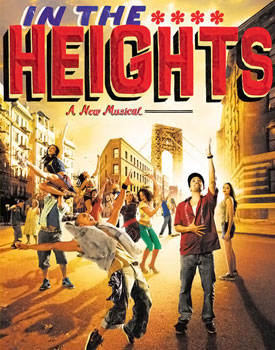
In the Heights (2008): Created by Lin-Manuel Miranda, In the Heights celebrates the vibrant culture of the Washington Heights neighborhood in New York City. With a fusion of hip-hop, salsa, and traditional musical styles, the show highlighted the dreams and struggles of a diverse community. Pick up my unit of it here. 

Fun Home (2013): Based on Alison Bechdel‘s graphic memoir, Fun Home marked a shift towards more personal and introspective storytelling. It explores themes of family, sexuality, and self-discovery, receiving acclaim for its emotional depth and authenticity. Looking for a Broadway unit for Fun Home?  Check out–Fun Home

Showtime Chronicles: History of Musical Theater Unveiled

Six Reasons Students Should Study the History of Musical Theater:

Studying the history of musical theater is not just a journey through captivating stories and enchanting melodies. It can be a transformative experience for some students. Obviously, theater and music students benefit the most.   Here are six reasons why delving into this rich history is a must for aspiring performers, directors, and creators:

1. Cultural Insight: The evolution of musical theater mirrors the cultural shifts of different eras. Understanding this history provides students with insights into the societal norms, values, and challenges that influenced the creation of iconic productions.

2. Artistic Evolution: The history of musical theater showcases the ever-changing landscape of artistic expression. Because there is a plethora of them, students can witness the evolution of musical styles and storytelling techniques. Reviewing the traditional melodies of the Golden Age to the experimental sounds of contemporary productions is simply fascinating! 

3. Innovation and Experimentation: Aspiring theater professionals can draw inspiration from the innovative spirit of past musicals. For example, when students explore groundbreaking productions like Rent and Wicked they are encouraged to push boundaries, experiment with new forms, and challenge the status quo in their own creative endeavors.

4. Social Commentary: Many musicals serve as powerful tools for social commentary. When examining works like West Side Story and Fun Home, students can gain a deeper understanding of how musical theater addresses and challenges societal issues.  Additionally, it  fosters a sense of responsibility in using their art. The musicals themes provoke thought and discussion.

5. Collaboration and Teamwork: The collaborative nature of musical theater is a unique aspect that sets it apart from other art forms. More over, studying the history of successful collaborations between composers, lyricists, directors, choreographers, and performers emphasizes the importance of teamwork in creating memorable and impactful productions. Looking for a bundle’s worth of unique lessons?   Pick up:  Year Long Theater Curriculum

undefined

6. Diversity and Representation: The recent emphasis on diversity and inclusion in musical theater opens up new narratives and perspectives. Consequently, students exploring productions like In the Heights can appreciate the importance of representing diverse voices on stage and the potential for musical theater to be a platform for social change.

Musical Theater and Its Evolution

In conclusion, I say safely say that the study of musical theater history is not just a journey. It’s a vibrant tapestry reflecting society’s evolution and the unstoppable force of creative expression. The show goes on, my friends, with new influences and stories captivating audiences worldwide.

Have you considered teaching your students about Juke Box Musicals?  Check out this blog post  Exploring the Magic of Jukebox Musicals: When Hits Shape the Stage

I wonder what musical will next be created. What musical do your students enjoy the most?  I’d love to hear about it.  Feel free to email me at DhcBaldwin@gmail.com

Deborah Baldwin, Dramamommaspeaks


Share this:

  • Click to share on Tumblr (Opens in new window) Tumblr
  • More
  • Click to share on X (Opens in new window) X
  • Click to share on Facebook (Opens in new window) Facebook
  • Click to share on Pinterest (Opens in new window) Pinterest
  • Click to share on LinkedIn (Opens in new window) LinkedIn
  • Click to email a link to a friend (Opens in new window) Email
  • Click to share on Reddit (Opens in new window) Reddit
  • Click to share on Pocket (Opens in new window) Pocket
  • Click to share on Telegram (Opens in new window) Telegram
  • Click to share on WhatsApp (Opens in new window) WhatsApp

Like this:

Like Loading...

Filed Under: arts integration, drama education, drama integration, Education, Education, excellence in teaching, High School, middle grades, music education, Musical Theatre, performing arts, Teacherspayteachers, youth theatre Tagged With: Fun Home, history of musical theater, in the heights, musical theater history, Rent, Show Boat, Sound of Music, The Black Crooke, Wicked

 Exploring the Magic of Jukebox Musicals: When Hits Shape the Stage

August 11, 2023 By dhcbaldwin Leave a Comment

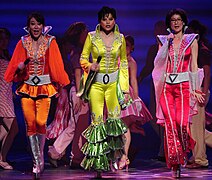
Three female leads of Mama Mia musical
 Exploring the Magic of Jukebox Musicals: When Hits Shape the Stage
In this blog post, we’ll delve into the world of jukebox musicals, understanding what they are, their history, and their enduring charm and go exploring the magic of juke box musicals: when hits shape the stage. When I was nine years old, my parents drove all the way from Kansas to Alaska.  It was a fabulous trip and I loved every minute of it.  I have many memories of that trips.  In fact, I remember more of that vacation than many others.  I wonder why?
 Exploring the Magic of Jukebox Musicals: When Hits Shape the Stage
After driving nearly  4,000 miles to get to Alaska, my father didn’t want to drive the entire way back.  He planned for us to journey back to the states on a ferry.  We had made the trip with another family and their teenage daughters.  Although the girls were much older than I, they were kind and played with me.  Traveling on the ferry took more than a day, I believe. There wasn’t a lot for us to do and we became quickly bored having only the activity of strolling around the ferry.
 Exploring the Magic of Jukebox Musicals: When Hits Shape the Stage

Seeing My Future

The girls invited me along on their walks. I felt so special! We discovered the coffee shop contained a juke box.  I remember the juke box was shiny and the lights which were blue and blinked when a song played.   I’d never played a jukebox before and I was mesmerized by it.  Someone chose Paperback Rider by the Beatles.
Hearing the song, the teens appeared from everywhere jumping up and dancing to the music. My traveling buddies squealed and began dancing, too.  Thinking I was the same age as they, I joined them.  For the first time in my young life, I saw my future full of being a teenager and spontaneously enjoying life like I’ve never done before. I learned the lyrics to Paperback Rider dancing over and over again to the juke box that day.
To this day, whenever I see a juke box (and they are so rare to find anymore), I remember dancing to the ferry boat’s jukebox on the ocean between Alaska and Canada.
Did you know I have the secret to boosting student engagement?  My new book, “We’re Live! Radio Theater #101” explains my journey to implementing this unique tool in the classroom. Check it out here

What are Jukebox Musicals?

Many theater and music students are unfamiliar with the term “jukebox” musicals.  Like other genres in music, it has its place in history.  In an effort to research them, I decided that a blog post focused upon them would be helpful to teachers, too. Of course, my little creative mind is thinking about a juke box musical product, too!
 Exploring the Magic of Jukebox Musicals: When Hits Shape the Stage

 Jukebox musicals are an exciting  genre of theater.  They capitalize on the power of weaving popular songs into the narrative.  In turn, it creates an exciting experience which resonates with both nostalgic fans and newcomers alike.

Are you looking for a unit about musical theater?  Check out this one:  Creating Your Own Juke Box Musical.

Cover of a middle school unit about creating your own juke box musical.

Are Jukebox Musicals Unique? 

At their core, jukebox musicals are a unique type of musical.  However, juke box musicals theatrical productions uses pre-existing popular songs and integrate them into their storylines. These songs are often hits from a particular artist, era, or musical genre. Unlike traditional musicals that feature original scores, jukebox musicals repurpose well-known tunes to enhance the storytelling.  People love juke box musicals! It brings together the familiarity of beloved songs with the excitement of live performance.  Plus, audiences enjoy this unique form of entertainment that blurs the lines between concert and theater. It’s a win-win!

Roots of Jukebox Musicals

The roots of jukebox musicals can be traced back to early musical revues and variety shows. Historically, snippets of popular songs were integrated into the performance. However, the genre truly gained prominence in the latter half of the 20th century. One of the earliest examples is “Ain’t Misbehavin'” (1978), which celebrated the music of Fats Waller. Yet, it was “Mamma Mia!” (1999), featuring the hits of ABBA, that catapulted jukebox musicals into mainstream success.

 Exploring the Magic of Jukebox Musicals: When Hits Shape the Stage

Important Elements of Jukebox Musicals

  1. Song Selection: As you would imagine, what is most important is the choice of song as they can make or break a successful production. The selected tracks must not only fit the narrative but also resonate with the audience’s emotions. These songs serve as emotional points of reference, thereby intensifying the impact of the storyline.
  2. Storyline Integration: Second most important element is the storyline.  It must seamlessly weave the songs into the plot.  We don’t want a scene to be dramatic only to have a humorous song complete it.  The two must jibe.  While some jukebox musicals opt for a biographical approach (e.g., “Jersey Boys” about Frankie Valli and The Four Seasons), others create entirely fictional tales (e.g., “Rock of Ages” and most recently, One More Time–the music of Brittany Spears).
  3. Nostalgia and Familiarity: Audiences enjoy reminiscing, especially through music.  Jukebox musicals often thrive on nostalgia, evoking memories of a particular time or artist. This sense of familiarity draws audiences in and encourages them to relive fond moments.
  4. Creative Reinterpretation: Successful jukebox musicals reimagine songs to fit the context of the story. Sometimes, lyrics take on new meanings when performed in a different context, adding depth and nuance to the original tracks. This is one of my favorite assets of a juke box musical–to use a song in a different way which gives it new meaning. 

(If you’d like to study juke box musicals with your students, check out this low prep unit:  Create Your Own Jukebox Musical

Cover of a middle school unit about creating your own juke box musical.

The Enduring Allure

Jukebox musicals continue to enchant audiences for several reasons:

  1. Familiarity: The comfort of recognizing songs instantly establishes a connection between the audience and the production.
  2. Cross-Generational Appeal: These musicals often introduce classic hits to younger generations, while simultaneously evoking nostalgia for older ones.
  3. Energetic Performances: The fusion of live performance with beloved songs creates a vibrant and captivating atmosphere.
  4. Escape and Emotion: The synergy between music and storytelling allows for immersive emotional experiences that can be both uplifting and cathartic.

My Favorite Jukebox Musicals

I always confidently announce to friends, “There isn’t a musical I don’t like.” Yet, it’s true!  Even if it’s not my favorite, I always appreciate the time it took to craft it, build, rehearse and perform it.  Here are some of my favorites:

1.  Top of the list for me is Mama Mia!

The story: On the eve of her wedding, a daughter’s quest to discover the identity of her father brings three men from her mother’s past back to the island they last visited 20 years ago. Beloved songs such as  I Have A Dream, Honey, Honey, Money, Money, Money, Thank You For The Music, Mamma Mia!, Chiquita, Dancing Queen, Lay All Your Love On Me, Super Trouper, The Name of The Game, Voulez-Vous, S.O.S., Knowing Me, Knowing You, Our Last Summer and  The Winner Takes It All. Wow! 
 Exploring the Magic of Jukebox Musicals: When Hits Shape the Stage
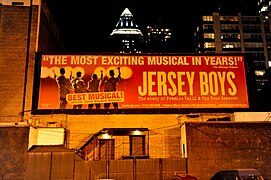
2.  Jersey Boys The story: In the 1960s, four scrappy young men from New Jersey — Frankie Valli (John Lloyd Young), Bob Gaudio (Erich Bergen), Nick Massi (Michael Lomenda) and Tommy DeVito (Vincent Piazza) — have the magic sound that propels them from singing under streetlights to singing in spotlights. With songs like Sherry, Big Girls Don’t Cry and Walk Like a Man,the quartet finds itself at the top of the charts. However, personal and professional problems threaten to tear the group apart.

 Exploring the Magic of Jukebox Musicals: When Hits Shape the Stage

3. Beautiful: The Carol King Musical-The story of Carole King is inspiring  and true.  Beautiful takes  you on an unforgettable journey of a remarkable career. A tapestry of creativity and innovation, Carole King paved the way for female artists for generations to come. Songs you’ll recognize are So Far Away, You’ve Got a Friend, Take Good Care of My Baby, Will You Love Me Tomorrow, I Feel the Earth Move and Locomotion among many others.
 Exploring the Magic of Jukebox Musicals: When Hits Shape the Stage
Create Your Own Musical Unit
Do you want your students to immersive themselves in the basic ideas behind creating a musical? Then check out my unit.  Make sure you follow me, too because soon I will have another coming out on the topic!  (Hint, hint)  Want some advice about directing a musical?  So You Are Directing a Musical…Now What? orYouth Theater Musical Rehearsal: What You Need to Know.
(Psst. Are you following me on Teacherspayteachers.com?  I would.  Whenever I upload a new product, TPT announces it to my followers.  Follow me here: Dramamommaspeaks Store.

Jukebox musicals are a celebration of the timeless power of music.  By artfully blending well-known songs with captivating storytelling, they create an unforgettable experience. Simply put, jukebox musicals resonate with diverse audiences. As the genre continues to evolve, it’s clear that the magic of jukebox musicals lies in their ability to transport us. So, the next time you’re looking for a theatrical journey that combines the best of both music and drama, consider diving into the world of jukebox musicals for a truly enchanting experience. (Want to pick up a free lesson about Myles Frost, the star of MJ the Michael Jackson Jukebox musical?

Here’s a free poster for your classroom of all of the Tony winning musicals here. Tony Award Winning Musicals Poster

What jukebox musicals have you seen?  Which do you enjoy the most?  I’d love to hear about them.

Click here:  We’re Live! Radio Theater #101

Share this:

  • Click to share on Tumblr (Opens in new window) Tumblr
  • More
  • Click to share on X (Opens in new window) X
  • Click to share on Facebook (Opens in new window) Facebook
  • Click to share on Pinterest (Opens in new window) Pinterest
  • Click to share on LinkedIn (Opens in new window) LinkedIn
  • Click to email a link to a friend (Opens in new window) Email
  • Click to share on Reddit (Opens in new window) Reddit
  • Click to share on Pocket (Opens in new window) Pocket
  • Click to share on Telegram (Opens in new window) Telegram
  • Click to share on WhatsApp (Opens in new window) WhatsApp

Like this:

Like Loading...

Filed Under: arts education, arts integration, community theater, drama education, music education, Musical Theatre, Professional Theatre, theater, youth theatre Tagged With: Beautiful: The Carole King Musical, creating a musical, history of musical theater, Jersey Boys, jukebox musicals, Mama Mia

What Everyone Should Know About Selecting a Musical For Their School

July 5, 2023 By dhcbaldwin Leave a Comment

Today, I want to talk to you about what everyone should know about selecting a musical for their school. As much as it is exciting to think about what production would serve your students the best, it’s also a huge challenge to do so.

Before you, the director, do anything you of course must read several scripts and select the one you like the most. This needs to occur at least six months in advance–don’t wait on this decision. (Why?  Because everyone and their dog is getting rights to productions.) I suggest you check out: Music Theater International or  Concord Theatrical, but there are many more just as good. 

First, I’d look over the music and make certain you have students who can sing the roles. Check vocal ranges, too.  Musicals are notorious for having many scene and costume changes, so be on the look out for those needs.  All that will matter when you begin to mount the production.  I have a lot of experience with Music Theater International.  Check out this post concerning my opinion of them:  MTI Junior Musicals– A Dream Come True!

My First Choice for a Musical

People ask for my advice concerning which musical they should select.  Generally, if it’s their first musical I suggest the near classic The Music Man.  It is still my go-to if I have the opportunity to choose the production.

What Everyone Should Know About Selecting a Musical For Their School

Selecting a Musical for Your School

Here’s the synopsis straight from Music Theater International, “By turns wicked, funny, warm, romantic and touching, The Music Man is family entertainment at its best. Meredith Willson’s six-time, Tony Award-winning musical comedy has been entertaining audiences since 1957 and is a family-friendly story to be shared with every generation.

The Music Man follows fast-talking traveling salesman, Harold Hill, as he cons the people of River City, Iowa, into buying instruments and uniforms for a boys’ band that he vows to organize – this, despite the fact that he doesn’t know a trombone from a treble clef. His plans to skip town with the cash are foiled when he falls for Marian, the librarian, who transforms him into a respectable citizen by curtain’s fall.”

This script is written very well.  If you’ve ever seen a play written by Neil Simon, you know that no matter who directs it the script will carry the actors’ performances no matter their quality.  Meredith Willson’s book for The Music Man is the same way.  To think that this gem was written in 1957 and still stands the test of time, never feels dated or old is a testament to its quality.

Looking to teach how to write your own musical to beginning students?  Go here.

File:Meredith willson 1937edited.jpg

Meredith Wilson

Selecting a Musical for Your School

Ever heard the phrase “butts in the seats”? In theatre, one of our biggest challenges is paying the bills for a production.  Some companies mount only musicals because they’ve discovered musicals have wide appeal. They are big money makers which is a good thing, because they cost a fortune to just rent!

So, if you want to fill your venue’s seats with more than just parents and students’ friends, pick something like The Music Man as your first production. If you are the first person to begin a program in your school, you want to wow your audience and establish a strong foundation for the future.  I do not recommend you do the latest and trendiest musical right now, whatever it may be.  Establish your program first and then select something more modern.

I recommend Music Man because the show has been around for many years and people have either seen it many times, on screen and a theater or they’ve performed in it.  It’s a staple of most theater companies, especially community theater.

What Everyone Should Know About Selecting a Musical For Their School

Your Objective

It’s important for you to have an objective with your production.  Some questions to ask yourself–Are you trying to establish a new program?  Or establish yourself in the department?  Or do you want a theater program which parents can trust and support?

The selection of your future musicals and plays will address your objective if you first decide upon it. You can always change your mind after a year or two and head a different direction if you aren’t having the success you expect.

The Music

This music has a “toe tappin'” kind of feel.  A lot of the songs are very familiar to people and you will find that your students may not them by having heard them so much.  Songs like “76 Trombones” is the most famous.  Most of the music is easy to learn.

The only difficult is that of the barbershop quartet (aka the School Board) with songs such as “Lida Rose.”  Also, Marion has an exciting one–“My White Knight.” Generally, the music can be learned to sing either unison if you need or several parts or a full out chorus

What Everyone Should Know About Selecting a Musical For Their School

Cast Break down

The show requires thirteen males and females and a chorus.  Your chorus can be as large as you need which in a school setting is so helpful.   Your biggest challenge is finding a male to play Harold Hill, the lead.  If he can act well, but his singing isn’t the best that’s okay.  It’s most important that your female lead, who portrays Marion Paroo, be a lovely singer who sings soprano.

The Music Man is a terrific vehicle for females.  Halleluijah!  If you are producing this at the high school level, you can feature a group of dancers who portray the students in the band at the end of the show.  Also, you need a few younger students.  You can involve elementary students or use students who are small and look younger.

Several of the characters require acting which is comedic and broad. Generally, novice actors  can do this believably.  Directing broad acting is easiest for novice directors as well.  The Mayor, his wife Eulailee,  his daughter Zaneeta, Zaneeta’s boyfriend Tommy, Harold’s friend Nathan.

Plus, some members of the chorus such as the Pick a Little Ladies and the School Board have great moments for comedy.  If the acting becomes too melodramatic, it is easy to direct actors to “pull it back a bit.” I always say if you have a strong Harold Hill and Marion Paroo the show can ride on that!

What Everyone Should Know About Selecting a Musical For Their School

Set Design

Another plus to The Music Man is the set.  There are several settings in the show:  the library, the Paroo home and porch, the school gymnasium and the town square. They can be depicted with the use of flats made into periaktois which display the different places in the story.

If you have room for a turntable, it’s useful in this situation and keeps the production moving along smoothly.  If you have room for platforms, you could use them instead.  And the use of white lattices goes a long way to give the idea of a small town at the turn of the century.

What Everyone Should Know About Selecting a Musical For Their School

Costumes

As we probably know, costumes play a vital role in a production.  This show is set in the early 1900s.  Never you mind about that!  I’ve found that if you have one costume per person for this production you can get by adequately.  The woman need long skirts, long sleeved blouses with high collars.

The girls need calf length skirts and blouses like the ladies. The men and boys need trousers, a long sleeved shirt and a hat.  Generally, my Harold and Marion have several costumes. There is a barbershop quartet which are fun to dress alike and a group of ladies who dress in Grecian togas for one scene.  Everything is up to your concept, so just do the best you can. 

Here’s a secret.  If everyone has the proper shoe wear for the show, you can pull it off.  So, women in heeled lace up boots (which look like the time period), and children in a neutral shoe like a short boot or girls in a black flat are adequate.

A good place to find hats for this musical is Amazon.  I see they have skimmer hats for men.  Or you can purchase  inexpensive simmer hats which are made of  sytrofoam  and paint them with craft paint to look more believable.  In the past, my ladies purchased hats with large brims. They’d get together and have a hat party decorating their hat for their character. I’d suggest a few of these hats. Hot glue some flowers on these babies and you are good to go!

The only big challenge in costuming are the marching band uniforms.  Your solution is to talk with your music departments and see if they keep their old marching band uniforms.  If they do, you can use those.

What Everyone Should Know About Selecting a Musical For Their School

Stage Properties

Most of the stage props are simple to collect though a few are tricky. You need a firecracker or something that makes the sound of a firecracker for the gymnasium scene.  This show requires band instruments for your “kid band” to hold near the end of the musical  They don’t have to work very well.  Your students don’t need to play them so if they are broken but look fine, that’s okay.

I’ll be honest here. I know I’m partial to this musical.  My husband  and I met while he conducted the orchestra for a production of it and I played Marion.  In addition, I’ve produced and directed both the adult version and junior versions four times.

All I can say friend is, it works.  It works. every. time. If you are looking for a Broadway musical to study with your students, check out my Broadway Musical and Unit of The Music Man. It contains everything a busy teacher needs to be successful in teaching it and engaging their students.

So there you have it–what everyone should know about selecting a musical for their school.  What musical do you suggest to new directors?  I have several others I suggest as well.  They are another blog post.

Woman behind DramaMommaSpeaks


Share this:

  • Click to share on Tumblr (Opens in new window) Tumblr
  • More
  • Click to share on X (Opens in new window) X
  • Click to share on Facebook (Opens in new window) Facebook
  • Click to share on Pinterest (Opens in new window) Pinterest
  • Click to share on LinkedIn (Opens in new window) LinkedIn
  • Click to email a link to a friend (Opens in new window) Email
  • Click to share on Reddit (Opens in new window) Reddit
  • Click to share on Pocket (Opens in new window) Pocket
  • Click to share on Telegram (Opens in new window) Telegram
  • Click to share on WhatsApp (Opens in new window) WhatsApp

Like this:

Like Loading...

Filed Under: acting, Arts, arts education, Broadway, community theater, directing experiences, drama education, music education, Musical Theatre, Producing plays and musicals, youth theatre Tagged With: casting, community theater, costume design, directing advice, set design, stage production advice, stage properties, The Music Man Broadway musical, themes

Doing Broadway Musicals the Right Way

September 29, 2021 By dhcbaldwin Leave a Comment

Red pencil on a piece of music, close up

Doing Musicals the Right Way

Doing Broadway Musicals the Right Way
The musical Hamilton

Let’s talk about doing musicals the right way. I watched the Tony awards last night.  Although it was shortened version on CBS, it was a lovely tribute to Broadway and theater. So exciting to know Broadway is back in business again.

But I have to say…as always they did musicals the right way.

What do I mean by that remark?  Often, I’ve thought about what makes a musical a classic.  Who makes the decisions whether a theatrical piece is or is not a classic?

According to one website, any musical written between 1920 and 1959 is considered a classic.  When I think about classic musicals, certain ones come to mind–South Pacific, Sound of Music, Oliver!, Peter Pan, The Music Man, Hello Dolly! My Fair Lady and Oklahoma! to name a few.

However, there are recent musicals which should be added to this category of Tony award winners.

I believe they become classics when they are endowed with strong plots, well defined characters, spectacle, universal themes and tremendous scores.  Consequently,  one could argue that most musicals which make it to Broadway should become classics, right? Maybe and maybe not.

However to me, the brilliance of the musical transcends all other productions and that is what sets is apart from others.

Doing Musicals the Right Way: The Phantom of the Opera

Let’s consider The Phantom of the Opera for example.

Doing Broadway Musicals the Right Way
Phantom of the Opera photo by Johan Perss

Phantom of the Opera

First, the plot: Based on the 1910 horror novel by Gaston Leroux, The Phantom of the Opera is a thrilling and romantic account of the legendary Phantom, a musical genius who dwells deep beneath a majestic opera house in Paris.

Shunned by society for his horrible facial deformity, he takes a promising young soprano, Christine, under his wing and grooms her for operatic fame, all the while falling deeply in love with her.

As Christine grows ever more successful, and a handsome young man from her past begins to successfully court her, the Phantom descends into a jealous rage and terrorizes the opera company with increasingly dangerous threats.

The plot takes twists and turns.  That’s a clear cut identifier of a classic.

Secondly, let’s consider the spectacle of the production.  A person could watch this one scene from Phantom of the Opera (in photo above) and have a good idea of the plot. Have you wondered about how to direct a musical? Check out: So You Are Directing a Musical…Now What?

phantom of the opera mask and red rose

In addition, the characters are well rounded with moments of which we can relate.  Another quality of a good musical.  One moment we hate the Phantom and another we pity him.  That tug at our heart strings makes him all the more compelling. Although Phantom of the Opera has less dialogue that most musicals, what dialogue it does have is well crafted.

The mere fact that Phantom of the Opera recently closed after a run of  35 years should tell us something, yes?  Staying power.

Doing Broadway Musicals the Right Way

Andrew Lloyd Weber’s music score is magnificent.  Perusing the internet researching this blog topic, I ran on to The Guardian’s review of Phantom of the Opera:

“Andrew Lloyd Webber has a true pop sensibility, ladling on the hooks. There are reprises and motifs everywhere, and even similar melodies in two of the big songs. Essentially, never take the unexpected route when the note you want to hear is right there.

That famous descending organ riff and its synth-rock bass may scream 1980s camp, but this is a show committed to bombast, the grisly gothic tale of the murderous phantom menacing a 19th-century Paris theatre unashamedly embraces high drama, backed by a wall of sound when Lloyd Webber’s more dense writing contrasts with the hit melodies.”

Doing Broadway Musicals the Right Way

Doing Musical the Right Way: Les Miserables

Les Miserables should be included the list of modern classic musicals.

First, let’s talk about the plot:  After 19 years as a prisoner, Jean Valjean is freed by Javert, the officer in charge of the prison workforce. Valjean promptly breaks parole but later uses money from stolen silver to reinvent himself as a mayor and factory owner. Javert vows to bring Valjean back to prison. Eight years later, Valjean becomes the guardian of a child named Cosette after her mother’s  death, but Javert’s relentless pursuit means that peace will be a long time coming.

Staging of Les Miserables

Secondly, the staging is magnificent! When I taught students about set design, I described the spectacle of the production. The revolving stage, the use of lighting and simple set pieces gives the production a feeling of fluidity and pace.  In particular, the scene when when Javert ends his life is powerful and raw.

Additionally, the use of fog and a simple bridge hoisted right at the moment Javert jumps to his death is breath taking. This moment of spectacle is tremendously engaging. Consequently, we are transported to the moment of impact as if we were jumping with him. The revolving stage turns as Javert sinks to the floor of the river, rolls in the current and slowly dies as the stage stops its revolve.  That’s powerful theater!

Doing Musicals the Right Way

Like Phantom of the Opera, Les Miserables has a long life on Broadway and London where it originated.  Forty-two countries have enjoyed the touring company shows. If that isn’t enough, it has been translated into 21  languages: English, Japanese, Hebrew, Hungarian, Icelandic, Norwegian, German, Polish, Swedish, Dutch, Danish, French, Czech, Castillian, Mauritian Creole, Flemish, Finnish, Argentinian, Portuguese, Estonian and Mexican Spanish. Pick up a copy of my Broadway musical unit of Les Miserables here.

What’s a Sung Thru Opera?

Les Miserables is considered a “sung-thru” opera. Because particular moments are sung rather than spoken and vice versa it demands our attention at all times.  I can’t say that about every production.

Salesmanship Cedes to Love in 'The Music Man' | Chicago News | WTTW

The Music Man

A third “should-be” classic, is The Music Man.

Again, let’s look at the plot: The Music Man is concerns con man Harold Hill, who poses as a boys’ band organizer and leader and sells band instruments and uniforms to naïve Iowa townsfolk, promising to train the members of the new band. Harold is no musician, however, and plans to skip town without giving any music lessons. Prim librarian and piano teacher Marian sees through him, but when Harold helps her younger brother overcome his lisp and social awkwardness, Marian begins to fall in love. Harold risks being caught to win her.

Every classic musical contains universal themes.  In this case, The Music Man demonstrates that music heals, redemption, risk romance and authenticity.

Doing Broadway Musicals the Right Way

A Crowd Pleaser

When teachers ask for my recommendation of a crowd pleaser musical which has opportunities for a large cast, first on my list is The Music Man.  The characters are charming, fun to portray and there’s room for many ages and grade levels. The dialogue is humorous when it needs to be and poignant in other moments.  My favorite line is, “He’s been the raspberry seed in my wisdom tooth long enough.”

With a blend of music indicative of the setting of the story, many of a plot takes twists and turns which is an identifier of a classic, too. For instance, The Music Man has such captivating music it’s used in other genres such as  by marching bands (Seventy-six Trombones)  and barbershop quartets (Lida Rose.)

Having directed it four times, I can say without a doubt it is one I can depend upon to be successful every time I direct it. Want some advice about directing? Check out: So You Are Directing a Musical…Now What?

Broadway Musical Units

As you may be aware, I create drama education resources for teachers through my store, DramaMommaSpeaks also on MadebyTeachers and my personal store on Payhip. 

I have a new bundle of “Classic Musicals”.

It includes:  Les Miserable, The Music Man, Peter Pan, Phantom of the Opera and West Side Story, South Pacific (new)

Each musical can be purchased separately, but if you buy them in a bundle you save up to 20%.  And guess what?  This is a growing bundle so as I create more Classic Musicals I’ll include include more productions.  (Get it at the beginning of the growing bundle and you get all of the rest of the musicals for FREE)

Doing Broadway Musicals the Right Way

These products include:

  • Letter to Teacher
  • Two Warm Ups–My Own Version of this Popular Exercise–
  • Teacher’s Script–What I Say and How I Say it!
  • Photos of the production
  • Synopsis of the Musical
  • Plot of the Musical–comprehensive and detailed
  • Short Biography about the creative team–composer, lyricist, playwright, producer or director
  • Biography focused on the author of the novel if it inspired the production
  • Why is this musical considered an opera and not a musical?
  • Separate File of Photos for Teacher’s Use in Lecture
  • History about the Origination of the Production
  • AND a Mini-Lesson on What are the Tony Awards?
  • List of Tony Awards
  • New York City Map with Competing Theaters Labeled
  • Student Note Page
  • Teacher Note Page Key
  • Fascinating Trivia about Broadway
  • Equally fascinating trivia about the particular musical
  • Songs List
  • Extension Activities–Ten Terrific Assignment Suggestions to Secure the Learning and Enrich the Experience either Individual or Group
  • Sources & Links to Film Clips from the Show
  • And More!

There are many musicals, too numerous to mention, which your students will appreciate exploring.  Have you considered Come From Away? Still so timely.  It’s an excellent production!

Doing Broadway Musicals the Right Way

Here’s another Broadway musical, West Side Story 

Doing Broadway Musicals the Right Way

Today, I added Oklahoma!

Doing Broadway Musicals the Right Way

And Here’s South Pacific

Doing Broadway Musicals the Right Way

And now The Sound of Music

Doing Broadway Musicals the Right Way

What other musicals do you think should be labeled as classics?  I’d love to know.  Contact me at DhcBaldwin@gmail.com or DeborahBaldwin.net

woman behind DramaMommaSpeaks


Share this:

  • Click to share on Tumblr (Opens in new window) Tumblr
  • More
  • Click to share on X (Opens in new window) X
  • Click to share on Facebook (Opens in new window) Facebook
  • Click to share on Pinterest (Opens in new window) Pinterest
  • Click to share on LinkedIn (Opens in new window) LinkedIn
  • Click to email a link to a friend (Opens in new window) Email
  • Click to share on Reddit (Opens in new window) Reddit
  • Click to share on Pocket (Opens in new window) Pocket
  • Click to share on Telegram (Opens in new window) Telegram
  • Click to share on WhatsApp (Opens in new window) WhatsApp

Like this:

Like Loading...

Filed Under: acting, Arts, arts education, arts integration, Broadway, community theater, community theatre, drama education, e-learning, Education, music education, Musical Theatre, performing arts, theater, Tony Awards, youth theatre Tagged With: Come From Away, Hamilton, musical theater, musical theatre, Phantom of the Opera, revivals of musicals, The Music Man, West Side Story

« Previous Page

Footer

Follow Us

logo3.png

FOLLOW US

Facebook X-twitter Pinterest Instagram Envelope Rss

Goodreads: read

Malibu Rising
Malibu Rising
by Taylor Jenkins Reid
People We Meet on Vacation
by Emily Henry
The Last Thing He Told Me
by Laura Dave
Faking It
Faking It
by Cora Carmack
Losing It
Losing It
by Cora Carmack

goodreads.com
Copyright © 2024 · Wellness Pro on Genesis Framework · WordPress.com.Log in
 

Loading Comments...
 

    %d