• Skip to primary navigation
  • Skip to main content
  • Skip to footer

Join Me in my new Facebook Group! https://www.facebook.com/groups/417126059784261

Menu
  • Meet Deb – The Heart Behind DramaMommaSpeaks
    • Work with Me! 
    • Photo Gallery of DramaMommaSpeaks
    • Directorial Credits
  • I Give Book Talks! 
    • Book Talk Through Skype
    • Books
  • Freebies!
  • Bumbling Bea
  • Teaching Resume
  • Acting Resume
  • Contact Me
  • Blog
    • Drama Education
    • Arts Education
    • Youth Theatre
    • Middle Grades
    • Musical Theatre
    • Teaching
  • Meet Deb – The Heart Behind DramaMommaSpeaks
    • Work with Me! 
    • Photo Gallery of DramaMommaSpeaks
    • Directorial Credits
  • I Give Book Talks! 
    • Book Talk Through Skype
    • Books
  • Freebies!
  • Bumbling Bea
  • Teaching Resume
  • Acting Resume
  • Contact Me
  • Blog
    • Drama Education
    • Arts Education
    • Youth Theatre
    • Middle Grades
    • Musical Theatre
    • Teaching

Education

How do I Become a Teacher?

July 22, 2021 By dhcbaldwin Leave a Comment

How do I Become a Teacher?

I didn’t think I’d become a teacher.  I took education classes at my father’s bidding.  Having taught thirty-eight years, I think I did the right thing. (Don’t tell Dad though.)

In light of the recent pandemic, it seems imperative to discuss this subject.

We are going to need teachers like never before.

There are many reasons we have a shortage. I won’t go into them here, but suffice to say if you are interested in teaching,  this is a good time to consider teaching as a career.

I come from a long line of teachers having several on both sides of my family.  If you’d like to know more about my teaching journey, check The 12 Unofficial Fortune Teller’s Guide to Becoming a Fantastic Drama Teacher

If you are attending a college or university, here are the steps to becoming a teacher.

NTU Graduation


Step1: Earn your bachelor’s degree.

A bachelor’s degree is required to become a teacher. Enrolling in a teacher education program which is pre-approved to meet the educational requirements for teacher certification, including student teaching, is the traditional route.

My advice is to consider the subject area (for example, science, English as a second language, or special education) and the grade level (such as elementary vs. secondary) you wish to teach. Not all teacher education programs provide training in all subject areas or grade levels. This is very important to check when you enroll in the school. Otherwise, you’ll be lacking what you need and then it’s a hassle to complete it.

Step 2:  State Teaching Exams

Generally, most states have a state exam you are required to take.  You will be prepared ahead of time for this exam and most people pass it easily.

Fingerprints

(source–“Fingerprints by kevin dooley)

Step 3: Fingerprinting

Any time an adult is going to work with children, they must be fingerprinted.  This is imperative. You school system will inform you where you get finger printed.  It’s a simple process.

Teacher Application Form - Fill Out and Sign Printable PDF Template | signNow

Step Four: Applying for Teaching Jobs

Once you have your license, you are ready to apply for teaching positions. There are several educational websites who provide a clearinghouse of positions.  You can look through the available  position or perhaps ones which they think will be open.  Check out http://www.teachingnomad.com.  It is a clearing house for teaching jobs in the United States and abroad.

As you apply for positions, you’ll be expected to show proof of your grades from college.  Also, you’ll be asked to provide several recommendations from people who have worked with you or can speak of your character.

You’ll want to write a professional resume of any previous work experience you’ve had with regard to teaching (teaching swimming lessons, working as a summer camp counselor, etc.) Check out this site for resume examples.  Go to: https://resumegenius.com for help.

Sometimes you can teach a subject which you have not studied in college.  When this occurs, the school system’s main office will give their go-ahead to hire you.  You’ll be expected to take the state teaching exam and probably a few additional clases.  In my case, I had to take three classes to become certified in English.  (I graduated from college with my certification in Speech and Drama. Usually, English or Language Arts accompanies this certification.)

Teachers

(source–“Teachers” by iwantt)

Step Five:  Your Mentor Teacher

When I became a teacher about a hundred years ago, I was on my own.  No one helped me or advised me.  I’m tough old bird and I figured it out by the third year.  My journey was typical of all new teachers at the time.  Thankfully, it isn’t that way anymore.  My advice?  Give teaching at least five years before you make a decision whether you want to continue or not.

You are assigned a mentor teacher who serves as a guide and hopefully a friend.  This person knows the ins and outs of teaching in your school and about teaching in general.

Alternative Teacher Certification

I was looking around the internet and found this great explanation for alternative teacher cetification at www.teachercertificationdegrees.com:

“Alternative or non-traditional teacher certification was initially introduced to fill critical teacher shortages. Today, alternative certification has been widely adopted as a way to recruit talented individuals in all subjects who have a passion for teaching but do not have backgrounds in education. According to a survey by the National Center for Education Statistics (NCES) covering the 2015-2016 school year, about 18% of public school teachers–676,000 individuals–had earned their teaching license through an alternative certification program.

This is up from the 2011-2012 school year when 14.6% of teachers leading classrooms in public schools reported entering teaching through an alternative pathway.”

Luckily, there are people who find they want to become teachers who did not study education when they were in college.  If that’s you–you are so valuable because you have real life experiences (for instance, I know a scientist who became a science teacher.)

Teaching has its challenges, but so do most careers.  My advice? Give. it. time.

Blue laptop keyboard with one red key which says

Want a FREE Guide and 10 page lesson?  Click here.

Advice from a 38 Year Veteran–

  1.  Find someone in the school who you can vent to and they to you.
  2.  Socialize with other teachers.
  3.  Don’t each lunch alone.
  4.  Get some exercise every day even if it feels like you can’t do it.  Taking a walk, even a mile, will help you tremendously.
  5.  Your desk is like a little home, so outfit it with things which make you smile–your favorite coffee cup or water bottle, a   small poster which inspires you, photos of family or friends.
  6.  Decorate your room in such a manner that is classic and a bit on trend.  YOU DON’T NEED TO LOOK LIKE PINTEREST PIN YOU’VE SEEN.  This is not a competition.
  7.  Keep your sense of humor–I can’t express this enough to you.
  8.  Keep your perspective.  These are young people and children.  Parents?  Well, they mean well but are generally biased toward their child.
  9. Make friends with the office and custodial staff.  They can make or break you and besides, they are always kinda fun.
  10.  Email me if you are having a rough day–I have a listening ear.

As I mentioned above, I never thought I’d become a teacher.  But you know, it suits me well and I’m grateful I had the opportunity to do so.

Got any questions?  Please feel free to contact me at DhcBaldwin@gmail.com or DeborahBaldwin.net


Share this:

  • Click to share on Tumblr (Opens in new window) Tumblr
  • More
  • Click to share on X (Opens in new window) X
  • Click to share on Facebook (Opens in new window) Facebook
  • Click to share on Pinterest (Opens in new window) Pinterest
  • Click to share on LinkedIn (Opens in new window) LinkedIn
  • Click to email a link to a friend (Opens in new window) Email
  • Click to share on Reddit (Opens in new window) Reddit
  • Click to share on Pocket (Opens in new window) Pocket
  • Click to share on Telegram (Opens in new window) Telegram
  • Click to share on WhatsApp (Opens in new window) WhatsApp

Like this:

Like Loading...

Filed Under: arts education, DeborahBaldwin.net, Education, elementary, excellence in teaching, middle grades, Teaching, youth theatre Tagged With: Education, process of becoming a teacher, school districts, teaching career, teaching certification

Why You Should Use These Effective Teaching Methods, Part One

June 22, 2018 By dhcbaldwin 2 Comments

Effective Teaching Methods

Let’s talk about why you should use these effective teaching methods. This is a two part series, so check back for part two, will you?

Soon it will be the fourth of July.  You know what that means don’t ya?

We are about half way through summer vacation for our overworked, underpaid teachers.

Hopefully, these education warriors are not spending their whole vacation sitting in professional development classes or reading yet another book on whatever trendy subject is being discussed in September at a faculty meeting.

I hope they are sitting in the Colorado Rocky Mountains by a stream, listening to the water as it slips over the rocks and cools the air. (This is one of my favorite memories in my life which I draw from time to time.)

Now, I taught drama classes for thirty-eight years.  That, my friend, is a heck of a long time.

The wisdom I am about to impart to you is my personal teaching method which works every.single.time.  I’ll say that again:  every.single.time

Image result for students using multiple intelligences

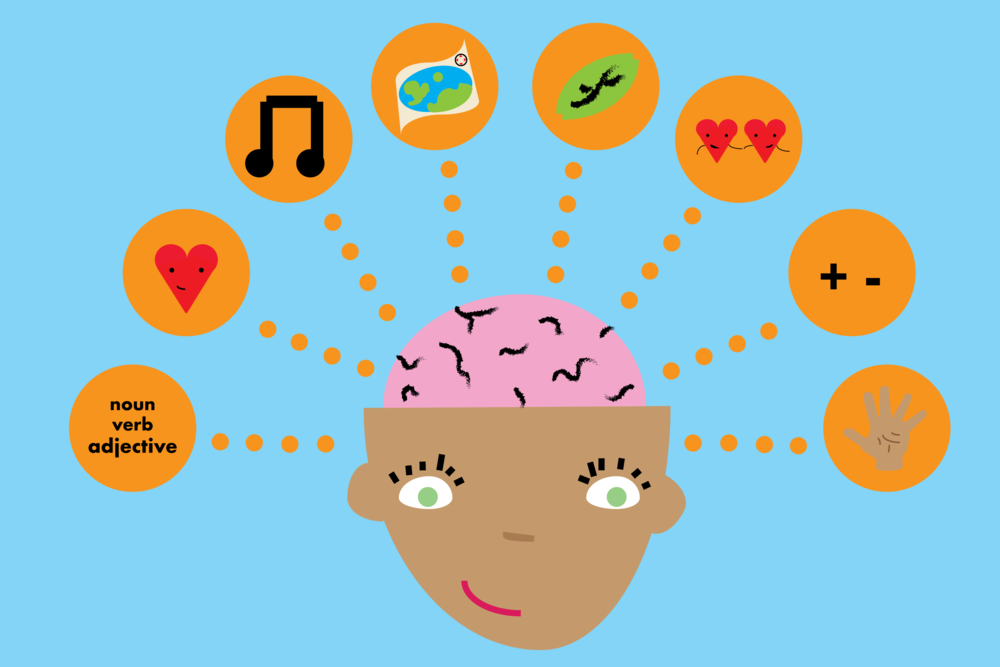
I believe in using the multiple intelligences…period.

From the American Institute of Learning and Human Development website,

“The theory of multiple intelligences was developed in 1983 by Dr. Howard Gardner, professor of education at Harvard University. It suggests that the traditional notion of intelligence, based on I.Q. testing, is far too limited. Instead, Dr. Gardner proposes eight different intelligences to account for a broader range of human potential in children and adults. These intelligences are:

              Linguistic intelligence (“word smart”)

              Logical-mathematical intelligence (“number/reasoning smart”)

              Spatial intelligence (“picture smart”)

              Bodily-Kinesthetic intelligence (“body smart”)

              Musical intelligence (“music smart”)

              Interpersonal intelligence (“people smart”)

              Intrapersonal intelligence (“self smart”)

              Naturalist intelligence (“nature smart”)

Just like Dr. Gardner, I present my lessons in a wide variety of ways using music, cooperative learning, art activities, role play, multimedia, field trips, inner reflection, and much more.

Image result for students using multiple intelligences


The most important question I know some educators have is whether each intelligence must be addressed with every lesson.  

The answer is a resounding, no!  But I bet if you use several methods over the course of a unit or several lessons, the students will be more engaged than the traditional methods of textbook and worksheets.

Case in point, my Theatre Appreciation class I taught this last semester at Neosho Community College in Ottawa, Kansas.

This was my first time to teach the class and I must say, it was a doozy for me.

Some challenges:

  • only four students (three were seniors in high school and one was twenty-three years old) enrolled
  • since Neosho is a commuter campus, a theater and its many aspects were unavailable to me
  • the class fulfilled a Humanities requirement, so the students didn’t necessarily take the class because they wanted to but needed the hours in order to graduate
  • although I had a teacher’s manual, powerpoint templates and test banks (which didn’t always coincide with the teacher’s manual), the scope of learning was massive!

In short, I created every lesson in the semester with very little help (oh, and forget using another professor’s syllabus supplement to help me, all the professors I found pn line planned it differently.)

At first, I tried the usual I-lecture-you-take-notes format.  Ugh…I’m embarassed to even admit that to you. It was excruciatingly boring for the students and myself.

What did work was assigning vocabulary words from each chapter and requiring the students to create flashcards on Quizlet.com. These vocabulary words spoke to those with Linguistic Intelligence.

I learned the students needed visual examples of the various times periods in theatre history.  That’s where youtube.com came in.  It was great help and the wealth of videos about theatre history, live performances of plays and musicals was extensive. Whew!  Suddenly, the learning came alive.

We attended a live performance of a play produced at the University of Kansas.  At the time, I wasn’t certain they appreciated the production, but later they mentioned the play to me several times.

Spatial Intelligence was addressed and it worked well for all of them.

I knew I could do better by them, but this was my first time teaching the material. I thought I should use a more traditional teaching method since these students came from rural school systems in general.  This might be an exagerration, but I have discovered in the past rural schools are less advanced or innovative. I could tell they were used to books and worksheets, good or not.

So, I did what I knew I should have done from the beginning–I used multiple intelligences.

Nearing the end of the semester, I assigned the students a project on a particular play they read.  Each one had a responsibility to learn about the job of that designer and the responsibilities of them, design either costumes (4 costumes), set (1 set with furniture and curtains, etc.), props (2 props specifically for the play)  or sound for the production (a sound plot and sound bites for several sounds, preshow and post show music.) Body-Kinesthetic Intelligence.

Additionally, they had to work with their peers pulling their ideas together as an artistic team would do for a production. Check off Interpersonal Intelligence!

Lastly, they were to share their learning with us.

They LOVED the assignment.  Please understand these were students who swore to me, “Mrs. Baldwin, I’m not at all creative.  I can’t possibly do this!”  However, by the end of the learning and sharing, they enjoyed it so much they suggested to me that I do more of this next time.

Image result for students using multiple intelligences

Aha! As I mentioned I knew that all ready, but it is always better when your students confirm your opinion.

I am by no means an expert on  teaching through the multiple intelligences, but using this method works for me every time.

It is fun, creative, allows for varied learning styles, skills and provides differentiated instruction.  You can’t beat that, can you?

What are your favorite teaching methods?  As a drama teacher, I model my expected outcome on a daily basis it seems.  Have you ever modeled for your students?  How did it go?

I’d love to hear from you.  Contact me at dhcbaldwin@gmail.com or DeborahBaldwin.net

author's signature

Share this:

  • Click to share on Tumblr (Opens in new window) Tumblr
  • More
  • Click to share on X (Opens in new window) X
  • Click to share on Facebook (Opens in new window) Facebook
  • Click to share on Pinterest (Opens in new window) Pinterest
  • Click to share on LinkedIn (Opens in new window) LinkedIn
  • Click to email a link to a friend (Opens in new window) Email
  • Click to share on Reddit (Opens in new window) Reddit
  • Click to share on Pocket (Opens in new window) Pocket
  • Click to share on Telegram (Opens in new window) Telegram
  • Click to share on WhatsApp (Opens in new window) WhatsApp

Like this:

Like Loading...

Filed Under: drama education, Teaching Tagged With: Education, effective teaching methods, teacher training

The Importance of Teaching

May 12, 2017 By dhcbaldwin Leave a Comment

How do you answer the questions whether there is an importance to teaching?

There are days I think teaching is a lost art.

There it is….the respect for it is long gone.

Sometimes I think this way.  Other days, not so much.

Teaching is like anything.  Good teachers make it look easy.  They barely break a sweat.

Recently, I taught a class in reading of nonfiction.  Sounds hugely interesting, huh?

Yeah, the students didn’t think so either.

My first hurdle was attitude.  The students were placed in this required class because their reading scores weren’t high enough for college level classes.

The class was comprised of twelve students–four international (two of which dropped out after two weeks), four tyical college aged and three older students, non traditional I guess you’d say.

Boy howdy, was it tough!

The international students couldn’t understand English very well and looked confused most of the time.

The 18 to 21 year olds took everything in stride and although they missed class occasionally, did their best to learn what they needed.

Then there were the older adults.  They were the tough ones. I could understand why.

How would you feel if someone told you your reading scores were lacking?  You’d resent it, right? Especially when you took a big leap and went back to school to try and catch up your life and have a career instead of a job.  That’s tough enough.

Two of the older adult learners would wrinkle up their noses if they didn’t like the correct answer to a test question they had missed.  They’d huff at me when I instructed them.  If they were confused, they’d grow frustrated as quickly as a toddler.

I knew what they were needing–time, patience from me and differentiated instruction.

I worked at it, but after awhile I simply used the textbook to teach with. There is more to this story than I feel comfortable sharing, but basically….

A teacher will become demoralized if the students and administration don’t respect her.

Yeah, that was me.

I hope teaching won’t be a lost art.  I hope young people will continue to become teachers. Recently, both of our daughters decided to become teachers–one a drama teacher like her momma and the other wants to teach nursing. Both young women will do an outstanding job.

Thank you teachers. You are the salt of the earth. Our future depends upon you.

Contact me at dhcbaldwin@gmail.com

If you’d like to learn more about my journey as a teacher, check out this post:  https://wp.me/p3GDNp-uF

Share this:

  • Click to share on Tumblr (Opens in new window) Tumblr
  • More
  • Click to share on X (Opens in new window) X
  • Click to share on Facebook (Opens in new window) Facebook
  • Click to share on Pinterest (Opens in new window) Pinterest
  • Click to share on LinkedIn (Opens in new window) LinkedIn
  • Click to email a link to a friend (Opens in new window) Email
  • Click to share on Reddit (Opens in new window) Reddit
  • Click to share on Pocket (Opens in new window) Pocket
  • Click to share on Telegram (Opens in new window) Telegram
  • Click to share on WhatsApp (Opens in new window) WhatsApp

Like this:

Like Loading...

Filed Under: arts education, drama education, Education, excellence in teaching Tagged With: Education, teacher appreciation, Teaching

Footer

Follow Us

logo3.png

FOLLOW US

Facebook X-twitter Pinterest Instagram Envelope Rss

Goodreads: read

Malibu Rising
Malibu Rising
by Taylor Jenkins Reid
People We Meet on Vacation
by Emily Henry
The Last Thing He Told Me
by Laura Dave
Faking It
Faking It
by Cora Carmack
Losing It
Losing It
by Cora Carmack

goodreads.com
Copyright © 2024 · Wellness Pro on Genesis Framework · WordPress.com.Log in
 

Loading Comments...
 

    %d