• Skip to primary navigation
  • Skip to main content
  • Skip to footer

Join Me in my new Facebook Group! https://www.facebook.com/groups/417126059784261

Menu
  • Meet Deb – The Heart Behind DramaMommaSpeaks
    • Work with Me! 
    • Photo Gallery of DramaMommaSpeaks
    • Directorial Credits
  • I Give Book Talks! 
    • Book Talk Through Skype
    • Books
  • Freebies!
  • Bumbling Bea
  • Teaching Resume
  • Acting Resume
  • Contact Me
  • Blog
    • Drama Education
    • Arts Education
    • Youth Theatre
    • Middle Grades
    • Musical Theatre
    • Teaching
  • Meet Deb – The Heart Behind DramaMommaSpeaks
    • Work with Me! 
    • Photo Gallery of DramaMommaSpeaks
    • Directorial Credits
  • I Give Book Talks! 
    • Book Talk Through Skype
    • Books
  • Freebies!
  • Bumbling Bea
  • Teaching Resume
  • Acting Resume
  • Contact Me
  • Blog
    • Drama Education
    • Arts Education
    • Youth Theatre
    • Middle Grades
    • Musical Theatre
    • Teaching

middle grade students

Striking a Balance with Students in Their Middle School Years

October 26, 2018 By dhcbaldwin 6 Comments

Striking a Balance with Students in Their Middle School Years

Today, let’s talk striking a balance with students in their middle school years. Middle School…near and dear to my heart. They can change on you in a split second and I love it!

Striking a Balance with Students in Their Middle School Years

My reasons for liking middle school

I always thought I’d teach high school.  Instead, I spent most of my career teaching middle school kids.  When I was in college we didn’t have middle schools yet.  They were created about ten years later.

I must say I think middle school is a brilliant idea.  I taught for the Columbia Public Schools in Columbia, Missouri and their middle schools were sixth and seventh grades.

Our building was HUGE!  It was to hold 600 and we were bursting at the seams with nearly l,000.  There were “temporary classroom” A.K.A. mobile trailers on three sides of the building.

I did the bulk of my speech communications teaching in Colorado, however.  I worked in a very unusual home school enrichment program. It too, was bursting at the seams.  I understand the program is so popular now, they are about have their own building and not lead the Nomad life anymore.  That’s super!  They so deserve it.

Striking a Balance with Middle School Students

I find teachers either ask too much or too little of middle grade students. Sometimes I had this challenge while teaching them.  It’s a hard balance to maintain. and an easy mistake to make.  Kids between the ages of eleven and fourteen change dramatically.  Just look at this young girl.

Striking a Balance with Students in Their Middle School Years

She’s probably a young sixth grader.  She wants so desperately to look grown up with her cute hat and spaghetti strap tank.  You know what gives her age away?  Her hair in braids.

Speech Class

Let’s take a speech class–either the teacher expects the students to make an outline, note cards and maybe even a power point or they expect the kids to just stand and make up the speech as they go along.

I taught for thirty-eight years and in that time, I perfected a simple but grade level appropriate rubric for speech making. It would be suitable for middle school students.

Although, this particular rubric was created for a special occasion speech, but it could easily be used for other types of speeches with a little tweaking.

I hope you’ll check it out at: rubric for special occasion speech

Why do our students need to make speeches?

I was perusing the internet to find some interesting information about speech making and ran on to this website, http://www.geraldgillis.com.  What I appreciate about Mr. Gillis’ post is that this was written by a lay person and not some fancy-dancy speech maker, you know?

Importance of Speaking Skills

Here is his post, The Importance of Speaking Skills

“Ability to inform, persuade, and direct. Business managers, educators, military leaders, lawyers, and politicians, among others, seek to develop their speaking skills to such a level that they are transformed into master communicators. Speaking clearly and confidently can gain the attention of an audience, providing the golden opportunity for the speaker to make the message known. Wise is the speaker who gains and then holds the attention of an audience, with well-chosen words in a well-delivered presentation, forming a message that is effective, informative, and understood.

• Ability to stand out from the rest. When one thinks of speaking skills, one tends to think of it as a common skill. Think again. The ability to stand before others and speak effectively is not an ordinary ability. Many people are deathly afraid of public speaking; others have little ability to form thoughts into sentences and then deliver those words in a believable way. The bad news is that at any given moment the world has precious few with the speaking talents of, say, Winston Churchill or John F. Kennedy. The good news is that a speaker whose skills are honed and developed with constant application and hard work can stand out.

• Ability to benefit derivatively. Well-developed verbal skills can increase one’s negotiation skills. Self-confidence is improved. A growing sense of comfort comes from speaking in front of larger and larger audiences. A reputation for excellence in speaking can accrue over time, thereby imparting a certain credibility to the speaker.

• Career enhancement. Employers have always valued the ability to speak well. It is, and always will be, an important skill, and well worth the effort in fully developing.
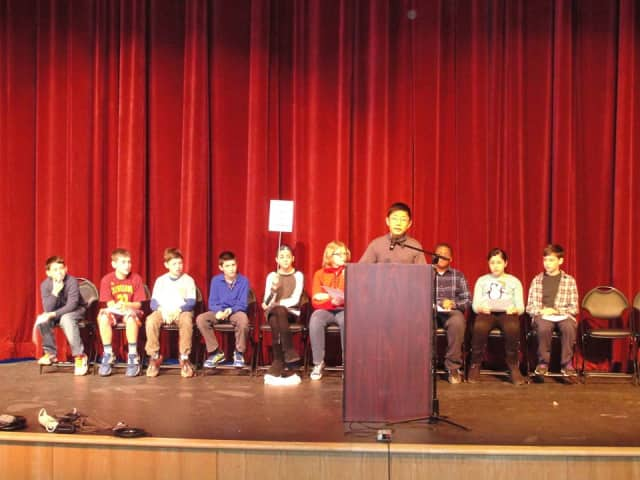
Striking a Balance with Students in Their Middle School Years

Speaking skills are important for career success, but certainly not limited to one’s professional aspirations. Speaking skills can enhance one’s personal life, thereby bringing about the well-rounded growth we should all seek.”

What experiences have you had with middle school students?  I bet they are interesting. I’d love to hear about them.

Here’s a tool which could come in handy most any day.  Conversation Starters

Here is a blog post about differentiation which could help you: Three Lessons to Engage Your Drama Class Using Differentiation

Comment on your most awkward moment at school.  I’d love to know.  Contact me at dhcbaldwin@gmail.com or DeborahBaldwin.net

Deborah Baldwin, Dramamommaspeaks


Share this:

  • Click to share on Tumblr (Opens in new window) Tumblr
  • More
  • Click to share on X (Opens in new window) X
  • Click to share on Facebook (Opens in new window) Facebook
  • Click to share on Pinterest (Opens in new window) Pinterest
  • Click to share on LinkedIn (Opens in new window) LinkedIn
  • Click to email a link to a friend (Opens in new window) Email
  • Click to share on Reddit (Opens in new window) Reddit
  • Click to share on Pocket (Opens in new window) Pocket
  • Click to share on Telegram (Opens in new window) Telegram
  • Click to share on WhatsApp (Opens in new window) WhatsApp

Like this:

Like Loading...

Filed Under: Education, excellence in teaching, middle grades, Speech Making Tagged With: Middle grade, middle grade students, middle graders, middle school drama, middle school students

A Writer’s Journey: A Really, Really Long One But Worth It

August 7, 2014 By dhcbaldwin 1 Comment

kabuki actor

People have asked me when and how the story of Bumbling Bea was conceived. To me, it feels like a really, really long story, but maybe it isn’t in the grand scheme of things. Here goes:

My grandparents, of whom I never knew, were missionaries in Japan in the 1930’s and 1940’s. My mother was born in Osaka, Japan and lived there until she was eighteen years old. Two years before the bombing of Pear Harbor, my grandfather was told it was not safe for Americans to stay in the country and urged to leave, so he did. My mother had all ready moved to the U.S. to go to college. She never returned to the country until my father and I visited with her when I was sixteen years old. It was an amazing trip and one that I still remember quite vividly.

One of the most memorable experiences of the trip was our attendance of a Kabuki play in Tokyo at the Royal Kabuki Theater. If you aren’t familiar with Kabuki Theater, my best description would be to compare it to an old melodrama mixed with a fairy tale and told in a grandiose way. The costumes are extravagant, the make up looks mask like, the sound effects are produced live and the actors use choreographed movement and facial expressions that are exaggerated.

depositphotos_4681233-Kabuki-Actor[1]

But here’s the real kicker: All of the roles are portrayed by men. What?

As a young woman, I was fascinated by this aspect. No women portray roles in the show? But the men aren’t considered dressing in drag? It’s part of the art form?

This is the primary impetus for writing Bumbling Bea. Initially, the book was titled Two for the Kabuki because it is a story about two girls–an American girl and a Japanese one. The title changed a year ago after attending a writing conference and talking with an agent who suggested I focus upon Bea’s impetuous nature.

I wanted to write a book for middle grade students because I have a special love for them. AND I thought that the fact that Kabuki Theater is only performed by men was an interesting idea that probably most students would not know. So, the original idea sat in my brain for twenty-seven years (no, honestly) until I finally gave in to my fears and worry and took a stab at writing the story.

But let’s rewind to the beginning of Bea’s journey.

When our oldest daughter was an infant, I enrolled in a beginning writing class with the Children’s Literature Institute. I had always been a writer, writing my first story when I was four years old (it was about a pig). I have a minor in English and I am licensed to teach Language Arts. But write a book? Other than my illogical fear of sharks, writing a book absolutely freaked me out! I had no idea how to go about writing a book, hence I took the writing class. I remember typing on my beloved Brother typewriter–no computers yet. I placed it on a towel, so my typing wouldn’t wake up our sleeping infant. I loved it. The writing gave me a creative outlet and something to think about other than diapers and feedings. Don’t get me wrong–I loved being a mother and I still do.

Being a mother has many challenges, none of which include having too much time on your hands. The more our daughter grew, the less time I had to write much less think. I put the book idea on the back burner of my brain, because of my family and teaching responsibilities. Also and probably most importantly, I had plenty of fear about attempting to write it. What if this, what if that, what if what if.

Fast forward several years….another daughter was born and I am still busy teaching and directing plays. No time for writing that’s for sure. Kabuki Theater would drift through my thoughts from time to time. When I became frustrated with circumstances in my life I’d weep that, “what I really need to do is write”! But still there was no writing accomplished and no faith in myself.

More time passed, except I began writing but I did’t recognize it. I adapted multicultural folk tales into plays and wrote arts grants for the community theater of which I presided. Heck, I even attended graduate school and received my Masters in Education in creative arts learning. There was a lot of writing in graduate school–papers, poems, lesson plans, etc.

But Bea and her story? Still not happening.

Zip. Zap. Twenty years go by in a slow motion instant. Our daughters are adults, we move, we have new jobs and live in an amazing place with mountains that tease you to be inspired. Another writing class (because I still don’t feel I know enough) and voila! Bumbling Bea was finally born.

So, the question should be: What changed that I finally felt equipped and ready to write Bea’s story? When one turns a half century (yikes), one begins to look around and think about the regrets that she has. I have always lived in the present, but I knew that I would really, really regret not writing Bea. And probably strangers, my friends and certainly my family were really, really tired of hearing about Bea. So, I did it and I’m really, really glad. Really. Tada!

Share this:

  • Click to share on Tumblr (Opens in new window) Tumblr
  • More
  • Click to share on X (Opens in new window) X
  • Click to share on Facebook (Opens in new window) Facebook
  • Click to share on Pinterest (Opens in new window) Pinterest
  • Click to share on LinkedIn (Opens in new window) LinkedIn
  • Click to email a link to a friend (Opens in new window) Email
  • Click to share on Reddit (Opens in new window) Reddit
  • Click to share on Pocket (Opens in new window) Pocket
  • Click to share on Telegram (Opens in new window) Telegram
  • Click to share on WhatsApp (Opens in new window) WhatsApp

Like this:

Like Loading...

Filed Under: Uncategorized Tagged With: a young mother's challenges, Family, Institute of Children's Literature, Kabuki Theater, middle grade students, writer's worries and fears of failure

Footer

Follow Us

logo3.png

FOLLOW US

Facebook X-twitter Pinterest Instagram Envelope Rss

Goodreads: read

Malibu Rising
Malibu Rising
by Taylor Jenkins Reid
People We Meet on Vacation
by Emily Henry
The Last Thing He Told Me
by Laura Dave
Faking It
Faking It
by Cora Carmack
Losing It
Losing It
by Cora Carmack

goodreads.com
Copyright © 2024 · Wellness Pro on Genesis Framework · WordPress.com.Log in
 

Loading Comments...
 

    %d