• Skip to primary navigation
  • Skip to main content
  • Skip to footer

Join Me in my new Facebook Group! https://www.facebook.com/groups/417126059784261

Menu
  • Meet Deb – The Heart Behind DramaMommaSpeaks
    • Work with Me! 
    • Photo Gallery of DramaMommaSpeaks
    • Directorial Credits
  • I Give Book Talks! 
    • Book Talk Through Skype
    • Books
  • Freebies!
  • Bumbling Bea
  • Teaching Resume
  • Acting Resume
  • Contact Me
  • Blog
    • Drama Education
    • Arts Education
    • Youth Theatre
    • Middle Grades
    • Musical Theatre
    • Teaching
  • Meet Deb – The Heart Behind DramaMommaSpeaks
    • Work with Me! 
    • Photo Gallery of DramaMommaSpeaks
    • Directorial Credits
  • I Give Book Talks! 
    • Book Talk Through Skype
    • Books
  • Freebies!
  • Bumbling Bea
  • Teaching Resume
  • Acting Resume
  • Contact Me
  • Blog
    • Drama Education
    • Arts Education
    • Youth Theatre
    • Middle Grades
    • Musical Theatre
    • Teaching

reading class

Eight Benefits for Students When Reading Plays

August 30, 2023 By dhcbaldwin Leave a Comment

a cat wearing reading glasses supposedly reading a book

Eight Benefits for Students When Reading Plays

As a child, I loved to read. However, I had one bad habit– reading the end of the book far before I’d read the rest of the book.  My mother called it shameful at the time.  I admit, I still imbibe in this activity from time to time. Not with plays, however. I’m proud to say that never have I ever read the end of the play ahead of time.  Never. Today I want to talk about the eight benefits for students when reading plays.

As educators, we constantly seek fresh and unique ways to engage our students and foster a genuine love for learning. While traditional reading materials hold their place, have you ever considered the profound impact of introducing plays into your curriculum? Beyond the spotlight and stage, the world of plays offers a wealth of opportunities for students to explore, learn, and grow. In this post, let’s delve into why incorporating plays into your teaching toolkit can be a game-changer.

Eight Benefits for Students When Reading Plays

#1 Spark Empathy and Understanding by Reading Plays 

Perhaps one of the most important reasons to read plays  is the swift speed a  playwright‘s uses to engage the audience right from the first word. Consequently, the play immediately piques our interest. Let’s admit something here.  Our students want everything fast, because the world has become so quick moving thanks to technology.  No one wants to be patient or wait around for anything.  Everyone, especially our students, want a quick fix.

Unlike reading novels, the old adage that “you should read the number of pages equal to your age before you decide if you enjoy the story or not” doesn’t hold true here. Plays must get to the point early on in the production or else the audience will make a quick exit for the theater door.  Consequently, most plays are under 150 pages.  They hold your attention to the end, because playwrights want the audience to be enthralled through curtain call.  Check out my post about The Most Important Play I’ve Directed in My 38 Year Career.

Usually, narration is kept to a minimum.  In most plays, if deftly written, the characters can narrate the story through their lines. Every character in a play has a unique story to tell, emotions to share, and challenges to overcome. When students step into the shoes of these characters through reading, they cultivate empathy and gain insights into different perspectives. This newfound empathy transcends the classroom, nurturing a more compassionate and understanding generation. When someone demonstrates how a person feels at a particular moment in a story, they visualize the moment playing out right in front of them. That is powerful.
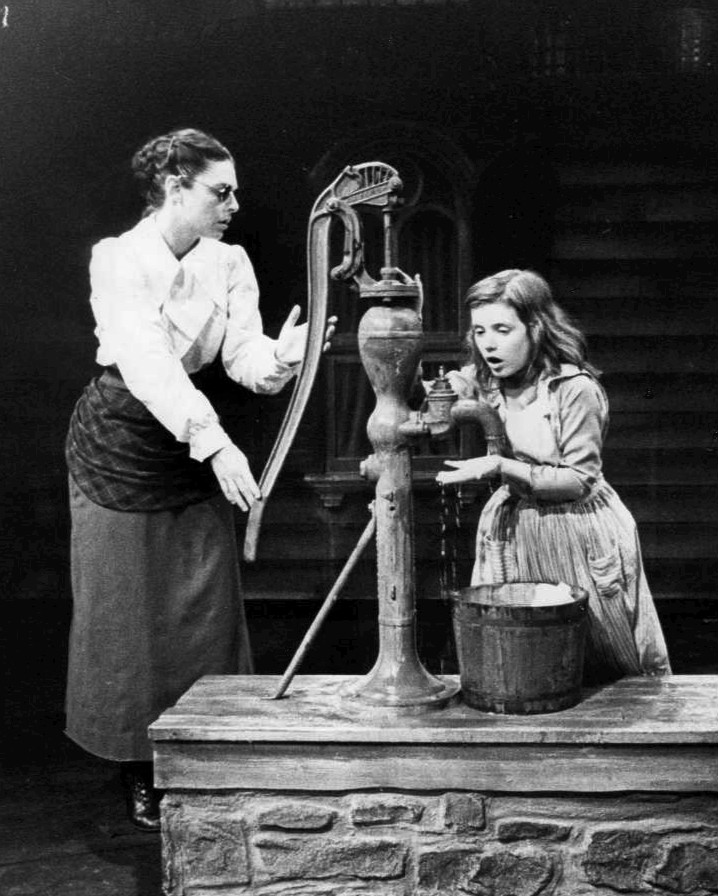
Eight Benefits for Students When Reading Plays


#2 Nurturing Critical Thinkers

Plays are intricate puzzles waiting to be unraveled. The layers of dialogue, symbolism, and character development offer an intellectual banquet for students. Even our youngest students can read a play and pick out the elements of literature--setting, conflict, plot and character, etc.   Encourage them to dissect the text, identify underlying themes, and analyze character motivations. This process hones critical thinking skills that extend far beyond the realm of literature.

Language Proficiency Beyond the Ordinary

Plays are a linguistic treasure trove, showcasing diverse forms of language from various eras and cultures. By exposing students to the rich tapestry of language found in plays, you’re fostering students to build a versatile vocabulary. Through the acquisition of new words and expressions students’ hone their communication skills which better equips them to communicate their thoughts and feelings.

Eight Benefits for Students When Reading Plays

#3 Plays and Time Travel through Text

History books offer facts; plays transport students back in time. Through the lens of playwrights’ words, students can experience different time periods, cultures, and societal norms. This immersive experience makes history come alive, encouraging students to appreciate the nuances of different eras. Plays have been written about many historical moments in history, science, art, music and so forth.  After 911, there were several plays written from the viewpoint of the firemen who survived the tragedy. One is The Guys.  The Guys tells a story about a New York City journalist who helps a local fire captain write memorial speeches for his men who died in the World Trade Center crisis bowed starring Sigourney Weaver and Bill Murray in January 2002.


Eight Benefits for Students When Reading Plays

#4 Reading Plays Provokes Dynamic  Class Discussions

The themes explored in plays are the stuff of thought-provoking conversations. From social issues to questions about morality, plays provide a perfect platform for discussing complex topics. By reading a play, students can articulate their opinions, learn from diverse viewpoints, and develop the art of respectful discourse. For example, The Laramie Project play is set in and around Laramie, Wyoming, in the aftermath of the murder of twenty-one -year-old Matthew Shepard.   The Laramie Project is known for its powerful portrayal of the complexities of a community’s response to a hate crime, and it has been widely performed and studied to shed light on issues related to LGBTQ+ rights, hate crimes, and social justice.

Eight Benefits for Students When Reading Plays

#5 Play Reading Bridges Generations

Incorporating both classic and contemporary plays bridges the literary gap between generations. Students connect with the enduring themes of the past while appreciating the evolving narratives of the present. She Stoops to Conquer was written in 1773 and is just as relevant today as when it was first produced. The overriding theme of She Stoops to Conquer is how reality is often distorted by social status. Sound familiar?

A recent column in Esquire magazine states, “Sometimes the Truly Rich lose their bearings about how money works for other people. While they have that joyful privilege of viewing money through the filter of what it can do for them, other people see cash as that wad of paper that can get them through the next two weeks.” In She Stoops To Conquer, a rigid English social system effectively encourages people to be someone other than who they really are.

She Stoops to Conquer is a comedy of manners that explores social class, one’s place in society, both socially and economically, and its importance in 18th century England. The characters and their conceptions of these absurd societal rules lead them on a humorous journey in their relationships, by exposing our students to plays which are nearly 250 years old, students learn to appreciate the continuity of human thought and storytelling across time.

#6 Students Skills for Life’s Journey

When students engage with plays, they acquire skills that are essential beyond graduation. The ability to analyze, interpret, and empathize with different perspectives equips them to thrive in diverse environments. They become lifelong learners who approach challenges with a multidimensional outlook.

Eight Benefits for Students When Reading Plays

 #7 Cultivating Creativity

The act of reading plays demands visualization – imagining characters, scenes, and emotions. A good example of this is the play War Horse.  The horse puppet that represents Joey is operated by three puppeteers each night: one at the head, one at the heart, and one at the hind. But this is no ordinary panto horse: when at full flight, the 30-kilogram, life-sized contraption is an imposing force, galloping across the stage. The scenes of Joey fighting in war are magnificent!  This visualization of a living breathing horse demands of us to use our  creativity thereby encouraging students to actively participate in crafting the narrative in their minds. They become co-creators of the story, enriching their imaginative capacities. If you are looking for a lesson concerning The War Horse play, check out:  War Horse Resource

 #8 Transformative Journey Through Reading Plays

I cannot stress enough that incorporating plays into your curriculum is not just about reading; it’s about opening doors to creativity, empathy, critical thinking, and cultural awareness. By introducing students to the world of plays, you’re guiding them on a transformative journey that goes beyond textbooks. You’re instilling a lifelong appreciation for literature, broadening their horizons, and empowering them to embrace the complexities of the world with confidence. I bet you’ll discover more of your students will become involved in their school play productions after they’ve read a few.  They are a perfect bridge. Have your students read any radio theater plays? Check out these blog posts for reasons to read them. Creative Dramatics Lesson Plans: Nine Reasons to Teach Radio Theater or Top Reasons Teachers Succeed When Teaching With Radio Theater

Let’s embrace the world of plays and witness the magic unfold within our classrooms. Your students’ journey into the realm of drama might just be the most enlightening adventure they embark upon.

What plays have your students read?  I’d love to hear from you about them.  Let’s chat!  Contact me at DhcBaldwin@gmail.com

Woman behind DramaMommaSpeaks

Share this:

  • Click to share on Tumblr (Opens in new window) Tumblr
  • More
  • Click to share on X (Opens in new window) X
  • Click to share on Facebook (Opens in new window) Facebook
  • Click to share on Pinterest (Opens in new window) Pinterest
  • Click to share on LinkedIn (Opens in new window) LinkedIn
  • Click to email a link to a friend (Opens in new window) Email
  • Click to share on Reddit (Opens in new window) Reddit
  • Click to share on Pocket (Opens in new window) Pocket
  • Click to share on Telegram (Opens in new window) Telegram
  • Click to share on WhatsApp (Opens in new window) WhatsApp

Like this:

Like Loading...

Filed Under: arts education, arts integration, drama education, drama integration, Education, excellence in teaching, High School, play reading, Reading Literacy, reading skills, theatre Tagged With: class, high school, language arts class, Middle school, play reading, reading class, reading plays, She Stoops to Conquer, The Diary of Anne Frank, The Laramie Project, War Horse

The Reasons Reader’s Theater is Successful with Our Students

December 6, 2019 By dhcbaldwin 8 Comments

The Reasons Reader’s Theater is Successful with Our Students

When I was a little girl, I loved to read aloud.  I was good at it, too!  I think it’s where I realized performing was something I loved because by reading aloud it gave me an opportunity to try out characters and voices.

My teachers readily noticed this about me, too. As a result, I was always asked to read aloud.  I felt very special at the moment.

Because I am very creative and drill work absolutely bores me, I wasn’t always the best student.

But reading aloud?  Oh, that’s so me….

I was looking around the internet to find some other educators (which there are many) who believed as strongly as I do about reading aloud.  My favorite method is through reader’s theater.

In case, you are unfamiliar with Reader’s Theater here is a good definition from the Education World website, a wonderful retired Language Arts Teacher,

“In Reader’s Theater, students “perform” by reading scripts created from grade-level books or stories — generally without benefit of costumes and props. The goal is to enhance reading skill and confidence through practice with a purpose. Reader’s Theater gives students a real reason to read aloud.

“A great deal of fluency research reiterates the need for repeated reading,” reported Finney. “Without fluency, there is little comprehension; the value of Reader’s Theater is increased tenfold when used as a strategy for increasing understanding of what is being read.”

Reader’s Theater motivates reluctant readers and provides fluent readers with the opportunity to explore genre and characterization.”

Yes, yes and one more yes!

Reader’s Theater motivate reluctant readers and provides them a safe environment.  They can actually “hide” behind a script.  As they focus on the script, they become unaware of reading aloud in front others.

Here are the Reasons I think Reader’s Theater Works:

  1.  It strengthens one’s reading–repeated reading of words makes them familiar.
  2.  It’s a safe way to involve reluctant readers.
  3.  Generally, the stories are short and highly engaging.  (No one wants to read a boring script aloud!)
  4.  It’s a great way to read different genres without having to commit to an entire book.
  5.  It “feels” like you are performing, but in a non-threatening manner.
  6.  Because students feel safe, their inner performer is more likely to emerge.

My only advice: I wouldn’t suggest putting kids on a stage to try out reader’s theater.  You have just shot yourself in the foot!  I promise, it won’t go well.

The Reasons Reader’s Theater is Successful with Our Students

Here is more from Education World.

Judy Freeman a literature consultant states,

“Reader’s Theater allows children the luxury of lingering over a story; acting it out many times so they come to understand all its nuances,” Freeman explained. “Too often, children read a story and only understand it at its most superficial literal level. With Reader’s Theater, they’re not just reading a story; they’re living it.”


“Always perform a Reader’s Theater script at least twice,” she advises. “The first time, the children will be struggling with words and their meanings, and with making sense of the play. It’ll be rough, but who cares? The second time, they’ll be able to focus on enjoying the performance and their parts in it. You can, if you wish, carry it further, adding props, costumes, and scenery; memorizing lines; or even putting on the play for other groups. You don’t have to, though. It’s the process that’s important here, not a finished product.”

That’s an important statement–it’s not a finished product.

To sum up in one phrase–Reader’s Theater allows for trial and error when reading.

Multicultural Folk Tales Reader’s Theater Scripts

I’ve penned several reader’s theater scripts.  Each is based on a multicultural folk tale.

Reader’s Theater:  The Sprightly Tailor

If you are looking for some different reader’s theater scripts, I’m your gal.  Because of my extensive experience teaching and directing (38 years–yikes!), you can trust the quality of these scripts.

AND HERE’S SOMETHING ELSE…

Each of these units comes with original songs written especially for the piece.  How cool is that?

This is not just a script, it’s a unit!

Here’s what you receive:

  •  Letter to teacher
  •  Warm up exercise
  •  Advice in directing reader’s theater
  • Blocking plot for teacher’s staging needs
  •  Scripts with roles for large classes
  • Original song

Does this sound good to you?  Check them out at:  Dramamommaspeaks Store

Here’s a new bundle you may enjoy:  Comical Reader’s Theater Scripts and Units

The Reasons Reader’s Theater is Successful with Our Students

When I taught at Smithton Middle School in Columbia, MO I used reader’s theater with an after school Drama club for ESL students.  This was about fifteen years ago.  At the time I used one of Aaron Shepherd’s scripts.  They are terrific.

Another time, I used a reader’s theater script version of Holes.  We invited reluctant readers to be involved.  I asked several administrators and teachers to play the adult roles.  It was absolutely awesome and we performed the script for the entire school.

What a boost in self confidence this was for those boys.

I co-created a youth theater program in Columbia as well–P.A.C.E. or Performing Arts in Children’s Education. We performed A Christmas Story as a stage reading.  Stage readings are very similar to reader’s theater.  You might think performing with script in hand would distract or detract from the performances.  Nope.  The audience loved it anyway.

So, I hope you’ll give reader’s theater a try whether you are in a drama class, high school language arts or social studies.  It’s not just for elementary students anymore.

What reader’s theater have you done in your class?  I’d love to hear about it.  Contact me at dhcbaldwin@gmail.com or DeborahBaldwin.net
Deborah Baldwin, Dramamommaspeaks

Abdullah's Gold
Abdullah’s Gold
The Little Girl and the Winter Whirlwinds
Saturday, Sunday and Monday
It Could Always Be Worse
Li Chi the Serpent Slayer
Sedna, an Inuit Tale
The Brave Little Tailor

Share this:

  • Click to share on Tumblr (Opens in new window) Tumblr
  • More
  • Click to share on X (Opens in new window) X
  • Click to share on Facebook (Opens in new window) Facebook
  • Click to share on Pinterest (Opens in new window) Pinterest
  • Click to share on LinkedIn (Opens in new window) LinkedIn
  • Click to email a link to a friend (Opens in new window) Email
  • Click to share on Reddit (Opens in new window) Reddit
  • Click to share on Pocket (Opens in new window) Pocket
  • Click to share on Telegram (Opens in new window) Telegram
  • Click to share on WhatsApp (Opens in new window) WhatsApp

Like this:

Like Loading...

Filed Under: arts education, drama education, excellence in teaching, play reading, Reading Literacy, reading skills, Teacherspayteachers, teaching strategies, theatre Tagged With: creative dramatics, elementary drama, middle school drama, reader's theater, reading class, reading strategies

Why Radio Theater Works: 9 Drama Lesson Benefits

September 8, 2018 By dhcbaldwin 2 Comments

Girls sitting around reading a radio theater play


Why Radio Theater Works: 9 Drama Lesson Benefits

Today, I want to talk about why radio theater works: 9 drama lesson benefits, In high school, I had a fan girl crush on John Boy of “The Waltons.” Maybe you don’t know of the television show, but I bet you can find it running somewhere on television. This birthed my love of radio theatre.

To begin with, part of the mystique of the show was the time period  (during the Depression) of  which the show was set.  How I could romanticize the time period, I’ll never know but I kinda think it’s because of John Boy. Also, I thought it was very heart warming when the family sat around the radio and listened to the evening radio show.

Anyway, back to the reasons I’m blogging about this topic.

Want a FREE guide and lesson plan for elementary students?  Click here Guide

Why Radio Theater Works: 9 Drama Lesson Benefits

Why Radio Theater Works: 9 Drama Lesson Benefits

At that point, I’d taught radio theater for over twenty years.  However I am  amazed by how many people in this day and age still don’t know much about the media.

I’m going out on a limb here, but really friends,  if you need an unusual creative dramatics lesson plan try radio theater, because–

  1. It’s creative
  2.  A perfect example of differentiated instruction.
  3.  Listening skills are strengthened–listening for one’s cues, creating sound effects by focusing one’s attention to them
  4. Speaking skills are polished–enunciation, rate of delivery, and diction come in to play when a student reads aloud
  5. Reading skills are cultivated–when a reader reads something repeatedly, they can’t help but become a better reader
  6. Language skills are honed–students become better communicators
  7. Cooperative learning is such a necessary part of this study
  8. Many of the radio theater play scripts I teach with are from previous eras–what a super way for students to learn about the past
  9. It’s just plain fun!

Although I use radio theater in my drama classroom,  I am acquainted with several teachers who have implemented it in the language arts and social studies/ history classes as well. Looking for other reasons to teach radio theater?  Check out this post: Top Reasons Teachers Succeed With Teaching Radio Theater

Why Radio Theater Works: 9 Drama Lesson Benefits

From History to Fiction—Radio Theater Brings It All to Life

How about these subjects?

  • The Hindenburg Disaster
  • D-Day Invasion
  • War of the Worlds
  • Japan Attacks Pearl Harbor
  • Nazis Enter
  • Albert Einstein Speaks on the Importance of the Radio
  • Winston Churchill’s Speech, “We Shall Fight on the Beaches”
  • John F. Kennedy and the Cuban Missile Crisis
  • And countless more!

There are scripts of classic books (Sherlock Holmes, Oscar Wilde, H.G. Wells) and historical moments, some fictionalized.  Today I found one about Abraham Lincoln.  How great!

For instance, you take any book they enjoy and turn it into radio theater.  Or maybe you use a particular fairy tale and present it as radio theater.  You see? The ideas are endless.  

If you are interested in more information about radio theater and radio plays, check out my Radio Theater Unit.  Additionally, I developed it so teachers can use it to complement their teaching of a particular script of their choosing.

Why Radio Theater Works: 9 Drama Lesson Benefits

A Humorous, Original Radio Play Script For You

If you’d like to see a preview of my middle grades radio play, Bow Wow Blues, check it out Bow Wow Blues Radio Theater Unit . 

If you’d like to hear Bow Wow Blues performed by students, check out: https://youtu.be/ouj4Ui5M2Eo

This TEN DAY unit, nearly 30 pages in length, is suitable for middle and high school drama classes or elementary gifted classes study creative dramatic and includes:

       • a lesson on the history of radio theatre,
       • information about Foley engineers
       • three links to video clips of Foleys
      • student created sound effect project
      • five links to radio play performances (some vintage and some recent)
      • a lesson in writing and producing radio commercials
      • links to four commercials and two acting exercises focused on sound effects
      • procedure plan to follow throughout the unit
      • teacher’s questions
      • sound effects quiz
      • a student group example of a radio commercial
      • trivia about radio theater stars

Here is a production by an ESL class in Tbilisi Georgia. They did a wonderful job! 
https://soundcloud.com/user-719594153/albums

Or may you’d like a bundle of them:  Radio Theater Bundle


There are individual scripts available too.

The Invisible Man

Looking for something to spur conversation about our personal perceptions of ourselves and how the world sees us?  Based on the story by H.G. Wells, The Invisible Man is a terrific play to use with your students. Consisting of a cast of  17 + with roles for both experienced and novice actors including several Foley engineers, a pitchman and music tech., the  play runs about 25 minutes with commercials.

The Canterville Ghost–a Popular Radio Play of Mine

The Canterville Ghost

Here’s one school’s version of The Canterville Ghost! https://youtu.be/BqFpChUkPbA

If your students interested in something spooky, but fun then The Canterville Ghost is a great choice.  The Canterville Ghost radio play is based on the novella by Oscar Wilde has a cast of 15 +.  There are roles for experienced performers and novices, several Foley engineers, a pitchman and music tech.  The play runs about 30 minutes including commercials.


Radio Audio Drama Script Halloween The Frozen Pirate Horror Foley Engineer

I ran on to this script and was ecstatic because it includes pirates, mystery and fun.  My husband, who is a instrumental music teacher, composed a song for the pirates to sing (optional, of course) but it makes it so engaging.  It’s scary and creepy and loads of fun.  The play runs about thirty minutes.  

The Frozen Pirate

I really enjoyed adapting this radio play.  Plus, I’m hoping students will enjoy the subjects–pirates, stolen treasure and mystery!   The Frozen Pirate is based on the novel by  nautical author William Russell  and requires a cast of 15 +.  My husband, an instrumental music teacher and composer, created a sea shanty reminiscent of songs from the time period, too!  There are roles for experienced performers and novices, several Foley engineers, a pitchman and music tech.  The play runs about 35 minutes including commercials. 

And lastly, I offer all of these radio plays as a set.  So, for example a teacher gets The Canterville Ghost AND the teaching materials for radio theater (Or they can purchase The Invisible Man with its teaching materials and so forth.)

A middle school grade appropriate comical radio drama script sample.

Bow Wow Blues, my last product listed here is an original comedy I penned for my class.  It’s  full of humor, puns, funny characters and a quick moving plot.  Students love it!  I’m so glad.  P.S.  The free sample if you’d like to take a look at it. 

Language Arts Classics Turn Radio Plays

If you are looking for classics, how about The Cask of Amontillado or the Monkey’s Paw?


​

Check out my guidebook concerning teaching students with radio theater: We’re Live! Radio Theater #101 So many choices, huh?

Guess what?  Now I have begun creating radio theater scripts for grades three to five.  Here are two:

Check out other products of mine at: Dramamommaspeaks Teacherpayteachers

What experiences have you had with radio theatre?  I’d love to hear about them.  Contact me at dhcbaldwin@gmail.com or DeborahBaldwin.net

Woman behind DramaMommaSpeaks

For more information about other drama education products, check out these posts:

Stage Properties are a Lesson in Wonderous Creativity

The Drama Exercise to Jazz Up Your Class and Impress Your Parents

The Ultimate Guide for Drama Teachers: Creative Movement? Are you kidding me?


Share this:

  • Click to share on Tumblr (Opens in new window) Tumblr
  • More
  • Click to share on X (Opens in new window) X
  • Click to share on Facebook (Opens in new window) Facebook
  • Click to share on Pinterest (Opens in new window) Pinterest
  • Click to share on LinkedIn (Opens in new window) LinkedIn
  • Click to email a link to a friend (Opens in new window) Email
  • Click to share on Reddit (Opens in new window) Reddit
  • Click to share on Pocket (Opens in new window) Pocket
  • Click to share on Telegram (Opens in new window) Telegram
  • Click to share on WhatsApp (Opens in new window) WhatsApp

Like this:

Like Loading...

Filed Under: creative dramatics, drama education, excellence in teaching, Radio Theatre Tagged With: bow wow blues, differentiated instruction, home school, radio plays, reading class, the canterville ghost, The frozen pirate, the invisible man

Footer

Follow Us

logo3.png

FOLLOW US

Facebook X-twitter Pinterest Instagram Envelope Rss

Goodreads: read

Malibu Rising
Malibu Rising
by Taylor Jenkins Reid
People We Meet on Vacation
by Emily Henry
The Last Thing He Told Me
by Laura Dave
Faking It
Faking It
by Cora Carmack
Losing It
Losing It
by Cora Carmack

goodreads.com
Copyright © 2024 · Wellness Pro on Genesis Framework · WordPress.com.Log in
 

Loading Comments...
 

    %d