• Skip to primary navigation
  • Skip to main content
  • Skip to footer

Join Me in my new Facebook Group! https://www.facebook.com/groups/417126059784261

Menu
  • Meet Deb – The Heart Behind DramaMommaSpeaks
    • Work with Me! 
    • Photo Gallery of DramaMommaSpeaks
    • Directorial Credits
  • I Give Book Talks! 
    • Book Talk Through Skype
    • Books
  • Freebies!
  • Bumbling Bea
  • Teaching Resume
  • Acting Resume
  • Contact Me
  • Blog
    • Drama Education
    • Arts Education
    • Youth Theatre
    • Middle Grades
    • Musical Theatre
    • Teaching
  • Meet Deb – The Heart Behind DramaMommaSpeaks
    • Work with Me! 
    • Photo Gallery of DramaMommaSpeaks
    • Directorial Credits
  • I Give Book Talks! 
    • Book Talk Through Skype
    • Books
  • Freebies!
  • Bumbling Bea
  • Teaching Resume
  • Acting Resume
  • Contact Me
  • Blog
    • Drama Education
    • Arts Education
    • Youth Theatre
    • Middle Grades
    • Musical Theatre
    • Teaching

Archives for 2022

Five Winter Themed Drama Lessons You Should Try

December 21, 2022 By dhcbaldwin Leave a Comment

Evergreen branch with snowy rain drops close up.

The topic of five winter themed drama lessons you should try sounded like something I should blog about today. By the next time I blog, it will be 2024!  Wow, time has really flown this year. If you want something with a Christmas theme, check out: Drama Units Christmas Theme Bundle

I’m not a big fan of the whole new year’s celebration thing.  In my family, all we did was change the calendar to the next month. Exciting, huh?

However, I know teachers are always looking for thematic units to brighten up the winter months.  This post concerns new years and winter units using drama as the tool for discovery.

Five Winter Themed Drama Lessons You Should Try

A Story of Generosity

This is one of the only folk tales I’ve found to celebrate the new year. I like the story so much that I’ve created two short class plays of it!

This charming play, based on a Japanese folk tale Oji San and the Grateful Statues share the themes of New Year, multiculturalism, winter, kindness and forgiveness. Students strengthen their study of another culture, reading (fluency), speaking (diction) and listening skills (restating) while learning to work cooperatively. This is excellent and very suitable piece for a vocal music, social studies, reading, language arts or drama class.

Once upon a time, there was an older Japanese couple who make straw hats which they sell at the market every day.  It is a struggle for them to make ends meet, but they greet each day with gratitude and kindness to everyone.  On New Year’s eve the man goes to market and no one buys a hat. As he walks home, dejected and worried, beautiful snow begins to fall.  When he passes the stone statues which sit on the wall near his house, he notices that the snow is falling on their heads and decides to give the statues the unsold hats to protect them from winter’s harshness.

Ojisan and the Grateful Statues

Five Winter Themed Drama Lessons You Should Try

His wife doesn’t understand her husband’s actions, but forgives him.  In the night a knock at the door awakens the couple.  To their amazement, a large rice cake is sitting there, though they don’t know who left it.  Off in the distance, they see the statues slowly walking back to their place on the wall.  It’s such a sweet story.

Students will have an opportunity to dramatize a folk tale using many of the elements of drama, create straw hats, design snowflakes, sing an original song written in a pentatonic scale and use their imaginations to express emotion through movement.

Five Winter Themed Drama Lessons You Should Try

In all honesty, I’m all about arts integration–it’s my goal for every classroom to integrate drama into their learning to some degree.  Ojisan and the Grateful Statues is a perfect choice to use as an integration. Contact  your vocal music teacher and present the play together! Your students can sing and accompany the song with metallophones, xyllophones and percussion.

You can find Ojisan and the Grateful Statues here.

Five Winter Themed Drama Lessons You Should Try

Chinese New Year Celebration

Maybe you want something to celebrate the Chinese new year.  Although this story is not directly related, it is a super story to dramatize.  I have three lessons about–one is a readers theater, one is a play and one is an entire unit.

Li Chi The Serpent Slayer is based on an old Chinese folk tale about a young girl who lives with her family in a small village.  Every few years, a serpent terrorizes her village and drags off one of the young women for his dinner. Everyone is fearful. No one wants to fight the serpent, but Li Chi asks her parents if she can fight the serpent. Want to learn about some other multicultural plays? Check out: The Reasons Teaching Multiculturalism in the Classroom is Vitally Important

Li Chi the Serpent Slayer

Li Chi is a fierce young woman with a quick wit who is cunning and brave.  Her parents deny her this chance and forbid her to go. Even so, Li Chi slips out at night with her dog and climbs the mountain to the serpent’s cave.   This time instead of a girl dying at the feet of the serpent, Li Chi outsmarts it. Li Chi the Serpent Slayer is full of plot twists.   And it’s even more special because the main character is a female! With themes of bravery, love of family, love of community and several others The Little Girl and the Winter whirlwinds is one to beat!

You can find Li Chi the Serpent Slayer here:


Five Winter Themed Drama Lessons You Should Try

A Story of Courage

Here is another story, this time a Bulgarian folk tale which shares a delightfully, sweet story about a little girl who saves her village during the late months of winter. As with Ojisan, there are other version of this story as well. With roles for 25+ The Little Girl and the Winter Whirlwinds shares themes of winter, generosity and courage. Perfect choice for students studying the culture of Slavic countries and/or Europe in a social studies or a drama class. you can find it here:

The Little Girl and the Winter Whirlwinds

The story, a Bulgarian folk tale, of The Little Girl and the Winter Whirlwinds goes like this–A wicked Winter Witch decides to stop Spring from arriving on time and makes Winter the only season on Earth. She hides the Sun behind dark clouds and covers the Earth with heavy snow. One morning the people from a small mountain village awake and fing their houses buried under the snow up to the roofs.

The people decide that the best thing to do is to send someone to the highest mountain peak, where the good wizard Father Frost lived in his palace of ice and ask him for help. Surprisingly, the Little Girl volunteers to go because she has very little to hold her back.  She believes her warm heart and love for everyone will melt the snow and bring spring. She never considered all the obstacles that would she would meet along her way. Full of varied characters of sizes The Little Girl and the Winter Whirlwind is a lovely story.

Again, we’ve added music to this play and teachers seems to like this aspect.  Since this story ends as Spring arrives, it would be perfect for February or even March.

Since first blogging about this subject, I’ve created additional resources to celebrate winter in the classroom. 

The Great Santa Suit Snafu — A Winter Readers Theater Your Students Will Love

Looking for a lively winter activity that builds reading fluency and keeps your students engaged during the busiest time of year? The Great Santa Suit Snafu is a classroom-friendly Readers Theater script that brings humor, mystery, and teamwork together in one festive package. It includes twelve speaking roles with room for extras and sound effects crew.

The Story:  Only one day before Christmas Eve, the elves discover that Santa’s magical suit has shrunk! A frantic team of reindeer, elves, and Mrs. Claus tries everything—from sewing disasters to “unjingling” Jingle Bells—in an attempt to save Christmas. With witty characters, playful dialogue, and an upbeat ending, students will love performing this holiday comedy. (Even includes musical score to help you learn it!) I’ve even included the lyrics to Unjingling the Bells so you won’t have to work too hard to teach it!

Because Readers Theater requires no memorization, costumes, or special materials, it’s ideal for December lessons, substitute plans, or that energetic week before winter break. The script is written especially for upper elementary and middle school students, with clear character cues, accessible vocabulary, and plenty of comedic moments that make even hesitant readers want to participate.

Five Winter Themed Drama Lessons You Should Try

Sometimes, my husband and I get crazy ideas.  Rudolph the Rapping Reindeer is one of them.

The story:  Rudolph discovers a unique talent for rapping, bringing a fresh beat to the North Pole just before Christmas Eve. While Santa and the other reindeer are skeptical at first, Rudolph, with the help of the beatboxing elves Twinkle and Jingle, teaches the team to groove and find their rhythm.

Even Blitzen, who struggles to rap, taps out a steady beat with his hooves to keep everyone on track. The fun reaches its peak when Mrs. Claus surprises everyone by unleashing her own wild freestyle rap.

With teamwork and holiday cheer, Rudolph and the crew take flight, spreading joy and beats across the world in the most unforgettable sleigh ride yet.

This 10–12 minute holiday play is perfect for grades 4-6, with 12 speaking roles and room for a chorus.  It  combines humor, teamwork, and joyous fun with a unique musical twist!

Need a good laugh? 

Five Winter Themed Drama Lessons You Should Try

The February Doldrums

Want something fun for early February?  Get everyone out of the winter blahs with this fun musical. Best for high school students, Ground Hog Day is based on the film of the same name.  Laugh your way through the learning! You can find it here.

Ground Hog Day the musical is about Phil Connors, a cynical Pittsburgh TV weatherman, who is sent to cover the annual Groundhog Day event in the isolated small town of Punxsutawney, Pennsylvania, when he finds himself caught in a time loop, forced to repeat the same day again and again…and again. Note:  This musical because of language is more suitable for high school students. 

The music is great and the story line is funny. We’ve all thought about what it would be like to go back and do something differently, haven’t we? I know I have.

The unit includes everything a busy teacher would need in order to be successful:  themes of the musical, plot, synopsis, creative staff biographies, Broadway and musical trivia, student questions (with a teacher’s key) and several enrichment activities to secure the learning.

Five Winter Themed Drama Lessons You Should Try

Hello Spring!

One more unit that I think your students will find fun is Buddy and the Evergreen Trees.

Buddy is a little blue bird with a hurt wing. When winter comes, his selfish and thoughtless bird friends leave him behind. Consequently, Buddy is sad, very worried and hurt by their leaving. A group of evergreen trees hear him saying good bye to his supposed friends and decide they want to help him. They befriend Buddy and invite him to live in their tree limbs until winter passes. Buddy heals over the winter delighting in living in the snowy evergreen trees, his new friends. This story teaches the themes of winter, friendship, compassion and generosity. You can find it here. 
File:In the winter forest (5431146866).jpg

Hello Every Month!

Recently, I found this folk tale and thought it was would be a perfect readers theater unit.  Why? First, there are many speaking roles!  The story will remind you of Cinderella to some degree.  It has a parable that could lead to a class discussion topic.
The Twelve Months reader theater unit and  story concerns a young and beautiful girl (called Marushka in some variations) who is sent into the cold forest in the winter to perform impossible tasks by her evil stepmother. She must get spring violets, summer strawberries and fall apples in midwinter as presents to give her stepsister for her birthday. On her journey, she meets a group of magical people who are the personification of the twelve months of the year.
When she returns home with the strawberries, her step mother and sister don’t believe her.  Finally, the step sister becomes so engaged with anger, she decides that she will go up into the snowy mountains by herself.  Little did she know, her rudeness would come back to ruin her.
Five Winter Themed Drama Lessons You Should Try
As always, I hope your 2023 year begins with much promise, joy and lots of fun teaching moments.  Teaching and learning should be fun, I believe.  It’s my hope that if you pick up these units, I’ve helped you to do so.
Drama Readers Theater Scripts Folk Fantasy Fairy Tales Literature Toolkit
Save money!  Pick up this bundle here:  Drama Readers Theater Scripts
What units do you teach during the winter season?  Anything thematic?  I’d love to hear about it.  Contact me at DhcBaldwin@gmail.com with your ideas.
Click here:  We’re Live! Radio Theater #101
Happy New Year!
Five Winter Themed Drama Lessons You Should Try


Share this:

  • Share on Tumblr (Opens in new window) Tumblr
  • More
  • Share on X (Opens in new window) X
  • Share on Facebook (Opens in new window) Facebook
  • Share on Pinterest (Opens in new window) Pinterest
  • Share on LinkedIn (Opens in new window) LinkedIn
  • Email a link to a friend (Opens in new window) Email
  • Share on Reddit (Opens in new window) Reddit
  • Share on Telegram (Opens in new window) Telegram
  • Share on WhatsApp (Opens in new window) WhatsApp

Like this:

Like Loading...

Filed Under: arts education, arts integration, community theater, drama education, drama integration, Education, Education, elementary, excellence in teaching, middle grades, New Teacher, plays, Teacherspayteachers, Teaching, theater, youth theatre Tagged With: Bulgarian folk tale, gifted and talented, ground hog day, language arts, reading, social studies, the months of the year, upper elementary, winter

What No One Tells You About Creating An On-Line Course

December 2, 2022 By dhcbaldwin Leave a Comment

Woman sitting on a sofa filming herself like she is teaching an on-line class

What No One Tells You About Creating An On-Line Course

Woman behind DramaMommaSpeaks

Today I want to talk about what no one tells you about creating an on-line course. I can’t believe I am finally to a place where I can blog about this subject. I’m not kidding when I say I’ve been creating an on-line course for nearly a year.

In September of 2021, an idea to create an on-line course crept into my mind and I couldn’t shake it.  I happened to put it out there that I’d like to create a course which would complement a particular category of units in my Teacherspayteachers store. Building an on-line course seemed the next step in my business and I still think this was a good idea.

I’m fortunate in that I’m a student in a wonderful company called SBZ Enterprises. They taught me how to amplify my presence in social media through their course focused on Instagram.  If you don’t know much about the Instagram and how to market on it, I’d suggest you take this course. You can find it at: SBZ Enterprises

What No One Tells You About Creating An On-Line Course

Ironically, at the time I was considering this on-line course idea, SBZ was offering an affiliation with Digital Course Academy owned by Amy Porterfield.  Would I be interested in taking the course with them?  I excitedly agreed to do so, but really I had no idea what in the world I got myself into.

Persevering as I often do when I learn outside of my comfort zone, I enrolled with Morgan Sutton, CEO of SBZ as my mentor through the training. Morgan has been invaluable help in many ways and I will always be grateful for her support and confidence in me.

What No One Tells You About Creating An On-Line Course

What is Digital Course Academy?

DCA is an on line course which teaches you how to create a webinar for an on-line course you are selling.  At the same time I began creating my course, I studied DCA’s trainings.  Talk about information overload! I mean, I’m not going to quit just because I’m in deeper than I meant to be. I finished the DCA course in December and decided that although I understood the concepts of webinar development, I needed to concentrate on my own on-line course before I could create a webinar for it.

Some people create the course as they develop their email list.  In DCA you are encouraged to develop your course through the help of your email followers, gaining their insights and suggestions as you create it.

What No One Tells You About Creating An On-Line Course

My ideal client is a teacher who teaches theater or a core subject who wants to sharpen their teaching skills.  I all ready knew teachers don’t have time to give me feedback, especially over several months as we fleshed out the course. Nonetheless, I was advised to survey my email list and make the first three modules of my course, so I did so.

I had seven beta testers for the course back in August.  Not one of them completed the three module course.  Not one.  That disturbed me to say the least because personally I finish commitments even if I don’t want to. Morgan assured me it happens a lot in a situation like this.  Cray cray is all I can say.

I was naïve

I planned to unveil my course ready by January of 2022.  Oh my gosh, that was a ridiculous goal I could never accomplish.  However, I didn’t know that at the time.  In March I decided I’d hold my first webinars for the course.  As the days and weeks wore on, I realized I needed another month to make ready everything. Again, I was so clueless.

It took me eight more months. Course creation can be a time suck, so if you are considering creating a course you need lots.of.time. 

During those months, I built up my email list, put out more lead magnets for said email list, built sales pages for the webinar, created ten modules with guides for each and tried to hold three webinars.  I followed the launch sequence for the webinar, too.

Everything appeared ready to go.  What a flop!

Looking for a few free lessons from me? Or maybe a radio theater checklist?  Check out this Free Stuff!


What No One Tells You About Creating An On-Line Course

What No One Tells You About Creating An On-Line Course

You know how sometimes in your life, something stops you in your tracks and you can’t move on?  These webinars were a failure because of reasons some of which I can’t control.  My advice?  Only use Zoom to hold your webinars and no one else.  The company I selected for the first webinars completely messed up the dates and times of my webinars so the thirty people who signed up thought the webinars were cancelled. And you know, once your customer is confused they are leery to attend another webinar or buy your product.

Course Creation Takes More Time Than You Think

Licking my wounds for a couple of months I sat on the course. I wasn’t disillusioned but disappointed.  I hoped that my webinars would attract teachers and I wouldn’t have to spend any more time on the course creation. I was so wrong. At that point, I cared more about people attending than any money I could make.  In fact, I’m still of this belief.  Money comes if it’s supposed to–that much I know.

In September I finished creating the course--all ten modules and ten guides. We (my dear husband and I) completed the recordings in early November, tweaking everything as time progressed.  In the meantime, several hundred teachers joined my email list and I think I’m getting the right audience for the course.

What No One Tells You About Creating An On-Line Course

Course Creation is Expensive

When you consider creating a course, there are expenses that no one tells you about for reasons unknown to me. Some of the expenses I never considered before beginning my course creation because I had no idea of all the details of doing this.  In hindsight I guess I should have researched the idea more fully before I began.

I use these platforms

  • course creation (Canva)
  • platform to hold course (Samcart)
  • payment page  (Samcart)
  • payment processing platform (Stripe)
  • sales page (Ontraport)
  • emails    (Ontraport)
  • recording equipment (I was lucky here, as we owned good recording equipment from a previous project.)

Webinar Building is Expensive Too

Building a webinar has its expenses, too.  Honestly, I didn’t know if Digital Course Academy is expensive, but there are extra (though optional) expenses involved if you use it. (Such as a course about email list building, for example.) These courses  really do help you.  Once the dust settles on this experience, I plan to re-enroll in some of Amy’s courses so I can pick up more tips. She’s really a gold mine of help!

Another expense–you need a platform for on-line meetings such as webinars and meetings with your students. I use Zoom because it’s the most respected and reliable.

Getting the word out about your course is a must–social media helps with that.  You need to publicize both the webinar and the course.  In my case, I use every available free platform–Instagram, Facebook, Pinterest. Linkedin.

If you have a blog and website as I do some of their costs play into this.  So, I must count WordPress and Wix for my blog and website and being seen on Linktree,etc.

What’s the Course?

What No One Tells You About Creating An On-Line Course

My course is titled,  “We’re Live! Radio Theater 101”–a step by step blueprint using a unique teaching tool to engage students when you’ve tried everything else. Interested? Email me at DhcBaldwin@gmail.com

This week I announced the course is open and available for purchase.  To be honest, I hate this part because I can’t control the outcome. I could wax philosophical and discuss how I don’t think we actually control anything, but you get the idea.

What No One Tells You About Creating An On-Line Course

One of the most difficult challenges is making a paradigm shift in teachers who think they can’t possibly use this in their classroom. They worry that they are expected to be a theater teacher and director, but I can assuage their worries. My guess is that I will probably spend a lot of time for the next month convincing teachers.

As of this writing, the webinars are planned for January when the teachers’ brains are rested and more apt to be open to new ideas. I know one thing for certain–it’s the cheapest it is every going to be. Once I begin the webinars, the course will cost more than it does at present.

I hope this helps you.  It’s been good for me to write down my thoughts about it–that’s for sure.  Have you created an on- line course?  How did it go for you?  Would you do it again?  Feel free to email me at DhcBaldwin@gmail.com

Woman behind DramaMommaSpeaks


Share this:

  • Share on Tumblr (Opens in new window) Tumblr
  • More
  • Share on X (Opens in new window) X
  • Share on Facebook (Opens in new window) Facebook
  • Share on Pinterest (Opens in new window) Pinterest
  • Share on LinkedIn (Opens in new window) LinkedIn
  • Email a link to a friend (Opens in new window) Email
  • Share on Reddit (Opens in new window) Reddit
  • Share on Telegram (Opens in new window) Telegram
  • Share on WhatsApp (Opens in new window) WhatsApp

Like this:

Like Loading...

Filed Under: Arts, arts education, e-learning, Education, Education, Radio Theatre, Teaching, teaching strategies, theater, theatre, youth theatre Tagged With: digital course academy, on line course, radio theater, suebenterprises

Youth Theater Musical Rehearsal: What You Need to Know

November 9, 2022 By dhcbaldwin Leave a Comment

This blog posts concerns how to rehearse a musical in youth theater.

The Youth Theater Musical Process: What You Need to Know

The youth theater musical process: what you need to know is one of those subjects you figure anyone who has acted at least once will know. Not so. This is a two part post. Here is the first post. The Steps in a Play Rehearsal in Youth Theater. 

Lately, I’ve read several posts from newbie teachers with no idea about the steps of the rehearsal process for a musical.  That seems odd to me, but maybe they are teachers whose focus is Language Arts or Social Studies? I know that sometimes the administration will ask a non-theater teacher to direct the school play or supervise the drama club, so that could be the reason for the unfamiliarity.

Regardless, I will take you through the process for a musical.  You can depend upon this process to prepare your young actors because I’m an expert in directing youth theater.  Having directed over 350 plays and musicals with both adults and children, I know the process like the back of my hand. Looking for a free lesson?  Go Here.

Youth Theater Musical Rehearsal: What You Need to Know

Step One: Selecting the Script

Before you, the director, do anything you of course must read several scripts and select the one you like the most. This needs to occur at least six months in advance–don’t wait on this decision. (Why?  Because everyone and their dog is getting rights to productions.) I suggest you check out: Music Theater International or  Concord Theatrical, but there are many more just as good. 

First, I’d look over the music and make certain you have students who can sing the roles. Check vocal ranges, too.  Musicals are notorious for having many scene and costume changes, so be on the look out for those needs.  All that will matter when you begin to mount the production.  I have a lot of experience with Music Theater International.  Check out this post concerning my opinion of them:  MTI Junior Musicals– A Dream Come True!

After you’ve chosen the musical, you may want to announce it to your students.  When?  It depends upon when you plan to announce it and when the production is to be performed.  Me?  I announce a month ahead of the auditions and no sooner. You need to decide whether you want your students to audition with songs for the musical.  If so, have photocopies of those songs available to the students.

The Youth Theater Musical Process: What You Need to Know

Step Two:  Auditions

Auditions for musicals contain three parts–singing, dancing and acting.  They will take several days to complete.

In the singing audition, will you audition students individually or in groups?  Make sure you have thought about if a non singer can be cast in a singing role and vice versa.

How important is it to you that the cast be able to dance?  Is it a tap show?  Are you going to require all dancers have tap dance experience? Will they need tap shoes?  Who will pay for those shoes, your department or the student?  Trust me, you can not learn to tap dance in just six weeks–you can do a few steps in a combination, but that’s asking a lot of non-dancers. This decision is very important.

The Youth Theater Musical Process: What You Need to Know

Youth Theater Musical Rehearsal: What You Need to Know


All School Production

Here is something else–will you accept everyone who auditions to be in the production?  Musicals allow for this much more than a play.  This question could be answered by your mission.  If your mission is to give everyone an opportunity to be on the stage, then auditions will go more quickly than if you are having a set amount of cast members.

In the call backs, you will want to hear the students sing and read again. Will these be cold call backs where by the students do not see the script ahead of time?  Or will you provide script sides for the callbacks?

Casting Tips

After the production is cast, at the first cast meeting I encourage students who did not receive the role they wanted to take dance classes and private singing lessons. This is a general statement and not directed to any one student.  Those who are serious about being cast will probably take some lessons before the next set of auditions.

Post the cast list either on a Friday afternoon  (when you can leave the school or theater for the weekend and give students time to unruffle their disappointed feathers) or post on-line on your website. Handling emails from parents on Monday is another blog post….someday.

Youth Theater Musical Rehearsal: What You Need to Know

The Read Through

Step Three:  Cast and Crew Read-Through

Usually, at the first meeting I ask the students to stand and say their name and what role they are playing. This is especially important to do for the chorus.  In fact, I have them introduce themselves first.  It’s a psychological boost for them if you think about it.  You focused on them first.  It may never occur again during the rehearsal process.

Next, we sing thru the music in the show.  I share my concept for the production as the songs progress.  Usually, I have a collage of photos, textures, colors or I might just talk about my thoughts.  If I have a model of the set, I share the model with them so they have a good idea of what the production will look like.

Just as with a play, the stage manager hands out a rehearsal schedule. I make it clear to the cast and the crew that their attendance matters.  They all ready know the absence policy because I gave it to them at the auditions.

Step Four:  Music Rehearsals

The first two weeks of rehearsals are planned for singing only.  The rehearsals are no longer than two hours and I begin with the large numbers first.  As the first week progresses, I call smaller group numbers and then solos.  Students only attend the rehearsals when they are included in the music.  I give them as much as of their free time back as I can at the beginning of the rehearsal, because I know that there will come a time when I need them more than what I originally planned.

The Youth Theater Musical Process: What You Need to Know

Youth Theater Musical Rehearsal: What You Need to Know

Step Five:  Choreography and Staging Rehearsals

The next two weeks are for choreography and staging of songs. Musical Staging is the choreographic elements that make a song or performance look more “theatrical” but doesn’t necessarily include intense dance choreography. Sometimes my choreographer will stage the numbers and sometimes I do them–frequently we split them up with both taking an equal amount.

Advice: It is my opinion that you first choreograph the songs which are the most difficult and include the largest group of people.  It’s possible that the last song in act one is challenging, so begin with it.  That gives the students more time to cogitate on the music.  Look at the second act and see what else is difficult.  It’s probably a song near the end of the show or even the last song of the show.  That’s fairly typical.  Choreograph this number second.  Then go to the next most difficult musical number and choreograph it.

The Youth Theater Musical Process: What You Need to Know

Youth Theater Musical Rehearsal: What You Need to Know

Step Six:  Blocking Rehearsals

Blocking rehearsals take one week to complete. Large group scenes are murder to block.  You might want to block sections of a scene a bit at a time.  Generally, I block three scenes in one rehearsal and follow a building block method as I do with a play.  Check out my first post:  Ten Steps to a Play or Musical Rehearsal 

Step Seven:  Working Rehearsals

In working rehearsals, I often put the musical number of a scene with the lines leading in and out of it so we can all see how it flows together.  Working rehearsals take me at least a week or more to accomplish. I go slowly and rehearse each scene several times in a two hour stretch.

At this point, most of your cast will be in attendance at rehearsals.  Until now their rehearsals have been spotty–sometimes once or twice a week, others will have rehearsal every day and so forth. Don’t be surprised if the students are chatty at the first two rehearsals.  Why?  They aren’t used to being all together!  The enormity of the production becomes very real for them at this point.  They see it taking shape right before their eyes–that’s exciting and can be a little anxiety ridden.  That’s natural.

The Youth Theater Musical Process: What You Need to Know

Youth Theater Musical Rehearsal: What You Need to Know

Advice: It’s best to work the scene in numerical order so the cast begins to get a feel for the show’s through line.  What’s a through line?  The through line is the connecting theme or plot of the musical.  My guess is that you mentioned your through line at the first cast meeting, but that was several weeks ago and students forget.

Here’s another bit of advice:  If the show is technically challenging and my actors are going to help with scene changes, I have been known to block scenes changes during working rehearsals. Even if students don’t have the actual set pieces to place on stage, they can at least begin to think about them.  Again, it aids the students in becoming very familiar with the production.

Step Eight:  Polishing Rehearsals and Off Book

It’s not unusual for me to ask my cast to be off book early on the show.  However, similar to a play I allow them a blocking rehearsal and one working rehearsal but then they must be off book.  The sooner they can put down their script the better for a musical production.

You will want at least two rehearsals just for the orchestra as you focus on the orchestra’s needs during each rehearsal.  These rehearsals are an opportunity to sing through the show and work out any kinks which emerge.

The Youth Theater Musical Process: What You Need to Know

Youth Theater Musical Rehearsal: What You Need to Know

Step Nine:  Technical Rehearsals

Remember me discussing having your cast member practice scene changes if they are helping with them? You may have two to four technical rehearsals depending upon the complexity of the musical.  Each act needs at least one rehearsal of a two hour stretch.  This gives the students’ brain time to adjust to the challenges or their responsibilities in a scene change in that one act. When you add props, you will find that the acting goes out the window.  Suddenly, an actor is holding a prop and for many students this distracts them.  For several rehearsals it is not uncommon for the students to back peddle a bit. A lot of details are being thrown at them–never fear.  They will get it!  Your stage manager will need to help them figure out if they must strike the props after it’s used or it’s preset, etc.  Everything is planned ahead of time.  I always say, “We plan for perfection, but we expect mistakes.”

The schedule could be:

Act One  6:30 to 8:30 (scene changes included)

Act Two 6:30 to 8:30  (scene changes included)

Act One  6:30 to 8:30 (add props. )

Act Two 6:30 to 8:30 (add props.)

The Youth Theater Musical Process: What You Need to Know

Youth Theater Musical Rehearsal: What You Need to Know

Step Ten:  Dress Rehearsals

Recently, someone asked me if four dress rehearsals was enough for a cast.  That’s too many in my opinion.  If the students are having trouble changing then just rehearse the costume changes.

Be careful that you don’t over rehearse the show.  This can occur too.  It’s okay that your dress rehearsals have a few problems, provided you brainstorm how to improve them and practice the changes a couple of times. Here’s a wonderful video clip of a costume change in Mary Poppins.

The Youth Theater Musical Process: What You Need to Know

Your show does not need to be perfect (if it ever is) by the second dress rehearsal. Trust me, you want your cast just a little nervous but confident for opening night. Careful not to burn them out!

Advice:  Teach your cast how to handle off balanced unplanned moments is so important.  Viola Spolin book Theater Games  Games for the Classroom contains a game which really helps with this problem.  It’s called Kitty Wants a Corner.  You can find the game through this link to her book.  

Whew!  This was a lot of information.  I hope I’ve given you a comprehensive guide for your rehearsals.  You can always email me if you need extra guidance.  That’s what I’m here for.  Until next time.

Woman behind DramaMommaSpeaks


Share this:

  • Share on Tumblr (Opens in new window) Tumblr
  • More
  • Share on X (Opens in new window) X
  • Share on Facebook (Opens in new window) Facebook
  • Share on Pinterest (Opens in new window) Pinterest
  • Share on LinkedIn (Opens in new window) LinkedIn
  • Email a link to a friend (Opens in new window) Email
  • Share on Reddit (Opens in new window) Reddit
  • Share on Telegram (Opens in new window) Telegram
  • Share on WhatsApp (Opens in new window) WhatsApp

Like this:

Like Loading...

Filed Under: acting, arts education, community theater, community theatre, directing experiences, drama education, Musical Theatre, Production Questions, theater, theatre, youth theatre Tagged With: musicals, rehearsal process for a musical, rehearsing a musical

Ten Steps in a Play Rehearsal in Youth Theater

October 25, 2022 By dhcbaldwin Leave a Comment

Ten Steps in a Play Rehearsal in Youth Theater is one of those subjects you figure anyone who has acted at least once will know. Not so. This is a two part post.  Next time, I’ll give you the rest of it, ok?

Lately, I’ve read several posts from newbie teachers with no idea about the steps of the rehearsal process for a play or musical.  That seems odd to me, but maybe they are teachers whose focus is Language Arts, Social Studies? I know that sometimes the administration will ask to direct the school play or supervise the drama club, so that could be the reason for the unfamiliarity.

Regardless, I will take you through the process for both a play and musical.  You can depend upon this process to prepare your young actors because I’m an expert in directing youth theater.  Having directed over 350 plays and musicals with both adults and children, I know the process like the back of my hand.

Ten Steps in the Play or Musical Rehearsal in Youth Theater

Ten Steps in a Play Rehearsal in Youth Theater

I’m assuming you have the funds to mount your production.  If not here are a few ideas for you:  Turn Your Theater Department Fundraising Into A High Performing Machine

Step One: Selecting the Script

Before you, the director, do anything you of course must read several scripts and decide upon the one you like the most. I suggest you check out: Dramatic Publishing Company or  Dramatists Play Service. but there are many more just as good.  Keep in mind the number of characters, scenes, props and costumes.  All that will matter when you begin to mount the production.  I could write a whole post just about how to select a play or musical, but instead check out: Critical Steps in Selecting a Play or Musical: Casting

After you’ve chosen the play, you may want to announce it to your students.  When?  It depends upon when you plan to announce it and when the production is to be performed.  Me?  I announce a month ahead of the auditions and no sooner.  I don’t like for students to focus on the show too much ahead of time.  Before you know it, they’ve precast the whole show, purchased their own copy of it and maybe memorized lines.  Oh, no, no, no!

Step Two:  Auditions

Auditions will take a few days:

Day 1 and 2 Auditions

Day 3  Call backs

Day 4  Cast Announced

You may think this is a short time, but that’s what we are going for here.  Do your best not to drag out the audition process–the outcome becomes too important to the students.

Ten Steps in a Play Rehearsal in Youth Theater

Advice:  If you have an auditions and allow students to watch one another audition, then you may consider announcing to them something along the lines of, “From now on until the show is cast your behavior and attitude matter to me.  No distractions are tolerated by me. I expect you to be quiet and attentive. No phones may be out.  If someone happens to record another student’s audition and posts it publicly, the guilty party will be denied a role in the play.  This is an unbending rule.”

Casting Tips

I also remind them that, “Although at the present moment it may feel like this is the only play in the world in which you could be cast, this isn’t true.  This isn’t the be all, end all.  Check around the city and see if anyone else is producing a show you could audition for and participate elsewhere.”

Post the cast list either on a Friday afternoon  (when you can leave the school or theater for the weekend and give students time to unruffle their disappointed feathers) or post on-line on your website. Handling emails from parents on Monday is another blog post….someday.

Ten Steps in a Play Rehearsal in Youth Theater

Ten Steps to the Play or Musical Rehearsal Process in Youth Theater
First rehearsal of Mulan, Jr.

Step Three:  Cast and Crew Read-Through

I’m old school, so I still call this meeting the “read-through.”  Some people now call it a table read (I always thought that was only used for television or movies), but no matter. At this read-through, I ask the cast and crew to introduce themselves and the role or position they are filling.

Next, it’s time to share my concept for the production.  I might have a collage of photos, textures, colors or I might just talk about my thoughts.  Personally, I think a collage is the best because then everyone knows what you consider the color blood red, for example.

Ten Steps in a Play Rehearsal in Youth Theater

We read through the show.  If I have a stage manager, they read aloud the stage directions.  This is to give the cast a feel for the play not that we are going to use these directions.  Not everyone knows that the stage directions that are printed in the script are honoring the first cast to have ever performed the play.  It is not required that you use the directions.

The stage manager hands out a rehearsal schedule. I make it clear to the cast and the crew that their attendance matters.  They all ready know the absence policy because I gave it to them at the auditions.

Ten Steps in a Play or Musical Rehearsal Process in Youth Theater

Step Four:  Blocking Rehearsals

In the coming days, we begin blocking the play.  If I am able to do so, I tape the stage giving the cast an idea of the size of the set, where stairs and doors are located, etc.  Usually, I use folding chairs in place of the furniture.  Everyone is aware that the chairs signify particular pieces of furniture.

Depending upon the length of the play, I usually block about 5 to 8 pages at the first rehearsal.  Why not many?  Because the cast is adapting to the script, plus the stage and my direction. Some young students need to write down their blocking before they even step on the stage.  That’s your call.

Ten Steps in a Play Rehearsal in Youth Theater

Advice:  You will not find that novice actors having a sense of blocking and staging.  They can not block themselves nor frankly should they.  You are teaching them about acting in a play–that’s part of the responsibility of someone directing youth theater.

Ten Steps in a Play or Musical Rehearsal Process in Youth Theater

The Blocking Process

I use a building block process when directing. Usually, I have two hour rehearsals with one ten minute break at half.

Day 1 block pages 1 to 8

Day 2 block pages 9 to 15 (or when there is a change in the mood or rhythm of the play) If a character enters the stage for the first time, they will change the dynamics of the play–I promise you. The playwright writes the scene this way on purpose.  So, block to the entrance of the character. (When a character enters or exits the stage it is called a French scene.)

Day 3 block pages 16 to 20, review blocking 1 to 8.  Less new pages to block, more time to spend on reviewing the first day’s blocking.

Day 4 block pages 21 to 26, review blocking 9 to 15 and so forth

Day 5 block pages 27 to 30, review Day 3 and Day 4 blocking.

Blocking Rehearsal

This part of rehearsal would continue until the play is completely blocked–a few new pages, several pages of review, until I am finished.

If you have a difficult scene (such as the dinner scene in The Miracle Worker between Helen and Annie), I take an entire rehearsal to block it.

Do I expect everyone to attend each rehearsal?  No, I’d rather they did not.  It’s just more students for me to be responsible for, more chances for talking and whatever else might bug me that day.  🙂

Ten Steps in a Play Rehearsal Process in Youth Theater

If you are interested in your students producing a play themselves, check out: How to Teach Play Production to Your Students

Ten Steps in the Play or Musical Rehearsal in Youth Theater

Step Five:  Working and Developing Rehearsals and Off Book

Let’s say I have everything blocked by Day 10.  Next we go into working and developing rehearsals.  Working rehearsal are just that–we work through the play a few pages at the time (probably using two days of blocking at a time) and fix any problem areas or give the students more opportunities to practice together. Developing is just a fancy name for giving the play “air” as I call it.  I give the cast a chance to settle into the play, adding their ideas here and there.

Advice:  I expect students to practice on their own time–reviewing their blocking and memorizing their lines.  I do not use rehearsals for line memorization. Those days can be excruciating for all of us as we listen to someone struggling with their lines.  Frankly, it makes everyone listening anxious. Even though we trust the actor will have his lines down pat by opening night, it is still a bit nerve wracking.  Wondered about tips to getting off book?  Check out this fascinating video:  How to Memorize Lines

Ten Steps in a Play Rehearsal in Youth Theater

Students should be off book for act one by Day 10 and act two by Day 15. Here is a blog post with three proven methods for memorizing lines: Three Ways to Memorize Lines for a Play or Musical I’m strict about this. What is off book?  It is the day when the actors rehearse without a script in their hands. They can call for lines, but if it’s obvious they have not memorized their lines, I make them practice with their script as to not bring the mood of the rehearsal down.

Want your students to design their own costume?  Theater Arts Unit Costume Design High School Level

After we have worked through the entire play, we have polishing rehearsals.  I’ll talk about those in the next post. Your students would appreciate this: Watch Splashy Rehearsal

Or maybe you just want to teach all things technical?  Here’s a bundle you may want to pick up for this purpose.

So there you have it–Ten Steps in a Play Rehearsal in Youth Theater. How do you run your rehearsals?  It’s always nice to hear from you.  You can contact me at DhcBaldwin@gmail.com or reply here. Here are more directing tips: Eighteen Ways To Make Your Directing Experience Less Stressful, Part One

Are you needing a FREE lesson?  Pick up this one: Lin Manuel Miranda Famous Theater Biography


Ten Steps in the Play or Musical Rehearsal in Youth Theater


Share this:

  • Share on Tumblr (Opens in new window) Tumblr
  • More
  • Share on X (Opens in new window) X
  • Share on Facebook (Opens in new window) Facebook
  • Share on Pinterest (Opens in new window) Pinterest
  • Share on LinkedIn (Opens in new window) LinkedIn
  • Email a link to a friend (Opens in new window) Email
  • Share on Reddit (Opens in new window) Reddit
  • Share on Telegram (Opens in new window) Telegram
  • Share on WhatsApp (Opens in new window) WhatsApp

Like this:

Like Loading...

Filed Under: acting, arts education, community theater, community theatre, directing experiences, drama education, Musical Theatre, New Teacher, performing arts, Play, plays, Producing plays and musicals, Production Questions, youth theatre Tagged With: blocking rehearsal, community theater directing, developing rehearsal, directing, directing tips, directing young actors, youth theater

Ten Ways to Teach Reluctant Students in Your Theater Class

October 5, 2022 By dhcbaldwin 1 Comment

At least once a week, I read of a teacher asking help with, “My beginning theater class is open to all students in the school. However, it has become a dumping ground with students completely disinterested in theater and the study of it. At the same time, I have students who are sincerely interested in the subject in the same class.  What do I do?” Today, I’m going to talk about Ten Ways to Teach Reluctant Students in Your Theater Class.

I know this challenge all too well myself.  Several times in my career, I had students placed in my classroom because the administration thought I demonstrated skill in reaching all students and could reach these students as well.

Do you have any idea how heavy the weight of responsibility for teaching to reluctant students is? Teaching is difficult enough and a theater class poses its own challenges that not everyone is aware of. For instance, when one acts they must share their feelings, real feelings.  That’s can be scary for even the most ardent theater student.

Ten Ways to Engage Reluctant Students in Your Theater Class

Simply put, you need to outsmart your reluctant students.  Remember, you are the professional here.  You’ve got what it takes to be successful (albeit tiring). Wonder how I got to where I am today? Check out: How Theatre Saved My Life

Teach Reluctant Students

  •  You need to survey each and every class to discover whether they are interested in theater or not.  This is true of anyone who teaches any electives from industrial education to art as well as theater. By surveying the students (through a questionnaire on-line or hard copy) you’ll find out their interest level (because you will ask it) and what they hope to learn in the class.
  • After you’ve studied the students’ questionnaire, you can now shape your lessons accordingly. Does this take more time than what you would usually do?  Yes.  Is it worth it?  Yes!  It is better to know your audience (because that’s what they are, essentially) than not and spend most of the year frustrated with their lack of engagement.
  • Use a game as a warm-up. Most students love a game so I recommend playing one at the beginning of each class.  For some students, it is the delight of their day (although they may never share this with you) and it lifts the burden for you always having to teach a concept.  Let the game teach them.  Also, playing a game makes class fun no matter the outcome.  Start with something simple like the Ball Game (Don’t know it? pick it up here).  The Ball Game can be played with students of any grade level. Games give students an opportunity to get to know one another without the stress of a face to face conversation. As the quarter progresses the games you can select games which are more difficult. By the last month of the semester, you should have no problem using an improvisation exercise as a warm-up.
  • Minimize your students’ worries.  Through the questionnaire, you should have a better grasp about what they think theater is as opposed to what it actually is. They may think theater is standing on a stage, wearing a costume (the student may dislike), wearing makeup (even the boys), memorizing gobs of lines and speaking at a volume for the entire class to hear. 

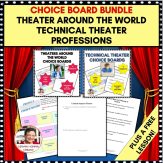
         Let’s not start there if that’s the case.  Let’s do some theater appreciation instead.  Show them video clips of theaters  around the world and either have a class discussion of each theater or give them questions to answer. Here is what I  mean:  Theaters Around the World.

Ten Ways to Engage Reluctant Students in Your Theater Class

Teaching Reluctant Students

  • Study technical theater with them--set, sound, stage properties, stage makeup or costume design.  Many students just need a backdoor into the subject. Technical theater is nonthreatening.  Most assignments are meant to be completed individually and not with a group.  This helps those students who do not speak English as their first language, especially.  I really enjoy teaching technical theater. Through its study, I usually find a student who no one knew very well that turns out to be a fabulous artist! Their creativity and talent can shine in technical theater and suddenly the other student take note of them.  It’s awesome. Here are a few technical theater units which may help you: Technical Theater Units or begin with Set Design, the Rendering
  • Reader’s theater is a good choice for your class.  Readers theater is successful in a class with various levels of interest, because there is no line memorization, no costumes, etc. Everyone sits together on the stage, so there’s that “safety in numbers” thing. Plus, if you wait until near the end of the second quarter, readers theater should not be difficult for your reluctant ones.  (Read my article in One Classroom Over about reader’s theater) You’ve given them plenty of time to adjust to the class. Here’s a funny script for them:  The Brave Little Tailor Unit.  Great for grades 5 to 7.
  • Radio theater is a super choice, too. Personally, I think radio theater has everything a play does!  That’s the reason I suggest it to teachers. Radio theater is highly imaginative from the many character voices actors create to the sound effects. Plus, it is a super tool for strengthening reading skills! It is easy to keep everyone involved, because they are on the stage the entire length of the piece. It can be as simple or as theatrical as you like.  And yet again–no line memorization! This is another unit I would teach near the end of the semester or year. If you are interested in radio theater, check out: Radio Theater Units and Lessons  Don’t know how to direct one?  Go here and pick up all of the training you need: How to Direct Radio Theater
  • Use movement exercises instead of acting ones.  Movement takes no sound and no verbal reaction.  Students like the physical activity, too. The Magic Circle is a good exercise to use for movement.  (Don’t know it?  Pick it up here)
  • Turn down your classroom lights. You won’t believe how dimming the lights will ease students’ anxieties. You just want the classroom light to be dim–light enough you can everyone but no so dark you can’t keep an eye out for any inappropriate behavior.
  • Play some classical music in the background.  Classical music works because there are no lyrics for the students to notice. It can express mood without anyone saying anything.  I think of it like a comforting blanket. In those awkward moments in a game, acting exercise or lesson they can help ease any anxiety that rears its ugly head.

Want some additional tips from me?  Check out Double Casting a Show? Here’s Advice

Ten Ways to Engage Reluctant Students in Your Theater Class

Advice for the Core Subject Teachers

Many of the suggestions I’ve made above work strictly in a theater classroom. Some of them will work for you as well.

Here are a couple of other suggestions for you:

Sometimes our students just need space away from others.  Offer that space in your classroom if a student needs it.  You want them to feel safe and accepted in your classroom. I say as long as they are focused on their work, this is acceptable.

Giving students choices is always a great idea, too.  Remember you have worked out the choices ahead of time so you are comfortable with whether they select once choice over another.  Choice Boards are super for this.  Here are some of mine as an example. This bundle is very popular with teachers: Choice Boards

Ten Ways to Teach Reluctant Students in Your Theater Class

You can even pick up a sample of them right here.

Or pick up a technical theater unit for high school students here: Technical Theater Units, High School

So, there you have it!  Teaching is a wonderful profession when everyone is treated with respect. Even the reluctant students can learn that respecting your art form is possible and believe it or not–enjoyable!  I discovered that once my students knew I had their back and understood them feigning disinterest in theater, I could work with them.  Lots of times, it’s just noise on their part.  Remember that–it’s just noise.

I’d love to know what you’ve found is successful with reluctant students in your classroom?  Contact me at DhcBaldwin@gmail.com.


Share this:

  • Share on Tumblr (Opens in new window) Tumblr
  • More
  • Share on X (Opens in new window) X
  • Share on Facebook (Opens in new window) Facebook
  • Share on Pinterest (Opens in new window) Pinterest
  • Share on LinkedIn (Opens in new window) LinkedIn
  • Email a link to a friend (Opens in new window) Email
  • Share on Reddit (Opens in new window) Reddit
  • Share on Telegram (Opens in new window) Telegram
  • Share on WhatsApp (Opens in new window) WhatsApp

Like this:

Like Loading...

Filed Under: acting, arts education, arts integration, drama education, drama integration, Education, elementary, excellence in teaching, High School, middle grades, reading skills, theater, youth theatre Tagged With: acting exercises, classroom behavior management, elementary school, ELL student, engaging students, high school, Middle school, movement exercises, radio theater, readers theater, reluctant student, Teaching, warm ups and games

8 Must-Haves for Your Middle School Theater Scope & Sequence

September 21, 2022 By dhcbaldwin Leave a Comment

A group of middle school kids looking down at the camera.

8 Must-Haves for Your Middle School Theater Scope & Sequence

Today I’m going to talk about the eight things you should include in your Middle School Theater Scope and Sequence. Obviously, this is my point of view on the subject. If you are new to my blog, welcome! I’m quite flattered that you’d check me out.

8 Must-Haves for Your Middle School Theater Scope & Sequence

My First Teaching Experience with Middle School 

My first job was as an English teacher in a junior high school.  Bear in mind that I was certified in English, but had never taught it or even had any time as a student teacher. My student teaching was in theater which in the 1970s was almost unhear of in the mid-west.

Anyway,  I remember they gave me this HUGE book with all of the benchmarks or objectives I was to reach.  It was so full of jargon, I had to sit and translate it into layman’s English.  Finally, I got the hang of it.

When I began teaching middle school theater in the mid 90s (yikes), no one seemed to clear on what they wanted me to cover.  I came into the position with twenty years of teaching and directing outside the classroom, so I knew what to do in those circumstances.

However, teaching theater in a school was different than that. In the particular school I taught theater all those many years ago, I spent about a year trying out ideas until I perfected what I thought would be successful with the students. Looking for a free biography and one pager assignment about Lin Manuel Miranda?


8 Must-Haves for Your Middle School Theater Scope & Sequence

A Thirteen Year Middle School Teaching Adventure

For thirteen years,  I taught a pre-elective theater class to sixth grade students–all 450 of them.  (Yes you read that correctly.) I had twenty-five days to fill with the many subjects of theater which was great fun but also rather challenging.  My tendency was to perfect something when we found it to work, but the students and I just didn’t have the time to do so since they moved to the next pre-elective class.

After thirteen years of this teaching load, I had completely topped out on what I could teach them.  At this point, we moved to Colorado and I took a part time speech and theater middle school job–completely different and chaotic. But that’s a blog post for another day.

In 2017, I began my store on Teacherspayteachers.com.  My plan was to recoup the pension I lost by staying home with our daughters when they were very young.  I lost half of my pension when I made that decision, but to this day I have no regrets.  I know our daughters almost as well as they do themselves.

8 Must-Haves for Your Middle School Theater Scope & Sequence

My Middle School Scope and Sequence Curriculum

People purchase my middle school drama curriculum a lot.  I’m very glad I can help them, but it never dawned on me that maybe I should include a scope and sequence with the units. Here I am today providing that guidance for you.

I taught these lessons in this particular order beginning with the easiest concepts and progressing to the most challenging. This was a pass/fail course.  I gave a daily participation grade as well.

1. Tableau (1 day)–Tableau is a staple of theater and a non-threatening concept which beginning theater students can learn. Students learn how to make stage pictures (which is one of the basic of directing as well), however they don’t have to say anything. You can find my tableau lessons here: Tableau Lesson

2. Chanting (1 day)–Chanting, or a repeated word or phrase used to illicit an effect is the second component I teach novices.

Engaging Activities to Inspire Creativity and Collaboration

3. Costume Design (2 days)–Who doesn’t like costume design?  Depending upon the time of year, I like to teach about costume design with a thematic approach.  You’ll have to check out my Halloween Costume Design Lesson here.

4. Movement (2 days)–Just like tableau, students enjoy movement because there is no speaking.  Plus, it does a great job of giving students some physical exercise which they sorely need. You can find my lesson for movement here:  Movement

5.Kamishibai Storytelling (1 week)–Depending upon your assessments of you students and what they appear to engage with in your teaching, I like to use Kamishibai storytelling from time to time.  Have you never heard of Kamishibai?  Check it out here: Kamishibai Storytelling

8 Must-Haves for Your Middle School Theater Scope & Sequence
https://theconversation.com

6. Set Design (1 week)–Set Design units are super useful.  They incorporate not only designing the set, but building a model of it.  In addition, students work with a partner which is so good for teaching cooperative learning.

7. Performance (1 week) You can choose to direct your students in a short class play or a short radio theater play-I liked to switch it up every now and then with one or the other.  Word of caution–don’t have one class performing a play while the others are studying radio theater.  You will make yourself crazy.

8. Enrichment (1 day) If you need a substitute, or your school is having a day of shortened class periods, watching a video clip of theaters around the world or studying about a famous theater artist such as Lin Manuel Miranda does an excellent job of changing the pace or giving everyone a breather.

If you want a bundle of technical theater units for middle school, click here.

Or you want a REALLY BIG BUNDLE  of middle school drama units, click here.

Sometimes I’d throw in components such as stage properties or sound effects because quite frankly, I needed the change.

8 Must-Haves for Your Middle School Theater Scope & Sequence

Objectives I Met with This Scope and Sequence Theater Curriculum

Here are the National Core Arts Standards which I used.

Connecting

Conceiving and developing new artistic ideas and work.

  • Anchor Standard #1. Generate and conceptualize artistic ideas and work.
    Anchor Standard #2. Organize and develop artistic ideas and work.
    Anchor Standard #3. Refine and complete artistic work.

Performing

Performing (dance, music, theatre): Realizing artistic ideas and work through interpretation and presentation.

  • Anchor Standard #4. Select, analyze and interpret artistic work for presentation.
    Anchor Standard #5. Develop and refine artistic techniques and work for presentation.
    Anchor Standard #6. Convey meaning through the presentation of artistic work.

Responding

Understanding and evaluating how the arts convey meaning.

  • Anchor Standard #7. Perceive and analyze artistic work.
    Anchor Standard #8. Interpret intent and meaning in artistic work.
    Anchor Standard #9. Apply criteria to evaluate artistic work.

Objectives I Met with This Scope and Sequence Continued

8 Must-Haves for Your Middle School Theater Scope & Sequence

If you need Common Core Standards, here are a few of them which my guide completes.:

Grade 6

Key Ideas and Details:

CCSS.ELA-LITERACY.RL.6.1

CCSS.ELA-LITERACY.RL.6.2

CCSS.ELA-LITERACY.RL.6.3

Craft and Structure:

CCSS.ELA-LITERACY.RL.6.4

CCSS.ELA-LITERACY.RL.6.5

CCSS.ELA-LITERACY.RL.6.6

Integration of Knowledge and Ideas:

CCSS.ELA-LITERACY.RL.6.7
CCSS.ELA-LITERACY.RL.6.8
CCSS.ELA-LITERACY.RL.6.9

Range of Reading and Level of Text Complexity:

CCSS.ELA-LITERACY.RL.6.10

Are you looking for some information about how to design a lesson plan?  Check out this post: Why is it Important to Create a Lesson Plan?

Grade 7

Key Ideas and Details:

CCSS.ELA-LITERACY.RL.7.1.

CCSS.ELA-LITERACY.RL.7.2
CCSS.ELA-LITERACY.RL.7.3

Craft and Structure:

CCSS.ELA-LITERACY.RL.7.4.

CCSS.ELA-LITERACY.RL.7.5
CCSS.ELA-LITERACY.RL.7.6
CCSS.ELA-LITERACY.RL.7.7
CCSS.ELA-LITERACY.RL.7.8
CCSS.ELA-LITERACY.RL.7.9:

CCSS.ELA-LITERACY.RL.7.10

Did you know I have an Instagram account with virtually different information than my blog?  You can find it at: DramamommaSpeaks Instagram

Multicultural Folk Tales

A Word of Caution

In an effort to do a exemplary job at teaching, sometimes we teachers go overboard on what our students should learn. I’m not a big fan of scene study when students are in middle school or lower. Or even monologues. They simply do not understand it nor appreciate it. Unfamiliar with creative dramatics? Check out: Learn How to Teach Creative Dramatics in Your Lunch Hour

What I do encourage theater teachers of elementary and middle school to teach is using creative dramatics’ many facets. One could teach the components above, number one to five, and then apply them to a readers theater or short class play.  Here is one of my which would work well for this plan:  Inca Story The Magic Lake Readers Theater or The Brave Little Tailor play. 

I hope my guide helps you in your teaching of middle school theater class.  What do you like to include in your teaching? I’ve love to hear about it.  You can email me at DhcBaldwin@gmail.com.  Let’s chat!

Woman behind DramaMommaSpeaks

Share this:

  • Share on Tumblr (Opens in new window) Tumblr
  • More
  • Share on X (Opens in new window) X
  • Share on Facebook (Opens in new window) Facebook
  • Share on Pinterest (Opens in new window) Pinterest
  • Share on LinkedIn (Opens in new window) LinkedIn
  • Email a link to a friend (Opens in new window) Email
  • Share on Reddit (Opens in new window) Reddit
  • Share on Telegram (Opens in new window) Telegram
  • Share on WhatsApp (Opens in new window) WhatsApp

Like this:

Like Loading...

Filed Under: Arts, arts education, arts integration, creative dramatics, creative movement, drama education, drama integration, excellence in teaching, middle grades, reading skills, storytelling, Teacherspayteachers, theater, theatre Tagged With: common core standards, lesson plans, middle school drama, middle school theater, national core arts standards, scope and sequence, upper elementary theater

Next Page »

Footer

Follow Us

logo3.png

FOLLOW US

Facebook X-twitter Pinterest Instagram Envelope Rss

Goodreads: read

Malibu Rising
Malibu Rising
by Taylor Jenkins Reid
People We Meet on Vacation
by Emily Henry
The Last Thing He Told Me
by Laura Dave
Faking It
Faking It
by Cora Carmack
Losing It
Losing It
by Cora Carmack

goodreads.com
Copyright © 2024 · Wellness Pro on Genesis Framework · WordPress.com.Log in
 

Loading Comments...
 

    %d