• Skip to primary navigation
  • Skip to main content
  • Skip to footer

Join Me in my new Facebook Group! https://www.facebook.com/groups/417126059784261

Menu
  • Meet Deb – The Heart Behind DramaMommaSpeaks
    • Work with Me! 
    • Photo Gallery of DramaMommaSpeaks
    • Directorial Credits
  • I Give Book Talks! 
    • Book Talk Through Skype
    • Books
  • Freebies!
  • Bumbling Bea
  • Teaching Resume
  • Acting Resume
  • Contact Me
  • Blog
    • Drama Education
    • Arts Education
    • Youth Theatre
    • Middle Grades
    • Musical Theatre
    • Teaching
  • Meet Deb – The Heart Behind DramaMommaSpeaks
    • Work with Me! 
    • Photo Gallery of DramaMommaSpeaks
    • Directorial Credits
  • I Give Book Talks! 
    • Book Talk Through Skype
    • Books
  • Freebies!
  • Bumbling Bea
  • Teaching Resume
  • Acting Resume
  • Contact Me
  • Blog
    • Drama Education
    • Arts Education
    • Youth Theatre
    • Middle Grades
    • Musical Theatre
    • Teaching

directing experiences

Should Middle School Directors Cast Every Student?

December 21, 2025 By dhcbaldwin Leave a Comment

Should Middle School Directors Cast Every Student?

Should Middle School Directors Cast Every Student?

Part of my weekly activities is reading  various Facebook drama teachers group posts.  One subject is  mentioned at least once a month.  So let’s discuss Should Middle School Directors Cast Every Student?

No matter the grade level, whenever you direct (and produce) a youth theater play, one of the biggest challenges is auditions.  Every middle school theatre director eventually faces this question. Auditions are over, the sign-up sheet is full, and more students showed up than the script allows. Though exciting that many students want to be involved in your program it can be a worry, too!

Do you cast every student who auditions—or do you stick to the number of roles written in the script?

There isn’t a single “right” answer. But there are thoughtful, student-centered ways to approach the decision.

first rehearsal
First rehearsal of Oklahoma!

Why This Question Comes Up So Often in Middle School

Middle school students are incredibly brave just for auditioning. Many are trying theatre for the first time, stepping outside their comfort zone. Or they audition  responding to encouragement from a teacher or friend. Directors feel a natural pull to reward that courage with a role. We know how much a student’s life can change by being a part of the school production–it’s transformative.

There’s also the practical reality–numbers. Programs need participation to survive. This challenge is a every year.  I know I’ve sweated it out myself.  Administrators and parents often view theatre as inclusive by nature. Plus, teachers don’t want to discourage students from coming back. Even the most shy students can blossom on a stage.  Consequently, we like to include those students to see if it helps them.

These are valid concerns—and they deserve thoughtful consideration.

Should Middle School Directors Cast Every Student?

When Casting Every Student Can Be the Right Choice

Casting every student can work well in certain situations, especially when the show itself allows flexibility. Flexibility is the key. This approach tends to succeed when:

The script includes an ensemble, chorus, or expandable roles–this is the easiest way to include more students.

Additional characters can be added without harming the story–instead of one policeman, you have two. Instead of four children, you have six.

Every student has a clear purpose onstage. This is something you’ll have to teach them.  Use the 9 questions as a guide for them to create a character.  You can find out about them at: Uta Hagen’s Nine Questions resource.

Rehearsal time, space, and supervision allow for a larger cast. A word of warning here–you have to recruit extra adults to help oversee them. Without the supervision, a director can’t expect these students to behave appropriately. They are still learning theater etiquette.  Additionally, they are learning how to become an adult! Plus, it’s a liability issue. Usually, I had an adult assistant director who “rode the herd”, so to speak.

Should Middle School Directors Cast Every Student?

Inclusive Theater: When To Cast Everyone in Middle School

When I directed Fiddler on the Roof, Jr., I remember hearing a surprising amount of gossip about the single bed we had preset backstage. Comments like, “So-and-so were sitting too close—I bet they like each other,” circulated even though an adult was present at all times.

If the middle school Are you considering process or product with the show?  If it’s process, then casting many students will not impeded the show.  However, it is difficult to keep large numbers of children (because they still are) focused for longer than fifteen minutes.  Remember, their teachers usually change activities in their classes every fifteen or twenty minutes.  These brief learning times carries over to rehearsal and some students can’t adjust.

The key is intention. Casting everyone should mean actively including students—not simply placing them onstage with nothing meaningful to do. I know of one director who cast three different groups of Oompa Loompas for Willy Wonka and the Chocolate Factory.  Now, that’s just a crime.  No one really gets anything out of that kind of arrangement.

Should Middle School Directors Cast Every Student?

Two Very Different Casting Realities

In summer camps, I usually cast everyone because for some students this is the only time they can participate, especially if they are from a small town with no formal theater programs in their schools.

However, this idea did not work in a school production.  The principal manipulated me into casting 68 (yes, you read that correctly) middle school students in Fiddler on the Roof, Jr.  It was extremely stressful not just because of the numbers. Because these students were also involved in track and their coach wanted them at practices just as much as I did at rehearsals.  I tried to drop the students from the production, but the principal got in the way of that.  Oh, it was a terrible experience.

Should Middle School Directors Cast Every Student?

When Following the Script Makes Sense

It is also completely appropriate—and sometimes necessary—to limit the cast.

Following the script closely may be the best choice when:

The story relies on specific, well-defined roles.  If the play is titled, Five Little Peppers and How They Grew, there can only be five children. Or casting the class and very popular Sound of Music–-everyone knows there were only seven children.

Adding characters would weaken the storytelling.  Adding an extra Dracula to the play would not work at all.  You get what I mean.

Should Middle School Directors Cast Every Student?

Should Middle School Directors Cast Every Student?

Rehearsal logistics become unmanageable. Usually, middle school productions are relegated to the school cafetorium.  If you are unfamiliar with them think of a cafeteria with a stage located at the end of one wall.  It’s horrible, but it can work.

Students would be underused or disengaged. Yes, that occurs sometimes when a director/teacher pads roles.

The director wants to honor the playwright’s structure and intent. By far this is the best reason!

Not every “no” is a rejection. Sometimes it’s a way of protecting the quality of the production. If the musical needs good singers who can sing difficult music, then including someone who doesn’t see well can hamper the atmosphere.

The learning experience of the students could be hindered if too many people were added to the production. If a production is a classic such as The Sound of Music, it just doesn’t help the story if you add twenty-five extra nuns.  There is simply not enough for them to do in the production.  If the student feels taken advantage of or patronized, they may never audition for you again. Tip:  If you call your ensemble make certain your rehearse them that day. If not, you are sure to lose cast members.

Should Middle School Directors Cast Every Student?

Finding the Middle Ground

For many directors, the best solution lives somewhere in between. Personally, I like to double cast youth theater productions. Check out this blog post for more information about my opinion: Double Casting a Show? Here’s Advice. Usually, when I double cast, I’m guaranteed to have one of the double cast students  attend rehearsals.  I don’t like conflicts, but I discovered most of the time students are absent is because of illness.

Some alternatives to consider:

Creating understudy or swing positions.  Personally, I think there is little payoff to being an understudy.  Students this age don’t consider this an honor or compliment.  I think it sends a message of, “Your audition was good, but just not good enough to warrant a role.”  Eek.

Adding narrators or small featured moments.  Yes, this is a good way to include more students.  At the beginning of Into the Woods I’ve added additional narrators and created a chorus for particular moments in the music which sort of invite extra character such as at the end of act one.

Should Middle School Directors Cast Every Student?
First rehearsal of Mulan, Jr.

Keeping the Door Open: More Ways for Students to Belong

Offering meaningful technical theatre roles with real responsibility. A great way to learn more about the theater is to work on the stage crew.  In college, the theater department required freshmen to put in hours on crew or work in the stage or costume shops.  Because I worked backstage, I learned how important every technical aspect was to the success of the show.

Providing additional performance opportunities through class projects, readers or radio theatre, or showcases. One of the reasons this is a good idea is that is demonstrates there is more to theater than just a play or musical.  Maybe they are excellent mimics and great at creating a voice for a character?

Tell them about the readers theater or radio theater shows you have planned for later in the year.  By doing so, it keeps a door with more opportunities open for them. Here’s a radio theater play that gets lots of stars:  The Monkey’s Paw Radio Play.  Also popular is the readers theater script of The Little Girl and the Winter Whirlwinds. I adapted them to include more students than you’d expect, but it works well in both pieces.

Should Middle School Directors Cast Every Student?

What I always tell my students after casting

After auditions, I would remind my students that the production is not a be-all-end all situation. I invite them to look around the community and see where else they can audition for a production.  Community theater is a super place for these students. In a community theater, they’ll meet people who enjoy theater as much as they do.  They’ll make friends with adults, too.  Some students have little exposure to adults and observing them rehearsing or how they behave, teaches them a lot.

If a student can afford it, I suggest to them to take voice and dance lessons. Several of my students took voice lessons and strengthen their singing and confidence.  A dance class can build their coordination. Or join the drama club if you have one.  It’s another place students can spend time with their friends just enjoying the art form for fun.  If you need a resource for this, check out: Fairy Tale Camp

However, don’t be surprised if they never audition again. They may have found something else they want to do with their time such as sports.  Sometimes a student will take off a year and then return the following year.  My casts become like family and the student may miss that comradery, especially if they don’t feel seen the rest of the time at school.

Lastly, these options reinforce an important lesson: theatre is more than being center stage. This is so important to learn at a young age.

Should Middle School Directors Cast Every Student?
Alice in Wonderland, Jr.

What Matters Most

Middle school theatre is not about perfection. It’s about growth.

Students learn courage by auditioning and resilience by not always being cast.  Additionally, they learn to collaborate by working toward a shared goal. Directors serve students best when they are honest, thoughtful, and intentional—not when they try to please everyone. Casting decisions aren’t just about filling roles. They’re about creating the strongest learning environment possible for the students you serve. Let’s not even begin to discuss what to do with disgruntled parents after auditions…

What kind of audition challenges have you had with your productions?  I’d love to hear about them.  Contact me at DhcBaldwin@gmail.com

Click the image below and check out my new book! Or click here:  We’re Live! Radio Theater #101

Share this:

  • Click to share on Tumblr (Opens in new window) Tumblr
  • More
  • Click to share on X (Opens in new window) X
  • Click to share on Facebook (Opens in new window) Facebook
  • Click to share on Pinterest (Opens in new window) Pinterest
  • Click to share on LinkedIn (Opens in new window) LinkedIn
  • Click to email a link to a friend (Opens in new window) Email
  • Click to share on Reddit (Opens in new window) Reddit
  • Click to share on Pocket (Opens in new window) Pocket
  • Click to share on Telegram (Opens in new window) Telegram
  • Click to share on WhatsApp (Opens in new window) WhatsApp

Like this:

Like Loading...

Filed Under: acting, arts education, arts integration, community theater, community theatre, directing experiences, drama education, drama integration, High School, middle grades, music education, Musical Theatre, performing arts, Play, plays, Producing plays and musicals, Production Questions, Radio Theatre, Readers Favorite, Teacherspayteachers, theater, theatre Tagged With: 'tweens, casting, drama education, large cast versus small cast, Middle school, middle school drama teacher, production tips, youth theater

Afraid to Teach Devising Theater in Your Classroom?

December 4, 2025 By dhcbaldwin Leave a Comment

Afraid to Teach Devising Theater in Your Classroom?

Afraid to Teach Devising Theater in Your Classroom?

If the words “Let’s devise a scene!” make your students stare back at you like deer in headlights—you’re not alone.  Many teachers are afraid to teach devising theater in the classroom.  I, for one, understand! It can feel abstract or a little chaotic at first. To be honest, I felt that way, too. But once you learn how to guide it, devising becomes one of the most rewarding tools in your drama classroom.

In my forty years of directing and teaching, I’ve found that devising builds confidence, collaboration, empathy, and creativity faster than almost anything else we do. Students suddenly realize that they are the playwright, the designer, and the performer. They have ownership—and that’s where the magic happens. Until you try devising theater with your students, you won’t believe how much engagement is derived from it.

Let’s break down a clear, classroom-ready way to use devising theater with your students.

Afraid to Teach Devising Theater in Your Classroom?

Afraid to Teach Devising Theater in Your Classroom?

When I was in college, this might have be called a structured improv., although this is more comprehensive. Devising theater is the process of creating an original performance as an ensemble. Instead of beginning with a script, students generate material through improvisation, movement, images, personal stories, character exploration, or thematic prompts.

The script—and sometimes even the structure—emerges from the group’s discoveries. It’s part improv, part writing workshop, part ensemble building, and completely student-driven. That last part is a double edged sword.  Giving the students ownership of their theater piece is exciting.  However, on the other hand, it can be nerve wracking.

Afraid to Teach Devising Theater in Your Classroom?

Why Should Drama Teachers Teach Devising Theater?

Devising naturally supports:

  • Student ownership of ideas
  • Ensemble building and trust
  • Creative risk-taking
  • Collaboration and communication skills
  • Social–emotional learning
  • Cross–curricular connections (social studies, ELA, history, even science)

And best of all—students who don’t see themselves as “actors” often thrive here. In many ways, it is non-threatening and that’s a big plus for reluctant students.

Afraid to Teach Devising Theater in Your Classroom?

Step 1: Start with a Strong Stimulus

This is the most important phase, in my opinion.  A stimulus gives students something to respond to. This is the single best way to avoid chaos. Without it, the students have a tendency to float around from idea to idea never coming to a conclusion until it is usually too late. For example, one time I observed two boys play around with some fur pieces I’d put in a box.  Ever so often I’d remind them to focus on their scene. Their scene, they decided, was cavemen living in a cave. That’s as far as they progressed.  They were so distracted by the furs they never got it together.

You can use:

  • A piece of music--You might want to give them boundaries such as only using classical or film music. Lyrics can impede the creative process.
  • A short poem or quote–Suggest to them of ways they could work the poem into their piece.  Take it apart?  Chanting particular sentences?
  • A photo of a place, person, or moment in history–Prior to the project as a warm-up I’ve shown students a photo of an old woman and asked them to tell me who she was, where did she live, etc.  Teaching them to use their imagination and that nothing is wrong so long as we focus together, we will have success.
  • An object (keys, scarf, shoes, old letter)–Stress to them that an object can become something else in their piece.  Maybe it begins as a scarf and over time it becomes a slithering snake?
  • A theme (identity, fear, courage, community)–You may need to give them examples, discussing themes of movies or plays of which they are familiar.

Ask students:
What does this make you think, feel, or imagine?  They could jot down notes in a journal they created for this experience.

Let their responses guide the first round of improvisation. This shows them that all ideas are good ones, some more than others.

Afraid to Teach Devising Theater in Your Classroom?

Step 2: Use Simple Improvisation Structures

First, you need to keep improvisations short—under 60 seconds at first. Why?  Because it forces the mind to abbreviate one’s ideas and to focus on selecting the best parts of one’s ideas.

Try:

  • Tableaux sequences–You know I love a good tableaux!
  • Gesture chains-– Much like the game “When I go to California” without speaking
  • “Pass the Action” improv.–This is a little like the improv. exercise, “Yes, and..”
  • Character walks with internal monologue–So clever, the actor demonstrates what they are thinking through their walk
  • Short improv scenes with a single rule (only questions, only movement, no words, etc.)

Read more about my thoughts on improvisation here:  Improvisation in Theater:  Myth Versus Reality

These tiny explorations give you loads of raw material.

Afraid to Teach Devising Theater in Your Classroom?

Step 3: Collect the Best Ideas

This step is crucial. Have students pause, reflect, and gather:

  • Interesting images they created–either digitally or three dimensional
  • Lines of dialogue that emerged--jotting down the best ones
  • Characters or relationships that appeared–are they useful to our improv.?
  • Movements that felt meaningful–which ones and how so?
  • Themes that keep repeating--what do these themes mean in your piece?

I usually assign a student as the “scribe” or I jot everything on the board.

Patterns always emerge. Usually, someone in each group notices them. Encourage the group when you see them light on an idea. It may be outlandish and farcical at first, but give them time to percolate.

Afraid to Teach Devising Theater in Your Classroom?

Step 4: Shape the Material into a Structure

When I was in college, this might have been called a structured improv.  However, this is more comprehensive. Frankly, I like it much better!

Once you have enough ideas, help the ensemble choose a simple structure.

A word of advice here. It does not need to be complicated! I’d remind the students that they are just learning how to do this.  Perhaps awarding participation points instead of a grade might help to make this less stressful?

Examples:

  • A series of vignettes
  • A journey (physical or emotional)
  • A day-in-the-life
  • Flashbacks
  • Nonlinear moments around a central theme

Most importantly, students decide the order. Encourage them to look objectively at their work and not be afraid to move their ideas around within the piece.  This is when ownership soars.

Afraid to Teach Devising Theater in Your Classroom?

Step 5: Rehearse, Refine, and Repeat

This is where it becomes “real theater.”

Guide students to:

  • Sharpen their movement and vocal choices
  • Clarify transitions–these can be challenging for students
  • Add sound, simple props, or rhythm
  • Edit anything unclear or unfocused

Devising is drafting. Revisions are part of the process—and students learn resilience by improving their own material. I wouldn’t be opposed to seeing each group’s piece prior to showing the rest of the class.  Give them notes and see what they do with them.

Afraid to Teach Devising Theater in Your Classroom?

Step 6: Share the Work

A novice teacher might make this more than it is designed to be.  A performance doesn’t have to be big. It can be:

  • A showing for another class
  • A share-out circle
  • A taped performance
  • A small showcase for families

The goal isn’t perfection—it’s expression.

Students often surprise themselves with what they can create together.

Afraid to Teach Devising Theater in Your Classroom?

Tips for Successful Devising

As the teacher, your job is to say “yes, and” early and often.

  • Keep group sizes small (4–6 students). That way, everyone has some say in the project.
  • Celebrate the process, not the product.  It’s all about the process, NOT the product!
  • Model risk-taking yourself. This is tantamount to success with this unit.  In fact, I think we teachers should always model everything for our students.
  • Provide enough structure to feel safe but enough freedom to feel creative. Put up the day’s objective and discuss it before they begin each day.

Final Thoughts

To think that I was not familiar with devising theater when it was introduced to me.  Now it seems like it’s second nature.  Devising theater is one of the most powerful ways to help students develop artistic confidence, empathy, and collaboration.

At its heart, devising says: Your voice matters. Your ideas matter. The ensemble needs you.

And when students believe that, they grow—not just as performers, but as people.

How have you used devising theater in your classroom?  I’d love to hear about it.  Just comment here or email me at DhcBaldwin@gmail.com

Click here: We’re Live! Radio Theater #101


Share this:

  • Click to share on Tumblr (Opens in new window) Tumblr
  • More
  • Click to share on X (Opens in new window) X
  • Click to share on Facebook (Opens in new window) Facebook
  • Click to share on Pinterest (Opens in new window) Pinterest
  • Click to share on LinkedIn (Opens in new window) LinkedIn
  • Click to email a link to a friend (Opens in new window) Email
  • Click to share on Reddit (Opens in new window) Reddit
  • Click to share on Pocket (Opens in new window) Pocket
  • Click to share on Telegram (Opens in new window) Telegram
  • Click to share on WhatsApp (Opens in new window) WhatsApp

Like this:

Like Loading...

Filed Under: arts education, arts integration, creative movement, Creativity, DeborahBaldwin.net, directing experiences, Distance Learning, drama education, drama integration, Education, excellence in teaching, High School, middle grades, Teacherspayteachers, Teaching, teaching strategies, youth theatre

5 Affordable Set Pieces for Theater Departments

August 19, 2025 By dhcbaldwin Leave a Comment

5 Affordable Set Pieces for Theater Departments
Deb building flats for The Giver

5 Affordable Set Pieces for Theater Departments

Welcome! If you’ve arrived at my blog because you are building a theater program in your school, I’m glad you did so. Today,  let’s talk about 5 affordable set pieces for theater departments.

Oh, gosh, I’ve been there.  Infact, I’ve created several programs for schools and community theaters in Colorado and Missouri. Check my resume here if you’d like more information about me:  Teaching Resume. Starting a drama program is exciting—but it can also feel overwhelming when budgets are small and storage space is limited. The good news? You don’t need elaborate sets or expensive rentals to create engaging productions. With just a handful of versatile set pieces, you can stage nearly any play, rehearse effectively, and stretch your students’ creativity.

Here are five must-have set pieces every beginning drama department can afford, build themselves, and use in countless ways.  Plus, I’ve included a bonus piece borrowed from the ancient Greeks. I’ve built every one of these set pieces several times, so you know I think they are essential.

5 Affordable Set Pieces for Theater Departments

5 Affordable Set Pieces for Theater Departments

1. Rehearsal Boxes (Stage Cubes)

  • Why: The ultimate multitaskers. Rehearsal cubes can become chairs, tables, steps, beds, or thrones—and they’re indispensable for rehearsals.
  • DIY Factor: Build from plywood or MDF, paint them black for neutral use, and stack for multiple levels.
  • Uses: Furniture, platforms, or even makeshift scenery.

Here’s a Youtube video that demonstrates how to build these gems: Learn to Build Actor Boxes

Scene Shop

2. Folding Flats (Walls That Go Anywhere)

  • Why: A basic flat is the backbone of any set. Just a couple can suggest endless locations.
  • DIY Factor: Create wooden frames covered with muslin or luan. Add hinges so they fold flat for storage.
  • Uses: Interior or exterior walls, doorways, murals, or projection screens.

These flats are made of wood.  Usually, mine are covered with muslin just like we’ve used for many years.  If you want to learn how to build a flat, go to: Stage Flat

5 Affordable Set Pieces for Theater Departments

Credit: https://buildersvilla.com

3. Platforms (Add Instant Levels)

  • Why: Theater becomes more dynamic when actors are on different heights. Platforms give depth and variety to any scene.
  • DIY Factor: Build 4×4 or 4×8 framed platforms topped with plywood. Keep them modular so you can reconfigure as needed.
  • Uses: Stairs, balconies, podiums, risers, or stages-within-a-stage.
5 Affordable Set Pieces for Theater Departments
Credit:  Buildersvilla.com

4. Freestanding Door Frame

  • Why: Nothing transforms a bare stage like an entrance. A door instantly suggests place and purpose.
  • DIY Factor: Build a sturdy wooden frame and mount a lightweight door. Keep it neutral so it fits multiple shows.
  • Uses:Entrances/exits for comedies, farces, haunted houses, or realistic dramas.

Doors and door frames are gold.  They do have go be built correctly, however.  If they are not, they will always be an issue for you.  If I was going to pay anyone to build something for me, I’d have someone built door frames and hang doors form. 


5 Affordable Set Pieces for Theater Departments5 Affordable Set Pieces for Theater Departments

Versatile Set Pieces: Tables and Chairs for Any Scene

5. Basic Table and Chairs

  • Why: The simplest set pieces are also the most used. A table and chairs can set dozens of scenes.

  • DIY Factor: Thrift store finds work beautifully. Refinish or paint them for versatility.

  • Uses: Dining rooms, courtrooms, offices, cafés, classrooms—the possibilities are endless.

During certain points in my career, I had access to a six feet long wooden table and bentwood chairs.  These are priceless!  You can use them in many ways whether for a dining room scene such as in The Miracle Worker, or the kitchen table in the annex of The Diary of Anne Frank.  Additionally you can use the chairs by themselves for two person scenes, etc.

5 Affordable Set Pieces for Theater Departments

Credit: //hstech.org

Bonus: Periaktoi (The Ancient Secret Weapon)

  • Why: Straight from ancient Greek theater, a periaktos is a three-sided flat mounted on a pivot. Spin it, and the scenery changes instantly! Perfect for schools with limited time and budgets.
  • DIY Factor:Construct tall triangular prisms with lightweight lumber and luan. Paint each side with a different setting—brick, sky, wallpaper, forest, etc.
  • Uses:Rotate between three locations in seconds. Ideal for one-acts, student-designed shows, or productions with quick transitions.

Whenever I begin a drama program or summer camp for someone, we always build periaktois.  Most theater groups are unfamiliar with them and they various uses.   They take time to build but are worth their weight in gold.  You can’t go wrong with them!

5 Affordable Set Pieces for Theater Departments

What if I have no carpentry skills and neither do my students?

Sometimes a teacher has the skills to build their own set.  In my case, my wonderful husband builds them for me.  However, sometimes he was unavailable to build, so, I’ve put a word out to parents volunteers to help build our sets. Usually, a group of fathers (and even grandfathers) would show up on a Saturday morning, I’d feed them donuts (that made them smile) and they’d build what I needed.  You can do that, too!

Another way to design the set is by the use of fabric.  When I directed The Giver at the Fine Arts Guild of the Rockies, I hung various colors of gray fabric from the battens.  It was a super way to pull the focus to the center and give mood.   Check out this blog post if you’d like to know about producing The Giver: The Reasons I Love The Giver Play

5 Affordable Set Pieces for Theater Departments

Teacher Benefits

Here’s some advice:  You simply must defend your program and its need for funds.  Consequently,  you should have a meeting with your administration and department chair.  If you’d like, use this blog post to defend your needs. 

  • Saves Money: Build once, reuse for years.
  • Encourages Creativity:Students learn to think outside the box when transforming simple pieces into new settings.
  • Teachable Moments:  Building these pieces doubles as a tech theater lesson.
  • Space Friendly: Most pieces stack or fold for easy storage.
  • Endlessly Versatile:From Shakespeare to contemporary plays, these pieces adapt to any production.

Last thoughts

To be honest, I think it’s a good thing for our students to see you being creative with what you have in your stock.  Too many times we are a throw away society–but by using these materials over and over in various configures, you are teaching them to be inventive and clever.

Lastly, you don’t need a giant scene shop or a massive budget to produce creative, polished shows. Start with these 5 affordable set pieces for theater departments—rehearsal boxes, flats, platforms, a door, and furniture—and add periaktoi for a touch of theatrical magic. With just these few items, your drama department can bring almost any story to life.

Want more budget-friendly tips for building your drama program? Join my newsletter for free resources, classroom-tested ideas, and exclusive discounts. This one is a free lesson about Audra McDonald!

If you are looking for set design units, check out:  Set Design High School and Set Design Middle School.

Click here:  We’re Live! Radio Theater #101

Deb directing The Miracle Worker
DEB DIRECTING THE MIRACLE WORKER


Share this:

  • Click to share on Tumblr (Opens in new window) Tumblr
  • More
  • Click to share on X (Opens in new window) X
  • Click to share on Facebook (Opens in new window) Facebook
  • Click to share on Pinterest (Opens in new window) Pinterest
  • Click to share on LinkedIn (Opens in new window) LinkedIn
  • Click to email a link to a friend (Opens in new window) Email
  • Click to share on Reddit (Opens in new window) Reddit
  • Click to share on Pocket (Opens in new window) Pocket
  • Click to share on Telegram (Opens in new window) Telegram
  • Click to share on WhatsApp (Opens in new window) WhatsApp

Like this:

Like Loading...

Filed Under: acting, Arts, arts education, arts integration, community theater, community theatre, creative dramatics, directing experiences, drama education, drama integration, excellence in teaching, Fine Arts Guild of the Rockies, Free Products, High School, plays, Producing plays and musicals, set design, Teacherspayteachers, youth theatre

Why Every High School Theater Needs a Rehearsal Contract

February 6, 2025 By dhcbaldwin 3 Comments

Cast of Oklahoma and their first read thru


Why Every High School Theater Needs a Rehearsal Contract

Let’s talk about why every high school theater (and even middle school) needs a rehearsal contract. When I first began directing youth theater plays, I ran everything like a professional theater company.  That’s all I knew. Don’t be like me. It’s a wonder any students continued working with me.  I’m sure I was too strict, too rigid and too professional.  These are kids for heaven’s sake.  However, running a high school play or musical is no small task.

Between casting, scheduling, and final performances, there are countless moving pieces that require organization and commitment. One of the best ways to establish expectations from the start is through a rehearsal contract. If you do so, you will have less issues to deal with and that’s tantamount to keeping the stress at bay. Wondering about all the details of directing?  Check out:  Ten Important Elements to Consider When Directing a Youth Theater Production

You ask, what is a rehearsal contract?  A rehearsal contract is a simple document that outlines responsibilities, schedules, and rules for everyone involved in a production. It ensures that students, parents, and staff are on the same page, helping to create a smooth and professional rehearsal process.

Why Every High School Theater Needs a Rehearsal Contract

Why Every High School Theater Needs a Rehearsal Contract

  1. Attendance Policy
    Too often, I read in Facebook theater teacher groups about directors losing students to conflicts they never mentioned prior to casting the show.  Students should understand that theater is a team effort, and absences affect everyone. The contract should outline expectations regarding:
  • Required attendance for rehearsals and performances You need to decide how much you are willing to acquiesce to students’.  Me?  I don’t budge.  
  • Consequences for excessive absences.  Will they be dropped from the show?  
  • Procedures for notifying the director in case of emergencies–Do you want it in an email?  You must state this. 
  1. Rehearsal Schedule
    A clear schedule helps students plan accordingly. The contract should include:
  • Weekly rehearsal days and times  My advice is to begin and end promptly at the time you set.  Inform the students to arrive early if they want to visit.
  • Tech week expectations (longer rehearsals, no absences) If it’s over a meal time.  Will you feed them? 
  • Acknowledgment that last-minute changes may occur. Will you send out an email stating these or post it outside of your classroom? 

Why Every High School Theater Needs a Rehearsal Contract

Rehearsal Conflict: Calling the Right Actors at the Right Time

Note:  I’m a little different here–I only call the actors I need to work with in a particular scene.  Everyone is not called for rehearsal every day. If the scene includes other characters but they are not important to the blocking (a large cast scene, for example), I don’t require them until later.

Why?  Because the non-speaking characters can become bored very quickly. Or they might feel taken advantage of to have to rehearse when they aren’t the focus of the scene. (All actors have egos!) Check out my blog about double casting: Double Casting a Show? Here’s Advice

3.  Behavior Expectations
A rehearsal is only as productive as the attitude of the cast and crew. Guidelines should address:

  • Respect for directors, stage managers, and fellow cast members–Maintaining a quiet atmosphere is important
  • Staying focused and engaged during rehearsals–No talking during rehearsals
  • Cell phone usage and socializing limits–I don’t allow cell phones in rehearsals.  They are a huge distraction to everyone.  I warn everyone once.  After that, I begin taking phones away and setting them on the edge of the stage.

4. Line and Blocking Memorization
Deadlines for memorization help keep the production on track. The contract can specify:

  • When actors must be off-book.  For instance, when we block a scene, I remind them that  the next time we hearse this scene, I require them to be off book–they may ask for lines at this rehearsal, however.
  • The importance of learning blocking and choreography–I’m a real stickler for blocking. Additionally, I take great care and time pre-blocking the production and I have reasons that  I want the actors to use my blocking.  The blocking always motivates the lines. 
  • You may need to teach your students how to memorize lines and blocking.  Check out this post for help:  Three Ways to Memorize Lines for a Play or Musical
  • Consequences for failing to meet deadlines. If you set up rehearsals and expectations properly, you will not need consequences.  You could use a “three strikes and you are out” rule.

Why Every High School Theater Needs a Rehearsal Contract

Costumes, Props & Backstage Expectations: Taking Responsibility for the Details

5.  Technical and Costuming Responsibilities
The backstage crew and actors share responsibility for props, set pieces, and costumes. The contract should include:

  • Care and handling of costumes, props, and set pieces You need to make a list of what you expect here.  Do you expect the students to wash their clothes between shows?  Wearing deodorant? How about hanging them up properly?
  • Expectations for costume fittings–I also remind the students that they are wearing costume not a cute outfit to school.  It is different.  Plus, It is not uncommon for them to not like how they look in the costume (teenage angst) , but they will learn how to accept this in time.
  • Any personal items students need to provide (shoes, base clothing, etc.)

6.  Parent/Guardian Acknowledgment
Since high school theater often involves extended hours, transportation, and possible fees, the contract should require a          parent/guardian signature. This ensures:

  • Parents are aware of the time commitment  Spell it out several times. For instance, “Rehearsals run from 4:30 to 6:30 Monday, Wednesday and Friday. Then, beginning February 18, they will run Monday, Tuesday, Wednesday, and Thursday from 4:30 to 7:00 p.m.”
  • They understand financial obligations. Usually, I suggest mentioning this right up front.  This may keep some students from participating.
  • They are encouraged to support their child’s participation. Welcome your parents to be involved as chairs for committees such as box office, concessions, building the set, props and costumes. I’ve made great friendships with my students’ parents.  They are terrific cheerleaders for your program!

Why Every High School Theater Needs a Rehearsal Contract

The Benefits of Using a Rehearsal Contract

Sometimes, you will find that you are teaching the parents and the students how to rehearse and what is expected of them.  Remember:  A contract does more than just enforce rules—it builds accountability. Not only does it help students treat the production with a higher level of professionalism, it  prepares them for future performance experiences.

Additionally, it reduces confusion and ensures that parents, students, and staff share the same expectations from day one. By implementing a rehearsal contract, you’re setting your cast and crew up for success, creating a smoother process for everyone involved.

Looking for more information about directing a production with students?  Check out: Critical Steps in Producing a Play or Musical: Costumesor Critical Steps in Selecting a Play or Musical: Casting

A Freebie Just for You! 


Like always, it is my goal to help teachers by providing resources that lighten their teaching. Check out this rehearsal contract and see if it has what you need.  I’ve created a word doc. of it!! You can download it and work it from there.  I hope this helps you!  Click here: Rehearsal Contract

first rehearsal
First rehearsal of Oklahoma!


High School Theater Rehearsal Contract

Production Title: [Insert Play/Musical Name]
School Name: [Insert School Name]
Director: [Insert Director’s Name]
Rehearsal Start Date: [Insert Date]
Performance Dates: [Insert Dates]

1. Attendance Policy

The success of our production depends on everyone’s commitment. Cast and crew members agree to:

  • Attend all scheduled rehearsals unless excused in advance.
  • Arrive on time and remain for the full duration of rehearsal.
  • Notify the director at least 24 hours in advance if an absence is unavoidable.
  • Limit absences to [insert allowed number] before roles may be reassigned.
  • Be present for all mandatory rehearsals, including tech week and performances (no absences permitted).

2. Rehearsal Schedule

  • Rehearsals will be held on [insert days and times].
  • Tech week and additional rehearsals may be scheduled as needed.
  • Students must check the callboard/email for updated schedules.

3. Rehearsal Etiquette

  • Arrive prepared with your script, notes, and any necessary materials.
  • Give full attention to the director, stage manager, and crew.
  • Respect the rehearsal space—clean up after yourself and take care of props/costumes.
  • Keep talking and cell phone use to a minimum unless permitted by the director.
  • Support your fellow cast and crew members with a positive attitude.

4. Line and Blocking Memorization

  • Lines must be memorized by [insert deadline].
  • Blocking and choreography must be fully learned and retained.
  • Failure to meet deadlines may result in removal from the production.

5. Costume and Technical Responsibilities

  • Actors will be responsible for attending all costume fittings.
  • Proper care must be taken with all props, costumes, and set pieces.
  • Actors may be required to provide certain personal costume items (shoes, undergarments, etc.).

6. Behavioral Expectations

  • Treat directors, stage managers, cast, and crew with respect.
  • Disruptive behavior, excessive tardiness, or refusal to cooperate may result in dismissal from the production.
  • Follow all school rules and adhere to safety protocols.

7. Parent/Guardian Acknowledgment

Parents/guardians must acknowledge the commitment required:

  • Students may have extended rehearsals leading up to the show.
  • Parents are responsible for transportation and ensuring their child arrives on time.
  • There may be financial responsibilities for costume items or production fees (if applicable).

Agreement and Signatures

By signing this contract, I acknowledge my role in this production and agree to adhere to the rehearsal expectations. I understand that failure to comply with these terms may result in consequences, including removal from the production.

Student Name (Print): ____________________________
Student Signature: ____________________________ Date: ____________

Parent/Guardian Name (Print): ____________________________
Parent/Guardian Signature: ____________________________ Date: ____________

Director Signature: ____________________________ Date: ____________


This contract sets clear expectations while reinforcing professionalism in high school theater. Let me know if you’d like any modifications!

I hope this post gives you all the answers you are looking for, but if not feel free to email me at DhcBaldwin@gmail.com and ask me any questions you have.

Woman behind DramaMommaSpeaks

Share this:

  • Click to share on Tumblr (Opens in new window) Tumblr
  • More
  • Click to share on X (Opens in new window) X
  • Click to share on Facebook (Opens in new window) Facebook
  • Click to share on Pinterest (Opens in new window) Pinterest
  • Click to share on LinkedIn (Opens in new window) LinkedIn
  • Click to email a link to a friend (Opens in new window) Email
  • Click to share on Reddit (Opens in new window) Reddit
  • Click to share on Pocket (Opens in new window) Pocket
  • Click to share on Telegram (Opens in new window) Telegram
  • Click to share on WhatsApp (Opens in new window) WhatsApp

Like this:

Like Loading...

Filed Under: acting, arts education, community theater, community theatre, directing experiences, drama education, Education, High School, middle grades, Musical Theatre, Producing plays and musicals, Teacherspayteachers, theater, theatre, youth theatre Tagged With: attendance policy, behavior expectations, costume responsibilities, directing advice, high school actors, lines and blocking memorization, parental involvement, rehearsal schedule, technical responsibilities

How to Attract Boys to Drama Programs

December 23, 2024 By dhcbaldwin Leave a Comment

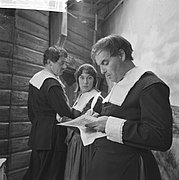
Two boys costumed for a melodrama

How to Attract Boys to Drama Programs

I keep up with theater teachers through Facebook groups and very often a teacher is lamenting about their lack of  boys for their play or musical. This is a very common problem. I’m lucky, I guess. Having never had this challenge myself, it’s tough for me to know how to counsel these teachers. I had plenty of boys involved in my plays and musicals during my thirty-eight years of productions. Admittedly, getting boys participating in a drama program can sometimes feel like an uphill battle.  However, it doesn’t have to be. This blog post, How to Attract Boys to Drama Programs offers you strategies and an inclusive approach to create an environment that appeals to boys and showcases the many ways theater can enrich their lives.

Warning:  Boys are different than girls for more than the obvious reasons.  Sometimes they take things into their hands when they really shouldn’t.  More on that later.

How to Attract Boys to Drama Programs

Why Boys May Hesitate to Join Drama

Boys are under different social pressures than girls when it comes to being involved in the arts.  Let’s consider the reasons boys might shy away from drama programs. Common barriers include:

  • Stereotypes: Boys may view drama as an activity that’s “not for them.” What do they mean by that?  Middle school is a time when friendships are vitally important.  If a boy is interested in auditioning for you, but his best friend is not, this boy will have a tough time committing to production.
  • Peer Pressure: Fear of judgment from friends can deter them. Unfortunately, we know that there are people who bully others just to make themselves feel powerful.  Middle school is a haven for this attitude.  Not surprisingly, a boy may avoid your invitation to audition just because he’s afraid of what the other boys might say or do.  Once I saw one of my former male students who was known for bullying others stand dead center in an auditorium just to be noticed by the audience before the production began.  Heaven forbid he’d audition!
  • Limited Exposure: Many boys haven’t been introduced to the exciting aspects of theater. There are so many cool parts to theater arts which boys can truly excel in if they try. Because generally there are fewer of them, the boys who are all ready a part of your theater program will get all the good stuff such as lighting, set and stage properties design.

How to Attract Boys to Drama Programs

Strategies to Attract Boys to Drama Programs

How does a teacher attract or encourage boys to be involved in your drama program?  Here are some ways I’ve found that have worked with a few boys I know.

1. Highlight the Benefits of Drama

Emphasize how drama builds confidence, improves communication skills, and fosters teamwork. Frame these benefits in ways that resonate with boys, such as:

  • Leadership skills: Drama encourages taking initiative and leading others on stage and behind the scenes.  Check out this blog post if you’d like to learn more–How Theatre Shaped My Life Volume Two
  • Collaboration: Showcase how teamwork in theater parallels skills used in sports or group projects. I always told my males, “You will never sit on the bench.  Rest easy, because you all ready know you are going to be involved because you play an actual character who is important to the production. “
  • Problem-solving: Technical theater, like set design and lighting, involves critical thinking and creativity.

2. Showcase Role Models

Promote male actors, directors, and technicians as examples of success. Highlight figures like Denzel Washington, Lin-Manuel Miranda, and Hugh Jackman, Anthony Ramos or Daniel Radcliffe who prove that theater is for everyone. Guest speakers or alumni who were involved in drama can also inspire boys to participate.


How to Attract Boys to Drama Programs

3. Offer a Range of Roles

Drama isn’t just about acting. Boys who might feel uncomfortable performing can get involved in:

  • Technical theater: Lighting, sound, and set construction are hands-on and appealing to many boys. Learn about my own students, Brandon Thomas, who became a professional set designer:  The Five Reasons Your Students Will Love Set Design
  • Stage combat: This element can add excitement and attract boys interested in action. Learn about my friend, Russ Brown’s stage combat business:
  • Playwriting and directing: For those who prefer being behind the scenes.

How to Attract Boys to Drama Programs

4. Incorporate Popular Themes

Choose plays or musicals with themes and stories that resonate with boys. Reading a play in a drama class which is male heavy can encourage your boys’ interest.  Productions featuring action, humor, or male leads can spark their interest. Examples include:

  • Adventurous tales like Peter and the Starcatcher or Treasure Island.
  • Modern musicals like Newsies or Hamilton that blend high energy with compelling male characters.
  • Classic male-heavy plays for middle schoolers such as The Jungle Book or The Adventures of Tom Sawyer.
  • Comedic options like The Brothers Grimm Spectaculathon or Holes offer humor and ensemble opportunities.
  • Action-packed choices like Robin Hood or The Legend of Sleepy Hollow, bring thrilling stories to life.
  • Historical dramas like Johnny Tremain or The Browns Go to Birmingham, explore rich narratives suitable for younger students.

How to Attract Boys to Drama Programs

5. Build a Welcoming Culture

Create an inclusive environment where boys feel comfortable expressing themselves. For instance:

  • Peer mentorship: Pair new boys with experienced male students in the drama program. If you have the opportunity to double cast a new male student with a veteran of your program, this is a great experience for both!
  • Social events: Host team-building activities that appeal to boys, such as improv nights or prop-building workshops.
  • Positive reinforcement: Celebrate boys’ achievements in drama to boost their confidence and visibility. (But be certain is it in equal measure to your girls.)

6. Engage Parents and Teachers

Parents and educators play a crucial role in encouraging boys to try drama.  Additionally, communicate the academic and personal benefits of theater.  Speak to any concerns they might have about stereotypes or peer influence. Perhaps the parents are wrestling with whether their son’s time is being well spent.  Check out this blog post concerning professions that use theater arts skills: Why Theater Education Matters: Developing Key Life Skills

How to Attract Boys to Drama Programs

Unpredictable Adventures: Directing Boys on Stage

With all of this, I admit boys are more likely to take a chance on the stage than a female would.  One boy, who is now studying to become a drama teacher, decided that he would “triple dress” for a production of Lil Mermaid.  No one asked him to do so. Usually Matt is full of energy, but I remember looking up observing that something was terribly wrong with Matt.  He was sweating profusely and could hardly move.  That’s when he admitted his triple dressing idea.  Friend, he even tripled dressed right down to his hat!

Another time, when I directing The Ransom of Red Chief, a boy thought his character would be funnier if he did a flip off the park bench.  As you might expect, when he did so we heard a loud crack.  Rodney had broken his arm!  This was opening night, so he had to play the role for the rest of the nights with a cast on his arm.

How to Attract Boys to Drama Programs

While directing Alice in Wonderland, one of the boys double cast as as the Mad Hatter decided that he wanted to eat bread and butter in the tea party scene.  Without asking, he took them on to stage and proceeded to do so.  Did the set crew know this?  Did I know this ahead of time? Nope and nope.  When the scene ended, the crew was instructed to turn the table on its side and carry it out.  Everything had been stuck to the table…but of course not the bread and butter!  No one saw it fall off the butter dish break but me.  The stage manager brought out a stool and promptly slipped on the butter and fell to the floor.  Fun times…

How to Attract Boys to Drama Programs

Success Stories from Boys in Drama

Hearing about real-life examples of boys thriving in drama programs can motivate others. Share testimonials from male students who have benefited from theater. Most importantly, these stories highlight the friendships, skills, and opportunities boys gain through drama.

Final Thoughts: Drama Is for Everyone

Lastly, drama programs can break down stereotypes, create engaging opportunities, and foster an inclusive atmosphere.   I promise you if you’ll follow some of my suggestions, you too can attract boys and show them the transformative power of theater. Drama programs are a place where everyone—regardless of gender—can explore their creativity, grow as individuals, and have fun. Check out this blog post for more information about my opinion: There’s a Place for Everyone in Theater

Ready to start attracting more boys to your drama program? Let’s make drama a space for all students to thrive! Contact me if you have any questions.  I’d love to hear from you!

Woman behind DramaMommaSpeaks

Share this:

  • Click to share on Tumblr (Opens in new window) Tumblr
  • More
  • Click to share on X (Opens in new window) X
  • Click to share on Facebook (Opens in new window) Facebook
  • Click to share on Pinterest (Opens in new window) Pinterest
  • Click to share on LinkedIn (Opens in new window) LinkedIn
  • Click to email a link to a friend (Opens in new window) Email
  • Click to share on Reddit (Opens in new window) Reddit
  • Click to share on Pocket (Opens in new window) Pocket
  • Click to share on Telegram (Opens in new window) Telegram
  • Click to share on WhatsApp (Opens in new window) WhatsApp

Like this:

Like Loading...

Filed Under: arts education, directing experiences, Education, High School, youth theatre Tagged With: boys in theater class, bullying, directing experiences with boys, high school boys, middle school boys

Timeless Triumphs: 8 Unforgettable High School Plays

April 28, 2024 By dhcbaldwin Leave a Comment

A single actor on a stage in a spotlight

It’s May and theater teachers are chatting about high school plays they are thinking of directing in the next school.  Oh, gosh.  I remember those times.  Today let’s discuss timeless triumphs: 8 unforgettable high school plays.

As much as you consider and make predictions concerning your student body (how many males, how many females) for future productions, it’s still a crap shoot.  For instance, students who have always been ardent theater lovers suddenly decide they want to play soccer in the fall and track in the spring.  Sometimes it is difficult to keep a balanced perspective concerning our  students’ choices.  It is my opinion that a teacher must remind themself that primarily our job is to introduce theater to students who may not have ever considered it before. Hopefully those theater loving students will return to participate in the near future. Looking for the Stella Adler Acting Unit? Go here.

Timeless Triumphs: 8 Unforgettable High School Plays

Every high school drama department seeks that perfect play: the one that captivates audiences, challenges actors, and leaves a lasting impression long after the final curtain call. In the realm of high school theater, certain plays have stood the test of time, earning their place as perennial favorites. Let’s explore eight such masterpieces that continue to enchant audiences and inspire young actors around the world.

Timeless Triumphs: 8 Unforgettable High School Plays

1. The Crucible by Arthur Miller:

  • Drama
  • Two hours
  • 10 M, 10 F (plus extras)

Set during the Salem witch trials, The Crucible explores themes of hysteria, suspicion, and the consequences of unchecked power. This play tells the story of a village that becomes embroiled in a witch hunt. The people of Salem live in a constant state of fear as more and more people are accused of witchcraft. It is my belief that The Crucible is a perfect high school play, primarily because it offers many students an opportunity to participate. High school productions of Miller’s masterpiece often resonate deeply with audiences, sparking discussions about morality, justice, and the dangers of groupthink.

2. A Midsummer Night’s Dream by William Shakespeare:

  • Comedy
  • Two hours
  • 20 characters, equally male and female
In one of the most famous of literary love quadrangles, A Midsummer Night’s Dream tells the tale of Hermia, Demetrius, Lysander, and Helena. These four misguided lovers  journey into the woods which lands them in even more trouble. Additionally,  members of the fairy kingdom decide to use them as veritable pawns in their own love games.
Against the backdrop of the wedding of Duke Theseus and Hippolyta, and the fiery battle of wills between the Fairy King and Queen, Oberon and Titania, the four lovers are challenged by magic and trickery to finally work out what love is all about.
Filled with magical enchantment and unforgettable mischievous fairies,  A Midsummer Night’s Dream is an excellent choice for high school students. It’s fun for them to explore the complexities of love and the absurdity of human behavior.

Timeless Triumphs: 8 Unforgettable High School Plays

Credit: Aquinas Academy of Pittsburgh

Timeless Triumphs: 8 Unforgettable High School Plays

3. Our Town by Thornton Wilder:

  • Drama
  • Full-Length Play
  • 7w, 17m

This Pulitzer Prize-winning play offers a poignant exploration of small-town life and the passage of time. Narrated by a stage manager, the production is performed with minimal props and sets.  However, don’t be swayed by its simplicity.  The play depicts the simple daily lives of the Webb and Gibbs families as their children fall in love, marry. The most poignant moment is eventually – in one of the most famous scenes in American theatre – death.

Thornton Wilder’s final word on how he wanted his play performed is an invaluable addition to the American stage and to the libraries of theatre lovers internationally. With its minimalist staging and universal themes, Our Town provides high school students with a profound theatrical experience that resonates with audiences of all ages.

Timeless Triumphs: 8 Unforgettable High School Plays

How about a comedy?

4. The Importance of Being Earnest by Oscar Wilde:

  • Full-length Play
  • Comedy
  • 5m., 4w. (1 extra.)

Wilde’s razor-sharp wit and biting satire take center stage in this delightful comedy of manners. Set in England during the late 19th century, the play follows the lives of two young men, Jack Worthing and Algernon Moncrieff, who adopt fictional identities to escape social obligations. Jack invents a brother named Ernest, while Algernon creates an invalid friend named Bunbury.

Not surprisingly, high school productions of The Importance of Being Earnest allow students to revel in the absurdities of Victorian society while honing their comedic timing and delivery. Note:  This is a costume heavy show, but I still recommend it to directors because it’s worth the extra money to costume the students appropriately.

Dramatic Play, Anyone?

5. Inherit the Wind by Jerome Lawrence and Robert E. Lee:

  • Drama
  • Two Hours
  • 21 men, 6 women, 2 boys, 1 girl, extras Many of the parts can be doubled

Inspired by the Scopes Monkey Trial, Inherit the Wind is a powerful courtroom drama that explores the clash between science and religion, freedom of thought, and the pursuit of truth. This story centers around a Tennessee teacher was tried for teaching the theory of evolution. As you might expect, two persuasive attorneys argue the case in an effort to determine the balance of church and state. High school productions of this play encourage critical thinking and foster discussions about education, censorship, and intellectual freedom.

Timeless Triumphs: 8 Unforgettable High School Plays

6. The Giver adapted by Eric Coble from the novel by Lois Lowry:

  • Drama
  • 4m., 4w., extras as desired or 4m., 2w. with doubling, extras as desired.
  • 90 minutes

Based on Lois Lowry’s dystopian novel, The Giver offers a thought-provoking exploration of a society that suppresses individuality and emotion in pursuit of stability. To begin with, the story follows Jonas, a boy living in a community based on Sameness. During the Ceremony of Twelve, he is selected as the community’s new Receiver of Memory. The old Receiver, who Jonas calls The Giver, transmits generational memories to the young boy by placing his hands on Jonas’s bare back.

High school productions of The Giver allow students to delve into themes of identity, freedom, and the consequences of conformity, sparking important conversations about societal norms and individuality. I directed The Giver for a the Fine Arts Guild of the Rockies community theater in Colorado.  It was sensational having a mixed age cast, but high school students can excel with it as well.  For more information about The Giver, check out: The Reasons I Love The Giver Play

Timeless Triumphs: 8 Unforgettable High School Plays

Historical Plays Worth Producing

7. The Diary of Anne Frank by Frances Goodrich and Albert Hackett:

  • Drama
  • Full Length
    5 men, 5 women (3 extras)

Based on the real-life diary of Anne Frank, this powerful play chronicles the experiences of a Jewish family hiding from the Nazis during World War II. High school productions of  The Diary of Anne Frank offer students the opportunity to explore themes of resilience, hope, and the human spirit in the face of adversity. I directed The Diary of Anne Frank with a community theater.  It was an unforgettable experience for everyone concerned. However, one challenge for us was that the stage was the shape of an octagon. Looking for more information about this high school play?  Check out: The Most Important Play I’ve Directed in My 38 Year Career

Timeless Triumphs: 8 Unforgettable High School Plays

8.  The Miracle Worker by William Gibson:

  • Drama
  • Two hours
  • 7 M, 7F (with extras)

Inspired by the true story of Helen Keller and her teacher Anne Sullivan, “The Miracle Worker” is a compelling exploration of perseverance, communication, and the triumph of the human spirit over adversity. William Gibson’s drama  chronicles the relationship between the real-life Helen Keller, a young girl from Alabama who was blind and deaf, and her teacher, the Irish, headstrong Annie Sullivan from Boston. It’s sensational theater.

Without a doubt, high school plays such as The Miracle Worker provide students with the opportunity to portray iconic historical figures while delving into themes of empathy, determination, and the transformative power of education.

Deb directing The Miracle Worker Me directing The Miracle Worker

Why do I select older plays to direct?

When you are a purist as I am concerning high school plays, you stick close to tried and true material.  That doesn’t mean I haven’t done my share of more modern plays.  I’ve directed a few. However, I think it’s important that our students broaden their knowledge base and ultimately, their resume by participating in the classics.  You simply can’t go wrong with them.

In the world of high school theater, these eight high school plays stand out as enduring classics or at the very least of the classic nature.. They continue to captivate audiences and inspire young actors. From thought-provoking dramas to poignant historical narratives, each play offers students the opportunity to delve into complex characters.

These Plays are Winners for High School

As I stated previously, by exploring universal themes students can learn what it takes to create unforgettable theatrical experiences. In short, these high school plays demand it of them. As high school drama departments continue to stage these masterpieces, they ensure that the magic of theater lives on for generations to come.

Do you have a high school play which you would add to this list?  I’d love to know about it.  Contact me at DhcBaldwin@gmail.com.

Photo Gallery of DramaMommaSpeaks

Directing students in Aladdin, Jr.

Share this:

  • Click to share on Tumblr (Opens in new window) Tumblr
  • More
  • Click to share on X (Opens in new window) X
  • Click to share on Facebook (Opens in new window) Facebook
  • Click to share on Pinterest (Opens in new window) Pinterest
  • Click to share on LinkedIn (Opens in new window) LinkedIn
  • Click to email a link to a friend (Opens in new window) Email
  • Click to share on Reddit (Opens in new window) Reddit
  • Click to share on Pocket (Opens in new window) Pocket
  • Click to share on Telegram (Opens in new window) Telegram
  • Click to share on WhatsApp (Opens in new window) WhatsApp

Like this:

Like Loading...

Filed Under: acting, arts education, community theater, directing experiences, drama education, drama integration, Fine Arts Guild of the Rockies, High School, plays, Producing plays and musicals, Production Questions, theater, theatre, youth theatre Tagged With: Inherit the Wind, Midsummer Night's Dream, The Crucible, The Diary of Anne Frank, The Giver, The Importance of Being Earnest, The Miracle Worker

Next Page »

Footer

Follow Us

logo3.png

FOLLOW US

Facebook X-twitter Pinterest Instagram Envelope Rss

Goodreads: read

Malibu Rising
Malibu Rising
by Taylor Jenkins Reid
People We Meet on Vacation
by Emily Henry
The Last Thing He Told Me
by Laura Dave
Faking It
Faking It
by Cora Carmack
Losing It
Losing It
by Cora Carmack

goodreads.com
Copyright © 2024 · Wellness Pro on Genesis Framework · WordPress.com.Log in
 

Loading Comments...
 

    %d