• Skip to primary navigation
  • Skip to main content
  • Skip to footer

Join Me in my new Facebook Group! https://www.facebook.com/groups/417126059784261

Menu
  • Meet Deb – The Heart Behind DramaMommaSpeaks
    • Work with Me! 
    • Photo Gallery of DramaMommaSpeaks
    • Directorial Credits
  • I Give Book Talks! 
    • Book Talk Through Skype
    • Books
  • Freebies!
  • Bumbling Bea
  • Teaching Resume
  • Acting Resume
  • Contact Me
  • Blog
    • Drama Education
    • Arts Education
    • Youth Theatre
    • Middle Grades
    • Musical Theatre
    • Teaching
  • Meet Deb – The Heart Behind DramaMommaSpeaks
    • Work with Me! 
    • Photo Gallery of DramaMommaSpeaks
    • Directorial Credits
  • I Give Book Talks! 
    • Book Talk Through Skype
    • Books
  • Freebies!
  • Bumbling Bea
  • Teaching Resume
  • Acting Resume
  • Contact Me
  • Blog
    • Drama Education
    • Arts Education
    • Youth Theatre
    • Middle Grades
    • Musical Theatre
    • Teaching

directing experiences

The Art and Impact of Stage Readings

December 6, 2023 By dhcbaldwin Leave a Comment

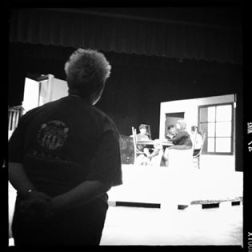
Two student actors receiving direction from their director
Let’s consider the art and impact of stage readings. Last weekend, I had a very rare opportunity-performing! Not only did I act, but I was directed by a former student of mine, Melissa Trieweiller. Plus, I was the first person to play the role of Olga, an old nun held against her will in the Russian Gulag.  This was a stage reading of a up-and-coming new play, The Gulag Girls by Shea Ketchum sponsored by Kansas City Public Theatre’s Theater Lab.

In the vast and captivating realm of theater, stage readings stand as a unique and powerful form of artistic expression. Unlike traditional plays with elaborate sets and full-fledged productions, stage readings bring scripts to life through the spoken word, allowing the audience to immerse themselves in the raw and unadorned essence of the story.

The Art and Impact of Stage Readings

The Essence of Stage Readings

At its core, a stage reading is a live performance where actors read from a script, typically without costumes, sets, or extensive rehearsals. The primary focus is on the text itself. The actors’ voices become the vehicles for conveying the story, emotions, and character dynamics. This minimalistic approach places a spotlight on the narrative and the nuances of the dialogue. Additionally, stage readings allow the audience to engage more deeply with the words and the subtleties of the language.

The Art and Impact of Stage Readings

The Creative Process

While the absence of elaborate staging may make stage readings seem straightforward, the creative process is intricate and demands a keen understanding of the script. In our case, we only performed/read the first act of Gulag Girls, because the second act was yet unfinished. In many ways, this made it more of a challenge for us actors.

In this particular circumstance, our job is to breathe life into our characters without knowing the whole story of the play.  As you might expect, there was no blocking. Consequently, we were relying solely on our  vocal delivery and emotional expression. Our director, a former student of mine, did a wonderful job guiding us and ensuring that the essence of the narrative was communicated effectively.

Shortened Rehearsal Schedule

One of the reasons I agreed to be a part of this stage reading was its rehearsal schedule.  We met twice last week for three hours each time and performed the reading once. The rehearsal process for a stage reading is often condensed compared to a full-scale production. Rehearsals for stage readings requires actors to quickly develop a profound understanding of their characters, their relationships, and the overall story arc. Got any budding playwrights in your classes?  Check out: Creative Writing/Playwriting Dialogue

The Art and Impact of Stage Readings

Ladies looking over their scripts double checking the material before we performed.’

One Challenge

In our case, we did not have a completed story arc.  Consequently, I had to hypothesize what might happen in the second act which would color the first one.  The challenge of a stage reading lies in creating a compelling performance that captivates the audience while working within the constraints of minimal visual elements. In other words, it takes actors who are excellent at their craft to make a stage reading exciting and worth attending.

Occasionally, some of the women (including myself) had moments when we were merely reading the script. Whenever I’d realize this about myself, I’d slow down. This forced me to concentrate on what I was saying, not what I was reading.  In fact, I believe it takes just as much concentration and focus to portray a role in a stage reading as a full production–maybe more.

The Art and Impact of Stage Readings

Impact on Performers

For actors, stage readings provide a unique and enriching experience. Stripped of the usual theatrical embellishments, performers are forced to rely on their vocal skills and emotional range to convey the depth of their characters. Probably most important is the emphasis on the spoken word. This fosters a deep connection between the actor and the audience.  Furthermore, the nuances of language and delivery take center stage.

For several years, my husband and I attended the Denver Center for Performing Arts Play Summits. I remember we fully enjoyed them. However, we found ourselves to be mentally exhausted afterward. We worked hard imagining the plays as they unfolded, but that was part of the fun of the experience.

The Art and Impact of Stage Readings

My Directing of Stage Readings

If you have never directed a stage reading, I highly recommend that you do!  Stage readings offer actors the opportunity to engage with a wide range of scripts and characters without the intensive time commitment of a full production. I directed two of them at a middle school–Holes (which included several teachers in the cast) , A Christmas Story and Bridge to Terabithia.  Our focus was not about reading a new play, but having extra opportunities for students to participate with very little friction for them to do so.  These three plays are all ready published.

Additionally, stage readings are much less expensive to produce than a full production.  Depending upon the playwright and how new the play is, you could pay them a stipend for the opportunity to introduce their show or give them a portion of your ticket sales.  However, they may look at the opportunity to have their show heard as payment enough.

Where can you find these new scripts?  They are everywhere.  Join a few theater teacher Facebook groups and ask around.  There are playwrights who frequent those groups. Luckily, they are looking for theaters to product their new plays–at little to no cost for you.

Stage Readings in the School Setting

My goal in directing stage readings was to give more students an opportunity to perform.  We’d only rehearse for five weekdays, then put up the production.  These extra productions gave performers additional opportunities to hone their craft. They could experiment with different genres. Definitely, it gave students an opportunity explore characters they might not have the chance to portray in a traditional play.

You can keep your expenses down by directing a stage reading, too.  There is no set to build, only chairs and music stands are needed. Usually, my students would dress in some sort of costume of their choosing using street clothes.  However, the costume was more of a suggestion to the character than anything else.

The Art and Impact of Stage Readings

In the photo above, you’ll see a backdrop was configured for this play.  This is an option for you if you want to give the play a little more life, but it is not expected.

Impact on Audiences

For audiences, stage readings offer a unique and intimate experience. The absence of elaborate sets and costumes allows spectators to use their imagination. Consequently, this creates a more personal connection with the narrative. By focusing on the spoken word audiences are encouraged to actively listen. This cleverly draws the audience into the intricate layers of the script.

Moreover, stage readings often feature new or lesser-known works, providing audiences with a sneak peek into the creative process. There’s the potential for discovering hidden gems. Additionally, the simplicity of the presentation allows for a more immediate and unfiltered connection between the audience and the story being told. This fosters a shared experience of discovery.

The Art and Impact of Stage Readings

A Full Circle Moment

This stage reading experience was a full circle for Melissa Trierweiler and I.  I’ve directed Melissa several times since she was a student of mine when she was twelve years old.  Now a grown woman, it is her turn to direct me.  The experience was very special for both of us.

Have you ever considered teaching or directing radio theater?  Check out this post. Top Reasons Teachers Succeed When Teaching With Radio Theater

The Art and Impact of Stage Readings

PHCoffee was our theater for the evening.

In conclusion, I encourage you to consider adding a stage reading to your school season.  In the tapestry of theatrical expression, stage readings weave a distinctive thread. They emphasize the power of the spoken word and the richness of storytelling. Stage readings open the door to a realm where language and emotion reign supreme. Not surprisingly, they captivate both performers and audiences alike.

As a form of artistic exploration, stage readings stand as a testament to the enduring potency of the written word. Moreover, they transcend the boundaries of traditional theatrical conventions. So, try producing a stage reading! You never know. Perhaps there are some hidden talents in your school who think this experience would be very cool. Maybe they’ll audition for you? Got reluctant students in your class, check out this post, Ten Ways to Teach Reluctant Students in Your Theater Class.

Have you directed any stage readings?  What are your opinions of them?  I’d love to hear from you.  Contact me at DhcBaldwin@gmail.com

Woman behind DramaMommaSpeaks

Share this:

  • Click to share on Tumblr (Opens in new window) Tumblr
  • More
  • Click to share on X (Opens in new window) X
  • Click to share on Facebook (Opens in new window) Facebook
  • Click to share on Pinterest (Opens in new window) Pinterest
  • Click to share on LinkedIn (Opens in new window) LinkedIn
  • Click to email a link to a friend (Opens in new window) Email
  • Click to share on Reddit (Opens in new window) Reddit
  • Click to share on Pocket (Opens in new window) Pocket
  • Click to share on Telegram (Opens in new window) Telegram
  • Click to share on WhatsApp (Opens in new window) WhatsApp

Like this:

Like Loading...

Filed Under: acting, arts education, community theater, directing experiences, drama education, plays, Producing plays and musicals, theater, theatre Tagged With: A Christmas Story, Bridge to Terabithia, Holes, stage readings, The Gulag Girls

What Everyone Should Know About Selecting a Musical For Their School

July 5, 2023 By dhcbaldwin Leave a Comment

Today, I want to talk to you about what everyone should know about selecting a musical for their school. As much as it is exciting to think about what production would serve your students the best, it’s also a huge challenge to do so.

Before you, the director, do anything you of course must read several scripts and select the one you like the most. This needs to occur at least six months in advance–don’t wait on this decision. (Why?  Because everyone and their dog is getting rights to productions.) I suggest you check out: Music Theater International or  Concord Theatrical, but there are many more just as good. 

First, I’d look over the music and make certain you have students who can sing the roles. Check vocal ranges, too.  Musicals are notorious for having many scene and costume changes, so be on the look out for those needs.  All that will matter when you begin to mount the production.  I have a lot of experience with Music Theater International.  Check out this post concerning my opinion of them:  MTI Junior Musicals– A Dream Come True!

My First Choice for a Musical

People ask for my advice concerning which musical they should select.  Generally, if it’s their first musical I suggest the near classic The Music Man.  It is still my go-to if I have the opportunity to choose the production.

What Everyone Should Know About Selecting a Musical For Their School

Selecting a Musical for Your School

Here’s the synopsis straight from Music Theater International, “By turns wicked, funny, warm, romantic and touching, The Music Man is family entertainment at its best. Meredith Willson’s six-time, Tony Award-winning musical comedy has been entertaining audiences since 1957 and is a family-friendly story to be shared with every generation.

The Music Man follows fast-talking traveling salesman, Harold Hill, as he cons the people of River City, Iowa, into buying instruments and uniforms for a boys’ band that he vows to organize – this, despite the fact that he doesn’t know a trombone from a treble clef. His plans to skip town with the cash are foiled when he falls for Marian, the librarian, who transforms him into a respectable citizen by curtain’s fall.”

This script is written very well.  If you’ve ever seen a play written by Neil Simon, you know that no matter who directs it the script will carry the actors’ performances no matter their quality.  Meredith Willson’s book for The Music Man is the same way.  To think that this gem was written in 1957 and still stands the test of time, never feels dated or old is a testament to its quality.

Looking to teach how to write your own musical to beginning students?  Go here.

File:Meredith willson 1937edited.jpg

Meredith Wilson

Selecting a Musical for Your School

Ever heard the phrase “butts in the seats”? In theatre, one of our biggest challenges is paying the bills for a production.  Some companies mount only musicals because they’ve discovered musicals have wide appeal. They are big money makers which is a good thing, because they cost a fortune to just rent!

So, if you want to fill your venue’s seats with more than just parents and students’ friends, pick something like The Music Man as your first production. If you are the first person to begin a program in your school, you want to wow your audience and establish a strong foundation for the future.  I do not recommend you do the latest and trendiest musical right now, whatever it may be.  Establish your program first and then select something more modern.

I recommend Music Man because the show has been around for many years and people have either seen it many times, on screen and a theater or they’ve performed in it.  It’s a staple of most theater companies, especially community theater.

What Everyone Should Know About Selecting a Musical For Their School

Your Objective

It’s important for you to have an objective with your production.  Some questions to ask yourself–Are you trying to establish a new program?  Or establish yourself in the department?  Or do you want a theater program which parents can trust and support?

The selection of your future musicals and plays will address your objective if you first decide upon it. You can always change your mind after a year or two and head a different direction if you aren’t having the success you expect.

The Music

This music has a “toe tappin'” kind of feel.  A lot of the songs are very familiar to people and you will find that your students may not them by having heard them so much.  Songs like “76 Trombones” is the most famous.  Most of the music is easy to learn.

The only difficult is that of the barbershop quartet (aka the School Board) with songs such as “Lida Rose.”  Also, Marion has an exciting one–“My White Knight.” Generally, the music can be learned to sing either unison if you need or several parts or a full out chorus

What Everyone Should Know About Selecting a Musical For Their School

Cast Break down

The show requires thirteen males and females and a chorus.  Your chorus can be as large as you need which in a school setting is so helpful.   Your biggest challenge is finding a male to play Harold Hill, the lead.  If he can act well, but his singing isn’t the best that’s okay.  It’s most important that your female lead, who portrays Marion Paroo, be a lovely singer who sings soprano.

The Music Man is a terrific vehicle for females.  Halleluijah!  If you are producing this at the high school level, you can feature a group of dancers who portray the students in the band at the end of the show.  Also, you need a few younger students.  You can involve elementary students or use students who are small and look younger.

Several of the characters require acting which is comedic and broad. Generally, novice actors  can do this believably.  Directing broad acting is easiest for novice directors as well.  The Mayor, his wife Eulailee,  his daughter Zaneeta, Zaneeta’s boyfriend Tommy, Harold’s friend Nathan.

Plus, some members of the chorus such as the Pick a Little Ladies and the School Board have great moments for comedy.  If the acting becomes too melodramatic, it is easy to direct actors to “pull it back a bit.” I always say if you have a strong Harold Hill and Marion Paroo the show can ride on that!

What Everyone Should Know About Selecting a Musical For Their School

Set Design

Another plus to The Music Man is the set.  There are several settings in the show:  the library, the Paroo home and porch, the school gymnasium and the town square. They can be depicted with the use of flats made into periaktois which display the different places in the story.

If you have room for a turntable, it’s useful in this situation and keeps the production moving along smoothly.  If you have room for platforms, you could use them instead.  And the use of white lattices goes a long way to give the idea of a small town at the turn of the century.

What Everyone Should Know About Selecting a Musical For Their School

Costumes

As we probably know, costumes play a vital role in a production.  This show is set in the early 1900s.  Never you mind about that!  I’ve found that if you have one costume per person for this production you can get by adequately.  The woman need long skirts, long sleeved blouses with high collars.

The girls need calf length skirts and blouses like the ladies. The men and boys need trousers, a long sleeved shirt and a hat.  Generally, my Harold and Marion have several costumes. There is a barbershop quartet which are fun to dress alike and a group of ladies who dress in Grecian togas for one scene.  Everything is up to your concept, so just do the best you can. 

Here’s a secret.  If everyone has the proper shoe wear for the show, you can pull it off.  So, women in heeled lace up boots (which look like the time period), and children in a neutral shoe like a short boot or girls in a black flat are adequate.

A good place to find hats for this musical is Amazon.  I see they have skimmer hats for men.  Or you can purchase  inexpensive simmer hats which are made of  sytrofoam  and paint them with craft paint to look more believable.  In the past, my ladies purchased hats with large brims. They’d get together and have a hat party decorating their hat for their character. I’d suggest a few of these hats. Hot glue some flowers on these babies and you are good to go!

The only big challenge in costuming are the marching band uniforms.  Your solution is to talk with your music departments and see if they keep their old marching band uniforms.  If they do, you can use those.

What Everyone Should Know About Selecting a Musical For Their School

Stage Properties

Most of the stage props are simple to collect though a few are tricky. You need a firecracker or something that makes the sound of a firecracker for the gymnasium scene.  This show requires band instruments for your “kid band” to hold near the end of the musical  They don’t have to work very well.  Your students don’t need to play them so if they are broken but look fine, that’s okay.

I’ll be honest here. I know I’m partial to this musical.  My husband  and I met while he conducted the orchestra for a production of it and I played Marion.  In addition, I’ve produced and directed both the adult version and junior versions four times.

All I can say friend is, it works.  It works. every. time. If you are looking for a Broadway musical to study with your students, check out my Broadway Musical and Unit of The Music Man. It contains everything a busy teacher needs to be successful in teaching it and engaging their students.

So there you have it–what everyone should know about selecting a musical for their school.  What musical do you suggest to new directors?  I have several others I suggest as well.  They are another blog post.

Woman behind DramaMommaSpeaks


Share this:

  • Click to share on Tumblr (Opens in new window) Tumblr
  • More
  • Click to share on X (Opens in new window) X
  • Click to share on Facebook (Opens in new window) Facebook
  • Click to share on Pinterest (Opens in new window) Pinterest
  • Click to share on LinkedIn (Opens in new window) LinkedIn
  • Click to email a link to a friend (Opens in new window) Email
  • Click to share on Reddit (Opens in new window) Reddit
  • Click to share on Pocket (Opens in new window) Pocket
  • Click to share on Telegram (Opens in new window) Telegram
  • Click to share on WhatsApp (Opens in new window) WhatsApp

Like this:

Like Loading...

Filed Under: acting, Arts, arts education, Broadway, community theater, directing experiences, drama education, music education, Musical Theatre, Producing plays and musicals, youth theatre Tagged With: casting, community theater, costume design, directing advice, set design, stage production advice, stage properties, The Music Man Broadway musical, themes

An Amazing Play That Most Theater Teachers Never Produce

May 2, 2023 By dhcbaldwin Leave a Comment

An Amazing Play That Most Theater Teachers Never Produce

An Amazing Play That Most Theater Teachers Never Produce

There’s an amazing play written by Playwight Aurand Harris that most theater teachers never produce. It’s name?  Orphan Train. Busy theater teachers/directors have no time to consider plays other than those from their past successes. They simply don’t have the brain space left to do so. That’s where I come in.

The Orphan Train published by Dramatic Publishing.

An Amazing Play That Most Theater Teachers Never Produce

An Amazing Play That Most Theater Teachers Never Produce

Synopsis

The play tells the story of nine orphans on an “orphan train” that left New York City on May 28, 1914. The train travels to Midwestern towns in search of homes, any homes, anywhere for the orphaned and unwanted children. There’s Mary, Evie, spunky Pegeen, Annie and Little Lucy, a quiet one.
Other orphans include Frank (who later becomes Frankie, a small girl), Raymond, Lucky and Danny the song-and-dance boy. And there are the men and women hoping for children. The lonesome whistle wails as the train chugs between encounters of anxiety, laughter, wistfulness, rejection and acceptance. Eight stories unfold, each a memorable surprise.  Cast size: 6m., 7w., 6 boys, 6 girls, or 11 (1m., 1w., 3 boys, 6 girls) with doubling.
An Amazing Play That Most Theater Teachers Never Produce

An Amazing Play That Most Theater Teachers Never Produce

Probably the first reason a teacher/director might not consider The Orphan Train is the size of the cast–13. There is a way around this issue.  Have you ever double cast a production?  Although it appears as extra work for you, long term it is a Godsend.  Usually, one of the two actors double cast in a role will always be in attendance so you can progress through your rehearsal calendar as planned. Also, if you are short on males, a female can portray one of the male characters. Or vice versa.
If you’d like more information about double casting, check out: Double Casting a Show? Here’s Advice
or help with directing– Ten Important Elements to Consider When Directing a Youth Theater Production.

Technical Requirements of The Orphan Train

I directed The Orphan Train with middle school students.  One reason I selected it is that there is no need for a set.  We legged several platforms and placed them together making different levels. Stage pieces consisted of black boxes and several wooden chairs.
The necessary stage properties are minimal as I recall.  That’s another plus to selecting this production for your season.
An Amazing Play That Most Theater Teachers Never Produce

Costume Design for The Orphan Train

Usually, I designed the costumes for my middle school plays partly because I have an intense interest in costume design. However, I took a chance with this play and did something completely different–I asked the students to find their own costumes. My budget paid for those students who could not afford it.

My color palette for the production was black and white hopefully denoting a black and white photograph.  To this end, I asked the students to bring in costume pieces for their character of either black, white or even gray. I guessed that most of the students could find what they needed quite easily and I was correct.  It worked great!  When they created a tableaux at the end of the show, they looked like a vintage photograph.

Did you know I have the secret to boosting student engagement?  My new book, “We’re Live! Radio Theater #101” explains my journey to implementing this unique tool in the classroom. Check it out here

An Amazing Play That Most Theater Teachers Never Produce

(We used this photo as a template for our show tee shirts! )

Light Design for The Orphan Train

I was fortunate.  My principal at the time was very supportive of the arts (in fact, all of the principals I worked for were supportive of the arts), and purchased lighting equipment for us.  Lighting the show was fairly simple–I used the stage lights (on little dimmers if you can imagine) and then our light board, trees and several ellipsoidal and fresnel.


Sound Design for The Orphan Train

My husband and I are avid music lovers.  We listen to all types of music.  Consequently, we knew of music which would be perfect for pre-show, intermission and post show.  We used period music such as Popular Roaring 1920s Music from the Year 1926.  The sound of trains was another thing we used between scenes–steam engines puffing, rolling around, train whistles, etc.

An Amazing Play That Most Theater Teachers Never Produce

Historical Significance of The Orphan Train

When I began researching the play, I found this entry in Wikipedia.com, “The Orphan Train Movement was a supervised welfare program that transported children from crowded Eastern cities of the United States to foster homes located largely in rural areas of the Midwest. The orphan trains operated between 1854 and 1929, relocating from about 200,000 children.

The co-founders of the Orphan Train movement claimed that these children were orphaned, abandoned, abused, or homeless, but this was not always true. They were mostly the children of new immigrants and the children of the poor and destitute families living in these cities. Criticisms of the program include ineffective screening of caretakers, insufficient follow-ups on placements, and that many children were used as strictly slave farm labor.

Charitable Institutions Aid to Orphans

Three charitable institutions, Children’s Village (founded 1851 by 24 philanthropists ), the Children’s Aid Society (established 1853 by Charles Loring Brace) and later, New York Foundling Hospital, endeavored to help these children. The institutions were supported by wealthy donors and operated by professional staff. The three institutions developed a program that placed homeless, orphaned, and abandoned city children, who numbered an estimated 30,000 in New York City alone in the 1850s, in foster homes throughout the country.

The children were transported to their new homes on trains that were labeled “orphan trains” or “baby trains”. This relocation of children ended in 1930 due to decreased need for farm labor in the Midwest. The phrase “orphan train” was first used in 1854 to describe the transportation of children from their home area via the railroad. However, the term “Orphan Train” was not widely used until long after the Orphan Train program had ended.

An Amazing Play That Most Theater Teachers Never Produce

Interviewing An Orphan 

We lived in Missouri at the time in which I directed the play. We’d heard there were several people still alive who rode the Orphan train many years prior.  With a little extra work, a parent volunteer found one of the children (now adult) who was an orphan and traveled by Orphan Train.  

This lovely lady came and spoke to our cast about what it was like to ride the train.  Although that was many years ago, I recall she said that the family she ended up with were not very nice to her but she grew up with them.

You always want a story like this to have a happy ending, don’t you?  However, it’s important that our students see life as it can be sometimes, especially in a case such as this one.

An Amazing Play That Most Theater Teachers Never Produce

Maybe you found this blog because you are interested in integrating drama into your core class.  I found a terrific site with plenty of information and teaching suggestions–The Orphan Train.  Start here to build your unit around The Orphan Train.  

Additionally, you could purchase a class set of this play to use as a read aloud. (Make sure you check it out before you purchase for your entire class–you don’t just want to take my word for it.  I remember there are several swear words which you may want to switch out with others not as flowery.)

The cover of a costume design lesson.

Use the script to study set or costume design.  This particular lesson would be helpful to you if you study costume design accompanying the play.  Or use this unit to study set design to accompany the play.

Have I convinced you to check out The Orphan Train play?  If hope so.  If you have any questions about directing this play or any other questions, please feel free to email me.  I receive emails every week from teachers needing a veteran teacher to give them advice.  That’s what I’m here for. Want a FREE lesson great for middle grade students?  Go here:  Lin Manuel Miranda


Share this:

  • Click to share on Tumblr (Opens in new window) Tumblr
  • More
  • Click to share on X (Opens in new window) X
  • Click to share on Facebook (Opens in new window) Facebook
  • Click to share on Pinterest (Opens in new window) Pinterest
  • Click to share on LinkedIn (Opens in new window) LinkedIn
  • Click to email a link to a friend (Opens in new window) Email
  • Click to share on Reddit (Opens in new window) Reddit
  • Click to share on Pocket (Opens in new window) Pocket
  • Click to share on Telegram (Opens in new window) Telegram
  • Click to share on WhatsApp (Opens in new window) WhatsApp

Like this:

Like Loading...

Filed Under: acting, arts education, arts integration, community theater, directing experiences, drama education, drama integration, Education, Education, middle grades, plays, Production Questions, Teacherspayteachers, Teaching, teaching strategies, theater, theatre, youth theatre Tagged With: double casting, early 1900s, historical events, Middle school, orphan trains, orphans

Youth Theater Musical Rehearsal: What You Need to Know

November 9, 2022 By dhcbaldwin Leave a Comment

This blog posts concerns how to rehearse a musical in youth theater.

The Youth Theater Musical Process: What You Need to Know

The youth theater musical process: what you need to know is one of those subjects you figure anyone who has acted at least once will know. Not so. This is a two part post. Here is the first post. The Steps in a Play Rehearsal in Youth Theater. 

Lately, I’ve read several posts from newbie teachers with no idea about the steps of the rehearsal process for a musical.  That seems odd to me, but maybe they are teachers whose focus is Language Arts or Social Studies? I know that sometimes the administration will ask a non-theater teacher to direct the school play or supervise the drama club, so that could be the reason for the unfamiliarity.

Regardless, I will take you through the process for a musical.  You can depend upon this process to prepare your young actors because I’m an expert in directing youth theater.  Having directed over 350 plays and musicals with both adults and children, I know the process like the back of my hand. Looking for a free lesson?  Go Here.

Youth Theater Musical Rehearsal: What You Need to Know

Step One: Selecting the Script

Before you, the director, do anything you of course must read several scripts and select the one you like the most. This needs to occur at least six months in advance–don’t wait on this decision. (Why?  Because everyone and their dog is getting rights to productions.) I suggest you check out: Music Theater International or  Concord Theatrical, but there are many more just as good. 

First, I’d look over the music and make certain you have students who can sing the roles. Check vocal ranges, too.  Musicals are notorious for having many scene and costume changes, so be on the look out for those needs.  All that will matter when you begin to mount the production.  I have a lot of experience with Music Theater International.  Check out this post concerning my opinion of them:  MTI Junior Musicals– A Dream Come True!

After you’ve chosen the musical, you may want to announce it to your students.  When?  It depends upon when you plan to announce it and when the production is to be performed.  Me?  I announce a month ahead of the auditions and no sooner. You need to decide whether you want your students to audition with songs for the musical.  If so, have photocopies of those songs available to the students.

The Youth Theater Musical Process: What You Need to Know

Step Two:  Auditions

Auditions for musicals contain three parts–singing, dancing and acting.  They will take several days to complete.

In the singing audition, will you audition students individually or in groups?  Make sure you have thought about if a non singer can be cast in a singing role and vice versa.

How important is it to you that the cast be able to dance?  Is it a tap show?  Are you going to require all dancers have tap dance experience? Will they need tap shoes?  Who will pay for those shoes, your department or the student?  Trust me, you can not learn to tap dance in just six weeks–you can do a few steps in a combination, but that’s asking a lot of non-dancers. This decision is very important.

The Youth Theater Musical Process: What You Need to Know

Youth Theater Musical Rehearsal: What You Need to Know


All School Production

Here is something else–will you accept everyone who auditions to be in the production?  Musicals allow for this much more than a play.  This question could be answered by your mission.  If your mission is to give everyone an opportunity to be on the stage, then auditions will go more quickly than if you are having a set amount of cast members.

In the call backs, you will want to hear the students sing and read again. Will these be cold call backs where by the students do not see the script ahead of time?  Or will you provide script sides for the callbacks?

Casting Tips

After the production is cast, at the first cast meeting I encourage students who did not receive the role they wanted to take dance classes and private singing lessons. This is a general statement and not directed to any one student.  Those who are serious about being cast will probably take some lessons before the next set of auditions.

Post the cast list either on a Friday afternoon  (when you can leave the school or theater for the weekend and give students time to unruffle their disappointed feathers) or post on-line on your website. Handling emails from parents on Monday is another blog post….someday.

Youth Theater Musical Rehearsal: What You Need to Know

The Read Through

Step Three:  Cast and Crew Read-Through

Usually, at the first meeting I ask the students to stand and say their name and what role they are playing. This is especially important to do for the chorus.  In fact, I have them introduce themselves first.  It’s a psychological boost for them if you think about it.  You focused on them first.  It may never occur again during the rehearsal process.

Next, we sing thru the music in the show.  I share my concept for the production as the songs progress.  Usually, I have a collage of photos, textures, colors or I might just talk about my thoughts.  If I have a model of the set, I share the model with them so they have a good idea of what the production will look like.

Just as with a play, the stage manager hands out a rehearsal schedule. I make it clear to the cast and the crew that their attendance matters.  They all ready know the absence policy because I gave it to them at the auditions.

Step Four:  Music Rehearsals

The first two weeks of rehearsals are planned for singing only.  The rehearsals are no longer than two hours and I begin with the large numbers first.  As the first week progresses, I call smaller group numbers and then solos.  Students only attend the rehearsals when they are included in the music.  I give them as much as of their free time back as I can at the beginning of the rehearsal, because I know that there will come a time when I need them more than what I originally planned.

The Youth Theater Musical Process: What You Need to Know

Youth Theater Musical Rehearsal: What You Need to Know

Step Five:  Choreography and Staging Rehearsals

The next two weeks are for choreography and staging of songs. Musical Staging is the choreographic elements that make a song or performance look more “theatrical” but doesn’t necessarily include intense dance choreography. Sometimes my choreographer will stage the numbers and sometimes I do them–frequently we split them up with both taking an equal amount.

Advice: It is my opinion that you first choreograph the songs which are the most difficult and include the largest group of people.  It’s possible that the last song in act one is challenging, so begin with it.  That gives the students more time to cogitate on the music.  Look at the second act and see what else is difficult.  It’s probably a song near the end of the show or even the last song of the show.  That’s fairly typical.  Choreograph this number second.  Then go to the next most difficult musical number and choreograph it.

The Youth Theater Musical Process: What You Need to Know

Youth Theater Musical Rehearsal: What You Need to Know

Step Six:  Blocking Rehearsals

Blocking rehearsals take one week to complete. Large group scenes are murder to block.  You might want to block sections of a scene a bit at a time.  Generally, I block three scenes in one rehearsal and follow a building block method as I do with a play.  Check out my first post:  Ten Steps to a Play or Musical Rehearsal 

Step Seven:  Working Rehearsals

In working rehearsals, I often put the musical number of a scene with the lines leading in and out of it so we can all see how it flows together.  Working rehearsals take me at least a week or more to accomplish. I go slowly and rehearse each scene several times in a two hour stretch.

At this point, most of your cast will be in attendance at rehearsals.  Until now their rehearsals have been spotty–sometimes once or twice a week, others will have rehearsal every day and so forth. Don’t be surprised if the students are chatty at the first two rehearsals.  Why?  They aren’t used to being all together!  The enormity of the production becomes very real for them at this point.  They see it taking shape right before their eyes–that’s exciting and can be a little anxiety ridden.  That’s natural.

The Youth Theater Musical Process: What You Need to Know

Youth Theater Musical Rehearsal: What You Need to Know

Advice: It’s best to work the scene in numerical order so the cast begins to get a feel for the show’s through line.  What’s a through line?  The through line is the connecting theme or plot of the musical.  My guess is that you mentioned your through line at the first cast meeting, but that was several weeks ago and students forget.

Here’s another bit of advice:  If the show is technically challenging and my actors are going to help with scene changes, I have been known to block scenes changes during working rehearsals. Even if students don’t have the actual set pieces to place on stage, they can at least begin to think about them.  Again, it aids the students in becoming very familiar with the production.

Step Eight:  Polishing Rehearsals and Off Book

It’s not unusual for me to ask my cast to be off book early on the show.  However, similar to a play I allow them a blocking rehearsal and one working rehearsal but then they must be off book.  The sooner they can put down their script the better for a musical production.

You will want at least two rehearsals just for the orchestra as you focus on the orchestra’s needs during each rehearsal.  These rehearsals are an opportunity to sing through the show and work out any kinks which emerge.

The Youth Theater Musical Process: What You Need to Know

Youth Theater Musical Rehearsal: What You Need to Know

Step Nine:  Technical Rehearsals

Remember me discussing having your cast member practice scene changes if they are helping with them? You may have two to four technical rehearsals depending upon the complexity of the musical.  Each act needs at least one rehearsal of a two hour stretch.  This gives the students’ brain time to adjust to the challenges or their responsibilities in a scene change in that one act. When you add props, you will find that the acting goes out the window.  Suddenly, an actor is holding a prop and for many students this distracts them.  For several rehearsals it is not uncommon for the students to back peddle a bit. A lot of details are being thrown at them–never fear.  They will get it!  Your stage manager will need to help them figure out if they must strike the props after it’s used or it’s preset, etc.  Everything is planned ahead of time.  I always say, “We plan for perfection, but we expect mistakes.”

The schedule could be:

Act One  6:30 to 8:30 (scene changes included)

Act Two 6:30 to 8:30  (scene changes included)

Act One  6:30 to 8:30 (add props. )

Act Two 6:30 to 8:30 (add props.)

The Youth Theater Musical Process: What You Need to Know

Youth Theater Musical Rehearsal: What You Need to Know

Step Ten:  Dress Rehearsals

Recently, someone asked me if four dress rehearsals was enough for a cast.  That’s too many in my opinion.  If the students are having trouble changing then just rehearse the costume changes.

Be careful that you don’t over rehearse the show.  This can occur too.  It’s okay that your dress rehearsals have a few problems, provided you brainstorm how to improve them and practice the changes a couple of times. Here’s a wonderful video clip of a costume change in Mary Poppins.

The Youth Theater Musical Process: What You Need to Know

Your show does not need to be perfect (if it ever is) by the second dress rehearsal. Trust me, you want your cast just a little nervous but confident for opening night. Careful not to burn them out!

Advice:  Teach your cast how to handle off balanced unplanned moments is so important.  Viola Spolin book Theater Games  Games for the Classroom contains a game which really helps with this problem.  It’s called Kitty Wants a Corner.  You can find the game through this link to her book.  

Whew!  This was a lot of information.  I hope I’ve given you a comprehensive guide for your rehearsals.  You can always email me if you need extra guidance.  That’s what I’m here for.  Until next time.

Woman behind DramaMommaSpeaks


Share this:

  • Click to share on Tumblr (Opens in new window) Tumblr
  • More
  • Click to share on X (Opens in new window) X
  • Click to share on Facebook (Opens in new window) Facebook
  • Click to share on Pinterest (Opens in new window) Pinterest
  • Click to share on LinkedIn (Opens in new window) LinkedIn
  • Click to email a link to a friend (Opens in new window) Email
  • Click to share on Reddit (Opens in new window) Reddit
  • Click to share on Pocket (Opens in new window) Pocket
  • Click to share on Telegram (Opens in new window) Telegram
  • Click to share on WhatsApp (Opens in new window) WhatsApp

Like this:

Like Loading...

Filed Under: acting, arts education, community theater, community theatre, directing experiences, drama education, Musical Theatre, Production Questions, theater, theatre, youth theatre Tagged With: musicals, rehearsal process for a musical, rehearsing a musical

Ten Steps in a Play Rehearsal in Youth Theater

October 25, 2022 By dhcbaldwin Leave a Comment

Ten Steps in a Play Rehearsal in Youth Theater is one of those subjects you figure anyone who has acted at least once will know. Not so. This is a two part post.  Next time, I’ll give you the rest of it, ok?

Lately, I’ve read several posts from newbie teachers with no idea about the steps of the rehearsal process for a play or musical.  That seems odd to me, but maybe they are teachers whose focus is Language Arts, Social Studies? I know that sometimes the administration will ask to direct the school play or supervise the drama club, so that could be the reason for the unfamiliarity.

Regardless, I will take you through the process for both a play and musical.  You can depend upon this process to prepare your young actors because I’m an expert in directing youth theater.  Having directed over 350 plays and musicals with both adults and children, I know the process like the back of my hand.

Ten Steps in the Play or Musical Rehearsal in Youth Theater

Ten Steps in a Play Rehearsal in Youth Theater

I’m assuming you have the funds to mount your production.  If not here are a few ideas for you:  Turn Your Theater Department Fundraising Into A High Performing Machine

Step One: Selecting the Script

Before you, the director, do anything you of course must read several scripts and decide upon the one you like the most. I suggest you check out: Dramatic Publishing Company or  Dramatists Play Service. but there are many more just as good.  Keep in mind the number of characters, scenes, props and costumes.  All that will matter when you begin to mount the production.  I could write a whole post just about how to select a play or musical, but instead check out: Critical Steps in Selecting a Play or Musical: Casting

After you’ve chosen the play, you may want to announce it to your students.  When?  It depends upon when you plan to announce it and when the production is to be performed.  Me?  I announce a month ahead of the auditions and no sooner.  I don’t like for students to focus on the show too much ahead of time.  Before you know it, they’ve precast the whole show, purchased their own copy of it and maybe memorized lines.  Oh, no, no, no!

Step Two:  Auditions

Auditions will take a few days:

Day 1 and 2 Auditions

Day 3  Call backs

Day 4  Cast Announced

You may think this is a short time, but that’s what we are going for here.  Do your best not to drag out the audition process–the outcome becomes too important to the students.

Ten Steps in a Play Rehearsal in Youth Theater

Advice:  If you have an auditions and allow students to watch one another audition, then you may consider announcing to them something along the lines of, “From now on until the show is cast your behavior and attitude matter to me.  No distractions are tolerated by me. I expect you to be quiet and attentive. No phones may be out.  If someone happens to record another student’s audition and posts it publicly, the guilty party will be denied a role in the play.  This is an unbending rule.”

Casting Tips

I also remind them that, “Although at the present moment it may feel like this is the only play in the world in which you could be cast, this isn’t true.  This isn’t the be all, end all.  Check around the city and see if anyone else is producing a show you could audition for and participate elsewhere.”

Post the cast list either on a Friday afternoon  (when you can leave the school or theater for the weekend and give students time to unruffle their disappointed feathers) or post on-line on your website. Handling emails from parents on Monday is another blog post….someday.

Ten Steps in a Play Rehearsal in Youth Theater

Ten Steps to the Play or Musical Rehearsal Process in Youth Theater
First rehearsal of Mulan, Jr.

Step Three:  Cast and Crew Read-Through

I’m old school, so I still call this meeting the “read-through.”  Some people now call it a table read (I always thought that was only used for television or movies), but no matter. At this read-through, I ask the cast and crew to introduce themselves and the role or position they are filling.

Next, it’s time to share my concept for the production.  I might have a collage of photos, textures, colors or I might just talk about my thoughts.  Personally, I think a collage is the best because then everyone knows what you consider the color blood red, for example.

Ten Steps in a Play Rehearsal in Youth Theater

We read through the show.  If I have a stage manager, they read aloud the stage directions.  This is to give the cast a feel for the play not that we are going to use these directions.  Not everyone knows that the stage directions that are printed in the script are honoring the first cast to have ever performed the play.  It is not required that you use the directions.

The stage manager hands out a rehearsal schedule. I make it clear to the cast and the crew that their attendance matters.  They all ready know the absence policy because I gave it to them at the auditions.

Ten Steps in a Play or Musical Rehearsal Process in Youth Theater

Step Four:  Blocking Rehearsals

In the coming days, we begin blocking the play.  If I am able to do so, I tape the stage giving the cast an idea of the size of the set, where stairs and doors are located, etc.  Usually, I use folding chairs in place of the furniture.  Everyone is aware that the chairs signify particular pieces of furniture.

Depending upon the length of the play, I usually block about 5 to 8 pages at the first rehearsal.  Why not many?  Because the cast is adapting to the script, plus the stage and my direction. Some young students need to write down their blocking before they even step on the stage.  That’s your call.

Ten Steps in a Play Rehearsal in Youth Theater

Advice:  You will not find that novice actors having a sense of blocking and staging.  They can not block themselves nor frankly should they.  You are teaching them about acting in a play–that’s part of the responsibility of someone directing youth theater.

Ten Steps in a Play or Musical Rehearsal Process in Youth Theater

The Blocking Process

I use a building block process when directing. Usually, I have two hour rehearsals with one ten minute break at half.

Day 1 block pages 1 to 8

Day 2 block pages 9 to 15 (or when there is a change in the mood or rhythm of the play) If a character enters the stage for the first time, they will change the dynamics of the play–I promise you. The playwright writes the scene this way on purpose.  So, block to the entrance of the character. (When a character enters or exits the stage it is called a French scene.)

Day 3 block pages 16 to 20, review blocking 1 to 8.  Less new pages to block, more time to spend on reviewing the first day’s blocking.

Day 4 block pages 21 to 26, review blocking 9 to 15 and so forth

Day 5 block pages 27 to 30, review Day 3 and Day 4 blocking.

Blocking Rehearsal

This part of rehearsal would continue until the play is completely blocked–a few new pages, several pages of review, until I am finished.

If you have a difficult scene (such as the dinner scene in The Miracle Worker between Helen and Annie), I take an entire rehearsal to block it.

Do I expect everyone to attend each rehearsal?  No, I’d rather they did not.  It’s just more students for me to be responsible for, more chances for talking and whatever else might bug me that day.  🙂

Ten Steps in a Play Rehearsal Process in Youth Theater

If you are interested in your students producing a play themselves, check out: How to Teach Play Production to Your Students

Ten Steps in the Play or Musical Rehearsal in Youth Theater

Step Five:  Working and Developing Rehearsals and Off Book

Let’s say I have everything blocked by Day 10.  Next we go into working and developing rehearsals.  Working rehearsal are just that–we work through the play a few pages at the time (probably using two days of blocking at a time) and fix any problem areas or give the students more opportunities to practice together. Developing is just a fancy name for giving the play “air” as I call it.  I give the cast a chance to settle into the play, adding their ideas here and there.

Advice:  I expect students to practice on their own time–reviewing their blocking and memorizing their lines.  I do not use rehearsals for line memorization. Those days can be excruciating for all of us as we listen to someone struggling with their lines.  Frankly, it makes everyone listening anxious. Even though we trust the actor will have his lines down pat by opening night, it is still a bit nerve wracking.  Wondered about tips to getting off book?  Check out this fascinating video:  How to Memorize Lines

Ten Steps in a Play Rehearsal in Youth Theater

Students should be off book for act one by Day 10 and act two by Day 15. Here is a blog post with three proven methods for memorizing lines: Three Ways to Memorize Lines for a Play or Musical I’m strict about this. What is off book?  It is the day when the actors rehearse without a script in their hands. They can call for lines, but if it’s obvious they have not memorized their lines, I make them practice with their script as to not bring the mood of the rehearsal down.

Want your students to design their own costume?  Theater Arts Unit Costume Design High School Level

After we have worked through the entire play, we have polishing rehearsals.  I’ll talk about those in the next post. Your students would appreciate this: Watch Splashy Rehearsal

Or maybe you just want to teach all things technical?  Here’s a bundle you may want to pick up for this purpose.

So there you have it–Ten Steps in a Play Rehearsal in Youth Theater. How do you run your rehearsals?  It’s always nice to hear from you.  You can contact me at DhcBaldwin@gmail.com or reply here. Here are more directing tips: Eighteen Ways To Make Your Directing Experience Less Stressful, Part One

Are you needing a FREE lesson?  Pick up this one: Lin Manuel Miranda Famous Theater Biography


Ten Steps in the Play or Musical Rehearsal in Youth Theater


Share this:

  • Click to share on Tumblr (Opens in new window) Tumblr
  • More
  • Click to share on X (Opens in new window) X
  • Click to share on Facebook (Opens in new window) Facebook
  • Click to share on Pinterest (Opens in new window) Pinterest
  • Click to share on LinkedIn (Opens in new window) LinkedIn
  • Click to email a link to a friend (Opens in new window) Email
  • Click to share on Reddit (Opens in new window) Reddit
  • Click to share on Pocket (Opens in new window) Pocket
  • Click to share on Telegram (Opens in new window) Telegram
  • Click to share on WhatsApp (Opens in new window) WhatsApp

Like this:

Like Loading...

Filed Under: acting, arts education, community theater, community theatre, directing experiences, drama education, Musical Theatre, New Teacher, performing arts, Play, plays, Producing plays and musicals, Production Questions, youth theatre Tagged With: blocking rehearsal, community theater directing, developing rehearsal, directing, directing tips, directing young actors, youth theater

The Best Advice You Could Ever Get About Selecting Plays For Youth Theater

August 25, 2022 By dhcbaldwin Leave a Comment

The Best Advice You Could Ever Get About Selecting Plays For Youth Theater

The Best Advice You Could Ever Get About Selecting Plays For Youth Theater

The Best Advice You Could Ever Get About Selecting Plays For Youth Theater

I’m a member of several Facebook groups for theater teachers.  Other than enjoying reading their posts (which are hysterical sometimes), I am touched by their many questions and how they help each other. During this time of year teachers are looking for plays for young actors–youth theater plays to produce with their students or study in a class.

I can feel their frustration with selecting or even finding a script. Who better to receive advice from than those who has been in their shoes?  That’s me. Here’s the best advice you could ever get about new plays for youth theater

We theater teachers are a different bunch.  Selecting a play for students to read which appeals to most of them is a real challenge. A lot of theater teachers have students dropped on to their rosters who are not interested in theater and that’s another issue. Or a teacher finds a script but it’s juvenile or too mature.  Or they lack merit, or quite frankly, they are just plain stupid. Plus, reading a play written for adults isn’t always the most appropriate for students. And…not everyone wants to read Shakespeare which seems to be a go-to when a teacher/director just can not think what else to do.  That’s an entirely different blog post for another time.

My Background

Since I taught and directed for over thirty-eight years, I’ve had plenty of experience with this problem.  If you want to see my employment resume, go to: Teaching Resume. When I began directing and teaching in the late 1980s, I couldn’t find plays for young actors. I’d pad scripts with extra characters to give students a line or two.  Was it copyright infringement?  Probably, but the play catalogues didn’t carry youth theater scripts at all. If I’m guilty of anything it’s guilty of trying to educate our youth. I rest my case!

The Best Advice You Could Ever Get About Selecting Plays For Youth Theater

The Best Advice You Could Ever Get About Selecting Plays For Youth Theater

Finally, out of sheer desperation, I co-developed a national playwriting contest for youth theater plays in 1988.  You can read more about it here: Start a Playwriting Contest Using 20 Questions (part one) and Start a Playwriting Contest Using 20 Questions (part two).

It is my opinion that the youth theater play market became popular in the mid 1990s when Music Theater International unveiled its junior musical category.  Suddenly, theater and vocal music teachers had musicals to perform instead of having to use full length musicals written primarily for adults. With the rise of MTI’s junior musicals popularity, playwrights could see a reason to create scripts for our youth. Now we have many playwrights writing for our youth.

Having taught and directed for all those years and experienced this issue firsthand, I have a good finger on the pulse of what our theater teachers need or require. I know what works and what doesn’t.

I’m so pleased with the number of people who read my blog each day keeping my little blog in the top 5 of the most popular in theater education.  As I’ve mentioned before, I’m here to help.

What’s My Advice?

Although it may easiest just to produce a play you’ve directed in the past, my advice is to try a new playwright.  Be daring and select something that is best for your students even if the community isn’t familiar with it.  That’s the only way people can learn about–you be the first!

When we began our playwriting contest I mentioned above, we didn’t have many playwrights interested in participating.  After several years, the word got out and many plays were entered in the contest.  We’d bring the winner to Columbia, MO and they’d have an opportunity to see their new script performed by our theater school. It was a wonderful way for our community to experience new works and help the playwrights as well.

Consequently, I thought it would be useful to give some playwrights a platform in which to share their scripts.  Here are several plays which I suggest you give a look and perhaps you will want to produce them:

The Best Advice You Could Ever Get About Selecting Plays For Youth Theater

The Losers’ Club

The Losers’ Club, published by Eldridge Publishing by Jonathan Turner Smith

One Act (High School Level)

Duration: 40 minutes

Cast: 8 m, 6 w

A group of outcast high sclhool students in a small Texas town have formed “The Losers’ Club.” On homecoming evening, these 12 students kidnap the star football player, Joe Taylor, and homecoming queen nominee, Tawny Harris, who have ignored, bullied, and ridiculed members of the club for years. Lead by Trenton, a 17-year-old Goth, the club members put the condescending Joe and Tawny on trial for “crimes committed against their fellow students.”

Each member of the “jury” details how he or she has been harassed by Joe, Tawny, and their friends, and how their lives have been affected by the abuse. What is revealed in the testimonies and the result of the trial is a surprise to all. An excellent play to serve as a catalyst for realistic discussions about bullying in schools across America.

The Best Advice You Could Ever Get About Selecting Plays For Youth Theater

Back to the 80s!

Back to the 80s! published by Playscripts.com publishing by Dean O’Carroll

Parody  (High School and above)
Duration: 60 – 70 minutes
15 W, 7 M,  (11-116 actors possible: 5-99 W, 1-111 M)
Set: Flexible.
(65 productions)

Hold on to your hoverboards, we’re taking a trip Back to the 80s! When modern teen Mary Fitzfry gets sent back in time by an eccentric professor, she finds herself in the middle of a totally tubular cavalcade of 80s pop culture. There’s a lot of familiar faces, from the teens in breakfast-time detention to the guys chasing ghosts and dancing zombies, but the biggest surprise of all is Mary’s own protective mom as a teen. Turns out she’s actually kind of rad – but thanks to Mary’s time travel, she’s in trouble.

Can Mary make things right? This adventure takes you from the mall where everything happens, to a suburban sitcom street, to a cave under the high school – and you can choose who to feature from a flexible throng of characters to bring your audience maximum nostalgia. A hilarious parody to make all ages cheer “I love the 80s!”

The Best Advice You Could Ever Get About Selecting Plays For Youth Theater

The Best Advice You Could Ever Get About Selecting Plays For Youth Theater

The Kingdom of Academia

The Kingdom of Academia published by Brookly Publishers by Autumn Owens

Type: One Act (Middle School and up)
Genres: Comedy, Ensemble Cast
Themes: Science & Math, Personifications, Royalty
Duration: 30 minutes
Speaking Cast: 2 females, 1 male, 14 either (17 total cast)
Flexibility: 0-20 extras, gender flexible
All is well in The Kingdom of Academia – a royal land ruled by the much-loved King and Queen and inhabited by loyal subjects like Art, Geography, History, and Philosophy. But when the Board of Education sends Math to become a new subject of Academia, the Kingdom’s peace and unity are threatened as subjects riot against this new addition. The King and Queen, having failed their own math classes as young students, turn a deaf ear to Math’s pleas to join the Kingdom.
It’s up to Math and his newfound friends, Science and the Princess, to convince Academia that Math isn’t so boring and confusing after all. Just when it seems that Academia might have a change of heart, the notorious Board of Education arrives on the scene, offering to take Math back. Will the King and Queen seize the opportunity to send Math home, or can Math persuade the Kingdom that he counts after all?
The Best Advice You Could Ever Get About Selecting Plays For Youth Theater

It’s Her Say

Published by Stage Partners

Type:  Drama/Comedy (Middle School and up)

Short Play Collection.

Durations:  Each play is 10-20 minutes.

 Speaking Cast:  10-20 actors, flexible casting

It’s Her Say, a collection of short plays that focus on the female experience, can be used in the classroom for scene study or licensed for production. Ranging from historical fictionto social consciousness to shifting friendships to horror comedy, each play is written by a female-identifying theatre teacher who knows exactly what young performers are capable of and what kind of work they are eager to perform. This collection includes the following short plays:

Some Things Never Changeby Jane Best
I Said Run.by Rachel Bublitz
The Women’s Land Armyby Stephanie Buckley
Beauty Kweenzby Diana Burbano
Talk to Me About Homeby Eugenie Carabatsos
The Bootby Emily Hageman
Angela and Angie and Cynthiaby Patty MacMullen
The Stakeout by K. Alexa Mavromatis
The Un-Help Desk by Emily McClain
Girl, Period by Stephanie Shearer

(These plays can be licensed together or separately. If you license the whole collection, you have permission to pick and choose which plays to perform.)

I hope you take my advice and check out these plays in the near future.  This has been such a successful experience that I plan to blog again about this subject suggesting other plays suitable for our students!  Make sure you are following me so you’ll know when I’ve blogged again. Join here:

What is one of your favorite youth theater plays?  I’d love to discuss it with you.  Contact me at DhcBaldwin@gmail.com

Woman behind DramaMommaSpeaks


Share this:

  • Click to share on Tumblr (Opens in new window) Tumblr
  • More
  • Click to share on X (Opens in new window) X
  • Click to share on Facebook (Opens in new window) Facebook
  • Click to share on Pinterest (Opens in new window) Pinterest
  • Click to share on LinkedIn (Opens in new window) LinkedIn
  • Click to email a link to a friend (Opens in new window) Email
  • Click to share on Reddit (Opens in new window) Reddit
  • Click to share on Pocket (Opens in new window) Pocket
  • Click to share on Telegram (Opens in new window) Telegram
  • Click to share on WhatsApp (Opens in new window) WhatsApp

Like this:

Like Loading...

Filed Under: directing experiences, drama education, Education, excellence in teaching, High School, middle grades, performing arts, plays, Producing plays and musicals, theater, youth theatre Tagged With: new youth theater scripts, playwrights, playwriting, youth theater

« Previous Page
Next Page »

Footer

Follow Us

logo3.png

FOLLOW US

Facebook X-twitter Pinterest Instagram Envelope Rss

Goodreads: read

Malibu Rising
Malibu Rising
by Taylor Jenkins Reid
People We Meet on Vacation
by Emily Henry
The Last Thing He Told Me
by Laura Dave
Faking It
Faking It
by Cora Carmack
Losing It
Losing It
by Cora Carmack

goodreads.com
Copyright © 2024 · Wellness Pro on Genesis Framework · WordPress.com.Log in
 

Loading Comments...
 

    %d