• Skip to primary navigation
  • Skip to main content
  • Skip to footer

Join Me in my new Facebook Group! https://www.facebook.com/groups/417126059784261

Menu
  • Meet Deb – The Heart Behind DramaMommaSpeaks
    • Work with Me! 
    • Photo Gallery of DramaMommaSpeaks
    • Directorial Credits
  • I Give Book Talks! 
    • Book Talk Through Skype
    • Books
  • Freebies!
  • Bumbling Bea
  • Teaching Resume
  • Acting Resume
  • Contact Me
  • Blog
    • Drama Education
    • Arts Education
    • Youth Theatre
    • Middle Grades
    • Musical Theatre
    • Teaching
  • Meet Deb – The Heart Behind DramaMommaSpeaks
    • Work with Me! 
    • Photo Gallery of DramaMommaSpeaks
    • Directorial Credits
  • I Give Book Talks! 
    • Book Talk Through Skype
    • Books
  • Freebies!
  • Bumbling Bea
  • Teaching Resume
  • Acting Resume
  • Contact Me
  • Blog
    • Drama Education
    • Arts Education
    • Youth Theatre
    • Middle Grades
    • Musical Theatre
    • Teaching

Musical Theatre

Ten Important Elements to Consider When Directing a Youth Theater Production

October 20, 2021 By dhcbaldwin 7 Comments

Ten Important Elements to Consider When Directing a Youth Theater Production

When becoming a drama teacher, I had high hopes of ending up in a large high school.  But life didn’t work that way.Instead, I developed and administrated several youth theater companies for community theaters. Once our daughters were in elementary school and I no longer needed to stay home with them, I went back to teaching. Today, I’m going to discuss Ten Important Elements to Consider When Directing a Youth Theater Production.

For many years, I taught at the same time as I ran the youth programs (my last teaching position included teaching students in second through twelfth) with all of these other responsibilities. It was a crazy busy time, but It was necessary and I enjoyed it.

Thirty-eight plus years later, I can see my talents and knowledge were best used with students of every grade level. Surprisingly, I enjoyed teaching middle school students the most, but I liked directing the high school ones.  Frankly, it was just easier.

Middle School Students Versus High School Students

Although as I write this, that isn’t really factual either.  Let me put it this way–middle school students are fresh, accepting and diligent.  High school students are quick, discerning and trusting if they think you know your stuff.

I do.

From time to time, teachers email me asking for advice on selecting a musical for their school or youth theater program.  I’ve directed over 250 plays and musicals through the years. I’m glad I can help others.

Do you need some guidance? Here are my thoughts on the subject.

Ten Important Elements to Consider When Directing a Youth Theater Production

  1. Talent pool--Of course, we’d all like our talent pool to be large.  Middle school students voices begin to change (especially boys) and if you cast the show in September it’s likely by the time you open in November your male lead’s voice may have dropped.  That’s okay.  Teach him how to talk sing his lyrics and he’ll be fine.
  2. Number of Students–More important than the talent pool is the number of students which are interested and the number of roles available if the show you’ve selected.  Can you cast everyone?  Do you want to involved everyone?  I wouldn’t recommend using a particular show as a recruitment tool.  Start small if your department is new at your school and over tie you can produce large cast shows.  There’s nothing wrong with tempting interested students who have never acted to have to wait until the second production.  It makes the experience all the more special.
  3. Funds for producing–Can your budget afford the production you selected?  Musicals are notoriously expensive, but they usually bring in the larger audiences.
  4. Costumes and Set Requirements–What about the needs of the costumes and the set?  Are the costumes something you can rent or build?  Do you have volunteers to sew them?  Do characters change costumes many times?  Does the set have anything that is crucial to it?  Can you design a set which is inexpensive, but gets across the setting?  Or do you have a technical theater director and students to build it?

Here’s one show I think is great for middle school–Willy Wonka, Jr.

Updated Version of Roald Dahl's Willy Wonka JR. Now Available! | Music Theatre International

Ten Important Elements to Consider When Directing a Youth Theater Production

  1. A quick synopsis—Roald Dahl’s Willy Wonka JR. follows enigmatic candy manufacturer Willy Wonka as he stages a contest by hiding golden tickets in five of his scrumptious candy bars. Whomever comes up with these tickets will win a free tour of the Wonka factory, as well as a lifetime supply of candy. Four of the five winning children are insufferable brats, but the fifth is a likeable young lad named Charlie Bucket, who takes the tour in the company of his equally amiable grandfather. The children must learn to follow Mr. Wonka’s rules in the factory — or suffer the consequences.
  2. Characters–I love the characters in Willy Wonka, Jr. Plus, students enjoy them, too!  What’s easiest for students to portray?  Characters near their age.  There’s Verua Salt, Charlie Bucket, August Gloop, Violet Beauregarde and Mike Teevee.  Plus, there are the roles of the parents, the Oompa Loompas,Charlie’s grandparents and of course Willy Wonka.  (Several times, I’ve cast Willy Wonka with a female.)
  3. Costumes, Sets and Props--I’ve been lucky enough to have parent volunteers who create the stage properties for me.  Some of these props can be collected easily, but a few need more attention–the chocolate bars, the fizzing lifting drink, etc.  But a warning if you are new to producing a musical:  they notoriously have many stage properties.
  4. Audience appeal–Roald Dahl’s book of Charlie and the Chocolate Factory or which the musical was adapted is quite popular with children to read and the title has word recognition.  Whole families can attend without any worry about subject matter or language. Everyone can relate to the story–from the children contestants to the parents.  Some of the best lines are Willy Wonka’s asides to the audience.  They come across as private jokes and that’s such fun.
  5. Music–Oh my gosh, it’s so clever!  It’s written in key signatures young voices can reach and sing strongly.  No trying to reach notes which are completely out of their range. Students pick it up quickly, plus Music Theater International provides rehearsal CDs for your students to use. Personally, I think the rehearsal cd is worth its weight in gold.  Students become very confident singing because they learn the music right along with the CD. If you’ve never used the MTI rehearsal cds, you will not believe how much it helps the students.

If you are considering double casting, check out Double Casting a Show? 

Having directed Willy Wonka, Jr. four times, I know it very well.  It never grows old.

 I have one complaint

  1. Length–The show is a little long (In the past, I’ve cut reprises near the end. I even gave one of the Oompa Loompa reprises to the contestants in the Willy Wonka contest.) If you have students which can sustain their energy for ninety minutes, then great!  It’s my experience that the length drains their energy.  I mean, they are only kids, you know?

If you would like more information about directing a production, check out Critical Steps in Selecting a Play or Musical: Budget & Royalties or Critical Steps in Producing a Play or Musical: Costumes 

Create Your Own Musical Lesson

Are you looking for a lesson to engage your students which teaches about writing a musical? Here is one.

Create Your Own Musical

Teach your students the process of creating a musical of their own! This lesson gives your students an opportunity to work cooperatively and become playwrights and lyricists by adapting a portion of a children’s book. It is most successful with students in sixth through eighth grade, especially students new to theater class or in a Language Arts class. In addition, a teacher could use this lesson with students who are distance learning #DistanceLearningTPT

Please note: To teach this lesson, you will need to check your school library or purchase several children’s books. I used a Berenstain Bears book for the example.

This product includes:

  • a letter to the teacher
  • warm up—MY version of this popular exercise
  • teacher’s script–what I say and how I say it!
  • procedure for the entire lesson
  • outline assignment
  • example of outline
  • detailed assignment sheet for students
  • storyboard template
  • rubric–FULLY EDITABLE
  • links
  • sources

I hope this helps you and gives you a nice start to selecting a musical to produce with students.  If you need any more help, please feel free to contact me at DhcBaldwin@gmail.com or DeborahBaldwin.net

Want a FREE guide and lesson plan to help you teach creative dramatics in your classroom?  Go to https://dramamommaspeaks.respond.ontraport.net/

woman behind DramaMommaSpeaks


Share this:

  • Click to share on Tumblr (Opens in new window) Tumblr
  • More
  • Click to share on X (Opens in new window) X
  • Click to share on Facebook (Opens in new window) Facebook
  • Click to share on Pinterest (Opens in new window) Pinterest
  • Click to share on LinkedIn (Opens in new window) LinkedIn
  • Click to email a link to a friend (Opens in new window) Email
  • Click to share on Reddit (Opens in new window) Reddit
  • Click to share on Pocket (Opens in new window) Pocket
  • Click to share on Telegram (Opens in new window) Telegram
  • Click to share on WhatsApp (Opens in new window) WhatsApp

Like this:

Like Loading...

Filed Under: arts education, community theater, community theatre, creative dramatics, drama education, middle grades, Musical Theatre, plays, Producing plays and musicals, Production Questions, Teacherspayteachers, theater, theatre, youth theatre Tagged With: Broadway musicals, Charlie and the Chocolate Factory, drama education, Music Theater International, Roald Dahl, theatrical production elements, Willy Wonka Junior, youth theater

Doing Broadway Musicals the Right Way

September 29, 2021 By dhcbaldwin Leave a Comment

Red pencil on a piece of music, close up

Doing Musicals the Right Way

Doing Broadway Musicals the Right Way
The musical Hamilton

Let’s talk about doing musicals the right way. I watched the Tony awards last night.  Although it was shortened version on CBS, it was a lovely tribute to Broadway and theater. So exciting to know Broadway is back in business again.

But I have to say…as always they did musicals the right way.

What do I mean by that remark?  Often, I’ve thought about what makes a musical a classic.  Who makes the decisions whether a theatrical piece is or is not a classic?

According to one website, any musical written between 1920 and 1959 is considered a classic.  When I think about classic musicals, certain ones come to mind–South Pacific, Sound of Music, Oliver!, Peter Pan, The Music Man, Hello Dolly! My Fair Lady and Oklahoma! to name a few.

However, there are recent musicals which should be added to this category of Tony award winners.

I believe they become classics when they are endowed with strong plots, well defined characters, spectacle, universal themes and tremendous scores.  Consequently,  one could argue that most musicals which make it to Broadway should become classics, right? Maybe and maybe not.

However to me, the brilliance of the musical transcends all other productions and that is what sets is apart from others.

Doing Musicals the Right Way: The Phantom of the Opera

Let’s consider The Phantom of the Opera for example.

Doing Broadway Musicals the Right Way
Phantom of the Opera photo by Johan Perss

Phantom of the Opera

First, the plot: Based on the 1910 horror novel by Gaston Leroux, The Phantom of the Opera is a thrilling and romantic account of the legendary Phantom, a musical genius who dwells deep beneath a majestic opera house in Paris.

Shunned by society for his horrible facial deformity, he takes a promising young soprano, Christine, under his wing and grooms her for operatic fame, all the while falling deeply in love with her.

As Christine grows ever more successful, and a handsome young man from her past begins to successfully court her, the Phantom descends into a jealous rage and terrorizes the opera company with increasingly dangerous threats.

The plot takes twists and turns.  That’s a clear cut identifier of a classic.

Secondly, let’s consider the spectacle of the production.  A person could watch this one scene from Phantom of the Opera (in photo above) and have a good idea of the plot. Have you wondered about how to direct a musical? Check out: So You Are Directing a Musical…Now What?

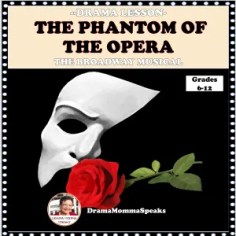
phantom of the opera mask and red rose

In addition, the characters are well rounded with moments of which we can relate.  Another quality of a good musical.  One moment we hate the Phantom and another we pity him.  That tug at our heart strings makes him all the more compelling. Although Phantom of the Opera has less dialogue that most musicals, what dialogue it does have is well crafted.

The mere fact that Phantom of the Opera recently closed after a run of  35 years should tell us something, yes?  Staying power.

Doing Broadway Musicals the Right Way

Andrew Lloyd Weber’s music score is magnificent.  Perusing the internet researching this blog topic, I ran on to The Guardian’s review of Phantom of the Opera:

“Andrew Lloyd Webber has a true pop sensibility, ladling on the hooks. There are reprises and motifs everywhere, and even similar melodies in two of the big songs. Essentially, never take the unexpected route when the note you want to hear is right there.

That famous descending organ riff and its synth-rock bass may scream 1980s camp, but this is a show committed to bombast, the grisly gothic tale of the murderous phantom menacing a 19th-century Paris theatre unashamedly embraces high drama, backed by a wall of sound when Lloyd Webber’s more dense writing contrasts with the hit melodies.”

Doing Broadway Musicals the Right Way

Doing Musical the Right Way: Les Miserables

Les Miserables should be included the list of modern classic musicals.

First, let’s talk about the plot:  After 19 years as a prisoner, Jean Valjean is freed by Javert, the officer in charge of the prison workforce. Valjean promptly breaks parole but later uses money from stolen silver to reinvent himself as a mayor and factory owner. Javert vows to bring Valjean back to prison. Eight years later, Valjean becomes the guardian of a child named Cosette after her mother’s  death, but Javert’s relentless pursuit means that peace will be a long time coming.

Staging of Les Miserables

Secondly, the staging is magnificent! When I taught students about set design, I described the spectacle of the production. The revolving stage, the use of lighting and simple set pieces gives the production a feeling of fluidity and pace.  In particular, the scene when when Javert ends his life is powerful and raw.

Additionally, the use of fog and a simple bridge hoisted right at the moment Javert jumps to his death is breath taking. This moment of spectacle is tremendously engaging. Consequently, we are transported to the moment of impact as if we were jumping with him. The revolving stage turns as Javert sinks to the floor of the river, rolls in the current and slowly dies as the stage stops its revolve.  That’s powerful theater!

Doing Musicals the Right Way

Like Phantom of the Opera, Les Miserables has a long life on Broadway and London where it originated.  Forty-two countries have enjoyed the touring company shows. If that isn’t enough, it has been translated into 21  languages: English, Japanese, Hebrew, Hungarian, Icelandic, Norwegian, German, Polish, Swedish, Dutch, Danish, French, Czech, Castillian, Mauritian Creole, Flemish, Finnish, Argentinian, Portuguese, Estonian and Mexican Spanish. Pick up a copy of my Broadway musical unit of Les Miserables here.

What’s a Sung Thru Opera?

Les Miserables is considered a “sung-thru” opera. Because particular moments are sung rather than spoken and vice versa it demands our attention at all times.  I can’t say that about every production.

Salesmanship Cedes to Love in 'The Music Man' | Chicago News | WTTW

The Music Man

A third “should-be” classic, is The Music Man.

Again, let’s look at the plot: The Music Man is concerns con man Harold Hill, who poses as a boys’ band organizer and leader and sells band instruments and uniforms to naïve Iowa townsfolk, promising to train the members of the new band. Harold is no musician, however, and plans to skip town without giving any music lessons. Prim librarian and piano teacher Marian sees through him, but when Harold helps her younger brother overcome his lisp and social awkwardness, Marian begins to fall in love. Harold risks being caught to win her.

Every classic musical contains universal themes.  In this case, The Music Man demonstrates that music heals, redemption, risk romance and authenticity.

Doing Broadway Musicals the Right Way

A Crowd Pleaser

When teachers ask for my recommendation of a crowd pleaser musical which has opportunities for a large cast, first on my list is The Music Man.  The characters are charming, fun to portray and there’s room for many ages and grade levels. The dialogue is humorous when it needs to be and poignant in other moments.  My favorite line is, “He’s been the raspberry seed in my wisdom tooth long enough.”

With a blend of music indicative of the setting of the story, many of a plot takes twists and turns which is an identifier of a classic, too. For instance, The Music Man has such captivating music it’s used in other genres such as  by marching bands (Seventy-six Trombones)  and barbershop quartets (Lida Rose.)

Having directed it four times, I can say without a doubt it is one I can depend upon to be successful every time I direct it. Want some advice about directing? Check out: So You Are Directing a Musical…Now What?

Broadway Musical Units

As you may be aware, I create drama education resources for teachers through my store, DramaMommaSpeaks also on MadebyTeachers and my personal store on Payhip. 

I have a new bundle of “Classic Musicals”.

It includes:  Les Miserable, The Music Man, Peter Pan, Phantom of the Opera and West Side Story, South Pacific (new)

Each musical can be purchased separately, but if you buy them in a bundle you save up to 20%.  And guess what?  This is a growing bundle so as I create more Classic Musicals I’ll include include more productions.  (Get it at the beginning of the growing bundle and you get all of the rest of the musicals for FREE)

Doing Broadway Musicals the Right Way

These products include:

  • Letter to Teacher
  • Two Warm Ups–My Own Version of this Popular Exercise–
  • Teacher’s Script–What I Say and How I Say it!
  • Photos of the production
  • Synopsis of the Musical
  • Plot of the Musical–comprehensive and detailed
  • Short Biography about the creative team–composer, lyricist, playwright, producer or director
  • Biography focused on the author of the novel if it inspired the production
  • Why is this musical considered an opera and not a musical?
  • Separate File of Photos for Teacher’s Use in Lecture
  • History about the Origination of the Production
  • AND a Mini-Lesson on What are the Tony Awards?
  • List of Tony Awards
  • New York City Map with Competing Theaters Labeled
  • Student Note Page
  • Teacher Note Page Key
  • Fascinating Trivia about Broadway
  • Equally fascinating trivia about the particular musical
  • Songs List
  • Extension Activities–Ten Terrific Assignment Suggestions to Secure the Learning and Enrich the Experience either Individual or Group
  • Sources & Links to Film Clips from the Show
  • And More!

There are many musicals, too numerous to mention, which your students will appreciate exploring.  Have you considered Come From Away? Still so timely.  It’s an excellent production!

Doing Broadway Musicals the Right Way

Here’s another Broadway musical, West Side Story 

Doing Broadway Musicals the Right Way

Today, I added Oklahoma!

Doing Broadway Musicals the Right Way

And Here’s South Pacific

Doing Broadway Musicals the Right Way

And now The Sound of Music

Doing Broadway Musicals the Right Way

What other musicals do you think should be labeled as classics?  I’d love to know.  Contact me at DhcBaldwin@gmail.com or DeborahBaldwin.net

woman behind DramaMommaSpeaks


Share this:

  • Click to share on Tumblr (Opens in new window) Tumblr
  • More
  • Click to share on X (Opens in new window) X
  • Click to share on Facebook (Opens in new window) Facebook
  • Click to share on Pinterest (Opens in new window) Pinterest
  • Click to share on LinkedIn (Opens in new window) LinkedIn
  • Click to email a link to a friend (Opens in new window) Email
  • Click to share on Reddit (Opens in new window) Reddit
  • Click to share on Pocket (Opens in new window) Pocket
  • Click to share on Telegram (Opens in new window) Telegram
  • Click to share on WhatsApp (Opens in new window) WhatsApp

Like this:

Like Loading...

Filed Under: acting, Arts, arts education, arts integration, Broadway, community theater, community theatre, drama education, e-learning, Education, music education, Musical Theatre, performing arts, theater, Tony Awards, youth theatre Tagged With: Come From Away, Hamilton, musical theater, musical theatre, Phantom of the Opera, revivals of musicals, The Music Man, West Side Story

The Essential Drama Integration Guide for Come From Away the Broadway Musical

September 15, 2021 By dhcbaldwin 3 Comments

Twin towers fencing with notes stuck to it after 911

The Essential Drama Integration Guide to Come From Away the Broadway Musical

The Essential Drama Integration Guide for Come From Away the Broadway Musical

Have you used drama integration to reach your students? This would be a good place to begin. Use my drama integration Come From Away the Broadway Musical.

What is Drama Integration?

Through participation in theatre, students develop speaking and listening skills. Students collaborate with others in accomplishing common goals. Though many classroom teachers do not have a drama teacher to collaborate with, drama is a natural place to begin arts integration.

The story behind Come From Away is one which can easily be used in any classroom studying September 11th. Rather than just studying the story, how about teaching the historical moment through a theatrical production?

Why is The Musical Titled “Come From Away”?

“Come from away” is a term used in Canada’s Atlantic provinces for someone who has moved to the area from somewhere else. I’m a come from away myself, from Ontario, though my mother was born here.

The first reason to teach with this musical, and foremost in my opinion, if the story. It is just plain fascinating and begins with an explanation of  Operation Yellow Ribbon.

The Essential Drama Integration Guide for Come From Away the Broadway Musical News - Mirror Online

Operation Yellow Ribbon was commenced by Canada to handle the diversion of civilian airline flights in response to the September 11 attacks in 2001 on the United States. Canada’s goal was to ensure that potentially destructive air traffic be removed from United States airspace as quickly as possible, and away from potential U.S. targets.

Instead of U.S. soil, those aircraft headed into the U.S. were place on the ground in Canada, at military and civilian airports in the Canadian provinces of Newfoundland, Newfoundland and Labrador, and British Columbia (and also several in New Brunswick, Alberta, Manitoba, Ontario and Quebec) where any destructive potential could be better contained and neutralized. None of the aircraft proved to be a threat, and Canada and Canadians hosted thousands of passengers stranded in Canada until U.S. airspace was reopened.

The Essential Drama Integration Guide to Come From Away the Broadway Musical

Canada began the operation after the U.S. Federal Aviation Administration (FAA), implementing Security Control of Air Traffic and Air Navigation Aids (SCATANA), grounded all aircraft across the United States, an unprecedented action. The FAA then worked with Transport Canada to reroute incoming international flights to airports in Canada.

During the operation, departing flights—with the exception of police, military, and humanitarian flights—were cancelled, marking the first time that Canadian airspace had been shut down. In total, as a result of Operation Yellow Ribbon, 255 aircraft were diverted to 17 different airports across the country. 45,000 people were displaced.

I told you it was fascinating! Come From Away is placed in Gander, Newfoundland.

The Essential Drama Integration Guide for Come From Away the Broadway Musical

Gander is a town located in the northeastern part of the island of Newfoundland in the province of Newfoundland and Labrador.  Located on the northeastern shore of Gander Lake, it is the site of Gander International Airport, once an important refueling stop for transatlantic aircraft, and still a preferred emergency landing point for aircraft facing on-board medical or security issues. At the time of the 911 attack, its population was 6,000.

Most of the streets in Gander are named after famous aviators, including Alcock and Brown, Amelia Earhart, Charles Lindbergh, Eddie Rickenbacker, Marc Garneau and Chuck Yeager.

The Essential Drama Integration Guide for Come From Away the Broadway Musical

Come From Away the Broadway Musical

Some musicals are developed with each creative team member responsible for particular parts of the show from playwriting to directing to choreography.  Others are more collaborative in nature.  The path of the musical, Come from Away  to  becoming a Broadway musical was fairly traditional once it was conceived.

However, its conception was the unique aspect and perhaps that why audiences love it so much.  In this particular case, the composer and lyricists are also the playwrights.  This doesn’t occur very often.

The Essential Drama Integration Guide to Come From Away the Broadway Musical

What is equally fascinating is the creative team’s personal connection to the story.  The setting is in their home province of  Newfoundland, Canada.  The team didn’t realize there was a story to be told until ten years later when they were approached to write the show.

The musical has been received by audiences and critics as a cathartic reminder of the capacity for human kindness in even the darkest of times and the triumph of humanity over hate.

DID YOU KNOW ONLY 14 STATES TEACH ABOUT 911?

Fourteen.

That’s a crying shame, but I’m out to change all that!

DramaMommaSpeaks Come From Away Drama Integration Guide

The Essential Drama Integration Guide for Come From Away the Broadway Musical

My Drama Resources

As you may be aware, I create drama education resources for teachers in my store, DramaMommaSpeaks.  Currently, my Come From Away unit is very popular with vocal music, language arts and theater teachers.

This 46 page, two-day product includes:

  • Letter to Teacher
  • Warm Up–MY Version of a Popular Physical Warm Up
  • Teacher’s Script–What I Say and How I Say it!
  • Photos of Gander, Newfoundland where the story takes place and the airstrip which became the connector between strangers
  • Plot of the Musical
  • Synopsis of the Musical
  • A Brief Description of the Operation Yellow Ribbon and 9/12, what occurred the day after the 9/11 attacks
  • Separate File of Photos for Teacher’s Use in Lecture
  • History about the Origination of the Production
  • Information on the Director, Christopher Ashley
  • Information on the Writing Team co-composers & playwrights David Hein and Irene Sankuff
  • A Shortened Lesson on: What are the Tony Awards?
  • List of Tony Awards
  • New York City Map with Competing Theaters Labeled
  • Student Note Page
  • Teacher Note Page Key
  • Trivia about Come From Away and Broadway Musicals with Some Surprising Facts!
  • Lyrics from “Welcome to the Rock”–Good for Class Discussions or as a Jumping Off Point
  • Extension Activities–Terrific Suggestions of Ways to Secure the Learning and Enrich the Experience, Individual and Group
  • Sources & Links to Video Clips from the Show
  • And More!

Looking for a Theater Curriculum Scope and Sequence  for Middle School?  Check out mine:  Drama Units Scope and Sequence. 

Comprehensive? You bet. If this interests you, perhaps my Hamilton lesson will too.  Check out this blog post here.

The Essential Drama Integration Guide for Come From Away the Broadway Musical

The Essential Drama Integration Guide for Come From Away the Broadway Musical

Come From Away Movie

The Come From Away movie was released recently.  You can find it on Apple TV.  Of course, it would be wonderful if your students could view the movie.  If not, you’ve got my complete lesson to answer any and all questions pertaining to this terrific musical.

It isn’t often that a historical moment is still pertinent twenty years later, but here we are. 

If you direct productions, you’ll enjoy this musical for its ensemble feel. The story is told by every character with most playing more than one role. That’s always a nice challenge for performers and such fun, too.  The set is simple, containing chairs, a table or two and few stage properties.  The music is clever and sounds a bit like Irish folk music to me.

DramaMommaSpeaks Come From Away Drama Integration Guide

I think once its released to amateurs, every community theater, in the country will produce it.  Wow!

A note to social studies and language arts teachers–don’t shy away from this musical because it is just that. Integrate drama into your classroom and your students will love you for it, I promise. Some of the best teaching is done when you break out of your routine and teach through a different medium.

I hope you’ll consider teaching your students about the musical, Come From Away.  As I said, it’s one of most popular products (in the top four!) so there is some reason everyone desires this lesson.  See for yourself.

Where were you when 911 occurred?  I was the first person in my school building to hear the news.  What an unforgettable experience to be sure.

phantom of the opera mask and red rose

Interested in another Broadway musical?  Check out: Phantom of the Opera

I’d love to hear about your memories of 911.  Contact me at DhcBaldwin@gmail.com or DeborahBaldwin.net

Want a FREE guide and drama integration lesson for grades 6 to 8?  Go here: FREE guide and drama integration

woman behind DramaMommaSpeaks


Share this:

  • Click to share on Tumblr (Opens in new window) Tumblr
  • More
  • Click to share on X (Opens in new window) X
  • Click to share on Facebook (Opens in new window) Facebook
  • Click to share on Pinterest (Opens in new window) Pinterest
  • Click to share on LinkedIn (Opens in new window) LinkedIn
  • Click to email a link to a friend (Opens in new window) Email
  • Click to share on Reddit (Opens in new window) Reddit
  • Click to share on Pocket (Opens in new window) Pocket
  • Click to share on Telegram (Opens in new window) Telegram
  • Click to share on WhatsApp (Opens in new window) WhatsApp

Like this:

Like Loading...

Filed Under: American experiences, arts education, arts integration, community theater, drama education, e-learning, Education, excellence in teaching, Musical Theatre, performing arts, Teacherspayteachers, youth theatre Tagged With: 911, Broadway, Come From Away, drama integration, Gander, language arts project, musical theater, Newfoundland, operation yellow ribbon, social studies project, theater class project, Tony award winning

How to Be the Cool Theater Teacher When Broadway Re-opens

August 18, 2021 By dhcbaldwin Leave a Comment

Two theater masks and a red curtain with a blog post about being the cool theater teacher

How to Be the Cool Theater Teacher When Broadway Re-opens

Every teacher wants to be popular. Personally,  I think it’s an unfulfilled desire from our high school days when maybe we weren’t the coolest and our pick of friends, though loyal, wasn’t exactly a large number.

Today, I’m going to talk about how to be the cool teacher….at least for a day or two.

People ask what is my favorite musical. This is a difficult question to answer, because I love many.

If I have to pick one for today, I’ll say Hadestown. (Tomorrow it will probably be something else.)

This is a glorious show filled with everything which makes a great one– memorable music, tremendous lyrics, terrific plot and unique message.

Hadestown review – musical Orpheus myth is a beguiling fable for today | Theatre | The Guardian

All About Hadestown

If you don’t know much about Hadestown, here is a quick synopsis from Broadway.com:

Hadestown intertwines two mythic tales—that of young dreamers Orpheus and Eurydice, and that of King Hades and his wife Persephone—as it invites you on a hell-raising journey to the underworld and back. Mitchell’s beguiling melodies and Chavkin’s poetic imagination pit industry against nature, doubt against faith, and fear against love. Performed by a vibrant ensemble of actors, dancers and singers, Hadestown is a haunting and hopeful theatrical experience that grabs you and never lets go.

Hadestown is a 2016 stage musical adaptation of the 2010 folk opera concept album by Anais Mitchell.  As in the 2010 album, Hadestown adapts the myth of Orpheus and Eurydice to a Great Depression-era inspired post-apocalyptic setting.

One of the production’s messages defends beauty and the importance of music and love to the soul, even in an increasingly commercialized world.

I can’t count how many times someone has suggested a song which makes them feel better (especially in light of the pandemic.)  Music speaks to people. I don’t know about you, but I couldn’t live without music in my life.  See what I mean in my post, How Enriched is Life Without Music?

How to Be the Cool Theater Teacher When Broadway Re-opens

Hadestown Broadway review: An epic musical journey to the underworld | EW.com

What is the origin of Hadestown?

Scrolling around the internet, I found this post from Vulture, “To use the appropriate organic metaphors, Hadestown started as a seed with a community-theater project that Mitchell, a songwriter, first performed in Vermont in 2006. That grew into a concept album in 2010, which she recorded along with folk musicians like Bon Iver’s Justin Vernon. By 2013, Mitchell started working with Chavkin — who had been directing The Great Comet Off Broadway — to plant Hadestown back onstage.

They took it to New York Theatre Workshop in 2016 and then to Edmonton’s Citadel Theatre and London’s National Theatre before returning to Broadway, where the show began performances on March 22. Along the way they experimented with everything from the set design, to the size of the cast, to their way of thinking about the main characters’ roles in the story.”

How to Be the Cool Theater Teacher When Broadway Re-opens


 Hades and Persephone

Two mythological tales were combined to create the plot of Hadestown.  It’s important to understand the two myths separately in order to appreciate them being woven together for this musical.

Hades is the Ancient Greek god of the Underworld, the place where human souls go after death. In time, his name became synonymous with his realm. It has to be said unsurprisingly – since he barely left it. Appropriately, the most significant myth related to Hades concerns one of the very few times he did – to abduct Demeter’s daughter, Persephone.

As the ruler of the dead, Hades was a grim and ghastly figure, inspiring awe and terror in everybody. Consequently, he was rarely depicted in art. When he was, he was most commonly portrayed with a beard, and a solemn, mournful look. He frequently wears a helmet, named the Helm of Darkness or the Cap of Invisibility. Cerberus, the three-headed dog which guarded the entrance to the Underworld, is usually beside him. Every so often he carries a scepter or holds the key to his kingdom. At a later stage, he became associated with his weapon of choice, the bident, a two-pronged fork modeled after Poseidon’s trident.

How to Be the Cool Theater Teacher When Broadway Re-opens

Persephone, the daughter of Demeter and Zeus, became the wife of Hades and the Queen of the Underworld. She was a dual deity, since, in addition to presiding over the dead with intriguing autonomy, as the daughter of Demeter, she was also a goddess of fertility. The myth of her abduction by Hades was frequently used to explain the cycle of the seasons.

Who Wrote Hadestown? 

Anaïs Mitchell is an American singer-songwriter, musician, and playwright. Mitchell has released seven albums, including Hadestown (2010), Young Man in America (2012), and Child Ballads (2013). She developed Hadestown (together with director Rachel Chavkin) into a stage show which received its US debut at New York Theatre Workshop in summer 2016, and its Canadian debut at the Citadel Theatre, Edmonton the following year. In 2018 it was announced that the show would open at London’s National Theatre later in the year before transferring to Broadway.

Hadestown began as a DIY community theater project in Vermont in 2006. In 2013 Anais began the process of expanding and adapting the work into a full-length professional theatrical production. She worked closely with director Rachel Chavkin.


Rachel Chavkin on 'Hadestown,' female directors and her dream of a TV miniseries - Los Angeles Times

Who directed Hadestown?

Director Rachel Chavkin  (has a BFA from New York University’s Tisch School of the Arts and an MFA from Columbia University School of the Arts (2008). Chavkin directed Dave Malloy’s Natasha, Pierre & The Great Comet of 1812, which ran Off-Broadway in 2013-2014. Natasha, Pierre & The Great Comet of 1812 received the 2013 Obie Award, Special Citation. Under her direction, the musical opened on Broadway at the Imperial Theatre on November 14, 2016.

At the 71st Tony Awards, the musical received twelve nominations, the highest number for the 2016-17 season, including a nomination for Chavkin for Best Director of a Musical.

How to Be the Cool Theater Teacher When Broadway Re-opens

In an article in American Theatre, it was noted that she has a “diverse slate of work” united with “a distinctively multisensory sensibility…. When she staged Meg Miroshnik’s The Fairytale Lives of Russian Girls at Yale Repertory Theatre, she included a live female punk band; her work with the TEAM routinely blends text, video, and pervasive sound design. ‘She can squeeze a lot into a small space, and yet it feels epic and sprawling,’ said Ars Nova artistic director Jason Eagan.

I’m Here to Help You! 

In case you aren’t aware, I create drama education and resources. I have a unit for Hadestown which you might appreciate.

This Product includes:

  • Letter to Teacher
  • Warm Up–MY Version of a Popular Physical Warm Up
  • Teacher’s Script–What I Say and How I Say it! (No need to worry about what to say)
  • Photos of the Statues of Greek Gods or Persephone & Hades
  • Paintings of the Statues of Greek Gods of Eurydice & Orpheus
  • Plot of the Musical
  • Synopsis of the Musical
  • A Brief Description of the Four Mythological Characters to Help Your Students Understand the Musical More Fully
  • Separate File of Photos for Teacher’s Use in Lecture
  • History about the Origination of the Production
  • Information on the Director, Rachel Chavkin
  • Information on the composer, Anais Mitchell
  • Information about the music arranger and orchestrator, Michael Chorney
  • A Shortened Lesson on: What are the Tony Awards?
  • List of Tony Awards
  • New York City Map Link with Competing Theaters Labeled
  • Student Note Page
  • Teacher Note Page Key
  • Trivia about Broadway Musicals with Some Surprising Facts!
  • Partial lyrics from “Why We Build a Wall”–Good for Class Discussions or as a Jumping Off Point
  • Extension Activities–Terrific Suggestions of Ways to Secure the Learning and Enrich the Experience, Individual and Group
  • Sources & Hot Links to Video Clips from the Show!

Hadestown Preview 

If this sounds interesting to you, check out my store at Dramamommaspeaks to learn more about the unit.

How to Be the Cool Theater Teacher When Broadway Re-opens

I’ve found most students are familiar with the music from a musical and the plot. However they never have an opportunity to learn about its origin, trivia and creative team.  I create units the way I would use them.

Review: The Metamorphosis of 'Hadestown,' From Cool to Gorgeous - The New York Times

Want to impress your students?  Hadestown reopens on Broadway on September 2.  Your students will be impressed that you keep up with the hubbub of Broadway by teaching Hadestown.

When Broadway reopens its doors, there is going to be so much excitement we will hear the cheers in every theater classroom in the country, much less the world. What a fabulous image and sound that will be!

What musical is your favorite (at least today)? I’d love to hear about it.  Contact me at DhcBaldwin@gmail.com or DeborahBaldwin.net.

Want some free lessons?  Check out: Free Stuff! (Check this often because I add lessons as I have time to do so.)

woman behind DramaMommaSpeaks

Share this:

  • Click to share on Tumblr (Opens in new window) Tumblr
  • More
  • Click to share on X (Opens in new window) X
  • Click to share on Facebook (Opens in new window) Facebook
  • Click to share on Pinterest (Opens in new window) Pinterest
  • Click to share on LinkedIn (Opens in new window) LinkedIn
  • Click to email a link to a friend (Opens in new window) Email
  • Click to share on Reddit (Opens in new window) Reddit
  • Click to share on Pocket (Opens in new window) Pocket
  • Click to share on Telegram (Opens in new window) Telegram
  • Click to share on WhatsApp (Opens in new window) WhatsApp

Like this:

Like Loading...

Filed Under: acting, Arts, arts education, arts integration, Broadway, e-learning, Education, Education, excellence in teaching, High School, middle grades, Musical Theatre, Teacherspayteachers, theater, Tony Awards, youth theatre Tagged With: Broadway musical fan favorites, drama resources, drama teacher, Hadestown, musical theater units, mythology, theater education, theater teacher

How Theatre Shaped My Life

August 4, 2021 By dhcbaldwin 3 Comments

How Theatre Shaped My Life

People have asked me how theatre shaped my life.  I hadn’t given it much thought until I considered my students growth through it.

Theatre gets a bum rep.  Don’t you think?

People who haven’t studied it have a difficult time understanding its power. I remember seeing a football player interview where the newscaster asks him what he planned to do now that he retired.  He said, “I’m going to be an actor.  My girl friend is an actress.  She’s going to teach me.”

Oh. My. Heavens.

No.

We theatre lovers know it’s not a weekend workshop type of experience.  Actors work their whole lives.  A favorite quote of mine from Bill English of the San Francisco Playhouse, “‘Theatre is like a gym for empathy. It’s where we go to build up the muscles of compassion, to practice listening and understanding and engaging with people that are not just like ourselves. We practice sitting down, paying attention and learning from other people’s actions. We practice caring.”

I asked some students of mine to share how theatre shaped their life.  Here are their thoughts.

How Theatre Shaped My Life

Matt Kimbel

I’m Mat Kimbel. I’m in college working towards becoming a theatre teacher. After working under the direction of Mrs. Baldwin for six years, there’s no denying that she influenced my decision to become a theatre teacher. ⁣
⁣
I found theatre when life dealt me a hand I was struggling to handle. 📌 I had just begun developing seizures as a result of being born with Cerebral Palsy (CP). Growing up with CP presented its own set of struggles, which at this point in time was my mental and physical health.

I wasn’t eating or hydrating or sleeping. I wasn’t doing well at school. I didn’t have many friends. I was battling depression at an extremely young age. ⁣
⁣
👉 During this time, my doctors prescribed several meds. most of which caused me to lash out, be angry and crude to people. Doctors suggested I play sports to try and release all of these volatile feelings. This seemed like the perfect solution. However, after participating in several sports, I struggled to keep up. I wasn’t finding what I was looking for. ⁣
⁣
After a few months of searching, my grandma suggested that I try theatre. 🎭🎭 My initial reaction was “Theatre? Frolic around on a stage, wear makeup, sing songs and pretend to be someone they aren’t?” Grandma kept insisting and got me to audition. Now, I can honestly say there is nothing I would rather do. ⁣
⁣
Once I got involved in theatre, my life completely changed. It’s like a light went off in my head. 💡I stopped being angry and lashing out. I started doing better in school. I started actually eating, to enjoy life. It led to me to taking voice lessons, choir and expanding my interests.

⁣
⁣When I was bullied everyday and my life at home wasn’t the best, 😊 it was theatre which kept me motivated during some of the roughest times. ⁣⁣

👉👉I wouldn’t be the person I am today without theatre. I can’t imagine what my life would be like if I didn’t find it. You never know what doors you can open until you try. ⁣

May be an image of 1 person, standing, outdoors and tree

How Theatre Shaped My Life

Mahogany Thomas

As a pastor, drama is present within my ministry in many ways. The lessons I learned while acting on empathy, connection and authenticity resonate deeply and are timeless. Projection, stage presence, eye-contact, and improvisation are all traits that essential to my profession.

Since I am often found in many places speaking in front of people, the practical lessons of drama are also fundamental. Likewise, I have a LOVE of preaching, and in many ways, preaching is a monologue.

This means the way you engage the audience and present the material matters. Your voice, storytelling, creativity, narration, and ability to captivate the audience to take them on a journey are critical in both the structure of my sermons and my delivery. ⁣
⁣
Drama education empowers its students to see not only themselves but one another with empathy. This is how you cultivate authentic relationships and move through such a contentious world. Building genuine relationships with one another are foundational in a world that needs healing. Therefore I make it my duty to live with empathy, love with empathy, and teach empathy to everyone I encounter, just as my drama experience has taught me.

D4F1F89B-7052-42F3-8635-853039ABDE81.JPG

How Theatre Shaped My Life

Ivy Favier

I’m Ivy Favier, a performer, composer, and artist who dreams of becoming a teacher. I was a student of Mrs. B. for 5 years, and I know it was she who inspired my dream.⁣
⁣
I met Mrs. B. in 5th Grade Musical Theatre class. I was shy and introverted as a child, and I remember being a little intimidated at first. She was so full of enthusiasm and vigor, and gave so much to her students, who gave so much back in return. She expected something of me, and I was going to have to dig deep to find it. ⁣
⁣
She pushed me just hard enough, challenged me to step out of the shadows and find my light. She made me feel safe and supported, showing me that it was ok to look silly and make mistakes. She encouraged me to speak up, reach out, make friends, and take risks.⁣
⁣
After that, I “caught the bug.” I auditioned and performed with many theatre companies across CO, took workshops, and attended summer camps.⁣
⁣

How Theatre Shaped My Life

As a TA for Mrs. B’s classes, I admired the way she interacted with her students. She taught them the value of theatre not in an academic way, but in a playful way. She made it real and relatable for them. This inspired me.⁣
⁣
🎭 My latest theatre endeavor is in Playback Theatre, a form of improv. —audience members tell stories from their lives and the actors interpret them on stage. This challenged the way I think about theatre. I now realize how our stories are all connected. Playback strengthened my listening skills, creativity, and empathy in my theatre and non-theatre life.⁣
⁣
I would be an entirely different person without theatre. I might still be that shy little girl, too afraid to step out of the shadows. Theatre gave me my own voice and power. It gave me courage. I learned I must leap in order to fly. If I fall, I can pick myself up and try again. It’s always worth it. Theatre taught me that. ⁣❤️

Thank you Matt, Mahogany and Ivy!

If you’d like to know about my moment when theatre not only shaped but saved my life, go to: How Theatre Saved My Life

Do you have an experience about how theatre shaped your life?  I’d love to hear about and maybe down the road, I’ll feature you too!

Contact me at DhcBaldwin@gmail.com or DeborahBaldwin.net


Share this:

  • Click to share on Tumblr (Opens in new window) Tumblr
  • More
  • Click to share on X (Opens in new window) X
  • Click to share on Facebook (Opens in new window) Facebook
  • Click to share on Pinterest (Opens in new window) Pinterest
  • Click to share on LinkedIn (Opens in new window) LinkedIn
  • Click to email a link to a friend (Opens in new window) Email
  • Click to share on Reddit (Opens in new window) Reddit
  • Click to share on Pocket (Opens in new window) Pocket
  • Click to share on Telegram (Opens in new window) Telegram
  • Click to share on WhatsApp (Opens in new window) WhatsApp

Like this:

Like Loading...

Filed Under: acting, arts education, community theater, community theatre, Creativity, drama education, Education, excellence in teaching, Musical Theatre, performing arts, Play, theater, theatre, This is How Theatre Shaped My Life, youth theatre Tagged With: adult development, bullying, child development, self confidence, self esteem, student growth

My Theatre Vocabulary List for the Classroom

June 23, 2021 By dhcbaldwin 4 Comments

My Theatre Vocabulary List for the Classroom

My Theatre Vocabulary List for the Classroom

My theater vocabulary list for the classroom

Let’s talk about my theatre vocabulary list for the classroom.  I apologize. It never occurred to me that teachers needed a list of vocabulary for their theatre classes.

Theatre is such a major part of my life, I’d forgotten not everyone comes into teaching theatre classes as knowledgeable as I was. However, as I think about it, I remember what it’s like getting started teaching a theatre class.

It’s tough to get started.  Although there are colleagues who will advise you, sometimes you need someone sort of “at your finger tips” to help you.  That’s me!

Why teach vocabulary words?

This seems this would have an obvious answer.  But just as in every other subject students teach, theater students need to know the words and phrases you will use in your classroom.  We can’t expect out students to be good communicators if we don’t help them, yes?

There are many processes students can  use to learn these words.  If you pick up my Word Wall product, I’ve included several different ways to learn the vocabulary words.

Teach by osmosis!  What’s that, you say?  Learning by proxy, or being exposed to someone, can naturally achieve an unconscious assimilation of ideas, vocabulary, knowledge and even technical skills. It’s called osmosis.

A teacher could share a vocabulary word each day. Start the day with the word and even demonstrate it.  Honestly, you will be surprised how quickly the students will learn them using osmosis. Just by seeing, demonstrating themselves and writing them, they’ll learn many of these words as if by magic.

++++++++ I am sorry there aren’t more words and their definitions listed here. I think students were coming here and filling out their vocabulary and definition sheet list and not finding the words and their definitions on their own.

Tsk, tsk. So, I edited the list to give you a basic idea..

My theater vocabulary list for the classroom

Actor to Choreography:

Actor    A male  person who performs a role in a play, work of theatre, or movie

Actress     A female person who performers in a role in a play, work of theatre, or movie.

Apron    The section of the stage floor which projects towards or into the auditorium. In proscenium theatres, it’s the part of the stage in front of the house tabs, or in front of the proscenium arch, above the orchestra pit

My Theatre Vocabulary List for the Classroom (Example)

Cast       A set of actors in a play

Catharsis    A moment of high tragedy at the emotional climax of a play is followed by an emotional cleansing for the characters and the audience

Chanting     A word or phrase repeated for an effect

Character   A person in a novel, play, or movie

Are you considering becoming a teacher?  Check out this blog post Why is it Important to Create a Lesson Plan?

My theater vocabulary list for the classroom

If you are a student, sorry.  You are going to have to look up these words yourself to attain the rest of the defintions.

Looking for a lesson for tomorrow?  Pick up this one about Lin Manuel Miranda.

My Theatre Vocabulary List for the Classroom

My theatre vocabulary list for the classroom

I was looking around the internet and found this great blog post about the reasons it is important to know how to spell.

Everything is provided for you.  Check it out at: Word Wall


My Theatre Vocabulary List for the Classroom

The Reasons It’s Important to Learn to Spell

  • It develops reading skills: Knowing how to spell correctly helps children become better readers. If they don’t know how to spell a word, they’re more likely to guess at its meaning, rather than understand its true meaning. Additionally, being able to accurately spell words helps to build fluency and allow kids to read faster.
  • It enhances writing skills: Knowing how to spell words correctly helps children become better writers as well. When they’re able to accurately spell words, they can express their thoughts and feelings more clearly, resulting in stronger writing overall.
  • It builds confidence: Being able to accurately spell words is a great confidence booster for primary school kids. Knowing that they can spell words correctly helps them become more confident readers and writers.
  • It improves vocabulary: Learning how to spell words correctly helps children learn the meanings of unfamiliar words and increase their vocabulary. This can be very beneficial for them in the future as they continue their education.
  • It helps with concentration: Spelling correctly requires focus and concentration, both of which are important skills for primary school children to learn. By mastering spelling, kids will be able to transfer these skills to other areas of their studies as well.
  • Ultimately, spelling is an essential skill for primary school children to learn. Not only does it help them become better readers and writers, but it also boosts their confidence, expands their vocabulary, and helps them develop concentration skills. Therefore, it’s important that primary school kids take the time to practice their spelling regularly.

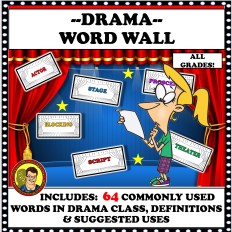
Instead of copying all of these words and making printables for your students, there are 64 in this product! Check out this WORD WALL:

My Theatre Vocabulary List for the Classroom

First African American to Win National Spelling Bee

Have you heard of Zaila Avant-garde?  The multitalented teenage phenomenon Zaila Avant-garde, became an overnight sensation with her Scripps National Spelling Bee win at the age of fourteen, when she became the first African American contestant to win. Zaila Avant-garde, now sixteen, will add “author” to her already-impressive list of accolades that includes: 2021 Scripps National Spelling Bee champion, 2021 Sports Kid of the Year by Sports Illustrated Kids; and two-time Guinness World Record holder for feats related to her basketball prowess.

Her books, IT’S NOT BRAGGING IF IT’S TRUE: HOW TO BE AWESOME AT LIFE, a non-fiction middle-grade and a picture book, WORDS OF WONDER FROM Z TO A, a children’s picture book, will be published on June 27, 2023, by Doubleday Books for Young Readers and edited by VP, Editor-in-Chief Frances Gilbert.

Pick up my Drama Word Wall.  Everything is provided for you.  Check it out at: Word Wall or you can pick up posters (some are FREE) for your classroom, too!  Growth Mindset Posters and Vocabulary

I hope this helps you.  Please feel free to contact me at DhcBaldwin@gmail.com or DeborahBaldwin.net

Want some more help in the classroom? Check out my FREE Guide and ten page lesson Here 

woman behind DramaMommaSpeaks

Share this:

  • Click to share on Tumblr (Opens in new window) Tumblr
  • More
  • Click to share on X (Opens in new window) X
  • Click to share on Facebook (Opens in new window) Facebook
  • Click to share on Pinterest (Opens in new window) Pinterest
  • Click to share on LinkedIn (Opens in new window) LinkedIn
  • Click to email a link to a friend (Opens in new window) Email
  • Click to share on Reddit (Opens in new window) Reddit
  • Click to share on Pocket (Opens in new window) Pocket
  • Click to share on Telegram (Opens in new window) Telegram
  • Click to share on WhatsApp (Opens in new window) WhatsApp

Like this:

Like Loading...

Filed Under: Arts, arts education, arts integration, creative dramatics, creative movement, drama education, Education, elementary, excellence in teaching, High School, middle grades, Musical Theatre, performing arts, Play, Professional Theatre, Radio Theatre, Teacherspayteachers, Teaching, youth theatre Tagged With: drama terminology, drama terms, drama vocabulary, spelling words, theatre terminology, theatre terms, word wall

« Previous Page
Next Page »

Footer

Follow Us

logo3.png

FOLLOW US

Facebook X-twitter Pinterest Instagram Envelope Rss

Goodreads: read

Malibu Rising
Malibu Rising
by Taylor Jenkins Reid
People We Meet on Vacation
by Emily Henry
The Last Thing He Told Me
by Laura Dave
Faking It
Faking It
by Cora Carmack
Losing It
Losing It
by Cora Carmack

goodreads.com
Copyright © 2024 · Wellness Pro on Genesis Framework · WordPress.com.Log in
 

Loading Comments...
 

    %d