• Skip to primary navigation
  • Skip to main content
  • Skip to footer

Join Me in my new Facebook Group! https://www.facebook.com/groups/417126059784261

Menu
  • Meet Deb – The Heart Behind DramaMommaSpeaks
    • Work with Me! 
    • Photo Gallery of DramaMommaSpeaks
    • Directorial Credits
  • I Give Book Talks! 
    • Book Talk Through Skype
    • Books
  • Freebies!
  • Bumbling Bea
  • Teaching Resume
  • Acting Resume
  • Contact Me
  • Blog
    • Drama Education
    • Arts Education
    • Youth Theatre
    • Middle Grades
    • Musical Theatre
    • Teaching
  • Meet Deb – The Heart Behind DramaMommaSpeaks
    • Work with Me! 
    • Photo Gallery of DramaMommaSpeaks
    • Directorial Credits
  • I Give Book Talks! 
    • Book Talk Through Skype
    • Books
  • Freebies!
  • Bumbling Bea
  • Teaching Resume
  • Acting Resume
  • Contact Me
  • Blog
    • Drama Education
    • Arts Education
    • Youth Theatre
    • Middle Grades
    • Musical Theatre
    • Teaching

reading skills

Overcoming Fear and Anxiety When Speaking English As A Second Language

March 16, 2023 By dhcbaldwin Leave a Comment

English language learners posing after a theater performance

Overcoming Fear and Anxiety When Speaking English As A Second Language

Overcoming Fear and Anxiety When Speaking English As A Second Language

One of the most valuable aspects of theater class is how it can be integrated into core subjects.  Today, I want to speak about overcoming fear and anxiety when speaking English as a second language. Personally, I think the best way is by taking a theater class. Let me explain.

If you are unfamiliar with the term, “ESL”, simply put it means English as a second language learner.  “ELL’ means the same thing, but we also have World language learner. 

Since I taught theater classes for over thirty-eight years, my teaching experience is vast.  Not only have I taught middle school students for a large portion of my career, but I worked with elementary and high school as well.

However, my favorite grade level is middle school.  If you’d like more information about my reasons, go to: Striking a Balance with Students in Their Middle School Years. 

When I taught a pre-elective drama class in Missouri, the ELL students were integrated into my class. There are many funny experiences of these sweet students trying valiantly to learn English and still be a child.  (Sometime ask me about the time I sat two girls together from warring tribes, the Tsuti and Hutus, without understanding their tribes were mortal enemies. Yikes!)

Did you know I have a new book, We’re Live! Radio Theater #101 which teaches you how to engage students with a unique tool?  Check it out here.

Overcoming Fear and Anxiety When Speaking English As A Second Language

Overcoming Fear and Anxiety When Speaking English As A Second Language

A sidenote:  My grandparents were missionaries in Japan where my mother was raised until she was eighteen years old.  When I was a child, my mother gave free boarding to international college students because she said, “They make me feel like I’m home in Japan.” Because I was raised around these people, I am very comfortable with people of all different nationalities and find them extremely interesting and generally quite friendly.

Being the observant person that I am, I noticed the ELL students were petrified to speak in front of their peers and did not fraternize with the native speakers.  I thought this was sad, but understandable.  Neither knew each other and neither was willing to be the first to extend a friendly hand. (Truly, it should be the native speaker.)

One year, I was looking for something different to offer after school as part of my career ladder responsibilities.  Remembering the native speakers and the ELL students sitting apart in the cafeteria not speaking to one another, I approached the ELL teacher about me sponsoring an after-school drama club specifically for them.  She jumped at the idea!

It seemed simple enough, right?

Three ELL Drama Club Problems to Overcome

Overcoming Fear and Anxiety When Speaking English As A Second Language

I planned to have six weeks of drama club and then a performance at the end.

The first problem:  The students would need transportation to take them home from school since they had no other means of travel.  We applied for money from the state for this and they came through handsomely.

The second problem:  How do inform the students and their parents about the club?  Easy.  Mrs. Zumwalt would take care of that for me.  (I must say, co-teaching with another teacher from my school was fabulous.) She took care of communication with parents and the students, while I planned the weekly activities.

The third problem:  What were my goals for the club? I knew that ELL students needed to overcome their fear and anxiety about speaking aloud.  The best way I knew to do this was by integrating drama.  Obviously, I wanted to strengthen their speaking of English.  But what else?  Drama games are always a hit with all of my students and I noticed the ELL students enjoyed them when we played them in class.  For particular games I used, see: Drama Games for the Introvertive Student, but I needed many more.

Readers Theater Resources on the Internet

Overcoming Fear and Anxiety When Speaking English As A Second Language

I took to the internet and looked for websites that shared particular games that ELL teachers used in their classroom, hoping to find some which integrated drama. Although this was many years ago, I looked at sites such as Fluentu.com.  I ran on to several books which were helpful, too–Enlivening Instruction with Drama and Improv: A Guide for Second Language and World Language Teachers . The ESL / ELL Teacher’s Survival Guide: Ready-to-Use Strategies, Tools, and Activities for Teaching English Language Learners of All Levels.

Generally, I relied on my go-to drama games and exercises that are successful with all students.  I always suggest to new teachers that they purchase a copy of Viola Spolin‘s book, Theatre Games for the Classroom.  IIt is an excellent source for creative dramatics exercises to use in any elementary and middle school classroom.

My plan included ending the club with a production of some sort.  I turned to Aaron Shepherd’s readers theater website, Aaron Shepard’s RT page as I was familiar with his work. His script, The Legend of Lightning Larry which is still one of my favorites.

I selected readers theater because students read from a script rather than memorize lines and sit together when they perform (safety in numbers, you know). Both attributes would help the students as they slowly overcame their fear and anxiety when speaking English.

If you are unfamiliar with the strengths of using readers theater in your classroom, check out: The Reasons Reader’s Theater is Successful with Our Students.

Overcoming Fear and Anxiety When Speaking English As A Second Language

The day arrived to perform the play.  I was very excited, but very naïve.  I thought the students’ parents and siblings would attend.  Parents attended every other time my students performed in my class.  We sent out invitations both through email and hard copies. We baked cookies, had punch ready and decorated.

No one attended.

Why?  Transportation issues.  I never occurred to me that transportation could be an issue, but of course it could be!

The important thing, however, is that the students had a blast doing the play.  The local newspaper came out and photographed the students performing.  Just think of how wonderful that would be for an immigrant to be acknowledged in their community’s newspaper!

The next year, we participated in the school’s diversity celebration. Using a book titled All the Colors of the Earth  and a song from the movie, Making an American quilt,  the students performed a movement piece to it using multi-color flags.  I narrated most of the poem and one student echoed me in several places in the poem.  It was a tremendous success! The student body and teachers applauded for them.  It makes me cry just to think about it now.

ESL Drama Club of Smithton Middle School

My Advice

If you are on the hunt for drama activities for ELL, ENL or World Languages students, I hope you’ll check out the materials I’ve mentioned above.  However, if you want to purchase from someone who is a veteran teacher and has first hand experience teaching creative dramatics to students, I’m your gal.

Earlier I mentioned readers theater scripts.  I have adapted several multicultural folk tales into readers theater scripts. Here are a few.  You can check them all out at: Dramamommaspeaks Readers Theater Units

I hope my experiences are helpful to you. If you have any questions or need advice, please don’t hesitate to email me. You can find me at DhcBaldwin.net or DhcBaldwin@gmail.com

Dramamommaspeaks Blog Author Deborah Baldwin

Share this:

  • Share on Tumblr (Opens in new window) Tumblr
  • More
  • Share on X (Opens in new window) X
  • Share on Facebook (Opens in new window) Facebook
  • Share on Pinterest (Opens in new window) Pinterest
  • Share on LinkedIn (Opens in new window) LinkedIn
  • Email a link to a friend (Opens in new window) Email
  • Share on Reddit (Opens in new window) Reddit
  • Share on Telegram (Opens in new window) Telegram
  • Share on WhatsApp (Opens in new window) WhatsApp

Like this:

Like Loading...

Filed Under: acting, American experiences, arts education, arts integration, creative dramatics, drama education, drama integration, Education, elementary, English Language Learners, excellence in teaching, foreign students, immigrants, middle grades, readers theater, Reading Literacy, reading skills, Teacherspayteachers, Teaching, teaching strategies, theater, world language, youth theatre Tagged With: creative dramatics, elementary, english as second language, immigrants, Middle school, Teaching, We're Live! Radio Theater #101

Top Reasons Teachers Succeed With Teaching Radio Theater

March 2, 2023 By dhcbaldwin Leave a Comment

two girls performing a radio theater play

Top Reasons Teachers Succeed With Teaching Radio Theater

Let’s discuss the top reasons teachers succeed when teaching with radio theater. If you follow my blog, then you know this is a subject I speak about quite frequently. Why?  First and foremost, teaching with radio theater is a marvelous teaching tool! When you really like something do you tell a lot of people? So let’s talk about the top reasons teachers succeed when teaching with radio theater!

The Top Reasons Teachers Succeed Teaching with Radio Theater Performing Arts
Temple Theater/Caroline’s Center for the Performing Arts

My Journey with Radio Theater

I taught a pre-elective drama class to 500 sixth graders every year for thirteen years.  Ending the six weeks with a performance was a challenge for me.  I’m a creative being and just can’t do the same thing over and over (as my good friend, a Home Economics teacher, could make cookies and sew pillow cases ad infinitum).  Yikes! Consequently, after about a year I ran dry on ideas of short class plays. To solve the problem, I began adapting multicultural folk tales into short class plays.  You can read about it here. The Reasons Teaching Multiculturalism in the Classroom is Vitally Important

Although this was a terrific answer to my problem and the students were happy, it wasn’t working enough for me. I remembered that I once participated in a radio theater performance. I loved the format!   When the performance ended, I realized it would be a terrific unit to create for my class. Yet, I had questions.  Could radio theater work in my classroom as well?  Would the students enjoy it?  Could I locate radio theater scripts for this purpose?  Plato said, “Necessity is the mother of invention.”  He was spot on, huh?

Photo Gallery of DramaMommaSpeaks
Me directing the radio play, It’s a Wonderful Life

Desperate to find scripts, I scoured the internet (which was brand new at the time BTW) and ran on to the Museum or Radio and Television website.  They offered family workshops producing a radio play.  Excitedly, I wrote them begging for guidance about my teaching plan and they were very generous sending me six radio theater scripts.  I’ll never be able to repay them for helping me to start my program.

Did you know I have the secret to boosting student engagement?  My new book, “We’re Live! Radio Theater #101” explains my journey to implementing this unique tool in the classroom. Check it out here

Immediate Success

The first time I directed a radio theater play, I noticed the students were immediately engaged!  Even the reluctant students or those with severe learning challenges who were accompanied by an aid. Everyone talked about them outside of my class.  Even their core teachers mentioned the students shared with them their excitement and anticipation of their public performance.

Had I run on to something which could make all of us happy?

After several years of using those scripts and adapting other short stories I found, I took a chance and wrote my own.  That’s when Bow Wow Blues was born. Check it out here: Bow Wow Blues Play Script and Unit

In 2017, at the encouragement of a good friend, I uploaded my script Bow Wow Blues in my TPT store.  I guess teachers and students really like it– I’m flattered.  To date I’ve sold over 500 copies.  If you’d like to learn more about Bow Wow Blues, go to:  Bow Wow Blues Script and Radio Theater Unit

creative dramatics lesson plans

Utilizing Radio Theater in the Classroom

Having ate, slept and breathed radio theater for over thirty years, it is very easy for me to defend its use in the classroom.

  1.  It’s creative–Talk about using your imagination!  Admittedly, I’m a stickler for using live sound effects.  It’s not enough to honk a bicycle horn.  Sometimes the sounds are difficult to duplicate.  That is where the creativity comes in.  Supporting creativity and problem solving is a natural part of radio theater. Ever heard of “complicating the sound?”
  2.  It’s a perfect example of differentiated instruction–Because a teacher gives students choices as to where they’d like to serve in the cast or sound effects team, it gives them an opportunity to learn at the pace in which they are comfortable.
  3.  Listening skills are strengthened–Everyone’s listening becomes more attuned to one another. Plus, listening for one’s cues and creating sound effects teaches students to focus their attention.
  4. Speaking skills are polished–There is nothing worse than a “mush mouth” actor.  Radio theater reinforces one’s enunciation, rate of delivery, and diction which all come in to play when a student reads aloud. Additionally, a teacher can strengthen students’ intonation, vocal flexibility and breath support.
  5. Reading skills are cultivated–Because a teacher spends many days rehearsing a radio theater script, and a reader reads something repeatedly, they can’t help but become a better reader!
  6. Language skills are honed–Students become better communicators as they work together giving suggestions for the sound effects, discussing the play with their classmates as well as acting their role
  7. Interpersonal Skills are buffed up. Verbal and nonverbal communication, the ability to handle conflict, teamwork, empathy, listening, and a positive attitude. Also, being flexible and positive, able to listen, and communicating well are important criteria for success at work.

The Top Reasons Teachers Succeed When Teaching with Radio Theater

Why Radio Theater Belongs in Your Classroom

8.  Cooperative and collaborative learning are such a necessary part of this experience–This is a perfect example             of   working together to learn something. For example, everyone must put aside their differences and work together                   toward   the performance.

9.  Additionally, radio theater is adaptable. Many of the radio theater play scripts I taught with are from previous                 eras– what a super way for students to learn about  the past? A history teacher could use a radio play in their                classroom. I know that several  Language Arts teachers have used several of my plays, in particular The Monkey’s                  Paw and The Frozen Pirate.

10.  Learn marketable skills–Being proficient in speaking through a microphone and familiar with running sound                  equipment  has valuable skill that makes them employable in the outside world.  Ever wondered about sound design?                Check out this  post: There’s a Place for Everyone in Theater

11. Lastly, it’s just plain fun  and engaging! I like to teach students in a manner which they don’t even know they are           learning.  I  strive to make each lesson so enjoyable that students remember the experience and keep coming back                        for  more!

These students performed radio theater during the Covid quarantine!  Many teachers found radio theater to be a life saver during the quarantine. Maybe you want a collection of scripts to choose from? Check out this: Radio Theater Bundle 

Preview of Radio Drama Script Very Popular Four Radio Plays and Unit High Engagement! 1

What’s holding you back?

Fear does frightening things to our psyche, yes?  Sometimes we are anxious and we don’t even know what about!

If you are like me, you like to be well informed on something you teach. That’s understandable.  If you’ve never even seen a radio play performed let alone a radio script, you will need to trust me on this.  Do you trust me? 

Essential Questions for Teaching Radio Theater

  • Do I need to be a teacher?
  • Is there a rationale in place before I teach radio theater?
  • Do I need to know what to say when I begin each lesson?
  • Do I  present the information in a particular order?
  • Should I require the students to take notes as I teach them?
  • Would trivia about particular radio shows or famous movie stars who got their start on RT pique my students’ curiosity and urge them to dig deeper in their study?
  • Should my students make a sound effect and be required to share it with the class?
  • What about a cooperative learning assignment?  Would that be helpful? Could they create a commercial for radio?
  • Would a group of theater games and exercises be helpful in teaching the concepts of radio theater? 
  • Should I collect several audio clips of actual radio shows of which the students can listen and learn?
  • Should I include enrichment in the unit, such as history about a famous radio show broadcast like War of the Worlds?
  • Do I need to find a floor plan that shows me how to set up the stage or in my classroom for a performance?
  • What sound effects should I collect to use? Do I need to purchase any or would some everyday objects suffice to create the sounds?

The answer to these questions is resounding YES. 

Pick up a FREE sample of my book, We’re Live! Radio Theater #101 here. 

Save Yourself Time and Work

Would it be nice not to have to spend countless hours creating this unit? For instance, what if instead of spending your free time and weekends researching, collecting materials and organizing your lessons you could purchase a veteran theater teacher’s unit and to learn about it as you taught it to your students?

You’ve heard me say this before, but I’ll say it again–Remember, I’ve been you.  As you would expect, I know the struggles and challenges, the sleepless nights, the knot in your stomach on Sunday night, the students who need a little extra “somethin’ somethin'” to tease their interests. Also, your worry to address their need for novelty in your lessons.

Proof That Radio Theater Works

Recently a theater teacher and I were chatting on Instagram about her use of radio theater in her classroom. You can read it here: Struggling with Your Students Engagement?

Furthermore, I’m not the only person who thinks radio theater is useful. Here is professor using radio theater in her college classroom. Theatre Students use Zoom to Create Old School Radio Drama
The Top Reasons Teachers Succeed Teaching with Radio Theater
In conclusion, I  believe that having this work done for you means I’m paying it forward to a busy teacher who already has a lot on on their plate for a fraction of the price your precious time is worth.
Do you have any questions or concerns?  Please feel free to email me atDhcBaldwin@gmail.com. I’d love to hear from you.
Woman behind DramaMommaSpeaks


Share this:

  • Share on Tumblr (Opens in new window) Tumblr
  • More
  • Share on X (Opens in new window) X
  • Share on Facebook (Opens in new window) Facebook
  • Share on Pinterest (Opens in new window) Pinterest
  • Share on LinkedIn (Opens in new window) LinkedIn
  • Email a link to a friend (Opens in new window) Email
  • Share on Reddit (Opens in new window) Reddit
  • Share on Telegram (Opens in new window) Telegram
  • Share on WhatsApp (Opens in new window) WhatsApp

Like this:

Like Loading...

Filed Under: arts education, arts integration, community theater, community theatre, Creativity, drama education, drama integration, Education, elementary, excellence in teaching, High School, middle grades, Reading Literacy, reading skills, Teacherspayteachers, Teaching, teaching strategies, theater, theatre, youth theatre Tagged With: differentiated instruction, language skills, lesson plans, nurturing creativity, procedure, radio theater, rationale, reading skills, speaking skills, student engagement, teaching advice, teaching tips, theater games

Ten Ways to Teach Reluctant Students in Your Theater Class

October 5, 2022 By dhcbaldwin 1 Comment

At least once a week, I read of a teacher asking help with, “My beginning theater class is open to all students in the school. However, it has become a dumping ground with students completely disinterested in theater and the study of it. At the same time, I have students who are sincerely interested in the subject in the same class.  What do I do?” Today, I’m going to talk about Ten Ways to Teach Reluctant Students in Your Theater Class.

I know this challenge all too well myself.  Several times in my career, I had students placed in my classroom because the administration thought I demonstrated skill in reaching all students and could reach these students as well.

Do you have any idea how heavy the weight of responsibility for teaching to reluctant students is? Teaching is difficult enough and a theater class poses its own challenges that not everyone is aware of. For instance, when one acts they must share their feelings, real feelings.  That’s can be scary for even the most ardent theater student.

Ten Ways to Engage Reluctant Students in Your Theater Class

Simply put, you need to outsmart your reluctant students.  Remember, you are the professional here.  You’ve got what it takes to be successful (albeit tiring). Wonder how I got to where I am today? Check out: How Theatre Saved My Life

Teach Reluctant Students

  •  You need to survey each and every class to discover whether they are interested in theater or not.  This is true of anyone who teaches any electives from industrial education to art as well as theater. By surveying the students (through a questionnaire on-line or hard copy) you’ll find out their interest level (because you will ask it) and what they hope to learn in the class.
  • After you’ve studied the students’ questionnaire, you can now shape your lessons accordingly. Does this take more time than what you would usually do?  Yes.  Is it worth it?  Yes!  It is better to know your audience (because that’s what they are, essentially) than not and spend most of the year frustrated with their lack of engagement.
  • Use a game as a warm-up. Most students love a game so I recommend playing one at the beginning of each class.  For some students, it is the delight of their day (although they may never share this with you) and it lifts the burden for you always having to teach a concept.  Let the game teach them.  Also, playing a game makes class fun no matter the outcome.  Start with something simple like the Ball Game (Don’t know it? pick it up here).  The Ball Game can be played with students of any grade level. Games give students an opportunity to get to know one another without the stress of a face to face conversation. As the quarter progresses the games you can select games which are more difficult. By the last month of the semester, you should have no problem using an improvisation exercise as a warm-up.
  • Minimize your students’ worries.  Through the questionnaire, you should have a better grasp about what they think theater is as opposed to what it actually is. They may think theater is standing on a stage, wearing a costume (the student may dislike), wearing makeup (even the boys), memorizing gobs of lines and speaking at a volume for the entire class to hear. 

         Let’s not start there if that’s the case.  Let’s do some theater appreciation instead.  Show them video clips of theaters  around the world and either have a class discussion of each theater or give them questions to answer. Here is what I  mean:  Theaters Around the World.

Ten Ways to Engage Reluctant Students in Your Theater Class

Teaching Reluctant Students

  • Study technical theater with them--set, sound, stage properties, stage makeup or costume design.  Many students just need a backdoor into the subject. Technical theater is nonthreatening.  Most assignments are meant to be completed individually and not with a group.  This helps those students who do not speak English as their first language, especially.  I really enjoy teaching technical theater. Through its study, I usually find a student who no one knew very well that turns out to be a fabulous artist! Their creativity and talent can shine in technical theater and suddenly the other student take note of them.  It’s awesome. Here are a few technical theater units which may help you: Technical Theater Units or begin with Set Design, the Rendering
  • Reader’s theater is a good choice for your class.  Readers theater is successful in a class with various levels of interest, because there is no line memorization, no costumes, etc. Everyone sits together on the stage, so there’s that “safety in numbers” thing. Plus, if you wait until near the end of the second quarter, readers theater should not be difficult for your reluctant ones.  (Read my article in One Classroom Over about reader’s theater) You’ve given them plenty of time to adjust to the class. Here’s a funny script for them:  The Brave Little Tailor Unit.  Great for grades 5 to 7.
  • Radio theater is a super choice, too. Personally, I think radio theater has everything a play does!  That’s the reason I suggest it to teachers. Radio theater is highly imaginative from the many character voices actors create to the sound effects. Plus, it is a super tool for strengthening reading skills! It is easy to keep everyone involved, because they are on the stage the entire length of the piece. It can be as simple or as theatrical as you like.  And yet again–no line memorization! This is another unit I would teach near the end of the semester or year. If you are interested in radio theater, check out: Radio Theater Units and Lessons  Don’t know how to direct one?  Go here and pick up all of the training you need: How to Direct Radio Theater
  • Use movement exercises instead of acting ones.  Movement takes no sound and no verbal reaction.  Students like the physical activity, too. The Magic Circle is a good exercise to use for movement.  (Don’t know it?  Pick it up here)
  • Turn down your classroom lights. You won’t believe how dimming the lights will ease students’ anxieties. You just want the classroom light to be dim–light enough you can everyone but no so dark you can’t keep an eye out for any inappropriate behavior.
  • Play some classical music in the background.  Classical music works because there are no lyrics for the students to notice. It can express mood without anyone saying anything.  I think of it like a comforting blanket. In those awkward moments in a game, acting exercise or lesson they can help ease any anxiety that rears its ugly head.

Want some additional tips from me?  Check out Double Casting a Show? Here’s Advice

Ten Ways to Engage Reluctant Students in Your Theater Class

Advice for the Core Subject Teachers

Many of the suggestions I’ve made above work strictly in a theater classroom. Some of them will work for you as well.

Here are a couple of other suggestions for you:

Sometimes our students just need space away from others.  Offer that space in your classroom if a student needs it.  You want them to feel safe and accepted in your classroom. I say as long as they are focused on their work, this is acceptable.

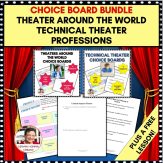
Giving students choices is always a great idea, too.  Remember you have worked out the choices ahead of time so you are comfortable with whether they select once choice over another.  Choice Boards are super for this.  Here are some of mine as an example. This bundle is very popular with teachers: Choice Boards

Ten Ways to Teach Reluctant Students in Your Theater Class

You can even pick up a sample of them right here.

Or pick up a technical theater unit for high school students here: Technical Theater Units, High School

So, there you have it!  Teaching is a wonderful profession when everyone is treated with respect. Even the reluctant students can learn that respecting your art form is possible and believe it or not–enjoyable!  I discovered that once my students knew I had their back and understood them feigning disinterest in theater, I could work with them.  Lots of times, it’s just noise on their part.  Remember that–it’s just noise.

I’d love to know what you’ve found is successful with reluctant students in your classroom?  Contact me at DhcBaldwin@gmail.com.


Share this:

  • Share on Tumblr (Opens in new window) Tumblr
  • More
  • Share on X (Opens in new window) X
  • Share on Facebook (Opens in new window) Facebook
  • Share on Pinterest (Opens in new window) Pinterest
  • Share on LinkedIn (Opens in new window) LinkedIn
  • Email a link to a friend (Opens in new window) Email
  • Share on Reddit (Opens in new window) Reddit
  • Share on Telegram (Opens in new window) Telegram
  • Share on WhatsApp (Opens in new window) WhatsApp

Like this:

Like Loading...

Filed Under: acting, arts education, arts integration, drama education, drama integration, Education, elementary, excellence in teaching, High School, middle grades, reading skills, theater, youth theatre Tagged With: acting exercises, classroom behavior management, elementary school, ELL student, engaging students, high school, Middle school, movement exercises, radio theater, readers theater, reluctant student, Teaching, warm ups and games

8 Must-Haves for Your Middle School Theater Scope & Sequence

September 21, 2022 By dhcbaldwin Leave a Comment

A group of middle school kids looking down at the camera.

8 Must-Haves for Your Middle School Theater Scope & Sequence

Today I’m going to talk about the eight things you should include in your Middle School Theater Scope and Sequence. Obviously, this is my point of view on the subject. If you are new to my blog, welcome! I’m quite flattered that you’d check me out.

8 Must-Haves for Your Middle School Theater Scope & Sequence

My First Teaching Experience with Middle School 

My first job was as an English teacher in a junior high school.  Bear in mind that I was certified in English, but had never taught it or even had any time as a student teacher. My student teaching was in theater which in the 1970s was almost unhear of in the mid-west.

Anyway,  I remember they gave me this HUGE book with all of the benchmarks or objectives I was to reach.  It was so full of jargon, I had to sit and translate it into layman’s English.  Finally, I got the hang of it.

When I began teaching middle school theater in the mid 90s (yikes), no one seemed to clear on what they wanted me to cover.  I came into the position with twenty years of teaching and directing outside the classroom, so I knew what to do in those circumstances.

However, teaching theater in a school was different than that. In the particular school I taught theater all those many years ago, I spent about a year trying out ideas until I perfected what I thought would be successful with the students. Looking for a free biography and one pager assignment about Lin Manuel Miranda?


8 Must-Haves for Your Middle School Theater Scope & Sequence

A Thirteen Year Middle School Teaching Adventure

For thirteen years,  I taught a pre-elective theater class to sixth grade students–all 450 of them.  (Yes you read that correctly.) I had twenty-five days to fill with the many subjects of theater which was great fun but also rather challenging.  My tendency was to perfect something when we found it to work, but the students and I just didn’t have the time to do so since they moved to the next pre-elective class.

After thirteen years of this teaching load, I had completely topped out on what I could teach them.  At this point, we moved to Colorado and I took a part time speech and theater middle school job–completely different and chaotic. But that’s a blog post for another day.

In 2017, I began my store on Teacherspayteachers.com.  My plan was to recoup the pension I lost by staying home with our daughters when they were very young.  I lost half of my pension when I made that decision, but to this day I have no regrets.  I know our daughters almost as well as they do themselves.

8 Must-Haves for Your Middle School Theater Scope & Sequence

My Middle School Scope and Sequence Curriculum

People purchase my middle school drama curriculum a lot.  I’m very glad I can help them, but it never dawned on me that maybe I should include a scope and sequence with the units. Here I am today providing that guidance for you.

I taught these lessons in this particular order beginning with the easiest concepts and progressing to the most challenging. This was a pass/fail course.  I gave a daily participation grade as well.

1. Tableau (1 day)–Tableau is a staple of theater and a non-threatening concept which beginning theater students can learn. Students learn how to make stage pictures (which is one of the basic of directing as well), however they don’t have to say anything. You can find my tableau lessons here: Tableau Lesson

2. Chanting (1 day)–Chanting, or a repeated word or phrase used to illicit an effect is the second component I teach novices.

Engaging Activities to Inspire Creativity and Collaboration

3. Costume Design (2 days)–Who doesn’t like costume design?  Depending upon the time of year, I like to teach about costume design with a thematic approach.  You’ll have to check out my Halloween Costume Design Lesson here.

4. Movement (2 days)–Just like tableau, students enjoy movement because there is no speaking.  Plus, it does a great job of giving students some physical exercise which they sorely need. You can find my lesson for movement here:  Movement

5.Kamishibai Storytelling (1 week)–Depending upon your assessments of you students and what they appear to engage with in your teaching, I like to use Kamishibai storytelling from time to time.  Have you never heard of Kamishibai?  Check it out here: Kamishibai Storytelling

8 Must-Haves for Your Middle School Theater Scope & Sequence
https://theconversation.com

6. Set Design (1 week)–Set Design units are super useful.  They incorporate not only designing the set, but building a model of it.  In addition, students work with a partner which is so good for teaching cooperative learning.

7. Performance (1 week) You can choose to direct your students in a short class play or a short radio theater play-I liked to switch it up every now and then with one or the other.  Word of caution–don’t have one class performing a play while the others are studying radio theater.  You will make yourself crazy.

8. Enrichment (1 day) If you need a substitute, or your school is having a day of shortened class periods, watching a video clip of theaters around the world or studying about a famous theater artist such as Lin Manuel Miranda does an excellent job of changing the pace or giving everyone a breather.

If you want a bundle of technical theater units for middle school, click here.

Or you want a REALLY BIG BUNDLE  of middle school drama units, click here.

Sometimes I’d throw in components such as stage properties or sound effects because quite frankly, I needed the change.

8 Must-Haves for Your Middle School Theater Scope & Sequence

Objectives I Met with This Scope and Sequence Theater Curriculum

Here are the National Core Arts Standards which I used.

Connecting

Conceiving and developing new artistic ideas and work.

  • Anchor Standard #1. Generate and conceptualize artistic ideas and work.
    Anchor Standard #2. Organize and develop artistic ideas and work.
    Anchor Standard #3. Refine and complete artistic work.

Performing

Performing (dance, music, theatre): Realizing artistic ideas and work through interpretation and presentation.

  • Anchor Standard #4. Select, analyze and interpret artistic work for presentation.
    Anchor Standard #5. Develop and refine artistic techniques and work for presentation.
    Anchor Standard #6. Convey meaning through the presentation of artistic work.

Responding

Understanding and evaluating how the arts convey meaning.

  • Anchor Standard #7. Perceive and analyze artistic work.
    Anchor Standard #8. Interpret intent and meaning in artistic work.
    Anchor Standard #9. Apply criteria to evaluate artistic work.

Objectives I Met with This Scope and Sequence Continued

8 Must-Haves for Your Middle School Theater Scope & Sequence

If you need Common Core Standards, here are a few of them which my guide completes.:

Grade 6

Key Ideas and Details:

CCSS.ELA-LITERACY.RL.6.1

CCSS.ELA-LITERACY.RL.6.2

CCSS.ELA-LITERACY.RL.6.3

Craft and Structure:

CCSS.ELA-LITERACY.RL.6.4

CCSS.ELA-LITERACY.RL.6.5

CCSS.ELA-LITERACY.RL.6.6

Integration of Knowledge and Ideas:

CCSS.ELA-LITERACY.RL.6.7
CCSS.ELA-LITERACY.RL.6.8
CCSS.ELA-LITERACY.RL.6.9

Range of Reading and Level of Text Complexity:

CCSS.ELA-LITERACY.RL.6.10

Are you looking for some information about how to design a lesson plan?  Check out this post: Why is it Important to Create a Lesson Plan?

Grade 7

Key Ideas and Details:

CCSS.ELA-LITERACY.RL.7.1.

CCSS.ELA-LITERACY.RL.7.2
CCSS.ELA-LITERACY.RL.7.3

Craft and Structure:

CCSS.ELA-LITERACY.RL.7.4.

CCSS.ELA-LITERACY.RL.7.5
CCSS.ELA-LITERACY.RL.7.6
CCSS.ELA-LITERACY.RL.7.7
CCSS.ELA-LITERACY.RL.7.8
CCSS.ELA-LITERACY.RL.7.9:

CCSS.ELA-LITERACY.RL.7.10

Did you know I have an Instagram account with virtually different information than my blog?  You can find it at: DramamommaSpeaks Instagram

Multicultural Folk Tales

A Word of Caution

In an effort to do a exemplary job at teaching, sometimes we teachers go overboard on what our students should learn. I’m not a big fan of scene study when students are in middle school or lower. Or even monologues. They simply do not understand it nor appreciate it. Unfamiliar with creative dramatics? Check out: Learn How to Teach Creative Dramatics in Your Lunch Hour

What I do encourage theater teachers of elementary and middle school to teach is using creative dramatics’ many facets. One could teach the components above, number one to five, and then apply them to a readers theater or short class play.  Here is one of my which would work well for this plan:  Inca Story The Magic Lake Readers Theater or The Brave Little Tailor play. 

I hope my guide helps you in your teaching of middle school theater class.  What do you like to include in your teaching? I’ve love to hear about it.  You can email me at DhcBaldwin@gmail.com.  Let’s chat!

Woman behind DramaMommaSpeaks

Share this:

  • Share on Tumblr (Opens in new window) Tumblr
  • More
  • Share on X (Opens in new window) X
  • Share on Facebook (Opens in new window) Facebook
  • Share on Pinterest (Opens in new window) Pinterest
  • Share on LinkedIn (Opens in new window) LinkedIn
  • Email a link to a friend (Opens in new window) Email
  • Share on Reddit (Opens in new window) Reddit
  • Share on Telegram (Opens in new window) Telegram
  • Share on WhatsApp (Opens in new window) WhatsApp

Like this:

Like Loading...

Filed Under: Arts, arts education, arts integration, creative dramatics, creative movement, drama education, drama integration, excellence in teaching, middle grades, reading skills, storytelling, Teacherspayteachers, theater, theatre Tagged With: common core standards, lesson plans, middle school drama, middle school theater, national core arts standards, scope and sequence, upper elementary theater

A Common Mistake Teachers Make In Teaching Theater to Students

April 13, 2022 By dhcbaldwin Leave a Comment

Surprised teacher with glasses on and carrying a gradebook

A Common Mistake Teachers Make In Teaching Theater to Students


A Common Mistake Teachers Make In Teaching Theater to Students

There is a common mistake teachers make in teaching theater to students.  I made it too.

I’ll explain.

It’s the time of year, when I’m beginning to read posts of graduating students accepting their first teaching position.  They are so excited and this brings me great joy. We need them and not just for the obvious reasons.

I’ve experienced this excitement myself.  It’s thrilling to know someone thought you were employable and would be an asset to their school staff.  At the same time, you are a little anxious because you aren’t certain you know what to do in certain situation.

That’s okay.  No one else does either.  If you’ve had an opportunity to see the new, very popular television show, “Abbot Elementary” you’ll watch the main character grapel with her feelings as well.  She’s a fairly new teacher and spends quite a lot of time second guessing herself.  (Pssst- so does everyone else.)

A Common Mistake Teachers Make In Teaching Theater to Students

A Common Mistake Teachers Make In Teaching Theater to Students

This post is for those of you who have been hired to teach theater to students in elementary and middle school. I can’t count the number of times someone has asked me, “What do I teach them?  The principal said they have no set curriculum. She just told me to teach what I thought was of value.”

Here are my questions back to you, “How many times do you see them a week? How many minutes is allotted to your class? Do you see them for a semester, quarter or the entire year?”

Irregardless of the answers, I know where you should begin. Bare in mind, your job is to encourage your students to learn more about the art form, work cooperatively with their classmates, appropriately express their feelings and leave your class feeling more confident and comfortable speaking in front of others.

A Common Mistake Teachers Make In Teaching Theater to Students

There are many ways to go about this, but I don’t want you to fret as I did. Let my thirty-eight years of teaching experience help you.  You probably won’t believe this, but when I studied for my masters in education (creative arts learning) a terrific teacher finally explained why these particular aspects should be taught first to your students.  Aha!

Boy, did he save me a lot of time.  Like many teachers, when I began teaching about a 100 years ago I taught like my high school teacher which was far too difficult for young students. Except I was teaching middle school students. I didn’t know better.  I thought I was doing the right thing, but I learned over time that they needed to study creative dramatics before anything else.

A Common Mistake Teachers Make In Teaching Theater to Students

The Necessary Components of Theater to Teach

If I were you in this situation, these are the components you want to teach:

  • tableau–Tableau is something nearly every student will understand.  Using a frozen stage picture, like a living photograph is something students can accomplish easily and with immediate success.  Plus, students aren’t expected to speak which helps reluctant performers.
  • chanting–We use chanting in many ways–either repeating a word several times or phrase or peppering a play or musical with it.  Once students study chanting and try it out for themselves they will hear it used everywhere.  Awesome sauce.
  • storytelling–Again, telling a story is an easy skill for students to learn and use. Once you enlighten your students to the reasons a person needs to have this skill, it becomes much easier for students to accomplish.
  • movement–If you haven’t won your students over to your class yet, instructing about the use movement will do it for you. Educating your students about the different kind of movement and how to use it is fascinating to them.  I mean, who hates trying to create the movements of a kitchen blender with your friend?
  • sound effects–Students love hands on learning.  Sound effects do a great job of satisfying this need. Trying your hand at creating the sound of a train chugging down the track or creating a scene of white water rafters paddling on a roaring river is so fun and exciting. Reluctant students love studying sound effects, because again they don’t need to speak.
  • set design–When teaching set design, I always found my most artistic ones.  This was fun, because being artistic isn’t something one can show of themselves on the outside.  A teacher can assign designing a rendering, building a model or simply making a powerpoint of their ideas. Usually, my students used fairy tale settings for their set designs and they loved it!
  • costume design–Honestly, I can’t think of a time when my students didn’t enjoy studying costume design. Teach them the basics of color, silhouette and texture and let them take off with their ideas.  Want to engage them even more? Teach about super heroes through costume design.  They will LOVE you for it.
  • improvisation–A day or two spent studying improvisation and how we use it in theater is a good choice.  Once students understand its uses and how freeing it is, even your reluctant students will participate.
  • stage properties–Stage props are easy to understand and create in one’s classroom. Once a teacher points out to the importance of this components, students are eager to make one.  I’ve had classes create all the props for another class’ musical or simply make plaster of paris items.  What do they enjoy the best?  Making food!
  • stage makeup--Stage makeup intrigues students.  I suppose it’s because its readily accessible and they are as familiar with it as a Halloween costume.  Teach them the basics, use a student in a demonstration and you are good to go.

Finally, it’s time to put all of these components into a short play.  It isn’t enough just to teach the components, applying it to a particular play or even short musical will help them readily and easily retain the information.  Plus, when student reads a play many times it helps their fluency, vocabulary, comprehension and many other skills.  You can take a short book or story the students enjoy and dramatize it yourselves. Or you can select a published play if you want a different perspective.

My Store Can Help You

You may be familiar with my store, Dramamommaspeaks.  I have created lessons for each component listed above. Here are few of them. In fact, I have a bundle of all of them at a discounted price.  No need for you to waste your time putting these lessons together when a trusted source can help you out.  Remember:  Confident people ask for help. None of us got where we are by ourselves.  🙂


Costume Design with Fairy Tales
Two students thinking about stage properties for the stage
Tips and Tricks of a Drama Teacher-- Drama Tools, That Is
Kamishibai Storytelling
A cover of a stage makeup lesson with a young and older person on the cover
This is the cover of a play version of The Brave Little Tailor, Grimm Fairy Tale.
This is the cover of a play version of the Jewish folk tale, It Could Always Be Worse
A cover for a sound effects lesson for elementary students with a boy and three words--pow, zap, boom.


So be of good cheer!  I’m here to help you if you need me.  If not, maybe you just want to pick up some FREE lessons.  Click here:  Creative Dramatics Lessons

 Drama Integration Lessons

If you’re looking for theater vocabulary lists, click here: My Theatre Vocabulary List for the Classroom

Need some posters? The Importance of a Drama Word Wall for Secondary Students

Do you have a question of me?  Contact me at DhcBaldwin@gmail.com or DeborahBaldwin.net

Follow me on Instagram

Congratulating a student in my production of The Secret Garden

Share this:

  • Share on Tumblr (Opens in new window) Tumblr
  • More
  • Share on X (Opens in new window) X
  • Share on Facebook (Opens in new window) Facebook
  • Share on Pinterest (Opens in new window) Pinterest
  • Share on LinkedIn (Opens in new window) LinkedIn
  • Email a link to a friend (Opens in new window) Email
  • Share on Reddit (Opens in new window) Reddit
  • Share on Telegram (Opens in new window) Telegram
  • Share on WhatsApp (Opens in new window) WhatsApp

Like this:

Like Loading...

Filed Under: arts education, arts integration, community theater, community theatre, creative dramatics, drama education, Education, excellence in teaching, middle grades, New Teacher, reading skills, storytelling, Teacherspayteachers, Teaching, youth theatre Tagged With: new teachers, rigor in teaching, teaching mistakes

370 Million Indigenous People Want You to Know About Their Cultures

October 28, 2020 By dhcbaldwin 4 Comments

370 MILLION INDIGENOUS PEOPLE WANT YOU TO KNOW ABOUT THEIR CULTURE

370 Million Indigenous People Want You to Know About Their Cultures

Today I want to speak about 370 million Indigenous people want you to know about their cultures. That’s a heady number–370 million people.

370 Million Indigenous People Want You to Know About Their Cultures

“Navajo Rug” by teofilo

My Navajo Rug

When I was a child, I contracted pneumonia at the beginning of a vacation while we traveled in the southwest.  Instead of going home early, my parents bedded me down in the car to sleep at night to get out of the cold while they slept in a very primitive tent trailer. During that unusual vacation I learned how to swallow huge pills for the pneumonia.  Because of this adventure, I can still take lots of pills all at once because of that fateful vacation.

While we traveled on that trip, we stopped somewhere in New Mexico and purchased a Navajo rug.  Many years later, when my dad died, my mother gave it to me because they used it to keep me warm in the car during the pneumonia.  I will never forget that.

To this day, that Navajo rug lays in our cedar chest protected from the elements.  It occurred to me as I worked on this blog post that I have never learned much about the Navajo nation.  Why didn’t I learn about them when I was in school?

I’m a Trailer Blazer

I am a person who sees a problem and sets out to fix it in some way. Whenever I see the need, I set to it.  Generally, I started youth theater programs for community theaters.  I’ve also co-created a national playwriting contest for youth theater plays, developed an ESL drama club and a few programs. My friend said I’m a trail blazer–I create, get the program up and running and then I’m ready to move on.  Yup, that’s me! Want to learn about my ESL Drama Club:  go to Overcoming Fear and Anxiety When Speaking English As A Second Language

Four years ago, I opened a drama education store (Dramamommaspeaks at TeacherspayTeachers.com)  to provide drama education resources for grades three to twelve.  I teach differently, not staying with the tried and true, because there are many opinions about what a student should learn about theater arts. In general, my teacher’s lessons or units are supplemental.

370 Million Indigenous People Want You to Know About Their Cultures

370 Million Indigenous People Want You to Know About Their Cultures

Recently I saw the movie,  Hunt for the Wilder People.  If you have seen it yet, I strongly suggest that you do.  It’s marvelous in so many ways. As I watching this funny and bittersweet story about a Maori boy in New Zealand and his unique relationship to his foster father, I realized I knew very little about the Maori culture.

Who are Indigenous People?

I can’t be the only person who thinks this way.  Truth be told, as children we never studied various cultures in social studies.  I was a student in the 1960s.  I’m sure our current social studies education includes learning about other cultures, but I don’t know how much they are studied.

The world is a mess right now.  We have lost our sense of compassion for people who are different from ourselves.  Could I help? Maybe a teeny bit.

My research began by seeking information about indigenous people.  Looking for facts and details about indigenous people, I found the UnitedNations.org website.

How many people identify as indigenous?

“It is estimated that there are more than 370 million indigenous people spread across 70 countries worldwide.
Practicing unique traditions, they retain social, cultural, economic and political characteristics that are distinct
from those of the dominant societies in which they live. Spread across the world from the Arctic to the South
Pacific, they are the descendants – according to a common definition – of those who inhabited a country or a
geographical region at the time when people of different cultures or ethnic origin. ”

370 Million Indigenous People Want You to Know About Their Cultures

Should I call them Indigenous People? 

The UnitedNations.org post continues, “The term ‘indigenous’ has prevailed as a generic term for many years. In some countries, there may be preference for other terms including  first peoples/nations, aboriginals, ethnic groups, adivasi,
janajati. Occupational and geographical terms like hunter-gatherers, nomads, peasants, hill people, etc.,
also exist and for all practical purposes can be used interchangeably with “indigenous peoples”.

My masters in education focused on arts integration infused in core subjects.  Nothing makes me happier than to discover a way to integrate drama into a core subject classroom.

Because arts integration reaches and engages students, I am always on the hunt for learning opportunities using drama integration to support the core subjects.

370 Million Indigenous People Want You to Know About Their Cultures

370 Million Indigenous People Want You to Know About Their Cultures

Enter Indigenous People Units

I collect international folk tales to use in drama class or arts integration lessons.  To date, my plays and readers theater units concern about China, Mexico, Peru,  the Cherokee Indian, Italy, Pakistan, Germany, Romania, Alaska, Japan and a Jewish story.  I believe multiculturalism is very important.  See what I mean.  The Reasons Teaching Multiculturalism in the Classroom is Vitally Important If you are interested in any of these units below, please check them out in my Teacherspayteachers.com store, or my store at Payhip.com or my store at MadebyTeachers.


SEDNA UPDATED
MAGIC LAKE READERS THEATER COVER UPDATED
HOW THE HONEY BEE GOT ITS STINGER COVER YDP 1.9
LEGEND OF THE SUNFLOWER COVER YDP UPDATED 1.9
MAIDENS OF THE CORN COVER

370 Millions People

In light of the world and the racial conflicts which have come to the forefront, I’ve turned my attention people of different cultures–namely indigenous people and their legend and folk tales.  I hope social studies, language arts, reading and drama teachers will appreciate the lessons and use them in their classroom.  They are enjoying the above mentioned ones I’ve developed.

Here’s a video preview of Sedna, An Inuit Tale

Indigenous People Units

As of this writing, I have two lessons available.  I’m hoping in time to have around ten, but of course I can create as many as I can find to share.


The products include some of the following depending upon the resource:

  • Two warm ups–one physical and one imaginative, both boost energy
  • Original version of the Legend of Corn Maidens or Magic Lake–great for comparison and contrast
  • Teacher’s script–what I say and how I say it!
  • Advice in directing reader’s theater
  • Blocking plot for performance
  • Kachina Dolls or Machu Picchu Information
  • Vocabulary and pronunciation
  • Who are the Zuni or Inca people?
  • Eleven to Thirteen page scripts with roles for 20+
  • Original song reminiscent of the Zuni music
  • Sheet music (optional for performance)
  • Sound bytes of music
  • Enrichment activities–designing a costume, designing a set, study of other Native American creation myths or a drama exercise using tableaux

As you can see, there is plenty of material for a lesson or two.

I hope you’ll check out these lessons and the rest to come.  Honestly, I don’t know what will be next, but I know one thing–I’m going to help educate our students about indigenous people through dramatic arts. If you are interested in the reasons for using readers theater as a way to integrate drama into your classroom, go to  The Reasons Reader’s Theater is Successful with Our Students or  How to Excite Students With Drama Integration

What arts integration lessons are your favorite?  I’d love to hear.  Contact me at DhcBaldwin@gmail.com or DeborahBaldwin.net

370 Million Indigenous People Want You to Know About Their Cultures

Share this:

  • Share on Tumblr (Opens in new window) Tumblr
  • More
  • Share on X (Opens in new window) X
  • Share on Facebook (Opens in new window) Facebook
  • Share on Pinterest (Opens in new window) Pinterest
  • Share on LinkedIn (Opens in new window) LinkedIn
  • Email a link to a friend (Opens in new window) Email
  • Share on Reddit (Opens in new window) Reddit
  • Share on Telegram (Opens in new window) Telegram
  • Share on WhatsApp (Opens in new window) WhatsApp

Like this:

Like Loading...

Filed Under: acting, arts education, arts integration, creative dramatics, creative movement, DeborahBaldwin.net, Distance Learning, drama education, e-learning, Education, elementary, excellence in teaching, High School, middle grades, reading skills, storytelling, Teacherspayteachers, Teaching, teaching strategies, youth theatre Tagged With: aboriginal, ethnic groups, first people, hill people, indigenous people, native americans, nomads, social studies, tribes, Unitednations.org

« Previous Page
Next Page »

Footer

Follow Us

logo3.png

FOLLOW US

Facebook X-twitter Pinterest Instagram Envelope Rss

Goodreads: read

Malibu Rising
Malibu Rising
by Taylor Jenkins Reid
People We Meet on Vacation
by Emily Henry
The Last Thing He Told Me
by Laura Dave
Faking It
Faking It
by Cora Carmack
Losing It
Losing It
by Cora Carmack

goodreads.com
Copyright © 2024 · Wellness Pro on Genesis Framework · WordPress.com.Log in
 

Loading Comments...
 

    %d