• Skip to primary navigation
  • Skip to main content
  • Skip to footer

Join Me in my new Facebook Group! https://www.facebook.com/groups/417126059784261

Menu
  • Meet Deb – The Heart Behind DramaMommaSpeaks
    • Work with Me! 
    • Photo Gallery of DramaMommaSpeaks
    • Directorial Credits
  • I Give Book Talks! 
    • Book Talk Through Skype
    • Books
  • Freebies!
  • Bumbling Bea
  • Teaching Resume
  • Acting Resume
  • Contact Me
  • Blog
    • Drama Education
    • Arts Education
    • Youth Theatre
    • Middle Grades
    • Musical Theatre
    • Teaching
  • Meet Deb – The Heart Behind DramaMommaSpeaks
    • Work with Me! 
    • Photo Gallery of DramaMommaSpeaks
    • Directorial Credits
  • I Give Book Talks! 
    • Book Talk Through Skype
    • Books
  • Freebies!
  • Bumbling Bea
  • Teaching Resume
  • Acting Resume
  • Contact Me
  • Blog
    • Drama Education
    • Arts Education
    • Youth Theatre
    • Middle Grades
    • Musical Theatre
    • Teaching

acting exercises

Ten Ways to Teach Reluctant Students in Your Theater Class

October 5, 2022 By dhcbaldwin 1 Comment

At least once a week, I read of a teacher asking help with, “My beginning theater class is open to all students in the school. However, it has become a dumping ground with students completely disinterested in theater and the study of it. At the same time, I have students who are sincerely interested in the subject in the same class.  What do I do?” Today, I’m going to talk about Ten Ways to Teach Reluctant Students in Your Theater Class.

I know this challenge all too well myself.  Several times in my career, I had students placed in my classroom because the administration thought I demonstrated skill in reaching all students and could reach these students as well.

Do you have any idea how heavy the weight of responsibility for teaching to reluctant students is? Teaching is difficult enough and a theater class poses its own challenges that not everyone is aware of. For instance, when one acts they must share their feelings, real feelings.  That’s can be scary for even the most ardent theater student.

Ten Ways to Engage Reluctant Students in Your Theater Class

Simply put, you need to outsmart your reluctant students.  Remember, you are the professional here.  You’ve got what it takes to be successful (albeit tiring). Wonder how I got to where I am today? Check out: How Theatre Saved My Life

Teach Reluctant Students

  •  You need to survey each and every class to discover whether they are interested in theater or not.  This is true of anyone who teaches any electives from industrial education to art as well as theater. By surveying the students (through a questionnaire on-line or hard copy) you’ll find out their interest level (because you will ask it) and what they hope to learn in the class.
  • After you’ve studied the students’ questionnaire, you can now shape your lessons accordingly. Does this take more time than what you would usually do?  Yes.  Is it worth it?  Yes!  It is better to know your audience (because that’s what they are, essentially) than not and spend most of the year frustrated with their lack of engagement.
  • Use a game as a warm-up. Most students love a game so I recommend playing one at the beginning of each class.  For some students, it is the delight of their day (although they may never share this with you) and it lifts the burden for you always having to teach a concept.  Let the game teach them.  Also, playing a game makes class fun no matter the outcome.  Start with something simple like the Ball Game (Don’t know it? pick it up here).  The Ball Game can be played with students of any grade level. Games give students an opportunity to get to know one another without the stress of a face to face conversation. As the quarter progresses the games you can select games which are more difficult. By the last month of the semester, you should have no problem using an improvisation exercise as a warm-up.
  • Minimize your students’ worries.  Through the questionnaire, you should have a better grasp about what they think theater is as opposed to what it actually is. They may think theater is standing on a stage, wearing a costume (the student may dislike), wearing makeup (even the boys), memorizing gobs of lines and speaking at a volume for the entire class to hear. 

         Let’s not start there if that’s the case.  Let’s do some theater appreciation instead.  Show them video clips of theaters  around the world and either have a class discussion of each theater or give them questions to answer. Here is what I  mean:  Theaters Around the World.

Ten Ways to Engage Reluctant Students in Your Theater Class

Teaching Reluctant Students

  • Study technical theater with them--set, sound, stage properties, stage makeup or costume design.  Many students just need a backdoor into the subject. Technical theater is nonthreatening.  Most assignments are meant to be completed individually and not with a group.  This helps those students who do not speak English as their first language, especially.  I really enjoy teaching technical theater. Through its study, I usually find a student who no one knew very well that turns out to be a fabulous artist! Their creativity and talent can shine in technical theater and suddenly the other student take note of them.  It’s awesome. Here are a few technical theater units which may help you: Technical Theater Units or begin with Set Design, the Rendering
  • Reader’s theater is a good choice for your class.  Readers theater is successful in a class with various levels of interest, because there is no line memorization, no costumes, etc. Everyone sits together on the stage, so there’s that “safety in numbers” thing. Plus, if you wait until near the end of the second quarter, readers theater should not be difficult for your reluctant ones.  (Read my article in One Classroom Over about reader’s theater) You’ve given them plenty of time to adjust to the class. Here’s a funny script for them:  The Brave Little Tailor Unit.  Great for grades 5 to 7.
  • Radio theater is a super choice, too. Personally, I think radio theater has everything a play does!  That’s the reason I suggest it to teachers. Radio theater is highly imaginative from the many character voices actors create to the sound effects. Plus, it is a super tool for strengthening reading skills! It is easy to keep everyone involved, because they are on the stage the entire length of the piece. It can be as simple or as theatrical as you like.  And yet again–no line memorization! This is another unit I would teach near the end of the semester or year. If you are interested in radio theater, check out: Radio Theater Units and Lessons  Don’t know how to direct one?  Go here and pick up all of the training you need: How to Direct Radio Theater
  • Use movement exercises instead of acting ones.  Movement takes no sound and no verbal reaction.  Students like the physical activity, too. The Magic Circle is a good exercise to use for movement.  (Don’t know it?  Pick it up here)
  • Turn down your classroom lights. You won’t believe how dimming the lights will ease students’ anxieties. You just want the classroom light to be dim–light enough you can everyone but no so dark you can’t keep an eye out for any inappropriate behavior.
  • Play some classical music in the background.  Classical music works because there are no lyrics for the students to notice. It can express mood without anyone saying anything.  I think of it like a comforting blanket. In those awkward moments in a game, acting exercise or lesson they can help ease any anxiety that rears its ugly head.

Want some additional tips from me?  Check out Double Casting a Show? Here’s Advice

Ten Ways to Engage Reluctant Students in Your Theater Class

Advice for the Core Subject Teachers

Many of the suggestions I’ve made above work strictly in a theater classroom. Some of them will work for you as well.

Here are a couple of other suggestions for you:

Sometimes our students just need space away from others.  Offer that space in your classroom if a student needs it.  You want them to feel safe and accepted in your classroom. I say as long as they are focused on their work, this is acceptable.

Giving students choices is always a great idea, too.  Remember you have worked out the choices ahead of time so you are comfortable with whether they select once choice over another.  Choice Boards are super for this.  Here are some of mine as an example. This bundle is very popular with teachers: Choice Boards
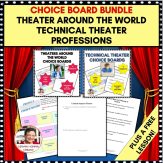
Ten Ways to Teach Reluctant Students in Your Theater Class

You can even pick up a sample of them right here.

Or pick up a technical theater unit for high school students here: Technical Theater Units, High School

So, there you have it!  Teaching is a wonderful profession when everyone is treated with respect. Even the reluctant students can learn that respecting your art form is possible and believe it or not–enjoyable!  I discovered that once my students knew I had their back and understood them feigning disinterest in theater, I could work with them.  Lots of times, it’s just noise on their part.  Remember that–it’s just noise.

I’d love to know what you’ve found is successful with reluctant students in your classroom?  Contact me at DhcBaldwin@gmail.com.


Share this:

  • Click to share on Tumblr (Opens in new window) Tumblr
  • More
  • Click to share on X (Opens in new window) X
  • Click to share on Facebook (Opens in new window) Facebook
  • Click to share on Pinterest (Opens in new window) Pinterest
  • Click to share on LinkedIn (Opens in new window) LinkedIn
  • Click to email a link to a friend (Opens in new window) Email
  • Click to share on Reddit (Opens in new window) Reddit
  • Click to share on Pocket (Opens in new window) Pocket
  • Click to share on Telegram (Opens in new window) Telegram
  • Click to share on WhatsApp (Opens in new window) WhatsApp

Like this:

Like Loading...

Filed Under: acting, arts education, arts integration, drama education, drama integration, Education, elementary, excellence in teaching, High School, middle grades, reading skills, theater, youth theatre Tagged With: acting exercises, classroom behavior management, elementary school, ELL student, engaging students, high school, Middle school, movement exercises, radio theater, readers theater, reluctant student, Teaching, warm ups and games

Three Lessons to Engage Your Drama Class Using Differentiation

February 3, 2021 By dhcbaldwin 2 Comments

Three Lessons to Engage Your Drama Class Using Differentiation

Three Lessons to Engage Your Drama Class Using Differentiation

Today I want to talk with you about three lessons to engage your drama class using differentiation.

I wasn’t a very good math student when I was a child.  I made it okay to third grade but then Mrs. Gibson had to take off the rest of the school year.  Mrs. Butterfield tried to teach me, but I got behind during division and then fell through the cracks. Of course, we only learned from textbooks–no cute clipart, certainly nothing thematic and blah, blah blah.

Our daughters were great math students.  That was some thirty years later and students were using manipulatives and calculators.  Wow, what a difference! Observing them utilizing various methods of learning to arrive at an answer, I know I could have done it, too.  My math skills would be much better than at present.

Three Lessons to Engage Your Drama Class Using Differentiation

What does “differentiation” mean to you?

“Differentiation means tailoring instruction to meet individual needs. Whether teachers differentiate content, process, products, or the learning environment, the use of ongoing assessment and flexible grouping makes this a successful approach to instruction.”

I can’t imagine a drama teacher not using differentiation, can you? It’s just what we do~ 

When I was researching this topic, I found some great information and suggestions.  One in particular from the Ontario Ministry of Education shared a tremendous example.  You really should check this out: edugain.ca

The best point made was that differentiation can offer many choices for students in their learning.  Throughout this terrific lesson the students were instructed to change their groupings, involve other classmates, shuffle themselves while continuing to learn.

Want some more help in the classroom? Check out my FREE Guide and ten page lesson Here 

Oh, I do that naturally!  I don’t know about you, but I like changing the group chemistry.  Have you ever worked on a problem with student learning groups and they solve it one way and another group solves it a different way?

Three Lessons to Engage Your Drama Class Using Differentiation

Number One:  Creative Movement

After reading this cool lesson from the Ontario Ministry of Education, I was reminded of a movement warm-up exercise from Viola Spolin’s book, Theater Games in the Classroom.

The warm up is called Freeze and Melt.  It’s not an easy warm-up (best with middle grades and older.)   Usually students need to be fairly comfortable with each other and/or willing participants.

Basically, they create a statue.

Here is my version–I encourage them to put themselves in unusual positions–twists, bent over, one arm stretched out, etc. One requirement is absolutely a must– They must be physically connected to their partner.  Usually, I suggest they connect foot to foot because it’s the least threatening contact.

As always, the lights are turned low in the classroom which helps them feel less vulnerable and exposed.  Classical music is played in the background to encourage a calm and relaxed feeling.

Once the students create their “statue”, I give them instructions about the different places the imaginary sun would be warmest on their body.  Their job is to melt very slowly focused on that part of their body where the sun is warming them.  I give each melting movement about five to ten seconds. I coach them as they move, so they don’t rush by counting them down. At this point, I ask them to freeze again. Observing them, I point out interesting shapes which occurred for them. We try a different place for the sun to warm them.  They melt and freeze when I direct them.

Three Lessons to Engage Your Drama Class Using Differentiation

Now they understand the warm up.

We end the exercise.  They shake out.  I give them a second to chat with their friend and take a new position.

We begin again and go through the same steps.  I encourage them to remember their face can express a particular emotion.  This deepens the experience for them as they realize the value of facial expression.  However, this time, the exercise lasts at least a minute (which sounds like a short time, but is actually quite long when you consider what I’ve asked of them to do.)

Now for differentiation--the group brings in two more people.  I give them very little time to make this new group, because I don’t want them to think too much.

The third time I push them to freeze in unusual positions.  At the very end of the exercise, I charged the students slowly “ooze” to the floor. We do this very slowly–on a ten count.   I encourage them to take unusual, ugly positions.  This is absolutely fascinating to watch!

If the class is very comfortable with the exercise, I’ve been known to have all of them create a statue together.  I like to push my students because I know if they trust me and they are relaxed and having fun, anything is possible. Check out this blog post for more movement suggestions: The Ultimate Guide for Drama Teachers: Creative Movement? Are you Kidding Me?

or check out this Thanksgiving themed creative movement lesson 

Number Two: Set Design

Three Lessons to Engage Your Drama Class Using Differentiation

It is very infrequent for me that I do not give students choices.  I mean, don’t you like it when you get to select the size of drink you’d like instead of someone just slapping down a huge soda when you thought it would be of a reasonable size? Me too.

My set design unit gives allows for differentiation.  First, they can study it in parts.  For instance, the set design rendering lesson gives them a chance to take their ideas and draw them.

Do you teach grades two to five?  Pick up this free guide and ten page lesson Here:

Three Lessons to Engage Your Drama Class Using Differentiation

Set Design Lesson

After they study set design, they have many choices. For instance, high school students are required to read a play of their choice.  Middle grade students might read aloud a play they are studying, but they’ll design a set for it which they choose.  In one set design unit, students design sets of their school.  Again, choice!

When it comes time to build a scale model of their set, they find a partner. Additionally, this gives them an opportunity to make a decision as to who they would work best with and could work cooperatively with for several days.  I like this requirement because it teaches them to consider their own learning styles while carefully considering their classmates’. Check out this blog post for more information Critical Steps in Producing a Play or Musical: Set Design

Did you know I have the secret to boosting student engagement?  My new book, “We’re Live! Radio Theater #101” explains my journey to implementing this unique tool in the classroom. Check it out here

Number Three: Improvisation

Three Lessons to Engage Your Drama Class Using Differentiation

No matter the class or grade level, I give students who are new to a drama class an opportunity to learn at their own pace. However, this does not mean we can wait until next year to try improvisation.

If a class is extremely reluctant, I’ll seek out the least worried student and demonstrate with them.  If the students are ELL and language is a barrier for us, I will stay with theater games until I see them relax and begin enjoying the experiences.  Again, this gives students another method of differentiation.

Check out this lesson:  Theater Professions

Sometimes I will group students by the color of their shirt, shoes or season in which they were born.  They never know how I will group them, because it depends upon their willingness to “play” along with me. Other times, they group themselves.

In most situations students write, read, listen, speak and demonstrate their learning to me.   You might say I’m thorough, but I’m not pedantic–I ignore the small stuff and concentrate on the big picture.  There is time enough to be perfectionistic down the road. Besides, no one is perfect. For more information about me, check out this blog post The Lessons I Learned from Working as a Drama Teacher

Here’s a brand new lesson which uses differentiation and cooperative learning–Norman Rockwell Paintings Creative Writing Play Dialogue Theater Arts lesson.

Three Lessons to Engage Your Drama Class Using Differentiation

I’d never really thought about the ways I use differentiation in my classroom. Wow, I use it a lot.  This was a good exercise for me to do! I hope it helps you, too!

How do you use differentiation in your classroom?  Contact me at DhcBaldwin@gmail.com or DeborahBaldwin.net

Deborah Baldwin of DramaMommaSpeaks

Share this:

  • Click to share on Tumblr (Opens in new window) Tumblr
  • More
  • Click to share on X (Opens in new window) X
  • Click to share on Facebook (Opens in new window) Facebook
  • Click to share on Pinterest (Opens in new window) Pinterest
  • Click to share on LinkedIn (Opens in new window) LinkedIn
  • Click to email a link to a friend (Opens in new window) Email
  • Click to share on Reddit (Opens in new window) Reddit
  • Click to share on Pocket (Opens in new window) Pocket
  • Click to share on Telegram (Opens in new window) Telegram
  • Click to share on WhatsApp (Opens in new window) WhatsApp

Like this:

Like Loading...

Filed Under: acting, arts education, creative dramatics, creative movement, drama education, Education, High School, middle grades, Teacherspayteachers, teaching strategies, theater, youth theatre Tagged With: acting exercises, acting warm-up, differentiation, elementary drama class, high school drama class, improvisation exercises, middle school drama class, movement, set design, tableau, using differentiation in the drama classroom

Footer

Follow Us

logo3.png

FOLLOW US

Facebook X-twitter Pinterest Instagram Envelope Rss

Goodreads: read

Malibu Rising
Malibu Rising
by Taylor Jenkins Reid
People We Meet on Vacation
by Emily Henry
The Last Thing He Told Me
by Laura Dave
Faking It
Faking It
by Cora Carmack
Losing It
Losing It
by Cora Carmack

goodreads.com
Copyright © 2024 · Wellness Pro on Genesis Framework · WordPress.com.Log in
 

Loading Comments...
 

    %d