

Here’s a Lesson You’d Neve Expect: Costume Design
It’s one of my favorite subjects in theater. How can you beat it?
It’s fun, creative, allows for your imagination to flow freely and just plain fun.
Oh, did I say fun twice?
You know who else loves costume design? Kids.
I think sometimes as drama teachers we think of costume design from the standpoint of a play or musical solely.
But there are so many other ways we use costumes. Maybe like me, you haven’t thought of them either.
For instance:
- Halloween costumes
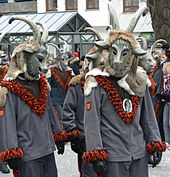
- Parade costumes
- Ballet costumes
- Super Hero
- Circus Performers
and probably more I haven’t even thought of yet!
Why Should I Teach Costume Design?
Here are some reasons for you:
- Costumes are one of the most popular components of theatre.
- An actor need not speak. A costume can share something about the character. The time period, tone of the production, personality or job of the character can all be conveyed through a costume.
- Costume design involves multi -step procedures. The student learns to site specific examples while attending to the precise details of a description.
- Students determine the meaning of symbols, key terms and phrases as they are used in a specific context relevant to grade appropriate texts and topics.
You may not know there are several important steps a costume designer must go through before the costume hits the stage.
1.) Analysis: The first step is an analysis of the script, musical composition, choreography, etc. Costume parameters for the show are established and a rough costume plot is created. A costume plot outlines which character is in which scene, when the actors change, and what costumes are mentioned in the script.
2.) Design Collaboration: This is a time when all of the designers meet with the director. There must be a clear understanding of where the show is headed. The designers get on the same page with the director in terms of themes for the show and what message they want the audience to get from the show.
3.) Costume Research: Now, the costume designer gathers research. Costume designers usually begin with world of the play research where they find research to establish the world where the play takes place. This helps the designers establish the rules of the world and then in turn understand the characters better. The designer will then go into broad research about each character to try to establish their personalities though their costume.
4.) Preliminary Sketching and Color Layout: Costume designers begin by creating preliminary sketches. beginning with very quick rough sketches the designer can get a basic idea for how the show will look put together and if the rules of the world are being maintained. The Costume designer will then go into more detailed sketches and will figure out the specific costumes and colors for the character. Sketches help see the show as a whole without them having to spend too much time on them.
5.) Final Sketches: Once the Costume Designer and the Director agree on the costumes and the ideas are fully flushed out, the designer will create final sketches. These are called renderings and are usually painted with watercolors or acrylic paints. These final sketches show what the designer wants the character to look like and the colors of the costume.

Here’s a little history for you:
Costume design has a very long history. The ancient Greek playwright Aeschylus, who lived in the 5th century B.C., created specific costumes for actors to wear when performing his tragedies. In the Middle Ages & Renaissance, scenery and costumes became increasingly important elements of stage plays. Want a free costume design lesson? Click here.
They helped capture a mood, create an exciting colorful event, and entertained audiences. But there wasn’t one cohesive idea of what costume had to be. In Shakespeare’s time, people performed in contemporary dress. In his own company, Shakespeare’s performers provided their own costumes.
In the 16th century, some traveling theatrical troops performed a style of theater called commedia dell’arte. It had costumes that represented stock characters, such as the serving girl, the doctor, and the harlequin. Everyone in the audience understood what these characters stood for by looking at their costumes.
From the 1770s through the 1870s, a desire for greater accuracy in costume design began to take hold due to an increase in stage performances and traveling theatrical troupes, and because more people had become familiar with the costumes of cultures around the world.
Into the 19th century, costume design became an increasingly specialized art, and two main ideas filtered into it. One was historical accuracy, or capturing the sense of a time period.
The other was concept-driven, in which costumes captured a vision that might not have connections to a known historical time and place. Think about movies and television today, and you can probably name several productions that fall into either category.
Did you know the use of metaphor through costume design is super cool? I love this part!
The Metaphor is used to assist the designer in developing a specific tone, mood, style, or feel for the play.
Metaphor is “A figure of speech in which a word … that ordinarily designates one thing is used to designate another, thus making an implicit comparison…“
For example: “All the world’s a stage,…” (William Shakespeare’s, As You Like It, Act II, scene 7). In less poetic terms — the world is a stage. (Note: A simile would add the word “like:” The world is like a stage.)
For example, after an analysis of Moliere’s The Giver, the designer may decide that Harpagon’s home, the primary set, is a gold coin. The metaphor — home is a gold coin — can suggest to the designer a color (gold), a shape (round), a texture (metallic)… How these elements are used depends on the designer’s creativity.
Think of the elements in Wizard of Oz—tornado, bicycle, ruby slippers, hour glass
How could you use these elements in the design of Dorothy’s house?
Here’s a Lesson You’d Never Expect
I have several costume design lessons you might be interested in.
Costume Design studies through:


Each is a two day student-centered study of the history of costume design, including giving students an opportunity to create their own designs and much more. If you are looking for a unit, this five day costume design unit works well with high school students.

Costume Design Unit for High School
I hope you’ll give them a look see.
I’d love to hear about your experiences with costumes. I have a few crazy ones, like the time I decided to dress as a stalk of celery…..but I’ll keep that story for another time.
Contact me at dhcbaldwin@gmail.com or DeborahBaldwin.net
