• Skip to primary navigation
  • Skip to main content
  • Skip to footer

Join Me in my new Facebook Group! https://www.facebook.com/groups/417126059784261

Menu
  • Meet Deb – The Heart Behind DramaMommaSpeaks
    • Work with Me! 
    • Photo Gallery of DramaMommaSpeaks
    • Directorial Credits
  • I Give Book Talks! 
    • Book Talk Through Skype
    • Books
  • Freebies!
  • Bumbling Bea
  • Teaching Resume
  • Acting Resume
  • Contact Me
  • Blog
    • Drama Education
    • Arts Education
    • Youth Theatre
    • Middle Grades
    • Musical Theatre
    • Teaching
  • Meet Deb – The Heart Behind DramaMommaSpeaks
    • Work with Me! 
    • Photo Gallery of DramaMommaSpeaks
    • Directorial Credits
  • I Give Book Talks! 
    • Book Talk Through Skype
    • Books
  • Freebies!
  • Bumbling Bea
  • Teaching Resume
  • Acting Resume
  • Contact Me
  • Blog
    • Drama Education
    • Arts Education
    • Youth Theatre
    • Middle Grades
    • Musical Theatre
    • Teaching

DISTANCE LEARNING

Five Reasons to Watch The Grinch Live! on NBC

November 11, 2020 By dhcbaldwin Leave a Comment

Five Reasons to Watch The Grinch Live!  on NBC

Happy Holidays (okay, it’s a little early, but covid….)

Pretty soon, all of the holidays special will begin and luckily, this year is no exception.

On December 9, there is going to be a live version on NBC of the Broadway musical, “The Grinch”!

How awesome is that?

How the Grinch Stole Christmas

(Yes, I know this photo is from the movie.)

Five Reasons to Watch The Grinch Live! on NBC

#1  THE PLOT

If you don’t know the musical, (because you’ve been living in a cave or something) the story goes like this:

The action of the musical happens in mysterious Whoville. Christmas is a wonderful holiday, which is adored by all the residents of the fantastic town. Who doesn’t love this time of the year, when everything around is covered with fluffy snow, when we feel a smell of a fir-tree, and people exchange with magnificent gifts? Therefore, on the eve of the holiday, the inhabitants are concerned about purchases of the gifts, decoration of the houses and, of course, preparation of dishes for the holiday table.

Once upon a time, a man lived in a town. His was called Grinch. His body was green and hairy. That’s why nobody in the Whoville loved him. The main hero took offense on the inhabitants and decided to live on the lonely mountain, which was blown by winds. A dog was an only being, who kept his company. On this mountain, he sat in a cave and was angry at the whole world.
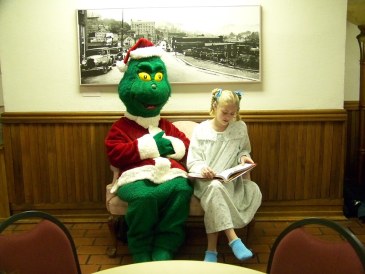
Breakfast with the Grinch 11-2010

Breakfast with the Grinch from vastateparkstaff

Grinch hated Christmas most of all. While the population of a town had fun with all hearts, the indicator of already bad Grinch’s mood expressed something awful. Each Christmas appeared to be a terrible torture for the green hermit. One day, a spiteful inhabitant of the mountain decided to finish a holiday once and for all. While the carefree Whovilleans were sleeping in holiday night with pleasure, perfidious Grinch decided to steal Christmas from the citizens, to make nobody able to have fun anymore.

Now, as well as the residents of the town, Grinch is in cares: he needs to prepare an ideal crime, that nobody could follow his ways. Two teenagers and two girls got on the mountain, where Grinch lived, and it finally angered him. He left the cave, put on a fancy dress and went down to the city, where he began to frighten everyone, who occurred on his path. What to do, if the circumstance, which is hard to cope with, unexpectedly interferes into the plans of Grinch? To speak more precisely, it is the little girl, who even wants to make friends with the character.

Five Reasons to Watch The Grinch Live on NBC

The girl, who helped the father with mail, was frightened so much that she fell in the packing machine, but then, probably, Grinch felt sorry and pulled her out. Cindy thanked him. Being raged by the fact that someone can think that he is kind, Grinch wrapped her with the tinsel. Then the girl thought that, maybe, Grinch is not so bad as everyone speaks about him. She also absolutely cannot understand the sense of Christmas and wants to reconcile him with the residents. However, finally, Grinch realizes that sense of Christmas is not in gifts. The repentant villain decided to return the gifts to the inhabitants, and they accepted him to their society.

#2 MATTHEW MORRISON

Matthew James Morrison will portray Grinch! Morrison is an American actor, dancer, and singer-songwriter. Morrison is known for starring in multiple Broadway and Off-Broadway productions, including his portrayal of Link Larkin in Hairspray  on Broadway, and for his role as Will Schuester on the television show Glee. He received a Tony Award nomination for his featured role as Fabrizio Nacarelli in the musical The Light in the Piazza.

#3 DENIS O’HARE

Denis O’Hare will play his dog, Max.  O’Hare is an American actor, singer, and author noted for his award-winning performances in the plays and musicals such as Sweet Charity,  as well as portraying vampire king Russell Eddington on HBO’s fantasy series True Blood. He has been nominated for an Primetime Emmy for Best Actor.

Five Reasons to Watch The Grinch Live on NBC

#4 THE COSTUMES

Personally, I think the costumes from the film version were exceptional.  I don’t know if they can reach that level of detail, but I’m interested in seeing if they do so.

#5 THE CHOREOGRAPHY

From viewing the snippet on NBC, I can tell the choreography is fun and playful.  That’s got to be a plus, huh? Here’s a trailer for the show:

https://www.today.com/popculture/nbc-bringing-grinch-life-new-musical-holiday-special-t198362

As you may know, several musicals have been performed live in recent years.  In my opinion, some were better than others.  I enjoyed NBC’s Hairspray and Jesus Christmas Super Star the most.  I would hope these production companies are learning how to produce a better product each time they attempt one.  Who knows?

Another was good production was  A Christmas Story.  In case you don’t me, I am a retired drama teacher having taught and directed for thirty-eight years.  You can find my resume here:Teaching Resume

A Christmas Story Broadway Musical Lesson

Now I created drama education resources for my business, Dramamommaspeaks.  I have a lesson about A Christmas Story which would complement the Grinch Live! If you are in a hybrid learning classroom or distance learning, these musicals work well for teachers.

You can find it here: A Christmas Story Broadway Musical Lesson

Five Reasons to Watch The Grinch Live on NBC

Need a quick emergency lesson plan? Or one for a substitute? Everything is provided for the busy teacher.

This Product includes:

  • Letter to Teacher
  • Two Warm Ups–MY Version of Popular Exercises
  • Teacher’s Script–what I say and how I say it!
  • Photos of the Production
  • Separate File of Slides for Teacher to Use to Lecture
  • Plot of the Musical
  • History about the Origination of the Production
  • Information concerning the composer, Pasek and Paul (who also co-wrote Dear Evan Hansen)
  • History about the Film and Musical Helping One Another
  • A Shortened Lesson on : What are the Tony Awards?
  • Tony Awards it Received
  • What are the Tony Awards
  • New York City Map with Competing Theatres Labeled
  • Student Note Page
  • Teacher Note Page Key
  • Trivia
  • Quotes from the Musical–Good for Discussions and Assignments
  • Extension Activities–Five different activities, individual and group
  • Sources & Links to Film Clips from the Show

This lesson works well with any grade level, although it was created for secondary students.  Reading, Language Arts, Vocal Music and Drama classes have success with it!

Or pick up my holiday lesson bundle at: Drama Lessons Holiday Themed 

I hope you’ll check out Grinch on December 9 and think about purchasing my Broadway lesson on A Christmas Story.  If nothing else, both will put you in the holiday spirit!

Which Grinch character is your favorite?  Mine is Max.  I’d love to hear from you.  Contact me at dhcbaldwin@gmail.com or DeborahBaldwin.net

Deborah Baldwin of DramaMommaSpeaks


Share this:

  • Click to share on Tumblr (Opens in new window) Tumblr
  • More
  • Click to share on X (Opens in new window) X
  • Click to share on Facebook (Opens in new window) Facebook
  • Click to share on Pinterest (Opens in new window) Pinterest
  • Click to share on LinkedIn (Opens in new window) LinkedIn
  • Click to email a link to a friend (Opens in new window) Email
  • Click to share on Reddit (Opens in new window) Reddit
  • Click to share on Pocket (Opens in new window) Pocket
  • Click to share on Telegram (Opens in new window) Telegram
  • Click to share on WhatsApp (Opens in new window) WhatsApp

Like this:

Like Loading...

Filed Under: acting, arts education, arts integration, Broadway, Distance Learning, drama education, e-learning, excellence in teaching, High School, middle grades, Musical Theatre, Teacherspayteachers, Teaching, theater, Tony Awards Tagged With: 'tweens, Broadway musicals, DISTANCE LEARNING, drama lessons, Family, family time, live musicals, middle grade books, Middle school, musical theater lessons, teacherspayteachers, VIRTUAL LEARNING, youth theatre

How Do I Use Boom Cards in My Drama Class?

August 3, 2020 By dhcbaldwin 1 Comment

How Do I Use Boom Cards in My Drama Class?

Teachers are creative beings and love an intriguing teaching method.  They are busy searching out new ways to reach students on a day-to-day basis. “To build a better mouse trap.” I always say. 

When the pandemic closed our schools, teachers scrambled for digital lessons.  Folks, they were amazing!  While everyone is extolling the virtues of our front line workers (and they are amazing), teachers should almost be included with them!

Did anyone even notice how quickly, smoothly and expertly the teachers pivoted to on-line learning? I even shifted gears in record time and I’m not in the classroom.  See how: Drama Lessons for Home-Bound Students or During the Corona Virus Quarantine

Teachers are rock stars!

What are Boom Cards?

Boom cards are self-grading that are gamified and provide teachers and parents the data they want. A teacher can use them for remedial instruction, review for a test or direct instruction.  They are awesome.  If you haven’t seen Boom Cards, check them out here: Boomcards.com

What are their strengths?

  • Digital task cards (in this case Boom Cards) build a skill base for the twenty-first century learning tools.
  • Digital task cards are flexible.
  • They can be used on a wide variety of devices.
  • They are a paperless resource–save those trees and ink.
  • They are similar to all other digital task cards or digital apps.–they are easy to use and understand.
  • Digital task cards are easy to share, give feedback and grade.

Teaching with Games

How Do I Use Boom Cards in My Drama Class?

How Do I Use Boom Cards in My Drama Class?

While I was researching this post, I found this rationale for teaching with games from ACD.org a website for administrators, principals and teachers says:

In classrooms showing the greatest gains, teachers did specific things. To get similar results, teachers should games for these reasons.

Use inconsequential competition. In general, students like to compete as long as the stakes are not high. During a two-week unit of instruction, a teacher might organize students into teams of four students each. Teams might play games four or five times during that unit. Each time they play, the first three teams to complete the game receive points (for example, 3 points for the first team to finish, 2 points for the second team, and 1 point for the third team). At the end of the unit, the teacher adds up the points for each team, and the three teams with the highest number of points get some inconsequential but fun reward, such as coupons to buy juice from the vending machines in the cafeteria.
Throughout the year, the teacher should reorganize the teams so all students have the experience of winning and losing. However, teachers must not factor game points into students’ grades for the unit. The points and rewards are simply for fun.

Target essential academic content. If games do not focus on important academic content, they will have little or no effect on student achievement and waste valuable classroom time. The most efficient way to maintain an academic focus is to organize games around important terms and phrases. For example, during a unit on dance moves, a dance teacher might identify terms and phrases such as axial movement, line of gravity, movement phrase, and nonlocomotor movement. Questions and answers would involve information important to these terms and phrases.

How Do I Use Boom Cards in My Drama Class?

How Do I Use Boom Cards in My Drama Class

Debrief the game. The most common error teachers make when using games is to add up team points and move on. The whole point of playing academic games in the classroom is to provide opportunities for students to examine important content in a lively and enjoyable venue. To stimulate analysis of important terms and phrases, a teacher can ask students which questions were difficult to answer and why.
For example, suppose that during a game of Pictionary in a mathematics class, students had difficulty drawing an image to represent the Fibonacci sequence. At the conclusion of the game, the teacher would ask students about their difficulties with this item. The discussion would serve as a brief review of the defining characteristics of a Fibonacci sequence.

Have students revise their notes. One generalization that applies to learning all types of content is that students must have opportunities to revise their understanding of the content as time goes by. When a game has ended and the class has discussed difficult terms and concepts related to the content, the teacher should give students time to revise their notes. A teacher might ask students to look over what they have previously written about this content in their notes and make any necessary changes. This might involve correcting misconceptions or adding new information that the students were unaware of.

Pretty wonderful, huh? Here is another post about using games in the classroom: Games + Teaching Method= Our Students Win!

HOW DO I USE BOOM CARDS IN MY DRAMA CLASSROOM?  If I were you, I’d assign Boom Cards for distance learning or use them as differentiated instruction in the classroom. These are suitable for middle grade students.  You could introduce the unit with the Boom Cards, assign them as homework for those with WiFi access or make them part of the lesson for the day.

As of this writing, I have nine sets of Boom Cards and hybrid blended classroom lessons.


Boom Cards
Drama Vocabulary

Each set includes:

  • 20-40 Cards
  • Questions for Each Section

The hybrid boom cards PDF include:

  • Letter to Teacher
  • Rationale
  • Warm up
  • Procedure
  • Links
  • Enrichment Activities and more!

I was a little hesitant to embark on the digital task card wagon.  Theater is usually taught in real time on a stage.  Plus, it’s very experiential.  We learn on our feet so to speak.

When I discovered Boom Cards I really had to think outside of the box and consider how a drama teacher could use digital card instruction.  Honestly, it wasn’t difficult to see how to use them–there are a myriad of ways as I mentioned above.

As a student, I would have enjoyed and appreciated learning through Boom Cards, especially with math concepts.  Beginning at about third grade, I was rotten at math. Our teacher became sick and the substitute who finished the school year took over.  When I didn’t understand multiplication, she left me in the dust pretty fast.  I understand why, though.  She was overwhelmed with the responsibility of finishing the year for someone.

Just think what these Boom Cards might have done for me?

Bookmark this post, because if you know me, you know I’ll add more sets as I have time.  

Have you taught with Boom Cards?  I’d love to hear about it.  Contact me DhcBaldwin@gmail.com or DeborahBaldwin.net

Share this:

  • Click to share on Tumblr (Opens in new window) Tumblr
  • More
  • Click to share on X (Opens in new window) X
  • Click to share on Facebook (Opens in new window) Facebook
  • Click to share on Pinterest (Opens in new window) Pinterest
  • Click to share on LinkedIn (Opens in new window) LinkedIn
  • Click to email a link to a friend (Opens in new window) Email
  • Click to share on Reddit (Opens in new window) Reddit
  • Click to share on Pocket (Opens in new window) Pocket
  • Click to share on Telegram (Opens in new window) Telegram
  • Click to share on WhatsApp (Opens in new window) WhatsApp

Like this:

Like Loading...

Filed Under: arts education, Boom Cards, Broadway, creative dramatics, Distance Learning, drama education, e-learning, Education, middle grades, reading skills, Teacherspayteachers, youth theatre Tagged With: blended classroom, Boom Cards, costume design, digital task cards, DISTANCE LEARNING, Drama Lessons for Distance Learning, grade 7, grade 8, Grade6, Halloween Costume Design, History of Set Design, hybrid blended classroom, hybrid drama lessons, Middle Grade Boom Cards, set design

How to Use a Hybrid Lesson in Your Drama Classroom Tomorrow

May 31, 2020 By dhcbaldwin Leave a Comment

How to Use a Hybrid Lesson in Your Drama Classroom Tomorrow

Brain, Mind, Psychology, Idea, Hearts, Love, Drawing

I’m a creative and imaginative person.  If you follow my blog, you’ll know that when I was ten years old I decided I would direct Mary Poppins in my backyard and have my father hire a helicopter to fly me into the yard near the forsythia.

Yes, I’m that kind of creative.

I get an itch in my fingers if I’m not creating something.  Usually, I can appease this creative itch by cooking something new or coloring in a coloring book or developing a new product for drama teachers.

Author Susan Vreeland thinks, “Painting feeds the eye just as poetry feeds the ear, which is to say that both feed the soul.”

I agree. Without being creative and imaginative, I am pretty unhappy.

Yet, even with this new interest of mine in developing drama education resources, I was becoming a bit stale.

I’ve been making drama lessons and adapting some of my former lessons for two years.  Two years and 220 products later, I have created quite a library for the busy drama teacher to use.  If you are interested in checking them out, grades second to twelve, go here:  Dramamommaspeaks Store

Enter Boom Learning

Among the many resources I used in my classroom in the past, recently I’ve learned how to make word walls,  growth mindset posters, one pager assignments, word searches, short biographies, Broadway musicals units, Google slides, etc.

Lately, I’ve been interested in digital task cards.  These puppies are HOT in the education market.  There’s great interest in using them in the classroom because I think we all know our students are going to have at least six months to a year of distance learning.

Because of this, I thought about what I could create for distance learning in particular hybrid learning.

Boom Learning is a website of digital task cards for all subjects and grade levels.  They are called Boom Cards.  Here is their description,

“Boom Cards are interactive lessons created by teachers like you. Using our platform, you can easily create Boom Cards to use in your class, or sell them in our marketplace. made for teachers and parents Teachers can use Boom Cards in the classroom or parents can use them at home.”

I have to say these digital task cards are really cool.  Teachers assign the cards and the students work through a set. Without them realizing it, the students grasp a concept (through short games) or practice a skill.

Hybrid Learning and Differentiation

As I mentioned, I’m a creative person.  I got to thinking………………is there some way to teach both through digital task cards AND through instruction from the teacher?

Of course!

As usual  whenever I blog, I searched the internet and found this helpful definition of Hybrid Blended Instruction from Schoology.com says:

“Beyond differentiation in terms of content, process, product, or modifying the traditional learning environment, blended hybrid learning combines face-to-face instruction with some form of “computer-mediated instruction.” Blended hybrid learning “has the opportunity to provide personalized instruction with some element of student control over path, pace, time, and place.” Thus, it is a mode of instruction that adds a significant amount of student agency to learning that is not otherwise possible through in-person differentiation, which still occurs synchronously and, in practice, largely at the direction of the teacher.”

How do I use hybrid blended instruction in my drama classroom?  

Primarily, this hybrid blended instruction could be used with drama subjects which could be best taught with limited but not limited to topics such as the  history of scenic design, stage properties, lights, costumes, etc.

The first hybrid  lesson I developed was my Costume Design with Fairy Tale Characters. I adapted parts of my PDF lesson to make it.

Drama Lesson:  Costume Design with Boom Cards!

COSTUME DESIGN MIDDLE GRADE BOOM CARDS COVER400 (1)

For Distance Learning–

It’s a three-step process. First, the teacher assigns the student to view a portion of a video which demonstrates the costume design concepts. Next, she assigns the Boom Cards! for the student to study prior to the assignments. Finally, the teacher charges the student to design a costume for a fairy tale character and complete the creative writing assignment. This lesson can last one or two days.

Included in the PDF product:

  • Letter to Teacher
  • Rationale for Teaching Costume Design
  • Costume Design Template (Female)
  • Costume Design Template (Male)
  • Writing Assignment Sheet
  • Writing Assignment Sheet Examples
  • Sources
  • Video Links

Included in the Boom Cards! product:

  • 16 Boom Cards which include the history of costume design
  • True/false questions to secure the learning as the student progresses through them

For the Blended Classroom

This is a definite paradigm shift for a drama teacher.  We are used to doing all the teaching ourselves. However, if other teachers in a school are using digital learning  in their classes the students may adapt quickly to our use of them.

What are the benefits for the teacher?

  • It frees up your time to take attendance, speak to individual students about their progress in class, take a break for! a few minutes!
  • The digital task cards are self grading. A teacher checks the students’ knowledge on a subject without having to grade another set of papers.  Yet, they are continuing to teach the students.

What are the cons to the Hybrid Blended Classroom?

According to Schoology.com

“….the blended hybrid classroom must bring true computer-mediated instruction into the mix, creating learning outcomes that aren’t possible through traditional methods. It takes technology infrastructure, planning, and hard work to make that ideal a reality.”

In other words it is going to take some time to prepare the lesson, accept the paradigm shift and conquer! In the long run, I think you’ll be glad you did. Until then, lean on me for help.

Hey, if I can do it then so can you?

If you would rather use just the digital task cards without the hybrid lesson, you can find them here:

Here are three sets of digital task cards which may come in handy for you.  (Tap on them to see their entire description.)

BUNDLE DRAMA VOCAB. COVER      ROMEO AND JULIET BOOM CARDS TPT COVER300 (1)

COSTUME DESIGN MIDDLE GRADE BOOM CARDS COVER

Here is my newest hybrid lesson. Costume Design Halloween Characters and Boom Cards!

COSTUME DESIGN HALLOWEEN LESSON PLUS BOOM CARDS400


What lessons have you created which lend themselves to Hybrids?  I’d love to hear about them?  Contact me at DhcBaldwin@gmail.com or DeborahBaldwin.net


Share this:

  • Click to share on Tumblr (Opens in new window) Tumblr
  • More
  • Click to share on X (Opens in new window) X
  • Click to share on Facebook (Opens in new window) Facebook
  • Click to share on Pinterest (Opens in new window) Pinterest
  • Click to share on LinkedIn (Opens in new window) LinkedIn
  • Click to email a link to a friend (Opens in new window) Email
  • Click to share on Reddit (Opens in new window) Reddit
  • Click to share on Pocket (Opens in new window) Pocket
  • Click to share on Telegram (Opens in new window) Telegram
  • Click to share on WhatsApp (Opens in new window) WhatsApp

Like this:

Like Loading...

Filed Under: arts education, Boom Cards, creative dramatics, Distance Learning, drama education, e-learning, Education, excellence in teaching, Teaching, teaching strategies, theater, youth theatre Tagged With: Boom Learning, costume design, DISTANCE LEARNING, drama class, drama vocabulary, e-learning, hybrid blended classroom, middle grades, Middle school

The Blended Learning Classroom is Here to Stay

May 28, 2020 By dhcbaldwin Leave a Comment

The Blended Learning Classroom is Here to Stay

Two years ago, I taught a blended classroom model for a community college. The dean called it a hybrid classroom. You can read more about it here:

 Thirteen Days to Creating a Successful Hybrid College Class, Day Two

Thirteen Days to Creating a Successful Hybrid College Class, Day Five

Deborah Baldwin, Dramamommaspeaks

I taught in public and private schools for the thirty-eight years of my career.  A blended classroom was very different for me, although I was enthusiastic about trying it.

Primarily, I had to think backwards with everything I wanted the students to learn.  Many hours and days later, I realized the value of the blended classroom.

I think we may see more and more of it as the pandemic continues.  

The good news is that our students appreciate differentiated instruction.  Who doesn’t?  I know I like to learn by myself and I also like to learn from a qualified instructor.

Plus, some parts of a lesson can be better expressed by viewing a video clip. Or taught by running through basic concepts on digital flashcards.  Of course, the most important part should be instructed by the teacher.

Because of the pandemic, most of our school have gone on-line.  We hear a lot about people pivoting, but folks, you have no idea how difficult that has been for our teachers.

They are best in their classroom. You just can’t stop a top notch educator!

Career, Business, Woman, Silhouette, Office, Worker

(I have to say this photo is rather comical.  What teacher wears high heels to teach?  Not this one, that’s for sure.)

I discovered more than half of my products could be tweaked for distance learning.  Since then, hundreds were purchased.  That’s thrilling for me for obvious reasons, but more importantly I was relieved I helped someone in a tough predicament.  However, I sensed they wanted something more than what I could offer at the moment. So I began researching the blended classroom.

Because of my recent experience,  it was necessary to blog about the blended classroom.   I truly believe it is here to stay.  As I always do when putting together a blog post, I looked around to see what I could find in the way of research on the subject.  This post very helpful, “The Seven Most Important Benefits of Blended Learning” from KnowledgeWave.com. KnowedgeWave is a business software company who develops products using Microsoft Office.

 The Blended Learning Classroom is Here to Stay

1. Flexibility

A blended learning approach provides ultimate flexibility in presenting content. Complex topics can be presented in the classroom, while other subject matter can be available online. With an online component, you’ll also increase flexibility and convenience over how and when your employees participate in training.

“In studies contrasting blends of online and face-to-face instruction with conventional face-to-face classes, blended instruction has been more effective.”
US Dept of Education, 2010

2. Effectiveness

Garrison and Kanuka (and I’m sure countless other academics) have studied blended learning. Their research concludes that “blended learning … has the proven potential to enhance both the effectiveness and efficiency of meaningful learning experiences.”

3. Efficiency

With a well-planned blended learning strategy, you can efficiently and quickly deliver training to a broad audience. And with digital assets such as videos and recordings and eBooks, the potential for re-use is huge. You can easily help more people get up-to-speed after the initial rounds of training have passed.

4. Cost-effectiveness

Most of us like strategies that can save our organization money. And blended learning is one of them! Including more online options in your training program saves on travel and missed work. When you are hosting live events online, you eliminate employee and instructor travel costs. When the venue is your own desk, that’s clearly a savings over large rooms!

5. Personalization

Any training that is not well implemented can create an isolating, cookie-cutter, impersonal learning experience. But the good news is that a well-crafted blended solution can provide a seamless transition from classroom to computer or vice-versa. You can design ways of continuing discussion themes and personalizing content to a person’s specific job or interests.

6. Extended reach

Almost always, creating a blended learning strategy reduces classroom teaching time. By digitizing the expertise of talented instructors or subject-matter experts, you can reach more people with high-quality content at a fraction of the cost. That frees up knowledgeable instructors to offer more classes, or create more training content, or work on other things.

7. Covers all learning styles

It’s always important to take learning styles into account then designing training for adults. Effective blended learning is a “best of all worlds” solution that can help you cater to all learning styles through a variety of mediums and techniques.

Here’s something I did not know–the blended classroom approach has been around since 1960 when the first mini computers emerged.  WHAT?!?

Innovative Teaching Methods

As a teacher – author I am constantly on the look out for successful, innovative and new methods teachers are using so I can provide products for them. In particular, I develop drama education units and lessons.

One of the newest methods is one pager assignments.  One pager assignments are a terrific way for students to take notes over what they learn.

One Pager Assignment

Here is one for you to check out : Hugh Jackman One Pager Biography Lesson

HUGH JACKMAN ONE PAGER COVER

A Blended Classroom Drama Lesson:  Costume Design with Fairy Tale Characters

We are hearing in the news that many schools are considering distance learning in the fall term. Lately, I considered how I could be of help to more teachers. Watching them navigate their way through these challenging times is hard.  Trust me, it is difficult enough to be a teacher in the classroom but these times compound everything.

I created nearly 220 drama education products (lessons, units, posters, quizzes, word walls, etc.) for my Dramamommaspeaks Store through Teacherspayteachers.com

Here is my recent costume design product for the blended classroom.

This unique and innovative lesson is the best of both worlds giving students an opportunity to learn individually and additional tools for the teacher to instruct through distance learning or in the classroom. #distancelearningTPT

How do I use this in my classroom?

It’s a three-step process. First, the teacher assigns the student to view a portion of a video which demonstrates the costume design concepts. Next, she assigns the Boom Cards! for the student to study prior to the assignments. Finally, the teacher charges the student to design a costume for a fairy tale character and complete the creative writing assignment. This lesson can last one or two days.

Included in the PDF product:

  • Letter to Teacher
  • Rationale for Teaching Costume Design
  • Costume Design Template (Female)
  • Costume Design Template (Male)
  • Writing Assignment Sheet
  • Writing Assignment Sheet Examples
  • Sources
  • Video Links

Included in the Boom Cards! product:

  • 16 Boom Cards which include the history of costume design
  • True/false questions to secure the learning as the student progresses through them

If you’d like more information about this Blended Classroom Lesson, go to:

Drama Lesson:  Boom Cards! Costume Design

The Blended Learning Classroom is Here to Stay

The Blended Learning Classroom is Here to Stay

NEW!  Here’s my first hybrid Broadway musical lesson.  Check it out: Wicked, the Broadway Musical with Boom Cards

I’m no sooth sayer, but from my many years of teaching experience and observation, I think I’m right bout the blended classroom of the future.

What experiences do you have with the Blended Classroom?  I’d love to hear about them.  Contact me at DhcBaldwin@gmail.com or DeborahBaldwin.net


Share this:

  • Click to share on Tumblr (Opens in new window) Tumblr
  • More
  • Click to share on X (Opens in new window) X
  • Click to share on Facebook (Opens in new window) Facebook
  • Click to share on Pinterest (Opens in new window) Pinterest
  • Click to share on LinkedIn (Opens in new window) LinkedIn
  • Click to email a link to a friend (Opens in new window) Email
  • Click to share on Reddit (Opens in new window) Reddit
  • Click to share on Pocket (Opens in new window) Pocket
  • Click to share on Telegram (Opens in new window) Telegram
  • Click to share on WhatsApp (Opens in new window) WhatsApp

Like this:

Like Loading...

Filed Under: arts education, college teaching, DeborahBaldwin.net, Distance Learning, drama education, Education, excellence in teaching, High School, middle grades, Teacherspayteachers, Uncategorized Tagged With: Arts, blended classroom, costume design distance learning, DISTANCE LEARNING, drama education distance learning, dramamommaspeaks, grade 6, grade 7, grade 8, school

Drama Lessons for Families Who are Home-Bound

March 25, 2020 By dhcbaldwin Leave a Comment

Drama Lessons for Families Who are Home-Bound


Tick, tock, tick, tock…….

Is it only Wednesday?

Have you worn out the Play-dough, grown frustrated by the board game, broke the new cool toy, gained five pounds by baking chocolate chip cookies and just can’t make one more blanket fort? 

The Joy and Intrigue of Broken Toys

Families:  Have you exhausted your ideas during this pandemic? 

If you’d like a free guide And lesson plan from me, click here LESSON PLAN

Need a little help?

I am here to help you.

Drama Lessons for Families  Who are Home-Bound

If you’d like a free guide And lesson plan from me, click here LESSON PLAN

Many years ago, we lived in Missouri.  I  remember when we’d have a couple of snow days in a row.   Deep snow and ice kept us home.

Of course we didn’t know how long we’d be, but the school district had a rough idea of when we’d return to the classroom.

pexels-photo-3626789

That was fine and it really was fun, but this?

Well, who knows how long this quarantine will last?

When our daughters were children, being very creative beings, they would orchestrate little programs for us.  They’d rehearse for hours, invite us to their concert or play and my husband and I would sit quietly while they gleefully performed for us.

We’d clap at the end as they bowed.  One time they put on their own rendition of Lion King.  Part of the end of the performance included walking around in a circle with a sign which read “Lion King” misspelled to “Loin King.”  We still call the show Loin King to this day…

It was such fun for all of us.  Honestly, I have many fond memories of those performances.  In fact, I remember them more than other times in their young lives.

Drama Lessons for Families  Who are Home-Bound

I say families that do drama together stay together.  (Last Saturday I said “families who Face Time together stay together” so you can see I toss this phrase around as needed.)

When I researched this subject, here was something I found very interesting about families in a research essay, childtrends.org:

Drama Lessons for Families Home-Bound

pexels-photo-1231365
Photo by Yulianto Poitier on Pexels.com

Time Use
Perspectives: Shared parent-child activities are important both because they are intrinsically satisfying and because they can help educate and socialize
children. For example, research has found that children whose homes emphasize learning opportunities and cognitively stimulating activities are more academically motivated than other children. In addition, a positive and enriching family environment can help prevent behavior problems in youth, including delinquent behavior.18 Moreover, sufficient quality time together may be a prerequisite for well-being in
family relationships.

Here are a few ideas for you of ways to provide quality time with your family.

Drama Lessons for Families Home-Bound

Here’s a new one! Drama Choice Boards–keep an eye out for more of these.

Drama Lesson Choice Board

Saturday, Sunday and Monday Unit and Play Distance Learning

SATURDAY, SUNDAY & MONDAY READERS THEATER COVER

This reader’s theater script is perfect for a family to use.  It has many roles and opportunities for younger children to be involved even if they can’t read yet.  Plus, there’s an original song.

Bow Wow Blues Unit and Play Distance Learning

RADIO THEATER IV BLUES COVER 285 dpi

The whole family can learn about radio theater with this gem.  Written in the style of old radio shows, Bow Wow Blues is a silly cops and robbers tale.

Plus, the family can learn about the radio theater of old and where it is most present today.

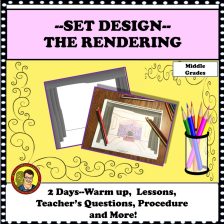
Set Design Rendering Lesson Distance Learning

SET DESIGN THE RENDERING EDITED

A precursor to my set design unit, this gives a family the chance to learn about set design and draw a rendering for any setting.

Maybe a set design of a child’s classroom? A castle?  The wild west?  The moon?

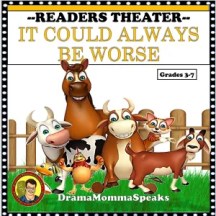
It Could Always Be Worse Reader’s Theater Distance Learning

The title of this reader’s theater is really all anyone needs.  Based on a Jewish folk tale, it is full of humorous moments and roles of animal sounds.

Part of the fun is the chaos that ensues every time the man does another thing that the rabbi suggests.

HINT:  THIS KIND OF PLAY IS RELAXING AND FUN FOR EVERYONE. 

Or how about some beginning playwriting?

Costume Design with Fairy Tale Characters

Costume Design Fairy Square Cover 400 dpi

Does the family enjoy fairy tales?  Here’s a lesson about costume design using fairy tale characters as the focus.

With costume design, a student considers the character from a different perspective or time period. (There is also one for super heroes and one for circus performers.)

It’s important our students learn about growth mindset by learning about successful people.  This series of theater artist biographies include

Idina Menzel, Hugh Jackman, Lin Manuel Miranda and many more.

Famous Theater Artist:  Idina Menzel 

I have several one pager assignments.  One for Idina Menzel and also Lin-Manuel Miranda.

Who am I?

Deborah Baldwin, Dramamommaspeaks

I am a retired drama educator having taught for thirty-eight years in both the public and private sectors. Whew! During this time, I created curriculum for studies in creative dramatics, creative movement, introduction to musical theatre, musical theatre, film making, technical theatre, introduction to Shakespeare, introduction to theatre as well speech and debate. I created seven youth theater companies that continue today in various parts of the midwest, oversaw productions for thirty-eight years, and developed a national playwriting contest for youth theater scripts. In addition, I am an award-winning director who has directed over 250 plays and musicals with children and adults alike. My sister was an elementary teacher for many years as were my aunts. In the late 1800s, my fraternal grandmother was known for her strength in teaching math in the wilds of Kansas. My maternal grandmother established the first kindergarten in Osaka, Japan in the 1890s. In short teaching is in my blood and comes to me joyfully and naturally.

Who’d a thought we’d be practicing social distancing and quarantined?  Not me that’s for sure.

I hope you’ll check out my lessons in my teacherspayteachers store, Dramamommaspeaks.  It’s free to join TpT and there are lots of free lessons to pick up for other interests, too.

In fact, here are a bunch for you: Free Teaching Resources Blog Hop

Take care.  Contact me if you need some advice or just to share how you used the lessons.  I’d love to hear from you.

Contact me at dhcbaldwin@gmail.com or DeborahBaldwin.net

Share this:

  • Click to share on Tumblr (Opens in new window) Tumblr
  • More
  • Click to share on X (Opens in new window) X
  • Click to share on Facebook (Opens in new window) Facebook
  • Click to share on Pinterest (Opens in new window) Pinterest
  • Click to share on LinkedIn (Opens in new window) LinkedIn
  • Click to email a link to a friend (Opens in new window) Email
  • Click to share on Reddit (Opens in new window) Reddit
  • Click to share on Pocket (Opens in new window) Pocket
  • Click to share on Telegram (Opens in new window) Telegram
  • Click to share on WhatsApp (Opens in new window) WhatsApp

Like this:

Like Loading...

Filed Under: arts education, creative dramatics, DeborahBaldwin.net, drama education, Education, elementary, excellence in teaching, Free Products, High School, middle grades, performing arts, Teacherspayteachers, teaching strategies, theater, youth theatre Tagged With: coronavirus, DISTANCE LEARNING, drama lessons, Drama Lessons: Middle Grades, family activities, grade 10, grade 3, grade 4, grade 5, grade 6, grade 7, grade 8, grade 9, high school, home school, quarantine, social distancing

Learning Through Reader’s Theater Scripts

March 21, 2020 By dhcbaldwin 3 Comments

Learning Through Readers Theater Scripts

Today’s let us consider an old friend of mine–readers theater.  Learning through readers theater scripts is effortless.  I’m getting ahead of myself here.

Shocking News

Did you know that 40% of our students can not read fluently.  Forty per cent!  Yikes.

READING WITH GRANDAUGHTER WHEN SHE WAS 18 MOS.

When we were raising our daughters, I made it a point of reading to our daughters at least thirty minutes twice a day.  I know not everyone has that privilege. Now I offer to read to my grandchildren whenever I can.  This little imp in the photo is our granddaughter who loves to read.  It’s no wonder–look at her in the photo! You can see her delight in the story and pictures.

But back to our students reading issues.  If you are looking for a way to keep your students engaged and sort of in the drama class (or actually Reading or Language Arts class) mindset, here’s an idea:

Teach through a reader’s theater script!

Rehearsal Schedule for a Readers Theater Performance

Here is what I would do in this situation—

Day One:

  •  Select a reader’s theater which you know your students will enjoy
  • Announce to the students in the class you will be performing a readers theater play
  • Teach about readers theater and its many assets (script in hand, no memorization, everyone works together)
  • Inform parents and invite them to the performance.  (Day Six)

Day Two:

  • Hand out scripts to students
  • Read aloud the script.
  • Afterward instruct students to select three roles they are interested in performing and send you their choices. You’ll send them an email with the cast list.
  • Cast the roles

Day Three:

  • Announce to the class the cast list
  • Teach students how to hi-light their lines.
  • Read aloud script a second time

Day Four

  • Discuss any questions or moments you want to clarify with the students (Such as when it says “ad-lib.” what does that mean?)
  • Instruct the students to complete any assignment you may have given them to accompany the script and send to you

Days Five, Six and Seven

Day Five

  • Read the script aloud  again and coach the class focusing on vocal inflection, variety, tone and enunciation (Also, you may want to coach them on physicalizing of the character. How would an angry man look?  What about a frightened giant?)
  • If you want the students to have costume pieces, perhaps you could discuss ideas for costume pieces they may have at home? (Maybe the students could use some foil and tagboard and make a crown, for instance.  Or a student portraying a chicken could make a demi-mask to wear during the reading.)

Day Six

  • Performance Day! 
  • Either rehearse the script once more or the teacher gives any last-minute directions
  • Record the performance (It will be so fun for the students to see it afterward!)

Day Seven

  • Hold a post production discussion about the experience (Maybe a little party could be held with everyone bringing their own snack and drink to the class?)

Young Woman at her Study Room Smiling at Camera

Grab my FREE guide and ten page lesson to help you boost student engagement here:

Reader’s Theater is an excellent way to involve all readers, no matter their skill level.

In case, you are unfamiliar with Reader’s Theater here is a good definition from the Education World website, a wonderful retired Language Arts Teacher,

“In Reader’s Theater, students “perform” by reading scripts created from grade-level books or stories — generally without benefit of costumes and props. The goal is to enhance reading skill and confidence through practice with a purpose. Reader’s Theater gives students a real reason to read aloud.

“A great deal of fluency research reiterates the need for repeated reading,” reported Finney. “Without fluency, there is little comprehension; the value of Reader’s Theater is increased tenfold when used as a strategy for increasing understanding of what is being read.”

Reader’s Theater motivates reluctant readers and provides fluent readers with the opportunity to explore genre and characterization.”

Asian teenage boy with disability in wheelchair reading book in library Disability Stock Photo

Reluctant Learners and Readers Theater

Are reluctant students successful with readers theater? Yes, yes and one more yes!

Reader’s Theater motivates reluctant readers and provides them a safe environment.  They can actually “hide” behind a script.  As they focus on the script, they become unaware of reading aloud in front others.

If you are ready to try a readers theater unit, here are a few of mine.


The products come with:

  • a warm up
  • advice in directing reader’s theater
  • blocking plot for teacher’s staging needs
  • a lesson about the country or culture of which the folk tale hails (i.e. Italian language, Yiddish language, Grimms Brothers, Inuit dance, etc.)
  • script with roles for 15 to 30 students, depending upon the script
  • original song and sheet music (optional for performance)
  • sound bytes of music

Comprehensive? You bet!

Check out my store at:  Dramamommaspeaks Store

These scripts are field-tested and created by a veteran drama teacher and director of thirty-eight years.

Who am I?

Deborah Baldwin, Dramamommaspeaks

I am a retired drama educator having taught for thirty-eight years in both the public and private sectors. Whew! During this time, I created a curriculum for studies in creative dramatics, creative movement, introduction to musical theater, musical theater, film making, technical theater, introduction to Shakespeare, introduction to theater as well speech and debate. I created seven youth theater companies that continue today in various parts of the Midwest, oversaw productions for thirty-eight years and developed a national playwriting contest for youth theater scripts. In addition, I am an award-winning director who has directed over 250 plays and musicals with children and adults alike. My sister was an elementary teacher for many years as were my aunts. In the late 1800s, my fraternal grandmother was known for her strength in teaching math in the wilds of Kansas. My maternal grandmother established the first kindergarten in Osaka, Japan in the 1890s. In short teaching is in my blood and comes to me joyfully and naturally.

I hope you’ll consider teaching readers theater to your students through distance learning with the help of a company such as Zoom.  I’d love to hear how it goes for you, too!

If you’d like to read more about my lessons, look at:

Eight Benefits for Students When Reading Plays

The Reasons Reader’s Theater is Successful with Our Students

The Reasons Teaching Multiculturalism in the Classroom is Vitally Important

Contact me at dhcbaldwin@gmail.com or DeborahBaldwin.net


Share this:

  • Click to share on Tumblr (Opens in new window) Tumblr
  • More
  • Click to share on X (Opens in new window) X
  • Click to share on Facebook (Opens in new window) Facebook
  • Click to share on Pinterest (Opens in new window) Pinterest
  • Click to share on LinkedIn (Opens in new window) LinkedIn
  • Click to email a link to a friend (Opens in new window) Email
  • Click to share on Reddit (Opens in new window) Reddit
  • Click to share on Pocket (Opens in new window) Pocket
  • Click to share on Telegram (Opens in new window) Telegram
  • Click to share on WhatsApp (Opens in new window) WhatsApp

Like this:

Like Loading...

Filed Under: arts education, Distance Learning, drama education, elementary, excellence in teaching, High School, middle grades, readers theater, Reading Literacy, reading skills, Teacherspayteachers, teaching strategies, youth theatre Tagged With: DISTANCE LEARNING, drama lessons, grade 10, grade 3, grade 4, grade 5, grade 6, grade 7, grade 8, grade 9, home schooling lessons, reader's theater, telecommunication, zoom

Next Page »

Footer

Follow Us

logo3.png

FOLLOW US

Facebook X-twitter Pinterest Instagram Envelope Rss

Goodreads: read

Malibu Rising
Malibu Rising
by Taylor Jenkins Reid
People We Meet on Vacation
by Emily Henry
The Last Thing He Told Me
by Laura Dave
Faking It
Faking It
by Cora Carmack
Losing It
Losing It
by Cora Carmack

goodreads.com
Copyright © 2024 · Wellness Pro on Genesis Framework · WordPress.com.Log in
 

Loading Comments...
 

    %d