• Skip to primary navigation
  • Skip to main content
  • Skip to footer

Join Me in my new Facebook Group! https://www.facebook.com/groups/417126059784261

Menu
  • Meet Deb – The Heart Behind DramaMommaSpeaks
    • Work with Me! 
    • Photo Gallery of DramaMommaSpeaks
    • Directorial Credits
  • I Give Book Talks! 
    • Book Talk Through Skype
    • Books
  • Freebies!
  • Bumbling Bea
  • Teaching Resume
  • Acting Resume
  • Contact Me
  • Blog
    • Drama Education
    • Arts Education
    • Youth Theatre
    • Middle Grades
    • Musical Theatre
    • Teaching
  • Meet Deb – The Heart Behind DramaMommaSpeaks
    • Work with Me! 
    • Photo Gallery of DramaMommaSpeaks
    • Directorial Credits
  • I Give Book Talks! 
    • Book Talk Through Skype
    • Books
  • Freebies!
  • Bumbling Bea
  • Teaching Resume
  • Acting Resume
  • Contact Me
  • Blog
    • Drama Education
    • Arts Education
    • Youth Theatre
    • Middle Grades
    • Musical Theatre
    • Teaching

engaging students

We’re Live! Radio Theater #101: Ignite Student Engagement

March 19, 2024 By dhcbaldwin Leave a Comment

A bucket of blue paint splashed on a walls with a yellow book, We're Live! Radio Theater #101

We’re Live! Radio Theater #101: Ignite Student Engagement

We're Live! Radio Theater #101: Ignite Student Engagement

Finally! I’m excited to share about my book with you–“We’re Live! Radio Theater #101”: Ignite Student Engagement! In the era of digital entertainment and on-demand streaming, the timeless allure of radio theater often gets overlooked. However, I’ve discovered that  its magic lies not only in its nostalgic appeal but also in its ability to captivate students’ imaginations through the power of sound alone.

Here’s a recent podcast interview concerning the book:  Thedtalkspodcast.com

Here’s a recent review of it:

Tiffaney Washington
5.0 out of 5 stars Engaging Entertaining Enlightening
I enjoyed learning about the history of radio theater. The author shares her own personal love affair with theater and then gives practical tips of preparing students for productions. I loved the tongue twisters, games, and tips on sound effect creation. It’s like the author predicted my questions and prepared answers. The scripts and QR codes are valuable, and I appreciated the modern recommendation of using AI to develop scripts, too. Wow! What a detailed resource…I feel I’m radio-ready! Let the Action begin!
And Another! 
Angela Howard
5.0 out of 5 stars If you are teaching radio, this is the book!

Reviewed in the United States on July 30, 2024

I have been teaching theatre in middle school for the past two years (this is year 20 of teaching for me, but I was teaching language arts), so moving to middle school has been a challenge. I had directed “It’s a Wonderful Life” as a radio show, complete with two foleys doing the sound effects for a local community theatre, which was a great learning experience.
I had read a post by this author that radio theatre is great for our 6th graders because we only get them for 9 weeks. Additionally, 6th graders are notorious for not wanting anyone looking at them. Radio theatre to the rescue! This book has it all, how to do and build the sound effects, script ideas, theatre games, how to use the mics – I feel like everything I was trying to teach myself is contained right here. If you haven’t taught radio and are interested in trying it, get this book. It is fun and the students really enjoy the challenge. Definitely worth the money!
Recently, I was interviewed on Trina Deboree Teaching and Learning’s podcast show talking about the book. Take a listen.
Here’s another just published July 4, 2025!   Review

We’re Live! Radio Theater #101

Recognizing this potential, educators have long turned to radio theater as a unique and effective tool for fostering creativity, enhancing communication skills, and sparking a love for storytelling among students. Now, with the release of my new book, “We’re Live! Radio Theater #101”,  teachers have a comprehensive daily guidebook at their fingertips to unlock the full potential of this art form in the classroom. You can find it here.

To give you a taste of the book, I’ve included its introduction below.

The Waltons Television Show By CBS Television

“We’re Live! Radio Theater #101”: Ignite Student Engagement

In high school, I had a fan girl crush on John Boy of “The Waltons” television show. For me, part of the mystique of the show was the Depression Era in which the show was set. Admittedly, life was simpler then for various reasons. People were hard pressed for money and looking for ways to escape the daily reminders of life. Radio was an inexpensive outlet and most households owned some type of radio.

I was the youngest child in a family of six. There are ten years difference between me and the next youngest sibling. Consequently, by the time I was eight I became an only child of sorts since my siblings grew up and moved away. Once I was the only child in the household, I was lonely much of the time. I yearned for a family like the Waltons. I fantasized my whole family sitting around the radio listening to a radio theater show just like did. Little did I know that in its own gentle way, “The Waltons” birthed my love of radio theater and not John Boy.

Late Night Radio Shows

At the same time, I discovered old radio shows from the 1930s and 40s broadcast on a radio station out of Chicago  were aired at 10:00 p.m. They played for an hour or two. Needless to say, I had a tough time waking the next morning.  I’d been super engaged while listening to these wonderful old shows. I’m not usually a night owl, but for these radio shows it was worth it!

During my second year as a middle school theater instructor, I rediscovered the enchanting realm of radio theater. Part of my responsibilities was to produce a class performance with the students. Since this was a pre-elective, I saw over 400 students each year. The job was a lot of work! I taught the varied elements of theater to these students. You can find my book here.

The teaching was always fun and the students enjoyed my lessons. However, the lesson planning was a bear to accomplish. As a creative person, I need variety in all aspects of my life. Teaching the same thing repetitively every twenty-five days to another seventy-five students was exhausting. Plus, it depleted my imagination.

We're Live! Radio Theater #101: Ignite Student Engagement

On line Radio Theater Assistance

Desperate for my personal sanity, I took to the brand-new internet (at the time) and began searching for short plays with large casts. There were none. Suddenly, I experienced an aha moment! I remembered my late nights in high school while listening to the radio shows.

Could radio theater be useful in my classroom? Would it be difficult to prepare and produce? Additionally, would my students stay engaged the entire time as we rehearsed and performed? Could students finish my class believing they had a comprehensive learning and genuine theatrical experience? Most importantly, would my reluctant students enjoy it?

I took a chance and emailed (which was a really big deal then) asking the Museum of Radio and Television if I could have a copy of one of the radio play scripts they used for workshops. They were so kind and sent me six! I embarked on my first radio show using their script of The Lone Ranger. Our greatest challenge was how to create  the sound of gun shots (use a clipboard and snap its clip). As I expected, the show was successful and the students appreciated its novelty. Over the course of the next few years, I began to adapt short stories as scripts. In fact, I even wrote one of my own, Bow Wow Blues, which is popular with middle schoolers. Who woulda’ thunk it?

My Love Affair with Radio Theater

Thus began my love affair with radio theater. Thirty-eight years later, I can say without a doubt that radio theater engages students, no matter if they are in upper elementary, middle, or high school. When teachers have students who are disengaged in their classes, radio theater is my first suggestion to them. I can hear the teacher’s excitement in their five-star reviews of my radio theater resources as they breathe a sigh of relief that they discovered a teaching tool they’d never tried. And it works every time. You can find my book here. 

Can I guarantee to you that radio theater will engage your students? No, but you are going to be much more prepared for trying to do so with the help of this book. So, get ready for some fun and great learning!

My Comprehensive Guidebook

Educators have long turned to unique and effective tools for fostering creativity, enhancing communication skills, and sparking a love for storytelling among students. Now, with the release of my new book, “We’re Live! Radio Theater #101,” teachers have a comprehensive daily guidebook at their fingertips. I think you’ll easily see how it will unlock the full potential of this art form in the classroom.

We're Live! Radio Theater #101: Ignite Student Engagement

“We’re Live! Radio Theater #101” is not just another resource.  The thirteen chapters address everything from the history of radio theater, warm up exercises, amplification. If that isn’t enough I’ve included a chapter over directing a radio play, script publishers, and much more. Foremost, my goal was to collect a treasure trove of practical strategies, creative activities, and insightful tips tailored specifically for educators.

As a seasoned drama educator, director and radio theater enthusiast, I’ve written this guidebook to demystify radio theater, empowering teachers to confidently integrate its magic into their classrooms.

So Much to Share

To begin, the guidebook includes an overview of radio theater’s rich history and its relevance in contemporary education. This sets set the stage for its integration into various curricular areas.  Most importantly, I instruct how to create your own radio play to teach your subject matter utilizing AI. From language arts to social studies, and even STEM subjects, this teacher guidebook demonstrates how this medium can enhance learning across disciplines. And do it effortlessly!

Radio program put on by children of Junior Artists Club Federal Art Project

“We’re Live! Radio Theater #101: Ignite Student Engagement

Exploring the rich history of sound effects, the guidebook additionally delves into their evolution from humble beginnings to indispensable tools in radio theater. From early broadcasts’ inventive use of everyday objects to modern digital techniques, students explore the artistry of crafting immersive auditory experiences.

Extras I’ve Included

The unit portion of the book (after chapter ten), your students will delight in hearing the stories of some of the original sound engineers (Foleys). Moreover, they’ll have an opportunity to try out creating a sound effect for themselves.   This three-week unit concludes with a performance of a radio play! You can find my book here.

Furthermore, by understanding the historical context and technological advancements, students can appreciate the role of sound effects in shaping the dramatic narrative and bringing stories to life in the theater of the mind.

“We’re Live! Radio Theater #101: Ignite Student Engagement

One of the standout features of the guidebook is its collection of teacher-friendly scripts suitable for daily use.  Additionally, these scripts to make it easier for any teacher or any subject matter to be successful right from the start. In the unit portion of the book, these scripts are crafted to fit seamlessly into the lesson plan.

Whether it’s a ten-minute warm-up activity or listening to current show or a radio show from days gone by, these teacher’s scripts offer flexibility and adaptability. Consequently, they suit the unique needs of every classroom.

Detailed Guidance

Moreover, each script is accompanied by detailed guidance on performance techniques, sound effects, warm up exercises, and exit slip prompts.  Also, these scripts make it easy for teachers to facilitate engaging and interactive experiences for their students. From tongue twisters to collaborating on a mini-commercial with fellow classmates, these teacher’s scripts are designed to promote active listening, creative expression, and collaborative learning. Simultaneously, they reinforce key curriculum objectives.

We're Live! Radio Theater #101: Ignite Student Engagement

Directing Radio Theater

One of the most challenging and potentially intimidating aspects of directing radio theater is just that.  How do you direct a radio play?  I’ve included a video which demonstrates all of the sound effects hand signals a floor director (that’s you) can use.  As a result, you will be surprised by how quickly you and your students pick up these hand signals and their meaning.  All you need is a little practice and you will have them learned in no time at all. Also, your students enjoy learning these signals-it’s sort of like you all have your own language to share amongst you. You can find my book here.

Take it From Me

“We’re Live! Radio Theater #101” doesn’t stop at theoretical concepts and hypothetical scenarios. It’s grounded in real-life examples and practical advice drawn from my own experiences as an educator. However, these are not examples that might work, they always work! Throughout the guidebook, I share anecdotes, success stories, and lessons learned from implementing radio theater projects especially in diverse classroom settings.

These insights not only inspire fellow teachers but also provide valuable guidance.  Furthermore, this book helps teachers to  overcome common challenges and maximizing the impact of radio theater in daily instruction. In addition,  I’ll teach you how to utilize this unique teaching tool for your classroom needs, too. Interested in more information concerning the strength of drama integration? Check out: How to Excite Students With Drama Integration

File:Radio program put on by children of Junior Artists Club Federal Art Project WPA Phoenix AZ 1935.gif

Live Links

Additionally, this guidebook encourages teachers to utilize live links to vintage radio shows and programs (such as War of the Worlds)  or YouTube clips.  These links  offer students a visual and auditory reference to grasp the feeling of radio theater. By immersing students in authentic performances, they can better understand the dynamics of sound effects, voice modulation, and storytelling techniques. Thus, this enhances their appreciation and proficiency in this timeless art form.

“We’re Live! Radio Theater #101” is more than just a teacher’s guidebook; it’s a daily companion for educators seeking to infuse their classrooms with creativity, excitement, and the transformative power of drama integration. Whether you’re looking to kickstart your morning with an energizing lesson or wind down the day with a captivating storytelling session, this guidebook offers a wealth of resources and inspiration to make every lesson memorable.

Teacher’s Guide: Radio Theater in Education

With its user-friendly scripts, practical tips, and real-life examples, “We’re Live! Radio Theater #101” invites educators to embark on a daily journey into the world of radio theater. The only limit is the imagination of their students. Pick up a copy of the paperback, hardback or e-book at Amazon Books or Barnes and Noble. 

Or download a sample!

Got any questions?  Please email me at DhcBaldwin@gmail.com

Woman behind DramaMommaSpeaks

Share this:

  • Click to share on Tumblr (Opens in new window) Tumblr
  • More
  • Click to share on X (Opens in new window) X
  • Click to share on Facebook (Opens in new window) Facebook
  • Click to share on Pinterest (Opens in new window) Pinterest
  • Click to share on LinkedIn (Opens in new window) LinkedIn
  • Click to email a link to a friend (Opens in new window) Email
  • Click to share on Reddit (Opens in new window) Reddit
  • Click to share on Pocket (Opens in new window) Pocket
  • Click to share on Telegram (Opens in new window) Telegram
  • Click to share on WhatsApp (Opens in new window) WhatsApp

Like this:

Like Loading...

Filed Under: acting, Uncategorized Tagged With: curriculum, engaging students, radio theater, teacher guidebook, teacher reflection, teaching scripts, units, warm up exercises, We're Live! Radio Theater #101

Ten Ways to Teach Reluctant Students in Your Theater Class

October 5, 2022 By dhcbaldwin 1 Comment

At least once a week, I read of a teacher asking help with, “My beginning theater class is open to all students in the school. However, it has become a dumping ground with students completely disinterested in theater and the study of it. At the same time, I have students who are sincerely interested in the subject in the same class.  What do I do?” Today, I’m going to talk about Ten Ways to Teach Reluctant Students in Your Theater Class.

I know this challenge all too well myself.  Several times in my career, I had students placed in my classroom because the administration thought I demonstrated skill in reaching all students and could reach these students as well.

Do you have any idea how heavy the weight of responsibility for teaching to reluctant students is? Teaching is difficult enough and a theater class poses its own challenges that not everyone is aware of. For instance, when one acts they must share their feelings, real feelings.  That’s can be scary for even the most ardent theater student.

Ten Ways to Engage Reluctant Students in Your Theater Class

Simply put, you need to outsmart your reluctant students.  Remember, you are the professional here.  You’ve got what it takes to be successful (albeit tiring). Wonder how I got to where I am today? Check out: How Theatre Saved My Life

Teach Reluctant Students

  •  You need to survey each and every class to discover whether they are interested in theater or not.  This is true of anyone who teaches any electives from industrial education to art as well as theater. By surveying the students (through a questionnaire on-line or hard copy) you’ll find out their interest level (because you will ask it) and what they hope to learn in the class.
  • After you’ve studied the students’ questionnaire, you can now shape your lessons accordingly. Does this take more time than what you would usually do?  Yes.  Is it worth it?  Yes!  It is better to know your audience (because that’s what they are, essentially) than not and spend most of the year frustrated with their lack of engagement.
  • Use a game as a warm-up. Most students love a game so I recommend playing one at the beginning of each class.  For some students, it is the delight of their day (although they may never share this with you) and it lifts the burden for you always having to teach a concept.  Let the game teach them.  Also, playing a game makes class fun no matter the outcome.  Start with something simple like the Ball Game (Don’t know it? pick it up here).  The Ball Game can be played with students of any grade level. Games give students an opportunity to get to know one another without the stress of a face to face conversation. As the quarter progresses the games you can select games which are more difficult. By the last month of the semester, you should have no problem using an improvisation exercise as a warm-up.
  • Minimize your students’ worries.  Through the questionnaire, you should have a better grasp about what they think theater is as opposed to what it actually is. They may think theater is standing on a stage, wearing a costume (the student may dislike), wearing makeup (even the boys), memorizing gobs of lines and speaking at a volume for the entire class to hear. 

         Let’s not start there if that’s the case.  Let’s do some theater appreciation instead.  Show them video clips of theaters  around the world and either have a class discussion of each theater or give them questions to answer. Here is what I  mean:  Theaters Around the World.

Ten Ways to Engage Reluctant Students in Your Theater Class

Teaching Reluctant Students

  • Study technical theater with them--set, sound, stage properties, stage makeup or costume design.  Many students just need a backdoor into the subject. Technical theater is nonthreatening.  Most assignments are meant to be completed individually and not with a group.  This helps those students who do not speak English as their first language, especially.  I really enjoy teaching technical theater. Through its study, I usually find a student who no one knew very well that turns out to be a fabulous artist! Their creativity and talent can shine in technical theater and suddenly the other student take note of them.  It’s awesome. Here are a few technical theater units which may help you: Technical Theater Units or begin with Set Design, the Rendering
  • Reader’s theater is a good choice for your class.  Readers theater is successful in a class with various levels of interest, because there is no line memorization, no costumes, etc. Everyone sits together on the stage, so there’s that “safety in numbers” thing. Plus, if you wait until near the end of the second quarter, readers theater should not be difficult for your reluctant ones.  (Read my article in One Classroom Over about reader’s theater) You’ve given them plenty of time to adjust to the class. Here’s a funny script for them:  The Brave Little Tailor Unit.  Great for grades 5 to 7.
  • Radio theater is a super choice, too. Personally, I think radio theater has everything a play does!  That’s the reason I suggest it to teachers. Radio theater is highly imaginative from the many character voices actors create to the sound effects. Plus, it is a super tool for strengthening reading skills! It is easy to keep everyone involved, because they are on the stage the entire length of the piece. It can be as simple or as theatrical as you like.  And yet again–no line memorization! This is another unit I would teach near the end of the semester or year. If you are interested in radio theater, check out: Radio Theater Units and Lessons  Don’t know how to direct one?  Go here and pick up all of the training you need: How to Direct Radio Theater
  • Use movement exercises instead of acting ones.  Movement takes no sound and no verbal reaction.  Students like the physical activity, too. The Magic Circle is a good exercise to use for movement.  (Don’t know it?  Pick it up here)
  • Turn down your classroom lights. You won’t believe how dimming the lights will ease students’ anxieties. You just want the classroom light to be dim–light enough you can everyone but no so dark you can’t keep an eye out for any inappropriate behavior.
  • Play some classical music in the background.  Classical music works because there are no lyrics for the students to notice. It can express mood without anyone saying anything.  I think of it like a comforting blanket. In those awkward moments in a game, acting exercise or lesson they can help ease any anxiety that rears its ugly head.

Want some additional tips from me?  Check out Double Casting a Show? Here’s Advice

Ten Ways to Engage Reluctant Students in Your Theater Class

Advice for the Core Subject Teachers

Many of the suggestions I’ve made above work strictly in a theater classroom. Some of them will work for you as well.

Here are a couple of other suggestions for you:

Sometimes our students just need space away from others.  Offer that space in your classroom if a student needs it.  You want them to feel safe and accepted in your classroom. I say as long as they are focused on their work, this is acceptable.

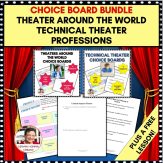
Giving students choices is always a great idea, too.  Remember you have worked out the choices ahead of time so you are comfortable with whether they select once choice over another.  Choice Boards are super for this.  Here are some of mine as an example. This bundle is very popular with teachers: Choice Boards

Ten Ways to Teach Reluctant Students in Your Theater Class

You can even pick up a sample of them right here.

Or pick up a technical theater unit for high school students here: Technical Theater Units, High School

So, there you have it!  Teaching is a wonderful profession when everyone is treated with respect. Even the reluctant students can learn that respecting your art form is possible and believe it or not–enjoyable!  I discovered that once my students knew I had their back and understood them feigning disinterest in theater, I could work with them.  Lots of times, it’s just noise on their part.  Remember that–it’s just noise.

I’d love to know what you’ve found is successful with reluctant students in your classroom?  Contact me at DhcBaldwin@gmail.com.


Share this:

  • Click to share on Tumblr (Opens in new window) Tumblr
  • More
  • Click to share on X (Opens in new window) X
  • Click to share on Facebook (Opens in new window) Facebook
  • Click to share on Pinterest (Opens in new window) Pinterest
  • Click to share on LinkedIn (Opens in new window) LinkedIn
  • Click to email a link to a friend (Opens in new window) Email
  • Click to share on Reddit (Opens in new window) Reddit
  • Click to share on Pocket (Opens in new window) Pocket
  • Click to share on Telegram (Opens in new window) Telegram
  • Click to share on WhatsApp (Opens in new window) WhatsApp

Like this:

Like Loading...

Filed Under: acting, arts education, arts integration, drama education, drama integration, Education, elementary, excellence in teaching, High School, middle grades, reading skills, theater, youth theatre Tagged With: acting exercises, classroom behavior management, elementary school, ELL student, engaging students, high school, Middle school, movement exercises, radio theater, readers theater, reluctant student, Teaching, warm ups and games

Footer

Follow Us

logo3.png

FOLLOW US

Facebook X-twitter Pinterest Instagram Envelope Rss

Goodreads: read

Malibu Rising
Malibu Rising
by Taylor Jenkins Reid
People We Meet on Vacation
by Emily Henry
The Last Thing He Told Me
by Laura Dave
Faking It
Faking It
by Cora Carmack
Losing It
Losing It
by Cora Carmack

goodreads.com
Copyright © 2024 · Wellness Pro on Genesis Framework · WordPress.com.Log in
 

Loading Comments...
 

    %d