• Skip to primary navigation
  • Skip to main content
  • Skip to footer

Join Me in my new Facebook Group! https://www.facebook.com/groups/417126059784261

Menu
  • Meet Deb – The Heart Behind DramaMommaSpeaks
    • Work with Me! 
    • Photo Gallery of DramaMommaSpeaks
    • Directorial Credits
  • I Give Book Talks! 
    • Book Talk Through Skype
    • Books
  • Freebies!
  • Bumbling Bea
  • Teaching Resume
  • Acting Resume
  • Contact Me
  • Blog
    • Drama Education
    • Arts Education
    • Youth Theatre
    • Middle Grades
    • Musical Theatre
    • Teaching
  • Meet Deb – The Heart Behind DramaMommaSpeaks
    • Work with Me! 
    • Photo Gallery of DramaMommaSpeaks
    • Directorial Credits
  • I Give Book Talks! 
    • Book Talk Through Skype
    • Books
  • Freebies!
  • Bumbling Bea
  • Teaching Resume
  • Acting Resume
  • Contact Me
  • Blog
    • Drama Education
    • Arts Education
    • Youth Theatre
    • Middle Grades
    • Musical Theatre
    • Teaching

Kabuki Theatre

Exploring Modern Theaters: A Global Journey in Performance

January 20, 2025 By dhcbaldwin Leave a Comment

photo from War Horse, the play

Exploring Modern Theaters: A Global Journey in Performance

As you might expect, I’ve attended theater all around the world–from Marcel Marceau in 1961, Kabuki theater in 1973 to an Innuit play in 2001.  Additionally, I’m aware that most of our students are not as fortunate as I. However, I think there is one way we can remedy this for our students.  Simply put, introduce to them theater around the world. Modern theater is a mix of old traditions and new ideas. Around the world, theater is growing and changing, showing the creativity of different cultures. This post, “Exploring Modern Theaters: A Global Journey in Performance,” takes a look at how theater is done in various places and what makes each unique.

File:Lin-Manuel Miranda in Hamilton.jpg

Creativity and Diversity

United States: The U.S. is known for its amazing theater, especially Broadway in New York City. Big musicals like Hamilton and The Lion King are huge hits, but there’s also smaller, more creative theater happening Off-Broadway and in places like Chicago. These smaller theaters often tell new stories and try out bold ideas. Perhaps more importantly, we have theater opportunities for people of different abilities, welcoming everyone to participate!

When Sam’s son, who has developmental disabilities, asked, “When is it my turn to act on stage?” she took action. As the theater arts coordinator at Phoenix Day School for the Deaf, Sam created Detour Company Theatre to provide performance opportunities for individuals with cognitive and physical disabilities. Detour, with about 50 actors, stages double features like Shrek The Musical and Legally Blonde The Musical.  Consequently, this allows our members to shine in lead and ensemble roles. “We take detours, but we all arrive at the same destination—entertainment and joy,” says Sam.

Canada: Canada’s theater reflects its mix of cultures. The Stratford Festival in Ontario.  This festival focuses on Shakespeare and classic plays.  Additionally, Indigenous playwrights like Tomson Highway tell important stories about First Nations. In Quebec, French-language plays bring another layer to Canada’s theater scene.

Exploring Modern Theaters: A Global Journey in Performance

Latin America: Theater in Latin America often combines art and activism. In Brazil, Augusto Boal’s Theatre of the Oppressed is a groundbreaking method that uses theater as a tool for social change. This technique encourages audience participation, turning spectators into “spect-actors”. This gives the audience a chance to engage with the performance and suggest solutions to real-life problems. Not only is that engaging, but of course topical.  It includes forms like Forum Theatre, where audience members step into roles to explore different outcomes, and Image Theatre, which uses body language to communicate complex ideas without words.

Boal’s work has inspired activists and educators worldwide to use theater to address inequality, oppression, and social justice issues. In Mexico, street theater is very popular, turning public spaces into stages and making theater fun and easy to access.

File:'The broken pot' Kleist Ukrainian National Theatre Dostoevsky "Brothers Karamazov" Yaroslavl Volkov theatre Directing Roman Markholia Stage design Vladimir Kovalchuk Costumes Natalia Rudiuk-6.jpg

Europe: Old and New Come Together

United Kingdom: The UK has a wide variety of theater, from the famous West End to interactive shows by companies like Punchdrunk. London’s National Theatre and Shakespeare’s Globe perform both old and new works, while smaller theaters introduce exciting new playwrights.

Punchdrunk Theatre Company, founded in 2000 by Felix Barrett, revolutionized immersive theater by placing audiences directly in the action. Known for their acclaimed production Sleep No More, a film noir-inspired take on Macbeth that’s captivated audiences in London, New York, and Shanghai, Punchdrunk creates non-linear narratives in sprawling, interactive spaces. Their latest, The Burnt City, explores the mythological Trojan War in a vast London venue.

Exploring Modern Theaters: A Global Journey in Performance
Berlin’s Schaubühne

Germany: Germany is known for its creative and experimental theater. Directors like Thomas Ostermeier at Berlin’s Schaubühne. Furthermore, this company makes bold choices, using technology and powerful visuals to connect with audiences in new ways.

France: French theater is often cutting-edge. The Avignon Festival is famous for blending theater, dance, and technology. Groups like Théâtre du Soleil explore global and political themes, attracting audiences from around the world.

Eastern Europe: Theater in Eastern Europe is shaped by its history. Puppetry and physical theater are common, with groups like Poland’s Teatr Piesn Kozla using music and movement to tell moving stories.

Exploring Modern Theaters: A Global Journey in Performance
Kathakali play

Asia: Mixing Old and New

India: Indian theater combines ancient traditions with modern issues. The Rangashankara theater in Bangalore encourages new writing.  Likewise, traditional forms like Kathakali inspire today’s plays. Writers like Mahesh Dattani focus on topics like gender and identity.

Japan: Japan’s theater keeps its classics alive, like Noh and Kabuki, while also pushing boundaries. Groups like Tokyo Metropolitan Theatre bring together artists from around the world, and playwright Toshiki Okada uses minimalist styles to talk about modern life.

Exploring Modern Theaters: A Global Journey in Performance
Tokyo Metropolitan Theatre

China: Chinese theater is a mix of traditional opera and modern techniques. For instance, cities like Beijing and Shanghai host performances that include drama, music, and digital effects.

Southeast Asia: Countries like Indonesia, Thailand, and the Philippines show a blend of tradition and modern theater. Shadow puppetry, like Wayang Kulit, inspires new works, while writers explore global and cultural themes.

Exploring Modern Theaters: A Global Journey in Performance
South African Theatre Festival

Africa: Stories of Strength and Change

African theater is deeply connected to storytelling and tradition. In Nigeria, Wole Soyinka’s plays explore the mix of old and new cultures. Moreover in South Africa, productions like Woza Albert! use humor to talk about serious topics like apartheid. Across the continent, theater reflects themes of identity and resilience, with festivals like South Africa’s National Arts Festival showcasing these works.

Exploring Modern Theaters: A Global Journey in Performance
Bangarra Dance Theatre

Australia and Oceania: Cultural Bridges

In Australia, Indigenous theater is very important. Groups like Bangarra Dance Theatre tell stories through dance and music, celebrating Aboriginal culture. Playwrights like David Williamson write sharp, funny plays about modern society. In New Zealand, theater mixes Maori myths with current issues to create unique performances.

War Horse, the play

Global Trends in Modern Theater

Theater today shares some common trends across the world:

  • Diversity and Representation: More playwrights and directors from different backgrounds are sharing their stories, creating fresh perspectives.
  • Technology on Stage: Shows are using virtual reality, projections, and other technologies to create amazing effects. Productions like The Encounter use 3D sound to make the audience feel part of the story.
  • Eco-Friendly Practices: Many theaters are trying to be greener by reusing sets and cutting down on energy use.
  • Interactive Shows: Some theaters let the audience take part in the story. Additionally, plays like Sleep No More create immersive experiences where viewers explore the performance space.
Exploring Modern Theaters: A Global Journey in Performance
Theatre Du Soleil

The Future of Modern Theater

John Steinbeck said, “The theater is the only institution in the world which has been dying for four thousand years and has never succumbed.” Every time I hear about a new production opening or a theater announcing its next season, I get a lump in my throat thinking about how “theater is dying”, not!

Modern theater keeps changing to stay exciting and relevant. As technology grows and new ideas emerge, theater will continue to reflect the world’s challenges and successes. That is exciting, yes? By mixing old traditions with new innovations, theater remains a powerful way to bring people together and share stories.

Whether it’s on big stages like Broadway or in small, experimental spaces, modern theater shows us what it means to be human. It connects us across cultures and reminds us of the power of storytelling.

Preview of Emergency Sub Plan! VERY Popular Theater Around the World Video Lessons Drama 1

Theaters Around the World Resource

Are you teaching middle and high school students about modern theater?  Check out my Theaters Around the World unit. It contains a series of video clips with questions pertaining to various theater companies around the world not mentioned here. Have any questions?  Please feel free to email me with them at DhcBaldwin@gmail.com


Deb

Woman behind DramaMommaSpeaks

Share this:

  • Click to share on Tumblr (Opens in new window) Tumblr
  • More
  • Click to share on X (Opens in new window) X
  • Click to share on Facebook (Opens in new window) Facebook
  • Click to share on Pinterest (Opens in new window) Pinterest
  • Click to share on LinkedIn (Opens in new window) LinkedIn
  • Click to email a link to a friend (Opens in new window) Email
  • Click to share on Reddit (Opens in new window) Reddit
  • Click to share on Pocket (Opens in new window) Pocket
  • Click to share on Telegram (Opens in new window) Telegram
  • Click to share on WhatsApp (Opens in new window) WhatsApp

Like this:

Like Loading...

Filed Under: acting, Arts, arts education, arts integration, drama education, drama integration, Education, Education, performing arts, plays, theater, theatre, youth theatre Tagged With: Kabuki Theatre, Rangashankara, Schaubühne, South African Theatre Festival

Kabuki Theatre for Girls

February 13, 2017 By dhcbaldwin 1 Comment

Kabuki Theatre for Girls

Kabuki theatre for girls

Today, let’s discuss Kabuki Theatre for Girls? Readers ask me why I created a story which included Kabuki theatre. Here is the book:http://tinyurl.com/n5at3oh

Kabuki Theatre for Girls

When I was sixteen years old, my parents and I traveled to Japan for a vacation.  My grandparents were missionaries in Japan prior to WWII and my mother wanted to visit the country again.  She hadn’t visited her birthplace since attending college in the US in the early 1940’s.

Mr. Tannabe (yes, I used his name in the book to honor him) served as a tour guide showing us around Japan. Mr. Tannabe owed his faith in Christ to my grandfather who baptized him in the ocean.  Consequently, he felt indebted to my grandfather’s extended family as well. He wined and dined us and showered us with many gifts.  Nearing the end of the trip,  Mr. Tannabe treated us to seats at the National Kabuki Theatre in Tokyo to attend a play.

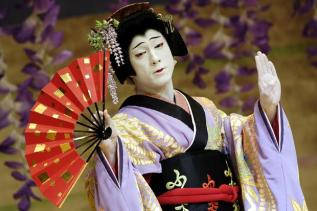
Mr. Tannabe knew I loved theatre.  I will be forever grateful to him for this experience, because the impetus for Bumbling Bea sprung from this performance. I was struck by its pageantry, spectacle, story, movement and style.  Then I found out that women originally portrayed all the characters.

kabuki theatre for girls

You are kidding me, right?  Why aren’t women performing Kabuki Theatre today?

The History of Kabuki Theatre

Here’s a quick history lesson for you:

It’s possible Kabuki Theatre was first created by a woman named  Okuni of Izumo in the 1590’s (around the time of Shakespeare). She was thought to be an iron worker’s daughter in service to a shrine of Izumo.

From   An Outline Drama of Japanese Theatre written in 1928 (I’m paraphrasing here) the supposed Okuni may have been on a tour seeking contributions for the shrine. Okuni’s dance was one of worship in praise of a Shinto god.   Her dance met with such welcome in Kyoto that she remained, to be identified with a new dramatic movement rising from the midst of the common people. Okuni was beautiful and graceful which appealed to the people regardless of the religious reasons.

Kabuki theatre for girls

From Sacred Steps to Center Stage

A young man was sent by his parents to become trained as a priest. He saw Okuni dance and admired her beauty and poise. This gentleman came from a military family and wasn’t interested in the priesthood, but more focused on social aspects.  However, he found her dances too restricting.  Over time, he convinced Okuni to adapt her dance movements to the music of the day (some of which he wrote). Later, this form became known as Kabuki–the art of song and dance.

More time goes by…

Okuni becomes the Beyoncé of the time. Her dances were sensual and exciting.

The Plot Twist That Changed Kabuki Forever

She was invited at least once to perform for the royalty of Japan.   As in many circumstances in the entertainment business,  imitators sprang up.  Both people were performing some form of Kabuki. These were men who were otherwise unemployed or women of ill repute (sex workers) and considered lower class citizens. Plus, those sexy dances, you know?  Kabuki gained a poor reputation.

Here’s the twist!

Well gosh.  Now, the women weren’t allowed on the stage (you know, because they are females and acting all sexy like).  There were lots of young unemployed men willing to take their places. The stories involved male and female characters, so the men took up playing the female characters as well.

To this day, men portray all the roles in Kabuki Theatre.

There is lots more to the history of Kabuki Theatre, but this gives you a very quick story explaining why a woman from the Midwest would craft such a story.

Kabuki theatre for girls
Kabuki Theatre has a style all its own.

🎭 Do Women Perform Kabuki Today?

Traditionally, women were banned from Kabuki in the 1600s—and that rule stuck for centuries. To this day, male actors still perform all roles in official Kabuki productions, including the female ones.

But times are changing. In recent years, women have begun reclaiming space in Kabuki through all-female troupes, academic training, and modern reinterpretations. While they may not yet dominate the traditional stage, women are finding powerful ways to honor and evolve this historic art form.

Carrying the Torch—Even When You’re Not Supposed To

I think one of most unusual aspects of it is a character could be passed from one generation of actors to the next.  Sort of like your grandfather was a Kabuki actor who played John Smith.  Then, your dad becomes a Kabuki actor and he inherits your grandfather’s role of John Smith PLUS whatever celebrated movement your grandfather created in the part.

Now it’s your turn.  Not only are you portraying the role your grandfather and father portrayed, you are sharing your family’s legacy.

Except you are a girl named Michiko.  You want to honor your grandfather, and in your case, your uncle. But heck.  You are a girl and the only family member interested or willing to train in the Kabuki Theatre.

Kabuki theatre for girls–that’s Michiko’s challenge and it was mine, too.

After attending only one Kabuki Theatre performance when I was a sixteen year old,  forty-four years later, I give you Bumbling Bea.

Bumbling Bea

If you are interested in reading Bumbling Bea, check it out here: http://tinyurl.com/n5at3oh

Got a question?  Feel free to write to me at Dhcbaldwin@gmail.com

Share this:

  • Click to share on Tumblr (Opens in new window) Tumblr
  • More
  • Click to share on X (Opens in new window) X
  • Click to share on Facebook (Opens in new window) Facebook
  • Click to share on Pinterest (Opens in new window) Pinterest
  • Click to share on LinkedIn (Opens in new window) LinkedIn
  • Click to email a link to a friend (Opens in new window) Email
  • Click to share on Reddit (Opens in new window) Reddit
  • Click to share on Pocket (Opens in new window) Pocket
  • Click to share on Telegram (Opens in new window) Telegram
  • Click to share on WhatsApp (Opens in new window) WhatsApp

Like this:

Like Loading...

Filed Under: Book Talks, Bumbling Bea, drama education, youth theatre Tagged With: Japan, Kabuki history, Kabuki Theatre, Middle school, middle school books, middle school drama class

Footer

Follow Us

logo3.png

FOLLOW US

Facebook X-twitter Pinterest Instagram Envelope Rss

Goodreads: read

Malibu Rising
Malibu Rising
by Taylor Jenkins Reid
People We Meet on Vacation
by Emily Henry
The Last Thing He Told Me
by Laura Dave
Faking It
Faking It
by Cora Carmack
Losing It
Losing It
by Cora Carmack

goodreads.com
Copyright © 2024 · Wellness Pro on Genesis Framework · WordPress.com.Log in
 

Loading Comments...
 

    %d