• Skip to primary navigation
  • Skip to main content
  • Skip to footer

Join Me in my new Facebook Group! https://www.facebook.com/groups/417126059784261

Menu
  • Meet Deb – The Heart Behind DramaMommaSpeaks
    • Work with Me! 
    • Photo Gallery of DramaMommaSpeaks
    • Directorial Credits
  • I Give Book Talks! 
    • Book Talk Through Skype
    • Books
  • Freebies!
  • Bumbling Bea
  • Teaching Resume
  • Acting Resume
  • Contact Me
  • Blog
    • Drama Education
    • Arts Education
    • Youth Theatre
    • Middle Grades
    • Musical Theatre
    • Teaching
  • Meet Deb – The Heart Behind DramaMommaSpeaks
    • Work with Me! 
    • Photo Gallery of DramaMommaSpeaks
    • Directorial Credits
  • I Give Book Talks! 
    • Book Talk Through Skype
    • Books
  • Freebies!
  • Bumbling Bea
  • Teaching Resume
  • Acting Resume
  • Contact Me
  • Blog
    • Drama Education
    • Arts Education
    • Youth Theatre
    • Middle Grades
    • Musical Theatre
    • Teaching

multiculturalism

Readers Theater: The Secret Tool for Social Studies

November 7, 2025 By dhcbaldwin Leave a Comment

Readers Theater: The Secret Tool for Social Studies

I wanted to write “Readers Theater: The Secret Tool for Social Studies” because so many teachers are searching for new ways to keep students engaged in social studies. When most teachers hear “Readers Theater,” they picture ELA fluency, reading  or drama class, or a fun break from routine. But Readers Theater is far more powerful than that—especially in the social studies classroom.

Social studies is filled with people, decisions, and moments that shaped the world. Readers Theater brings those stories to life.

Readers Theater: The Secret Tool for Social Studies

Why It Works

Personally, I believe Readers Theater is one of the most useful teaching tools we teachers have at our disposal. First, Readers Theater requires no costumes, sets, and maybe most importantly–no memorization. (I’m aware that I am repetitive here, but not having to memorize lines could be the single greatest asset of Readers Theater.) Talking about making it easy on the teacher! Plus, students remain seated and bring characters to life using only their voices. Stay seated, you say?  Plus, everyone faces forward.  Consequently, there is not much opportunity for shenanigans.  Since the pressure of performance is removed, even shy or reluctant learners can participate successfully.

It’s simple, low-prep, and high-engagement—just what teachers need when the curriculum feels heavy.

Readers Theater: The Secret Tool for Social Studies


✅ 1. Readers Theater Builds Historical Empathy

As we know, understanding history is more than memorizing dates. I remember when I was in social studies class, I had a difficult time with all of the facts.  Students learn why people behaved as they did, how they felt, and what values shaped their choices.

Here’s a tip:  When students “step into” a historical figure’s role—even just by reading lines—they connect emotionally with the past. That’s powerful. 

  • What did enslaved families risk on the Underground Railroad?

  • How did immigrant children feel arriving at Ellis Island?

  • What was it like to hear Lincoln’s words at Gettysburg?

Readers Theater turns history from a timeline into a human experience.

Readers Theater: The Secret Tool for Social Studies


✅ 2. It Gives Voice to Multiple Perspectives

Good social studies teaching includes multiple viewpoints. Readers Theater makes that visible and audible.

A script can feature:

  • Leaders and everyday citizens

  • Soldiers, nurses, and workers–Veterans Day One Act

  • Children’s voices from different cultures–check out Magic Lake (a Peruvian story about a little girl who saves the prince)

  • Opposing sides of an issue–It Could Always Be Worse is an excellent example of being grateful

Students begin to recognize that history isn’t one story—it’s many. I find that learning that other cultures have the same issues that I have makes me feel better about my particular issue at the time.

Readers Theater: The Secret Tool for Social Studies
My ESL Drama Club in Smithton Middle School, 2001

✅ 3. It Supports ELLs and Struggling Readers

Because students read aloud together, Readers Theater:

  • Encourages repeated reading (which boosts comprehension)

  • Builds vocabulary naturally

  • Strengthens speaking and listening skills

  • Reduces anxiety—no memorization, no performing alone

ELL students in particular benefit from hearing fluent reading modeled by classmates while having the chance to participate at their comfort level. About twenty years ago, I sponsored an ESL Drama Club.  What a tremendous experience that was.  We performed a Readers Theater script by Aaron Shepherd. 
Readers Theater: The Secret Tool for Social Studies


✅ 4. It Turns Primary Sources Into Something Students Can Understand

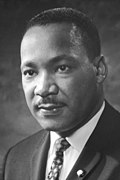
Primary documents are rich—but intimidating. Once a student is intimidated, they can’t learn.  Readers Theater helps teachers “translate” them into accessible language without losing meaning. For example, a student could learn about Martin Luther King through a Readers Theater script.  

A script can simplify:

  • Speeches

  • Letters

  • Newspaper accounts

  • Diaries

  • Oral histories

Additionally, if a teacher uses the Readers Theater script for a performance, such the Martin Luther King holiday, students begin to internalize content instead of just decoding it. I know that when my teachers used Readers Theater in our classes, I remembered the information much more easily.

Readers Theater: The Secret Tool for Social Studies


✅ 5. It Encourages Collaboration and Critical Thinking

Social studies is filled with cause and effect, motives, and outcomes. Readers Theater takes those ideas off the page and puts them into dialogue, letting students hear history instead of just reading about it.

After a script, students can discuss:

  • Who had power in the situation?

  • What choices did characters have? Li Chi The Serpent Slayer is a fantastic Chinese folk tale about a girl volunteering herself to save her village.

  • What might you have done differently?

  • What bias or point of view appears in the story?

Readers Theater: The Secret Tool for Social Studies

How Readers Theater Turns Passive Readers into Powerful Thinkers

Suddenly, they’re not just reading history—they’re interrogating it. When students interrogate information—asking questions, challenging assumptions, and discussing why events happened—they are no longer passive receivers of content. They become active thinkers. That shift builds confidence.

  • They learn that their ideas and questions matter.
    When students are encouraged to question the text, they begin to trust their own reasoning. Without a doubt, trusting one’s self is monumentally important.

  • They discover they can figure things out on their own.
    Instead of waiting for the teacher to supply answers, they explore possibilities and defend their thinking. For that reason, their sense of ownership becomes a heady experience.  One experience a students doesn’t easily forget!

  • They practice speaking up.
    Discussing motives, cause and effect, and different perspectives helps students find their voice and participate more boldly. Using Readers Theater as the vehicle for your teaching is a sly way to engage students. Personally, I think it is magical.

  • They realize there is not always one “right answer.”
    In social studies, interpretation is part of learning. When students see that they can contribute, analyze, and debate, their confidence grows. Additionally, as confidence grows, a teacher may discover that the most reluctant student feels comfortable speaking up.  Readers Theater is non-threatening.

Additionally, interrogating information isn’t just academic—it’s empowering. Readers Theater makes this even more accessible because students hear viewpoints aloud, react to them, and respond in real time. As a result, that experience helps them feel capable, engaged, and confident in the classroom. And…it’s effortless teaching, I promise you.


✅ Ideas for Using Readers Theater in Social Studies

  • Biographies (Harriet Tubman, Cesar Chavez, Sojourner Truth, Eleanor Roosevelt)

  • World cultures and holidays ( Día de (los) Muertos–Day of the Dead)

  • Indigenous stories and oral traditions (How the Bee Got Its Singer-a Cherokee Creation Myth)

  • Immigration experiences

  • Civil Rights Movement

  • World War II home front

  • Constitutional Convention debates

  • Historical folktales and legends ( The Fall of the Spider Man–a Canadian Folk Tale)

Short scripts can be used during:

  • Introduction to a Unit

  • Stations

  • Friday fun days

  • Sub plans

  • Intervention groups

  • Literacy centers

  • Class performance days


✅ Final Thoughts

I hope you’ll consider including Readers Theater scripts into your social studies curriculum. Social studies should never feel like a silent subject. It should be full of voices, stories, and perspectives.

Readers Theater does exactly that—bringing history to life in a way that is meaningful, accessible, and unforgettable.

How have you used Readers Theater in your social studies classroom?  I’d love to hear about it.  Feel free to email me at DhcBaldwin@gmail.com

   Have you heard the news?  We’re Live! Radio Theater #101 was awarded a 5 star review of excellence.  Get your copy here! We’re Live! Radio Theater #101

Share this:

  • Click to share on Tumblr (Opens in new window) Tumblr
  • More
  • Click to share on X (Opens in new window) X
  • Click to share on Facebook (Opens in new window) Facebook
  • Click to share on Pinterest (Opens in new window) Pinterest
  • Click to share on LinkedIn (Opens in new window) LinkedIn
  • Click to email a link to a friend (Opens in new window) Email
  • Click to share on Reddit (Opens in new window) Reddit
  • Click to share on Pocket (Opens in new window) Pocket
  • Click to share on Telegram (Opens in new window) Telegram
  • Click to share on WhatsApp (Opens in new window) WhatsApp

Like this:

Like Loading...

Filed Under: arts integration, drama education, drama integration, Education, Education, elementary, English Language Learners, excellence in teaching, gifted and talented, middle grades, multiculturalism, readers theater, reading skills, Teacherspayteachers, Teaching, teaching strategies Tagged With: elementary school, listening skills, Middle school, multiculturalism, readers theater, social studies, speaking skills

Unveiling Reader’s Theater: What You Never Knew

February 7, 2024 By dhcbaldwin Leave a Comment

A multicultural group of students facing the camera

Even though I lacked familiarity with Reader’s Theater as a student, once I was a teacher its advantages surpassed any apprehensions I harbored. Let’s talk–unveiling Reader’s Theater: what you never knew. In today’s dynamic educational landscape, teachers are continually exploring innovative methods to engage students and foster deeper understanding.

Unveiling Reader’s Theater: What You Never Knew

One technique gaining popularity is Reader’s Theater.  Reader’s Theater is  a powerful instructional tool that combines reading, performance, and collaborative learning. Particularly in upper elementary classrooms, Reader’s Theater offers numerous benefits, from improving literacy skills to enhancing social and emotional development. Let’s delve into why incorporating Reader’s Theater can be a game-changer for educators and students alike.

Unveiling Reader's Theater: What You Never Knew
Credit Readingrockets.org

Boosting Literacy Skills

One of the most important reasons Reader’s Theater is beneficial is its power in boosting literacy skills.  It provides an interactive platform for students to actively engage with text. By taking on different roles and reading aloud, students develop fluency, comprehension, and expression. According to a study published in The Reading Teacher, students who participated in Reader’s Theater experienced significant gains in reading fluency compared to those who did not. The repetitive reading inherent in rehearsals helps reinforce vocabulary and comprehension, leading to improved reading proficiency over time.

Did you know I have the secret to boosting student engagement?  My new book, “We’re Live! Radio Theater #101” explains my journey to implementing this unique tool in the classroom. Check it out here

Fostering Collaboration and Social Skills

If you were to ask me what is the greatest asset of theater, I’d say its adaptability to integrate into any core subject. However, it wasn’t until I studied for my Masters in Arts Integration that this became glaringly apparent to me.  Any time it is used in the classroom, your students level of engagement increases.  In addition,  collaboration lies at the heart of Reader’s Theater. Working together to interpret scripts, assign roles, and rehearse scenes cultivates teamwork and communication skills. A survey conducted by the National Education Association found that 89% of teachers reported improvements in students’ collaboration skills after implementing Reader’s Theater in their classrooms. Moreover, performing in front of classmates builds confidence and self-esteem while encouraging empathy and appreciation for diverse perspectives.

Enhancing Creativity and Critical Thinking

Reader’s Theater encourages students to think critically and creatively as they interpret characters and scenes. For some students, it is the first time they see a story in a book as something other than words on a page.  The story comes alive! An analysis conducted by the International Journal of Education and the Arts revealed that students engaged in Reader’s Theater demonstrated higher levels of creativity and critical thinking compared to traditional reading instruction. Analyzing text, identifying character motivations, and making decisions about performance elements stimulate higher-order thinking skills. By the way, gifted and talented students groove on unique learning and Reader’s Theater is one way to reach them. 

Unveiling Reader's Theater: What You Never Knew

Addressing Multiple Learning Styles

Every student learns differently, and Reader’s Theater caters to a variety of learning styles. Visual learners benefit from seeing the text come to life through performance, while auditory learners engage with the spoken word and sound effects. According to a report by the American Federation of Teachers, Reader’s Theater accommodates diverse learning styles and promotes inclusive classrooms. By providing a multi-sensory experience, Reader’s Theater ensures that all students have the opportunity to succeed and shine in the classroom.

Cultivating a Love for Literature

Reader’s Theater breathes new life into literature, history, etc. transforming reading assignments into dynamic and memorable experiences. A survey conducted by Scholastic found that 78% of students reported enjoying reading more after participating in Reader’s Theater activities. By engaging students’ imaginations and emotions, Reader’s Theater ignites a passion for storytelling and fosters a lifelong love of reading. As students connect emotionally with characters and narratives, they develop empathy, cultural awareness, and a deeper appreciation for the power of words. A by- product of passively studying another culture through a Reader’s Theater script, encourages students to be more accepting of one another.  Can I prove it?  Nope, I just know from my many years of teaching and directing experience.

Unveiling Reader's Theater: What You Never Knew

Reader’s Theater in the Multicultural Classroom

I am aware of the many challenges our teachers are facing at this point and time.  As a member of several Facebook teacher groups, I hear them lament about their worries and frustrations.  One of their major challenges they are having is keeping the students engaged in their learning.  In addition, the students are unkind to one another to a degree we haven’t seen in our recent past.  I am as concerned about our students’ futures as the teachers.

I can’t fix everything, but I can help.  In my thirty-eight years of teaching, I saw the need for multiculturalism right from the first day of teaching. What is multiculturalism? Simply, put, multiculturalism is defined as allowing many individual cultures to exist within one country. It is the idea that many different types of cultures can exist within one nation.  But how to celebrate the cultures? Many years ago, I began adapting multicultural folk tales into readers theater plays and friend, it works!  Students enjoy learning about other cultures through Reader’s Theater.

Looking for something to celebrate spring?  Pick up The Little Girl and the Winter Whirlwinds here.

Unveiling Reader's Theater: What You Never Knew

The Legend of How the Bee Got Its Stinger Reader’s Theater

For example, I created a Reader’s Theater script for The Legend of How the Bee Got Its Stinger based on a Cherokee Indian legend. The story: Back in ancient times, when the people were purer and could converse with the animals. The Creator would visit with them. The people asked the Creator for something that was “sweet” to the taste. So, the Creator sent the Bee, but the Bee had no stinger. Down came the Bee and it found a suitable tree in which, they could build their hive, live in, produce honey, multiply and feed its young. Soon the people came to the Bee and asked for some of the sweet syrup and the Bee gave each person a container full. The people loved the syrup and greedily ate it, then went back to the Bee for more. What happens next? You’ll just have to purchase the resource to find out! Looking for another Native American story?  Check out:  370 Million Indigenous People Want You to Know About Their Cultures

Unveiling Reader's Theater: What You Never Knew

The Sprightly Tailor Reader’s Theater Unit

The Story of the Sprightly Tailor is another fun one and so unique! This story, from the British Isles, is spooky, scary and funny all at the same time. It is about a swift-footed and energetic (sprightly) tailor who undertakes to sew some trews (trousers) at night, among the haunted ruins of an old church. Along enters a ghost! You’ll just have to see what happens next…You can find it here: Comical Readers Theater Unit The Sprightly Tailor.

Unveiling Reader's Theater: What You Never Knew

Abdullah’s Gold Reader’s Theater Unit

Abdullah’s Gold is a story with a moral which students can understand and readily identify.  Abdullah was one of the richest men in town, but you could easily mistake him for a beggar. It was his theory that since there were so many people out to rob a rich man, it was safe to pretend to be poor. And so he did.

But he really didn’t have to pretend. Stingy to the core he found it very easy to be poor. So what if people sniggered and children called out, “Kanjoos! Kanjoos!” (miser, miser), whenever he passed by in his worn-out clothes. Abdullah became more and more content with his growing pile of money as the years went by. But one night, something happens to Abdullah’s money and things were never the same for him. You can find Abullah’s Gold here.

Unveiling Reader’s Theater: What You Never Knew

Looking for more information about Reader’s Theater?  Check out: Learning Through Reader’s Theater Scripts

You can check out all of my readers theater scripts at: Dramamommaspeaks

As you can see, incorporating Reader’s Theater into the upper elementary classroom offers a wealth of benefits, from enhancing literacy skills to fostering collaboration and creativity. By providing a dynamic and interactive approach to reading instruction, teachers can inspire students to become confident readers, effective communicators, and lifelong learners. Plus, let’s not forget how the study of cultures can encourage students to have a  global perspective and culturally sensitive. Who knows?  You may enjoy it just as much as your students!  At least, that is my hope. Let’s embrace the transformative potential of Reader’s Theater and empower our students to shine on stage and in life.

What Reader’s Theater have you used in your classroom?  What discoveries did you make by implementing it?  I’d love to hear about it.  Contact me at DhcBaldwin@gmail.com

Woman behind DramaMommaSpeaks


Share this:

  • Click to share on Tumblr (Opens in new window) Tumblr
  • More
  • Click to share on X (Opens in new window) X
  • Click to share on Facebook (Opens in new window) Facebook
  • Click to share on Pinterest (Opens in new window) Pinterest
  • Click to share on LinkedIn (Opens in new window) LinkedIn
  • Click to email a link to a friend (Opens in new window) Email
  • Click to share on Reddit (Opens in new window) Reddit
  • Click to share on Pocket (Opens in new window) Pocket
  • Click to share on Telegram (Opens in new window) Telegram
  • Click to share on WhatsApp (Opens in new window) WhatsApp

Like this:

Like Loading...

Filed Under: arts education, arts integration, creative dramatics, Creativity, drama education, drama integration, Education, Education, elementary, excellence in teaching, gifted and talented, middle grades, multiculturalism, readers theater, Reading Literacy, reading skills, Readingrocket.org, storytelling, Teaching, teaching strategies Tagged With: Cultural awareness, Cultural sensitivity, diversity, Ethnicity, gifted and talented, Global perspective, Inclusivity, Middle school, multiculturalism, Race, reader's theater, upper elementary

What is Operation Yellow Ribbon?

June 19, 2019 By dhcbaldwin Leave a Comment

What is Operation Yellow Ribbon?

I have a confession to make.

Even though I witnessed 9/11 on television when it occurred, I never knew about the wonderful Canadians who stepped up on 9/12.

Did you?

Here’s the story:

“Operation Yellow Ribbon was commenced by Canada to handle the diversion of civilian airline flights in response to the September 11 attacks in 2001 on the United States. Canada’s goal was to ensure that potentially destructive air traffic be removed from United States airspace as quickly as possible, and away from potential U.S. targets, and instead place these aircraft on the ground in Canada, at military and civilian airports in the Canadian provinces of Nova Scotia, Newfoundland and Labrador, and British Columbia where any destructive potential could be better contained and neutralized. None of the aircraft proved to be a threat, and Canada and Canadians hosted thousands of passengers stranded in Canada until U.S. airspace was reopened.”

There’s a wonderful Tony award winning musical, Come From Away which explains Operation Yellow Ribbon.

What is Operation Yellow Ribbon?

Welcome to the Rock

Image may contain: 8 people, people smiling, people standing

Now, I must admit, I’m a little partial to this particular musical.  See the fellow in the blue Police cap?  He is Geno Carr and was my daughter’s acting teacher when he taught at Stephens College. He’s a great talent and person.

Come From Way, the Broadway Musical

Come From Away is a musical about the people of Gander, Nova Scotia who took in the many stranded air plane travelers who were headed to the United States on 9/11.  Since the air space above the United States was shut down immediately after the attack, all the airplanes on route to the United States had to be sent somewhere else.  Gander, Nova Scotia is about as close as you can get to the United States without actually being in the country.

See the source image

The composers/playwrights, David Hein and Irene Sankuff, are Canadians themselves hailing from Nova Scotia .  Ironically, they were living in New York city the day of the attack and knew nothing about the story of Operation Yellow Ribbon until ten years later when they were approached to write the show.

Like many Broadway musicals, its journey to the Great White Way was several years in the making–Canada, California and back again to California.

Come From Away is wildly popular. It’s one of the most popular shows for families and student tour groups to see.

There are many reasons why, but one first on my mind is that it does an excellent job of supporting cultural awareness.  It reminds us that we are all in this together.   The message is one of compassion for every human being. I think that’s why the show resonates with the audience.  

What is Operation Yellow Ribbon?

Take care of your neighbors as they would you.

I think it’s too easy to forget we are all in this together.  Maybe it’s because of the day to day challenges everyone encounters or our natural preoccupation with our own lives.

Personally, I love it when people ban together for a cause. I think it’s one of the primary reasons I love theatre as much as I do–people ban together to make something good happen.

I especially appreciate it when the United States steps in to help during a crisis. Putting politics aside, when the going gets rough, the United States is there to help.

See the source image

I was researching this post and wandered on to this site,  http://www.reference.com.  It states,

“The United States has helped other countries by providing financial assistance, providing military assistance, training professionals and giving humanitarian aid. Being a world super power, most countries look up to the United States for guidance, protection and aid.

One of the ways in which the United States has helped other countries is by offering humanitarian assistance in times of disasters, such as hurricanes, terrorist attacks, earthquakes and other calamities. The United States also assists countries in training professionals, such as military personnel and government administration officers. Extending grants and loans to developing countries in order to improve infrastructure and other developmental agendas is another way the United States has helped other countries.”

See the source image

Multicultural Awareness Books

If we expect our students to be understanding and compassionate to others, we need to begin teaching them when they are young.  Here’s a list of books teachers and parents can read to children about this, from readbrightly.com:

  • It’s Mine! by Leo Lionni.
  • The Giving Tree. by Shel Silverstein.
  • The Berenstain Bears Think of Those in Need. by Stan Berenstain and Jan Berenstain.
  • Strega Nona’s Harvest. by Tomie dePaola.
  • The Spiffiest Giant in Town.
  • What Is Given from the Heart.
  • The Gift of Nothing.
  • Harold Loves His Wooly Hat.

Come From Away, the Broadway Musical

My Favorite Broadway Musicals

If you are looking for a different approach to studying 9/11, consider my lesson on Come From Away.

It includes:

  • Letter to Teacher
  • Warm Up–MY Version of a Popular Physical Warm Up
  • Teacher’s Script–What I Say and How I Say it!
  • Photos of Gander, Nova Scotia where the story takes place and the airstrip which became the connector between strangers
  • Plot of the Musical
  • Synopsis of the Musical
  • A Brief Description of the Operation Yellow Ribbon and 9/12, what occurred the day after the 9/11 attacks
  • Separate File of Photos for Teacher’s Use in Lecture
  • History about the Origination of the Production
  • Information on the Director, Christopher Ashley
  • Information on the Writing Team co-composers & playwrights David Hein and Irene Sankuff
  • A Shortened Lesson on : What are the Tony Awards?
  • List of Tony Awards
  • New York City Map with Competing Theaters Labeled
  • Student Note Page
  • Teacher Note Page Key
  • Trivia about Come From Away and Broadway Musicals with Some Surprising Facts!
  • Lyrics from “Welcome to the Rock”–Good for Class Discussions or as a Jumping Off Point
  • Extension Activities–Terrific Suggestions of Ways to Secure the Learning and Enrich the Experience, Individual and Group
  • Sources & Links to Film Clips from the Show
  • And More!

I have several more Broadway musical lessons which you can check out here:

Dramamommaspeaks Store

Do you remember September 11th?  I was on my prep. period and turned on the television to see the news for the day.  Instead, I saw the first tower being hit.  It was unbelievable.  I remember running to the main office and telling them to turn on a television.  By then, the second tower was toppled.

Then my students arrived in my classroom.  I had to stay silent about the catastrophe for four hours.  It was agonizing.  I’ll never forget it.

Contact me at dhcbaldwin@gmail.com or DeborahBaldwin.net

Wha is Operation Yellow Ribbon?


Share this:

  • Click to share on Tumblr (Opens in new window) Tumblr
  • More
  • Click to share on X (Opens in new window) X
  • Click to share on Facebook (Opens in new window) Facebook
  • Click to share on Pinterest (Opens in new window) Pinterest
  • Click to share on LinkedIn (Opens in new window) LinkedIn
  • Click to email a link to a friend (Opens in new window) Email
  • Click to share on Reddit (Opens in new window) Reddit
  • Click to share on Pocket (Opens in new window) Pocket
  • Click to share on Telegram (Opens in new window) Telegram
  • Click to share on WhatsApp (Opens in new window) WhatsApp

Like this:

Like Loading...

Filed Under: arts education, Broadway, drama education, Musical Theatre, Tony Awards Tagged With: Arts, Come From Away, multiculturalism, United States aid

Footer

Follow Us

logo3.png

FOLLOW US

Facebook X-twitter Pinterest Instagram Envelope Rss

Goodreads: read

Malibu Rising
Malibu Rising
by Taylor Jenkins Reid
People We Meet on Vacation
by Emily Henry
The Last Thing He Told Me
by Laura Dave
Faking It
Faking It
by Cora Carmack
Losing It
Losing It
by Cora Carmack

goodreads.com
Copyright © 2024 · Wellness Pro on Genesis Framework · WordPress.com.Log in
 

Loading Comments...
 

    %d