• Skip to primary navigation
  • Skip to main content
  • Skip to footer

Join Me in my new Facebook Group! https://www.facebook.com/groups/417126059784261

Menu
  • Meet Deb – The Heart Behind DramaMommaSpeaks
    • Work with Me! 
    • Photo Gallery of DramaMommaSpeaks
    • Directorial Credits
  • I Give Book Talks! 
    • Book Talk Through Skype
    • Books
  • Freebies!
  • Bumbling Bea
  • Teaching Resume
  • Acting Resume
  • Contact Me
  • Blog
    • Drama Education
    • Arts Education
    • Youth Theatre
    • Middle Grades
    • Musical Theatre
    • Teaching
  • Meet Deb – The Heart Behind DramaMommaSpeaks
    • Work with Me! 
    • Photo Gallery of DramaMommaSpeaks
    • Directorial Credits
  • I Give Book Talks! 
    • Book Talk Through Skype
    • Books
  • Freebies!
  • Bumbling Bea
  • Teaching Resume
  • Acting Resume
  • Contact Me
  • Blog
    • Drama Education
    • Arts Education
    • Youth Theatre
    • Middle Grades
    • Musical Theatre
    • Teaching

musical theater

License Training Musicals: Why You Need to Know Them Now

July 24, 2024 By dhcbaldwin 1 Comment

License Training Musicals: Why You Need to Know Them Now

License Training Musicals: Why You Need to Know Them Now

As a respectful product adopter, I try new products early but carefully. I’m thrilled to share License Training Musicals: Why You Need to Know Them Now. You are going to want to know more about them, too!

I keep up an active Instagram account through my Dramamommaspeaks page.  Primarily, teachers follow me there but from time to time other groups join–play publishers, authors and youth theater companies.  Recently, a new company joined me.  Being the dutiful marketing person that I aspire to be, I checked them out.  Simply put, once you learn about this company it is going to rock your world!

License Training Musicals: Why You Need to Know Them Now

License Training Musicals: Why You Need to Know Them Now

License Training Musicals creates specially crafted scripts and resources designed to change the way actors are trained. They provide true equity in learning with equal lines of dialogue, singing solos, and dance opportunities.  In addition, these training musicals are a truly unique and fun way to approach musical theater training for school drama teachers, community theaters, students and adults alike!

Are you understanding this yet?  Here’s a scenario for you:  You are a harried high school theater teacher.  Additionally, you are half way through the school year and it is time to study musical theater.  You all ready know that your students are wild  about musical theater–they sing songs and quote lines from musicals every single day.  Having their engagement to the subject isn’t the problem.   The problem is everyone wants to be the lead!  That’s a wonderful problem to have, but how do you accomplish this?

Of course, you can double cast the show.  That’s one of my most favorite ways to give more students stage time. You can learn more about my double casting adventures at: Double Casting a Show? Here’s Advice. What do you do about the rest?  More importantly, how do you encourage a student who may have the ability but needs to build their confidence so they feel comfortable singing louder or carrying a show?  After searching exhaustively on the web, you discover a new company,  License Training Musicals or LTM.com.  You are ecstatic!   Finally, someone that has solved this problem.

License Training Musicals: Why You Need to Know Them Now

What Makes LTM special?

First, I appreciate their mission statement: “To revolutionize the way musical theater is taught, by eliminating inequity and empowering all students to train as leads on and off the stage!”  Inequity is a big challenge theater teachers address every time they cast a show.  Plus, inequity can ruin the cast’s  chemistry.

Secondly, License Training Musicals creates one act musicals for casts of 1 to 8.  Here’s the kicker–everyone has the same amount of lines and songs. What?! Yes, you read that correctly.

Thirdly, the music is just great!  It isn’t preachy or juvenile as I find so many other places.

Their show kits contain: 

  • Triple Threat Training Script .PDF
  • Lead Sheet Music .PDF
  • Demo Vocal Track .Wav
  • Piano Melody With Click Track For Rehearsal .Wav
  • Piano Melody With Instrumental For Rehearsal .Wav
  • Instrumental Performance Track .Wav

Fourth, and this is almost too good to be true–they really want to HELP your students.

  • Flexible for any cast type
  • Affordable for any budget
  • Includes ALL resources for rehearsals AND performances
  • Royalty Free FOREVER

If you’d like to learn more about License Training Musicals, watch this youtube video

License Training Musicals: Why You Need to Know Them Now

Let’s Meet the Owners

Pamela Atkinson is the executive director and founder of the company. Among other things, Pam has a Masters in Educ. , Bachelors in Education and a B.S in Business. In addition,  she is certified to teach theater.   Pam has been on stage as a dancer, actress in print and television, and professional singer in Hawaii, California, Washington State, New York, and in Utah. Along with that, ask her to show you, “Body Language” music video (sort of a joke).

Pamela’s Creativity

She directed choirs, and orchestras, owned a big city dance studio, as well as produced shows and musicals.  Pam created a public school dance program called A Step Ahead,  and directed collegiate and community dance companies. Also, she  danced/choreographed for the  NBA Sacramento Kings Fastbreak Dance team.  Currently, she is the tech theater teacher in the Nebo School district.

Through her 45 + years in the industry, License Training Musicals is the culmination of her effort to fulfill that mission. You can learn more about her here: LicenseTrainingMusicals

Katie D Higley

Katie Higley is the artistic director, music composer and curriculum creator of the company.  At six months old Katie’s mom discovered her humming Silent Night. By age three, she belted out gibberish at the top of her lungs while holding aloft a Readers Digest magazine on the pot!

Since then, she has blossomed into an accomplished “triple threat” performer having been in 22 musicals before graduating high school. Interestingly, she’s a multi-instrumentalist who made it to Hollywood Week as an American Idol contestant not once, but twice!

Katie’s Accomplishments

Katie loves teaching the gifts of music to hundreds of students for the last 16 years as a professional artist development coach. She’s a motivational TEDx speaker, custom songwriter, author of the well loved “Uke Hymnbook”, a screen composer at Primer Chord Production Music in Australia and a self published producer with her music placed worldwide!

As you might expect, Katie has a Bachelor’s Degree in Commercial Music from BYU, she’s certified in Music Technology from RCC with an Honorary Chaplain of Spiritual Music Credential from the WSHO. She serves as the Head Chair of Spanish Fork’s Got Talent Show at Spanish Fork City’s Fiesta Days.

License Training Musicals: Why You Need to Know Them Now

Jessica NS Blackhurst

Jessica NS Blackhurst’s self-proclaimed super power is her ability to find and create stories that remind our souls who we really are and the truth of what this life is all about.

As a youth Jessica coped with loss, financial hardship, and constantly moving for her father’s work by making the theater her home and diving deep into the sacred and uplifting power of storytelling. These passions set her on a course of leadership through storytelling.

Jessica’s Education

Jessica pursued education in every medium through which it is possible to enlighten and uplift with story. For example, she studied English literature, written novels.  She trained in stage acting and public speaking, competed in playwriting competitions.  Plus, Jessica studied the art of screenwriting and directing (receiving a bachelor’s in media arts from BYU).  Jessica has an experienced and proficient hand in songwriting with an emphasis on lyricism.  On a daily basis, she applies herself to mastering the particular crafts of a musical theater librettist and lyricist.

Jessica met Katie Higley at BYU in 2010.  They have a long history of writing amazing songs and inspiring musicals together many of which they now bring to you here!

Join their Beta Program Now

Are you excited about the possibilities here?  Here is where it gets really exciting–LTM is looking for partners who will take time to simply fill out a survey about the shows they finished. They would love feedback on the shows you think may need improvement. Hearing about your experiences helps us create the best possible musical theater resources for your classroom.

Furthermore, they  also hope you’ll let us know if there is anything else we can include to make these tools more useful for you and your students!

For more information about the Beta program go to: LTM Beta Program

As an early adopter, I can say without a doubt–you NEED to check out this company now.  You won’t regret it. Just think how much better your year will go knowing there is a company creating musical theater resources to better things for your students and you.

Are you all ready familiar with LTM?  I’d love to hear your thoughts about them.  Feel free to email me at DhcBaldwin@gmail.com

Looking for a unique tool to boost student engagement?  Check out my new book, now available as a PDF: We’re Live! Radio Theater #101

Woman behind DramaMommaSpeaks


Share this:

  • Click to share on Tumblr (Opens in new window) Tumblr
  • More
  • Click to share on X (Opens in new window) X
  • Click to share on Facebook (Opens in new window) Facebook
  • Click to share on Pinterest (Opens in new window) Pinterest
  • Click to share on LinkedIn (Opens in new window) LinkedIn
  • Click to email a link to a friend (Opens in new window) Email
  • Click to share on Reddit (Opens in new window) Reddit
  • Click to share on Pocket (Opens in new window) Pocket
  • Click to share on Telegram (Opens in new window) Telegram
  • Click to share on WhatsApp (Opens in new window) WhatsApp

Like this:

Like Loading...

Filed Under: Arts, arts education, community theater, community theatre, drama education, drama integration, Education, excellence in teaching, gifted and talented, music education, Musical Theatre, Producing plays and musicals, teaching strategies, theater, theatre Tagged With: effective teaching methods, high school musical theater, high school theater, high school vocal music, license training musicals, musical theater, teaching method, teaching tool

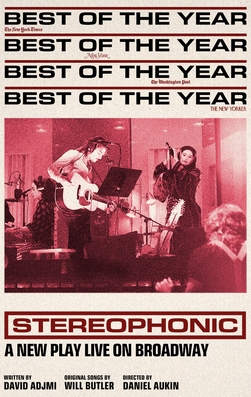
The Resonance of Stereophonic: A Tony Award Nominee

May 28, 2024 By dhcbaldwin Leave a Comment

Blog post concerning Stereophonic, a new Broadway musical

The Resonance of Stereophonic: A Tony Award Nominee

Humans like to reminisce. Currently, the 1970s are popular. Did you know the 1970s fashion is a throw back in 2024? Clothes such as bell bottoms, flowy dresses.  In fact, even the furniture and housewares remind me of the 1970s.  How fortuitous for a new musical, Stereophonic, set in the 1970s to have opened on Broadway recently. Let’s discuss the resonance of Stereophonic: a Tony Award Nominee.

Stereophonic falls into the genre of a play with music.  Although they are considered musicals, they are different from most musicals.  However, they are just as important as others. First, let’s dive into what makes Stereophonic a standout production and why it has garnered such prestigious recognition.

The Resonance of Stereophonic: A Tony Award Nominee

This is my good friend and R and B player @kelleyhuntmusic, circa 1979.

I am part of the Baby Boomer echo generation. The term “Baby Boomer echo” refers to the demographic phenomenon that followed the post-World War II baby boom generation. Baby boomers are those born roughly between 1946 and 1964, a period characterized by a significant increase in birth rates. 

My generation saw many changes in our society which were reflected in the music of the times as well.  Groups such as Fleetwood Mac, Journey and America were extremely popular bands of the times. The 1970s saw hard rock get harder, soft rock get softer, and artists frustrated with standard musical forms tossing them aside and starting their own styles.  This phenomena is part of the mystique of a new play with music, Stereophonic.

The Resonance of Stereophonic, a Play with Music

Stereophonic stands out with its unique blend of music, storytelling, and innovation. Set in the 1970s,  Stereophonic has captivated audiences and critics alike. It has all ready earned its place among the most celebrated theatrical works of the season.

The Resonance of Stereophonic: A Tony Award Nominee

Stereophonic, a Symphony of Sound and Story

At its core, Stereophonic is a celebration of music and its profound impact on our lives. What makes Stereophonic different from other musicals is the way the play ingeniously intertwines an evocative narrative with a rich, immersive soundscape.  This intertwining creates an experience that is both sensory and emotional. The story follows a group of characters whose lives are intricately connected through music, exploring themes of love, loss, and the search for identity.

Stereophonic is the inside story of a Fleetwood Mac-style band Stereophonic, which tracks the volatile creation of a rock and roll album over the course of a year in the 1970s. The title, Stereophonic, itself hints at the dual nature of the story – one that resonates on multiple levels. The use of stereophonic sound technology within the production adds a unique layer of depth.  The score makes the audience feel as though they are part of the musical journey. This innovative use of sound design is one of the reasons Stereophonic stands out in a season filled with remarkable productions.


The Resonance of Stereophonic: A Tony Award Nominee

Stellar Cast and Direction

As you might expect, a production is only as strong as its cast and crew.  Stereophonic boasts some of the finest talents in the industry. The ensemble cast delivers powerful performances that bring the intricate characters to life. Each actor’s ability to convey the emotional depth and complexity of their role adds to the overall impact of the story.

The direction of Stereophonic is masterful, seamlessly blending the elements of music and narrative. I viewed a video clip of the production which was on Jimmy Farrell’s Late Night Show.  It’s fascinating, because although we know they are acting it feels like you are sitting in on a band’s recording session. The cast appears unaware of the audience–that’s so intriguing. The director, Daniel Aukin’s vision to create an immersive experience has paid off, with audiences often describing the play as a visceral and transformative journey. The meticulous attention to detail in both the staging, a recording studio, and the sound design is evident.

230px

Critical Acclaim and Audience Reception

Stereophonic mines the agony and the ecstasy of creation as it zooms in on a music studio in 1976. Here, an up-and-coming rock band recording a new album finds itself suddenly on the cusp of superstardom. The ensuing pressures could spark their breakup — or their breakthrough. As someone who lived during the 1970s when the production is placed, I hear my high school days in their music!

Not surprisingly, Stereophonic has received rave reviews from critics, who have praised its innovative approach and emotional depth. Many have noted the seamless integration of the musical and narrative elements.  The production pushes the boundaries of traditional theater. The critical acclaim is matched by audience reactions. Reports from media say that many theatergoers describing the show as an unforgettable experience. And the show hasn’t even been featured on the Tony awards yet!

The production’s nomination for multiple Tony Awards is a testament to its excellence. Categories include Best Play, Best Direction, Best Sound Design, and several acting nominations, reflecting the all-around strength of the show. Winning a Tony is one of the highest honors in the theater world, and Stereophonic’s multiple nominations underscore its impact and quality.

undefined

The Musical Play Genre: Other Noteworthy Examples

You may not have realized that Stereophonic is part of a rich tradition of plays that incorporate music to enhance storytelling.

Here are some other notable examples:

  • Fela! – This vibrant musical play tells the story of Fela Kuti, the Nigerian musician and political activist. Known for its dynamic choreography and powerful music, Fela! immerses the audience in the world of Afrobeat and Kuti’s fight against oppression.
  • Once – Based on the Academy Award-winning film, Once is a poignant love story set in Dublin. The play features actors who double as musicians, playing instruments live on stage, creating an intimate and immersive experience that highlights the power of music in bringing people together.
  • The Band’s Visit – This Tony Award-winning musical tells the story of an Egyptian police band stranded in a small Israeli town. Through its hauntingly beautiful score and heartfelt narrative, The Band’s Visit explores themes of connection and the universality of human experience.
  • Passing Strange – A semi-autobiographical musical by Stew, Passing Strange follows a young African American’s journey to find “the real” through music and art. The play is noted for its rock concert-like atmosphere and its exploration of identity and self-discovery.
  • Spring Awakening – This rock musical adaptation of Frank Wedekind’s 1891 play tackles the struggles of adolescence and sexual awakening. The integration of modern rock music with a period setting creates a powerful and resonant experience for contemporary audiences.

Plays with Music for Students to Perform

If you are looking for a play with music for your students to perform.  I suggest checking out:

  • Bridge to Terabithia–-This powerful adaptation, supported by a lyrical score, focuses the humor, warmth and emotional intensity of Katherine Paterson’s Newbery Award winning novel. Jesse, alienated from the pragmatism of his family and rural Virginia culture, draws and dreams of becoming something special. Leslie, the new girl from the city and the ultimate outsider, opens a world of imagination, art and literature for him. Together they create Terabithia, a fantasy kingdom where they are safe from those who don’t understand them. Their friendship grows as Jesse’s world expands.

Looking for a lesson concerning the Tony awards?  Go here.

 The Future of Theatrical Innovation

I had never heard Stereophonic ‘s music until recently when I was listening to the Sirius station, Broadway.  Wow!  Whenever a theatrical production is unique, it paves the way for others to do the same.  It sort of whets a potential audience’s appetite,  demonstrating how traditional storytelling can be enhanced through modern technology and creative sound design. As audiences continue to seek out new and immersive experiences, productions like Stereophonic encourage others to follow.

As I mentioned previously, the 1970s are all the rage again.  It’s fun for me to reminisce about that important time in my life.  If for no other reason, I’d like to see Stereophonic and watch it winds its way through my memories.   As we await the results of the Tony Awards, one thing is clear: Stereophonic has made an indelible mark on the world of theater, and its influence will be felt for years to come.

Were you a student in the 1970s?  If not, do you enjoy listening to 70s music?  I’d love to hear from you.  Just email me at DhcBaldwin@gmail.com

The Transformative Power When Students Apply Stage Makeup
Graduation photo, 1974

Dramamommaspeaks** is dedicated to exploring the vibrant world of theater, offering insights and reviews on the latest productions, trends, and industry news. Stay tuned for more updates and in-depth analyses of your favorite shows and emerging talents.

Share this:

  • Click to share on Tumblr (Opens in new window) Tumblr
  • More
  • Click to share on X (Opens in new window) X
  • Click to share on Facebook (Opens in new window) Facebook
  • Click to share on Pinterest (Opens in new window) Pinterest
  • Click to share on LinkedIn (Opens in new window) LinkedIn
  • Click to email a link to a friend (Opens in new window) Email
  • Click to share on Reddit (Opens in new window) Reddit
  • Click to share on Pocket (Opens in new window) Pocket
  • Click to share on Telegram (Opens in new window) Telegram
  • Click to share on WhatsApp (Opens in new window) WhatsApp

Like this:

Like Loading...

Filed Under: arts education, Broadway, drama education, Education, Education, music education, Musical Theatre, plays, Teacherspayteachers, theater, theatre, Tony Awards Tagged With: 1970s, baby boomer echo, broadway musical, musical theater, plays with music, theater, tony award

So You Are Directing a Musical…Now What?

December 28, 2021 By dhcbaldwin 2 Comments

So You Are Directing a Musical…Now What?

Recently, I was interviewed by Jessica Peresta of the Elementry Musician podcast. Primarily, we spoke about drama integration. However we did speak about the process of directing a play or musical. Today, I’m going to discuss So You Are Directing a Musical…Now What?

Again, I forget not everyone knows the process.

So You Are Directing a Musical...Now What?


What are the steps to producing a musical with youth?

That’s a difficult question for me to answer because it depends upon the grade level of the students and length/complexity of the show.

Let’s pretend you are a fifth grade teacher who wants to direct a musical with your students. First, what musical have you chosen?  How long is it?  Thirty minutes or an hour?  How many songs are there?  The size of the cast matters, too.

Imagine your wonderful principal paid for your class (haha) to produce an MTI Kids musical. You selected Jungle Book, Kids.  Terrific! Now I know what we’ve got to work with.  I can’t say enough good about Musical Theater International musicals, especially all of the junior and kids versions.

So You Are Directing a Musical...Now What?

Jungle Book, Kids (credit Owen Lucas Photography)

So You Are Directing a Musical…Now What?

First, lets discuss the story: Banished by the ferocious tiger, Shere Khan, a human boy named Mowgli and his panther friend, Bagheera, are on the run in the deepest parts of the jungle. On their journey, the two meet a sinister snake named Kaa, a herd of elephants and a giant bear named Baloo, who teaches them the swingin’ musical rhythms of the jungle. After surviving a dangerous encounter with a band of monkeys led by King Louie, Mowgli and Bagheera are forced to run for their lives. When Shere Khan returns, our heroes must rally their fellow animals into battle and restore peace throughout the jungle.

Jungle Book has room for large cast so that’s wonderful for your students.  The show contains twelve songs–all very memorable and gleaned from the animated movie.  This helps you because the students will learn them quicker since they’ve probably heard them a bit.

The length of the musical matters, too. The show runs an hour with an intermission of fifteen minutes.  In other words, you have under sixty pages of material to direct.  (Remember there are twelve songs–that cuts into the scenes and lines quite a bit.)

Want to teach your students the beginning of creating a musical?  Check out:  Creating Your Own Musical

So You Are Directing a Musical...Now What?

Musical Theater Rehearsal Schedule Example

Let’s pretend it’s November 1.  You auditioned your class in October (prior to Halloween of course) and your first rehearsal is November 1, a Monday.  I would organize my rehearsals like this:

November 1–Read thru script, discuss the story, re-tell the story, etc.

November 2 to 4–Sing songs

November 5  Choreograph Song either the first musical number or the most difficult first (I discovered that if I got the toughest musical number out of the way near the beginning of the rehearsal schedule, we didn’t worry ourselves about it. Also, the students would have more time to review it than if we waited until its time in the script, such as near the end.)

So You Are Directing a Musical...Now What?

“Seussical, Jr.”  Fine Arts Guild of the Rockies Summer Theater Camp with my direction

Want to study a Broadway musical with your students?  Check out Broadway Musical Unit Study Guide for Matilda!

Musical Theater Rehearsal Schedule Example

This is an example.  I can’t remember how many scenes or musical numbers Jungle Book, Kids contains.  Usually, I use a building block method with young students, grades 3 to 5th.

Nov. 8–Choreograph Song

Nov. 9–Run Song #1 and Song #2

Nov. 10–Choreograph Song #3

Nov. 11–At this point, the students need a change.  I would block scene 1 and run it with Song #1

Nov. 12–Run Song #2 and #3 and review scene 1 blocking once more

Nov.  13–Choreograph Song #4 and #5 (because they are beginning to know what to expect and they are picking it more quickly than at the beginning)

Nov. 16–Block scene two and three, choreograph song #5

Nov. 17–Block scene four and five, run songs 3 and 4

Nov. 18–Block scenes six and seven, choreograph song #6

Nov. 19–Polish scenes one and two with songs (OFF  BOOK)

Nov. 20–Polish scenes three and four with songs (OFF BOOK)

Nov. 23–Polish scenes five and six with songs (OFF BOOK)

So You Are Directing a Musical...Now What?

“The Secret Garden” Apex Home Enrichment Program with my direction

Musical Theater Rehearsal Schedule Example

Nov. 24–To be Announced (This gives you some wiggle room incase you get behind, there’s a fire drill that causes an up roar or whatever.)

Nov. 25–Run Songs with Choreography

Nov. 26–Run scenes only

Nov. 27–Run thru

Nov. 30–Run thru

Dec. 1–Run thru with props

Dec. 2–Run thru with props and costumes (Notice how I continue to add to the process?)

Dec.3–Dress rehearsal with props, costumes and set

Dec. 4–Dress rehearsal

Dec. 5–Perform!

In 1981 when I began directing youth theater, I over rehearsed and over blocked. I’m sure it was being too conscientious and also too controlling.  Now, I almost under rehearsed them so they’ll have an edge for the show.  THERE IS NOTHING WORSE THAN A SHOW THAT’S WORN OUT BEFORE IT OPENS. (I can always tell.)

So You Are Directing a Musical...Now What?

“On Golden Pond” at Fine Arts Guild of the Rockies with my direction

So You Are Directing a Musical…Now What?

If you are directing older students, the rehearsal schedule is similar to directing adults if you are directing in a community theater.  Check out my post about community theater here: Are You Missing These Kind of People in Your Life?

Usually, my rehearsal calendar follows:

Two weeks of music–chorus numbers first (2 days) , small group (3 days) , solos (3 days) then the second week try practicing the Music in the order in which is appears in the musical (The magic here is to begin with the most difficult or complicated numbers first so they are completed early in the process)

Two weeks of choreography–large group numbers (3 days), small group numbers (3 days), solos (2 days) continuing in this fashion until everything is choreographed.

One week of blocking and/or staging (If you can, ask that everyone be off book at this time. Or at the very least calling for lines.)

Want to be the Cool Teacher?  Check out:  Six, the Broadway Musical Unit or Les Miserables or Sweeney Todd: The Demon Barber of Fleet Street

Musical Theater Rehearsal Schedule Example

Two week of polishing each scene and act.  Usually, I rehearse an act at a time (The magic during this process is rehearsing act one–Monday, act two–Tuesday  THEN beginning the next time with act two–Wednesday  and then act one-Thursday. Friday is your first full run thru)

One week of run thrus (add props and set pieces if possible)

One day of cue to cues, two dress rehearsals and then open!

As the director, you may feel like you aren’t needed very much in this second rehearsal calendar.  You are incorrect.  Your mere presence helps a cast to feel secure and acknowledged for all of their enthusiasm and hard work. Just being present and cheering on your cast means the world to them.

Want more directing advice?  Check out Ten Important Elements to Consider When Directing a Youth Theater Production

Looking for a FREE lesson or two?  Check out Drama Integration for Grades 6 to 8

or Creative Dramatics Lessons for Grades 2 to 5

How do you organize your rehearsals?  I’d love to know. Contact me at DhcBaldwin@gmail.com or DeborahBaldwin.net

woman behind DramaMommaSpeaks

Deb


Share this:

  • Click to share on Tumblr (Opens in new window) Tumblr
  • More
  • Click to share on X (Opens in new window) X
  • Click to share on Facebook (Opens in new window) Facebook
  • Click to share on Pinterest (Opens in new window) Pinterest
  • Click to share on LinkedIn (Opens in new window) LinkedIn
  • Click to email a link to a friend (Opens in new window) Email
  • Click to share on Reddit (Opens in new window) Reddit
  • Click to share on Pocket (Opens in new window) Pocket
  • Click to share on Telegram (Opens in new window) Telegram
  • Click to share on WhatsApp (Opens in new window) WhatsApp

Like this:

Like Loading...

Filed Under: arts education, arts integration, community theater, community theatre, creative dramatics, drama education, Education, Education, Musical Theatre, performing arts, Teacherspayteachers, theater, theatre, youth theatre Tagged With: acting, advice for director, Broadway musicals, director tips, drama lessons, Music Theater International, musical theater, rehearsing musicals, tips for a directing, youth theater

Doing Broadway Musicals the Right Way

September 29, 2021 By dhcbaldwin Leave a Comment

Red pencil on a piece of music, close up

Doing Musicals the Right Way

Doing Broadway Musicals the Right Way
The musical Hamilton

Let’s talk about doing musicals the right way. I watched the Tony awards last night.  Although it was shortened version on CBS, it was a lovely tribute to Broadway and theater. So exciting to know Broadway is back in business again.

But I have to say…as always they did musicals the right way.

What do I mean by that remark?  Often, I’ve thought about what makes a musical a classic.  Who makes the decisions whether a theatrical piece is or is not a classic?

According to one website, any musical written between 1920 and 1959 is considered a classic.  When I think about classic musicals, certain ones come to mind–South Pacific, Sound of Music, Oliver!, Peter Pan, The Music Man, Hello Dolly! My Fair Lady and Oklahoma! to name a few.

However, there are recent musicals which should be added to this category of Tony award winners.

I believe they become classics when they are endowed with strong plots, well defined characters, spectacle, universal themes and tremendous scores.  Consequently,  one could argue that most musicals which make it to Broadway should become classics, right? Maybe and maybe not.

However to me, the brilliance of the musical transcends all other productions and that is what sets is apart from others.

Doing Musicals the Right Way: The Phantom of the Opera

Let’s consider The Phantom of the Opera for example.

Doing Broadway Musicals the Right Way
Phantom of the Opera photo by Johan Perss

Phantom of the Opera

First, the plot: Based on the 1910 horror novel by Gaston Leroux, The Phantom of the Opera is a thrilling and romantic account of the legendary Phantom, a musical genius who dwells deep beneath a majestic opera house in Paris.

Shunned by society for his horrible facial deformity, he takes a promising young soprano, Christine, under his wing and grooms her for operatic fame, all the while falling deeply in love with her.

As Christine grows ever more successful, and a handsome young man from her past begins to successfully court her, the Phantom descends into a jealous rage and terrorizes the opera company with increasingly dangerous threats.

The plot takes twists and turns.  That’s a clear cut identifier of a classic.

Secondly, let’s consider the spectacle of the production.  A person could watch this one scene from Phantom of the Opera (in photo above) and have a good idea of the plot. Have you wondered about how to direct a musical? Check out: So You Are Directing a Musical…Now What?

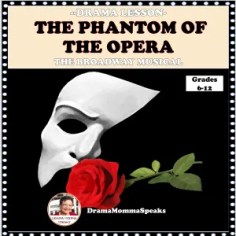
phantom of the opera mask and red rose

In addition, the characters are well rounded with moments of which we can relate.  Another quality of a good musical.  One moment we hate the Phantom and another we pity him.  That tug at our heart strings makes him all the more compelling. Although Phantom of the Opera has less dialogue that most musicals, what dialogue it does have is well crafted.

The mere fact that Phantom of the Opera recently closed after a run of  35 years should tell us something, yes?  Staying power.

Doing Broadway Musicals the Right Way

Andrew Lloyd Weber’s music score is magnificent.  Perusing the internet researching this blog topic, I ran on to The Guardian’s review of Phantom of the Opera:

“Andrew Lloyd Webber has a true pop sensibility, ladling on the hooks. There are reprises and motifs everywhere, and even similar melodies in two of the big songs. Essentially, never take the unexpected route when the note you want to hear is right there.

That famous descending organ riff and its synth-rock bass may scream 1980s camp, but this is a show committed to bombast, the grisly gothic tale of the murderous phantom menacing a 19th-century Paris theatre unashamedly embraces high drama, backed by a wall of sound when Lloyd Webber’s more dense writing contrasts with the hit melodies.”

Doing Broadway Musicals the Right Way

Doing Musical the Right Way: Les Miserables

Les Miserables should be included the list of modern classic musicals.

First, let’s talk about the plot:  After 19 years as a prisoner, Jean Valjean is freed by Javert, the officer in charge of the prison workforce. Valjean promptly breaks parole but later uses money from stolen silver to reinvent himself as a mayor and factory owner. Javert vows to bring Valjean back to prison. Eight years later, Valjean becomes the guardian of a child named Cosette after her mother’s  death, but Javert’s relentless pursuit means that peace will be a long time coming.

Staging of Les Miserables

Secondly, the staging is magnificent! When I taught students about set design, I described the spectacle of the production. The revolving stage, the use of lighting and simple set pieces gives the production a feeling of fluidity and pace.  In particular, the scene when when Javert ends his life is powerful and raw.

Additionally, the use of fog and a simple bridge hoisted right at the moment Javert jumps to his death is breath taking. This moment of spectacle is tremendously engaging. Consequently, we are transported to the moment of impact as if we were jumping with him. The revolving stage turns as Javert sinks to the floor of the river, rolls in the current and slowly dies as the stage stops its revolve.  That’s powerful theater!

Doing Musicals the Right Way

Like Phantom of the Opera, Les Miserables has a long life on Broadway and London where it originated.  Forty-two countries have enjoyed the touring company shows. If that isn’t enough, it has been translated into 21  languages: English, Japanese, Hebrew, Hungarian, Icelandic, Norwegian, German, Polish, Swedish, Dutch, Danish, French, Czech, Castillian, Mauritian Creole, Flemish, Finnish, Argentinian, Portuguese, Estonian and Mexican Spanish. Pick up a copy of my Broadway musical unit of Les Miserables here.

What’s a Sung Thru Opera?

Les Miserables is considered a “sung-thru” opera. Because particular moments are sung rather than spoken and vice versa it demands our attention at all times.  I can’t say that about every production.

Salesmanship Cedes to Love in 'The Music Man' | Chicago News | WTTW

The Music Man

A third “should-be” classic, is The Music Man.

Again, let’s look at the plot: The Music Man is concerns con man Harold Hill, who poses as a boys’ band organizer and leader and sells band instruments and uniforms to naïve Iowa townsfolk, promising to train the members of the new band. Harold is no musician, however, and plans to skip town without giving any music lessons. Prim librarian and piano teacher Marian sees through him, but when Harold helps her younger brother overcome his lisp and social awkwardness, Marian begins to fall in love. Harold risks being caught to win her.

Every classic musical contains universal themes.  In this case, The Music Man demonstrates that music heals, redemption, risk romance and authenticity.

Doing Broadway Musicals the Right Way

A Crowd Pleaser

When teachers ask for my recommendation of a crowd pleaser musical which has opportunities for a large cast, first on my list is The Music Man.  The characters are charming, fun to portray and there’s room for many ages and grade levels. The dialogue is humorous when it needs to be and poignant in other moments.  My favorite line is, “He’s been the raspberry seed in my wisdom tooth long enough.”

With a blend of music indicative of the setting of the story, many of a plot takes twists and turns which is an identifier of a classic, too. For instance, The Music Man has such captivating music it’s used in other genres such as  by marching bands (Seventy-six Trombones)  and barbershop quartets (Lida Rose.)

Having directed it four times, I can say without a doubt it is one I can depend upon to be successful every time I direct it. Want some advice about directing? Check out: So You Are Directing a Musical…Now What?

Broadway Musical Units

As you may be aware, I create drama education resources for teachers through my store, DramaMommaSpeaks also on MadebyTeachers and my personal store on Payhip. 

I have a new bundle of “Classic Musicals”.

It includes:  Les Miserable, The Music Man, Peter Pan, Phantom of the Opera and West Side Story, South Pacific (new)

Each musical can be purchased separately, but if you buy them in a bundle you save up to 20%.  And guess what?  This is a growing bundle so as I create more Classic Musicals I’ll include include more productions.  (Get it at the beginning of the growing bundle and you get all of the rest of the musicals for FREE)

Doing Broadway Musicals the Right Way

These products include:

  • Letter to Teacher
  • Two Warm Ups–My Own Version of this Popular Exercise–
  • Teacher’s Script–What I Say and How I Say it!
  • Photos of the production
  • Synopsis of the Musical
  • Plot of the Musical–comprehensive and detailed
  • Short Biography about the creative team–composer, lyricist, playwright, producer or director
  • Biography focused on the author of the novel if it inspired the production
  • Why is this musical considered an opera and not a musical?
  • Separate File of Photos for Teacher’s Use in Lecture
  • History about the Origination of the Production
  • AND a Mini-Lesson on What are the Tony Awards?
  • List of Tony Awards
  • New York City Map with Competing Theaters Labeled
  • Student Note Page
  • Teacher Note Page Key
  • Fascinating Trivia about Broadway
  • Equally fascinating trivia about the particular musical
  • Songs List
  • Extension Activities–Ten Terrific Assignment Suggestions to Secure the Learning and Enrich the Experience either Individual or Group
  • Sources & Links to Film Clips from the Show
  • And More!

There are many musicals, too numerous to mention, which your students will appreciate exploring.  Have you considered Come From Away? Still so timely.  It’s an excellent production!

Doing Broadway Musicals the Right Way

Here’s another Broadway musical, West Side Story 

Doing Broadway Musicals the Right Way

Today, I added Oklahoma!

Doing Broadway Musicals the Right Way

And Here’s South Pacific

Doing Broadway Musicals the Right Way

And now The Sound of Music

Doing Broadway Musicals the Right Way

What other musicals do you think should be labeled as classics?  I’d love to know.  Contact me at DhcBaldwin@gmail.com or DeborahBaldwin.net

woman behind DramaMommaSpeaks


Share this:

  • Click to share on Tumblr (Opens in new window) Tumblr
  • More
  • Click to share on X (Opens in new window) X
  • Click to share on Facebook (Opens in new window) Facebook
  • Click to share on Pinterest (Opens in new window) Pinterest
  • Click to share on LinkedIn (Opens in new window) LinkedIn
  • Click to email a link to a friend (Opens in new window) Email
  • Click to share on Reddit (Opens in new window) Reddit
  • Click to share on Pocket (Opens in new window) Pocket
  • Click to share on Telegram (Opens in new window) Telegram
  • Click to share on WhatsApp (Opens in new window) WhatsApp

Like this:

Like Loading...

Filed Under: acting, Arts, arts education, arts integration, Broadway, community theater, community theatre, drama education, e-learning, Education, music education, Musical Theatre, performing arts, theater, Tony Awards, youth theatre Tagged With: Come From Away, Hamilton, musical theater, musical theatre, Phantom of the Opera, revivals of musicals, The Music Man, West Side Story

The Essential Drama Integration Guide for Come From Away the Broadway Musical

September 15, 2021 By dhcbaldwin 3 Comments

Twin towers fencing with notes stuck to it after 911

The Essential Drama Integration Guide to Come From Away the Broadway Musical

The Essential Drama Integration Guide for Come From Away the Broadway Musical

Have you used drama integration to reach your students? This would be a good place to begin. Use my drama integration Come From Away the Broadway Musical.

What is Drama Integration?

Through participation in theatre, students develop speaking and listening skills. Students collaborate with others in accomplishing common goals. Though many classroom teachers do not have a drama teacher to collaborate with, drama is a natural place to begin arts integration.

The story behind Come From Away is one which can easily be used in any classroom studying September 11th. Rather than just studying the story, how about teaching the historical moment through a theatrical production?

Why is The Musical Titled “Come From Away”?

“Come from away” is a term used in Canada’s Atlantic provinces for someone who has moved to the area from somewhere else. I’m a come from away myself, from Ontario, though my mother was born here.

The first reason to teach with this musical, and foremost in my opinion, if the story. It is just plain fascinating and begins with an explanation of  Operation Yellow Ribbon.

The Essential Drama Integration Guide for Come From Away the Broadway Musical News - Mirror Online

Operation Yellow Ribbon was commenced by Canada to handle the diversion of civilian airline flights in response to the September 11 attacks in 2001 on the United States. Canada’s goal was to ensure that potentially destructive air traffic be removed from United States airspace as quickly as possible, and away from potential U.S. targets.

Instead of U.S. soil, those aircraft headed into the U.S. were place on the ground in Canada, at military and civilian airports in the Canadian provinces of Newfoundland, Newfoundland and Labrador, and British Columbia (and also several in New Brunswick, Alberta, Manitoba, Ontario and Quebec) where any destructive potential could be better contained and neutralized. None of the aircraft proved to be a threat, and Canada and Canadians hosted thousands of passengers stranded in Canada until U.S. airspace was reopened.

The Essential Drama Integration Guide to Come From Away the Broadway Musical

Canada began the operation after the U.S. Federal Aviation Administration (FAA), implementing Security Control of Air Traffic and Air Navigation Aids (SCATANA), grounded all aircraft across the United States, an unprecedented action. The FAA then worked with Transport Canada to reroute incoming international flights to airports in Canada.

During the operation, departing flights—with the exception of police, military, and humanitarian flights—were cancelled, marking the first time that Canadian airspace had been shut down. In total, as a result of Operation Yellow Ribbon, 255 aircraft were diverted to 17 different airports across the country. 45,000 people were displaced.

I told you it was fascinating! Come From Away is placed in Gander, Newfoundland.

The Essential Drama Integration Guide for Come From Away the Broadway Musical

Gander is a town located in the northeastern part of the island of Newfoundland in the province of Newfoundland and Labrador.  Located on the northeastern shore of Gander Lake, it is the site of Gander International Airport, once an important refueling stop for transatlantic aircraft, and still a preferred emergency landing point for aircraft facing on-board medical or security issues. At the time of the 911 attack, its population was 6,000.

Most of the streets in Gander are named after famous aviators, including Alcock and Brown, Amelia Earhart, Charles Lindbergh, Eddie Rickenbacker, Marc Garneau and Chuck Yeager.

The Essential Drama Integration Guide for Come From Away the Broadway Musical

Come From Away the Broadway Musical

Some musicals are developed with each creative team member responsible for particular parts of the show from playwriting to directing to choreography.  Others are more collaborative in nature.  The path of the musical, Come from Away  to  becoming a Broadway musical was fairly traditional once it was conceived.

However, its conception was the unique aspect and perhaps that why audiences love it so much.  In this particular case, the composer and lyricists are also the playwrights.  This doesn’t occur very often.

The Essential Drama Integration Guide to Come From Away the Broadway Musical

What is equally fascinating is the creative team’s personal connection to the story.  The setting is in their home province of  Newfoundland, Canada.  The team didn’t realize there was a story to be told until ten years later when they were approached to write the show.

The musical has been received by audiences and critics as a cathartic reminder of the capacity for human kindness in even the darkest of times and the triumph of humanity over hate.

DID YOU KNOW ONLY 14 STATES TEACH ABOUT 911?

Fourteen.

That’s a crying shame, but I’m out to change all that!

DramaMommaSpeaks Come From Away Drama Integration Guide

The Essential Drama Integration Guide for Come From Away the Broadway Musical

My Drama Resources

As you may be aware, I create drama education resources for teachers in my store, DramaMommaSpeaks.  Currently, my Come From Away unit is very popular with vocal music, language arts and theater teachers.

This 46 page, two-day product includes:

  • Letter to Teacher
  • Warm Up–MY Version of a Popular Physical Warm Up
  • Teacher’s Script–What I Say and How I Say it!
  • Photos of Gander, Newfoundland where the story takes place and the airstrip which became the connector between strangers
  • Plot of the Musical
  • Synopsis of the Musical
  • A Brief Description of the Operation Yellow Ribbon and 9/12, what occurred the day after the 9/11 attacks
  • Separate File of Photos for Teacher’s Use in Lecture
  • History about the Origination of the Production
  • Information on the Director, Christopher Ashley
  • Information on the Writing Team co-composers & playwrights David Hein and Irene Sankuff
  • A Shortened Lesson on: What are the Tony Awards?
  • List of Tony Awards
  • New York City Map with Competing Theaters Labeled
  • Student Note Page
  • Teacher Note Page Key
  • Trivia about Come From Away and Broadway Musicals with Some Surprising Facts!
  • Lyrics from “Welcome to the Rock”–Good for Class Discussions or as a Jumping Off Point
  • Extension Activities–Terrific Suggestions of Ways to Secure the Learning and Enrich the Experience, Individual and Group
  • Sources & Links to Video Clips from the Show
  • And More!

Looking for a Theater Curriculum Scope and Sequence  for Middle School?  Check out mine:  Drama Units Scope and Sequence. 

Comprehensive? You bet. If this interests you, perhaps my Hamilton lesson will too.  Check out this blog post here.

The Essential Drama Integration Guide for Come From Away the Broadway Musical

The Essential Drama Integration Guide for Come From Away the Broadway Musical

Come From Away Movie

The Come From Away movie was released recently.  You can find it on Apple TV.  Of course, it would be wonderful if your students could view the movie.  If not, you’ve got my complete lesson to answer any and all questions pertaining to this terrific musical.

It isn’t often that a historical moment is still pertinent twenty years later, but here we are. 

If you direct productions, you’ll enjoy this musical for its ensemble feel. The story is told by every character with most playing more than one role. That’s always a nice challenge for performers and such fun, too.  The set is simple, containing chairs, a table or two and few stage properties.  The music is clever and sounds a bit like Irish folk music to me.

DramaMommaSpeaks Come From Away Drama Integration Guide

I think once its released to amateurs, every community theater, in the country will produce it.  Wow!

A note to social studies and language arts teachers–don’t shy away from this musical because it is just that. Integrate drama into your classroom and your students will love you for it, I promise. Some of the best teaching is done when you break out of your routine and teach through a different medium.

I hope you’ll consider teaching your students about the musical, Come From Away.  As I said, it’s one of most popular products (in the top four!) so there is some reason everyone desires this lesson.  See for yourself.

Where were you when 911 occurred?  I was the first person in my school building to hear the news.  What an unforgettable experience to be sure.

phantom of the opera mask and red rose

Interested in another Broadway musical?  Check out: Phantom of the Opera

I’d love to hear about your memories of 911.  Contact me at DhcBaldwin@gmail.com or DeborahBaldwin.net

Want a FREE guide and drama integration lesson for grades 6 to 8?  Go here: FREE guide and drama integration

woman behind DramaMommaSpeaks


Share this:

  • Click to share on Tumblr (Opens in new window) Tumblr
  • More
  • Click to share on X (Opens in new window) X
  • Click to share on Facebook (Opens in new window) Facebook
  • Click to share on Pinterest (Opens in new window) Pinterest
  • Click to share on LinkedIn (Opens in new window) LinkedIn
  • Click to email a link to a friend (Opens in new window) Email
  • Click to share on Reddit (Opens in new window) Reddit
  • Click to share on Pocket (Opens in new window) Pocket
  • Click to share on Telegram (Opens in new window) Telegram
  • Click to share on WhatsApp (Opens in new window) WhatsApp

Like this:

Like Loading...

Filed Under: American experiences, arts education, arts integration, community theater, drama education, e-learning, Education, excellence in teaching, Musical Theatre, performing arts, Teacherspayteachers, youth theatre Tagged With: 911, Broadway, Come From Away, drama integration, Gander, language arts project, musical theater, Newfoundland, operation yellow ribbon, social studies project, theater class project, Tony award winning

What Can We Learn from Greek Mythology and Hadestown

May 10, 2019 By dhcbaldwin 1 Comment

Blog post concerning Greek Mythology and Hadestown, the Broadway musical

What Can We Learn from Greek Mythology and Hadestown?

When the 2019 Tony award nominations were announced, Hadestown was included–not surprisingly.  Today I want to talk about what can we learn from Greek mythology?

What Can We Learn from Greek Mythology and Hadestown?

Are you familiar with the musical?  It’s awesome, but don’t take my word for it.

https://www.youtube.com/watch?v=NfNHgSsammc

Here is the plot in a nutshell.  From Broadway.com:

“The plot of Hadestown follows the overall framework of the narrative that we know from antiquity, established most thoroughly by Vergil in Book 4 of the Georgics and Ovid in Book 10 of his Metamorphoses. Orpheus and Eurydice are in love and preparing for marriage. She ends up in the underworld, here referred to as “Hadestown.”

What Can We Learn from Greek Mythology and Hadestown?

Orpheus goes before Hades and Persephone and manages to win Eurydice’s freedom with his song on the condition that he not look back as she follows him out. At the last minute he looks back and loses her forever. The most significant departure that Mitchell makes from the traditional narrative concerns the reason for Eurydice’s presence in the underworld, or “Hadestown.”

In place of the traditional snake-bitten ankle Mitchell explicitly draws attention to the ambiguity of her narrative, challenging her listeners to draw their own conclusions.”

What is Hadestown?

What Can We Learn from Greek Mythology and Hadestown?

Hadestown is a 2016 stage musical adaptation of the 2010 folk opera concept album by Anais Mitchell. It tells the intertwining of two love stories—Eurydice and Orpheus and King Hades and his wife, Persephone. As in the 2010 album, Hadestown adapts the myth of Orpheus and Eurydice to a Great Depression-era inspired post-apocalyptic setting.

One of the messages of the production defends beauty and the importance of music and love to the soul, even in an increasingly commercialized world.

Such an important message.  If you know anything about me, you know I think the arts are vitally importance.

What Can We Learn from Greek Mythology and Hadestown?
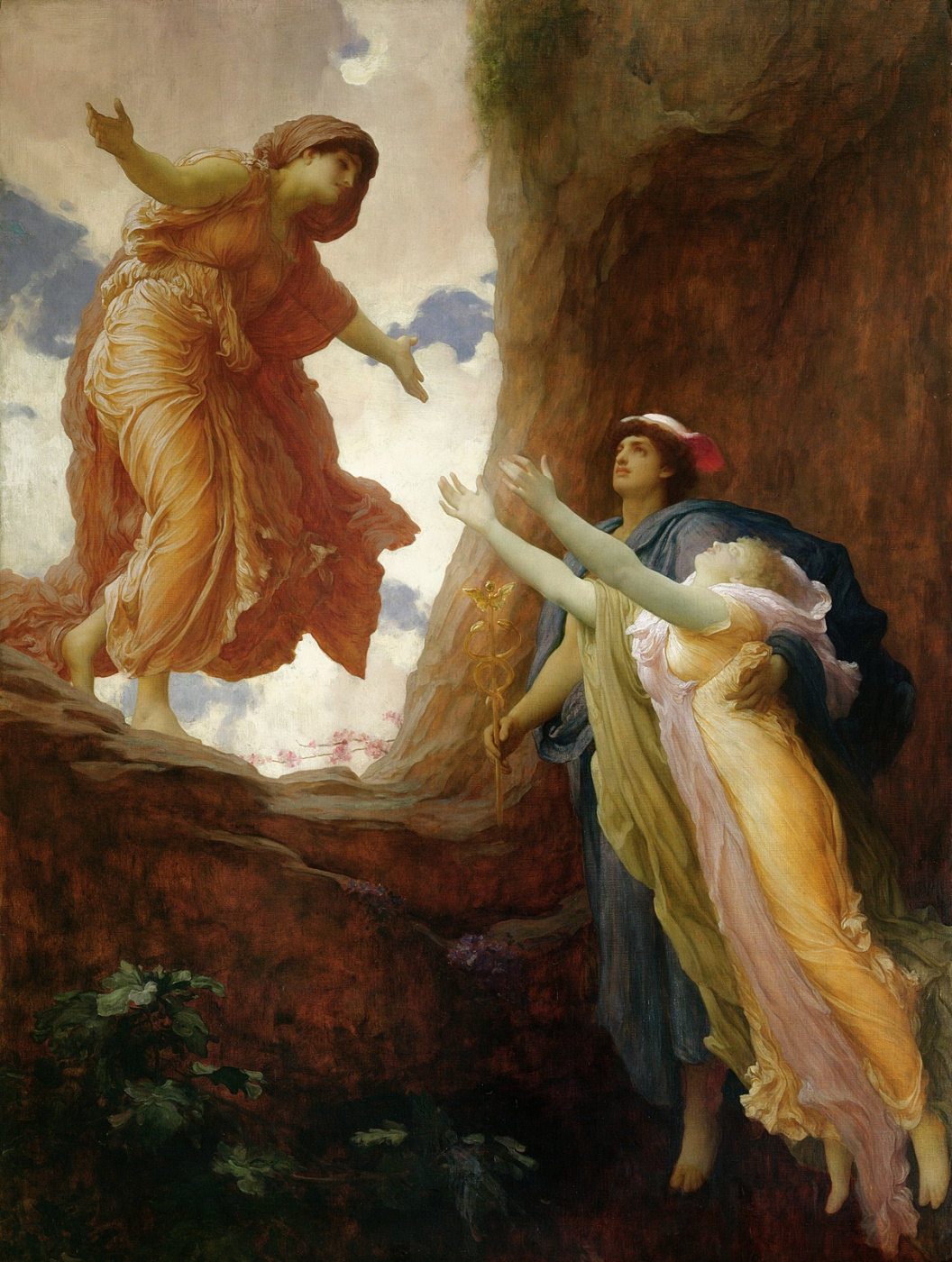
Fredrick Leighton’s The Return of Persephone, circa 1891.

What is Mythology?

I was looking around for answers to this question and found this at reference.com:

“Mythology is studied because myths are ways in which cultures attempt to explain the world and answer questions of human concern. For instance, mythology delves into such basic debates as good versus evil or looks into the nature of man.

Mythology also illustrates different cultures and their narratives. The mythology of each culture is the accumulation of that culture’s knowledge, wisdom and experience. Although mythologies differ, they often follow the same basic themes. For instance, several cultures have myths that deal with the afterlife and great floods.

What Can We Learn from Greek Mythology and Hadestown?

The World of Mythology

Many Middle Eastern cultures also have virgin-birth myths. Some archetypal themes deal with women of power, heroes, paradise and quests. The hero myth is about figures performing unbelievable feats. Heroes are in the mythology of most cultures. Hercules, the son of Zeus, is one of the most popular of these mythological figures.

Kutoyis is a Native American Blackfoot hero who also has supernatural origins. In Britain there is the King Arthur myth. Heroes also come from religious mythology, such as Jesus Christ, Muhammad and Buddha.

Mythology is still prominent in aspects of modern culture, especially advertising, because of its universality and vibrant metaphors. For instance, the Trojan horse is still a metaphor for gifts that are not really gifts. When Camelot is referred to, it denotes a golden age of prosperity.”

What Can We Learn from Greek Mythology?

What Can We Learn from Greek Mythology and Hadestown?

Five Reasons We Study Greek Mythology

When I decided to blog about the importance of mythology, I had a devil of a time (no pun intended) finding adequate articles discussing it. However, this mother did a fantastic job of defending the need for studying myths with our students.  Here are a few excerpts from the blog post which can be found at www.thekennedyadventures.com, a home school blog under Five Reasons We Study Greek Mythology:

  • One of the hidden benefits of studying Greek myths is to explore virtues. With these classic stories, the lines between righteous and immoral behavior are clear cut, so that even young children can recognize examples of the 4 cardinal virtues: prudence, justice, fortitude and temperance.
  • In Greek mythology, the lines between good and evil are very clear cut. Monsters are monsters, while heroes are heroes. When you take a look at Heracles (Hercules is his Roman name), there’s no doubt in children’s mind that he’s a good guy, performing noble deeds.
  • Ever deal with character issues in your home?
  • The best way I’ve found to tackle these tough topics? Reading stories about them, especially ones found in the Greek myths.

What Can We Learn from Greek Mythology and Hadestown?

5 Reasons to Study Greek Mythology

  • Children can recognize an element of negativity in a story much better than they can emulate it to you. It’s a great way to role play and discuss reasons behind bad behavior
  • Do you expect your children to study Shakespeare or other English literature as they grow older? They will need at least a basic understanding of Greek mythology to assist them in studying these great works.
  • Allusions to Greek myths (and their Roman counterparts) are everywhere, both in modern literature and the classics. Think about these examples:
  • Mary Shelley incorporated the myth of Prometheus into her book Frankenstein. (also known as The Modern Day Prometheus) C.S. Lewis’ Till We Have Faces is a retelling of the story of Cupid and Psyche.

The Avengers films are an excellent example of mythology in action.  Obviously, it works–it’s made a billion dollars in the first weekend!

If you are studying mythology with your students, you might appreciate my Page to Stage lesson on Hadestown.

What Can We Learn from Greek Mythology?

Check it out here:  Hadestown, the Broadway Musical

Hadestown Broadway Musical Unit

This Resource is Comprehensive

This is a two or three day lesson about the musical which includes a warm up exercise, the history of the Greek mythological characters, the plot of the musical, a mini lesson on the Tony Awards, hot links to video examples of the musical, a separate set of slides to teach the lesson, quotes, trivia and extension activities.

Here’s a blog post about other Page to Stage Lessons:  Why Do You Need a Mission Statement for Your Teacherspayteachers Store?

Do you teach younger students? Check out my readers theater lesson, the Legend of the Sunflower.

The Legend of the Sunflower

I agree with this statement by author, Ashwin Sanghi,

“It is not history, theology or mythology that interest me. It is the fact that history, theology or mythology could have alternative interpretations or explanations. I try to connect the dots between the past and the present.”

I try to connect the dots, too.  We all do whether we are aware of it or not.  That’s why we need to study Greek mythology and so do our students.

What are your favorite myths?  I’d love to hear about them.

Contact me at dhcbaldwin@gmail.com or DeborahBaldwin.net

Deborah Baldwin


Share this:

  • Click to share on Tumblr (Opens in new window) Tumblr
  • More
  • Click to share on X (Opens in new window) X
  • Click to share on Facebook (Opens in new window) Facebook
  • Click to share on Pinterest (Opens in new window) Pinterest
  • Click to share on LinkedIn (Opens in new window) LinkedIn
  • Click to email a link to a friend (Opens in new window) Email
  • Click to share on Reddit (Opens in new window) Reddit
  • Click to share on Pocket (Opens in new window) Pocket
  • Click to share on Telegram (Opens in new window) Telegram
  • Click to share on WhatsApp (Opens in new window) WhatsApp

Like this:

Like Loading...

Filed Under: Arts, arts education, Broadway, drama education, excellence in teaching, middle grades, Teacherspayteachers, Teaching, theater, theatre, youth theatre Tagged With: greek mythology, Hadestown the Broadway musical, musical theater, teacherspayteachers, Tony Awards

Next Page »

Footer

Follow Us

logo3.png

FOLLOW US

Facebook X-twitter Pinterest Instagram Envelope Rss

Goodreads: read

Malibu Rising
Malibu Rising
by Taylor Jenkins Reid
People We Meet on Vacation
by Emily Henry
The Last Thing He Told Me
by Laura Dave
Faking It
Faking It
by Cora Carmack
Losing It
Losing It
by Cora Carmack

goodreads.com
Copyright © 2024 · Wellness Pro on Genesis Framework · WordPress.com.Log in
 

Loading Comments...
 

    %d