• Skip to primary navigation
  • Skip to main content
  • Skip to footer

Join Me in my new Facebook Group! https://www.facebook.com/groups/417126059784261

Menu
  • Meet Deb – The Heart Behind DramaMommaSpeaks
    • Work with Me! 
    • Photo Gallery of DramaMommaSpeaks
    • Directorial Credits
  • I Give Book Talks! 
    • Book Talk Through Skype
    • Books
  • Freebies!
  • Bumbling Bea
  • Teaching Resume
  • Acting Resume
  • Contact Me
  • Blog
    • Drama Education
    • Arts Education
    • Youth Theatre
    • Middle Grades
    • Musical Theatre
    • Teaching
  • Meet Deb – The Heart Behind DramaMommaSpeaks
    • Work with Me! 
    • Photo Gallery of DramaMommaSpeaks
    • Directorial Credits
  • I Give Book Talks! 
    • Book Talk Through Skype
    • Books
  • Freebies!
  • Bumbling Bea
  • Teaching Resume
  • Acting Resume
  • Contact Me
  • Blog
    • Drama Education
    • Arts Education
    • Youth Theatre
    • Middle Grades
    • Musical Theatre
    • Teaching

play reading

Eight Benefits for Students When Reading Plays

August 30, 2023 By dhcbaldwin Leave a Comment

a cat wearing reading glasses supposedly reading a book

Eight Benefits for Students When Reading Plays

As a child, I loved to read. However, I had one bad habit– reading the end of the book far before I’d read the rest of the book.  My mother called it shameful at the time.  I admit, I still imbibe in this activity from time to time. Not with plays, however. I’m proud to say that never have I ever read the end of the play ahead of time.  Never. Today I want to talk about the eight benefits for students when reading plays.

As educators, we constantly seek fresh and unique ways to engage our students and foster a genuine love for learning. While traditional reading materials hold their place, have you ever considered the profound impact of introducing plays into your curriculum? Beyond the spotlight and stage, the world of plays offers a wealth of opportunities for students to explore, learn, and grow. In this post, let’s delve into why incorporating plays into your teaching toolkit can be a game-changer.

Eight Benefits for Students When Reading Plays

#1 Spark Empathy and Understanding by Reading Plays 

Perhaps one of the most important reasons to read plays  is the swift speed a  playwright‘s uses to engage the audience right from the first word. Consequently, the play immediately piques our interest. Let’s admit something here.  Our students want everything fast, because the world has become so quick moving thanks to technology.  No one wants to be patient or wait around for anything.  Everyone, especially our students, want a quick fix.

Unlike reading novels, the old adage that “you should read the number of pages equal to your age before you decide if you enjoy the story or not” doesn’t hold true here. Plays must get to the point early on in the production or else the audience will make a quick exit for the theater door.  Consequently, most plays are under 150 pages.  They hold your attention to the end, because playwrights want the audience to be enthralled through curtain call.  Check out my post about The Most Important Play I’ve Directed in My 38 Year Career.

Usually, narration is kept to a minimum.  In most plays, if deftly written, the characters can narrate the story through their lines. Every character in a play has a unique story to tell, emotions to share, and challenges to overcome. When students step into the shoes of these characters through reading, they cultivate empathy and gain insights into different perspectives. This newfound empathy transcends the classroom, nurturing a more compassionate and understanding generation. When someone demonstrates how a person feels at a particular moment in a story, they visualize the moment playing out right in front of them. That is powerful.
Eight Benefits for Students When Reading Plays


#2 Nurturing Critical Thinkers

Plays are intricate puzzles waiting to be unraveled. The layers of dialogue, symbolism, and character development offer an intellectual banquet for students. Even our youngest students can read a play and pick out the elements of literature--setting, conflict, plot and character, etc.   Encourage them to dissect the text, identify underlying themes, and analyze character motivations. This process hones critical thinking skills that extend far beyond the realm of literature.

Language Proficiency Beyond the Ordinary

Plays are a linguistic treasure trove, showcasing diverse forms of language from various eras and cultures. By exposing students to the rich tapestry of language found in plays, you’re fostering students to build a versatile vocabulary. Through the acquisition of new words and expressions students’ hone their communication skills which better equips them to communicate their thoughts and feelings.

Eight Benefits for Students When Reading Plays

#3 Plays and Time Travel through Text

History books offer facts; plays transport students back in time. Through the lens of playwrights’ words, students can experience different time periods, cultures, and societal norms. This immersive experience makes history come alive, encouraging students to appreciate the nuances of different eras. Plays have been written about many historical moments in history, science, art, music and so forth.  After 911, there were several plays written from the viewpoint of the firemen who survived the tragedy. One is The Guys.  The Guys tells a story about a New York City journalist who helps a local fire captain write memorial speeches for his men who died in the World Trade Center crisis bowed starring Sigourney Weaver and Bill Murray in January 2002.


Eight Benefits for Students When Reading Plays

#4 Reading Plays Provokes Dynamic  Class Discussions

The themes explored in plays are the stuff of thought-provoking conversations. From social issues to questions about morality, plays provide a perfect platform for discussing complex topics. By reading a play, students can articulate their opinions, learn from diverse viewpoints, and develop the art of respectful discourse. For example, The Laramie Project play is set in and around Laramie, Wyoming, in the aftermath of the murder of twenty-one -year-old Matthew Shepard.   The Laramie Project is known for its powerful portrayal of the complexities of a community’s response to a hate crime, and it has been widely performed and studied to shed light on issues related to LGBTQ+ rights, hate crimes, and social justice.

Eight Benefits for Students When Reading Plays

#5 Play Reading Bridges Generations

Incorporating both classic and contemporary plays bridges the literary gap between generations. Students connect with the enduring themes of the past while appreciating the evolving narratives of the present. She Stoops to Conquer was written in 1773 and is just as relevant today as when it was first produced. The overriding theme of She Stoops to Conquer is how reality is often distorted by social status. Sound familiar?

A recent column in Esquire magazine states, “Sometimes the Truly Rich lose their bearings about how money works for other people. While they have that joyful privilege of viewing money through the filter of what it can do for them, other people see cash as that wad of paper that can get them through the next two weeks.” In She Stoops To Conquer, a rigid English social system effectively encourages people to be someone other than who they really are.

She Stoops to Conquer is a comedy of manners that explores social class, one’s place in society, both socially and economically, and its importance in 18th century England. The characters and their conceptions of these absurd societal rules lead them on a humorous journey in their relationships, by exposing our students to plays which are nearly 250 years old, students learn to appreciate the continuity of human thought and storytelling across time.

#6 Students Skills for Life’s Journey

When students engage with plays, they acquire skills that are essential beyond graduation. The ability to analyze, interpret, and empathize with different perspectives equips them to thrive in diverse environments. They become lifelong learners who approach challenges with a multidimensional outlook.

Eight Benefits for Students When Reading Plays

 #7 Cultivating Creativity

The act of reading plays demands visualization – imagining characters, scenes, and emotions. A good example of this is the play War Horse.  The horse puppet that represents Joey is operated by three puppeteers each night: one at the head, one at the heart, and one at the hind. But this is no ordinary panto horse: when at full flight, the 30-kilogram, life-sized contraption is an imposing force, galloping across the stage. The scenes of Joey fighting in war are magnificent!  This visualization of a living breathing horse demands of us to use our  creativity thereby encouraging students to actively participate in crafting the narrative in their minds. They become co-creators of the story, enriching their imaginative capacities. If you are looking for a lesson concerning The War Horse play, check out:  War Horse Resource

 #8 Transformative Journey Through Reading Plays

I cannot stress enough that incorporating plays into your curriculum is not just about reading; it’s about opening doors to creativity, empathy, critical thinking, and cultural awareness. By introducing students to the world of plays, you’re guiding them on a transformative journey that goes beyond textbooks. You’re instilling a lifelong appreciation for literature, broadening their horizons, and empowering them to embrace the complexities of the world with confidence. I bet you’ll discover more of your students will become involved in their school play productions after they’ve read a few.  They are a perfect bridge. Have your students read any radio theater plays? Check out these blog posts for reasons to read them. Creative Dramatics Lesson Plans: Nine Reasons to Teach Radio Theater or Top Reasons Teachers Succeed When Teaching With Radio Theater

Let’s embrace the world of plays and witness the magic unfold within our classrooms. Your students’ journey into the realm of drama might just be the most enlightening adventure they embark upon.

What plays have your students read?  I’d love to hear from you about them.  Let’s chat!  Contact me at DhcBaldwin@gmail.com

Woman behind DramaMommaSpeaks

Share this:

  • Click to share on Tumblr (Opens in new window) Tumblr
  • More
  • Click to share on X (Opens in new window) X
  • Click to share on Facebook (Opens in new window) Facebook
  • Click to share on Pinterest (Opens in new window) Pinterest
  • Click to share on LinkedIn (Opens in new window) LinkedIn
  • Click to email a link to a friend (Opens in new window) Email
  • Click to share on Reddit (Opens in new window) Reddit
  • Click to share on Pocket (Opens in new window) Pocket
  • Click to share on Telegram (Opens in new window) Telegram
  • Click to share on WhatsApp (Opens in new window) WhatsApp

Like this:

Like Loading...

Filed Under: arts education, arts integration, drama education, drama integration, Education, excellence in teaching, High School, play reading, Reading Literacy, reading skills, theatre Tagged With: class, high school, language arts class, Middle school, play reading, reading class, reading plays, She Stoops to Conquer, The Diary of Anne Frank, The Laramie Project, War Horse

Play Reading and Analysis–An Important Skill for Our Students

January 10, 2020 By dhcbaldwin Leave a Comment

Play Reading and Analysis–an Important Skill for Our Students

Deborah Baldwin teaching

I am a drama teacher.  Consequently, I eat, sleep and breath theater even now that I’m newly retired.

I listen to the Sirius Broadway station all day which keeps me abreast to upcoming productions and tours.

Because of my love for theater, I spend a lot of time on Pinterest.com pinning anything that pertains to theater–plays, musicals, set design, costume design, stage properties do it yourself creations, stage makeup, videos, lighting plots, show posters, etc.

I have A LOT of boards…………….:)

I see theater teachers in Facebook groups looking for play titles to read with their students, especially middle school.  If you are looking for a good one to study,  try Tim Kelly’s dramatization of The Adventures of Tom Sawyer.  Here is a study guide and set design unit for it:  Study Guide and Set Design Units Tom Sawyer

BUNDLE TOM SAWYER STUDY GUIDE AND SET DESIGN

Sorry, I digressed.

Strengthening Literacy through Play Reading

Back to literacy.

I looked for research concerning the reasons our students should read a play script and of course, ran on to balanced literacy.

“When students have a voice in the reading process, they’re learning to contribute to their own knowledge.  Because they can select the books (in my case, plays) they wish to read, they have greater control over what they want to learn. Students are much more likely to view reading as a priority when they have some ownership in the reading process.

However, this doesn’t mean students can make their independent reading choices willy-nilly.  There does have to be some structure involved. First of all, the independent reading selection must be at their reading level.  No “easy” books during independent reading. “At their reading level” means students should be able to read their selections with 95%-100% accuracy.”

I agree with everything mentioned above.

Reading a play can be an amazing, satisfying experience.  Once my students become accustom to reading a script aloud (which takes about one class period), they are invested.

woman reading book

Here are some of the reasons for our students to read a play:

  1.  The dialogue is terrific.  You can’t help but be engaged.  The playwright hones his script to be the most compelling experience he can create.  He certainly doesn’t want an audience member leaving the production.  When an audience members leaves, it’s not the same as turning off the television–EVERYONE sees the bored person leave.  Yikes! Also, if you are teaching students how to write dialogue, reading a script will help them immensely.
  2. There is no narration or superfluous information.  There might be someone who narrates, but again, the narration is short, concise and entices the audience.
  3. For many moments in the plot, stage directions are included.  If the play reader becomes lost, it is easy to find one’s place in the script merely by reading the directions.  The stage directions help a reader to visualize the action. They were either added to the script by the playwright or placed there in honor of the first company who produced it.
  4. Characters are well developed.  A well crafted play can be read without looking at each character’s printed name within the play.  A reader should be able to read down the middle of the script and know who is speaking and why.
  5. Each scene and act follows the traditional plot structure–a beginning (the conflict is unveiled), rising action and some sort of resolution.  Generally, an act is ended like a cliff hanger in a movie or book.  Or, it makes a thought provoking statement which enhances the theme and encourages the audience member to return after intermission.
  6. Generally, the plot concerns a short amount of time in the main character’s life.  If the script becomes too epic, the audience is lost and again they’ll quit listening.
  7. Everything that is published in the script is vitally important to its success on the stage. That means anything mentioned or used has been carefully chosen.
  8. I can’t think of a script I haven’t enjoyed reading.  Sure, I’d rather see the script in a live production but reading the script works for me almost as well.

Strengthening Literacy through Play Reading

So how do you find the scripts your students will enjoy?  I surveyed a group of drama teachers from all over the world and they helped me come up with a list of plays they think students should read.

For High School

  • Harvey
  • Arsenic and Old Lace
  • Still Life With Iris
  • To Kill a Mockingbird
  • Oslo
  • Inherit the Wind
  • Diary of Anne Frank
  • The Giver
  • The Effect of Gamma Rays on Man in the Moon Marigolds
  • Anne of Green Gables
  • Fences
  • Vanities
  • Yellow Boat
  • The Giver
  • Dark Road
  • Children’s Hour
  • Our Town
  • The Crucible
  • Raisin in the Sun
  • Antigone
  • The Doll’s House
  • Glass Menagerie
  • Dancing at Lughnasa
  • Death of a Salesman
  • Doubt
  • Proof
  • Harry Potter and the Cursed Child
  • The Heidi Chronicles
  • Last Night at Ballyhoo
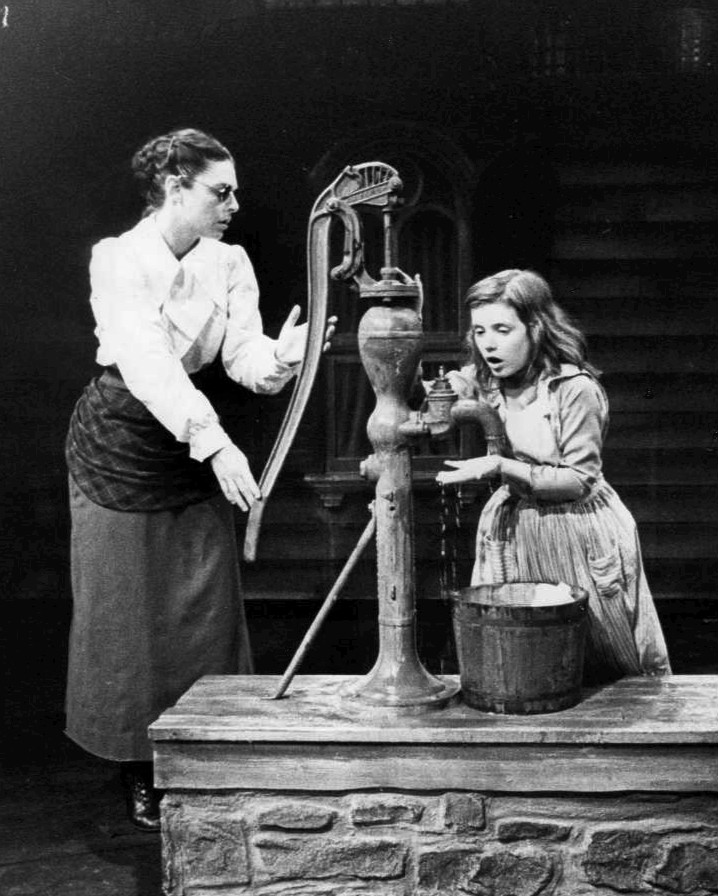
  • The Miracle Worker

Strengthening Literacy through Play Reading

Most of these scripts can be purchased through one of the various script publishers.  If you don’t know where to start, try searching the nae of the script, such as “The Giver, the play version.”

If that gets you nowhere, you can try findaplay.com  This site used to be my favorite, but I’ve noticed not every script is listed there anymore.

Your students may find on-line versions to read, especially of the classics (our Town, The Crucible, Raisin in the Sun, The Doll’s House, etc.)  or check out your school or public library.

Sometimes you’ll find them in anthologies, especially if they were Tony Award Winners.  I believe this list includes only Tony Award winners.

I have a unit (two actually) which can help you teach about play analysis.  It is:  Play Reading and Analysis (PDF) 

and Play Reading and Analysis Google Classroom

Packed with questions and a rubric it contains:

  • Letter to Teacher
  • Project Assignment–What is Expected in the Assignment
  • Play Analysis Questions–as a Producer, Director and Designer
  • Play Titles–Vetted and Compiled from Drama Teachers Around the World
  • Rubric (FULLY EDITABLE)
  • Exit Slip prompts for 5 days–Questions are Provided for Each Day
  • Source Page

I hope you’ll check it out and use it.  It’s very different.


Or, if you’d like to get a heck of a deal, look into this bundle:  Drama Units and Lessons for High School Students

Until next time.

Deborah Baldwin, author

Contact me at dhcbaldwin@gmail.com or DeborahBaldwin.net

Share this:

  • Click to share on Tumblr (Opens in new window) Tumblr
  • More
  • Click to share on X (Opens in new window) X
  • Click to share on Facebook (Opens in new window) Facebook
  • Click to share on Pinterest (Opens in new window) Pinterest
  • Click to share on LinkedIn (Opens in new window) LinkedIn
  • Click to email a link to a friend (Opens in new window) Email
  • Click to share on Reddit (Opens in new window) Reddit
  • Click to share on Pocket (Opens in new window) Pocket
  • Click to share on Telegram (Opens in new window) Telegram
  • Click to share on WhatsApp (Opens in new window) WhatsApp

Like this:

Like Loading...

Filed Under: arts education, drama education, excellence in teaching, play reading, plays, Teacherspayteachers, theater, youth theatre Tagged With: 'tweens, drama education, drama lessons, high school, Middle grade, middle grades, play analysis, play reading, theater education, youth theater

Footer

Follow Us

logo3.png

FOLLOW US

Facebook X-twitter Pinterest Instagram Envelope Rss

Goodreads: read

Malibu Rising
Malibu Rising
by Taylor Jenkins Reid
People We Meet on Vacation
by Emily Henry
The Last Thing He Told Me
by Laura Dave
Faking It
Faking It
by Cora Carmack
Losing It
Losing It
by Cora Carmack

goodreads.com
Copyright © 2024 · Wellness Pro on Genesis Framework · WordPress.com.Log in
 

Loading Comments...
 

    %d