• Skip to primary navigation
  • Skip to main content
  • Skip to footer

Join Me in my new Facebook Group! https://www.facebook.com/groups/417126059784261

Menu
  • Meet Deb – The Heart Behind DramaMommaSpeaks
    • Work with Me! 
    • Photo Gallery of DramaMommaSpeaks
    • Directorial Credits
  • I Give Book Talks! 
    • Book Talk Through Skype
    • Books
  • Freebies!
  • Bumbling Bea
  • Teaching Resume
  • Acting Resume
  • Contact Me
  • Blog
    • Drama Education
    • Arts Education
    • Youth Theatre
    • Middle Grades
    • Musical Theatre
    • Teaching
  • Meet Deb – The Heart Behind DramaMommaSpeaks
    • Work with Me! 
    • Photo Gallery of DramaMommaSpeaks
    • Directorial Credits
  • I Give Book Talks! 
    • Book Talk Through Skype
    • Books
  • Freebies!
  • Bumbling Bea
  • Teaching Resume
  • Acting Resume
  • Contact Me
  • Blog
    • Drama Education
    • Arts Education
    • Youth Theatre
    • Middle Grades
    • Musical Theatre
    • Teaching

plays

8 Middle School Plays That Work Every Time

April 23, 2024 By dhcbaldwin Leave a Comment

8 Middle School plays that work every time

8 Middle School Plays That Work Every Time

Teachers often ask me for  middle school play titles.  So, let’s talk about this today, 8 middle school plays that work every time.  I hope this list will help you as you consider what you’d like to direct in the next school year.  Having directed hundreds of play and musical for over 38 years, I have a vast experience in this subject. It is my goal to provide all the details and links that lead you to purchasing a preview of the scripts. 

Before you begin reading this post, please know that I am a purist.  I don’t do direct cute bunny or zombie storis, if you know what I mean.  Frankly, I think a teacher shouldn’t cater to the emotional level of the students but have high expectations of them.  What could be better than a play based on a classic novel or one with historical significance?

Here are a few I recommend you read and consider. I’ve listed these scripts in no particular order. 

8 Middle School Plays That Work Every Time

8 Middle School Plays That Work Every Time

Anne of Green Gables adapted by Sylvia Ashby.

  • Drama/Comedy
  • 9 M and 7 F plus extras
  • 120 minutes in length

Synopsis: A refreshing, contemporary telling of the classic story. Stern Marilla and her warm-hearted brother Matthew hoped to adopt a boy to work on their farm. But the orphanage sends young, befreckled Anne by mistake, and their lives will never be the same. Her warmth and wit affect everyone around her – even, eventually, the cold Marilla. We follow Anne through her rebellious years, her transformation into a young woman, and her romantic pairing with Gilbert. This play has been charming audiences around the world. Read more about this script here: Ten Reasons Why Everyone Produces Anne of Green Gables

8 Middle School Plays That Work Every Time

Tom Sawyer adapted by Tim Kelly

  • Drama/ Comedy
  • 9 to 11M., 12F  plus extras
  • 90 minutes in length

The child in all of us never gets tired of reliving again and again the antics and adventures of Tom, Huck, Becky Thatcher and all the rest of Mark Twain’s beloved characters. All the familiar characters are here—Huckleberry Finn, Aunt Polly, Becky Thatcher, Widow Douglas, Muff Potter, Cousin Mary and menacing Injun Joe. The action flows well, and scenes fly by in a lively fashion: the classic “fence-painting” scene, the school lessons from strict Mr. Dobbins, the eerie murder of Doc Robinson in the graveyard at midnight, the pirate journey to Jackson’s Island where buried treasure proves very dangerous, Tom’s side-splitting “funeral,” Tom’s courtship of Becky and other scenes from the immortal classic. If you want a study guide for Tom Sawyer which includes a set design lesson, check out: Drama Lesson Tom Sawyer

8 Middle School Plays That Work Every Time

8 Middle School Plays That Work Every Time

Number the Stars  adapted by Douglas Larche

  • Drama
  • 7 M and 7 F, extras
  • 80 minutes in length

During the German occupation of Denmark in World War II, the Nazis closed down Jewish-owned businesses and began to round up the Jews for relocation to concentration camps for the final solution. Danish freedom fighters of all ages risked everything in daring, hurried attempts to rescue the entire Jewish population. In this stirring play, young Annemarie and Kirsti Johansen face soldiers, interrogations, fierce dogs, personal danger, the loss of loved ones and their own fears as they try to help their friend Ellen Rosen escape across the ocean to Sweden and safely.

Courage, faith, ingenuity and even their fledgling acting skills eventually win the day. All the drama, pathos, adventure, terror and humor that have made Number the Stars a national best seller (and winner of the Newberry Award and the American Library Association Book of the Year Award) come to life in this powerful adaptation.

8 Middle School Plays That Work Every Time

Bringing History to Life

If you are looking for a week’s worth of drama class lessons for the first week of school, check out: First Week of School Drama Lessons

Dramamommaspeaks resource for middle school drama teachers

Orphan Train by Aurand Harris

  • Drama/Comedy
  • 6m., 7w., 6 boys, 6 girls, or 11 (1m., 1w., 3 boys, 6 girls) with doubling.
  • 65 minutes in length

The play tells the story of nine orphans on an “orphan train” that left New York City on May 28, 1914. The train travels to Midwestern towns in search of homes, any homes, anywhere for the orphaned and unwanted children. There’s Mary, Evie, spunky Pegeen, Annie and Little Lucy, a quiet one. Other orphans include Frank (who later becomes Frankie, a small girl), Raymond, Lucky and Danny the song-and-dance boy. And there are the men and women hoping for children. The lonesome whistle wails as the train chugs between encounters of anxiety, laughter, wistfulness, rejection and acceptance. Eight stories unfold, each a memorable surprise. The Orphan Train is a charming heart-warmer and all we expect from one of legendary playwrights for children, Aurand Harris. The staging creates a highly theatrical story, moving, amusing and always tellingly human.

8 Middle School Plays That Work Every Time

More Middle School Plays

The Princess Who Became King 

  • Drama
  • 6w, 14m, 5 any gender (youth)
  • 90 minutes in length

From the author of the very popular Anne of Green Gables. Freely adapted from an Indian tale, this spritely comedy serves up a blend of love, adventure and intrigue. On the eve of their wedding, Ravi and Parijata flee from their homes because their fathers are feuding — due to the schemes of an ambitious Guru. Parijata’s father is the terrible tempered Raja; Ravi’s father is the foolishly superstitious Sultan. On a dangerous forest journey, the Princess loses her amazing performing monkey, Zmarti, and is kidnapped by Gumba, a cloddish thief. After numerous chases and mistaken identities, the play ends in happy reunion and reconciliation and a surprise coronation! This play can be produced with colorful, elaborate scenery, or with almost no scenery at all.

8 Middle School Plays That Work Every Time


Story Theater stories from Grimm Brothers and Aesop adapted by Paul Sills.

  • Drama/Comedy
  • When I direct this play, I split up the stories and used as many students as I needed for each one.
  • 90 minutes in length

Mr. Sills started in New Haven and wound up on Broadway with this group of famous fables from the Grimm Brothers and Aesop. Here you will meet again Henny Penny, the Golden Goose, Venus and the Cat, the Fisherman and His Wife, the Robber Baron, the Bremen Towson Musicians, and other favorites. The fables require talented actors with expressive bodies. And make no mistakes about the quality: this is top-drawer adult theatre.

8 Middle School Plays That Work Every Time

8 Middle School Plays That Work Every Time

The Little Princess adapted by June Walker Rogers

  • Drama
  • 6m 13F
  • 90 minutes in length

Sara Crewe is one of the most beloved fictional heroines, and June Walker Rogers has brought her to life in this funny, sad, wonderfully imaginative adaptation. Audiences will identify with Sara as she begins her adventures in “Miss Minchin’s Select Seminary for Young Ladies”; laugh with her as she brings happiness to others; weep with her as her fortune changes from rich girl to poor orphan; and rejoice with her when strange events bring still another reversal of her destiny. This is a lovely play!

8 Middle School Plays That Work Every Time

The Emperor’s New Clothes

  • Comedy
  • 11 actors, flexible (many of the roles can be played by men or women).
  • 50 minutes

A bright, crisp, well-tailored dramatization of the Hans Christian Andersen tale. Snip and Tuck, two swindlers posing as tailors, weave a jolly trick on Emperor Velvet, who is willing to sacrifice his castle, friends—even his Empress Velveteen and their children, Prince Terry Cloth and Princess Polly Ester—to buy the most luxurious new clothes available. As you might expect, the “tailors” pull the wool over everybody’s eyes until a homespun boy has the courage to speak the unadorned truth, and all the fools are uncovered at last—and the swindlers are turned over to Shroud, keeper of the (shh-whisper) dungeon. The cleverly patterned characters and silky smooth plot will keep your audiences in stitches. Sharon A. Cole brought the characters to life with strong but humorous personalities that your cast members will love playing. Every role is a gem.

8 Middle School Plays That Work Every Time

The Bridge to Terabithia Adapted by author, Katherine Patterson

  • Drama
  • 3 Male 6 Female
  • 90 minutes in length

This powerful adaptation, supported by a lyrical score, focuses the humor, warmth and emotional intensity of Katherine Paterson’s Newbery Award winning novel.

Jesse, alienated from the pragmatism of his family and rural Virginia culture, draws and dreams of becoming something special. Then the new girl, Leslie, who just moved in from the city and the ultimate outsider, opens a world of imagination, art and literature for him

Together they create Terabithia, a fantasy kingdom where they are safe from those who don’t understand them. Their friendship grows as Jesse’s world expands. However, when tragedy strikes, the strength gained in Terabithia takes Jesse forward on his own and lets him share the magic of his dreams

Lastly, I wanted to include one of my favorites to direct around Halloween.  It’s just fun!

8 Middle School Plays That Work Every Time

It’s a Howl! by Tim Kelly

  • Comedy
  • 8 M and 14W
  • 90 minutes in length

Teenager Jane Hastings inherits remote and creepy Wolfbane Abbey. It’s a combination school and clinic for students who have trouble “adjusting.” No wonder – they’re werewolves! To begin with, the doctor who runs the Abbey decides Jane must be driven out of her mind so he can be trustee. This isn’t as easy as it sounds – even though the place is filled with more horrors than a wax museum. With two friends, Jane does her best to sort out the Abbey’s problem and “curse.” The characters are great fun to play in this fast-paced spoof, including bewildered police, a werewolf hunter, weird students, a gypsy who spends most of her time in a scary laboratory, and a reporter from a scandal magazine. And that’s just for openers…don’t forget the vampire. Not surprisingly, laughs collide with screams and the ending has plenty of bite.

Looking for a few other plays that might be successful with your students? Check out: The Ten Reasons Everyone Produces The Best Christmas Pageant Ever

Looking for bundles of drama lessons for middle school?  You know I’ve got you covered. Bundle Volume 3 Middle School Drama Units

Whew!  That’s quite a list.  Have you directed any of these plays?  I’d love to hear about your experiences. Email me at DhcBaldwin@gmail.com

Click here:  We’re Live! Radio Theater #101

Woman behind DramaMommaSpeaks

Share this:

  • Click to share on Tumblr (Opens in new window) Tumblr
  • More
  • Click to share on X (Opens in new window) X
  • Click to share on Facebook (Opens in new window) Facebook
  • Click to share on Pinterest (Opens in new window) Pinterest
  • Click to share on LinkedIn (Opens in new window) LinkedIn
  • Click to email a link to a friend (Opens in new window) Email
  • Click to share on Reddit (Opens in new window) Reddit
  • Click to share on Pocket (Opens in new window) Pocket
  • Click to share on Telegram (Opens in new window) Telegram
  • Click to share on WhatsApp (Opens in new window) WhatsApp

Like this:

Like Loading...

Filed Under: arts education, community theater, community theatre, drama education, drama integration, Education, gifted and talented, middle grades, plays, Teacherspayteachers, theater, theatre, youth theatre Tagged With: 'tweens, acting, Anne of Green Gables, books adapted into plays, Bridge to Terabithia, Middle school, plays, The Little Princess, Tom Sawyer

Play Production for Newbie Theater Teachers: Expectations Versus Reality

June 22, 2022 By dhcbaldwin Leave a Comment

Play Production for Newbie Theater Teachers: Expectations Versus Reality

Play Production for Newbie Theater Teachers: Expectations Versus Reality

Play Production for Newbie Theater Teachers: Expectations Versus Reality

Congratulations!  You’ve been hired to teach theater and direct several productions a year. You probably have the class curriculum nailed down or you are in the midst of it.  However, you realize that although you have some experience on stage as a performer, you may need some help with other facets of a production.  This post should help–Play Production for Newbie Theater Teachers: Expectations Versus Reality

When I majored in theater at Stephens College about a 100 years ago, although I was mostly interested in performing we were expected to work backstage for the first semester.  I still think that’s an excellent idea. Some students who began as performance majors find they are more suited to stage management, costume or set design for instance. Plus, an actor needs to understand what goes into mounting a production.

Too many people get out there and think they are going to end up on the Broadway stage after their first audition. Many give up too quickly, but perhaps if they’d found another way to be involved with theater they would have stayed with it.

I love theater so much, I didn’t care if all I ever did was sweep the stage–it was that important to me.  If you want to know how theater saved my life, go to How Theatre Saved My Life

Newbie Theater Teacher Expectations

Play Production for Newbie Theater Teachers: Expectations Versus Reality

It’s only natural to think that when you enter your first teaching position in your career, everything is provided for your classroom and stage.  You may have come from a high school or certainly college which fully supported the theater arts department.  That’s understandable and certainly the way it should be.

Some high schools even have technical directors who oversee the technical aspects of productions and teach the technical theater classes.  That’s terrific!

You expect to have a lot of materials and resources all ready organized–set pieces, costumes, makeup, storage space, etc.  If the school and their theater department has been in existence for several years, you should expect to take what was left from the previous teacher and grow from there.

Did you know I have the secret to boosting student engagement?  My new book, “We’re Live! Radio Theater #101” explains my journey to implementing this unique tool in the classroom. Check it out here


The Reality

Play Production for Newbie Theater Teachers: Expectations Versus Reality

Here is the reality– In many school systems, the theater department and arts in general are looked upon as unimportant. (Because the general public does not understand what it takes to teach theater much less produce a play or musical.) Generally, the arts play second fiddle to sports. It’s not fair and not right but it happens all. the.time

If you find a school, which is not a performing arts school, who supports the arts you are lucky to teach there.

I can’t even count how many times people have said, “This school doesn’t have a budget for me!  They don’t have materials or resources for mounting a production. What do I do?”

Tip:  One question you need to ask when you interview for any teaching position should be about the budget for your classes and/or productions.  If the administrator doesn’t know the budget, this is a red flag. It doesn’t mean you don’t have a budget, but this is easy to ascertain for them and they should be willing to divulge it.

Tip:  When you interview, ask to see the stage and check out backstage as well. See if they have any costumes, props or set pieces.  Do they have stage lights, light trees and amplification equipment? Does anyone else use the stage other than the theater department?  Who and how much time do they use it?

Tip:  Find out if there is a parent booster club for the arts. They are invaluable to your success at this particular school. They can help you in many ways–fundraising, building sets and sewing costumes, advertising and box office.

Play Production for Newbie Theater Teachers: Expectations Versus Reality

Play Production for Newbie Theater Teachers: Expectations Versus Reality

If the school doesn’t have a production budget, the first thing you will need to do is raise money to pay the expenses of the production.  These expenses can range anywhere from $500 to (gulp) $10,000 a piece.  Consider ticket prices and talk with other teachers in the district to see what they charge.  Check out my fundraising suggestions here: Turn Your Theater Department Fundraising Into A High Performing Machine

If your set inventory doesn’t have much to offer, then you may need to build flats. There are many ways to do so.  I’d check out this video for instruction on building a Hollywood flat. Or you can build a muslin flat.

I’d suggest watching the Cal State A & L videos on youtube.com  They teach just about everything you’d need to know in a clear and concise method.

If you need help with costume design, check out my post: Critical Steps in Producing a Play or Musical: Costumes

Play Production for Newbie Theater Teachers: Expectations Versus Reality

One of my lesser strengths is light design. I know what I want, but I don’t know how to make it happen.  I defer to my husband about light design because he’s designed for me for years. (See the photo above)  In your case, I’d check Cal State for help there.

Did you know I have the secret to boosting student engagement?  My new book, “We’re Live! Radio Theater #101” explains my journey to implementing this unique tool in the classroom. Check it out here

My Most Important Advice

Play Production for Newbie Theater Teachers: Expectations Versus Reality

Many directors of school productions think they have to produce their shows having the quality of a Broadway production.  Not only is this unreasonable to expect of yourself, but not necessary.  If you do a good job and balance the production so that everything is of equal quality (your show is imbalanced if the only set piece which was completed for your set is the staircase you spent all month building for your play), then you can rest knowing you did your best under the circumstances.

You should not be expected to do more with less.  Just do the best you can understand the circumstances. You shouldn’t spend all weekend for several months working on one production. You shouldn’t be doing all the work yourself. Don’t forget that without YOU, none of the magic happens and the students need YOU the most. 

What is most important is what your students learn from the experience, right?

Here are a few blog posts that can answer some questions or help you:

Critical Steps in Producing a Play or Musical: Stage Makeup 

Critical Steps in Producing a Play or Musical: Costumes


My Advice for FREE

Play Production for Newbie Theater Teachers: Expectations Versus Reality

I am willing to advise you for free.  You can find me many places– on instagram @dramamommaspeaks, Facebook @dramamommaspeaks or email me at DhcBaldwin@gmail.com.  I have been where you are now.  Luckily, you have someone like me to advise you.

No one learns much of anything completely by themselves.  A good teacher asks for advice and help.  You will be a better teacher for it, I promise!

If you’ve had any experiences you’d like to share, please hit reply and share them with me.  I’d love to hear from you.

You can contact me at DhcBaldwin@gmail.com

Deborah Baldwin, Dramamommaspeaks


Share this:

  • Click to share on Tumblr (Opens in new window) Tumblr
  • More
  • Click to share on X (Opens in new window) X
  • Click to share on Facebook (Opens in new window) Facebook
  • Click to share on Pinterest (Opens in new window) Pinterest
  • Click to share on LinkedIn (Opens in new window) LinkedIn
  • Click to email a link to a friend (Opens in new window) Email
  • Click to share on Reddit (Opens in new window) Reddit
  • Click to share on Pocket (Opens in new window) Pocket
  • Click to share on Telegram (Opens in new window) Telegram
  • Click to share on WhatsApp (Opens in new window) WhatsApp

Like this:

Like Loading...

Filed Under: Arts, arts education, drama education, Education, High School, Producing plays and musicals, Production Questions, Stephens College, Teaching, theater, theatre, youth theatre Tagged With: musicals, new teacher, new teacher help, newbie teacher, play production, plays, producing a musical

The Reasons We Need Girls to Be Heroes in Stories

March 17, 2021 By dhcbaldwin 3 Comments

The Reasons We Need Girls to Be Heroes in Stories

My husband and I watched Mulan last night.  Wow! I especially enjoyed the terrific plot twists in the film. And those costumes! It made me think of the reasons we need girls to be heroes in stories.

So, to the Disney production company —

  • Thank you for not having a passionate kiss between Mulan and Chen Honghui, the romantic lead (sort of).  It wasn’t needed. It was far more interesting to think they became friends.
  • Thank you for demonstrating a female can be just as fearless as a male.
  • Thank you for allowing her to be her own person.
  • Thank you for giving Mulan a persona so large it was difficult for her to hide it.

The Reasons We Need Girls to Be Heroes in Stories

Women’s History Month

in this day and age, especially during March the designated Women’s History Month, it only seems appropriate to celebrate women who have been heroes.

Everywhere around us (at least at present), there are little video snippets about women in history. This is terrific.

I believe what we need now more than ever is more stories like Mulan. The reasons we need girls to be heroes in stories is because it is difficult for them to relate to a male’s story.  Our young daughters and nieces need role models near their age even if they are imaginary. Although I think we are more aware of the pressure put on our young women, it has not faded away.

Getting Lost in Social Media

Trust me, it’s very easy for our girls to get lost in social media and social pressure to conform.  What kind of messages are they hearing–one is to have beautiful  long luxurious hair.  What about young girls climbing a mountain and covered in bumps and bruises?  We don’t see those so much, but we want our daughters to not only have choices but good ones which will benefit their lives not just their face.

Of course, girls need to learn about women who have made scientific discoveries, blazed frontiers, etc.  They are inspiring to study, however when you are young it is difficult to admire someone as old as your grandmother or auntie. We need more stories whether fiction or nonfiction about young women or girls.

The Reasons We Need Girls to Be Heroes in Stories

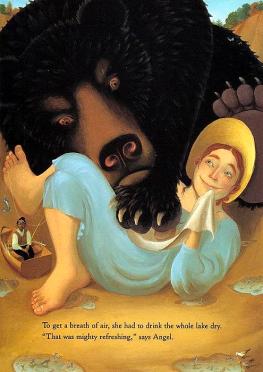
There are many folk tales with girls as the heroine. I’d begin with a folk tale such as Swamp Angel.  Swamp Angel is a tall tale about a girl  (who got her name from saving passengers of a wagon train that “got mired in Dejection Swamp”) who competes against the Tennessee men in trying to kill Thundering Tarnation, a huge bear who ate all of the settlers’ food. It’s funny and worth dramatizing.

Molly Whuppie

Or how about Molly Whuppie?  Molly is a female trickster, an underdog who outsmarts her adversary, the giant. She saves her two sisters who she protects from the giant.  The English folk tale describes how she feels the sad abandonment by her parents and becomes resilient, willing to take on and complete the three quests set by the king.

For example, this is Mary Anderson, a rising star in the British theater.  No one has heard much about her, yet her story is fascinating and rather tragic as well.

The Reasons We Need Girls to Be Heroes in Stories 

Young Women in the Arts

Another route would be to make films about young women doing amazing things such as Amanda Gorman, the poet laureate, is more of what we need. As most of us are aware, Amanda took the world by storm with her poem for the presidential inauguration of Joe Biden.

Who else is there?  Oh, my gosh—plenty!

I have to admit it has been tough to find women under the age of thirty years who are being celebrated like Amanda.  I know they are out there, however.

Young Arts Foundation

Upon researching this blog post, I found the Young Arts Foundation.  I’m embarassed to say I’ve never heard of it.

Their mission: National Young Arts Foundation  identifies the most accomplished young artists in the visual, literary and performing arts, and provides them with creative and professional development opportunities throughout their careers.

I was pleased to see Viola Davis and Camille A. Brown are alumni of the program.  Here is a blog post about studying theater artists (Viola and Camille are included) which might come in handy for you:  Should Students Read Biographies?

The National Young Arts Foundation has an entire program whose express purpose is nurturing young artists.

Now this is what I’m talking about!

DramaMommaSpeaks Play and Readers Theater Scripts

The Reasons We Need Girls to Be Heroes in Stories  is because our girls need our support however we can provide it.

As a teacher I was always on the lookout for young women who demonstrated talent in the arts.  Now that I’m retired, I miss the opportunities to nurture their talents.

I can nurture young girls in the arts, however.

I’ve adapted several multicultural folk tales into plays and readers theater scripts.  You can find them here: Dramamommaspeaks

In the meantime, I’d love to share with you about them.

Li Chi Slays the Serpent

Li Chi Slays the Serpent appears like many folk tales of a different time, namely several thousand years ago.  What I especially enjoy about it is the fearless heroine.  Li Chi takes it upon herself to kill the serpent who descends upon her village every few years to snatch up a young girl to devour.  She disobeys her parents after they inform her she is not permitted to go fight the serpent and sneaks out to the mountains where the serpent lives.  Using her wits and expert planning, she lures the serpent out with food and ultimately kills him.

The Little Girl and the Winter Whirlwind

This folk tale from Bulgaria features a female as the hero.  (Oh, I know there is a female version of heroine, but I’m kinda partial to “hero.”)

The story reminds me a bit of Li Chi. A wicked Winter Witch decides to stop Spring from coming on time and make Winter the only season on Earth. She hides the Sun behind dark clouds and covered the Earth with heavy snow.

One morning the people from a small mountain village woke up and found their houses burried under the snow up to the roofs. They started digging tunnels from their own to the neighboring houses, and gathered in small groups to decide what they could do.

They finally decided that the best thing to do is to send someone on the highest mountain peak, where the good wizard Father Frost lived in his palace of ice and ask him for help. The Little Girl volunteers to go because she has very little to hold her back.  She believes her warm heart and love for everyone will melt the snow and bring spring.  It’s another dramatic story worth telling and performing.

The Magic Lake

The Magic Lake is an Inca legend about a little girl (hmmmm, seems to be a theme here) who leaves her home to travel to the Magic Lake to bring back magical water for the prince who is sick and dying.  On her journey, she travels with her trusted llama and two maccaw birds who protect her.  She outwits a giant rattlesnake, a huge red scorpion and swarm of ferocious army ants and finds the magic water just in time.  Exciting?  You bet.

If you’d like more information about this and other stories with girls as the hero, check out my store  Dramamommaspeaks 

or Distance Learning with Reader’s Theater Scripts.

Gotta go–I just found two more folk tales that I simply must dramatize.  I can’t wait to begin!

What stories do you appreciate?  I’d love to hear about them.  Contact me at DhcBaldwin@gmail.com or DeborahBaldwin.net

Deborah Baldwin of DramaMommaSpeaks


Share this:

  • Click to share on Tumblr (Opens in new window) Tumblr
  • More
  • Click to share on X (Opens in new window) X
  • Click to share on Facebook (Opens in new window) Facebook
  • Click to share on Pinterest (Opens in new window) Pinterest
  • Click to share on LinkedIn (Opens in new window) LinkedIn
  • Click to email a link to a friend (Opens in new window) Email
  • Click to share on Reddit (Opens in new window) Reddit
  • Click to share on Pocket (Opens in new window) Pocket
  • Click to share on Telegram (Opens in new window) Telegram
  • Click to share on WhatsApp (Opens in new window) WhatsApp

Like this:

Like Loading...

Filed Under: arts education, arts integration, community theater, creative dramatics, drama education, elementary, middle grades, Teacherspayteachers, theater, youth theatre Tagged With: British Theater, folk tales about girls, girl heroes, Girl Scouts, Mary Anderson, Molly Whuppie, plays, reader's theater, Swamp Angel, women in history, women super heroes, womens history month

Critical Steps in Selecting a Play or Musical: Budget & Royalties

August 5, 2016 By dhcbaldwin 6 Comments

599251_10151928154440331_863385914_n[1]

Willy Wonka, Jr.  2010

Let’s discuss the critical steps in selecting a play or musical:  budget & royalties.  Sometimes I meet with directors of future productions who are excited and apprehensive at the same time.   Usually, they are certain in their decision of choice of show or are completely overwhelmed by the many selections in which they have to choose.  I thought I’d write a series of blog entries concerning this.This is the first of many.

Number One: Director’s Concept

You need a director’s concept.  A director’s concept is the message that the director wants to convey to the audience.  If you are directing “The Miracle Worker”, you will probably want a natural, historically accurate concept. If I’m directing a historical piece, I select costumes, props and have a set designed to demonstrate it. But what else is important to you?  Helen’s viewpoint?  How can you  present that to an audience?  I’d suggest to you to create a concept collage pertaining to your concept.  It’s really easy to do, fun and will help you in every facet of the production.  Get out a large piece of paper or posterboard, begin researching on the internet (which is the easiest way to research for this), find photos of everything that inspired you and your director concept.

Number Two:  Budget

What is the budget? Before a company can even get started, the budget must be considered. There is nothing worse than getting yourself caught in a snare of “Well, we have to buy it (or rent, borrow or steal it) because the script says so.”  Proper preplanning can help a company to avoid this dilemna. To me, the budget controls everything–where you can afford that really neat backdrop you want to rent for , or the authentic looking chain male for “Camelot”, puppets for   Lion King   and so on and so on.

Some amateur companies set a budget, but never look at it again.  Some have producers who guard the budget like a hawk.  Some others leave everything up to the director (as if they don’t have enough to do all ready). Make sure you know how the money is overseen.  You’d hate to find out that the fog machine you had rented can’t be used for the woods scenes in “Into the Woods” after you had enthusiastically worked it into the show.

And for heaven’s sake, read the script a couple of times to make sure there aren’t any surprises that you forgot about.  But where do you find the publishing companies’ names?  There is a great source, Findaplay.com  that can help you.  You can always search the web for the company, but if you want to produce a version of Tom Sawyer, for example, there are several companies that offer it.  Findaplay.com will list all of them and if they don’t, then go to the web and look around.

Several times I have wanted to produce a play version of some story.  One was Holes and another was The Stinky Cheese Man and Other Fairly Stupid Tales.  At the time, there were no publishers with rights to the stories.  It took a bit of searching, but I found the author of Holes which led me to the playwright of Holes.  I wrote to the playwright and asked if my school could produce his play and he agreed! Talk about fortuitous!  I did the same with Stinky Cheese Man.  I found the author, who sent me to the playwright who allowed the youth theatre company I was working with to produce the musical version.  Pay dirt!  So, if you are interested in a particular book and want to produce it as a play or musical, look around the internet.  You may find it in this manner.

But in no uncertain terms (please hear this loud and clear) you CAN NOT take someone else’s material and dramatize it for your own use.  This is a HUGE copyright infringement and just tacky.

https://readersfavorite.com/annual-book-award-contest.htm?affiliateID=1555

img_0183

Number Three:  Royalties

Personally, I think it’s important to know the cost of the royalties for your chosen production before even choosing it.  Usually, plays are no problem.  But musicals?  Well, that’s another challenge all together! Any time I hear about a company who is producing a fairly new show straight off of Broadway, I always think about the royalties.  The cost of royalties can stop a company in their tracks.  Musicals require a hefty sum of money to produce, not to mention the rental of scripts and librettos.  Oh yes, and if you plan to have an orchestra, you need to figure in the cost of their music to rent as well. (And paying your orchestra players, too.)

Also, you may need to pay the royalties to the publisher ahead of time.  It all depends upon the contract you sign, so read it overcarefully.

When you peruse a copy of a musical, you can ask the publishing company for a general royalty cost.  You’ll need to give them some information that’s necessary to them ( size of theatre, ticket prices, length of run, etc.)

So, there you have it!  There are the critical steps in selecting a play or musical:  budget & royalties.

If all of these decisions sound daunting, keep in mind that it is just part of the journey to direct or produce a show.  I promise you, once an audience sits down in the theatre and the house darkens, you will forget all about this stuff.  Because that’s all it is, stuff…..

Next look at my post on casting a production.

Contact me at Dhcbaldwin@gmail.com or BumblingBea.com

Share this:

  • Click to share on Tumblr (Opens in new window) Tumblr
  • More
  • Click to share on X (Opens in new window) X
  • Click to share on Facebook (Opens in new window) Facebook
  • Click to share on Pinterest (Opens in new window) Pinterest
  • Click to share on LinkedIn (Opens in new window) LinkedIn
  • Click to email a link to a friend (Opens in new window) Email
  • Click to share on Reddit (Opens in new window) Reddit
  • Click to share on Pocket (Opens in new window) Pocket
  • Click to share on Telegram (Opens in new window) Telegram
  • Click to share on WhatsApp (Opens in new window) WhatsApp

Like this:

Like Loading...

Filed Under: drama education, Musical Theatre, Producing plays and musicals, Production Questions Tagged With: ', beginner directors, budgets for theatrical productions, Bumbling Bea, deborah-baldwin, director's concept, Findplay.com, first time directors, musicals, plays

Footer

Follow Us

logo3.png

FOLLOW US

Facebook X-twitter Pinterest Instagram Envelope Rss

Goodreads: read

Malibu Rising
Malibu Rising
by Taylor Jenkins Reid
People We Meet on Vacation
by Emily Henry
The Last Thing He Told Me
by Laura Dave
Faking It
Faking It
by Cora Carmack
Losing It
Losing It
by Cora Carmack

goodreads.com
Copyright © 2024 · Wellness Pro on Genesis Framework · WordPress.com.Log in
 

Loading Comments...
 

    %d