• Skip to primary navigation
  • Skip to main content
  • Skip to footer

Join Me in my new Facebook Group! https://www.facebook.com/groups/417126059784261

Menu
  • Meet Deb – The Heart Behind DramaMommaSpeaks
    • Work with Me! 
    • Photo Gallery of DramaMommaSpeaks
    • Directorial Credits
  • I Give Book Talks! 
    • Book Talk Through Skype
    • Books
  • Freebies!
  • Bumbling Bea
  • Teaching Resume
  • Acting Resume
  • Contact Me
  • Blog
    • Drama Education
    • Arts Education
    • Youth Theatre
    • Middle Grades
    • Musical Theatre
    • Teaching
  • Meet Deb – The Heart Behind DramaMommaSpeaks
    • Work with Me! 
    • Photo Gallery of DramaMommaSpeaks
    • Directorial Credits
  • I Give Book Talks! 
    • Book Talk Through Skype
    • Books
  • Freebies!
  • Bumbling Bea
  • Teaching Resume
  • Acting Resume
  • Contact Me
  • Blog
    • Drama Education
    • Arts Education
    • Youth Theatre
    • Middle Grades
    • Musical Theatre
    • Teaching

acting

Why Theater Education Matters: Developing Key Life Skills

August 8, 2024 By dhcbaldwin Leave a Comment

White drama masks demonstrating Why Theater Education Matters: Developing Key Life Skills

Why Theater Education Matters: Developing Key Life Skills

Why Theater Education Matters: Developing Key Life Skills

Today, I want to blog about why theater education matters:  developing key life skills.  Recently, I read a Facebook post by a theater teacher who was frantic for help.  She taught drama in middle school.  Her sixth grade classes were a reasonable size, but that’s where the good news end.

More Typical Scenario Than You Would Think

Her seventh and eighth grade classes had been mixed up, so she no longer had an intermediate (7th) and experienced class (8th). Get this-when she inquired for the reasons for this cluster, her questions weren’t addressed. Unfortunately, she was informed that she would have to do the best she could. She should sharpen up her classroom management skills.   And if that’s not enough–her classes were 50 to 60 students in number.  What?!?

As I consider this enormous problem for her, I’m struck with a thought.  This is one time that it is more important to teach key life skills to her gigantic and potentially unsafe classes than to actually study theater. My suggestion?  Focus on life skills through her lessons and though they will still pertaining to theater, the students will feel less threatened.

Why Theater Education Matters: Developing Key Life Skills

Theater education is often seen as an extracurricular activity.  Some people consider it a hobby for those interested in acting or the arts. However, the benefits of theater education extend far beyond the stage. Engaging in theater can play a crucial role in developing essential life skills. These are skills which are tantamount to success in one’s personal and professional life. Here’s a closer look at why theater education should be an integral part of every student’s learning experience.

Why Theater Education Matters: Developing Key Life Skills

1. Enhancing Communication Skills

One of the most apparent benefits of theater education is the improvement of communication skills. Through acting, students learn to express themselves clearly and confidently. They practice articulation, projection, and the importance of non-verbal cues. These skills are not only vital for performing on stage but are also crucial in everyday interactions and professional environments.

By memorizing lines from plays or musicals, student absorb a variety of sentences and phrasing.  If they are like me, it carries over into your every day speech. Furthermore, you naturally know how to use a particular phrase or word  without even having to think about it.  You communicate with ease and confidence.  My suggestion:  teach students how to memorize a short paragraph from a play.  

Why Theater Education Matters: Developing Key Life Skills

2. Fostering Teamwork and Collaboration

Theater is inherently a collaborative art form. From rehearsals to performances, students must work closely with their peers, directors, and crew members. This collaboration teaches them how to work effectively in a team. A cast must listen to others’ ideas, and contribute constructively.

I can always tell if students have been directed by a knowledgeable teacher who understands the value of everyone’s talents and abilities.  The entire cast and crew carries about them a sense of ownership.  They help one another and are willing to sacrifice their ego for the sake of the production.   These teamwork skills are highly sought after in almost every career field. My suggestion:  Teach set design, having students work with a buddy.  

Why Theater Education Matters: Developing Key Life Skills

3. Developing Empathy and Emotional Intelligence

By stepping into different characters’ shoes, students gain a deeper understanding of diverse perspectives and emotions. This experience fosters empathy. It allows them to relate better to others’ feelings and experiences. Additionally, theater education helps students develop emotional intelligence by encouraging them to recognize and manage their own emotions, as well as understand and influence the emotions of others.

As we are aware, our students are suffering from bullying not only in the classroom and hallways, but on-line as well.  Students who have portrayed villains or down-trodden characters know what that feels like.  I do not have any proof to expound here. However, my personal experiences with this issue lead me to believe that your arts students are the least likely students to intimidate anyone. Check out this post-–Drama Student, I Recognize You a Mile Away

Arts students are usually immensely clever and generally have differing viewpoints from the study body as a whole.  Consequently, often time they suffer being left out of social circles.  Theater gives them a “home” at school.  My suggestion? Write a monologue speaking as the animal.  (You won’t believe how well this works for students.)

Looking for a bundle of units concerning acting styles?  Check out this one:  Acting Styles of Stanislawski, Adler, Strasberg and Hagen. 

Why Theater Education Matters: Developing Key Life Skills

4. Building Confidence and Self-Esteem

Performing in front of an audience can be a daunting task, but it is also an excellent confidence booster. Theater education provides a safe and supportive environment for students to take risks, make mistakes, and learn from them. Over time, this process builds self-esteem and a sense of accomplishment. Accordingly, confident individuals are more likely to take on leadership roles and tackle challenges head-on.

As adults, we continue to grapple with taking risks in our lives.  Some people are so afraid of risk, they become stagnant and don’t grow. I’ve witnessed this in my extended family and it saddens my heart.  Their spouse, on the other hand, who studied theater and dealt with self esteem issues as a young person continues to challenge herself in her profession.

I know, without a doubt, it is because she learned from being on stage and facing risks, that she knows how to advocate for herself. My suggestion?   Give them a pre-performance and post performance exit slip and ask them to be candid about themselves. 

Why Theater Education Matters: Developing Key Life Skills

5. Encouraging Creativity and Problem-Solving

Theater is a creative endeavor that requires thinking outside the box. For example, whether it’s coming up with an innovative set design or interpreting a script in a unique way, students are constantly challenged to be creative. This creative thinking extends to problem-solving skills, as students must navigate unexpected issues that arise during rehearsals and performances. Check out this blog post if you need reasons to include drama integration in your core classes: How to Excite Students With Drama Integration

Through trial and error, students build their problem-solving skills and learn that making mistakes doesn’t mean failure.  Mistakes signify that the particular issue wasn’t solved or completed. That is all, period. My suggestion?  Teach with  my Famous Theater Artists Growth Mindset Unit. 

Why Theater Education Matters: Developing Key Life Skills

6. Strengthening Academic Performance

Research has shown that students involved in theater tend to perform better academically. Theater education enhances literacy and reading comprehension through script analysis and character study. Also, it improves memory and concentration, which are beneficial across all subjects. Moreover, the discipline and time management skills learned in theater can translate to better study habits and academic success.

In the beginning, novices will try to beat the system and paraphrase their lines.  Hence, they never truly learn them. By the time they are in high school, they’ve convinced themselves that, “I can’t learn lines.” I know this is not true.  Plus, I know what they need is a system that works.

Once I demonstrate to them the various methods for line memorization, they try again.  When they have success using one of those methods, their entire attitude changes. But it still takes self discipline!  If you want more information for line memorization, read Three Ways to Memorize Lines for a Play or Musical

Why Theater Education Matters: Developing Key Life Skills

7. Preparing for Future Careers

While not all students will pursue careers in theater, the skills gained from theater education are transferable to numerous professions. Additionally, theater education equips students with a versatile skill set that can enhance their career prospects and success.

Here are a few careers where having theater skills are useful:

Public Relations Specialist–Skills Used: Communication, presentation, creativity, adaptability.
How Theater Helps: Understanding audience engagement and crafting compelling narratives.

Event Planner–Skills Used: Organization, time management, creativity, problem-solving.
How Theater Helps: Managing events and performances teaches you how to coordinate logistics and handle unexpected issues.

Marketing Professional–Skills Used: Creativity, communication, storytelling, audience analysis.
How Theater Helps: Developing marketing campaigns requires the same creative storytelling skills used in theater.

Educator/Teacher–Skills Used: Communication, presentation, adaptability, creativity.
How Theater Helps: Theater teaches how to engage and hold the attention of an audience, which is essential in the classroom.

Future Careers Utilizing Theater Skills

Human Resources Manager–Skills Used: Communication, conflict resolution, empathy, teamwork.
How Theater Helps: Theater experiences foster a deep understanding of human behavior and group dynamics.

Sales Professional–Skills Used: Persuasion, communication, presentation, relationship building.
How Theater Helps: Performing helps build confidence and the ability to convey messages effectively.

Lawyer–Skills Used: Argumentation, public speaking, critical thinking, research.
How Theater Helps: Theater provides practice in presenting arguments persuasively and thinking on one’s feet.

Psychologist/Counselor– Skills Used: Empathy, communication, analysis, problem-solving.
How Theater Helps: Understanding characters and motivations in theater aids in understanding and helping real people.

Other Career Examples

Journalist–Skills Used: Research, storytelling, communication, adaptability.
How Theater Helps: Writing and interpreting scripts in theater helps journalists craft compelling stories.

Film and Television Production–Skills Used: Creativity, technical skills, teamwork, problem-solving.
How Theater Helps: The technical and creative aspects of theater production are directly applicable to film and television.

Corporate Trainer–Skills Used: Communication, presentation, adaptability, teaching.
How Theater Helps: Theater training provides techniques for engaging an audience and conveying information effectively.

Nonprofit Manager–Skills Used: Communication, organization, fundraising, storytelling.
How Theater Helps: Effective storytelling and presentation skills are crucial for fundraising and advocacy work.

Entrepreneur–Skills Used: Creativity, risk-taking, problem-solving, adaptability.
How Theater Helps: The improvisational nature of theater helps entrepreneurs navigate the uncertainties of starting and running a business.

See?  The list for skills learned in a theater class is immense.  If you are a theater teacher and must defend the reasons for keeping your class, quote from this list! 

Empowering Students with Creativity, Confidence, and Collaboration

Theater education is much more than learning to act; it’s a comprehensive learning experience that develops critical life skills. By incorporating theater into the curriculum, educators can provide students with invaluable tools. Most importantly, these tools that will benefit them throughout their lives.

Whether a student dreams of a career on Broadway or in a corporate office, the lessons learned in theater education will help them shine in any role they choose to play. Looking for a teacher guidebook to teach you how to boost student engagement?  Pick up We’re Live! Radio Theater #101 on Amazon.com

Plus, I’m a featured author in OneClassroomOver magazine this month.  Check it out here.

Have you ever defended the need for your class or department? I’d love to learn about it.  Contact me at DhcBaldwin@gmail.com

Woman behind DramaMommaSpeaks


Share this:

  • Share on Tumblr (Opens in new window) Tumblr
  • More
  • Share on X (Opens in new window) X
  • Share on Facebook (Opens in new window) Facebook
  • Share on Pinterest (Opens in new window) Pinterest
  • Share on LinkedIn (Opens in new window) LinkedIn
  • Email a link to a friend (Opens in new window) Email
  • Share on Reddit (Opens in new window) Reddit
  • Share on Telegram (Opens in new window) Telegram
  • Share on WhatsApp (Opens in new window) WhatsApp

Like this:

Like Loading...

Filed Under: acting, Arts, arts education, drama education, Education, Education, excellence in teaching, High School, middle grades, Teaching, theater, theatre, youth theatre Tagged With: careers using theater skills, entrepreneus, film and television production, journalist, marketing professional, psychologist, salesman, Teacher, theater skills

Jimmy Awards: Honoring High School Musical Theatre Talent

June 26, 2024 By dhcbaldwin Leave a Comment

Jimmy Awards: Honoring High School Musical Theatre Talent

When I was a high school student I discovered my love for musical theater.   Several years later and a whole lot of training, I gained the confidence to audition for the musicals. While in college, I worked my way to portraying lead roles in college. However, there was no such thing as the Jimmy Awards.  I would have jumped at the chance to audition for this amazing award!  Today, my blog post is, Jimmy Awards: Celebrating High School Musical Theatre Talent.

If you’re a fan of musical theatre, you might already know about the Tony Awards. However, like me you may have never heard of the Jimmy Awards. It is officially known as the National High School Musical Theatre Awards (NHSMTA).  The Jimmy Awards shine a spotlight on the best and brightest high school musical theatre talent in the United States.

Named in honor of Broadway impresario James M. Nederlander, this annual event is a testament to the dedication, passion, and talent of young performers across the country. Check out this blog post if you are interested in the history of musical theater: Showtime Chronicles: History of Musical Theater Unveiled.

Jimmy Awards: Honoring High School Musical Theatre Talent

Honoring High School Musical Theatre Talent

Although I’d heard of Mr. Nederlander, I didn’t actually know why he was important., often referred to as Jimmy Nederlander, was a prominent American theatre owner and producer. Born on March 31, 1922, and passing away on July 25, 2016, Nederlander was a key figure in the Broadway community. Serving as the head of the Nederlander Organization, he was one of the most influential theatre operators and producers in the world. He is credited with overseeing a vast network of theatres, including nine Broadway venues. Wow!

Under his leadership, the Nederlander Organization produced numerous successful Broadway shows, including hits like Rent, Wicked, and The Lion King. His contributions to the theatre industry were immense, and he played a significant role in shaping modern Broadway.

Jimmy Awards: Honoring High School Musical Theatre Talent

The History of the Jimmy Awards

The Jimmy Awards were established in 2009 to recognize and celebrate outstanding achievement in high school musical theatre. Students from regional theatre awards programs participate in a week-long intensive in New York City, where they receive training from industry professionals and compete for scholarships and awards. The experience culminates in a dazzling showcase at a Broadway theatre, where the top performers are selected as finalists and given the chance to perform solos and group numbers. Two main awards are given each year, Best Performance by an Actress and Best Performance by an Actor.

Jimmy Awards: Honoring High School Musical Theatre Talent

The Journey to the Jimmy Awards

To make it to the Jimmy Awards, students must first excel in their local or regional theatre competitions. These regional awards programs, known as “Theatre Awards,” exist in various cities and states across the country. Winners of these regional programs then advance to the national level—the Jimmy Awards. The program impacts over 140,000 students annually who participate in high school musical theatre competitions sponsored by over forty professional theatres throughout the US. Amazing! 

The Jimmy Award nominees travel to New York City for a week in June.  I’m certain that  the opportunity to travel to NYC is exciting enough for the young people.  The week culminates with a live show in which the winners are determined. During the week, the nominees rehearse their performances for the award show and receive coaching from industry professionals.

The Jimmy Awards Show

The show begins with an opening number (typically a “mega-mix of contemporary Broadway hits”) involving all nominees, followed by a series of “showcase medleys”, in which several nominees appear in costume in the role they performed in their high school’s musical, each in turn singing a short solo, while the remaining performers act as backup singers and dancers. These medleys have gained a cult following, with fans appreciating the crossover between disparate popular musicals.Since 2016, due to an increasing number of nominees and time limitations, only a portion of nominees have participated in showcase medleys, with the remainder instead performing in a group number. 

Judging at the Jimmy Awards

During an intermission, a panel of experts selects about eight finalists. During the show’s second half, the finalists each perform a solo, and the winners are announced. All finalists also receive a $3,000 scholarship toward their future education. In addition to the main awards of Best Performance by an Actress and Best Performance by an Actor, other awards are given out with smaller prizes. In 2023, awards were given for Best Dancer, Rising Star, Best Performance in an Ensemble, and Spirit of the Jimmys.  Additionally, each  of these aforementioned awards include a $2,000 scholarship. 

The week-long program  is rigorous and transformative. Participants attend masterclasses, workshops, and rehearsals led by Broadway professionals. Also, they have the opportunity to meet and learn from peers who share their passion for theatre. As you would expect, they become part of a  a supportive and inspiring community. If you’d like to teach your students about the Tony awards, check out: Drama Class Tony Awards Study and Game 

Eva Noblezda
Eva Noblezda, winner of Jimmy Awards, 2019

The Impact of the Jimmys

The Jimmy Awards make a profound impact on the lives of young performers. Many past participants go on to successful careers in theatre, film, and television. Notable alumni include Eva Noblezada, who starred in Miss Saigon and Hadestown on Broadway, and Andrew Barth Feldman, playing the title role in Dear Evan Hansen.

The exposure and training provided by the Jimmys can open doors to prestigious performing arts colleges and professional opportunities. In addition to the invaluable experience, students also compete for significant scholarships, helping to ease the financial burden of pursuing a career in the arts. If you are looking for an excellent theatre program in a small college, check out my Alma Mater, Stephens College.  

Why the Jimmys Matter

Perhaps this is the best reason for the Jimmy Awards.  They not only recognize and reward talent but also highlight the importance of arts education in schools. With school systems making cuts to the arts almost on a daily basis, this award is hugely important.  Musical theatre programs provide students with a creative outlet.  Additionally, they  teach valuable life skills, and foster a sense of community. The Jimmy awards celebrate the hard work of students, teachers, and schools, encouraging the continued support and development of arts programs nationwide.

Dramamommaspeaks

How to Support the Jimmy Awards

There are several ways to support the Jimmy Awards and the young performers they celebrate. As simple as it sounds, please attend local high school musical productions.  Or you can donate to arts education programs. Or help spread the word about the importance of the arts in schools. Additionally, watching the Jimmy Awards ceremony you can help raise awareness and appreciation for these talented young artists. There are plenty of theater teachers desperate for funds.  

In conclusion, as you can see here, the Jimmy Awards are more than just a competition. They are a celebration of the future of musical theatre. The Jimmy awards play a crucial role in ensuring that the magic of Broadway continues to thrive for generations to come.

This year’s Master of Ceremonies for the evening was Josh Groban, star of the recent revival of Sweeney Todd: the Demon Barber of Fleet Street. Talk about a talent!  If you are interested in teaching your students about Josh Groban, pick up this Dramamommaspeaks resource: Josh Groban Biography Lesson and One Pager Assignment.

Are you and your students familiar with The Jimmy Awards?  I’d love to hear about it. Email me at DhcBaldwin@gmail.com


Share this:

  • Share on Tumblr (Opens in new window) Tumblr
  • More
  • Share on X (Opens in new window) X
  • Share on Facebook (Opens in new window) Facebook
  • Share on Pinterest (Opens in new window) Pinterest
  • Share on LinkedIn (Opens in new window) LinkedIn
  • Email a link to a friend (Opens in new window) Email
  • Share on Reddit (Opens in new window) Reddit
  • Share on Telegram (Opens in new window) Telegram
  • Share on WhatsApp (Opens in new window) WhatsApp

Like this:

Like Loading...

Filed Under: acting, Arts, arts education, Broadway, drama education, Education, Education, High School, music education, Musical Theatre, performing arts, Teacherspayteachers, Tony Awards, youth theatre Tagged With: Broadway, Eva Noblezda, James M. Nederlander, Jimmy Awards, Josh Groban

Superhero Drama: Captivating Classroom Techniques

June 12, 2024 By dhcbaldwin Leave a Comment

 Superhero Drama: Captivating Classroom Techniques

If you are a new drama teacher for middle school, you may find that although the students are excited they have no idea what to expect.  Additionally,  they may be reluctant to participate or even disinterested (how could anyone be disinterested in theater?) because your class could be a pre-elective and everyone takes it.  Or maybe the school counselor plopped them in your class so they get their arts credit completed. I can help you! This post concerns superhero drama: captivating classroom techniques.

This happened to me. Many years ago, when I discovered I had students that fit this aforementioned description, I completely reorganized my lesson plans.  Instead of the traditional lesson you might teach beginners (intro. to theater, breathing exercises, monologues and duets) I  taught with non-threatening and more group exercises. One thing that always worked with them was superheroes.

Superhero Drama: Captivating Classroom Techniques

 Superhero Drama: Captivating Classroom Techniques

Superheroes have always fascinated audiences, capturing the imagination of both young and old. Their tales of courage, conflict, and victory make them perfect tools for engaging students in the drama classroom. Simply put, super heroes are a safe subject with them. Using superhero themes can spark students’ creativity.  In addition it can make learning more relatable, and deepen their understanding of dramatic arts. Here’s how you can leverage superheroes to create an engaging drama classroom experience.

The Magnetic Appeal of Superheroes

Superheroes embody themes like good versus evil, identity, and transformation and everyone understands those themes.  Additionally, they  are rich in dramatic potential. By incorporating these familiar and exciting characters into drama lessons, you can immediately capture students’ attention and make learning more engaging.

 Superhero Drama: Captivating Classroom Techniques

Super Hero Lesson Number One

Start by analyzing popular superheroes. Discuss their backstories, motivations, strengths, and weaknesses. This familiar territory makes character analysis more accessible and exciting for students.  Plus, it  helps them understand the nuances of character development.

The first lesson I teach them is Storytelling with Postcards Super Hero Themed. Students are placed in small groups.  Their challenge is to select five postcard cards at random from a box or hat.  The group creates a story about a super hero integrating the postcards images, words, or themes into the story.  But, the story must be about you as the super hero. Talk about fun! Students enjoy telling the story together–see?  No performing alone.  For more information, check out the lesson here.

Lesson Plan Number Two: Costume Design and Stagecraft

 Superhero Drama: Captivating Classroom Techniques

Designing sets and costumes for superhero-themed performances can enhance the visual appeal of drama and teach students about stagecraft. This hands-on approach can make the learning experience more engaging and memorable. Encouraging students to create their own superheroes taps into their creativity.  It allows them to apply their understanding of character development in a very relaxed manner.  This activity not only engages students but also helps them develop their storytelling abilities. Plus, students can study costume design at the same time. Check out this resource here.

 Superhero Drama: Captivating Classroom Techniques

Lesson Number Three:  Playwriting and the Monologue

Superhero stories are rich with conflict and moral dilemmas, perfect for exploring plot development and thematic elements in drama. Discussing these common superhero conflicts can make complex dramatic concepts more accessible and engaging. Another lesson which they enjoy is writing a monologue as themselves as the super hero. You might think this would be too difficult for your students, but if you give them a framework they will be successful.  Check out this resource here.

 Superhero Drama: Captivating Classroom Techniques

 Lesson Number Four: Encouraging Movement and Tableaux

Superhero scenarios are perfect for practicing movement and tableaux–two crucial components in drama. Tableaux is an easy concept for everyone to understand.  There are many ways to demonstrate it through the use of super heroes–maybe a group shows the moment Super Man protects someone from a monster?  Or Wonder Woman holds back the ocean so that a group of boaters aren’t drowned by it?

Students are familiar with super heroes jumps, falls, lunges and spins.  By studying movement using the super hero theme, students yet again feel comfortable moving around the room as they learn various elements of movement.  These scenarios often involve unexpected situations, requiring quick thinking and adaptability, which keeps students on their toes. Using those lessons to lead into studying tableau, makes for effortless studying of tableaux. Check out this lesson here.

 Superhero Drama: Captivating Classroom Techniques

Lesson Number Five:  Improvisation

Superhero scenarios are perfect for practicing improvisation, a crucial skill in drama. These scenarios often involve unexpected situations and require quick thinking and adaptability, By doing so, this keeps students on their toes. My favorite way to teach improvisation to novices is through a few warm up exercises.   This exercise is titled “My Three Headed Monster” but it would be just as fun if the monster became a three headed super hero.  Pick it up here (page one) and  here (page two) Again, I have found this is always a successful teaching experience because students sit together on the stage. Although they are speaking spontaneously they must work out answers together.  

Reflective Learning

Make sure that after each activity you  encourage students to reflect on their performances.  Process is everything! Discussing what they learned and how they felt embodying their superheroes can deepen their understanding and appreciation of drama. Grab this bundle which can last over five days Super  here.

‘ Superhero Drama: Captivating Classroom Techniques

Super Hero Quotes as Writing Prompts: Lesson Number Six

Using quotes spoken by super heroes for writing prompts is useful in this situation, too. Here are a few I like:

  • “With Great Power, Comes Great Responsibility.” Uncle Ben in Spider Man
  • “Heroes are made by the path they choose, not the powers they are graced with.” Iron Man
  • “You are much stronger than you think you are. Trust me.” Super Man
  • “You don’t need to be a super hero.  You just need to be better than you were yesterday.”
  •  “A true hero isn’t measured by the size of her strength, but by the strength of her heart.” Wonder Woman
  • “The woman who follows the crowd will grow no further than the crowd. The woman who walks alone is likely to find herself in places no one has ever been before.” Super Woman

Using superhero themes in the drama classroom can transform lessons into engaging, imaginative experiences. It is easy to connect dramatic principles to beloved characters. You can make learning more exciting and relatable for students. So, be courageous!  Embrace your inner hero and lead your students on an epic journey through the world of drama, where creativity and engagement soar.

Have you ever taught using a super hero theme to teach concepts? I’d love to hear about it.  Just email me at DhcBaldwin@gmail.com

Woman behind DramaMommaSpeaks

Share this:

  • Share on Tumblr (Opens in new window) Tumblr
  • More
  • Share on X (Opens in new window) X
  • Share on Facebook (Opens in new window) Facebook
  • Share on Pinterest (Opens in new window) Pinterest
  • Share on LinkedIn (Opens in new window) LinkedIn
  • Email a link to a friend (Opens in new window) Email
  • Share on Reddit (Opens in new window) Reddit
  • Share on Telegram (Opens in new window) Telegram
  • Share on WhatsApp (Opens in new window) WhatsApp

Like this:

Like Loading...

Filed Under: acting, arts education, Back to School, creative dramatics, creative movement, drama education, drama integration, Education, elementary, set design, storytelling, Teacherspayteachers, Teaching, teaching strategies, theatre, youth theatre Tagged With: costume design, drama compoents, improvisation, movement, set design, Spider Man, storytelling, super hero, super heroes, super heroes lesson plan, super man, tableau, Wonder Woman

Timeless Triumphs: 8 Unforgettable High School Plays

April 28, 2024 By dhcbaldwin Leave a Comment

A single actor on a stage in a spotlight

It’s May and theater teachers are chatting about high school plays they are thinking of directing in the next school.  Oh, gosh.  I remember those times.  Today let’s discuss timeless triumphs: 8 unforgettable high school plays.

As much as you consider and make predictions concerning your student body (how many males, how many females) for future productions, it’s still a crap shoot.  For instance, students who have always been ardent theater lovers suddenly decide they want to play soccer in the fall and track in the spring.  Sometimes it is difficult to keep a balanced perspective concerning our  students’ choices.  It is my opinion that a teacher must remind themself that primarily our job is to introduce theater to students who may not have ever considered it before. Hopefully those theater loving students will return to participate in the near future. Looking for the Stella Adler Acting Unit? Go here.

Timeless Triumphs: 8 Unforgettable High School Plays

Every high school drama department seeks that perfect play: the one that captivates audiences, challenges actors, and leaves a lasting impression long after the final curtain call. In the realm of high school theater, certain plays have stood the test of time, earning their place as perennial favorites. Let’s explore eight such masterpieces that continue to enchant audiences and inspire young actors around the world.

Timeless Triumphs: 8 Unforgettable High School Plays

1. The Crucible by Arthur Miller:

  • Drama
  • Two hours
  • 10 M, 10 F (plus extras)

Set during the Salem witch trials, The Crucible explores themes of hysteria, suspicion, and the consequences of unchecked power. This play tells the story of a village that becomes embroiled in a witch hunt. The people of Salem live in a constant state of fear as more and more people are accused of witchcraft. It is my belief that The Crucible is a perfect high school play, primarily because it offers many students an opportunity to participate. High school productions of Miller’s masterpiece often resonate deeply with audiences, sparking discussions about morality, justice, and the dangers of groupthink.

2. A Midsummer Night’s Dream by William Shakespeare:

  • Comedy
  • Two hours
  • 20 characters, equally male and female
In one of the most famous of literary love quadrangles, A Midsummer Night’s Dream tells the tale of Hermia, Demetrius, Lysander, and Helena. These four misguided lovers  journey into the woods which lands them in even more trouble. Additionally,  members of the fairy kingdom decide to use them as veritable pawns in their own love games.
Against the backdrop of the wedding of Duke Theseus and Hippolyta, and the fiery battle of wills between the Fairy King and Queen, Oberon and Titania, the four lovers are challenged by magic and trickery to finally work out what love is all about.
Filled with magical enchantment and unforgettable mischievous fairies,  A Midsummer Night’s Dream is an excellent choice for high school students. It’s fun for them to explore the complexities of love and the absurdity of human behavior.

Timeless Triumphs: 8 Unforgettable High School Plays

Credit: Aquinas Academy of Pittsburgh

Timeless Triumphs: 8 Unforgettable High School Plays

3. Our Town by Thornton Wilder:

  • Drama
  • Full-Length Play
  • 7w, 17m

This Pulitzer Prize-winning play offers a poignant exploration of small-town life and the passage of time. Narrated by a stage manager, the production is performed with minimal props and sets.  However, don’t be swayed by its simplicity.  The play depicts the simple daily lives of the Webb and Gibbs families as their children fall in love, marry. The most poignant moment is eventually – in one of the most famous scenes in American theatre – death.

Thornton Wilder’s final word on how he wanted his play performed is an invaluable addition to the American stage and to the libraries of theatre lovers internationally. With its minimalist staging and universal themes, Our Town provides high school students with a profound theatrical experience that resonates with audiences of all ages.

Timeless Triumphs: 8 Unforgettable High School Plays

How about a comedy?

4. The Importance of Being Earnest by Oscar Wilde:

  • Full-length Play
  • Comedy
  • 5m., 4w. (1 extra.)

Wilde’s razor-sharp wit and biting satire take center stage in this delightful comedy of manners. Set in England during the late 19th century, the play follows the lives of two young men, Jack Worthing and Algernon Moncrieff, who adopt fictional identities to escape social obligations. Jack invents a brother named Ernest, while Algernon creates an invalid friend named Bunbury.

Not surprisingly, high school productions of The Importance of Being Earnest allow students to revel in the absurdities of Victorian society while honing their comedic timing and delivery. Note:  This is a costume heavy show, but I still recommend it to directors because it’s worth the extra money to costume the students appropriately.

Dramatic Play, Anyone?

5. Inherit the Wind by Jerome Lawrence and Robert E. Lee:

  • Drama
  • Two Hours
  • 21 men, 6 women, 2 boys, 1 girl, extras Many of the parts can be doubled

Inspired by the Scopes Monkey Trial, Inherit the Wind is a powerful courtroom drama that explores the clash between science and religion, freedom of thought, and the pursuit of truth. This story centers around a Tennessee teacher was tried for teaching the theory of evolution. As you might expect, two persuasive attorneys argue the case in an effort to determine the balance of church and state. High school productions of this play encourage critical thinking and foster discussions about education, censorship, and intellectual freedom.

Timeless Triumphs: 8 Unforgettable High School Plays

6. The Giver adapted by Eric Coble from the novel by Lois Lowry:

  • Drama
  • 4m., 4w., extras as desired or 4m., 2w. with doubling, extras as desired.
  • 90 minutes

Based on Lois Lowry’s dystopian novel, The Giver offers a thought-provoking exploration of a society that suppresses individuality and emotion in pursuit of stability. To begin with, the story follows Jonas, a boy living in a community based on Sameness. During the Ceremony of Twelve, he is selected as the community’s new Receiver of Memory. The old Receiver, who Jonas calls The Giver, transmits generational memories to the young boy by placing his hands on Jonas’s bare back.

High school productions of The Giver allow students to delve into themes of identity, freedom, and the consequences of conformity, sparking important conversations about societal norms and individuality. I directed The Giver for a the Fine Arts Guild of the Rockies community theater in Colorado.  It was sensational having a mixed age cast, but high school students can excel with it as well.  For more information about The Giver, check out: The Reasons I Love The Giver Play

Timeless Triumphs: 8 Unforgettable High School Plays

Historical Plays Worth Producing

7. The Diary of Anne Frank by Frances Goodrich and Albert Hackett:

  • Drama
  • Full Length
    5 men, 5 women (3 extras)

Based on the real-life diary of Anne Frank, this powerful play chronicles the experiences of a Jewish family hiding from the Nazis during World War II. High school productions of  The Diary of Anne Frank offer students the opportunity to explore themes of resilience, hope, and the human spirit in the face of adversity. I directed The Diary of Anne Frank with a community theater.  It was an unforgettable experience for everyone concerned. However, one challenge for us was that the stage was the shape of an octagon. Looking for more information about this high school play?  Check out: The Most Important Play I’ve Directed in My 38 Year Career

Timeless Triumphs: 8 Unforgettable High School Plays

8.  The Miracle Worker by William Gibson:

  • Drama
  • Two hours
  • 7 M, 7F (with extras)

Inspired by the true story of Helen Keller and her teacher Anne Sullivan, “The Miracle Worker” is a compelling exploration of perseverance, communication, and the triumph of the human spirit over adversity. William Gibson’s drama  chronicles the relationship between the real-life Helen Keller, a young girl from Alabama who was blind and deaf, and her teacher, the Irish, headstrong Annie Sullivan from Boston. It’s sensational theater.

Without a doubt, high school plays such as The Miracle Worker provide students with the opportunity to portray iconic historical figures while delving into themes of empathy, determination, and the transformative power of education.

Deb directing The Miracle Worker Me directing The Miracle Worker

Why do I select older plays to direct?

When you are a purist as I am concerning high school plays, you stick close to tried and true material.  That doesn’t mean I haven’t done my share of more modern plays.  I’ve directed a few. However, I think it’s important that our students broaden their knowledge base and ultimately, their resume by participating in the classics.  You simply can’t go wrong with them.

In the world of high school theater, these eight high school plays stand out as enduring classics or at the very least of the classic nature.. They continue to captivate audiences and inspire young actors. From thought-provoking dramas to poignant historical narratives, each play offers students the opportunity to delve into complex characters.

These Plays are Winners for High School

As I stated previously, by exploring universal themes students can learn what it takes to create unforgettable theatrical experiences. In short, these high school plays demand it of them. As high school drama departments continue to stage these masterpieces, they ensure that the magic of theater lives on for generations to come.

Do you have a high school play which you would add to this list?  I’d love to know about it.  Contact me at DhcBaldwin@gmail.com.

Photo Gallery of DramaMommaSpeaks

Directing students in Aladdin, Jr.

Share this:

  • Share on Tumblr (Opens in new window) Tumblr
  • More
  • Share on X (Opens in new window) X
  • Share on Facebook (Opens in new window) Facebook
  • Share on Pinterest (Opens in new window) Pinterest
  • Share on LinkedIn (Opens in new window) LinkedIn
  • Email a link to a friend (Opens in new window) Email
  • Share on Reddit (Opens in new window) Reddit
  • Share on Telegram (Opens in new window) Telegram
  • Share on WhatsApp (Opens in new window) WhatsApp

Like this:

Like Loading...

Filed Under: acting, arts education, community theater, directing experiences, drama education, drama integration, Fine Arts Guild of the Rockies, High School, plays, Producing plays and musicals, Production Questions, theater, theatre, youth theatre Tagged With: Inherit the Wind, Midsummer Night's Dream, The Crucible, The Diary of Anne Frank, The Giver, The Importance of Being Earnest, The Miracle Worker

Discovering Creativity: A Drama Camp Fairy Tale Adventure

April 16, 2024 By dhcbaldwin Leave a Comment

A group of students jumping with joy at a summer drama camp

Discovering Creativity: A Drama Camp Fairy Tale Adventure

Today let’s talk about discovering creativity: a drama camp fairy tale adventure.  I heartily love summer for many reasons, do you?  Before I retired one of my favorite things to do in the summer, was to run a two week summer drama camp. Since I ran summer drama camps for thirty-eight years, this is one thing I really have down.  Are you thinking of running a camp this summer?


Discovering Creativity: A Drama Camp Fairy Tale Adventure

Drama campers having a little coloring time break!

Summer is a perfect time for students to learn about subjects that they either do not have available to take in their school, or wish to learn more in depth.  Enter my Summer Drama Fairy Tale Camp Curriculum!

Designed to ignite creativity and foster confidence, this immersive program offers eight dynamic lessons encompassing costume design, set creation, chanting, movement, storytelling, tableau theater, sound effects, and stage properties. Whether you’re planning a short spring break camp or a summer extravaganza, this comprehensive resource is your ticket to a stress-free and engaging experience for campers of all ages.

Summer Camp of Bye Bye Birdie

Discovering Creativity: A Drama Camp Fairy Tale Adventure

Tableau Theater:
Campers kick off their fairy tale adventure by delving into the art of tableau theater. Then, through group exercises and improvisation, they learn how to create striking frozen scenes. These poses cleverly convey emotion and narrative without words. This lesson sets the stage for exploring composition, expression, and storytelling through stillness.

Set Design Masterclass:
In this hands-on workshop, campers discover the magic of set design. From fantastical landscapes to royal castles, students brainstorm and sketch their own designs. At the same time, they  learn how to bring their imaginative visions to life on stage. With the templates provided, they explore the intricacies of set pieces required for each setting, sparking their creativity and transport potential audiences to far-off lands.

A MIDDLE GRADE GIRL POINTING AT THE CAMERA

Pick up my FREE Scope and Sequence Drama Curriculum here.

Lessons During Drama Camp

Chanting and Choral Performance:
Campers harness the power of voice and rhythm as they explore chanting and choral performance techniques. Through vocal warm-ups and group exercises, they develop their vocal skills and create captivating chants. These chants can  be used to enhance the atmosphere of their fairy tale world in the play.  As a result, this adds depth and authenticity to their performances.

Movement and Characterization:
Through movement exercises and character exploration, campers learn how to embody the personalities and traits of their favorite fairy tale characters. From graceful princesses to mischievous trolls, they discover the physicality and nuances that bring characters to life on stage. Ultimately, this  fosters a deeper understanding of character development and expression.

Discovering Creativity: A Drama Camp Fairy Tale Adventure

First day of camp read through

Storytelling:
Campers delve into the art of storytelling, learning how to captivate audiences with their words and imagination. Through interactive games and exercises.  In addition, they explore narrative structure, character development, and audience engagement.  They hone their storytelling skills and unleashing their creativity in the process. Plus, there is a whole day set aside for everyone to tell a story of their own life!

File:Windmaschine (Nachbau).jpg

Wind machine

Creating Sound Effects and Beginning Playwriting:
In this interactive workshop, campers explore the world of sound effects. They do so by learning how to use everyday objects to create magical sounds and immersive audio environments. Working in small groups, the campers experiment with creating sound scenes by incorporating them into a short scene. The student write their own scene  and performing them for their peers. Consequently, they discover how sound can enhance the atmosphere and drama of their performances.

Costume Design Workshop:
Campers unleash their creativity as they explore the art of costume design. From princess gowns to wizard robes, they conceptualize, sketch, and create costumes design. The campers discover how they can bring their own fairy tale character to life. With four design templates provided, they have the freedom to customize their designs and express their unique vision.

Discovering Creativity: A Drama Camp Fairy Tale Adventure

Playing a game during camp

Stage Properties:
Campers get hands-on experience studying stage properties and learning how to categorize props through fun activities. They discover the magic of stage properties, from magical wands to treasure chests, unleashing their creativity and attention to detail in bringing the world of fairy tales to life. If time allows, they can even make a few props for your production!

Discovering Creativity: A Drama Camp Fairy Tale Adventure

https://creativecommons.org/licenses/by/4.0/

Bloom’s Taxonomy of Learning

I’m a student of Bloom’s Taxonomy of Learning. Bloom’s Taxonomy focuses on cognitive development of intellectual abilities and skills. The cognitive learning domain can be classified in declarative and intellectual skills. Intellectual skills  include concepts, principles, procedures and rules which are applied in instances beyond instruction. In other words, it isn’t enough for a student to merely learn about something. They need to apply it for the students to retain the learning. 

Culminating in a Captivating Performance:
As the grand finale of the fairy tale adventure, campers bring the beloved classic “The Brave Little Tailor” to life on stage. With roles for 25+ students, this enchanting one-act play showcases the talents and creativity of young actors, transporting audiences to a world of adventure, courage, and magic.

Discovering Creativity: A Drama Camp Fairy Tale Adventure

Synopsis: “The Brave Little Tailor” follows the journey of a humble tailor who, through his wit and bravery, embarks on a series of daring adventures. From a outsmarting giant to overcoming posses of flies, the tailor’s courage knows no bounds as he proves that even the smallest individual can achieve great things. In the end, even the King and Queen of the kingdom get involved.  And let’s not forget that fun song that’s included. (optional)

Throughout the camp, DramaMommaSpeaks’ resources help directors foster a supportive and inclusive environment where campers can express themselves creatively, build confidence, and forge lasting friendships. With a treasure trove of lessons and a captivating finale, the Fairy Tale Adventure curriculum promises to ignite the spark of imagination and leave a lasting impression on all who participate.

Would you like a preview of the resource?  Click SUMMER CAMP UNIT EBOOK PREVIEW YDP PDF-min.

This unit is valued at $50.00, but you will be paying much less.

Photo Gallery of DramaMommaSpeaks

Group hug at end of camp cast party

Life Lessons Learned at Summer Camp

One website, Simplelocalbillings.com had a nice article about the value of summer camp, “In the safe surroundings of summer camp, you can push yourself past your comfort zones and release your inner child in a judge-free environment. You learn to have faith in both yourself and the people around you, so that whatever seems scary, different, or impossible is often achievable at camp.”

Making New Friends at Camp

Another asset of summer camp is that students make new friends outside of their school.  This is important!  These experience demonstrate to the students that they are more than just the school they attend.  By doing so, it gives them a new and different perspective on themselves and how they fit into the world.
In conclusion, I hope you’ll consider purchasing this 136 page resource. You’ll find it here.  It will not only give you everything you need to be successful in your camp, but help to provide opportunities for students to learn as well as be joyful.
What camps have you created?  I’d love to hear about them.  Contact me at DhcBaldwin@gmail.com


Woman behind DramaMommaSpeaks

Share this:

  • Share on Tumblr (Opens in new window) Tumblr
  • More
  • Share on X (Opens in new window) X
  • Share on Facebook (Opens in new window) Facebook
  • Share on Pinterest (Opens in new window) Pinterest
  • Share on LinkedIn (Opens in new window) LinkedIn
  • Email a link to a friend (Opens in new window) Email
  • Share on Reddit (Opens in new window) Reddit
  • Share on Telegram (Opens in new window) Telegram
  • Share on WhatsApp (Opens in new window) WhatsApp

Like this:

Like Loading...

Filed Under: acting, arts education, arts integration, community theater, community theatre, creative dramatics, Creativity, drama education, drama integration, Education, gifted and talented, Teacherspayteachers, theater, theatre, youth theatre Tagged With: costume design, drama camp for grades 3 to 7, dramamommaspeaks, play production, set design, sound effects, stage properties, storytelling, summer drama camp, tableau, teacherspayteachers, The Brave Little Tailor, two week camp

We’re Live! Radio Theater #101: Ignite Student Engagement

March 19, 2024 By dhcbaldwin Leave a Comment

A bucket of blue paint splashed on a walls with a yellow book, We're Live! Radio Theater #101

We’re Live! Radio Theater #101: Ignite Student Engagement

We're Live! Radio Theater #101: Ignite Student Engagement

Finally! I’m excited to share about my book with you–“We’re Live! Radio Theater #101”: Ignite Student Engagement! In the era of digital entertainment and on-demand streaming, the timeless allure of radio theater often gets overlooked. However, I’ve discovered that  its magic lies not only in its nostalgic appeal but also in its ability to captivate students’ imaginations through the power of sound alone.

Here’s a recent podcast interview concerning the book:  Thedtalkspodcast.com

Here’s a recent review of it:

Tiffaney Washington
5.0 out of 5 stars Engaging Entertaining Enlightening
I enjoyed learning about the history of radio theater. The author shares her own personal love affair with theater and then gives practical tips of preparing students for productions. I loved the tongue twisters, games, and tips on sound effect creation. It’s like the author predicted my questions and prepared answers. The scripts and QR codes are valuable, and I appreciated the modern recommendation of using AI to develop scripts, too. Wow! What a detailed resource…I feel I’m radio-ready! Let the Action begin!
And Another! 
Angela Howard
5.0 out of 5 stars If you are teaching radio, this is the book!

Reviewed in the United States on July 30, 2024

I have been teaching theatre in middle school for the past two years (this is year 20 of teaching for me, but I was teaching language arts), so moving to middle school has been a challenge. I had directed “It’s a Wonderful Life” as a radio show, complete with two foleys doing the sound effects for a local community theatre, which was a great learning experience.
I had read a post by this author that radio theatre is great for our 6th graders because we only get them for 9 weeks. Additionally, 6th graders are notorious for not wanting anyone looking at them. Radio theatre to the rescue! This book has it all, how to do and build the sound effects, script ideas, theatre games, how to use the mics – I feel like everything I was trying to teach myself is contained right here. If you haven’t taught radio and are interested in trying it, get this book. It is fun and the students really enjoy the challenge. Definitely worth the money!
Recently, I was interviewed on Trina Deboree Teaching and Learning’s podcast show talking about the book. Take a listen.
Here’s another just published July 4, 2025!   Review

We’re Live! Radio Theater #101

Recognizing this potential, educators have long turned to radio theater as a unique and effective tool for fostering creativity, enhancing communication skills, and sparking a love for storytelling among students. Now, with the release of my new book, “We’re Live! Radio Theater #101”,  teachers have a comprehensive daily guidebook at their fingertips to unlock the full potential of this art form in the classroom. You can find it here.

To give you a taste of the book, I’ve included its introduction below.

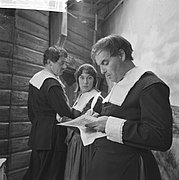
The Waltons Television Show By CBS Television

“We’re Live! Radio Theater #101”: Ignite Student Engagement

In high school, I had a fan girl crush on John Boy of “The Waltons” television show. For me, part of the mystique of the show was the Depression Era in which the show was set. Admittedly, life was simpler then for various reasons. People were hard pressed for money and looking for ways to escape the daily reminders of life. Radio was an inexpensive outlet and most households owned some type of radio.

I was the youngest child in a family of six. There are ten years difference between me and the next youngest sibling. Consequently, by the time I was eight I became an only child of sorts since my siblings grew up and moved away. Once I was the only child in the household, I was lonely much of the time. I yearned for a family like the Waltons. I fantasized my whole family sitting around the radio listening to a radio theater show just like did. Little did I know that in its own gentle way, “The Waltons” birthed my love of radio theater and not John Boy.

Late Night Radio Shows

At the same time, I discovered old radio shows from the 1930s and 40s broadcast on a radio station out of Chicago  were aired at 10:00 p.m. They played for an hour or two. Needless to say, I had a tough time waking the next morning.  I’d been super engaged while listening to these wonderful old shows. I’m not usually a night owl, but for these radio shows it was worth it!

During my second year as a middle school theater instructor, I rediscovered the enchanting realm of radio theater. Part of my responsibilities was to produce a class performance with the students. Since this was a pre-elective, I saw over 400 students each year. The job was a lot of work! I taught the varied elements of theater to these students. You can find my book here.

The teaching was always fun and the students enjoyed my lessons. However, the lesson planning was a bear to accomplish. As a creative person, I need variety in all aspects of my life. Teaching the same thing repetitively every twenty-five days to another seventy-five students was exhausting. Plus, it depleted my imagination.

We're Live! Radio Theater #101: Ignite Student Engagement

On line Radio Theater Assistance

Desperate for my personal sanity, I took to the brand-new internet (at the time) and began searching for short plays with large casts. There were none. Suddenly, I experienced an aha moment! I remembered my late nights in high school while listening to the radio shows.

Could radio theater be useful in my classroom? Would it be difficult to prepare and produce? Additionally, would my students stay engaged the entire time as we rehearsed and performed? Could students finish my class believing they had a comprehensive learning and genuine theatrical experience? Most importantly, would my reluctant students enjoy it?

I took a chance and emailed (which was a really big deal then) asking the Museum of Radio and Television if I could have a copy of one of the radio play scripts they used for workshops. They were so kind and sent me six! I embarked on my first radio show using their script of The Lone Ranger. Our greatest challenge was how to create  the sound of gun shots (use a clipboard and snap its clip). As I expected, the show was successful and the students appreciated its novelty. Over the course of the next few years, I began to adapt short stories as scripts. In fact, I even wrote one of my own, Bow Wow Blues, which is popular with middle schoolers. Who woulda’ thunk it?

My Love Affair with Radio Theater

Thus began my love affair with radio theater. Thirty-eight years later, I can say without a doubt that radio theater engages students, no matter if they are in upper elementary, middle, or high school. When teachers have students who are disengaged in their classes, radio theater is my first suggestion to them. I can hear the teacher’s excitement in their five-star reviews of my radio theater resources as they breathe a sigh of relief that they discovered a teaching tool they’d never tried. And it works every time. You can find my book here. 

Can I guarantee to you that radio theater will engage your students? No, but you are going to be much more prepared for trying to do so with the help of this book. So, get ready for some fun and great learning!

My Comprehensive Guidebook

Educators have long turned to unique and effective tools for fostering creativity, enhancing communication skills, and sparking a love for storytelling among students. Now, with the release of my new book, “We’re Live! Radio Theater #101,” teachers have a comprehensive daily guidebook at their fingertips. I think you’ll easily see how it will unlock the full potential of this art form in the classroom.

We're Live! Radio Theater #101: Ignite Student Engagement

“We’re Live! Radio Theater #101” is not just another resource.  The thirteen chapters address everything from the history of radio theater, warm up exercises, amplification. If that isn’t enough I’ve included a chapter over directing a radio play, script publishers, and much more. Foremost, my goal was to collect a treasure trove of practical strategies, creative activities, and insightful tips tailored specifically for educators.

As a seasoned drama educator, director and radio theater enthusiast, I’ve written this guidebook to demystify radio theater, empowering teachers to confidently integrate its magic into their classrooms.

So Much to Share

To begin, the guidebook includes an overview of radio theater’s rich history and its relevance in contemporary education. This sets set the stage for its integration into various curricular areas.  Most importantly, I instruct how to create your own radio play to teach your subject matter utilizing AI. From language arts to social studies, and even STEM subjects, this teacher guidebook demonstrates how this medium can enhance learning across disciplines. And do it effortlessly!

Radio program put on by children of Junior Artists Club Federal Art Project

“We’re Live! Radio Theater #101: Ignite Student Engagement

Exploring the rich history of sound effects, the guidebook additionally delves into their evolution from humble beginnings to indispensable tools in radio theater. From early broadcasts’ inventive use of everyday objects to modern digital techniques, students explore the artistry of crafting immersive auditory experiences.

Extras I’ve Included

The unit portion of the book (after chapter ten), your students will delight in hearing the stories of some of the original sound engineers (Foleys). Moreover, they’ll have an opportunity to try out creating a sound effect for themselves.   This three-week unit concludes with a performance of a radio play! You can find my book here.

Furthermore, by understanding the historical context and technological advancements, students can appreciate the role of sound effects in shaping the dramatic narrative and bringing stories to life in the theater of the mind.

“We’re Live! Radio Theater #101: Ignite Student Engagement

One of the standout features of the guidebook is its collection of teacher-friendly scripts suitable for daily use.  Additionally, these scripts to make it easier for any teacher or any subject matter to be successful right from the start. In the unit portion of the book, these scripts are crafted to fit seamlessly into the lesson plan.

Whether it’s a ten-minute warm-up activity or listening to current show or a radio show from days gone by, these teacher’s scripts offer flexibility and adaptability. Consequently, they suit the unique needs of every classroom.

Detailed Guidance

Moreover, each script is accompanied by detailed guidance on performance techniques, sound effects, warm up exercises, and exit slip prompts.  Also, these scripts make it easy for teachers to facilitate engaging and interactive experiences for their students. From tongue twisters to collaborating on a mini-commercial with fellow classmates, these teacher’s scripts are designed to promote active listening, creative expression, and collaborative learning. Simultaneously, they reinforce key curriculum objectives.

We're Live! Radio Theater #101: Ignite Student Engagement

Directing Radio Theater

One of the most challenging and potentially intimidating aspects of directing radio theater is just that.  How do you direct a radio play?  I’ve included a video which demonstrates all of the sound effects hand signals a floor director (that’s you) can use.  As a result, you will be surprised by how quickly you and your students pick up these hand signals and their meaning.  All you need is a little practice and you will have them learned in no time at all. Also, your students enjoy learning these signals-it’s sort of like you all have your own language to share amongst you. You can find my book here.

Take it From Me

“We’re Live! Radio Theater #101” doesn’t stop at theoretical concepts and hypothetical scenarios. It’s grounded in real-life examples and practical advice drawn from my own experiences as an educator. However, these are not examples that might work, they always work! Throughout the guidebook, I share anecdotes, success stories, and lessons learned from implementing radio theater projects especially in diverse classroom settings.

These insights not only inspire fellow teachers but also provide valuable guidance.  Furthermore, this book helps teachers to  overcome common challenges and maximizing the impact of radio theater in daily instruction. In addition,  I’ll teach you how to utilize this unique teaching tool for your classroom needs, too. Interested in more information concerning the strength of drama integration? Check out: How to Excite Students With Drama Integration

File:Radio program put on by children of Junior Artists Club Federal Art Project WPA Phoenix AZ 1935.gif

Live Links

Additionally, this guidebook encourages teachers to utilize live links to vintage radio shows and programs (such as War of the Worlds)  or YouTube clips.  These links  offer students a visual and auditory reference to grasp the feeling of radio theater. By immersing students in authentic performances, they can better understand the dynamics of sound effects, voice modulation, and storytelling techniques. Thus, this enhances their appreciation and proficiency in this timeless art form.

“We’re Live! Radio Theater #101” is more than just a teacher’s guidebook; it’s a daily companion for educators seeking to infuse their classrooms with creativity, excitement, and the transformative power of drama integration. Whether you’re looking to kickstart your morning with an energizing lesson or wind down the day with a captivating storytelling session, this guidebook offers a wealth of resources and inspiration to make every lesson memorable.

Teacher’s Guide: Radio Theater in Education

With its user-friendly scripts, practical tips, and real-life examples, “We’re Live! Radio Theater #101” invites educators to embark on a daily journey into the world of radio theater. The only limit is the imagination of their students. Pick up a copy of the paperback, hardback or e-book at Amazon Books or Barnes and Noble. 

Or download a sample!

Got any questions?  Please email me at DhcBaldwin@gmail.com

Woman behind DramaMommaSpeaks

Share this:

  • Share on Tumblr (Opens in new window) Tumblr
  • More
  • Share on X (Opens in new window) X
  • Share on Facebook (Opens in new window) Facebook
  • Share on Pinterest (Opens in new window) Pinterest
  • Share on LinkedIn (Opens in new window) LinkedIn
  • Email a link to a friend (Opens in new window) Email
  • Share on Reddit (Opens in new window) Reddit
  • Share on Telegram (Opens in new window) Telegram
  • Share on WhatsApp (Opens in new window) WhatsApp

Like this:

Like Loading...

Filed Under: acting, Uncategorized Tagged With: curriculum, engaging students, radio theater, teacher guidebook, teacher reflection, teaching scripts, units, warm up exercises, We're Live! Radio Theater #101

« Previous Page
Next Page »

Footer

Follow Us

logo3.png

FOLLOW US

Facebook X-twitter Pinterest Instagram Envelope Rss

Goodreads: read

Malibu Rising
Malibu Rising
by Taylor Jenkins Reid
People We Meet on Vacation
by Emily Henry
The Last Thing He Told Me
by Laura Dave
Faking It
Faking It
by Cora Carmack
Losing It
Losing It
by Cora Carmack

goodreads.com
Copyright © 2024 · Wellness Pro on Genesis Framework · WordPress.com.Log in
 

Loading Comments...
 

    %d