• Skip to primary navigation
  • Skip to main content
  • Skip to footer

Join Me in my new Facebook Group! https://www.facebook.com/groups/417126059784261

Menu
  • Meet Deb – The Heart Behind DramaMommaSpeaks
    • Work with Me! 
    • Photo Gallery of DramaMommaSpeaks
    • Directorial Credits
  • I Give Book Talks! 
    • Book Talk Through Skype
    • Books
  • Freebies!
  • Bumbling Bea
  • Teaching Resume
  • Acting Resume
  • Contact Me
  • Blog
    • Drama Education
    • Arts Education
    • Youth Theatre
    • Middle Grades
    • Musical Theatre
    • Teaching
  • Meet Deb – The Heart Behind DramaMommaSpeaks
    • Work with Me! 
    • Photo Gallery of DramaMommaSpeaks
    • Directorial Credits
  • I Give Book Talks! 
    • Book Talk Through Skype
    • Books
  • Freebies!
  • Bumbling Bea
  • Teaching Resume
  • Acting Resume
  • Contact Me
  • Blog
    • Drama Education
    • Arts Education
    • Youth Theatre
    • Middle Grades
    • Musical Theatre
    • Teaching

play reading

Who Is Springboard to Action and Why It Matters

October 8, 2025 By dhcbaldwin Leave a Comment

Every so often, someone reaches out to me and asks if I can help spread the word about an organization that’s making a real difference in theater education. I’m always willing to consider it.  That’s part of my mission statement.  When I see a program that opens doors for students and inspires teachers, I’m always eager to share it. Today’s spotlight is on one of those opportunities: Who Is Springboard to Action and Why It Matters.

Who Is Springboard to Action and Why It Matters

Who is Springboard to Design and Why It Matters

Springboard to Design encourages and mentors high school students from underrepresented populations to explore the process of theatrical collaboration and the many avenues of American Theatre design. Led by renowned members of the contemporary theatre in the heart of NYC, the Springboard to Design curriculum includes workshops, seminars, and access to important work on and off Broadway.

Springboard to Action

Instructors consist of award-winning artists who create a collaborative environment for students, as they explore costume, set, lighting, projection, hair, makeup, and sound design. How wonderful this is for the students! Knowing that someone who the students can relate to because of their background or culture or ethnicity is important.  Such an approach ensures that the program is not all about teaching and learning—it’s about connection.

Springboard to Design is an initiative by Design Action, an intergenerational coalition of BIPOC and white designers working to end racial inequities in North American theatre. The program was incubated in collaboration with the American Theatre Wing in 2021. In the summer of 2025, Springboard to Design was hosted at The Harvey Fierstein Theatre Lab housed in The New York Public Library for the Performing Arts in the heart of Lincoln Center.

Who Is Springboard to Action and Why It Matters

Benefits of Springboard to Design

In case you want to share this information with your students, here’s a quick list of how this program benefits students:

  • Accessibility – Tuition, housing, and program costs are fully covered, making it possible for all students to attend.
  • Representation Matters – Students work with professional designers who reflect diverse backgrounds and lived experiences.
  • Professional Mentorship – Award-winning artists guide students through real-world design challenges.
  • Hands-On Training – Workshops let students experiment with costume, set, lighting, projection, hair, makeup, and sound design.
  • Career Exploration – Students discover design pathways beyond acting, expanding their vision of what a future in theatre can be.
  • Community Building – The program fosters collaboration, teamwork, and friendships with peers who share the same passions.
  • Networking in NYC – Students gain exposure to Broadway professionals and experience theatre in the cultural hub of the U.S.
  • Recognition – Being part of a nationally recognized program (Anthem Award winner) adds prestige to a student’s portfolio or college application.

Isn’t this is exciting?  I wish I had students that I could introduce to this program.  If you need an answer to the question, “How is theater useful in the outside world”, read: Why Theater Education Matters: Developing Key Life Skills

Who Is Springboard to Action and Why It Matters

Breaking Barriers for Future Theater Artists

The program includes workshops and mentorship from award-winning artists. Students explore costume, set, lighting, sound, hair, makeup, and projection design in the heart of New York City. Here’s the exciting part—the SB2D program is FREE to all students.

Springboard to Design (SB2D) gives students the chance to dive into the world of theatre design and discover new artistic possibilities, no experience required! With housing available and tuition fully covered, this program is built to remove barriers for the next generation of theatre designers. Thus, students expand their sense of community, collaboration, and imagination.

Springboard to Design is all ready a winner!  The program was recognized by the 2022 and 2023 Anthem Awards as a Bronze Winner for Education, Arts, & Culture – Community Engagement.

Who Is Springboard to Action and Why It Matters

Application Details and Deadlines

The applications for the 2026 program are open from September 15th to December 15th, 2025.

The application will include a few short essays, a brief introduction video, and an original piece of artwork.

There is a $25 application fee. If for any reason you are unable to afford the fee, or if it causes stress on family finances. If so, please contact us to receive a voucher. This application fee goes directly back into the program and helps keep the week-long experience free for students.

The Power of Finding Your Community

I can only speak from personal experience.  When I attended college I finally found people who were just like me with the same interests and goal.  I was much more willing to show up for myself.  Sounds to me like Springboard to Action is the opportunity and growth we’d all like to give our students an opportunity to attain.  For more information about the program, go to Springboard for Action.

I give drama teachers advise nearly weekly.  If you have any questions or need some help, just email me at DhcBaldwin@gmail.com

Woman behind DramaMommaSpeaks

Share this:

  • Click to share on Tumblr (Opens in new window) Tumblr
  • More
  • Click to share on X (Opens in new window) X
  • Click to share on Facebook (Opens in new window) Facebook
  • Click to share on Pinterest (Opens in new window) Pinterest
  • Click to share on LinkedIn (Opens in new window) LinkedIn
  • Click to email a link to a friend (Opens in new window) Email
  • Click to share on Reddit (Opens in new window) Reddit
  • Click to share on Pocket (Opens in new window) Pocket
  • Click to share on Telegram (Opens in new window) Telegram
  • Click to share on WhatsApp (Opens in new window) WhatsApp

Like this:

Like Loading...

Filed Under: Arts, arts education, Broadway, Christmas memories, community theater, Creativity, Distance Learning, drama education, Education, Education, gifted and talented, immigrants, performing arts, Play, play reading, plays, Radio Theatre, Readers Favorite, readers theater, set design, The Wheel Education, theater, theatre Tagged With: BIPOC, drama class, high school, Middle school, minorities in theater, NC, New York, summer programs for minorities, theater class

Eight Benefits for Students When Reading Plays

August 30, 2023 By dhcbaldwin Leave a Comment

a cat wearing reading glasses supposedly reading a book

Eight Benefits for Students When Reading Plays

As a child, I loved to read. However, I had one bad habit– reading the end of the book far before I’d read the rest of the book.  My mother called it shameful at the time.  I admit, I still imbibe in this activity from time to time. Not with plays, however. I’m proud to say that never have I ever read the end of the play ahead of time.  Never. Today I want to talk about the eight benefits for students when reading plays.

As educators, we constantly seek fresh and unique ways to engage our students and foster a genuine love for learning. While traditional reading materials hold their place, have you ever considered the profound impact of introducing plays into your curriculum? Beyond the spotlight and stage, the world of plays offers a wealth of opportunities for students to explore, learn, and grow. In this post, let’s delve into why incorporating plays into your teaching toolkit can be a game-changer.

Eight Benefits for Students When Reading Plays

#1 Spark Empathy and Understanding by Reading Plays 

Perhaps one of the most important reasons to read plays  is the swift speed a  playwright‘s uses to engage the audience right from the first word. Consequently, the play immediately piques our interest. Let’s admit something here.  Our students want everything fast, because the world has become so quick moving thanks to technology.  No one wants to be patient or wait around for anything.  Everyone, especially our students, want a quick fix.

Unlike reading novels, the old adage that “you should read the number of pages equal to your age before you decide if you enjoy the story or not” doesn’t hold true here. Plays must get to the point early on in the production or else the audience will make a quick exit for the theater door.  Consequently, most plays are under 150 pages.  They hold your attention to the end, because playwrights want the audience to be enthralled through curtain call.  Check out my post about The Most Important Play I’ve Directed in My 38 Year Career.

Usually, narration is kept to a minimum.  In most plays, if deftly written, the characters can narrate the story through their lines. Every character in a play has a unique story to tell, emotions to share, and challenges to overcome. When students step into the shoes of these characters through reading, they cultivate empathy and gain insights into different perspectives. This newfound empathy transcends the classroom, nurturing a more compassionate and understanding generation. When someone demonstrates how a person feels at a particular moment in a story, they visualize the moment playing out right in front of them. That is powerful.

Eight Benefits for Students When Reading Plays


#2 Nurturing Critical Thinkers

Plays are intricate puzzles waiting to be unraveled. The layers of dialogue, symbolism, and character development offer an intellectual banquet for students. Even our youngest students can read a play and pick out the elements of literature--setting, conflict, plot and character, etc.   Encourage them to dissect the text, identify underlying themes, and analyze character motivations. This process hones critical thinking skills that extend far beyond the realm of literature.

Language Proficiency Beyond the Ordinary

Plays are a linguistic treasure trove, showcasing diverse forms of language from various eras and cultures. By exposing students to the rich tapestry of language found in plays, you’re fostering students to build a versatile vocabulary. Through the acquisition of new words and expressions students’ hone their communication skills which better equips them to communicate their thoughts and feelings.

Eight Benefits for Students When Reading Plays

#3 Plays and Time Travel through Text

History books offer facts; plays transport students back in time. Through the lens of playwrights’ words, students can experience different time periods, cultures, and societal norms. This immersive experience makes history come alive, encouraging students to appreciate the nuances of different eras. Plays have been written about many historical moments in history, science, art, music and so forth.  After 911, there were several plays written from the viewpoint of the firemen who survived the tragedy. One is The Guys.  The Guys tells a story about a New York City journalist who helps a local fire captain write memorial speeches for his men who died in the World Trade Center crisis bowed starring Sigourney Weaver and Bill Murray in January 2002.


Eight Benefits for Students When Reading Plays

#4 Reading Plays Provokes Dynamic  Class Discussions

The themes explored in plays are the stuff of thought-provoking conversations. From social issues to questions about morality, plays provide a perfect platform for discussing complex topics. By reading a play, students can articulate their opinions, learn from diverse viewpoints, and develop the art of respectful discourse. For example, The Laramie Project play is set in and around Laramie, Wyoming, in the aftermath of the murder of twenty-one -year-old Matthew Shepard.   The Laramie Project is known for its powerful portrayal of the complexities of a community’s response to a hate crime, and it has been widely performed and studied to shed light on issues related to LGBTQ+ rights, hate crimes, and social justice.

Eight Benefits for Students When Reading Plays

#5 Play Reading Bridges Generations

Incorporating both classic and contemporary plays bridges the literary gap between generations. Students connect with the enduring themes of the past while appreciating the evolving narratives of the present. She Stoops to Conquer was written in 1773 and is just as relevant today as when it was first produced. The overriding theme of She Stoops to Conquer is how reality is often distorted by social status. Sound familiar?

A recent column in Esquire magazine states, “Sometimes the Truly Rich lose their bearings about how money works for other people. While they have that joyful privilege of viewing money through the filter of what it can do for them, other people see cash as that wad of paper that can get them through the next two weeks.” In She Stoops To Conquer, a rigid English social system effectively encourages people to be someone other than who they really are.

She Stoops to Conquer is a comedy of manners that explores social class, one’s place in society, both socially and economically, and its importance in 18th century England. The characters and their conceptions of these absurd societal rules lead them on a humorous journey in their relationships, by exposing our students to plays which are nearly 250 years old, students learn to appreciate the continuity of human thought and storytelling across time.

#6 Students Skills for Life’s Journey

When students engage with plays, they acquire skills that are essential beyond graduation. The ability to analyze, interpret, and empathize with different perspectives equips them to thrive in diverse environments. They become lifelong learners who approach challenges with a multidimensional outlook.

Eight Benefits for Students When Reading Plays

 #7 Cultivating Creativity

The act of reading plays demands visualization – imagining characters, scenes, and emotions. A good example of this is the play War Horse.  The horse puppet that represents Joey is operated by three puppeteers each night: one at the head, one at the heart, and one at the hind. But this is no ordinary panto horse: when at full flight, the 30-kilogram, life-sized contraption is an imposing force, galloping across the stage. The scenes of Joey fighting in war are magnificent!  This visualization of a living breathing horse demands of us to use our  creativity thereby encouraging students to actively participate in crafting the narrative in their minds. They become co-creators of the story, enriching their imaginative capacities. If you are looking for a lesson concerning The War Horse play, check out:  War Horse Resource

 #8 Transformative Journey Through Reading Plays

I cannot stress enough that incorporating plays into your curriculum is not just about reading; it’s about opening doors to creativity, empathy, critical thinking, and cultural awareness. By introducing students to the world of plays, you’re guiding them on a transformative journey that goes beyond textbooks. You’re instilling a lifelong appreciation for literature, broadening their horizons, and empowering them to embrace the complexities of the world with confidence. I bet you’ll discover more of your students will become involved in their school play productions after they’ve read a few.  They are a perfect bridge. Have your students read any radio theater plays? Check out these blog posts for reasons to read them. Creative Dramatics Lesson Plans: Nine Reasons to Teach Radio Theater or Top Reasons Teachers Succeed When Teaching With Radio Theater

Let’s embrace the world of plays and witness the magic unfold within our classrooms. Your students’ journey into the realm of drama might just be the most enlightening adventure they embark upon.

What plays have your students read?  I’d love to hear from you about them.  Let’s chat!  Contact me at DhcBaldwin@gmail.com

Woman behind DramaMommaSpeaks

Share this:

  • Click to share on Tumblr (Opens in new window) Tumblr
  • More
  • Click to share on X (Opens in new window) X
  • Click to share on Facebook (Opens in new window) Facebook
  • Click to share on Pinterest (Opens in new window) Pinterest
  • Click to share on LinkedIn (Opens in new window) LinkedIn
  • Click to email a link to a friend (Opens in new window) Email
  • Click to share on Reddit (Opens in new window) Reddit
  • Click to share on Pocket (Opens in new window) Pocket
  • Click to share on Telegram (Opens in new window) Telegram
  • Click to share on WhatsApp (Opens in new window) WhatsApp

Like this:

Like Loading...

Filed Under: arts education, arts integration, drama education, drama integration, Education, excellence in teaching, High School, play reading, Reading Literacy, reading skills, theatre Tagged With: class, high school, language arts class, Middle school, play reading, reading class, reading plays, She Stoops to Conquer, The Diary of Anne Frank, The Laramie Project, War Horse

Never Underestimate the Influence of Teaching with Videos

February 23, 2022 By dhcbaldwin 2 Comments

A girl listening with headphones to something important on her laptop

Never Underestimate the Influence of Teaching with Videos

Never Underestimate the Influence of Teaching with Videos

When I began teaching, we didn’t have videos to show students anything pertaining to theater. Friends, never underestimate the never underestimate the influence of teaching with videos!

That was 1980 and the closest thing we had was an old projector which showed black and white films.  Yuck. Part of the reason this was uninspiring to students is as we know, theater is a visual art.  Plus, it gives students a concrete example of the quality of work professionals turn out. Consequently, not many students enrolled in drama classes.

I was looking around for more reasons why teaching with video works. I ran on to www.nextthoughtsstudios.com I found this quote helpful:   “Studies have shown that the use of short video clips allows for more efficient processing and memory recall. The visual and auditory nature of videos appeals to a wide audience and allows each user to process information in a way that’s natural to them. In a nutshell, videos are good teachers.”

Things are different now, huh?

Practically with the snap of a finger, a teacher can search for what she wants and show it in her classroom within a few minutes.

Never Underestimate the Influence of Teaching with Videos

Creating products gives me oppportunities to see many videos worth viewing in the theater classroom.  I thought they might be of benefit to you, too!

Primarily, these videos are located on youtube.com.  If your school allows you to use Youtube. com, you will be good to go.  I’ve also mentioned several videos that you could rent or purchase for your classroom.

Never Underestimate the Influence of Teaching with Videos

Never Underestimate the Influence of Teaching with Videos

Hamilton!

Let’s Look at Hamilton, first!

There are many videos of Hamilton.  However one that I especially like is: Adam Savage Examines the Props of Hamilton.

Let’s begin with set design. Set Design for Hamilton is terrific.  It’s only 3 minutes in length. Fascinating stuff here.

The lighting design for Hamilton is awesome! Behind the Scenes with a Hamilton Stagehand Who Told Stories with LightsThis one shows what its like for a stagehand.  So interesting.  (5:58 mins.)

The costume design for Hamilton is a Hamilton Designers Explain How Costumes are Made I think you’ll learn something new here. (29:42 mins.)

Hamilton is available on line through DisneyPlus only.  Honestly, I’d sign up for DisneyPlus just to have the opportunity to show it to my students.

If you’d like more information about Hamilton, check out: Hamilton the Musical: A Drama Lesson with a Unique Perspective

Never Underestimate the Influence of Teaching with Videos

Wicked!

Behind the Emerald Curtain is a series of videos which were created for the express purpose of education.

Wicked Behind the Emerald Curtain is a fascinating interview with the costume designer, Susan Hilferty. There is more information here than just costume design, so take a look at this! (5:35 mins.)

In this video, the choreographer for Wicked explains the difference between choreography and staging a musical. See how the entire world of Wicked the musical was choreographed.  (4:47 mins.)

Who is an expert in stage smoke, fog and torches?  This man is. You’ll want to check out the special effects of Wicked for certain. Wicked: Special Effects (3:37 mins.)

Good news!  A movie version of Wicked is slated to begin productions in the summer of 2022.  Cynthia Erivo will pay Elfaba and Arianna Grande will be Glenda.  How wonderful will that be?

Considering teaching a whole unit on Wicked?  Check out my post: Will Wicked The Musical Ever Rule the World?

Never Underestimate the Influence of Teaching with Videos

Dear Evan Hansen

Now that the Dear Evan Hansen movie has been released, this would be a fantastic time to study the musical.

David Korins, Set Design of Dear Evan Hansen shares an incredible story about his creative process. (3:43 mins.)

Here is a short piece on the Genius Design of Lighting of Dear Evan Hansen you simply must show your students! In this video clip, the announcer explains the complexity and number of light cues used in one part of a song.  Amazing.  (3:13 mins.)

Maybe you need something physical for your students to do? You could use this as a warm-up of even lesson for the day.  Check out Dear Evan Hansen Dance Combo (27:01 mins.)

You can rent Dear Evan Hansen through a variety of ways–Apple TV and Prime are two.

Here’s a blog post concerning Dear Evan Hansen  which you may find useful and interesting. Like “Dear Evan Hansen”? Then You’ll Love This News

Never Underestimate the Influence of Teaching with Videos

Never Underestimate the Influence of Teaching with Videos

Spongebob Squarepants

Oh my gosh, friends.  Spongebob Squarepants is such fun and your younger students will really enjoy learning about it.

You’ll want to look at the interview of a set designer. Set Designer David Zinn ( 7:00 mins.) I enjoy how he explains his concept of the musical, but also explains how color, the use of unusual objects and looking at the story as a child would.

Davis Zinn is exceptionally talented!  He designed the costumes for the production as well.  Explore the Costumes of Spongebob Squarepants.  (2:56 mins.) Your students will love what he uses for each costumes and the detail is immense.

Switching gears here.  I think showing a rehearsal of a production. It’s very important for our students.  It demonstrates that rehearsals should be done with high energy, full commitment and dedication.  Get a Sneak Peak at New Broadway Musical Spongebob Squarepants (2:25 mins.)

Never Underestimate the Influence of Teaching with Videos

Need a scope and sequence for your middle school theater class?  I can help here: Drama Units Scope and Sequence

Hadestown

Take a Tour Downtown of Hadestown with Rachel Hauk, set design and Rachel Chavkin, director. (4:09 mins.) For your students who can’t get enough of the creative process of designing a production, you’ll want to show this one.

Making the Music Anais Mitchell  (3:50 mins.) talks about composing the music for Hadestown. In particular, she talks about the song, “Why Do We Build a Wall.: The lyrics to this song are not a political statement, but when Hadestown opened our former president was busy trying to keep immigrants out of the country.  Talk about life imitating art and vice versa.

Broadway’s Hadestown is a Google Talk (55:31 mins.) which older students would appreciate.  I think I would use it for a discussion and pick out certain parts which I wanted to point out–blocking, staging, etc.  Members of the cast have an opportunity to share about the production. I especially appreciate Andre Shields’ interview.  Although long, it’s worth the time.

You can find bootleg copies of Hadestown. That means someone recorded it illegally.  I don’t recommend using these because it just perpetuates the idea that this activity is acceptable.

Here’s a blog post of mine about Hadestown and all its wonderfulness. What Can We Learn from Greek Mythology?

Never Underestimate the Influence of Teaching with Videos

Never Underestimate the Influence of Teaching with Videos

Beetlejuice

Heres a fun one to study:  Beetlejuice!  The Cast of Beetlejuice Performed at  medley at the Tony Awards. (3:48 mins.) Something interesting about this musical is that it was nominated for many Tony awards and didn’t win one.  Strange, huh?

The set design is so imaginative–I’d show this for your gifted students.  They’ll get a kick out of it! David Korns strikes again as the designer of the Beetlejuice set.  It might be interesting to show the three video clips of his work and see if there are any similarities.  That’s what I would do.  Set Tour with Designer David Korin/ Beetlejuice the Musical. (7:22 mins.)

In How William Ivey Long Created the Beetlejuice and Tootsie Costumes (9:35 mins.) Long speaks about his process for the musical.  Talk about talented!  You’ll see that he spent over two years designing Beetlejuice.  Amazing.

We can’t leave out plays.  They are fabulous to teach with too

Teach with Plays

We can’t leave out plays.  They are fabulous to teach with too.

Never Underestimate the Influence of Teaching with Videos

Harry Potter and the Cursed Child

Oh yes!  To study a  little bit of Harry Potter and the Cursed Child play  would be fabulous for middle grade students.

If your students are unfamiliar with the play, show them this montage first: Harry Potter and the Cursed Child Exclusive Montage. (4:43 mins.)

This clip shares many things–the director, special effects, blocking, staging, lighting design, costume design–you name it.  Behind the Scenes of Harry Potter and the Cursed Child (2:49 mins.) is a definite show on my list!

I think students will find this video Magic to Do: Harry Potter with James Snyder (9:51 mins.) demonstrates that actors are pretty much like the rest of us.  Pretty goofy.

Never Underestimate the Influence of Teaching with Videos

To Kill a Mockingbird

Let’s say you want to read a play in your high school theater class?  I’d suggest To Kill a Mockingbird.  I’d include these video clips while we read it.  Maybe as a warm-up.

I’d begin with this video clip.  It concerns how the play was reworked by the director, Aaron Sorkin. How Aaron Sorkin Reworked To Kill a Mockingbird for Broadway  (7:19 mins.) It’s fascinating.

To Kill a Mockingbird Lessons for Today focuses on (7:10 mins.)  the show’s star Jeff Daniels and playwright Aaron Sorkin about translating Lee’s characters to the stage, and with students who talk about “Mockingbird”‘s relevance to today’s audience.

Lastly, this video clip discusses the characters of the play.  Citizens of To Kill a Mockingbird LaTanya Richards Jackson as Calpurnia (2:40 mins.)

Never Underestimate the Influence of Teaching With Videos

I hope these video links give you a lot of choice and ideas for your classroom use.  If I were you, I’d teach a different musical or play each day–that’s 8 days or more of lessons for you.  And….a substitute could use these as well.

Have you used video clips in your classroom?  I’d love to hear about it.  Contact me at DhcBaldwin@gmail.com or DeborahBaldwin.net

Want some help with your directing?  Pick up my FREE checklists at: Director’s Helper Checklists

woman behind DramaMommaSpeaks


Share this:

  • Click to share on Tumblr (Opens in new window) Tumblr
  • More
  • Click to share on X (Opens in new window) X
  • Click to share on Facebook (Opens in new window) Facebook
  • Click to share on Pinterest (Opens in new window) Pinterest
  • Click to share on LinkedIn (Opens in new window) LinkedIn
  • Click to email a link to a friend (Opens in new window) Email
  • Click to share on Reddit (Opens in new window) Reddit
  • Click to share on Pocket (Opens in new window) Pocket
  • Click to share on Telegram (Opens in new window) Telegram
  • Click to share on WhatsApp (Opens in new window) WhatsApp

Like this:

Like Loading...

Filed Under: arts education, Creativity, Distance Learning, drama education, elementary, hybrid learning, middle grades, Musical Theatre, performing arts, Play, play reading, Professional Theatre, Teacherspayteachers, Tony Awards Tagged With: Broadway musicals, Hamilton, harry potter and the cursed child, spongebob squarepants, to kill a mockingbird, video links, Wicked, youtube

The Seven Reasons I Recommend Plays for New Audiences Scripts

February 8, 2022 By dhcbaldwin Leave a Comment

blue stick figure holding gold drama masks

The Seven Reasons I Recommend Plays for New Audiences Scripts

File:Children's Theatre Company.jpg

Have you heard of Plays for New Audiences? No? They are terrific.  Here are the seven reasons I recommend plays for new audiences scripts.

Plays for New Audiences is a division of Children’s Theatre Company. (Pictured above) Minneapolis, Minnesota. PNA offers contemporary works that are topical, relevant, and even fantastical. In addition, PNA offers many reimagined classics that are stage-ready for your next production.

The Children’s Theatre Company (formerly known as The Moppet Players from 1961 to 1965) is a regional theater established in 1965, specializing in plays for families, young audiences and the very young.

You really must check out this website!  Plays for New Audiences 

I ran on to the Childrens Theatre Company many years ago and picked up a few scripts for the youth theater I was administrating. Friends, these scripts are fabulous.

Plays for High School of Middle School Students to Perform

At least once a week, I read of teachers desperate to find a script to produce with their students.  Either they need one for their class to produce, or are looking for a play to use to travel and perform for their elementary or middle schools. (Next school year would be a fantastic time to do this with your students since the pandemic will have subsided and everyone should be back in school full swing.)

Here are a few I suggest, but friends there are many of which to choose.  Do give this website an afternoon to peruse.

Mark Twain

The Seven Reasons I Recommend Plays for New Audiences Scripts

Reason #1: Some are adapted from celebrated authors.

A Mark Twain Storybook is about a troupe of actors who re-tell some of Mark Twain’s most popular stories in “The Quadricetennial edition of America’s most loved traveling show, The Celebrated Mark Twain Storybook and Musicale Review!” They cover Tom Sawyer, The Good Little Boy (and, conversely, The Bad Little Boy), The Jumping Frog, What Stumped the Bluejays, Experience of the McWilliamses with Membranous Croup, and The Prince and the Pauper. A Mark Twain Storybook is a vaudeville inspired, rollicking delight.

The script is forty-five pages with roles for five actors with a running time of seventy-five minutes and recommended for ages six and up.

Reason #2:  They are willing to adapt movies into plays. Generally, a movie will come out of a play version, but I like that they are willing to reverse that if the script is worthwhile.

The Seven Reasons I Recommend Plays for New Audiences Scripts

Another script which looks sensational is Akeelah and the Bee.  Akeelah and the Bee tells the story of a girl with a crazy passion for words: the more abstruse and labyrinthine, the better. But this gift is almost overwhelmed by the challenge of her daily life in a tough, Chicago neighborhood. Akeelah’s aptitude earns her a spot in the National Spelling Bee, which inspires the people in her neighborhood with her courage and tenacity. (You may be familiar with this title as there was a movie of it first.)

The script is 104 pages with roles for seven males and seven females.  It runs two hours and is suitable for ages eight and up.

Reason #3:  Some plays contain original plots.

If you are looking for something concerning the Jewish culture, I’d check out The Adventures of Motel. The Adventures of Motel is a story of adventure and misadventure set in Russia in the year 1905. A Jewish boy named Mottel meets the trials of living under rule of a cruel Czar with wit and good cheer. Mottel has many adventures, from causing the whole town to sneeze, dying the river (and in effect all the laundry) blue, and eventually travelling to America. We are able to experience what life was like for Jews in Russia at this tine while being entertained by the mishaps of a young boy.

The script is fifty-eight pages in length, runs two hours and has a cast of thirteen male and eleven female.  It is suitable for ages eleven and up.

Reason #4: Many are multicultural.  Quite a few are adaptations from folk or fairy tales.

Monkey King

The Seven Reasons I Recommend Plays for New Audiences Scripts

The Monkey King is a fabulous folk tale from China. I’d take a look at it if you have a large class or auditioning pool.

The Monkey King play concerns a Heavenly Palace, the Jade Emperor and the Jade Empress are holding a feast. Suddenly a monkey hatches from a rock and declares himself King, shaking the very foundations of heaven and earth. He even travels to the underworld and erases his death in the Book of the Dead. The Emperor tries to capture the Monkey, but the wild animal escapes, ending up in a showdown with Buddha himself! Buddha wins and thus begins the Monkey’s earthly adventures. He accompanies a monk on a pilgrimage, along with two traveling companions, a pig, Ba-jie, and a carp, Sha-Sen, both of whom have been sent down to earth after causing trouble in the Heavenly Realm. As with every great quest story, the journey tests the character of the four travelers. To complete the mission, each must learn to recognize his weakness and understand their strengths.

The script is fifty-two pages  in length runs one hour and  forty-one minutes with roles for fifteen male and eight female +ensemble (Doubling possible)

Talking

The Seven Reasons I Recommend Plays for New Audiences Scripts

Reason #5:  They are diverse.

Based on the book of the same name, Lizzie Bright and the Buckminster Boy is worth checking out as well.

In Lizzie Bright and the Buckminster Boy  Turner Buckminster III can’t win: he’s the new kid in town, he plays baseball differently, and he stumbles upon trouble at every step. Turner’s only friend is Lizzie Bright Griffin from Malaga Island, an impoverished community founded by former slaves. The town (and Turner’s father) disapproves of their friendship, but Turner and Lizzie remain friends regardless. When powerful forces threaten Lizzie and her kin, Turner faces the ultimate test of his character—and learns a hard-earned lesson about courage and loss.

The script is eighty-eight pages in length, runs two hours (with an intermission) and has roles for four male and seven female. It is appropriate for nine years and up.

Reason #6:  They are entertaining and fun!

Bunnicula: 40th Anniversary Edition (Bunnicula and Friends) Cover Image

The Seven Reasons I Recommend Plays for New Audiences Scripts

Looking for a musical?  Here is one–Bunnicula!

Bunnical is about a dancing cat, a howling dog, and a vampire bunny. The perfect pet combination for any family. It’s a dark and stormy night and Chester (the family cat) and Harold (the family dog) sit waiting for their owners to return home from the movies. Chester and Harold are more than just pets, they’re good friends too. When the Monroes finally get home, they come bearing a surprise: they’ve found a bunny in the movie theater. But this is no ordinary rabbit… this is the extraordinary Bunnicula. When the family’s produce starts losing its juice, Chester thinks he knows what’s causing the fantastic phenomenon. Bunnicula is a vampire! Or maybe Chester’s imagination is getting the better of him. Singing and dancing their way through this hilarious mystery, the furry friends find room in their hearts, and in their home, for one very unique bunny.

This musical comes with musical tracks which would be very helpful if you don’t have an accompaniast.  The show runs one hour and thirty-one minutes, has roles for two female and one male and is suitable for age six and up.


Reindeer in Tromso region, Northern Norway

The Seven Reasons I Recommend Plays for New Audiences Scripts

Reason #7: They offer scripts with holiday themes.

Holiday Plays

Publishers with holiday themed scripts are always a plus in my book.  Prancer concerns young Jessica Riggs’ family has fallen on hard times. Still, she keeps her belief in Santa Claus and the idea that there are miracles in the world. When an injured reindeer appears in Jessica’s backyard, she believes it is Prancer. While she is nursing the creature back to health, the whole community of Three Oaks eventually learns about Prancer, causing big problems for Jessica as she tries to return the reindeer home. Based on the cherished film, Prancer, this piece uses a heartwarming story and breathtaking puppetry to bring light into your holiday season.

Want some help with directing?  Pick up my Director’s Helper Checklist here: Director’s Helper Checklist 

Licensing and Royalties Information

I did want to touch on purchasing scripts and royalties for these plays and musicals.  If you want to purchase copies for your class to read called you need a Classroom Reading license. This is a fifty dollar per semester cost. You can download and copy as many as you need. If you want to purchase, just one it is $12.00. I think it would be better to purchase a classroom reading license. At fifty dollars,  that’s a pretty good deal since the average script cost of other publishers is usually around $10.00.  I’d seriously consider doing this if I were you.

You would need to apply for a license to produce one of their plays in order to receive a royalty quote.  I was unable to secure this information for you.

I hope you’ll check out Plays for New Audiences and their scripts.  If I was still directing and teaching, I’d be on this site like butter on bread.  They are unique, imaginative and guaranteed to be engaging to your students and audience.

If you’d appreciate additional advice from a seasoned theater teacher and director, check out:

 Ten Important Elements to Consider When Directing a Youth Theater Production

Eighteen Ways To Make Your Directing Experience Less Stressful, Part One

Eighteen Ways to Make Your Directing Experience Less Stressful, Part Two

What play publishing company are you fond of?  There are many, huh?  Leave a comment and share your opinion.  If you’d like to contact me do so at DhcBaldwin@gmail.com or DeborahBaldwin.net

woman behind DramaMommaSpeaks

Share this:

  • Click to share on Tumblr (Opens in new window) Tumblr
  • More
  • Click to share on X (Opens in new window) X
  • Click to share on Facebook (Opens in new window) Facebook
  • Click to share on Pinterest (Opens in new window) Pinterest
  • Click to share on LinkedIn (Opens in new window) LinkedIn
  • Click to email a link to a friend (Opens in new window) Email
  • Click to share on Reddit (Opens in new window) Reddit
  • Click to share on Pocket (Opens in new window) Pocket
  • Click to share on Telegram (Opens in new window) Telegram
  • Click to share on WhatsApp (Opens in new window) WhatsApp

Like this:

Like Loading...

Filed Under: arts education, arts integration, community theater, community theatre, directing experiences, drama education, elementary, High School, middle grades, performing arts, Play, play reading, plays, Producing plays and musicals, theater, theatre, youth theatre Tagged With: books adapted into plays, holiday themed, movies adapted into plays, multicultural themed

Creative Dramatics Lessons That Kids Love

July 22, 2020 By dhcbaldwin 1 Comment

Creative Dramatics from an Awarding Winning Drama Teache

Creative Dramatics Lessons That Kids Love

Dramamommaspeaks Blog Author Deborah Baldwin

Hello!

Today, I wanted to blog about Creative Dramatics Lessons That Kids Love. You may not know me or be familiar with my work.  I’m Deborah Baldwin (but my friends call me Deb.)  I am a recently retired award-winning drama teacher of thirty-eight years.  In that time, I directed over 250 plays and musicals with students and adults as well.  I taught every grade level, but the bulk of my time was spent with secondary students.

Here is my resume if you’d like to see it:

If you’d like a free guide And lesson plan from me, click here LESSON PLAN

Creative Dramatics Lessons That Kids Love

My Teaching Style

Drama is a hands-on class. To this end, I’m always on my feet, modeling for my students while teaching them a host of concepts. It is not unusual to hear my classroom in chortles of laughter because humor is an outstanding way to gain a student’s attention. I empower students at an early age. Although I am always mindful of my learning objectives, I think it’s vital for students to experiment within the confines of my instruction.

I encourage students to be independent and creative thinkers. Many less confident or reluctant students benefit from my teaching methods as together we hit the challenges they encounter. I am creative, intense, driven and brave–these are qualities I nurture in all my students and generally receive outstanding results.

Creative Dramatics Lessons for Elementary Grades by an Award Winning Drama Teacher

If you need some warm ups for your class, whether a core or drama class check out Theatre Games Guide

Strengthening Reading Comprehension Skills

When I was researching this blog post, I found a wonderful site,  http://www.understood.org.  They discussed the reasons for reading aloud (aka drama class!):

1. Decoding

Decoding is a vital step in the reading process. Kids use this skill to sound out words they’ve heard before but haven’t seen written out. The ability to do that is the foundation for other reading skills.

Decoding relies on an early language skill called phonemic awareness. (This skill is part of an even broader skill called phonological awareness.) Phonemic awareness lets kids hear individual sounds in words (known as phonemes). It also allows them to “play” with sounds at the word and syllable level.

2. Fluency

To read fluently, kids need to instantly recognize words, including ones they can’t sound out. Fluency speeds up the rate at which they can read and understand text. It’s also important when kids encounter irregular words, like of and the, which can’t be sounded out.

Sounding out or decoding every word can take a lot of effort. Word recognition is the ability to recognize whole words instantly by sight, without sounding them out.

3. Vocabulary

To understand what you’re reading, you need to understand most of the words in the text. Having a strong vocabulary is a key component of reading comprehension. Students can learn vocabulary through instruction. But they typically learn the meaning of words through everyday experience and also by reading.

What can help: The more words kids are exposed to, the richer their vocabulary becomes. You can help build your child’s vocabulary by having frequent conversations on a variety of topics. Try to include new words and ideas. Telling jokes and playing word games is a fun way to build this skill.

Creative Dramatics Lessons for Elementary Grades by an Award Winning Drama Teacher

4. Sentence Construction and Cohesion

Understanding how sentences are built might seem like a writing skill. So might connecting ideas within and between sentences, which is called cohesion. But these skills are important for reading comprehension as well.

Knowing how ideas link up at the sentence level helps kids get meaning from passages and entire texts. It also leads to something called coherence, or the ability to connect ideas to other ideas in an overall piece of writing.

What can help: Explicit instruction can teach kids the basics of sentence construction. For example, teachers can work with students on connecting two or more thoughts, through both writing and reading.

Making Connections: Using What They Know to Understand

5. Reasoning and Background Knowledge

Most readers relate what they’ve read to what they know. So it’s important for kids to have background or prior knowledge about the world when they read. They also need to be able to “read between the lines” and pull out meaning even when it’s not literally spelled out.

What can help: Your child can build knowledge through reading, conversations, movies and TV shows, and art. Life experience and hands-on activities also build knowledge.

6. Working Memory and Attention

These two skills are both part of a group of abilities known as executive function. They’re different but closely related.

When kids read, attention allows them to take in information from the text. Working memory allows them to hold on to that information and use it to gain meaning and build knowledge from what they’re reading.

What can help: There are many ways you can help improve your child’s working memory. Skill builders don’t have to feel like work, either. There are a number of games and everyday activities that can build working memory without kids even knowing it.

Creative Dramatics from an Awarding Winning Drama Teacher

Maybe you are researching Back to School lessons. Or you are looking for drama units, lessons and plays for your elementary students. Or you want to save yourself time? 

I can help you. 

Here is my opinion about expectations of our elementary students. My Pet Peeve

Here are a few of my lessons for elementary students:

Birthday cake with puppy wearing a hat

It Could Always Be Worse Readers Theater

  • Tableau, Grades 3 and 4
  • Chanting, Grades 3 to 5
  • Costume Design with Goldilocks and the Three Bears
  • Creative Movement
  • Costume Design with Snow White and the Seven Dwarfs
  • The Little Girl and the Winter Whirlwinds
  • Costume Design with Alice in Wonderland Characters

Each lesson comes with a teacher’s letter, procedure, a warm-up, materials list, teacher’s script and assignments.

Recently, I created fifteen minute radio theater plays for grades 3 to 5.  These are royalty free, too! 

  • Radio Theater Play of The Brave Little Tailor
  • Radio Theater Play of It Could Always Be Worse

Recently, I created fifteen minute radio theater plays for grades 3 to 5.  These are royalty free, too!

I hope you’ll check out my creative dramatics lessons.  My thirty-eight years of teaching drama education serve me well in creating these lessons and/or adapting some which I all ready used in the classroom.

Have you taught creative dramatics with your students?  I’d love to hear about it.  Contact me at DhcBaldwin@gmail.com or DeborahBaldwin.net

Looking for a freebie or two?  Go to:

Free Teaching Resources Blog Hop

Free Stuff!


Share this:

  • Click to share on Tumblr (Opens in new window) Tumblr
  • More
  • Click to share on X (Opens in new window) X
  • Click to share on Facebook (Opens in new window) Facebook
  • Click to share on Pinterest (Opens in new window) Pinterest
  • Click to share on LinkedIn (Opens in new window) LinkedIn
  • Click to email a link to a friend (Opens in new window) Email
  • Click to share on Reddit (Opens in new window) Reddit
  • Click to share on Pocket (Opens in new window) Pocket
  • Click to share on Telegram (Opens in new window) Telegram
  • Click to share on WhatsApp (Opens in new window) WhatsApp

Like this:

Like Loading...

Filed Under: arts education, Back to School, creative dramatics, creative movement, Creativity, DeborahBaldwin.net, drama education, Education, play reading, Radio Theatre, Reading Literacy, reading skills, teaching strategies, theater, youth theatre Tagged With: arts integration, back to school, costume design, creative dramatics lesson for back to school, drama lessons, dramamommaspeaks, elementary level plays, radio plays for elementary, radio theater for elementary, reading comprehension, teaching style, VIRTUAL LEARNING

Play Reading and Analysis–An Important Skill for Our Students

January 10, 2020 By dhcbaldwin Leave a Comment

Play Reading and Analysis–an Important Skill for Our Students

Deborah Baldwin teaching

I am a drama teacher.  Consequently, I eat, sleep and breath theater even now that I’m newly retired.

I listen to the Sirius Broadway station all day which keeps me abreast to upcoming productions and tours.

Because of my love for theater, I spend a lot of time on Pinterest.com pinning anything that pertains to theater–plays, musicals, set design, costume design, stage properties do it yourself creations, stage makeup, videos, lighting plots, show posters, etc.

I have A LOT of boards…………….:)

I see theater teachers in Facebook groups looking for play titles to read with their students, especially middle school.  If you are looking for a good one to study,  try Tim Kelly’s dramatization of The Adventures of Tom Sawyer.  Here is a study guide and set design unit for it:  Study Guide and Set Design Units Tom Sawyer

BUNDLE TOM SAWYER STUDY GUIDE AND SET DESIGN

Sorry, I digressed.

Strengthening Literacy through Play Reading

Back to literacy.

I looked for research concerning the reasons our students should read a play script and of course, ran on to balanced literacy.

“When students have a voice in the reading process, they’re learning to contribute to their own knowledge.  Because they can select the books (in my case, plays) they wish to read, they have greater control over what they want to learn. Students are much more likely to view reading as a priority when they have some ownership in the reading process.

However, this doesn’t mean students can make their independent reading choices willy-nilly.  There does have to be some structure involved. First of all, the independent reading selection must be at their reading level.  No “easy” books during independent reading. “At their reading level” means students should be able to read their selections with 95%-100% accuracy.”

I agree with everything mentioned above.

Reading a play can be an amazing, satisfying experience.  Once my students become accustom to reading a script aloud (which takes about one class period), they are invested.

woman reading book

Here are some of the reasons for our students to read a play:

  1.  The dialogue is terrific.  You can’t help but be engaged.  The playwright hones his script to be the most compelling experience he can create.  He certainly doesn’t want an audience member leaving the production.  When an audience members leaves, it’s not the same as turning off the television–EVERYONE sees the bored person leave.  Yikes! Also, if you are teaching students how to write dialogue, reading a script will help them immensely.
  2. There is no narration or superfluous information.  There might be someone who narrates, but again, the narration is short, concise and entices the audience.
  3. For many moments in the plot, stage directions are included.  If the play reader becomes lost, it is easy to find one’s place in the script merely by reading the directions.  The stage directions help a reader to visualize the action. They were either added to the script by the playwright or placed there in honor of the first company who produced it.
  4. Characters are well developed.  A well crafted play can be read without looking at each character’s printed name within the play.  A reader should be able to read down the middle of the script and know who is speaking and why.
  5. Each scene and act follows the traditional plot structure–a beginning (the conflict is unveiled), rising action and some sort of resolution.  Generally, an act is ended like a cliff hanger in a movie or book.  Or, it makes a thought provoking statement which enhances the theme and encourages the audience member to return after intermission.
  6. Generally, the plot concerns a short amount of time in the main character’s life.  If the script becomes too epic, the audience is lost and again they’ll quit listening.
  7. Everything that is published in the script is vitally important to its success on the stage. That means anything mentioned or used has been carefully chosen.
  8. I can’t think of a script I haven’t enjoyed reading.  Sure, I’d rather see the script in a live production but reading the script works for me almost as well.

Strengthening Literacy through Play Reading

So how do you find the scripts your students will enjoy?  I surveyed a group of drama teachers from all over the world and they helped me come up with a list of plays they think students should read.

For High School

  • Harvey
  • Arsenic and Old Lace
  • Still Life With Iris
  • To Kill a Mockingbird
  • Oslo
  • Inherit the Wind
  • Diary of Anne Frank
  • The Giver
  • The Effect of Gamma Rays on Man in the Moon Marigolds
  • Anne of Green Gables
  • Fences
  • Vanities
  • Yellow Boat
  • The Giver
  • Dark Road
  • Children’s Hour
  • Our Town
  • The Crucible
  • Raisin in the Sun
  • Antigone
  • The Doll’s House
  • Glass Menagerie
  • Dancing at Lughnasa
  • Death of a Salesman
  • Doubt
  • Proof
  • Harry Potter and the Cursed Child
  • The Heidi Chronicles
  • Last Night at Ballyhoo
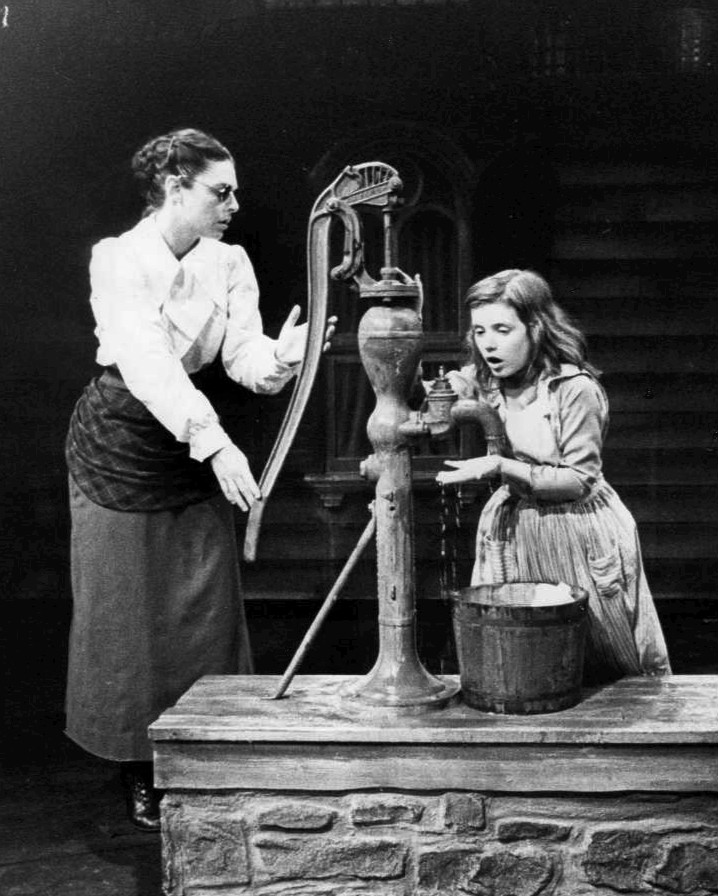
  • The Miracle Worker

Strengthening Literacy through Play Reading

Most of these scripts can be purchased through one of the various script publishers.  If you don’t know where to start, try searching the nae of the script, such as “The Giver, the play version.”

If that gets you nowhere, you can try findaplay.com  This site used to be my favorite, but I’ve noticed not every script is listed there anymore.

Your students may find on-line versions to read, especially of the classics (our Town, The Crucible, Raisin in the Sun, The Doll’s House, etc.)  or check out your school or public library.

Sometimes you’ll find them in anthologies, especially if they were Tony Award Winners.  I believe this list includes only Tony Award winners.

I have a unit (two actually) which can help you teach about play analysis.  It is:  Play Reading and Analysis (PDF) 

and Play Reading and Analysis Google Classroom

Packed with questions and a rubric it contains:

  • Letter to Teacher
  • Project Assignment–What is Expected in the Assignment
  • Play Analysis Questions–as a Producer, Director and Designer
  • Play Titles–Vetted and Compiled from Drama Teachers Around the World
  • Rubric (FULLY EDITABLE)
  • Exit Slip prompts for 5 days–Questions are Provided for Each Day
  • Source Page

I hope you’ll check it out and use it.  It’s very different.


Or, if you’d like to get a heck of a deal, look into this bundle:  Drama Units and Lessons for High School Students

Until next time.

Deborah Baldwin, author

Contact me at dhcbaldwin@gmail.com or DeborahBaldwin.net

Share this:

  • Click to share on Tumblr (Opens in new window) Tumblr
  • More
  • Click to share on X (Opens in new window) X
  • Click to share on Facebook (Opens in new window) Facebook
  • Click to share on Pinterest (Opens in new window) Pinterest
  • Click to share on LinkedIn (Opens in new window) LinkedIn
  • Click to email a link to a friend (Opens in new window) Email
  • Click to share on Reddit (Opens in new window) Reddit
  • Click to share on Pocket (Opens in new window) Pocket
  • Click to share on Telegram (Opens in new window) Telegram
  • Click to share on WhatsApp (Opens in new window) WhatsApp

Like this:

Like Loading...

Filed Under: arts education, drama education, excellence in teaching, play reading, plays, Teacherspayteachers, theater, youth theatre Tagged With: 'tweens, drama education, drama lessons, high school, Middle grade, middle grades, play analysis, play reading, theater education, youth theater

Next Page »

Footer

Follow Us

logo3.png

FOLLOW US

Facebook X-twitter Pinterest Instagram Envelope Rss

Goodreads: read

Malibu Rising
Malibu Rising
by Taylor Jenkins Reid
People We Meet on Vacation
by Emily Henry
The Last Thing He Told Me
by Laura Dave
Faking It
Faking It
by Cora Carmack
Losing It
Losing It
by Cora Carmack

goodreads.com
Copyright © 2024 · Wellness Pro on Genesis Framework · WordPress.com.Log in
 

Loading Comments...
 

    %d