• Skip to primary navigation
  • Skip to main content
  • Skip to footer

Join Me in my new Facebook Group! https://www.facebook.com/groups/417126059784261

Menu
  • Meet Deb – The Heart Behind DramaMommaSpeaks
    • Work with Me! 
    • Photo Gallery of DramaMommaSpeaks
    • Directorial Credits
  • I Give Book Talks! 
    • Book Talk Through Skype
    • Books
  • Freebies!
  • Bumbling Bea
  • Teaching Resume
  • Acting Resume
  • Contact Me
  • Blog
    • Drama Education
    • Arts Education
    • Youth Theatre
    • Middle Grades
    • Musical Theatre
    • Teaching
  • Meet Deb – The Heart Behind DramaMommaSpeaks
    • Work with Me! 
    • Photo Gallery of DramaMommaSpeaks
    • Directorial Credits
  • I Give Book Talks! 
    • Book Talk Through Skype
    • Books
  • Freebies!
  • Bumbling Bea
  • Teaching Resume
  • Acting Resume
  • Contact Me
  • Blog
    • Drama Education
    • Arts Education
    • Youth Theatre
    • Middle Grades
    • Musical Theatre
    • Teaching

theatre

Women Who Shaped Theater: Sarah Bernhardt to Audra McDonald

March 15, 2025 By dhcbaldwin Leave a Comment

Pink roses in the background with photos of actresses Sarah Bernhardt and Audra McDonald

Women Who Shaped Theater: Sarah Bernhardt to Audra McDonald

Theater has long been a space for storytelling, creativity, and performance. Yet, for much of history, women struggled to claim their rightful place on stage and behind the scenes. Despite these challenges, countless women have shaped the theatrical world, pushing boundaries and redefining the art form. In this post, we’ll explore the women who shaped theater: Sarah Bernhardt to Audra McDonald.

As a woman myself, I am always aware of women’s contribution to theater. In particular, I want to focus not only Sara and Audra, but also Lorraine Hansberry, Ethel Merman, Julie Taymor, Rita Moreno and Sarah Bareilles. Each of these trailblazers changed the industry in profound ways, leaving a lasting impact on performers, playwrights, and audiences alike. If you’d like to learn about other theater artists, check out: Teaching Stage Legends: Burnett, Andrews, Jones, and Van Dyke 

File:Sarah Bernhardt by Sarony cph.3a38656.jpg

Women Who Shaped Theater: Sarah Bernhardt to Audra McDonald

Sarah Bernhardt

My mother used to call me “Sarah Bernhardt” and at the rip age of twelve I didn’t know who she was.  I think in my mother’s own way, she was trying to tease me.  But now that I know about Ms. Bernhardt, I’m flattered! Before Broadway, before Hollywood, there was Sarah Bernhardt (1844–1923). A French actress renowned for her dramatic flair and commanding stage presence, Bernhardt became one of the world’s first global celebrities.

  • She was known as “The Divine Sarah” and performed in roles traditionally played by men, including Hamlet.
  • Bernhardt toured internationally, bringing high art to audiences around the world.
  • She defied expectations by continuing to perform even after losing her leg in her later years.
  •  Bernhardt originally planned to become a nun but instead enrolled in the Paris Conservatory when she was 16. However with the support and encouragement of her mother’s wealthy lover, her prolific theatrical career was ignited

Bernhardt’s daring choices and larger-than-life persona set the stage for future actors to embrace their individuality and take risks in their careers.

File:Ethel merman 1967.JPG

Ethel Merman: The Queen of Broadway

If you think of Broadway belters, one name comes to mind first: Ethel Merman (1908–1984). Known for her powerful voice and impeccable comedic timing, Merman became one of the most influential musical theater performers of all time.

  • She originated some of Broadway’s most famous roles, including Annie Oakley in Annie Get Your Gun and Reno Sweeney in Anything Goes.
  • Her strong, brassy voice set the standard for musical theater vocalists.
  • She worked with legendary composers like Cole Porter, George Gershwin, and Irving Berlin—many of whom wrote songs specifically for her.
  • She was a favorite of Cole Porter, who wrote Anything Goes and DuBarry Was a Lady specifically for her.

Merman proved that musical theater could be just as electrifying as a dramatic play, paving the way for powerhouse performers like Patti LuPone and Idina Menzel.
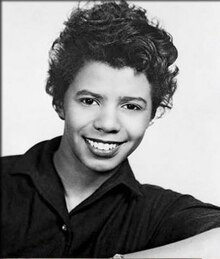
Lorraine Hansberry: A Playwright Who Changed History

While many women made their mark on stage, Lorraine Hansberry (1930–1965) changed theater history with her words. Her groundbreaking play A Raisin in the Sun (1959) was the first play written by a Black woman to be performed on Broadway. When teachers ask of a recommendation for someone to teach about during Black History month, I always suggest Lorraine Hansberry.

  • A Raisin in the Sun tackled themes of racial injustice, family struggles, and the pursuit of dreams, resonating with audiences of all backgrounds.
  • Hansberry was the first Black woman to win the New York Drama Critics’ Circle Award.
  • She used her platform to advocate for civil rights, influencing both the arts and activism.
  • Her close friend Nina Simone wrote the song “To Be Young, Gifted and Black” in Hansberry’s honor after her passing.

Hansberry’s work opened doors for future generations of playwrights, including Lynn Nottage, Suzan-Lori Parks, and Dominique Morisseau, whose works continue to challenge and inspire audiences today. Pick up a FREE biography lesson about Cynthia Erivo!

File:Julie Taymor 2 Shankbone 2009 Metropolitan Opera.jpg

Julie Taymor: A Visionary Director

Women have historically been underrepresented in directing and design, but Julie Taymor (b. 1952) shattered expectations with her revolutionary approach to theater.

  • She became the first woman to win a Tony Award for Best Direction of a Musical with The Lion King (1997).
  • She designed over 230 puppets for The Lion King, blending African and Asian theatrical traditions.
  • Taymor has directed not only on Broadway but also in opera and film, proving that theatrical storytelling transcends mediums.
  • In 1991, she received the MacArthur Fellowship, recognizing her innovative approach to theater.

In addition, her work paved the way for other female directors like Diane Paulus, Rachel Chavkin, and Liesl Tommy, showing that women can lead bold, visually stunning productions.

File:Audra McDonald (1).jpg

Audra McDonald: A Record-Breaking Star

No list of influential women in theater is complete without Audra McDonald (b. 1970). She is known for her astonishing vocal range and acting talent.  And get this:  McDonald has won more Tony Awards than any other performer—six and counting!

  • She is the only performer to win a Tony in all four acting categories (Best Actress and Featured Actress in both plays and musicals).
  • Her roles range from classic musicals (Carousel, Ragtime) to powerful dramas (Master Class, Lady Day at Emerson’s Bar & Grill).
  • First Black Woman to Play Mother Abbess in The Sound of Music Live! (2013) and Bess in Porgy and Bess on Broadway.
  • She has used her platform to advocate for diversity and inclusion in theater, supporting young artists and underserved communities.

McDonald continues to redefine what it means to be a Broadway star, inspiring new generations of performers to pursue excellence on their own terms.

File:Rita Moreno (78th Peabody Awards) 2 (cropped).jpg

Rita Moreno: A Trailblazing Triple Threat

It’s important to mention that women from many backgrounds and cultures blazed the trail for females. Few performers can match the versatility and longevity of Rita Moreno (b. 1931). One of the few EGOT (Emmy, Grammy, Oscar, and Tony) winners, Moreno has influenced generations of actors in both film and theater.

  • She made history as Anita in the 1961 film version of West Side Story, winning the Academy Award for Best Supporting Actress—the first Latina to do so.
  • On stage, she starred in Broadway productions such as The Ritz (for which she won a Tony) and The Odd Couple.
  • She appeared in both the 1961 and 2021 versions of West Side Story—winning an Oscar for playing Anita in the original and portraying Valentina in the remake.
  • Moreno has long been an advocate for Latinx representation in entertainment, paving the way for performers like Lin-Manuel Miranda and Daphne Rubin-Vega.

At 90+ years old, Moreno continues to perform, proving that great artistry knows no age.

File:Joni Mitchell 1143 05 (cropped).jpg

Sara Bareilles: A Modern Broadway Powerhouse

One of my personal favorite creators if Sarah Bareilles.  While many know Sara Bareilles (b. 1979) for her pop hits like Love Song and Brave, she has become a major force in modern musical theater.

  • She composed and wrote the lyrics for Waitress (2016), becoming one of the few female composers to write a full Broadway score.
  • She later stepped into the lead role of Jenna, proving her talent as a performer as well.
  • Her song “King of Anything” was a response to people constantly giving her unsolicited advice—especially about her music career.
  • Bareilles has continued her Broadway career with projects like Into the Woods and Girls5eva, inspiring more women to pursue composing and writing in theater.

Bareilles represents the future of musical theater, where women are not just stars but also creators shaping the stories we see on stage.

Preview of Drama Musical Theater Empowering Women Study Guides History Tony Awards 1

If you want to celebrate National Women’s Month in March, check out this bundle.  It’s full of information about four musicals which had women at the forefront and helm.

How have you celebrated National Women’s Month in your classroom?  Please share. You can email me at DhcBaldwin@gmail.com

Woman behind DramaMommaSpeaks

Share this:

  • Share on Tumblr (Opens in new window) Tumblr
  • More
  • Share on X (Opens in new window) X
  • Share on Facebook (Opens in new window) Facebook
  • Share on Pinterest (Opens in new window) Pinterest
  • Share on LinkedIn (Opens in new window) LinkedIn
  • Email a link to a friend (Opens in new window) Email
  • Share on Reddit (Opens in new window) Reddit
  • Share on Pocket (Opens in new window) Pocket
  • Share on Telegram (Opens in new window) Telegram
  • Share on WhatsApp (Opens in new window) WhatsApp

Like this:

Like Loading...

Filed Under: acting, arts education, Broadway, community theater, community theatre, drama education, drama integration, Education, Education, High School, middle grades, music education, Musical Theatre, performing arts, Professional Theatre, Teacherspayteachers, theater, theatre, Tony Awards, youth theatre Tagged With: Ethel Merman, Julie Taymore, Lorraine Hansberry, Rita Moreno, Sarah Bareilles, Sarah Bernhardt

Unmasking Drama: Engaging Small Classes

February 27, 2025 By dhcbaldwin 2 Comments

A happy teacher calling on a small class of drama students.

Unmasking Drama: Engaging Small Classes

Unmasking Drama: Engaging Small Classes Effectively

Today, let’s discuss Unmasking Drama: Engaging Small Classes. Picture this: You are ready to teach on your very first day of classes. Excited, you double-check the student roster. Hmmm. At last check, there weren’t too many students signed up for your class. However, you knew that in the last days of summer, usually some stragglers sign up. In walk two students. Even though your roster listed these two students’ names, you are certain there are more arriving any minute.

You wait five minutes. The two students look uncomfortable and you are apprehensive. You think, “What can I do with a class of two? How can I still make this class engaging? “ Disappointed, you throw out your plans for the first week of class.

Unmasking Drama: Engaging Small Classes Effectively

Unmasking Drama: Engaging Small Classes

Does this sound like you? I’ve been in this position before. Teaching drama to a small group is a unique challenge. Unlike math or even art, drama thrives on human interaction, group dynamics, and ensemble work. So, what do you do when your “ensemble” consists of just two or three students?

Occasionally, a teacher will email me begging for help with teaching their class. They have a small class of students. The question to me is usually the same: Is it possible to teach drama to a small group of students?

My answer is always a resounding, yes! I’ve taught several classes with only one or two students. These were home school students in a huge enrichment program. Your success depends upon a few things, some of which are somewhat out of your control. However, there are many things you can control, and with a little creativity, you can turn a small class into an enriching experience.


Unmasking Drama: Engaging Small Classes Effectively

Unmasking Drama: Engaging Small Classes

1. Limited Ensemble Dynamics

With fewer students, it’s harder to create the rich, spontaneous interactions typical in larger ensembles. Each student’s contribution is magnified, and the diversity of ideas and energy might be more limited. At times, I’ve noticed that when a student receives too much attention, they can become overly dependent on me when struggling with a concept.

2. Individualized Needs

In a small group, differences in skill levels, personality, and confidence become more apparent. This is where the teacher’s level of exhaustion comes into play. You must tailor lessons, provide personalized feedback, and ensure that each student’s unique needs are met without compromising the group’s overall progress.

3. Risk and Vulnerability

Drama often involves improvisation and exposing one’s vulnerabilities. In a small setting, students may feel overly visible or pressured, making it tougher to foster a safe space for experimentation and risk-taking. (If one student resists and you only have two in the class, your chance of success has dropped by 50%!)

4. Building Group Cohesion

Developing trust and a sense of community is essential in drama. With fewer participants, it requires extra effort to ensure that all students connect and collaborate effectively. Absenteeism, students not learning their lines, or unfinished projects can bring your class to a standstill.


Solutions & Strategies for Success

Quick Fixes for Small Classes

  • Lean into one-on-one coaching: Treat it like a personalized drama mentorship.
  • Adjust group exercises for two or three people: Focus on duologues, monologues, and character studies.
  • Expand beyond acting: Let students explore directing, playwriting, and design.
  • Use multimedia tools: Record performances, create podcasts, or study filmed theater.

Now, let’s look at how I put these strategies into action.


Unmasking Drama: Engaging Small Classes Effectively

Emily’s Story: Adapting Drama for One Student

Emily was a wonderful homeschool student in my drama class. Several other students were signed up but dropped at the last minute. Since I had previous teaching experience with Emily and knew that if I canceled the class, she’d be crestfallen.

Inventory the Student’s Interests

To begin, I interviewed Emily to discover which aspects of theater interested her most. Ha! All of it! We discussed book titles that had been dramatized, musicals she liked.  Additionally, we considered whether she wanted to be realistic or fanciful in her set and costume designs. By giving Emily opportunities to choose the differentiation, I knew that we’d be more successful than had we not done so.

Unmasking Drama: Engaging Small Classes Effectively

Creating a Personalized Curriculum

Since I was teaching Emily once a week from August to May, we structured  our plan together. Here’s what it looked like:

Lesson Plan for a One-Student Drama Class

  • August: Icebreaker games and warm-ups that work for two people (e.g., Add a Word storytelling).*
  • September: Read the play version of Peter Pan aloud.
  • October: Studied and designed costumes for Peter Pan. Emily even sewed Peter Pan’s hat!
  • November: Explored set design and built a model of the Peter Pan set.
  • December: Watched the Peter Pan musical and compared it to the play version.
  • January & February: Studied stage properties. Emily designed and built a cardboard broadsword using an instructional video.
  • March: Studied stage makeup and designed a look for Captain Hook.
  • April: Selected a three-person scene from Peter Pan to perform. I invited two girls from another class to rehearse with Emily.
  • May: Performed the scene for Emily’s parents and she wrote a reflection about her experiences during the year of learning.

*Generally, we began each class with a warm-up exercise of some kind that tied to the subject of the day.

If you are in need of particular lessons for this plan, check out:  Dramamommaspeaks Store


Unmasking Drama: Engaging Small Classes Effectively

Alternative Approaches for Small Classes

Rotating Focus Each Class

Another way to teach a small drama class effectively is to structure your lessons to explore different aspects of theater each session:

  • Acting & Performance: Scene study, monologues, improv games.
  • Technical Theater: Costume and set design projects.
  • Theater History & Playwriting: Reading plays, writing scenes.
  • Production Elements: Sound design, lighting concepts, directing techniques.

Creative Drama Exercises for Small Groups

Here are a few engaging activities tailored for 1-3 students:

  • “Mirror, Mirror”: One student mimics another’s movements to build focus.
  • “What are you doing?: Take turns informing each other something they must do that is physical, “I’m mopping the floor.”
  • Table Reads: Read and analyze famous plays.
  • Monologue Swap: Perform the same monologue in different tones/moods.
  • Character Walks: Move around as different characters to develop physicality.

Unmasking Drama: Engaging Small Classes Effectively

Final Thoughts: Reframing Small Classes as an Opportunity

Thus, as you are aware, teaching a small drama class can feel isolating or discouraging. But it also offers a unique opportunity for deep, personalized instruction. Most importantly, the key is to lean into the strengths of a small class, offering students individualized coaching, creative freedom, and opportunities to explore theater beyond acting.

Your Turn!

  • Have you ever taught a small drama class? What creative solutions worked for you?
  • What are your favorite duo or trio scene studies? Drop your recommendations below! Or Email me at DhcBaldwin@gmail.com

I hope this blog post, Unmasking Drama: Engaging Small Classes Effectively has been helpful to you. Need more ideas? Check out my post on How to Use a Hybrid Lesson in Your Drama Classroom Tomorrow.

Woman behind DramaMommaSpeaks

Share this:

  • Share on Tumblr (Opens in new window) Tumblr
  • More
  • Share on X (Opens in new window) X
  • Share on Facebook (Opens in new window) Facebook
  • Share on Pinterest (Opens in new window) Pinterest
  • Share on LinkedIn (Opens in new window) LinkedIn
  • Email a link to a friend (Opens in new window) Email
  • Share on Reddit (Opens in new window) Reddit
  • Share on Pocket (Opens in new window) Pocket
  • Share on Telegram (Opens in new window) Telegram
  • Share on WhatsApp (Opens in new window) WhatsApp

Like this:

Like Loading...

Filed Under: acting, arts education, arts integration, Creativity, drama education, Education, Education, excellence in teaching, multiculturalism, set design, Teacherspayteachers, teaching strategies, theater, theatre, youth theatre Tagged With: acting, Broadway musicals, cooperative learning, costume design, drama education, drama lessons, ensemble acting, improvisation, Peter Pan play, reading play, set design, technical theater, theater, warm up exercises

Why Every High School Theater Needs a Rehearsal Contract

February 6, 2025 By dhcbaldwin 3 Comments

Cast of Oklahoma and their first read thru


Why Every High School Theater Needs a Rehearsal Contract

Let’s talk about why every high school theater (and even middle school) needs a rehearsal contract. When I first began directing youth theater plays, I ran everything like a professional theater company.  That’s all I knew. Don’t be like me. It’s a wonder any students continued working with me.  I’m sure I was too strict, too rigid and too professional.  These are kids for heaven’s sake.  However, running a high school play or musical is no small task.

Between casting, scheduling, and final performances, there are countless moving pieces that require organization and commitment. One of the best ways to establish expectations from the start is through a rehearsal contract. If you do so, you will have less issues to deal with and that’s tantamount to keeping the stress at bay. Wondering about all the details of directing?  Check out:  Ten Important Elements to Consider When Directing a Youth Theater Production

You ask, what is a rehearsal contract?  A rehearsal contract is a simple document that outlines responsibilities, schedules, and rules for everyone involved in a production. It ensures that students, parents, and staff are on the same page, helping to create a smooth and professional rehearsal process.

Why Every High School Theater Needs a Rehearsal Contract

Why Every High School Theater Needs a Rehearsal Contract

  1. Attendance Policy
    Too often, I read in Facebook theater teacher groups about directors losing students to conflicts they never mentioned prior to casting the show.  Students should understand that theater is a team effort, and absences affect everyone. The contract should outline expectations regarding:
  • Required attendance for rehearsals and performances You need to decide how much you are willing to acquiesce to students’.  Me?  I don’t budge.  
  • Consequences for excessive absences.  Will they be dropped from the show?  
  • Procedures for notifying the director in case of emergencies–Do you want it in an email?  You must state this. 
  1. Rehearsal Schedule
    A clear schedule helps students plan accordingly. The contract should include:
  • Weekly rehearsal days and times  My advice is to begin and end promptly at the time you set.  Inform the students to arrive early if they want to visit.
  • Tech week expectations (longer rehearsals, no absences) If it’s over a meal time.  Will you feed them? 
  • Acknowledgment that last-minute changes may occur. Will you send out an email stating these or post it outside of your classroom? 

Why Every High School Theater Needs a Rehearsal Contract

Rehearsal Conflict: Calling the Right Actors at the Right Time

Note:  I’m a little different here–I only call the actors I need to work with in a particular scene.  Everyone is not called for rehearsal every day. If the scene includes other characters but they are not important to the blocking (a large cast scene, for example), I don’t require them until later.

Why?  Because the non-speaking characters can become bored very quickly. Or they might feel taken advantage of to have to rehearse when they aren’t the focus of the scene. (All actors have egos!) Check out my blog about double casting: Double Casting a Show? Here’s Advice

3.  Behavior Expectations
A rehearsal is only as productive as the attitude of the cast and crew. Guidelines should address:

  • Respect for directors, stage managers, and fellow cast members–Maintaining a quiet atmosphere is important
  • Staying focused and engaged during rehearsals–No talking during rehearsals
  • Cell phone usage and socializing limits–I don’t allow cell phones in rehearsals.  They are a huge distraction to everyone.  I warn everyone once.  After that, I begin taking phones away and setting them on the edge of the stage.

4. Line and Blocking Memorization
Deadlines for memorization help keep the production on track. The contract can specify:

  • When actors must be off-book.  For instance, when we block a scene, I remind them that  the next time we hearse this scene, I require them to be off book–they may ask for lines at this rehearsal, however.
  • The importance of learning blocking and choreography–I’m a real stickler for blocking. Additionally, I take great care and time pre-blocking the production and I have reasons that  I want the actors to use my blocking.  The blocking always motivates the lines. 
  • You may need to teach your students how to memorize lines and blocking.  Check out this post for help:  Three Ways to Memorize Lines for a Play or Musical
  • Consequences for failing to meet deadlines. If you set up rehearsals and expectations properly, you will not need consequences.  You could use a “three strikes and you are out” rule.

Why Every High School Theater Needs a Rehearsal Contract

Costumes, Props & Backstage Expectations: Taking Responsibility for the Details

5.  Technical and Costuming Responsibilities
The backstage crew and actors share responsibility for props, set pieces, and costumes. The contract should include:

  • Care and handling of costumes, props, and set pieces You need to make a list of what you expect here.  Do you expect the students to wash their clothes between shows?  Wearing deodorant? How about hanging them up properly?
  • Expectations for costume fittings–I also remind the students that they are wearing costume not a cute outfit to school.  It is different.  Plus, It is not uncommon for them to not like how they look in the costume (teenage angst) , but they will learn how to accept this in time.
  • Any personal items students need to provide (shoes, base clothing, etc.)

6.  Parent/Guardian Acknowledgment
Since high school theater often involves extended hours, transportation, and possible fees, the contract should require a          parent/guardian signature. This ensures:

  • Parents are aware of the time commitment  Spell it out several times. For instance, “Rehearsals run from 4:30 to 6:30 Monday, Wednesday and Friday. Then, beginning February 18, they will run Monday, Tuesday, Wednesday, and Thursday from 4:30 to 7:00 p.m.”
  • They understand financial obligations. Usually, I suggest mentioning this right up front.  This may keep some students from participating.
  • They are encouraged to support their child’s participation. Welcome your parents to be involved as chairs for committees such as box office, concessions, building the set, props and costumes. I’ve made great friendships with my students’ parents.  They are terrific cheerleaders for your program!

Why Every High School Theater Needs a Rehearsal Contract

The Benefits of Using a Rehearsal Contract

Sometimes, you will find that you are teaching the parents and the students how to rehearse and what is expected of them.  Remember:  A contract does more than just enforce rules—it builds accountability. Not only does it help students treat the production with a higher level of professionalism, it  prepares them for future performance experiences.

Additionally, it reduces confusion and ensures that parents, students, and staff share the same expectations from day one. By implementing a rehearsal contract, you’re setting your cast and crew up for success, creating a smoother process for everyone involved.

Looking for more information about directing a production with students?  Check out: Critical Steps in Producing a Play or Musical: Costumesor Critical Steps in Selecting a Play or Musical: Casting

A Freebie Just for You! 


Like always, it is my goal to help teachers by providing resources that lighten their teaching. Check out this rehearsal contract and see if it has what you need.  I’ve created a word doc. of it!! You can download it and work it from there.  I hope this helps you!  Click here: Rehearsal Contract

first rehearsal
First rehearsal of Oklahoma!


High School Theater Rehearsal Contract

Production Title: [Insert Play/Musical Name]
School Name: [Insert School Name]
Director: [Insert Director’s Name]
Rehearsal Start Date: [Insert Date]
Performance Dates: [Insert Dates]

1. Attendance Policy

The success of our production depends on everyone’s commitment. Cast and crew members agree to:

  • Attend all scheduled rehearsals unless excused in advance.
  • Arrive on time and remain for the full duration of rehearsal.
  • Notify the director at least 24 hours in advance if an absence is unavoidable.
  • Limit absences to [insert allowed number] before roles may be reassigned.
  • Be present for all mandatory rehearsals, including tech week and performances (no absences permitted).

2. Rehearsal Schedule

  • Rehearsals will be held on [insert days and times].
  • Tech week and additional rehearsals may be scheduled as needed.
  • Students must check the callboard/email for updated schedules.

3. Rehearsal Etiquette

  • Arrive prepared with your script, notes, and any necessary materials.
  • Give full attention to the director, stage manager, and crew.
  • Respect the rehearsal space—clean up after yourself and take care of props/costumes.
  • Keep talking and cell phone use to a minimum unless permitted by the director.
  • Support your fellow cast and crew members with a positive attitude.

4. Line and Blocking Memorization

  • Lines must be memorized by [insert deadline].
  • Blocking and choreography must be fully learned and retained.
  • Failure to meet deadlines may result in removal from the production.

5. Costume and Technical Responsibilities

  • Actors will be responsible for attending all costume fittings.
  • Proper care must be taken with all props, costumes, and set pieces.
  • Actors may be required to provide certain personal costume items (shoes, undergarments, etc.).

6. Behavioral Expectations

  • Treat directors, stage managers, cast, and crew with respect.
  • Disruptive behavior, excessive tardiness, or refusal to cooperate may result in dismissal from the production.
  • Follow all school rules and adhere to safety protocols.

7. Parent/Guardian Acknowledgment

Parents/guardians must acknowledge the commitment required:

  • Students may have extended rehearsals leading up to the show.
  • Parents are responsible for transportation and ensuring their child arrives on time.
  • There may be financial responsibilities for costume items or production fees (if applicable).

Agreement and Signatures

By signing this contract, I acknowledge my role in this production and agree to adhere to the rehearsal expectations. I understand that failure to comply with these terms may result in consequences, including removal from the production.

Student Name (Print): ____________________________
Student Signature: ____________________________ Date: ____________

Parent/Guardian Name (Print): ____________________________
Parent/Guardian Signature: ____________________________ Date: ____________

Director Signature: ____________________________ Date: ____________


This contract sets clear expectations while reinforcing professionalism in high school theater. Let me know if you’d like any modifications!

I hope this post gives you all the answers you are looking for, but if not feel free to email me at DhcBaldwin@gmail.com and ask me any questions you have.

Woman behind DramaMommaSpeaks

Share this:

  • Share on Tumblr (Opens in new window) Tumblr
  • More
  • Share on X (Opens in new window) X
  • Share on Facebook (Opens in new window) Facebook
  • Share on Pinterest (Opens in new window) Pinterest
  • Share on LinkedIn (Opens in new window) LinkedIn
  • Email a link to a friend (Opens in new window) Email
  • Share on Reddit (Opens in new window) Reddit
  • Share on Pocket (Opens in new window) Pocket
  • Share on Telegram (Opens in new window) Telegram
  • Share on WhatsApp (Opens in new window) WhatsApp

Like this:

Like Loading...

Filed Under: acting, arts education, community theater, community theatre, directing experiences, drama education, Education, High School, middle grades, Musical Theatre, Producing plays and musicals, Teacherspayteachers, theater, theatre, youth theatre Tagged With: attendance policy, behavior expectations, costume responsibilities, directing advice, high school actors, lines and blocking memorization, parental involvement, rehearsal schedule, technical responsibilities

Exploring Modern Theaters: A Global Journey in Performance

January 20, 2025 By dhcbaldwin Leave a Comment

photo from War Horse, the play

Exploring Modern Theaters: A Global Journey in Performance

As you might expect, I’ve attended theater all around the world–from Marcel Marceau in 1961, Kabuki theater in 1973 to an Innuit play in 2001.  Additionally, I’m aware that most of our students are not as fortunate as I. However, I think there is one way we can remedy this for our students.  Simply put, introduce to them theater around the world. Modern theater is a mix of old traditions and new ideas. Around the world, theater is growing and changing, showing the creativity of different cultures. This post, “Exploring Modern Theaters: A Global Journey in Performance,” takes a look at how theater is done in various places and what makes each unique.

File:Lin-Manuel Miranda in Hamilton.jpg

Creativity and Diversity

United States: The U.S. is known for its amazing theater, especially Broadway in New York City. Big musicals like Hamilton and The Lion King are huge hits, but there’s also smaller, more creative theater happening Off-Broadway and in places like Chicago. These smaller theaters often tell new stories and try out bold ideas. Perhaps more importantly, we have theater opportunities for people of different abilities, welcoming everyone to participate!

When Sam’s son, who has developmental disabilities, asked, “When is it my turn to act on stage?” she took action. As the theater arts coordinator at Phoenix Day School for the Deaf, Sam created Detour Company Theatre to provide performance opportunities for individuals with cognitive and physical disabilities. Detour, with about 50 actors, stages double features like Shrek The Musical and Legally Blonde The Musical.  Consequently, this allows our members to shine in lead and ensemble roles. “We take detours, but we all arrive at the same destination—entertainment and joy,” says Sam.

Canada: Canada’s theater reflects its mix of cultures. The Stratford Festival in Ontario.  This festival focuses on Shakespeare and classic plays.  Additionally, Indigenous playwrights like Tomson Highway tell important stories about First Nations. In Quebec, French-language plays bring another layer to Canada’s theater scene.

Exploring Modern Theaters: A Global Journey in Performance

Latin America: Theater in Latin America often combines art and activism. In Brazil, Augusto Boal’s Theatre of the Oppressed is a groundbreaking method that uses theater as a tool for social change. This technique encourages audience participation, turning spectators into “spect-actors”. This gives the audience a chance to engage with the performance and suggest solutions to real-life problems. Not only is that engaging, but of course topical.  It includes forms like Forum Theatre, where audience members step into roles to explore different outcomes, and Image Theatre, which uses body language to communicate complex ideas without words.

Boal’s work has inspired activists and educators worldwide to use theater to address inequality, oppression, and social justice issues. In Mexico, street theater is very popular, turning public spaces into stages and making theater fun and easy to access.

File:'The broken pot' Kleist Ukrainian National Theatre Dostoevsky "Brothers Karamazov" Yaroslavl Volkov theatre Directing Roman Markholia Stage design Vladimir Kovalchuk Costumes Natalia Rudiuk-6.jpg

Europe: Old and New Come Together

United Kingdom: The UK has a wide variety of theater, from the famous West End to interactive shows by companies like Punchdrunk. London’s National Theatre and Shakespeare’s Globe perform both old and new works, while smaller theaters introduce exciting new playwrights.

Punchdrunk Theatre Company, founded in 2000 by Felix Barrett, revolutionized immersive theater by placing audiences directly in the action. Known for their acclaimed production Sleep No More, a film noir-inspired take on Macbeth that’s captivated audiences in London, New York, and Shanghai, Punchdrunk creates non-linear narratives in sprawling, interactive spaces. Their latest, The Burnt City, explores the mythological Trojan War in a vast London venue.

Exploring Modern Theaters: A Global Journey in Performance
Berlin’s Schaubühne

Germany: Germany is known for its creative and experimental theater. Directors like Thomas Ostermeier at Berlin’s Schaubühne. Furthermore, this company makes bold choices, using technology and powerful visuals to connect with audiences in new ways.

France: French theater is often cutting-edge. The Avignon Festival is famous for blending theater, dance, and technology. Groups like Théâtre du Soleil explore global and political themes, attracting audiences from around the world.

Eastern Europe: Theater in Eastern Europe is shaped by its history. Puppetry and physical theater are common, with groups like Poland’s Teatr Piesn Kozla using music and movement to tell moving stories.

Exploring Modern Theaters: A Global Journey in Performance
Kathakali play

Asia: Mixing Old and New

India: Indian theater combines ancient traditions with modern issues. The Rangashankara theater in Bangalore encourages new writing.  Likewise, traditional forms like Kathakali inspire today’s plays. Writers like Mahesh Dattani focus on topics like gender and identity.

Japan: Japan’s theater keeps its classics alive, like Noh and Kabuki, while also pushing boundaries. Groups like Tokyo Metropolitan Theatre bring together artists from around the world, and playwright Toshiki Okada uses minimalist styles to talk about modern life.

Exploring Modern Theaters: A Global Journey in Performance
Tokyo Metropolitan Theatre

China: Chinese theater is a mix of traditional opera and modern techniques. For instance, cities like Beijing and Shanghai host performances that include drama, music, and digital effects.

Southeast Asia: Countries like Indonesia, Thailand, and the Philippines show a blend of tradition and modern theater. Shadow puppetry, like Wayang Kulit, inspires new works, while writers explore global and cultural themes.

Exploring Modern Theaters: A Global Journey in Performance
South African Theatre Festival

Africa: Stories of Strength and Change

African theater is deeply connected to storytelling and tradition. In Nigeria, Wole Soyinka’s plays explore the mix of old and new cultures. Moreover in South Africa, productions like Woza Albert! use humor to talk about serious topics like apartheid. Across the continent, theater reflects themes of identity and resilience, with festivals like South Africa’s National Arts Festival showcasing these works.

Exploring Modern Theaters: A Global Journey in Performance
Bangarra Dance Theatre

Australia and Oceania: Cultural Bridges

In Australia, Indigenous theater is very important. Groups like Bangarra Dance Theatre tell stories through dance and music, celebrating Aboriginal culture. Playwrights like David Williamson write sharp, funny plays about modern society. In New Zealand, theater mixes Maori myths with current issues to create unique performances.

War Horse, the play

Global Trends in Modern Theater

Theater today shares some common trends across the world:

  • Diversity and Representation: More playwrights and directors from different backgrounds are sharing their stories, creating fresh perspectives.
  • Technology on Stage: Shows are using virtual reality, projections, and other technologies to create amazing effects. Productions like The Encounter use 3D sound to make the audience feel part of the story.
  • Eco-Friendly Practices: Many theaters are trying to be greener by reusing sets and cutting down on energy use.
  • Interactive Shows: Some theaters let the audience take part in the story. Additionally, plays like Sleep No More create immersive experiences where viewers explore the performance space.
Exploring Modern Theaters: A Global Journey in Performance
Theatre Du Soleil

The Future of Modern Theater

John Steinbeck said, “The theater is the only institution in the world which has been dying for four thousand years and has never succumbed.” Every time I hear about a new production opening or a theater announcing its next season, I get a lump in my throat thinking about how “theater is dying”, not!

Modern theater keeps changing to stay exciting and relevant. As technology grows and new ideas emerge, theater will continue to reflect the world’s challenges and successes. That is exciting, yes? By mixing old traditions with new innovations, theater remains a powerful way to bring people together and share stories.

Whether it’s on big stages like Broadway or in small, experimental spaces, modern theater shows us what it means to be human. It connects us across cultures and reminds us of the power of storytelling.

Preview of Emergency Sub Plan! VERY Popular Theater Around the World Video Lessons Drama 1

Theaters Around the World Resource

Are you teaching middle and high school students about modern theater?  Check out my Theaters Around the World unit. It contains a series of video clips with questions pertaining to various theater companies around the world not mentioned here. Have any questions?  Please feel free to email me with them at DhcBaldwin@gmail.com


Deb

Woman behind DramaMommaSpeaks

Share this:

  • Share on Tumblr (Opens in new window) Tumblr
  • More
  • Share on X (Opens in new window) X
  • Share on Facebook (Opens in new window) Facebook
  • Share on Pinterest (Opens in new window) Pinterest
  • Share on LinkedIn (Opens in new window) LinkedIn
  • Email a link to a friend (Opens in new window) Email
  • Share on Reddit (Opens in new window) Reddit
  • Share on Pocket (Opens in new window) Pocket
  • Share on Telegram (Opens in new window) Telegram
  • Share on WhatsApp (Opens in new window) WhatsApp

Like this:

Like Loading...

Filed Under: acting, Arts, arts education, arts integration, drama education, drama integration, Education, Education, performing arts, plays, theater, theatre, youth theatre Tagged With: Kabuki Theatre, Rangashankara, Schaubühne, South African Theatre Festival

The Power of Creativity: Nurturing Innovation in Students

January 8, 2025 By dhcbaldwin Leave a Comment

The Power of Creativity: Nurturing Innovation in Students

I worry about our students.  Specifically, as a drama teacher and working with all things theater, I’m concerned about our students’ creativity.  So let’s consider that today–the power of creativity: nurturing innovation in students. In a world increasingly shaped by rapid technological advancements and complex global challenges, creativity has never been more essential.

Schools are not just places where students learn facts and figures. They are incubators for innovative thinkers, problem solvers, and dreamers. I believe that nurturing creativity in students is not only a vital aspect of their development but also an investment in the future.

The Power of Creativity: Nurturing Innovation in Students

Why Creativity Matters

This is a generality–many people believe they are not creative. One of my friends, who has a beautifully decorated home told me, “I’m not creative like you.”  What? Of course,  I disagree with her. Creativity is not just about art, music, or theater. It is the foundation of critical thinking, adaptability, and innovation. When students learn to think creatively, they develop skills that help them approach problems from new perspectives. They explore unconventional solutions, and express their individuality. Since this is a drama education blog, I’m going to consider creativity from that standpoint.

The Power of Creativity: Nurturing Innovation in Students

Creativity in Action: Building Skills Through the Arts

For example:

  • Problem-Solving: Creativity helps students develop resilience and resourcefulness when facing challenges, fostering a mindset of possibilities rather than obstacles. Set design is an excellent example of problem solving.  Students envision their design, draw and build a model of it.
  • Innovation: Many of today’s most groundbreaking advancements come from those who think outside the box, whether in science, business, or technology. The War Horse play is wildly innovative using life size puppets of horses to tell the story.
  • Emotional Growth: Creativity allows students to express their feelings, build confidence, and develop empathy by exploring diverse narratives and perspectives. Writing a monologue, a form of playwriting, about a Christmas gift a student is given is non-threatening and something they can relate to quite easily.

The Power of Creativity: Nurturing Innovation in Students

Strategies to Cultivate Creativity in the Classroom

  1. Encourage Open-Ended Exploration Let students experiment with ideas and projects without fear of being “wrong.” Open-ended assignments promote originality and allow them to explore their interests. Several times in a semester, I give students an opportunity to improv. a particular theme using tableaux or movement like the Tricicle Theater Company.
  2. Incorporate Arts into the Curriculum Theater, music, visual arts, and creative writing engage students in ways that traditional lectures cannot. These disciplines help students develop a broader range of cognitive and emotional skills. Teaching students about building a mood through sound effects and music is always fun.
  3. Provide Opportunities for Collaboration Group projects encourage students to build on each other’s ideas, learning how to synthesize diverse perspectives into something greater than the sum of its parts. For example, if students create their own juke box musical they must work together to create a dynamic and finished product.
  4. Value the Process Over the Product Celebrating effort and experimentation reduces the pressure to “succeed” and helps students take risks, an essential part of creative growth. Designing a costume and using only newspaper and painter’s tape to secure it nurtures ingenuity.  
  5. Model Creativity Teachers who demonstrate their own creative processes—whether through storytelling, problem-solving, or innovation in teaching methods—instill a sense of curiosity and possibility in their students.  When teaching storytelling, I always model a story for my storytelling unit.
  6. If you’d like to learn about the importance of drama education to a student’s life, check out my Litpick.com article.

The Power of Creativity: Nurturing Innovation in Students

The Long-Term Impact

Are you a day dreamer? Sometimes I daydream when I’m create new resources such as the Sonologue unit.  According to the American Psychological Association, “Studies indicate that creativity involves the interaction of multiple neural networks. For instance, the default mode network, associated with mind-wandering and spontaneous thinking, collaborates with the executive control network, responsible for focused attention, during creative tasks. This interplay allows individuals to generate original ideas and critically evaluate them.

As a teacher, one of the best things you can do is praise your students when they are creative, no matter the quality of their project.  When creativity is nurtured, students carry these skills far beyond the classroom. They learn at an early age that having creative ideas will pay off for them.  They become innovators in their fields. Additionally, they are compassionate leaders, and individuals who view the world through a lens of possibility. My advice?  Be as free with them as you possibly can and just watch them light up! 
The Power of Creativity: Nurturing Innovation in Students
Here’s a new warm-up exercise which I think will help you and your students greatly as they hone their creativity: Exploration Game
Moreover, creative education helps students develop a lifelong love of learning, which is critical in an ever-changing world. Learn about my former student, Brandon Davis and how he used set design as a student and turned it into a professional career. The Five Reasons Your Students Will Love Set Design
The Power of Creativity: Nurturing Innovation in Students

The Link Between Personality, Creativity, and Joy

Personality traits such as openness to experience have been consistently linked to higher creativity. Individuals high in this trait tend to be more imaginative.  Additionally they are curious, and open to new experiences.  These quality all contribute to creative thinking. in a recent study sponsored by YouGov which surveyed 700 children, “Creative activities help children recognize their unique talents and develop a deeper belief in their abilities—giving children an incredible sense of joy and accomplishment,” says Cheri Sterman, senior director of education for Crayola. For more information, check out: www.parents.com 

Final Thoughts

I hope my friend re-considers her creativity.  It would be sad to think someone stunted their creativity and imagination just because they don’t think they are capable.  And here’s another thing–creativity has nothing to do with talent! Whoa, that’s a heady thought.  Someone can be talented and not creative.

For instance, your student is a math wizard–that takes analytical thought and problem solving.  That doesn’t necessarily take talent.  Or your teacher is an incredible singer–they are expressive and skilled. Her prowess was probably built through much hard work and practice. I would argue that both people are creative. Do you agree? 

Investing in creativity in education is about more than preparing students for careers—it’s about preparing them for life. When schools make room for creativity, they  enrich students’ academic experiences. Furthermore, they empower them to shape a better future. As educators and mentors, we hold the key to unlocking the potential of the next generation. Let’s use it to inspire a world filled with imagination, innovation, and boundless opportunities.

How do you nurture creativity in your classroom? Share your strategies and success stories in the comments below!

Woman behind DramaMommaSpeaks

Share this:

  • Share on Tumblr (Opens in new window) Tumblr
  • More
  • Share on X (Opens in new window) X
  • Share on Facebook (Opens in new window) Facebook
  • Share on Pinterest (Opens in new window) Pinterest
  • Share on LinkedIn (Opens in new window) LinkedIn
  • Email a link to a friend (Opens in new window) Email
  • Share on Reddit (Opens in new window) Reddit
  • Share on Pocket (Opens in new window) Pocket
  • Share on Telegram (Opens in new window) Telegram
  • Share on WhatsApp (Opens in new window) WhatsApp

Like this:

Like Loading...

Filed Under: acting, Arts, arts education, arts integration, community theatre, creative movement, Creativity, drama education, drama integration, Education, Education, elementary, High School, middle grades, performing arts, set design, storytelling, Teacherspayteachers, theatre Tagged With: children, costume design, elementary, high school, litpick.com, Middle school, movement, set design, sonologue, sound effects, storytelling, tableau, yougov

Epic Theater Evolution: A Journey Through Time

December 11, 2024 By dhcbaldwin Leave a Comment

Let’s talk about epic theater evolution: a journey through time, shall we?  I’ll admit it.  I wasn’t much for history when I was a young student.  However, as I’ve aged, I’ve become more interested in it.  I guess that is what age does to you?

Epic Theater Evolution: A Journey Through Time

Theater has been an integral part of human culture for thousands of years.  It evolved through various forms and styles to become the dynamic and diverse art form we enjoy today. Let’s journey through the fascinating history of theater, from its origins in ancient Greece to the innovative virtual productions of the modern era.

Epic Theater Evolution: A Journey Through Time

Ancient Greek Theater

Last summer we had the amazing opportunity to tour Greece!  Before traveling there, I hadn’t researched the tour because I like to learn about the sites more spontaneously. We purposely chose this trip so that we could see all of the ruins of Greek theaters. Wow, did we see a lot.

The origins of Western theater trace back to ancient Greece, around the 5th century BCE. This era gave birth to the seminal genres of tragedy and comedy. Greek tragedies, often based on mythological themes, explored human emotions.  Playwrights like Aeschylus, Sophocles, and Euripides are still revered for their contributions, with works like “Oedipus Rex” and “Medea” continuing to be studied and performed. If you’ve never read a Greek play, I’d encourage you to do so.  They are amazing and as timely now as then.

Greek comedies, penned by playwrights such as Aristophanes, offered satirical takes on contemporary society and politics. The amphitheaters of ancient Greece, with their impressive acoustics and grand stages, became the blueprint for future theater architecture.

Epic Theater Evolution: A Journey Through Time

The Renaissance and Shakespearean Era

Several years ago, we traveled to England and saw the birthplace of William Shakespeare. Wow!   The Renaissance period was a period of revival and innovation in the arts, and theater was no exception. This era saw the emergence of new theatrical forms and the construction of iconic venues like The Globe Theatre in London. ‘

William Shakespeare, perhaps the most celebrated playwright of all time, emerged during this period. His plays, ranging from the tragic “Hamlet” to the comedic “A Midsummer Night’s Dream,” have left an indelible mark on literature and theater. If you’d like to learn more about Shakespeare, check out: What is Shakespeare in the Park and Why Should I Like It?

Shakespeare’s works explored the complexity of the human condition.  In addition, his mastery of language and characterization has influenced countless playwrights and actors. The Renaissance also saw the development of opera and ballet, further enriching the theatrical landscape.

Epic Theater Evolution: A Journey Through Time

The 19th and 20th Centuries

In the 19th century theater shifted towards realism and naturalism.  Playwrights like Henrik Ibsen and Anton Chekhov leading the way. Ibsen’s “A Doll’s House” and Chekhov’s “The Cherry Orchard” focused on everyday life and the intricacies of human relationships, departing from the melodramatic styles of earlier periods. Sometime ask me about my experience being part of the live sound effects crew on Chekhov’s play, “Three Sisters”. There were these sleigh bells on a piece of wire and I was to “canter” with them…Oh my gosh, it was a funny experience~

Musical Kinky Boots

The Birth of Musical Theater

Probably my most favorite time in theater history was when the 20th century witnessed the rise of musical theater.  Musicals with legendary collaborations like Rodgers and Hammerstein producing classics such as “The Sound of Music“ and “Oklahoma!” continue to be popular to this day.  This period also introduced groundbreaking works from playwrights like Arthur Miller and Tennessee Williams, whose plays delved into the complexities of American life. Read this post if you are interested in additional historical information about musical theater– Showtime Chronicles: History of Musical Theater Unveiled

Epic Theater Evolution: A Journey Through Time

 Contemporary Theater

Today, theater is more diverse and experimental than ever. Personally, I’m pleased to see this.  Modern productions often incorporate multimedia elements, breaking traditional boundaries to create immersive experiences. Playwrights like Tony Kushner and directors like Julie Taymor have pushed the envelope with innovative storytelling and staging techniques.

Furthermore, the inclusion of diverse voices and stories has enriched contemporary theater.  Thus, making it a more inclusive space that reflects a wide range of experiences and perspectives. For example, in New York City, the popular theatre attraction “Sleep No More” pushes the audience’s a-typical standards of plays by introducing Shakespeare’s Macbeth almost as if it were an exhibit piece. Requiring the audience to remain silent throughout, audience members are asked to analyze complicated set pieces and follow fast-paced actors running through rooms to understand the story. How fascinating.

undefined

An excellent musical which just recently ran on Broadway was How to Dance in Ohio.   At a group counseling center in Columbus, Ohio, seven autistic young adults prepare for a spring formal dance–a rite of passage that breaks open their routines and sets off hilarious and heartbreaking encounters with love, stress, excitement, and independence.

Scientifically accurate atomic model of the external structure of SARS-CoV-2. Each "ball" is an atom.

The Rise of Virtual and Online Theater

The COVID-19 pandemic brought unprecedented challenges to the performing arts.  However, it also spurred a surge in virtual and online theater. Companies adapted by streaming performances and creating interactive digital experiences. Productions like the National Theatre’s “Frankenstein” and Zoom-based plays have demonstrated the potential of virtual theater. Those of you who teach theater used every means possible to allow your students to perform.  Some even used radio theater! As great as it sounds, Covid nearly ruined theater.  Check out: TheConversation.com article: The Pandemic Nearly Killed Theater

As we move forward, hybrid models combining live and digtal elements are likely to become more common, expanding the reach and accessibility of theater. I’m thrilled to see more recorded live theater performances such as National Theatre Home.

Onthestage.com, states, “Perhaps the biggest added value of VOD (video on demand)  is the flexibility it brings to audiences. Maybe someone across the country is interested in viewing your show, but doesn’t have the means to get there. Or, in today’s uncertain climate, it’s likely someone might fall ill during show week and can’t attend in-person. There are some, even, that may prefer to watch the show from the comfort of their own homes just because. You give those potential audience members more options to experience your work.”

And isn’t that what we want?  There’s a place for everyone in theater–onstage, backstage and even in the house.

In conclusion, theater has always been a reflection of the society it inhabits.  It cleverly evolved to meet the changing tastes and challenges of its audience. From the grand amphitheaters of ancient Greece to the digital stages of today, theater remains a vital and dynamic form of expression.

Preview of Free Drama Lesson The Origin of Theatre 1

Teaching about the origin of theater?  Pick up this FREE lesson in my Teacherspayteachers store.

What are your favorite theater memories? How has theater impacted your life? Share your thoughts in the comments below and join the conversation about the enduring magic of theater.

If you’d like to teach about the origin of theater, check out this FREE resource: The Origin of Theater

Share this:

  • Share on Tumblr (Opens in new window) Tumblr
  • More
  • Share on X (Opens in new window) X
  • Share on Facebook (Opens in new window) Facebook
  • Share on Pinterest (Opens in new window) Pinterest
  • Share on LinkedIn (Opens in new window) LinkedIn
  • Email a link to a friend (Opens in new window) Email
  • Share on Reddit (Opens in new window) Reddit
  • Share on Pocket (Opens in new window) Pocket
  • Share on Telegram (Opens in new window) Telegram
  • Share on WhatsApp (Opens in new window) WhatsApp

Like this:

Like Loading...

Filed Under: arts education, drama education, Education, excellence in teaching, performing arts, plays, Teacherspayteachers, theater, theatre, Tony Awards, youth theatre Tagged With: aeschylus, aristophanes, autistic actors, diverse population, england, greek history, hamlet, history of theater, Shakespeare, sophocles

« Previous Page
Next Page »

Footer

Follow Us

logo3.png

FOLLOW US

Facebook X-twitter Pinterest Instagram Envelope Rss

Goodreads: read

Malibu Rising
Malibu Rising
by Taylor Jenkins Reid
People We Meet on Vacation
by Emily Henry
The Last Thing He Told Me
by Laura Dave
Faking It
Faking It
by Cora Carmack
Losing It
Losing It
by Cora Carmack

goodreads.com
Copyright © 2024 · Wellness Pro on Genesis Framework · WordPress.com.Log in
 

Loading Comments...
 

    %d