• Skip to primary navigation
  • Skip to main content
  • Skip to footer

Join Me in my new Facebook Group! https://www.facebook.com/groups/417126059784261

Menu
  • Meet Deb – The Heart Behind DramaMommaSpeaks
    • Work with Me! 
    • Photo Gallery of DramaMommaSpeaks
    • Directorial Credits
  • I Give Book Talks! 
    • Book Talk Through Skype
    • Books
  • Freebies!
  • Bumbling Bea
  • Teaching Resume
  • Acting Resume
  • Contact Me
  • Blog
    • Drama Education
    • Arts Education
    • Youth Theatre
    • Middle Grades
    • Musical Theatre
    • Teaching
  • Meet Deb – The Heart Behind DramaMommaSpeaks
    • Work with Me! 
    • Photo Gallery of DramaMommaSpeaks
    • Directorial Credits
  • I Give Book Talks! 
    • Book Talk Through Skype
    • Books
  • Freebies!
  • Bumbling Bea
  • Teaching Resume
  • Acting Resume
  • Contact Me
  • Blog
    • Drama Education
    • Arts Education
    • Youth Theatre
    • Middle Grades
    • Musical Theatre
    • Teaching

Education

Creative Dramatics for Tweens: Build Confidence First

July 9, 2025 By dhcbaldwin Leave a Comment

Creative Dramatics for Tweens: Build Confidence First

I’ve wanted to blog on this subject for a long time–Creative Dramatics for Tweens: Build Confidence First. It’s easy to assume that the best way to begin a drama class is with scripts in hand or with a monologue or duet scene. After all, that’s what theater is all about—character, dialogue, blocking, memorization. Right?

Creative Dramatics for Tweens: Build Confidence First
Here I am with a former student sitting on the floor, playing the warm-up game with my class

Not quite.

When you’re working with middle school students, traditional scripted drama can be overwhelming. Many students at this age are still learning to navigate their emotions.  Additionaly, they are learning how to communicate effectively, and build trust with their peers. That’s why I believe the best way to start middle school theater is not with a script, but with creative dramatics.

What Is Creative Dramatics?

Creative dramatics is an unscripted, process-centered approach to theater. It includes improvisation, storytelling, pantomime, role play, and drama games. Unlike traditional scripted drama, it emphasizes exploration over performance. Additionally, it is less about perfect delivery and more about self-expression, teamwork, and discovery.

In short—it’s play with purpose.

Creative Dramatics for Tweens: Build Confidence First

Why Traditional Drama Doesn’t Work Right Away

Middle school students come to drama class with a wide range of abilities.  Plus, they join us with different comfort levels, and backgrounds.  Some are eager to perform; others are terrified of speaking aloud. When we hand them a script and ask them to “act,” we’re assuming they already have skills they may not have yet.

As we are aware, times have changed one generation to the next.  I was from the generation where parents said children were, “to be seen and not heard.’ My parents let my teachers deal with me at school–they did not intervene at all. My daughters weren’t raised as strictly but guardedly.  However, we did not ask them for their input in making decisions about and for them.  This latest generation is much more hands-on.

Modern parents are often more involved in their children’s lives than previous generations. They attend more events, know more about their kids’ social-emotional development, and are quicker to advocate in school or healthcare settings. This shift is partly due to greater access to parenting research, a cultural emphasis on emotional intelligence, and a desire to break cycles from their own childhoods.

Creative Dramatics for Tweens: Build Confidence First

How Developmentally Appropriate Drama Builds Success

How does that play out in the drama classroom?  In drama class we deal with our emotions right from the first day.  If a student is uncomfortable sharing emotion, they will shut down on a teacher before they have even begun.

This is the primary reason for beginning the school year or even second semester with creative dramatics and not jumping into more a more traditional theater class.  Take.your.time.

Here are a few reasons traditional methods may fall short:

They’re still figuring out who they are. Think of it–they enter your classroom as basically a 5th grader and leave the school as almost a 9th grader.  That’s huge growth!  Identity is a work in progress at this age. Asking them to take on another character can feel like too much when they’re unsure of themselves to begin with.

Reading aloud is a challenge for some. Not every student is a confident reader. Struggling through a script in front of peers can be a confidence killer.

Performance anxiety is real. Scripts and staged scenes can cause fear of failure, embarrassment, or judgment.

Additionally, they haven’t built ensemble yet. Trust is a crucial part of theater—and it takes time. Without it, collaborative scene work suffers. Students must feel safe in order to take chances and make mistakes in front of their peers.

Creative Dramatics for Tweens: Build Confidence First

What Creative Dramatics Offers Instead

Simply put, creative dramatics gives students the freedom to play, explore, and make choices.

Here’s why it works so well for middle schoolers:

Confidence Grows Naturally
I found that activities like studying movement and storytelling encourage participation without the pressure of “getting it right.” Students learn that all ideas are welcome, and that builds a safer space for risk-taking.

It Emphasizes Play
Middle schoolers need movement and laughter. Games and creative exercises channel their energy in productive ways—and make class genuinely fun. Students have shared with me that the warm-up games are their favorite part of their school day!  One exercise that is always successful is The Three Headed Monster.  Want a copy?  Pick it up here: Three Headed Monster

Creative Dramatics for Tweens: Build Confidence First

Why Creative Dramatics Works for Every Student

It Builds Ensemble
Middle schools are generally as large as a small high school.  That means your students may not be familiar with each other. Several elementaries can funnel into one middle school. Therefore, group work, partner activities, and group-based improvisation help students learn to listen, collaborate, and trust one another. These are the same skills that will serve them when they do move into scripted work. Check out this bundle:  Group Based Improvisation Exercises

 Skills Are Introduced Organically
Voice, body language, emotion, conflict, character motivation—these are all explored through creative dramatics. Often students aren’t even aware that they’re developing them. Because you have focused on participation rather than performance, your timid students have an opportunity to challenge their fears without criticism.

It Welcomes All Learners
Some students didn’t choose to take drama. Others are English language learners or neurodivergent. Creative dramatics gives everyone a way in—regardless of background or ability. My favorite memories of teaching middle school have always been when a secial needs student get to participate in the performance. Or the ELL students show their classmates that they don’t need to be good English speakers to win at a game! Need something for a substitute teacher to teach?  Check out: Emergency Sub Plan Bundle 

Creative Dramatics for Tweens: Build Confidence First

What It Looks Like in Practice

So, what does creative dramatics actually look like in the classroom?  A middle school drama classroom is joyful, dynamic and always fun!

Here are a few ways to begin your middle school drama class:

  • Tableaux exercises where students freeze in poses to tell a story or capture a scene–pick up Fairy Tales with Tableau
  • Improvisation games like “Yes, And…” or “What Are You Doing?”
  • Story circle activities where students help shape a narrative such as Magic Circle
  • Movement builds expression and clarity without words such as Creative Movement
  • Character walk explorations where students invent physical traits for imaginary people. This first begins with a charater analysis such as Character Analysis

None of these require a script. All of them build foundational theater skills.

Creative Dramatics for Tweens: Build Confidence First

When to Introduce Scripts

Scripts do have a place in middle school drama. They come after the ensemble is built, the fear is reduced, and the students are comfortable in their own creative voices.

When that time comes, try:

  • Class plays where the entire class is involved, such as The Brave Little Tailor
  • Reader’s theater as a gentle transition, such as The Magic Lake
  • Radio theater is non-threatening and requires very little preparation for you or the students, try Bow Wow Blues

Once they’re ready, traditional drama becomes much more successful—and meaningful. It’s worth noting you should also not begin the year delving into theater history.  If you’d like a  free lesson for this subject, check out: The Origin of Theater

Creative Dramatics for Tweens: Build Confidence First

Final Thoughts

Here’s some advice:  don’t be like me and get all caught up in the quality of the performance. When I first started teaching middle schoolers, I was too focused on the final performance.  Some students can only equate a play performance as doing “theater”. They may not come out of their shells until they are standing in front an audience (hopefully, someone else’s class of students are serving as audience).

What is key here is that your students are LEARNING. Once you accept this, your teaching will be much more fun and fulfilling.   Middle school drama is not about putting on a perfect show. It’s about helping students discover who they are, how they express themselves, and how they connect with others. Want more advice about teaching middle schoolers? Check out: How to Make Your Drama Class More Successful –Lessons Learned from 38 Years of Teaching-Middle School

Where Confidence Begins: Creative Dramatics

If we want them to fall in love with theater—and we do—we need to meet them where they are. That starts not with scripts, but with play. With movement, with laughter and 2ith ensemble.

It starts with creative dramatics.

Have you tried creative dramatics with your students?  Drop a comment and share what’s worked for you, or explore my ready-to-use lessons that make the first weeks of drama class engaging and low-stress—for you and your students.

Woman behind DramaMommaSpeaks

Share this:

  • Click to share on Tumblr (Opens in new window) Tumblr
  • More
  • Click to share on X (Opens in new window) X
  • Click to share on Facebook (Opens in new window) Facebook
  • Click to share on Pinterest (Opens in new window) Pinterest
  • Click to share on LinkedIn (Opens in new window) LinkedIn
  • Click to email a link to a friend (Opens in new window) Email
  • Click to share on Reddit (Opens in new window) Reddit
  • Click to share on Pocket (Opens in new window) Pocket
  • Click to share on Telegram (Opens in new window) Telegram
  • Click to share on WhatsApp (Opens in new window) WhatsApp

Like this:

Like Loading...

Filed Under: arts education, arts integration, creative dramatics, creative movement, drama education, drama integration, Education, Education, excellence in teaching, middle grades, Teacherspayteachers, Teaching, teaching strategies, youth theatre Tagged With: 'tweens, bow wow blues, character analysis, class plays, drama education, drama lessons, drama units, growing up, Middle school, movement, radio theater, reader's theater, storytelling, tableau, The Brave Little Tailor, The Magic Lake, The Origin orf Theater

Easy-to-Use Middle School Drama Lessons: Volume 1

June 25, 2025 By dhcbaldwin Leave a Comment

middle school students working together on a drama class project by Dramamommaspeaks

Easy-to-Use Middle School Drama Lessons: Volume 1

My second year of teaching
School photo of my second year of teaching

Today, let’s talk about easy-to-use middle school drama lessons, volume 1, shall we? I bet you’d agree with me–teachers are conscientious people. We are like a dog with a bone–we just don’t give up.  When I began teaching, my first three years of teaching (English) were exhausting and challenging.  In fact, I had never student taught the subject.  Plus, I was on my own  trying to understand the scope and sequence pacing.

Back then, we did not have mentor teachers. A nice, equally young teacher  gave me a huge tome complete with English department standards with outcomes expected by grade level.  It was filled with jargon which I had to translate into laymen terms before I could even consider teaching them! Talk about overwhelm. However, I never gave up and learned tons from teaching English for those three years.

From Grad School to the Classroom: What Really Works with Middle Schoolers

Time went by and I survived those first years of teaching.  Later, when I began teaching a pre-elective drama class for middle schoolers, I had just finished my M.Ed. in Creative Arts Learning. It was perfect timing—I ended up using so many of those teaching methods in the classroom right away.

What I learned over many years is that middle school students need variety and short bursts of learning.  Of course, it’s good if it’s fun, too.  (Trust me, here.  My students and I laugh a lot in a class period.) Looking for a play to direct? Check out: 8 Middle School Plays That Work Every Time

My lessons generally followed this pattern:

  • warm up (15 mins.)
  • teacher lesson (10 to 20 mins.)
  • student application (15 mins.)
  • cool down, exit slip, etc. (5-10 mins.)

What’s Inside Volume 1?

Easy-to-Use Middle School Drama Lessons: Volume 1

Even though this was a pass/fail class, I had the opportunity to teach as much or as little theater information as I liked. The principal left it up to me which was gratifying to way the least.   Also, I taught them the rudimentary concepts of stage geography, stage positions, blocking positions, acting positions, and movement. Most youth theater and school theater programs focus on the actor.  I knew that the concepts of stage orientation would be needed no matter what program or class they enrolled in next time.

Hooked from the Start: Building Excitement and Ownership in Drama Class

Additionally, students learned about the origin of theater (did it begin through myth or ritual?).  We had  lively debates discussing their opinions.  By establishing the class with this resource, a teacher can put their students in the driver’s seat right off the bat.  They learn that their opinions count!

Always I kept it in mind that I wanted my students to enroll in another drama class after mine.  Most importantly, I wanted them to leave my class so in love with theater arts they couldn’t wait to learn more about it.

Easy-to-Use Middle School Drama Lessons: Volume 1

Why Teachers Love It

It is not out of the ordinary for me to receive a positive review.  I’m thrilled that I helped a teacher! 

“My students loved this unit for my theater class.  I have always struggled on how to teach set deisng in this class and your presesntation took me step by step through the procerss! Plus, I was able to modify it for my Behavior Theater class who loved the hands on aspects of this unit. ”

“Thank you for the teacher’s script and details. YOu could easily print and use this in your classroom immediately. SO MUCH DETAILS and SO MANY OPTIONS! I can use it all or in pieces as time allows. Thank you.”

My Favorite Lessons in the Volume

Easy-to-Use Middle School Drama Lessons: Volume 1

One of my favorite units to teach is set design.  Students enjoy it because it’s concrete.  It’s not that scary acting/ emotion stuff! Plus, I focus on fairy tales as the theme.  When I first began teaching this unit, fairy tales hadn’t become as popular as they are at present.  In fact, some students weren’t even familiar with the story of The Three Little Pigs!

However, now that fairy tales are popular in television and film, students nearly jump at the opportunity to create their own set for whatever fairy tale story they choose. The unit includes titles such as Cinderella, Little Red Riding Hood or Jack and the Beanstalk.

Storytelling Japan Student Created Pictures Drama Lesson Kamishibai Drawing

In addition, I enjoy teaching about Kamishibai Storytelling.  If you are unfamiliar with Kamishibai, you’ll enjoy how well it works in the classroom.  Got shy students?  You can encourage to break out of their shell through this unit.  First, you’ll put your students into teams of two to create their stories. They draw their story and finally they perform them in tandem.  Talk about win-win!

How to Use It Throughout the Year

Easy-to-Use Middle School Drama Lessons: Volume 1

Have you picked up a copy of my Scope and Sequence resource of drama lessons?  It’s free to you and will give you a comprehensive and organized plan.  You can find it here: Scope and Sequence, Vol. 1.

When you pick up the scope and sequence guide, you’ll notice that I suggest beginning the learning with the basic components of theater.  They include tableaux, movement, sound effects, improvisation, movement, etc.  Furthermore, there is time for designing a set and costumes, too.  I’ve included everything a teacher may need from teacher’s scripts (so you know what to say) to procedures (with time stamps) to warm-up exercises, live video clip links and a rubric or two.

Drama Class Theater Curriculum Middle School Vol. 1 Acting Improvisation Plays

So, there you have it!  I hope you’ll grab Volume 1 here to take the guesswork out of teaching drama! Or…buy Volume 1 and 2 here: Bundle Volume 1 and 2 Middle School

Looking for more?  Check out my new book, We’re Live! Radio Theater #101–all about how to use radio theater to engage students in any classroom.

Easy-to-Use Middle School Drama Lessons: Volume 1

Got a question or request?  Just email me at DhcBaldwin@gmail.com.  I’d be happy to help you!

Woman behind DramaMommaSpeaks

P.S.  If you all ready own these, check out volume 3!  It’s brand new:  BUNDLE MIDDLE SCHOOL CURRICULUM VOLUME 3

Click here:  We’re Live! Radio Theater #101


Share this:

  • Click to share on Tumblr (Opens in new window) Tumblr
  • More
  • Click to share on X (Opens in new window) X
  • Click to share on Facebook (Opens in new window) Facebook
  • Click to share on Pinterest (Opens in new window) Pinterest
  • Click to share on LinkedIn (Opens in new window) LinkedIn
  • Click to email a link to a friend (Opens in new window) Email
  • Click to share on Reddit (Opens in new window) Reddit
  • Click to share on Pocket (Opens in new window) Pocket
  • Click to share on Telegram (Opens in new window) Telegram
  • Click to share on WhatsApp (Opens in new window) WhatsApp

Like this:

Like Loading...

Filed Under: acting, arts education, arts integration, Back to School, creative dramatics, creative movement, drama education, drama integration, Education, Education, excellence in teaching, gifted and talented, performing arts, readers theater, set design, storytelling, Teacherspayteachers, teaching strategies, youth theatre Tagged With: 'tweens, arts integration, costume design, creative dramatics, drama education, drama lessons, drama units, Kamishibai Storytelling, Middle school, radio theater, set design

Boost Drama Class with These 5 Teacher Favorites

June 9, 2025 By dhcbaldwin Leave a Comment

A wooden figure leaning up against a stack of books

Boost Drama Class with These 5 Teacher Favorites

To begin with, as theater teachers, we often face a familiar set of challenges: limited prep time and diverse student needs. Plus, these are coupled  with th desire to build a strong classroom community while still hitting learning goals. How can we do that? What resources will it require?  Let’s discuss how to boost drama class with these five teacher favorites!  Whether you’re just starting out or looking to refresh your curriculum, the right resource can make all the difference.

Over time, I’ve created and refined dozens of drama education materials that aim to solve these challenges. These aren’t just popular—they’ve been tested by real teachers and praised for how well they support classroom success. (Proof of Concept?  To date, over 23,000 teachers have purchased from my Dramamommaspeaks store.)

Boost Drama Class with These 5 Teacher Favorites

Boost Drama Class with These 5 Teacher Favorites

1. Drama Ice Breakers and Ensemble Builders

Why it helps:
A strong ensemble is the heartbeat of any theater classroom. These ice breakers and team-building games are more than just “fun activities”.  They teach students how to collaborate, listen actively, and take creative risks in a low-pressure environment. I’ve used these same  for questions for years to help my students become confident and connected performers.

What’s included:

  • Engaging warm-ups for all experience levels
  • Games that promote trust and communication
  • Easy-to-follow instructions for quick implementation

As a result, this is a teacher favorite because:
They save you time and get your students up and moving—essential in the first few weeks of school.

One reviewer wrote, “These helped my students open up immediately and created a supportive classroom culture.”

Boost Drama Class with These 5 Teacher Favorites

Boost Drama Class with These 5 Teacher Favorites

Daily Drama That Delivers: Engage Every Student, Every Day

2. Morning Meeting Bell Ringers: Tony Award-Winning Plays

Why it helps:
These 24 bell ringers bring Broadway into your classroom through bite-sized lessons that celebrate Tony award-winning plays. Each includes a brief synopsis, the awards it won, and a thoughtful question to encourage discussion or journal writing. In addition, they’re great for daily warm-ups or as part of a broader curriculum on theater history.

What’s included:

  • 24 ready-to-use slides
  • Tony-winning play summaries and awards
  • Video clip links for reference
  • Critical thinking questions to prompt student reflection

Teacher favorite because:
They introduce important theatrical works without adding to your prep load. Consequently, students get exposed to a wide range of plays, and teachers love the simplicity and depth. “These were a great way to start my class and got my students talking about theater right away,” one educator said.

Boost Drama Class with These 5 Teacher Favorites

3. Radio Theater Unit

Why it helps:
This unit taps into the often-overlooked world of radio drama.  It is ideal for classrooms with limited space or performance anxiety. Students learn about sound effects, vocal inflection, and character development. Lastly, they create and perform their own radio commercials. Pick up one of my radio play scripts and you’ve got three weeks of learning!

What’s included:

  • A full unit guide with daily procedures for 12 days
  • Warm-ups and vocal exercises
  • Radio play scripts and sound design activities

Altogether, this is a teacher favorite because:
It combines performance, technical design, and storytelling into one seamless unit. One teacher shared, “My class LOVED this! It allowed even shy students to shine and brought a new energy to our drama time.”

Boost Drama Class with These 5 Teacher Favorites

Connect with Culture and Creativity

4. The Story of Lin-Manuel Miranda: Read-Aloud Biography Unit

Why it helps:
Students are always more engaged when they can relate to the subject. This biography of Lin-Manuel Miranda—complete with prompts and journaling ideas—makes for a great literacy integration!  Plus, it’a super jumping-off point for conversations about creativity, diversity, and perseverance. 

What’s included:

  • A read-aloud biography concerning his life, education, journey to Broadway and accolades he’s won
  • Student discussion questions
  • Journal writing prompts for reflection and connection

Teacher favorite because:
It inspires students with a story they care about while encouraging thoughtful writing. Additionally, teachers often use this during Hispanic Heritage Month, literacy blocks, or between units. One teacher remarked, “My students really enjoyed this lesson. The resources were great and they loved putting together the rap!”

Check out this blog post for other famous Broadway actor biographies: Teaching Stage Legends: Burnett, Andrews, Jones, and Van Dyke

Boost Drama Class with These 5 Teacher Favorites

5. Costume Design for Beginners

Why it helps: Costume design is a fantastic entry point into technical theater.  Furthermore, it helps students think critically about character, mood, and time period. This beginner-friendly unit introduces students to the basics of costume design through research, drawing, and hands-on activities.

What’s included:

  • Introduction to costume design principles
  • Guided drawing and analysis assignments
  • Creative prompts for designing original character costumes

Teacher favorite because: It taps into visual learning and creativity while supporting script analysis and design thinking. One teacher noted, “This was a perfect way to engage students who love art and fashion while still connecting back to theater concepts.”

Pick up a FREE holiday parade costume design lesson here:

In Conclusion

Lastly,  you’re looking for materials that are trusted, easy to implement, and designed with teachers in mind, give these a try. Check out this post for additional resources which can help you:  5 Easy Drama Games for Emergency Sub Plans

Have a favorite you’d like me to feature next? Drop me a message—I love hearing how these resources work in your classroom. Also, I’m so pleased to announce that my blog is one of the top 5 for drama teachers in the world. 

Learn more here:

This may contain: the top drama teacher blog badge with gold stars on it and text reading top drama teacher blog

Deborah Baldwin of Dramamommaspeaks
When I portrayed MIss Prism in The Importance of Being Earnest

Deb

Share this:

  • Click to share on Tumblr (Opens in new window) Tumblr
  • More
  • Click to share on X (Opens in new window) X
  • Click to share on Facebook (Opens in new window) Facebook
  • Click to share on Pinterest (Opens in new window) Pinterest
  • Click to share on LinkedIn (Opens in new window) LinkedIn
  • Click to email a link to a friend (Opens in new window) Email
  • Click to share on Reddit (Opens in new window) Reddit
  • Click to share on Pocket (Opens in new window) Pocket
  • Click to share on Telegram (Opens in new window) Telegram
  • Click to share on WhatsApp (Opens in new window) WhatsApp

Like this:

Like Loading...

Filed Under: acting, arts education, arts integration, drama education, drama integration, Education, Education, English Language Learners, excellence in teaching, Free Products, gifted and talented, High School, middle grades, Radio Theatre, Teacherspayteachers, Teaching, teaching strategies, theater, theatre, Tony Awards, youth theatre Tagged With: ice reaker exercises, Lin Manuel Miranda, morning meeting Tony awards, radio theater, teaching tools introduction to costume design

Teach Through the Arts for Healthier Students

April 1, 2025 By dhcbaldwin 2 Comments

Teach Through the Arts for Healthier Students

If you’re a teacher, you already know how students light up when they’re given the chance to create. I was one of those students. Whether it’s acting out a scene, drawing a character sketch, or composing a soundscape, the arts tap into something deeply human.  But beyond building imagination and collaboration, there’s another reason to champion the arts in your classroom: teach through the arts for healthier students. Creative activities don’t just enrich learning—they support emotional regulation, reduce stress, and promote well-being in ways that traditional methods often can’t.

I jokingly tell friends that, “I’m going to see a live musical tonight to boost my mental health.”  I coined,  “arts vitamins” for these experiences.  Although anecdotal, I can prove how much they help me.  I have a devil of a time sleeping through the night.  However, whenever I attend any sort of arts event I sleep like a little baby that night.  Seeing the arts live always moves me most, but even when I watch a performance on screen—whether in a theater or at home—I still feel uplifted. One of my favorites “arts vitamins” to view at home is: nattheaathome.org

Teach Through the Arts for Healthier Students

In 2019, the World Health Organization reviewed over 3,000 studies exploring the connection between the arts and health. Their conclusion? The arts play a major role in the prevention of illness, the promotion of health, and the management and treatment of disease.

Why Theater Education Matters: Building Key Life Skills Sub Plans Drama

Teach Through the Arts for Healthier Students

For years, the arts were often seen as enrichment—something extra to sprinkle in after the “real” academic work was done. But research continues to prove otherwise: the arts are foundational to student wellness and development.

Creative experiences directly impact the brain and body in ways that support learning and health. When students engage in activities like acting, drawing, singing, or dancing, they’re doing far more than expressing themselves—they’re nurturing their nervous systems and emotional intelligence. Have you ever had to debate why your theater class is important?  Check out this resource.  Why Theater Education Matters

Teach Through the Arts for Healthier Students

The Art of Feeling Better

Here’s how the arts support student health:

  • Lower cortisol levels: Engaging in creative activities can reduce the stress hormone cortisol, leading to calmer, more focused students—especially important in high-pressure school environments.

  • Improve emotional regulation: Artistic expression gives students safe ways to explore and manage emotions. Acting out scenes, drawing feelings, or writing monologues helps them process big feelings in a constructive way.

  • Enhance communication and social connection: Group projects, performances, and critiques all help students develop empathy, active listening, and collaboration skills. These are critical for both classroom success and life beyond school.

  • Strengthen the immune system: When students are less stressed and more engaged, their bodies respond positively. Lower stress levels have been linked to better immune function and overall well-being.

As a teacher, you’re not just boosting creativity—you’re giving students tools for healthier lives. Every artistic moment in your classroom is a step toward a more balanced, resilient learner. Looking for a FREE lesson from me?  Pick up my FREE Nicole Scherzinger Biography Lesson here.
Teach Through the Arts for Healthier Students

When Art Becomes Medicine: A Swiss Town’s Prescription for Creativity

If you need proof that the arts are more than just enrichment, look to the small town of Biel/Bienne, Switzerland, where doctors are literally prescribing museum visits to patients dealing with stress, depression, or burnout.

In a groundbreaking pilot program launched in early 2024, patients can receive a “cultural prescription” as part of their treatment plan. These prescriptions allow free access to local art museums, encouraging individuals to explore creativity and beauty as a form of healing. Inspired by similar programs in Canada and Belgium, this initiative is a bold recognition of what many educators already know: art heals.

Additionally, patients reported improvements in mood, motivation, and perspective—just by spending time in creative spaces. The program doesn’t just serve as a mental health intervention; it also builds connection, curiosity, and engagement with the community.

Teach Through the Arts for Healthier Students

Classroom Connection: What This Looks Like in Action

Students who are struggling with anxiety might find solace in writing a monologue or performing a scene. Or you can play it safe and do a group performance  which can build confidence in shy students. Also, reflective art journals help process emotions. Even a simple daily sketch or a “freeze frame” tableau can reset the tone of a restless classroom. Want a resource for this purpose?  Check out:  Tableau for the End of the School Year

These aren’t just fun activities—they are tools that support mental and emotional health.

Teach Through the Arts for Healthier Students

The ‘Art for Everyone’ Movement: Expanding Access, One Step at a Time

When I was researching this topic, I learned about this movement on  CBS Sunday Morning.  The Art for Everyone movement reminds us that art isn’t just for professional artists or elite programs—it’s for everyone. Similarly, this growing initiative advocates for accessible, inclusive arts education in schools, libraries, hospitals, and communities. It partners with artists, educators, and civic leaders to make sure students—no matter their background—get a chance to create and express. I’ve blogged about this subject in the past from a different perspective.  You can read it here: This is What the Arts do for You 

You’re part of that movement every time you make space for creativity in your classroom. Don’t know how to do so?  Check out:  How Do I Use Arts Integration in the Classroom?

Teach Through the Arts for Healthier Students

The Research Is In: Arts Build Confidence and Well-Being

As an arts advocate for over forty years, I have first hand experience at the positive results the arts encourage in our students. In fact, I’ve never known them not to boost a student’s confidence.   However, in a recent study from China focused on college students found something powerful: students who participated in fine arts classes reported higher levels of psychological well-being. But that’s not all—what made the biggest difference was the boost in creativity and self-confidence those classes sparked.

In other words, the more students engaged with the arts, the more they believed in their ability to create and solve problems—and the better they felt mentally and emotionally. Yahoo!

Furthermore, this matters at every level of education. As teachers, when we teach through the arts, we give students space to explore their creativity, we’re also helping them grow into more confident, resilient individuals. It’s not just about developing artistic skills—it’s about supporting the whole person.

Final Thoughts for Teachers

When you teach through the arts, you don’t need a separate arts budget.  Nor do you need a black box theater to bring the benefits of the arts into your students’ lives. Start small. Try:

  • A short scene reading on a Friday afternoon

  • A visual reflection poster after a book unit

  • A “soundtrack” assignment for a character study

  • Or simply asking, “How can we express this concept creatively?”

When you integrate the arts, you’re not just teaching your subject—you’re nurturing your students’ health, confidence, and humanity. And that is something worth celebrating.

What arts activities do you include in your lessons?  Did you know that my masters is in creative arts learning, or arts integration?  I am very willing to create for you the lesson you need for this express purpose.  Just email me at DhcBaldwin@gmail.com

Woman behind DramaMommaSpeaks

Share this:

  • Click to share on Tumblr (Opens in new window) Tumblr
  • More
  • Click to share on X (Opens in new window) X
  • Click to share on Facebook (Opens in new window) Facebook
  • Click to share on Pinterest (Opens in new window) Pinterest
  • Click to share on LinkedIn (Opens in new window) LinkedIn
  • Click to email a link to a friend (Opens in new window) Email
  • Click to share on Reddit (Opens in new window) Reddit
  • Click to share on Pocket (Opens in new window) Pocket
  • Click to share on Telegram (Opens in new window) Telegram
  • Click to share on WhatsApp (Opens in new window) WhatsApp

Like this:

Like Loading...

Filed Under: arts education, arts integration, college teaching, community theater, community theatre, creative dramatics, creative movement, Creativity, drama education, drama integration, Education, Education, excellence in teaching, gifted and talented, High School, middle grades, music education, performing arts, Teacherspayteachers, Teaching, teaching strategies, youth theatre Tagged With: Arts and Student Health, Arts Integration Research, Benefits of Arts in Education, Creative Learning Strategies, Social Emotional Learning in Schools, Student Well-Being, Teach Through the Arts

Women Who Shaped Theater: Sarah Bernhardt to Audra McDonald

March 15, 2025 By dhcbaldwin Leave a Comment

Pink roses in the background with photos of actresses Sarah Bernhardt and Audra McDonald

Women Who Shaped Theater: Sarah Bernhardt to Audra McDonald

Theater has long been a space for storytelling, creativity, and performance. Yet, for much of history, women struggled to claim their rightful place on stage and behind the scenes. Despite these challenges, countless women have shaped the theatrical world, pushing boundaries and redefining the art form. In this post, we’ll explore the women who shaped theater: Sarah Bernhardt to Audra McDonald.

As a woman myself, I am always aware of women’s contribution to theater. In particular, I want to focus not only Sara and Audra, but also Lorraine Hansberry, Ethel Merman, Julie Taymor, Rita Moreno and Sarah Bareilles. Each of these trailblazers changed the industry in profound ways, leaving a lasting impact on performers, playwrights, and audiences alike. If you’d like to learn about other theater artists, check out: Teaching Stage Legends: Burnett, Andrews, Jones, and Van Dyke 

File:Sarah Bernhardt by Sarony cph.3a38656.jpg

Women Who Shaped Theater: Sarah Bernhardt to Audra McDonald

Sarah Bernhardt

My mother used to call me “Sarah Bernhardt” and at the rip age of twelve I didn’t know who she was.  I think in my mother’s own way, she was trying to tease me.  But now that I know about Ms. Bernhardt, I’m flattered! Before Broadway, before Hollywood, there was Sarah Bernhardt (1844–1923). A French actress renowned for her dramatic flair and commanding stage presence, Bernhardt became one of the world’s first global celebrities.

  • She was known as “The Divine Sarah” and performed in roles traditionally played by men, including Hamlet.
  • Bernhardt toured internationally, bringing high art to audiences around the world.
  • She defied expectations by continuing to perform even after losing her leg in her later years.
  •  Bernhardt originally planned to become a nun but instead enrolled in the Paris Conservatory when she was 16. However with the support and encouragement of her mother’s wealthy lover, her prolific theatrical career was ignited

Bernhardt’s daring choices and larger-than-life persona set the stage for future actors to embrace their individuality and take risks in their careers.

File:Ethel merman 1967.JPG

Ethel Merman: The Queen of Broadway

If you think of Broadway belters, one name comes to mind first: Ethel Merman (1908–1984). Known for her powerful voice and impeccable comedic timing, Merman became one of the most influential musical theater performers of all time.

  • She originated some of Broadway’s most famous roles, including Annie Oakley in Annie Get Your Gun and Reno Sweeney in Anything Goes.
  • Her strong, brassy voice set the standard for musical theater vocalists.
  • She worked with legendary composers like Cole Porter, George Gershwin, and Irving Berlin—many of whom wrote songs specifically for her.
  • She was a favorite of Cole Porter, who wrote Anything Goes and DuBarry Was a Lady specifically for her.

Merman proved that musical theater could be just as electrifying as a dramatic play, paving the way for powerhouse performers like Patti LuPone and Idina Menzel.

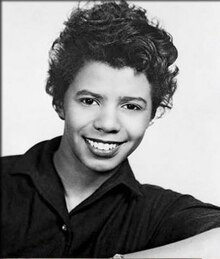
Lorraine Hansberry: A Playwright Who Changed History

While many women made their mark on stage, Lorraine Hansberry (1930–1965) changed theater history with her words. Her groundbreaking play A Raisin in the Sun (1959) was the first play written by a Black woman to be performed on Broadway. When teachers ask of a recommendation for someone to teach about during Black History month, I always suggest Lorraine Hansberry.

  • A Raisin in the Sun tackled themes of racial injustice, family struggles, and the pursuit of dreams, resonating with audiences of all backgrounds.
  • Hansberry was the first Black woman to win the New York Drama Critics’ Circle Award.
  • She used her platform to advocate for civil rights, influencing both the arts and activism.
  • Her close friend Nina Simone wrote the song “To Be Young, Gifted and Black” in Hansberry’s honor after her passing.

Hansberry’s work opened doors for future generations of playwrights, including Lynn Nottage, Suzan-Lori Parks, and Dominique Morisseau, whose works continue to challenge and inspire audiences today. Pick up a FREE biography lesson about Cynthia Erivo!

File:Julie Taymor 2 Shankbone 2009 Metropolitan Opera.jpg

Julie Taymor: A Visionary Director

Women have historically been underrepresented in directing and design, but Julie Taymor (b. 1952) shattered expectations with her revolutionary approach to theater.

  • She became the first woman to win a Tony Award for Best Direction of a Musical with The Lion King (1997).
  • She designed over 230 puppets for The Lion King, blending African and Asian theatrical traditions.
  • Taymor has directed not only on Broadway but also in opera and film, proving that theatrical storytelling transcends mediums.
  • In 1991, she received the MacArthur Fellowship, recognizing her innovative approach to theater.

In addition, her work paved the way for other female directors like Diane Paulus, Rachel Chavkin, and Liesl Tommy, showing that women can lead bold, visually stunning productions.

File:Audra McDonald (1).jpg

Audra McDonald: A Record-Breaking Star

No list of influential women in theater is complete without Audra McDonald (b. 1970). She is known for her astonishing vocal range and acting talent.  And get this:  McDonald has won more Tony Awards than any other performer—six and counting!

  • She is the only performer to win a Tony in all four acting categories (Best Actress and Featured Actress in both plays and musicals).
  • Her roles range from classic musicals (Carousel, Ragtime) to powerful dramas (Master Class, Lady Day at Emerson’s Bar & Grill).
  • First Black Woman to Play Mother Abbess in The Sound of Music Live! (2013) and Bess in Porgy and Bess on Broadway.
  • She has used her platform to advocate for diversity and inclusion in theater, supporting young artists and underserved communities.

McDonald continues to redefine what it means to be a Broadway star, inspiring new generations of performers to pursue excellence on their own terms.

File:Rita Moreno (78th Peabody Awards) 2 (cropped).jpg

Rita Moreno: A Trailblazing Triple Threat

It’s important to mention that women from many backgrounds and cultures blazed the trail for females. Few performers can match the versatility and longevity of Rita Moreno (b. 1931). One of the few EGOT (Emmy, Grammy, Oscar, and Tony) winners, Moreno has influenced generations of actors in both film and theater.

  • She made history as Anita in the 1961 film version of West Side Story, winning the Academy Award for Best Supporting Actress—the first Latina to do so.
  • On stage, she starred in Broadway productions such as The Ritz (for which she won a Tony) and The Odd Couple.
  • She appeared in both the 1961 and 2021 versions of West Side Story—winning an Oscar for playing Anita in the original and portraying Valentina in the remake.
  • Moreno has long been an advocate for Latinx representation in entertainment, paving the way for performers like Lin-Manuel Miranda and Daphne Rubin-Vega.

At 90+ years old, Moreno continues to perform, proving that great artistry knows no age.

File:Joni Mitchell 1143 05 (cropped).jpg

Sara Bareilles: A Modern Broadway Powerhouse

One of my personal favorite creators if Sarah Bareilles.  While many know Sara Bareilles (b. 1979) for her pop hits like Love Song and Brave, she has become a major force in modern musical theater.

  • She composed and wrote the lyrics for Waitress (2016), becoming one of the few female composers to write a full Broadway score.
  • She later stepped into the lead role of Jenna, proving her talent as a performer as well.
  • Her song “King of Anything” was a response to people constantly giving her unsolicited advice—especially about her music career.
  • Bareilles has continued her Broadway career with projects like Into the Woods and Girls5eva, inspiring more women to pursue composing and writing in theater.

Bareilles represents the future of musical theater, where women are not just stars but also creators shaping the stories we see on stage.

Preview of Drama Musical Theater Empowering Women Study Guides History Tony Awards 1

If you want to celebrate National Women’s Month in March, check out this bundle.  It’s full of information about four musicals which had women at the forefront and helm.

How have you celebrated National Women’s Month in your classroom?  Please share. You can email me at DhcBaldwin@gmail.com

Woman behind DramaMommaSpeaks

Share this:

  • Click to share on Tumblr (Opens in new window) Tumblr
  • More
  • Click to share on X (Opens in new window) X
  • Click to share on Facebook (Opens in new window) Facebook
  • Click to share on Pinterest (Opens in new window) Pinterest
  • Click to share on LinkedIn (Opens in new window) LinkedIn
  • Click to email a link to a friend (Opens in new window) Email
  • Click to share on Reddit (Opens in new window) Reddit
  • Click to share on Pocket (Opens in new window) Pocket
  • Click to share on Telegram (Opens in new window) Telegram
  • Click to share on WhatsApp (Opens in new window) WhatsApp

Like this:

Like Loading...

Filed Under: acting, arts education, Broadway, community theater, community theatre, drama education, drama integration, Education, Education, High School, middle grades, music education, Musical Theatre, performing arts, Professional Theatre, Teacherspayteachers, theater, theatre, Tony Awards, youth theatre Tagged With: Ethel Merman, Julie Taymore, Lorraine Hansberry, Rita Moreno, Sarah Bareilles, Sarah Bernhardt

Unmasking Drama: Engaging Small Classes

February 27, 2025 By dhcbaldwin 2 Comments

A happy teacher calling on a small class of drama students.

Unmasking Drama: Engaging Small Classes

Unmasking Drama: Engaging Small Classes Effectively

Today, let’s discuss Unmasking Drama: Engaging Small Classes. Picture this: You are ready to teach on your very first day of classes. Excited, you double-check the student roster. Hmmm. At last check, there weren’t too many students signed up for your class. However, you knew that in the last days of summer, usually some stragglers sign up. In walk two students. Even though your roster listed these two students’ names, you are certain there are more arriving any minute.

You wait five minutes. The two students look uncomfortable and you are apprehensive. You think, “What can I do with a class of two? How can I still make this class engaging? “ Disappointed, you throw out your plans for the first week of class.

Unmasking Drama: Engaging Small Classes Effectively

Unmasking Drama: Engaging Small Classes

Does this sound like you? I’ve been in this position before. Teaching drama to a small group is a unique challenge. Unlike math or even art, drama thrives on human interaction, group dynamics, and ensemble work. So, what do you do when your “ensemble” consists of just two or three students?

Occasionally, a teacher will email me begging for help with teaching their class. They have a small class of students. The question to me is usually the same: Is it possible to teach drama to a small group of students?

My answer is always a resounding, yes! I’ve taught several classes with only one or two students. These were home school students in a huge enrichment program. Your success depends upon a few things, some of which are somewhat out of your control. However, there are many things you can control, and with a little creativity, you can turn a small class into an enriching experience.


Unmasking Drama: Engaging Small Classes Effectively

Unmasking Drama: Engaging Small Classes

1. Limited Ensemble Dynamics

With fewer students, it’s harder to create the rich, spontaneous interactions typical in larger ensembles. Each student’s contribution is magnified, and the diversity of ideas and energy might be more limited. At times, I’ve noticed that when a student receives too much attention, they can become overly dependent on me when struggling with a concept.

2. Individualized Needs

In a small group, differences in skill levels, personality, and confidence become more apparent. This is where the teacher’s level of exhaustion comes into play. You must tailor lessons, provide personalized feedback, and ensure that each student’s unique needs are met without compromising the group’s overall progress.

3. Risk and Vulnerability

Drama often involves improvisation and exposing one’s vulnerabilities. In a small setting, students may feel overly visible or pressured, making it tougher to foster a safe space for experimentation and risk-taking. (If one student resists and you only have two in the class, your chance of success has dropped by 50%!)

4. Building Group Cohesion

Developing trust and a sense of community is essential in drama. With fewer participants, it requires extra effort to ensure that all students connect and collaborate effectively. Absenteeism, students not learning their lines, or unfinished projects can bring your class to a standstill.


Solutions & Strategies for Success

Quick Fixes for Small Classes

  • Lean into one-on-one coaching: Treat it like a personalized drama mentorship.
  • Adjust group exercises for two or three people: Focus on duologues, monologues, and character studies.
  • Expand beyond acting: Let students explore directing, playwriting, and design.
  • Use multimedia tools: Record performances, create podcasts, or study filmed theater.

Now, let’s look at how I put these strategies into action.


Unmasking Drama: Engaging Small Classes Effectively

Emily’s Story: Adapting Drama for One Student

Emily was a wonderful homeschool student in my drama class. Several other students were signed up but dropped at the last minute. Since I had previous teaching experience with Emily and knew that if I canceled the class, she’d be crestfallen.

Inventory the Student’s Interests

To begin, I interviewed Emily to discover which aspects of theater interested her most. Ha! All of it! We discussed book titles that had been dramatized, musicals she liked.  Additionally, we considered whether she wanted to be realistic or fanciful in her set and costume designs. By giving Emily opportunities to choose the differentiation, I knew that we’d be more successful than had we not done so.

Unmasking Drama: Engaging Small Classes Effectively

Creating a Personalized Curriculum

Since I was teaching Emily once a week from August to May, we structured  our plan together. Here’s what it looked like:

Lesson Plan for a One-Student Drama Class

  • August: Icebreaker games and warm-ups that work for two people (e.g., Add a Word storytelling).*
  • September: Read the play version of Peter Pan aloud.
  • October: Studied and designed costumes for Peter Pan. Emily even sewed Peter Pan’s hat!
  • November: Explored set design and built a model of the Peter Pan set.
  • December: Watched the Peter Pan musical and compared it to the play version.
  • January & February: Studied stage properties. Emily designed and built a cardboard broadsword using an instructional video.
  • March: Studied stage makeup and designed a look for Captain Hook.
  • April: Selected a three-person scene from Peter Pan to perform. I invited two girls from another class to rehearse with Emily.
  • May: Performed the scene for Emily’s parents and she wrote a reflection about her experiences during the year of learning.

*Generally, we began each class with a warm-up exercise of some kind that tied to the subject of the day.

If you are in need of particular lessons for this plan, check out:  Dramamommaspeaks Store


Unmasking Drama: Engaging Small Classes Effectively

Alternative Approaches for Small Classes

Rotating Focus Each Class

Another way to teach a small drama class effectively is to structure your lessons to explore different aspects of theater each session:

  • Acting & Performance: Scene study, monologues, improv games.
  • Technical Theater: Costume and set design projects.
  • Theater History & Playwriting: Reading plays, writing scenes.
  • Production Elements: Sound design, lighting concepts, directing techniques.

Creative Drama Exercises for Small Groups

Here are a few engaging activities tailored for 1-3 students:

  • “Mirror, Mirror”: One student mimics another’s movements to build focus.
  • “What are you doing?: Take turns informing each other something they must do that is physical, “I’m mopping the floor.”
  • Table Reads: Read and analyze famous plays.
  • Monologue Swap: Perform the same monologue in different tones/moods.
  • Character Walks: Move around as different characters to develop physicality.

Unmasking Drama: Engaging Small Classes Effectively

Final Thoughts: Reframing Small Classes as an Opportunity

Thus, as you are aware, teaching a small drama class can feel isolating or discouraging. But it also offers a unique opportunity for deep, personalized instruction. Most importantly, the key is to lean into the strengths of a small class, offering students individualized coaching, creative freedom, and opportunities to explore theater beyond acting.

Your Turn!

  • Have you ever taught a small drama class? What creative solutions worked for you?
  • What are your favorite duo or trio scene studies? Drop your recommendations below! Or Email me at DhcBaldwin@gmail.com

I hope this blog post, Unmasking Drama: Engaging Small Classes Effectively has been helpful to you. Need more ideas? Check out my post on How to Use a Hybrid Lesson in Your Drama Classroom Tomorrow.

Woman behind DramaMommaSpeaks

Share this:

  • Click to share on Tumblr (Opens in new window) Tumblr
  • More
  • Click to share on X (Opens in new window) X
  • Click to share on Facebook (Opens in new window) Facebook
  • Click to share on Pinterest (Opens in new window) Pinterest
  • Click to share on LinkedIn (Opens in new window) LinkedIn
  • Click to email a link to a friend (Opens in new window) Email
  • Click to share on Reddit (Opens in new window) Reddit
  • Click to share on Pocket (Opens in new window) Pocket
  • Click to share on Telegram (Opens in new window) Telegram
  • Click to share on WhatsApp (Opens in new window) WhatsApp

Like this:

Like Loading...

Filed Under: acting, arts education, arts integration, Creativity, drama education, Education, Education, excellence in teaching, multiculturalism, set design, Teacherspayteachers, teaching strategies, theater, theatre, youth theatre Tagged With: acting, Broadway musicals, cooperative learning, costume design, drama education, drama lessons, ensemble acting, improvisation, Peter Pan play, reading play, set design, technical theater, theater, warm up exercises

« Previous Page
Next Page »

Footer

Follow Us

logo3.png

FOLLOW US

Facebook X-twitter Pinterest Instagram Envelope Rss

Goodreads: read

Malibu Rising
Malibu Rising
by Taylor Jenkins Reid
People We Meet on Vacation
by Emily Henry
The Last Thing He Told Me
by Laura Dave
Faking It
Faking It
by Cora Carmack
Losing It
Losing It
by Cora Carmack

goodreads.com
Copyright © 2024 · Wellness Pro on Genesis Framework · WordPress.com.Log in
 

Loading Comments...
 

    %d