• Skip to primary navigation
  • Skip to main content
  • Skip to footer

Join Me in my new Facebook Group! https://www.facebook.com/groups/417126059784261

Menu
  • Meet Deb – The Heart Behind DramaMommaSpeaks
    • Work with Me! 
    • Photo Gallery of DramaMommaSpeaks
    • Directorial Credits
  • I Give Book Talks! 
    • Book Talk Through Skype
    • Books
  • Freebies!
  • Bumbling Bea
  • Teaching Resume
  • Acting Resume
  • Contact Me
  • Blog
    • Drama Education
    • Arts Education
    • Youth Theatre
    • Middle Grades
    • Musical Theatre
    • Teaching
  • Meet Deb – The Heart Behind DramaMommaSpeaks
    • Work with Me! 
    • Photo Gallery of DramaMommaSpeaks
    • Directorial Credits
  • I Give Book Talks! 
    • Book Talk Through Skype
    • Books
  • Freebies!
  • Bumbling Bea
  • Teaching Resume
  • Acting Resume
  • Contact Me
  • Blog
    • Drama Education
    • Arts Education
    • Youth Theatre
    • Middle Grades
    • Musical Theatre
    • Teaching

bow wow blues

Creative Dramatics for Tweens: Build Confidence First

July 9, 2025 By dhcbaldwin Leave a Comment

Creative Dramatics for Tweens: Build Confidence First

I’ve wanted to blog on this subject for a long time–Creative Dramatics for Tweens: Build Confidence First. It’s easy to assume that the best way to begin a drama class is with scripts in hand or with a monologue or duet scene. After all, that’s what theater is all about—character, dialogue, blocking, memorization. Right?

Creative Dramatics for Tweens: Build Confidence First
Here I am with a former student sitting on the floor, playing the warm-up game with my class

Not quite.

When you’re working with middle school students, traditional scripted drama can be overwhelming. Many students at this age are still learning to navigate their emotions.  Additionaly, they are learning how to communicate effectively, and build trust with their peers. That’s why I believe the best way to start middle school theater is not with a script, but with creative dramatics.

What Is Creative Dramatics?

Creative dramatics is an unscripted, process-centered approach to theater. It includes improvisation, storytelling, pantomime, role play, and drama games. Unlike traditional scripted drama, it emphasizes exploration over performance. Additionally, it is less about perfect delivery and more about self-expression, teamwork, and discovery.

In short—it’s play with purpose.

Creative Dramatics for Tweens: Build Confidence First

Why Traditional Drama Doesn’t Work Right Away

Middle school students come to drama class with a wide range of abilities.  Plus, they join us with different comfort levels, and backgrounds.  Some are eager to perform; others are terrified of speaking aloud. When we hand them a script and ask them to “act,” we’re assuming they already have skills they may not have yet.

As we are aware, times have changed one generation to the next.  I was from the generation where parents said children were, “to be seen and not heard.’ My parents let my teachers deal with me at school–they did not intervene at all. My daughters weren’t raised as strictly but guardedly.  However, we did not ask them for their input in making decisions about and for them.  This latest generation is much more hands-on.

Modern parents are often more involved in their children’s lives than previous generations. They attend more events, know more about their kids’ social-emotional development, and are quicker to advocate in school or healthcare settings. This shift is partly due to greater access to parenting research, a cultural emphasis on emotional intelligence, and a desire to break cycles from their own childhoods.

Creative Dramatics for Tweens: Build Confidence First

How Developmentally Appropriate Drama Builds Success

How does that play out in the drama classroom?  In drama class we deal with our emotions right from the first day.  If a student is uncomfortable sharing emotion, they will shut down on a teacher before they have even begun.

This is the primary reason for beginning the school year or even second semester with creative dramatics and not jumping into more a more traditional theater class.  Take.your.time.

Here are a few reasons traditional methods may fall short:

They’re still figuring out who they are. Think of it–they enter your classroom as basically a 5th grader and leave the school as almost a 9th grader.  That’s huge growth!  Identity is a work in progress at this age. Asking them to take on another character can feel like too much when they’re unsure of themselves to begin with.

Reading aloud is a challenge for some. Not every student is a confident reader. Struggling through a script in front of peers can be a confidence killer.

Performance anxiety is real. Scripts and staged scenes can cause fear of failure, embarrassment, or judgment.

Additionally, they haven’t built ensemble yet. Trust is a crucial part of theater—and it takes time. Without it, collaborative scene work suffers. Students must feel safe in order to take chances and make mistakes in front of their peers.

Creative Dramatics for Tweens: Build Confidence First

What Creative Dramatics Offers Instead

Simply put, creative dramatics gives students the freedom to play, explore, and make choices.

Here’s why it works so well for middle schoolers:

Confidence Grows Naturally
I found that activities like studying movement and storytelling encourage participation without the pressure of “getting it right.” Students learn that all ideas are welcome, and that builds a safer space for risk-taking.

It Emphasizes Play
Middle schoolers need movement and laughter. Games and creative exercises channel their energy in productive ways—and make class genuinely fun. Students have shared with me that the warm-up games are their favorite part of their school day!  One exercise that is always successful is The Three Headed Monster.  Want a copy?  Pick it up here: Three Headed Monster

Creative Dramatics for Tweens: Build Confidence First

Why Creative Dramatics Works for Every Student

It Builds Ensemble
Middle schools are generally as large as a small high school.  That means your students may not be familiar with each other. Several elementaries can funnel into one middle school. Therefore, group work, partner activities, and group-based improvisation help students learn to listen, collaborate, and trust one another. These are the same skills that will serve them when they do move into scripted work. Check out this bundle:  Group Based Improvisation Exercises

 Skills Are Introduced Organically
Voice, body language, emotion, conflict, character motivation—these are all explored through creative dramatics. Often students aren’t even aware that they’re developing them. Because you have focused on participation rather than performance, your timid students have an opportunity to challenge their fears without criticism.

It Welcomes All Learners
Some students didn’t choose to take drama. Others are English language learners or neurodivergent. Creative dramatics gives everyone a way in—regardless of background or ability. My favorite memories of teaching middle school have always been when a secial needs student get to participate in the performance. Or the ELL students show their classmates that they don’t need to be good English speakers to win at a game! Need something for a substitute teacher to teach?  Check out: Emergency Sub Plan Bundle 

Creative Dramatics for Tweens: Build Confidence First

What It Looks Like in Practice

So, what does creative dramatics actually look like in the classroom?  A middle school drama classroom is joyful, dynamic and always fun!

Here are a few ways to begin your middle school drama class:

  • Tableaux exercises where students freeze in poses to tell a story or capture a scene–pick up Fairy Tales with Tableau
  • Improvisation games like “Yes, And…” or “What Are You Doing?”
  • Story circle activities where students help shape a narrative such as Magic Circle
  • Movement builds expression and clarity without words such as Creative Movement
  • Character walk explorations where students invent physical traits for imaginary people. This first begins with a charater analysis such as Character Analysis

None of these require a script. All of them build foundational theater skills.

Creative Dramatics for Tweens: Build Confidence First

When to Introduce Scripts

Scripts do have a place in middle school drama. They come after the ensemble is built, the fear is reduced, and the students are comfortable in their own creative voices.

When that time comes, try:

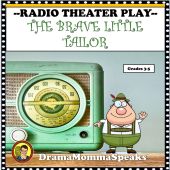
  • Class plays where the entire class is involved, such as The Brave Little Tailor
  • Reader’s theater as a gentle transition, such as The Magic Lake
  • Radio theater is non-threatening and requires very little preparation for you or the students, try Bow Wow Blues

Once they’re ready, traditional drama becomes much more successful—and meaningful. It’s worth noting you should also not begin the year delving into theater history.  If you’d like a  free lesson for this subject, check out: The Origin of Theater

Creative Dramatics for Tweens: Build Confidence First

Final Thoughts

Here’s some advice:  don’t be like me and get all caught up in the quality of the performance. When I first started teaching middle schoolers, I was too focused on the final performance.  Some students can only equate a play performance as doing “theater”. They may not come out of their shells until they are standing in front an audience (hopefully, someone else’s class of students are serving as audience).

What is key here is that your students are LEARNING. Once you accept this, your teaching will be much more fun and fulfilling.   Middle school drama is not about putting on a perfect show. It’s about helping students discover who they are, how they express themselves, and how they connect with others. Want more advice about teaching middle schoolers? Check out: How to Make Your Drama Class More Successful –Lessons Learned from 38 Years of Teaching-Middle School

Where Confidence Begins: Creative Dramatics

If we want them to fall in love with theater—and we do—we need to meet them where they are. That starts not with scripts, but with play. With movement, with laughter and 2ith ensemble.

It starts with creative dramatics.

Have you tried creative dramatics with your students?  Drop a comment and share what’s worked for you, or explore my ready-to-use lessons that make the first weeks of drama class engaging and low-stress—for you and your students.

Woman behind DramaMommaSpeaks

Share this:

  • Click to share on Tumblr (Opens in new window) Tumblr
  • More
  • Click to share on X (Opens in new window) X
  • Click to share on Facebook (Opens in new window) Facebook
  • Click to share on Pinterest (Opens in new window) Pinterest
  • Click to share on LinkedIn (Opens in new window) LinkedIn
  • Click to email a link to a friend (Opens in new window) Email
  • Click to share on Reddit (Opens in new window) Reddit
  • Click to share on Pocket (Opens in new window) Pocket
  • Click to share on Telegram (Opens in new window) Telegram
  • Click to share on WhatsApp (Opens in new window) WhatsApp

Like this:

Like Loading...

Filed Under: arts education, arts integration, creative dramatics, creative movement, drama education, drama integration, Education, Education, excellence in teaching, middle grades, Teacherspayteachers, Teaching, teaching strategies, youth theatre Tagged With: 'tweens, bow wow blues, character analysis, class plays, drama education, drama lessons, drama units, growing up, Middle school, movement, radio theater, reader's theater, storytelling, tableau, The Brave Little Tailor, The Magic Lake, The Origin orf Theater

Why Radio Theater Works: 9 Drama Lesson Benefits

September 8, 2018 By dhcbaldwin 2 Comments

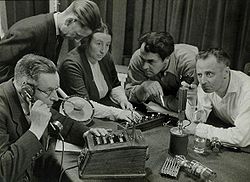
Girls sitting around reading a radio theater play


Why Radio Theater Works: 9 Drama Lesson Benefits

Today, I want to talk about why radio theater works: 9 drama lesson benefits, In high school, I had a fan girl crush on John Boy of “The Waltons.” Maybe you don’t know of the television show, but I bet you can find it running somewhere on television. This birthed my love of radio theatre.

To begin with, part of the mystique of the show was the time period  (during the Depression) of  which the show was set.  How I could romanticize the time period, I’ll never know but I kinda think it’s because of John Boy. Also, I thought it was very heart warming when the family sat around the radio and listened to the evening radio show.

Anyway, back to the reasons I’m blogging about this topic.

Want a FREE guide and lesson plan for elementary students?  Click here Guide

Why Radio Theater Works: 9 Drama Lesson Benefits

Why Radio Theater Works: 9 Drama Lesson Benefits

At that point, I’d taught radio theater for over twenty years.  However I am  amazed by how many people in this day and age still don’t know much about the media.

I’m going out on a limb here, but really friends,  if you need an unusual creative dramatics lesson plan try radio theater, because–

  1. It’s creative
  2.  A perfect example of differentiated instruction.
  3.  Listening skills are strengthened–listening for one’s cues, creating sound effects by focusing one’s attention to them
  4. Speaking skills are polished–enunciation, rate of delivery, and diction come in to play when a student reads aloud
  5. Reading skills are cultivated–when a reader reads something repeatedly, they can’t help but become a better reader
  6. Language skills are honed–students become better communicators
  7. Cooperative learning is such a necessary part of this study
  8. Many of the radio theater play scripts I teach with are from previous eras–what a super way for students to learn about the past
  9. It’s just plain fun!

Although I use radio theater in my drama classroom,  I am acquainted with several teachers who have implemented it in the language arts and social studies/ history classes as well. Looking for other reasons to teach radio theater?  Check out this post: Top Reasons Teachers Succeed With Teaching Radio Theater

Why Radio Theater Works: 9 Drama Lesson Benefits

From History to Fiction—Radio Theater Brings It All to Life

How about these subjects?

  • The Hindenburg Disaster
  • D-Day Invasion
  • War of the Worlds
  • Japan Attacks Pearl Harbor
  • Nazis Enter
  • Albert Einstein Speaks on the Importance of the Radio
  • Winston Churchill’s Speech, “We Shall Fight on the Beaches”
  • John F. Kennedy and the Cuban Missile Crisis
  • And countless more!

There are scripts of classic books (Sherlock Holmes, Oscar Wilde, H.G. Wells) and historical moments, some fictionalized.  Today I found one about Abraham Lincoln.  How great!

For instance, you take any book they enjoy and turn it into radio theater.  Or maybe you use a particular fairy tale and present it as radio theater.  You see? The ideas are endless.  

If you are interested in more information about radio theater and radio plays, check out my Radio Theater Unit.  Additionally, I developed it so teachers can use it to complement their teaching of a particular script of their choosing.

Why Radio Theater Works: 9 Drama Lesson Benefits

A Humorous, Original Radio Play Script For You

If you’d like to see a preview of my middle grades radio play, Bow Wow Blues, check it out Bow Wow Blues Radio Theater Unit . 

If you’d like to hear Bow Wow Blues performed by students, check out: https://youtu.be/ouj4Ui5M2Eo

This TEN DAY unit, nearly 30 pages in length, is suitable for middle and high school drama classes or elementary gifted classes study creative dramatic and includes:

       • a lesson on the history of radio theatre,
       • information about Foley engineers
       • three links to video clips of Foleys
      • student created sound effect project
      • five links to radio play performances (some vintage and some recent)
      • a lesson in writing and producing radio commercials
      • links to four commercials and two acting exercises focused on sound effects
      • procedure plan to follow throughout the unit
      • teacher’s questions
      • sound effects quiz
      • a student group example of a radio commercial
      • trivia about radio theater stars

Here is a production by an ESL class in Tbilisi Georgia. They did a wonderful job! 
https://soundcloud.com/user-719594153/albums

Or may you’d like a bundle of them:  Radio Theater Bundle


There are individual scripts available too.

The Invisible Man

Looking for something to spur conversation about our personal perceptions of ourselves and how the world sees us?  Based on the story by H.G. Wells, The Invisible Man is a terrific play to use with your students. Consisting of a cast of  17 + with roles for both experienced and novice actors including several Foley engineers, a pitchman and music tech., the  play runs about 25 minutes with commercials.

The Canterville Ghost–a Popular Radio Play of Mine

The Canterville Ghost

Here’s one school’s version of The Canterville Ghost! https://youtu.be/BqFpChUkPbA

If your students interested in something spooky, but fun then The Canterville Ghost is a great choice.  The Canterville Ghost radio play is based on the novella by Oscar Wilde has a cast of 15 +.  There are roles for experienced performers and novices, several Foley engineers, a pitchman and music tech.  The play runs about 30 minutes including commercials.


Radio Audio Drama Script Halloween The Frozen Pirate Horror Foley Engineer

I ran on to this script and was ecstatic because it includes pirates, mystery and fun.  My husband, who is a instrumental music teacher, composed a song for the pirates to sing (optional, of course) but it makes it so engaging.  It’s scary and creepy and loads of fun.  The play runs about thirty minutes.  

The Frozen Pirate

I really enjoyed adapting this radio play.  Plus, I’m hoping students will enjoy the subjects–pirates, stolen treasure and mystery!   The Frozen Pirate is based on the novel by  nautical author William Russell  and requires a cast of 15 +.  My husband, an instrumental music teacher and composer, created a sea shanty reminiscent of songs from the time period, too!  There are roles for experienced performers and novices, several Foley engineers, a pitchman and music tech.  The play runs about 35 minutes including commercials. 

And lastly, I offer all of these radio plays as a set.  So, for example a teacher gets The Canterville Ghost AND the teaching materials for radio theater (Or they can purchase The Invisible Man with its teaching materials and so forth.)

A middle school grade appropriate comical radio drama script sample.

Bow Wow Blues, my last product listed here is an original comedy I penned for my class.  It’s  full of humor, puns, funny characters and a quick moving plot.  Students love it!  I’m so glad.  P.S.  The free sample if you’d like to take a look at it. 

Language Arts Classics Turn Radio Plays

If you are looking for classics, how about The Cask of Amontillado or the Monkey’s Paw?


​

Check out my guidebook concerning teaching students with radio theater: We’re Live! Radio Theater #101 So many choices, huh?

Guess what?  Now I have begun creating radio theater scripts for grades three to five.  Here are two:

Check out other products of mine at: Dramamommaspeaks Teacherpayteachers

What experiences have you had with radio theatre?  I’d love to hear about them.  Contact me at dhcbaldwin@gmail.com or DeborahBaldwin.net

Woman behind DramaMommaSpeaks

For more information about other drama education products, check out these posts:

Stage Properties are a Lesson in Wonderous Creativity

The Drama Exercise to Jazz Up Your Class and Impress Your Parents

The Ultimate Guide for Drama Teachers: Creative Movement? Are you kidding me?


Share this:

  • Click to share on Tumblr (Opens in new window) Tumblr
  • More
  • Click to share on X (Opens in new window) X
  • Click to share on Facebook (Opens in new window) Facebook
  • Click to share on Pinterest (Opens in new window) Pinterest
  • Click to share on LinkedIn (Opens in new window) LinkedIn
  • Click to email a link to a friend (Opens in new window) Email
  • Click to share on Reddit (Opens in new window) Reddit
  • Click to share on Pocket (Opens in new window) Pocket
  • Click to share on Telegram (Opens in new window) Telegram
  • Click to share on WhatsApp (Opens in new window) WhatsApp

Like this:

Like Loading...

Filed Under: creative dramatics, drama education, excellence in teaching, Radio Theatre Tagged With: bow wow blues, differentiated instruction, home school, radio plays, reading class, the canterville ghost, The frozen pirate, the invisible man

Footer

Follow Us

logo3.png

FOLLOW US

Facebook X-twitter Pinterest Instagram Envelope Rss

Goodreads: read

Malibu Rising
Malibu Rising
by Taylor Jenkins Reid
People We Meet on Vacation
by Emily Henry
The Last Thing He Told Me
by Laura Dave
Faking It
Faking It
by Cora Carmack
Losing It
Losing It
by Cora Carmack

goodreads.com
Copyright © 2024 · Wellness Pro on Genesis Framework · WordPress.com.Log in
 

Loading Comments...
 

    %d