• Skip to primary navigation
  • Skip to main content
  • Skip to footer

Join Me in my new Facebook Group! https://www.facebook.com/groups/417126059784261

Menu
  • Meet Deb – The Heart Behind DramaMommaSpeaks
    • Work with Me! 
    • Photo Gallery of DramaMommaSpeaks
    • Directorial Credits
  • I Give Book Talks! 
    • Book Talk Through Skype
    • Books
  • Freebies!
  • Bumbling Bea
  • Teaching Resume
  • Acting Resume
  • Contact Me
  • Blog
    • Drama Education
    • Arts Education
    • Youth Theatre
    • Middle Grades
    • Musical Theatre
    • Teaching
  • Meet Deb – The Heart Behind DramaMommaSpeaks
    • Work with Me! 
    • Photo Gallery of DramaMommaSpeaks
    • Directorial Credits
  • I Give Book Talks! 
    • Book Talk Through Skype
    • Books
  • Freebies!
  • Bumbling Bea
  • Teaching Resume
  • Acting Resume
  • Contact Me
  • Blog
    • Drama Education
    • Arts Education
    • Youth Theatre
    • Middle Grades
    • Musical Theatre
    • Teaching

Broadway musicals

Unmasking Drama: Engaging Small Classes

February 27, 2025 By dhcbaldwin 2 Comments

A happy teacher calling on a small class of drama students.

Unmasking Drama: Engaging Small Classes

Unmasking Drama: Engaging Small Classes Effectively

Today, let’s discuss Unmasking Drama: Engaging Small Classes. Picture this: You are ready to teach on your very first day of classes. Excited, you double-check the student roster. Hmmm. At last check, there weren’t too many students signed up for your class. However, you knew that in the last days of summer, usually some stragglers sign up. In walk two students. Even though your roster listed these two students’ names, you are certain there are more arriving any minute.

You wait five minutes. The two students look uncomfortable and you are apprehensive. You think, “What can I do with a class of two? How can I still make this class engaging? “ Disappointed, you throw out your plans for the first week of class.

Unmasking Drama: Engaging Small Classes Effectively

Unmasking Drama: Engaging Small Classes

Does this sound like you? I’ve been in this position before. Teaching drama to a small group is a unique challenge. Unlike math or even art, drama thrives on human interaction, group dynamics, and ensemble work. So, what do you do when your “ensemble” consists of just two or three students?

Occasionally, a teacher will email me begging for help with teaching their class. They have a small class of students. The question to me is usually the same: Is it possible to teach drama to a small group of students?

My answer is always a resounding, yes! I’ve taught several classes with only one or two students. These were home school students in a huge enrichment program. Your success depends upon a few things, some of which are somewhat out of your control. However, there are many things you can control, and with a little creativity, you can turn a small class into an enriching experience.


Unmasking Drama: Engaging Small Classes Effectively

Unmasking Drama: Engaging Small Classes

1. Limited Ensemble Dynamics

With fewer students, it’s harder to create the rich, spontaneous interactions typical in larger ensembles. Each student’s contribution is magnified, and the diversity of ideas and energy might be more limited. At times, I’ve noticed that when a student receives too much attention, they can become overly dependent on me when struggling with a concept.

2. Individualized Needs

In a small group, differences in skill levels, personality, and confidence become more apparent. This is where the teacher’s level of exhaustion comes into play. You must tailor lessons, provide personalized feedback, and ensure that each student’s unique needs are met without compromising the group’s overall progress.

3. Risk and Vulnerability

Drama often involves improvisation and exposing one’s vulnerabilities. In a small setting, students may feel overly visible or pressured, making it tougher to foster a safe space for experimentation and risk-taking. (If one student resists and you only have two in the class, your chance of success has dropped by 50%!)

4. Building Group Cohesion

Developing trust and a sense of community is essential in drama. With fewer participants, it requires extra effort to ensure that all students connect and collaborate effectively. Absenteeism, students not learning their lines, or unfinished projects can bring your class to a standstill.


Solutions & Strategies for Success

Quick Fixes for Small Classes

  • Lean into one-on-one coaching: Treat it like a personalized drama mentorship.
  • Adjust group exercises for two or three people: Focus on duologues, monologues, and character studies.
  • Expand beyond acting: Let students explore directing, playwriting, and design.
  • Use multimedia tools: Record performances, create podcasts, or study filmed theater.

Now, let’s look at how I put these strategies into action.


Unmasking Drama: Engaging Small Classes Effectively

Emily’s Story: Adapting Drama for One Student

Emily was a wonderful homeschool student in my drama class. Several other students were signed up but dropped at the last minute. Since I had previous teaching experience with Emily and knew that if I canceled the class, she’d be crestfallen.

Inventory the Student’s Interests

To begin, I interviewed Emily to discover which aspects of theater interested her most. Ha! All of it! We discussed book titles that had been dramatized, musicals she liked.  Additionally, we considered whether she wanted to be realistic or fanciful in her set and costume designs. By giving Emily opportunities to choose the differentiation, I knew that we’d be more successful than had we not done so.

Unmasking Drama: Engaging Small Classes Effectively

Creating a Personalized Curriculum

Since I was teaching Emily once a week from August to May, we structured  our plan together. Here’s what it looked like:

Lesson Plan for a One-Student Drama Class

  • August: Icebreaker games and warm-ups that work for two people (e.g., Add a Word storytelling).*
  • September: Read the play version of Peter Pan aloud.
  • October: Studied and designed costumes for Peter Pan. Emily even sewed Peter Pan’s hat!
  • November: Explored set design and built a model of the Peter Pan set.
  • December: Watched the Peter Pan musical and compared it to the play version.
  • January & February: Studied stage properties. Emily designed and built a cardboard broadsword using an instructional video.
  • March: Studied stage makeup and designed a look for Captain Hook.
  • April: Selected a three-person scene from Peter Pan to perform. I invited two girls from another class to rehearse with Emily.
  • May: Performed the scene for Emily’s parents and she wrote a reflection about her experiences during the year of learning.

*Generally, we began each class with a warm-up exercise of some kind that tied to the subject of the day.

If you are in need of particular lessons for this plan, check out:  Dramamommaspeaks Store


Unmasking Drama: Engaging Small Classes Effectively

Alternative Approaches for Small Classes

Rotating Focus Each Class

Another way to teach a small drama class effectively is to structure your lessons to explore different aspects of theater each session:

  • Acting & Performance: Scene study, monologues, improv games.
  • Technical Theater: Costume and set design projects.
  • Theater History & Playwriting: Reading plays, writing scenes.
  • Production Elements: Sound design, lighting concepts, directing techniques.

Creative Drama Exercises for Small Groups

Here are a few engaging activities tailored for 1-3 students:

  • “Mirror, Mirror”: One student mimics another’s movements to build focus.
  • “What are you doing?: Take turns informing each other something they must do that is physical, “I’m mopping the floor.”
  • Table Reads: Read and analyze famous plays.
  • Monologue Swap: Perform the same monologue in different tones/moods.
  • Character Walks: Move around as different characters to develop physicality.

Unmasking Drama: Engaging Small Classes Effectively

Final Thoughts: Reframing Small Classes as an Opportunity

Thus, as you are aware, teaching a small drama class can feel isolating or discouraging. But it also offers a unique opportunity for deep, personalized instruction. Most importantly, the key is to lean into the strengths of a small class, offering students individualized coaching, creative freedom, and opportunities to explore theater beyond acting.

Your Turn!

  • Have you ever taught a small drama class? What creative solutions worked for you?
  • What are your favorite duo or trio scene studies? Drop your recommendations below! Or Email me at DhcBaldwin@gmail.com

I hope this blog post, Unmasking Drama: Engaging Small Classes Effectively has been helpful to you. Need more ideas? Check out my post on How to Use a Hybrid Lesson in Your Drama Classroom Tomorrow.

Woman behind DramaMommaSpeaks

Share this:

  • Click to share on Tumblr (Opens in new window) Tumblr
  • More
  • Click to share on X (Opens in new window) X
  • Click to share on Facebook (Opens in new window) Facebook
  • Click to share on Pinterest (Opens in new window) Pinterest
  • Click to share on LinkedIn (Opens in new window) LinkedIn
  • Click to email a link to a friend (Opens in new window) Email
  • Click to share on Reddit (Opens in new window) Reddit
  • Click to share on Pocket (Opens in new window) Pocket
  • Click to share on Telegram (Opens in new window) Telegram
  • Click to share on WhatsApp (Opens in new window) WhatsApp

Like this:

Like Loading...

Filed Under: acting, arts education, arts integration, Creativity, drama education, Education, Education, excellence in teaching, multiculturalism, set design, Teacherspayteachers, teaching strategies, theater, theatre, youth theatre Tagged With: acting, Broadway musicals, cooperative learning, costume design, drama education, drama lessons, ensemble acting, improvisation, Peter Pan play, reading play, set design, technical theater, theater, warm up exercises

Never Underestimate the Influence of Teaching with Videos

February 23, 2022 By dhcbaldwin 2 Comments

A girl listening with headphones to something important on her laptop

Never Underestimate the Influence of Teaching with Videos

Never Underestimate the Influence of Teaching with Videos

When I began teaching, we didn’t have videos to show students anything pertaining to theater. Friends, never underestimate the never underestimate the influence of teaching with videos!

That was 1980 and the closest thing we had was an old projector which showed black and white films.  Yuck. Part of the reason this was uninspiring to students is as we know, theater is a visual art.  Plus, it gives students a concrete example of the quality of work professionals turn out. Consequently, not many students enrolled in drama classes.

I was looking around for more reasons why teaching with video works. I ran on to www.nextthoughtsstudios.com I found this quote helpful:   “Studies have shown that the use of short video clips allows for more efficient processing and memory recall. The visual and auditory nature of videos appeals to a wide audience and allows each user to process information in a way that’s natural to them. In a nutshell, videos are good teachers.”

Things are different now, huh?

Practically with the snap of a finger, a teacher can search for what she wants and show it in her classroom within a few minutes.

Never Underestimate the Influence of Teaching with Videos

Creating products gives me oppportunities to see many videos worth viewing in the theater classroom.  I thought they might be of benefit to you, too!

Primarily, these videos are located on youtube.com.  If your school allows you to use Youtube. com, you will be good to go.  I’ve also mentioned several videos that you could rent or purchase for your classroom.

Never Underestimate the Influence of Teaching with Videos

Never Underestimate the Influence of Teaching with Videos

Hamilton!

Let’s Look at Hamilton, first!

There are many videos of Hamilton.  However one that I especially like is: Adam Savage Examines the Props of Hamilton.

Let’s begin with set design. Set Design for Hamilton is terrific.  It’s only 3 minutes in length. Fascinating stuff here.

The lighting design for Hamilton is awesome! Behind the Scenes with a Hamilton Stagehand Who Told Stories with LightsThis one shows what its like for a stagehand.  So interesting.  (5:58 mins.)

The costume design for Hamilton is a Hamilton Designers Explain How Costumes are Made I think you’ll learn something new here. (29:42 mins.)

Hamilton is available on line through DisneyPlus only.  Honestly, I’d sign up for DisneyPlus just to have the opportunity to show it to my students.

If you’d like more information about Hamilton, check out: Hamilton the Musical: A Drama Lesson with a Unique Perspective

Never Underestimate the Influence of Teaching with Videos

Wicked!

Behind the Emerald Curtain is a series of videos which were created for the express purpose of education.

Wicked Behind the Emerald Curtain is a fascinating interview with the costume designer, Susan Hilferty. There is more information here than just costume design, so take a look at this! (5:35 mins.)

In this video, the choreographer for Wicked explains the difference between choreography and staging a musical. See how the entire world of Wicked the musical was choreographed.  (4:47 mins.)

Who is an expert in stage smoke, fog and torches?  This man is. You’ll want to check out the special effects of Wicked for certain. Wicked: Special Effects (3:37 mins.)

Good news!  A movie version of Wicked is slated to begin productions in the summer of 2022.  Cynthia Erivo will pay Elfaba and Arianna Grande will be Glenda.  How wonderful will that be?

Considering teaching a whole unit on Wicked?  Check out my post: Will Wicked The Musical Ever Rule the World?

Never Underestimate the Influence of Teaching with Videos

Dear Evan Hansen

Now that the Dear Evan Hansen movie has been released, this would be a fantastic time to study the musical.

David Korins, Set Design of Dear Evan Hansen shares an incredible story about his creative process. (3:43 mins.)

Here is a short piece on the Genius Design of Lighting of Dear Evan Hansen you simply must show your students! In this video clip, the announcer explains the complexity and number of light cues used in one part of a song.  Amazing.  (3:13 mins.)

Maybe you need something physical for your students to do? You could use this as a warm-up of even lesson for the day.  Check out Dear Evan Hansen Dance Combo (27:01 mins.)

You can rent Dear Evan Hansen through a variety of ways–Apple TV and Prime are two.

Here’s a blog post concerning Dear Evan Hansen  which you may find useful and interesting. Like “Dear Evan Hansen”? Then You’ll Love This News

Never Underestimate the Influence of Teaching with Videos

Never Underestimate the Influence of Teaching with Videos

Spongebob Squarepants

Oh my gosh, friends.  Spongebob Squarepants is such fun and your younger students will really enjoy learning about it.

You’ll want to look at the interview of a set designer. Set Designer David Zinn ( 7:00 mins.) I enjoy how he explains his concept of the musical, but also explains how color, the use of unusual objects and looking at the story as a child would.

Davis Zinn is exceptionally talented!  He designed the costumes for the production as well.  Explore the Costumes of Spongebob Squarepants.  (2:56 mins.) Your students will love what he uses for each costumes and the detail is immense.

Switching gears here.  I think showing a rehearsal of a production. It’s very important for our students.  It demonstrates that rehearsals should be done with high energy, full commitment and dedication.  Get a Sneak Peak at New Broadway Musical Spongebob Squarepants (2:25 mins.)

Never Underestimate the Influence of Teaching with Videos

Need a scope and sequence for your middle school theater class?  I can help here: Drama Units Scope and Sequence

Hadestown

Take a Tour Downtown of Hadestown with Rachel Hauk, set design and Rachel Chavkin, director. (4:09 mins.) For your students who can’t get enough of the creative process of designing a production, you’ll want to show this one.

Making the Music Anais Mitchell  (3:50 mins.) talks about composing the music for Hadestown. In particular, she talks about the song, “Why Do We Build a Wall.: The lyrics to this song are not a political statement, but when Hadestown opened our former president was busy trying to keep immigrants out of the country.  Talk about life imitating art and vice versa.

Broadway’s Hadestown is a Google Talk (55:31 mins.) which older students would appreciate.  I think I would use it for a discussion and pick out certain parts which I wanted to point out–blocking, staging, etc.  Members of the cast have an opportunity to share about the production. I especially appreciate Andre Shields’ interview.  Although long, it’s worth the time.

You can find bootleg copies of Hadestown. That means someone recorded it illegally.  I don’t recommend using these because it just perpetuates the idea that this activity is acceptable.

Here’s a blog post of mine about Hadestown and all its wonderfulness. What Can We Learn from Greek Mythology?

Never Underestimate the Influence of Teaching with Videos

Never Underestimate the Influence of Teaching with Videos

Beetlejuice

Heres a fun one to study:  Beetlejuice!  The Cast of Beetlejuice Performed at  medley at the Tony Awards. (3:48 mins.) Something interesting about this musical is that it was nominated for many Tony awards and didn’t win one.  Strange, huh?

The set design is so imaginative–I’d show this for your gifted students.  They’ll get a kick out of it! David Korns strikes again as the designer of the Beetlejuice set.  It might be interesting to show the three video clips of his work and see if there are any similarities.  That’s what I would do.  Set Tour with Designer David Korin/ Beetlejuice the Musical. (7:22 mins.)

In How William Ivey Long Created the Beetlejuice and Tootsie Costumes (9:35 mins.) Long speaks about his process for the musical.  Talk about talented!  You’ll see that he spent over two years designing Beetlejuice.  Amazing.

We can’t leave out plays.  They are fabulous to teach with too

Teach with Plays

We can’t leave out plays.  They are fabulous to teach with too.

Never Underestimate the Influence of Teaching with Videos

Harry Potter and the Cursed Child

Oh yes!  To study a  little bit of Harry Potter and the Cursed Child play  would be fabulous for middle grade students.

If your students are unfamiliar with the play, show them this montage first: Harry Potter and the Cursed Child Exclusive Montage. (4:43 mins.)

This clip shares many things–the director, special effects, blocking, staging, lighting design, costume design–you name it.  Behind the Scenes of Harry Potter and the Cursed Child (2:49 mins.) is a definite show on my list!

I think students will find this video Magic to Do: Harry Potter with James Snyder (9:51 mins.) demonstrates that actors are pretty much like the rest of us.  Pretty goofy.

Never Underestimate the Influence of Teaching with Videos

To Kill a Mockingbird

Let’s say you want to read a play in your high school theater class?  I’d suggest To Kill a Mockingbird.  I’d include these video clips while we read it.  Maybe as a warm-up.

I’d begin with this video clip.  It concerns how the play was reworked by the director, Aaron Sorkin. How Aaron Sorkin Reworked To Kill a Mockingbird for Broadway  (7:19 mins.) It’s fascinating.

To Kill a Mockingbird Lessons for Today focuses on (7:10 mins.)  the show’s star Jeff Daniels and playwright Aaron Sorkin about translating Lee’s characters to the stage, and with students who talk about “Mockingbird”‘s relevance to today’s audience.

Lastly, this video clip discusses the characters of the play.  Citizens of To Kill a Mockingbird LaTanya Richards Jackson as Calpurnia (2:40 mins.)

Never Underestimate the Influence of Teaching With Videos

I hope these video links give you a lot of choice and ideas for your classroom use.  If I were you, I’d teach a different musical or play each day–that’s 8 days or more of lessons for you.  And….a substitute could use these as well.

Have you used video clips in your classroom?  I’d love to hear about it.  Contact me at DhcBaldwin@gmail.com or DeborahBaldwin.net

Want some help with your directing?  Pick up my FREE checklists at: Director’s Helper Checklists

woman behind DramaMommaSpeaks


Share this:

  • Click to share on Tumblr (Opens in new window) Tumblr
  • More
  • Click to share on X (Opens in new window) X
  • Click to share on Facebook (Opens in new window) Facebook
  • Click to share on Pinterest (Opens in new window) Pinterest
  • Click to share on LinkedIn (Opens in new window) LinkedIn
  • Click to email a link to a friend (Opens in new window) Email
  • Click to share on Reddit (Opens in new window) Reddit
  • Click to share on Pocket (Opens in new window) Pocket
  • Click to share on Telegram (Opens in new window) Telegram
  • Click to share on WhatsApp (Opens in new window) WhatsApp

Like this:

Like Loading...

Filed Under: arts education, Creativity, Distance Learning, drama education, elementary, hybrid learning, middle grades, Musical Theatre, performing arts, Play, play reading, Professional Theatre, Teacherspayteachers, Tony Awards Tagged With: Broadway musicals, Hamilton, harry potter and the cursed child, spongebob squarepants, to kill a mockingbird, video links, Wicked, youtube

So You Are Directing a Musical…Now What?

December 28, 2021 By dhcbaldwin 2 Comments

So You Are Directing a Musical…Now What?

Recently, I was interviewed by Jessica Peresta of the Elementry Musician podcast. Primarily, we spoke about drama integration. However we did speak about the process of directing a play or musical. Today, I’m going to discuss So You Are Directing a Musical…Now What?

Again, I forget not everyone knows the process.

So You Are Directing a Musical...Now What?


What are the steps to producing a musical with youth?

That’s a difficult question for me to answer because it depends upon the grade level of the students and length/complexity of the show.

Let’s pretend you are a fifth grade teacher who wants to direct a musical with your students. First, what musical have you chosen?  How long is it?  Thirty minutes or an hour?  How many songs are there?  The size of the cast matters, too.

Imagine your wonderful principal paid for your class (haha) to produce an MTI Kids musical. You selected Jungle Book, Kids.  Terrific! Now I know what we’ve got to work with.  I can’t say enough good about Musical Theater International musicals, especially all of the junior and kids versions.

So You Are Directing a Musical...Now What?

Jungle Book, Kids (credit Owen Lucas Photography)

So You Are Directing a Musical…Now What?

First, lets discuss the story: Banished by the ferocious tiger, Shere Khan, a human boy named Mowgli and his panther friend, Bagheera, are on the run in the deepest parts of the jungle. On their journey, the two meet a sinister snake named Kaa, a herd of elephants and a giant bear named Baloo, who teaches them the swingin’ musical rhythms of the jungle. After surviving a dangerous encounter with a band of monkeys led by King Louie, Mowgli and Bagheera are forced to run for their lives. When Shere Khan returns, our heroes must rally their fellow animals into battle and restore peace throughout the jungle.

Jungle Book has room for large cast so that’s wonderful for your students.  The show contains twelve songs–all very memorable and gleaned from the animated movie.  This helps you because the students will learn them quicker since they’ve probably heard them a bit.

The length of the musical matters, too. The show runs an hour with an intermission of fifteen minutes.  In other words, you have under sixty pages of material to direct.  (Remember there are twelve songs–that cuts into the scenes and lines quite a bit.)

Want to teach your students the beginning of creating a musical?  Check out:  Creating Your Own Musical

So You Are Directing a Musical...Now What?

Musical Theater Rehearsal Schedule Example

Let’s pretend it’s November 1.  You auditioned your class in October (prior to Halloween of course) and your first rehearsal is November 1, a Monday.  I would organize my rehearsals like this:

November 1–Read thru script, discuss the story, re-tell the story, etc.

November 2 to 4–Sing songs

November 5  Choreograph Song either the first musical number or the most difficult first (I discovered that if I got the toughest musical number out of the way near the beginning of the rehearsal schedule, we didn’t worry ourselves about it. Also, the students would have more time to review it than if we waited until its time in the script, such as near the end.)

So You Are Directing a Musical...Now What?

“Seussical, Jr.”  Fine Arts Guild of the Rockies Summer Theater Camp with my direction

Want to study a Broadway musical with your students?  Check out Broadway Musical Unit Study Guide for Matilda!

Musical Theater Rehearsal Schedule Example

This is an example.  I can’t remember how many scenes or musical numbers Jungle Book, Kids contains.  Usually, I use a building block method with young students, grades 3 to 5th.

Nov. 8–Choreograph Song

Nov. 9–Run Song #1 and Song #2

Nov. 10–Choreograph Song #3

Nov. 11–At this point, the students need a change.  I would block scene 1 and run it with Song #1

Nov. 12–Run Song #2 and #3 and review scene 1 blocking once more

Nov.  13–Choreograph Song #4 and #5 (because they are beginning to know what to expect and they are picking it more quickly than at the beginning)

Nov. 16–Block scene two and three, choreograph song #5

Nov. 17–Block scene four and five, run songs 3 and 4

Nov. 18–Block scenes six and seven, choreograph song #6

Nov. 19–Polish scenes one and two with songs (OFF  BOOK)

Nov. 20–Polish scenes three and four with songs (OFF BOOK)

Nov. 23–Polish scenes five and six with songs (OFF BOOK)

So You Are Directing a Musical...Now What?

“The Secret Garden” Apex Home Enrichment Program with my direction

Musical Theater Rehearsal Schedule Example

Nov. 24–To be Announced (This gives you some wiggle room incase you get behind, there’s a fire drill that causes an up roar or whatever.)

Nov. 25–Run Songs with Choreography

Nov. 26–Run scenes only

Nov. 27–Run thru

Nov. 30–Run thru

Dec. 1–Run thru with props

Dec. 2–Run thru with props and costumes (Notice how I continue to add to the process?)

Dec.3–Dress rehearsal with props, costumes and set

Dec. 4–Dress rehearsal

Dec. 5–Perform!

In 1981 when I began directing youth theater, I over rehearsed and over blocked. I’m sure it was being too conscientious and also too controlling.  Now, I almost under rehearsed them so they’ll have an edge for the show.  THERE IS NOTHING WORSE THAN A SHOW THAT’S WORN OUT BEFORE IT OPENS. (I can always tell.)

So You Are Directing a Musical...Now What?

“On Golden Pond” at Fine Arts Guild of the Rockies with my direction

So You Are Directing a Musical…Now What?

If you are directing older students, the rehearsal schedule is similar to directing adults if you are directing in a community theater.  Check out my post about community theater here: Are You Missing These Kind of People in Your Life?

Usually, my rehearsal calendar follows:

Two weeks of music–chorus numbers first (2 days) , small group (3 days) , solos (3 days) then the second week try practicing the Music in the order in which is appears in the musical (The magic here is to begin with the most difficult or complicated numbers first so they are completed early in the process)

Two weeks of choreography–large group numbers (3 days), small group numbers (3 days), solos (2 days) continuing in this fashion until everything is choreographed.

One week of blocking and/or staging (If you can, ask that everyone be off book at this time. Or at the very least calling for lines.)

Want to be the Cool Teacher?  Check out:  Six, the Broadway Musical Unit or Les Miserables or Sweeney Todd: The Demon Barber of Fleet Street

Musical Theater Rehearsal Schedule Example

Two week of polishing each scene and act.  Usually, I rehearse an act at a time (The magic during this process is rehearsing act one–Monday, act two–Tuesday  THEN beginning the next time with act two–Wednesday  and then act one-Thursday. Friday is your first full run thru)

One week of run thrus (add props and set pieces if possible)

One day of cue to cues, two dress rehearsals and then open!

As the director, you may feel like you aren’t needed very much in this second rehearsal calendar.  You are incorrect.  Your mere presence helps a cast to feel secure and acknowledged for all of their enthusiasm and hard work. Just being present and cheering on your cast means the world to them.

Want more directing advice?  Check out Ten Important Elements to Consider When Directing a Youth Theater Production

Looking for a FREE lesson or two?  Check out Drama Integration for Grades 6 to 8

or Creative Dramatics Lessons for Grades 2 to 5

How do you organize your rehearsals?  I’d love to know. Contact me at DhcBaldwin@gmail.com or DeborahBaldwin.net

woman behind DramaMommaSpeaks

Deb


Share this:

  • Click to share on Tumblr (Opens in new window) Tumblr
  • More
  • Click to share on X (Opens in new window) X
  • Click to share on Facebook (Opens in new window) Facebook
  • Click to share on Pinterest (Opens in new window) Pinterest
  • Click to share on LinkedIn (Opens in new window) LinkedIn
  • Click to email a link to a friend (Opens in new window) Email
  • Click to share on Reddit (Opens in new window) Reddit
  • Click to share on Pocket (Opens in new window) Pocket
  • Click to share on Telegram (Opens in new window) Telegram
  • Click to share on WhatsApp (Opens in new window) WhatsApp

Like this:

Like Loading...

Filed Under: arts education, arts integration, community theater, community theatre, creative dramatics, drama education, Education, Education, Musical Theatre, performing arts, Teacherspayteachers, theater, theatre, youth theatre Tagged With: acting, advice for director, Broadway musicals, director tips, drama lessons, Music Theater International, musical theater, rehearsing musicals, tips for a directing, youth theater

Ten Important Elements to Consider When Directing a Youth Theater Production

October 20, 2021 By dhcbaldwin 7 Comments

Ten Important Elements to Consider When Directing a Youth Theater Production

When becoming a drama teacher, I had high hopes of ending up in a large high school.  But life didn’t work that way.Instead, I developed and administrated several youth theater companies for community theaters. Once our daughters were in elementary school and I no longer needed to stay home with them, I went back to teaching. Today, I’m going to discuss Ten Important Elements to Consider When Directing a Youth Theater Production.

For many years, I taught at the same time as I ran the youth programs (my last teaching position included teaching students in second through twelfth) with all of these other responsibilities. It was a crazy busy time, but It was necessary and I enjoyed it.

Thirty-eight plus years later, I can see my talents and knowledge were best used with students of every grade level. Surprisingly, I enjoyed teaching middle school students the most, but I liked directing the high school ones.  Frankly, it was just easier.

Middle School Students Versus High School Students

Although as I write this, that isn’t really factual either.  Let me put it this way–middle school students are fresh, accepting and diligent.  High school students are quick, discerning and trusting if they think you know your stuff.

I do.

From time to time, teachers email me asking for advice on selecting a musical for their school or youth theater program.  I’ve directed over 250 plays and musicals through the years. I’m glad I can help others.

Do you need some guidance? Here are my thoughts on the subject.

Ten Important Elements to Consider When Directing a Youth Theater Production

  1. Talent pool--Of course, we’d all like our talent pool to be large.  Middle school students voices begin to change (especially boys) and if you cast the show in September it’s likely by the time you open in November your male lead’s voice may have dropped.  That’s okay.  Teach him how to talk sing his lyrics and he’ll be fine.
  2. Number of Students–More important than the talent pool is the number of students which are interested and the number of roles available if the show you’ve selected.  Can you cast everyone?  Do you want to involved everyone?  I wouldn’t recommend using a particular show as a recruitment tool.  Start small if your department is new at your school and over tie you can produce large cast shows.  There’s nothing wrong with tempting interested students who have never acted to have to wait until the second production.  It makes the experience all the more special.
  3. Funds for producing–Can your budget afford the production you selected?  Musicals are notoriously expensive, but they usually bring in the larger audiences.
  4. Costumes and Set Requirements–What about the needs of the costumes and the set?  Are the costumes something you can rent or build?  Do you have volunteers to sew them?  Do characters change costumes many times?  Does the set have anything that is crucial to it?  Can you design a set which is inexpensive, but gets across the setting?  Or do you have a technical theater director and students to build it?

Here’s one show I think is great for middle school–Willy Wonka, Jr.

Updated Version of Roald Dahl's Willy Wonka JR. Now Available! | Music Theatre International

Ten Important Elements to Consider When Directing a Youth Theater Production

  1. A quick synopsis—Roald Dahl’s Willy Wonka JR. follows enigmatic candy manufacturer Willy Wonka as he stages a contest by hiding golden tickets in five of his scrumptious candy bars. Whomever comes up with these tickets will win a free tour of the Wonka factory, as well as a lifetime supply of candy. Four of the five winning children are insufferable brats, but the fifth is a likeable young lad named Charlie Bucket, who takes the tour in the company of his equally amiable grandfather. The children must learn to follow Mr. Wonka’s rules in the factory — or suffer the consequences.
  2. Characters–I love the characters in Willy Wonka, Jr. Plus, students enjoy them, too!  What’s easiest for students to portray?  Characters near their age.  There’s Verua Salt, Charlie Bucket, August Gloop, Violet Beauregarde and Mike Teevee.  Plus, there are the roles of the parents, the Oompa Loompas,Charlie’s grandparents and of course Willy Wonka.  (Several times, I’ve cast Willy Wonka with a female.)
  3. Costumes, Sets and Props--I’ve been lucky enough to have parent volunteers who create the stage properties for me.  Some of these props can be collected easily, but a few need more attention–the chocolate bars, the fizzing lifting drink, etc.  But a warning if you are new to producing a musical:  they notoriously have many stage properties.
  4. Audience appeal–Roald Dahl’s book of Charlie and the Chocolate Factory or which the musical was adapted is quite popular with children to read and the title has word recognition.  Whole families can attend without any worry about subject matter or language. Everyone can relate to the story–from the children contestants to the parents.  Some of the best lines are Willy Wonka’s asides to the audience.  They come across as private jokes and that’s such fun.
  5. Music–Oh my gosh, it’s so clever!  It’s written in key signatures young voices can reach and sing strongly.  No trying to reach notes which are completely out of their range. Students pick it up quickly, plus Music Theater International provides rehearsal CDs for your students to use. Personally, I think the rehearsal cd is worth its weight in gold.  Students become very confident singing because they learn the music right along with the CD. If you’ve never used the MTI rehearsal cds, you will not believe how much it helps the students.

If you are considering double casting, check out Double Casting a Show? 

Having directed Willy Wonka, Jr. four times, I know it very well.  It never grows old.

 I have one complaint

  1. Length–The show is a little long (In the past, I’ve cut reprises near the end. I even gave one of the Oompa Loompa reprises to the contestants in the Willy Wonka contest.) If you have students which can sustain their energy for ninety minutes, then great!  It’s my experience that the length drains their energy.  I mean, they are only kids, you know?

If you would like more information about directing a production, check out Critical Steps in Selecting a Play or Musical: Budget & Royalties or Critical Steps in Producing a Play or Musical: Costumes 

Create Your Own Musical Lesson

Are you looking for a lesson to engage your students which teaches about writing a musical? Here is one.

Create Your Own Musical

Teach your students the process of creating a musical of their own! This lesson gives your students an opportunity to work cooperatively and become playwrights and lyricists by adapting a portion of a children’s book. It is most successful with students in sixth through eighth grade, especially students new to theater class or in a Language Arts class. In addition, a teacher could use this lesson with students who are distance learning #DistanceLearningTPT

Please note: To teach this lesson, you will need to check your school library or purchase several children’s books. I used a Berenstain Bears book for the example.

This product includes:

  • a letter to the teacher
  • warm up—MY version of this popular exercise
  • teacher’s script–what I say and how I say it!
  • procedure for the entire lesson
  • outline assignment
  • example of outline
  • detailed assignment sheet for students
  • storyboard template
  • rubric–FULLY EDITABLE
  • links
  • sources

I hope this helps you and gives you a nice start to selecting a musical to produce with students.  If you need any more help, please feel free to contact me at DhcBaldwin@gmail.com or DeborahBaldwin.net

Want a FREE guide and lesson plan to help you teach creative dramatics in your classroom?  Go to https://dramamommaspeaks.respond.ontraport.net/

woman behind DramaMommaSpeaks


Share this:

  • Click to share on Tumblr (Opens in new window) Tumblr
  • More
  • Click to share on X (Opens in new window) X
  • Click to share on Facebook (Opens in new window) Facebook
  • Click to share on Pinterest (Opens in new window) Pinterest
  • Click to share on LinkedIn (Opens in new window) LinkedIn
  • Click to email a link to a friend (Opens in new window) Email
  • Click to share on Reddit (Opens in new window) Reddit
  • Click to share on Pocket (Opens in new window) Pocket
  • Click to share on Telegram (Opens in new window) Telegram
  • Click to share on WhatsApp (Opens in new window) WhatsApp

Like this:

Like Loading...

Filed Under: arts education, community theater, community theatre, creative dramatics, drama education, middle grades, Musical Theatre, plays, Producing plays and musicals, Production Questions, Teacherspayteachers, theater, theatre, youth theatre Tagged With: Broadway musicals, Charlie and the Chocolate Factory, drama education, Music Theater International, Roald Dahl, theatrical production elements, Willy Wonka Junior, youth theater

Has Covid Ended the Broadway Theater?

March 3, 2021 By dhcbaldwin 2 Comments

Has Covid Ended the Broadway Theater?

Recently, my husband and I caught a wonderful performance on BroadwayHD of “Slava’s Snow Show.”  It is quinessential circus theater and we nearly wept with joy while watching it..  Even though it was a filmed performance, it was the closest thing we’d gotten to live theater in nearly a year.

These are unprecendented times, yes?  Everyone in the world is in the same boat.

Will Broadway Theater Re-open?

Broadway, Font, Letters, Sign, Lights, Red, Yellow

It is hard to believe, but Broadway is coming back sooner than we think!

A time line has been drafted for the potential reopening of Broadway theaters and live entertainment venues.

As reported in Broadway News, New York state can reopen venues through a combination of quick Covid tests and socially distanced seating. Although audience numbers would be significantly lower than pre-lockdown levels, it’s the first step to Broadway being back open again.

Speaking about the framework, Governor Cuomo said: “The overall effort is headed towards reopening with testing. And we’re going to be smart, but also aggressive about it.” He also said that Broadway theatres could realistically open if everyone was proven to be Covid negative. As long as all safety protocols were signed off, “You can open a Broadway stage with a set percentage of occupants, where people have tested prior to walking into that Broadway theater.”

During the seven-month Pop Up Festival announced recently, small crowd sizes will be introduced for live performances. This will be the next step since the outdoor Bills Stadium reopened its doors, with up to 7,000 fans attending games.

Here’s the deal, though.  On February 23, venues with a seating capacity of over 10,000 will be allowed to reopen. Of course, this doesn’t include Broadway theater which are much smaller, but hey that’s a start!

Outdoor, Street, Road, City, View, Night, Evening, Time

Not everyone is excited about this plan. From the newyorktheatreguide.com, ” … Broadway leaders previously stated theatres can’t open until Coronavirus levels are low enough to sustain full houses in auditorium.”

Theater is expensive! My personal experiences with administrating theater companies taught me it is not cost effective without a full house. According to nytix.com, “Some may say that any attendance is better than no attendance, but operating costs for Broadway plays are often so steep that they need to sell at least 80% of tickets (or more!) just to break even.

Spending the producers’ money to put on Broadway shows for just 10-25% capacity, could very well create even more losses than having no shows at all. It seems like a real world skit of the famous Nathan Lane show The Producers, but with real consequences for art and people. Broadway Theatres could increase ticket prices but they would have to be 2-3 times the normal cost and they would soon run out of patrons with pockets that deep to buy them.”

At present, Broadway theaters are closed until May 30.

Broadway and West 34th St.

Which Shows Will Re-open?

If you think about it–we are talking about over 97,000 people returning to their jobs and/or be cast.  Unfortunately, they can’t just iron the costumes, turn on the lights and open the grand curtain.  It will take several months for a production to open again.

I looked around to see if I could discern which shows would re-open first. It’s like trying to find a needle in a haystack. According to Broadwayworld.com  productions are slated to open sometime in the fall.

Productions included are:

  • The Music Man by December 20, 21l.
  • Caroline or Change
  • David Byrne’s America Utopia
  • MJ the Musical

Many productions (Dear Evan Hansen, Aladdin, Book of Mormon, Aint Too Proud, etc.) haven’t made an announcement yet.  I’ll update this list as news becomes available.

Who will open first?

Who will open first?  According to the newyorktheatreguide.com website, there are rumors that Hamilton will be the first Broadway show to re-open, with potential performances from Jul. 4, 2021. Yippee!

Speaking to Variety, Lin-Manuel Miranda said: “I think when theater comes back it’s going to be in conversation with technology in an entirely different way. I don’t think we go back to a world where a show premieres on Broadway, and then no one can see it unless they have two hundred bucks. I think producers are going to have to start thinking about how they’re going to capture [their work] because in capturing it they can actually capture a much larger audience for their live show.”

I’m intrigued by this comment.  Does Lin-Manuel mean covid precautions? Or recorded music?

Is Theater Dead? 

As a theater lover, director, producer, actress and teacher I worry about theater even without the pandemic.

It’s easily misunderstood and not everyone understands the power of the performing arts.  I didn’t know it at the time, but this post has come to pass: How Fulfilling is Life Without Theatre? 

I’m always reminded of this quote by John Steinbeck, “The theater is the only institution in the world which has been dying for four thousand years and has never succumbed.  It requires tough and devoted people to keep it alive.”

It does require grit from us in theater arts.  All around you right now there are people working to bring back theater for all of us. Feel comforted by that thought–theater people are a harty bunch!

In the meantime, while we wait to see live theater I can help a little. Here are some lessons which might be of interest to you.

They are quite popular with other teachers. I’ll tell you a secret. (Most of my lessons come with a teacher’s script so a teacher doesn’t have to think what to say to begin the lesson.  I’ve provided it for them.) I have lessons for grades two to twelve. If you don’t know about me, I am a retired drama teacher now selling drama resources. You can find them at Dramamommaspeaks Store


Hamilton
Hamilton
Boom Cards
Boom Cards
Costume Design
Costume Design
Wicked
Wicked
STAGE MAKEUP ZOMBIE CHARACTERS
Come From Away
Come From Away
Costume Design
Costume Design
Storytelling
Storytelling
High School
High School
Radio Theater
Radio Theater
Readers Theater
Readers Theater
Drama Vocabulary
Drama Vocabulary
Theater will live through this time.  I’m certain it will take several months before we see packed theaters. How exciting will it be to see happy people roaming around Times Square before a performance. I plan to be there, don’t you?

If you could pick which musical and play you’d like to open first, which would you select?  I’d love to hear from you.  Contact me at DhcBaldwin@gmail. com or DeborahBaldwin.net

Deborah Baldwin of DramaMommaSpeaks

Share this:

  • Click to share on Tumblr (Opens in new window) Tumblr
  • More
  • Click to share on X (Opens in new window) X
  • Click to share on Facebook (Opens in new window) Facebook
  • Click to share on Pinterest (Opens in new window) Pinterest
  • Click to share on LinkedIn (Opens in new window) LinkedIn
  • Click to email a link to a friend (Opens in new window) Email
  • Click to share on Reddit (Opens in new window) Reddit
  • Click to share on Pocket (Opens in new window) Pocket
  • Click to share on Telegram (Opens in new window) Telegram
  • Click to share on WhatsApp (Opens in new window) WhatsApp

Like this:

Like Loading...

Filed Under: acting, arts education, Broadway, community theater, drama education, e-learning, Education, excellence in teaching, Musical Theatre, performing arts, Play, Professional Theatre, storytelling, teaching strategies, theater, theatre, Tony Awards, youth theatre Tagged With: Broadway, Broadway musicals, covid, drama education, musical theater lessons, pandemic, youth theater

Five Reasons to Watch The Grinch Live! on NBC

November 11, 2020 By dhcbaldwin Leave a Comment

Five Reasons to Watch The Grinch Live!  on NBC

Happy Holidays (okay, it’s a little early, but covid….)

Pretty soon, all of the holidays special will begin and luckily, this year is no exception.

On December 9, there is going to be a live version on NBC of the Broadway musical, “The Grinch”!

How awesome is that?

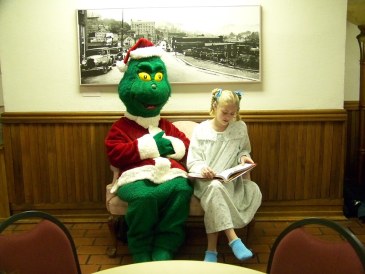
How the Grinch Stole Christmas

(Yes, I know this photo is from the movie.)

Five Reasons to Watch The Grinch Live! on NBC

#1  THE PLOT

If you don’t know the musical, (because you’ve been living in a cave or something) the story goes like this:

The action of the musical happens in mysterious Whoville. Christmas is a wonderful holiday, which is adored by all the residents of the fantastic town. Who doesn’t love this time of the year, when everything around is covered with fluffy snow, when we feel a smell of a fir-tree, and people exchange with magnificent gifts? Therefore, on the eve of the holiday, the inhabitants are concerned about purchases of the gifts, decoration of the houses and, of course, preparation of dishes for the holiday table.

Once upon a time, a man lived in a town. His was called Grinch. His body was green and hairy. That’s why nobody in the Whoville loved him. The main hero took offense on the inhabitants and decided to live on the lonely mountain, which was blown by winds. A dog was an only being, who kept his company. On this mountain, he sat in a cave and was angry at the whole world.

Breakfast with the Grinch 11-2010

Breakfast with the Grinch from vastateparkstaff

Grinch hated Christmas most of all. While the population of a town had fun with all hearts, the indicator of already bad Grinch’s mood expressed something awful. Each Christmas appeared to be a terrible torture for the green hermit. One day, a spiteful inhabitant of the mountain decided to finish a holiday once and for all. While the carefree Whovilleans were sleeping in holiday night with pleasure, perfidious Grinch decided to steal Christmas from the citizens, to make nobody able to have fun anymore.

Now, as well as the residents of the town, Grinch is in cares: he needs to prepare an ideal crime, that nobody could follow his ways. Two teenagers and two girls got on the mountain, where Grinch lived, and it finally angered him. He left the cave, put on a fancy dress and went down to the city, where he began to frighten everyone, who occurred on his path. What to do, if the circumstance, which is hard to cope with, unexpectedly interferes into the plans of Grinch? To speak more precisely, it is the little girl, who even wants to make friends with the character.

Five Reasons to Watch The Grinch Live on NBC

The girl, who helped the father with mail, was frightened so much that she fell in the packing machine, but then, probably, Grinch felt sorry and pulled her out. Cindy thanked him. Being raged by the fact that someone can think that he is kind, Grinch wrapped her with the tinsel. Then the girl thought that, maybe, Grinch is not so bad as everyone speaks about him. She also absolutely cannot understand the sense of Christmas and wants to reconcile him with the residents. However, finally, Grinch realizes that sense of Christmas is not in gifts. The repentant villain decided to return the gifts to the inhabitants, and they accepted him to their society.

#2 MATTHEW MORRISON

Matthew James Morrison will portray Grinch! Morrison is an American actor, dancer, and singer-songwriter. Morrison is known for starring in multiple Broadway and Off-Broadway productions, including his portrayal of Link Larkin in Hairspray  on Broadway, and for his role as Will Schuester on the television show Glee. He received a Tony Award nomination for his featured role as Fabrizio Nacarelli in the musical The Light in the Piazza.

#3 DENIS O’HARE

Denis O’Hare will play his dog, Max.  O’Hare is an American actor, singer, and author noted for his award-winning performances in the plays and musicals such as Sweet Charity,  as well as portraying vampire king Russell Eddington on HBO’s fantasy series True Blood. He has been nominated for an Primetime Emmy for Best Actor.

Five Reasons to Watch The Grinch Live on NBC

#4 THE COSTUMES

Personally, I think the costumes from the film version were exceptional.  I don’t know if they can reach that level of detail, but I’m interested in seeing if they do so.

#5 THE CHOREOGRAPHY

From viewing the snippet on NBC, I can tell the choreography is fun and playful.  That’s got to be a plus, huh? Here’s a trailer for the show:

https://www.today.com/popculture/nbc-bringing-grinch-life-new-musical-holiday-special-t198362

As you may know, several musicals have been performed live in recent years.  In my opinion, some were better than others.  I enjoyed NBC’s Hairspray and Jesus Christmas Super Star the most.  I would hope these production companies are learning how to produce a better product each time they attempt one.  Who knows?

Another was good production was  A Christmas Story.  In case you don’t me, I am a retired drama teacher having taught and directed for thirty-eight years.  You can find my resume here:Teaching Resume

A Christmas Story Broadway Musical Lesson

Now I created drama education resources for my business, Dramamommaspeaks.  I have a lesson about A Christmas Story which would complement the Grinch Live! If you are in a hybrid learning classroom or distance learning, these musicals work well for teachers.

You can find it here: A Christmas Story Broadway Musical Lesson

Five Reasons to Watch The Grinch Live on NBC

Need a quick emergency lesson plan? Or one for a substitute? Everything is provided for the busy teacher.

This Product includes:

  • Letter to Teacher
  • Two Warm Ups–MY Version of Popular Exercises
  • Teacher’s Script–what I say and how I say it!
  • Photos of the Production
  • Separate File of Slides for Teacher to Use to Lecture
  • Plot of the Musical
  • History about the Origination of the Production
  • Information concerning the composer, Pasek and Paul (who also co-wrote Dear Evan Hansen)
  • History about the Film and Musical Helping One Another
  • A Shortened Lesson on : What are the Tony Awards?
  • Tony Awards it Received
  • What are the Tony Awards
  • New York City Map with Competing Theatres Labeled
  • Student Note Page
  • Teacher Note Page Key
  • Trivia
  • Quotes from the Musical–Good for Discussions and Assignments
  • Extension Activities–Five different activities, individual and group
  • Sources & Links to Film Clips from the Show

This lesson works well with any grade level, although it was created for secondary students.  Reading, Language Arts, Vocal Music and Drama classes have success with it!

Or pick up my holiday lesson bundle at: Drama Lessons Holiday Themed 

I hope you’ll check out Grinch on December 9 and think about purchasing my Broadway lesson on A Christmas Story.  If nothing else, both will put you in the holiday spirit!

Which Grinch character is your favorite?  Mine is Max.  I’d love to hear from you.  Contact me at dhcbaldwin@gmail.com or DeborahBaldwin.net

Deborah Baldwin of DramaMommaSpeaks


Share this:

  • Click to share on Tumblr (Opens in new window) Tumblr
  • More
  • Click to share on X (Opens in new window) X
  • Click to share on Facebook (Opens in new window) Facebook
  • Click to share on Pinterest (Opens in new window) Pinterest
  • Click to share on LinkedIn (Opens in new window) LinkedIn
  • Click to email a link to a friend (Opens in new window) Email
  • Click to share on Reddit (Opens in new window) Reddit
  • Click to share on Pocket (Opens in new window) Pocket
  • Click to share on Telegram (Opens in new window) Telegram
  • Click to share on WhatsApp (Opens in new window) WhatsApp

Like this:

Like Loading...

Filed Under: acting, arts education, arts integration, Broadway, Distance Learning, drama education, e-learning, excellence in teaching, High School, middle grades, Musical Theatre, Teacherspayteachers, Teaching, theater, Tony Awards Tagged With: 'tweens, Broadway musicals, DISTANCE LEARNING, drama lessons, Family, family time, live musicals, middle grade books, Middle school, musical theater lessons, teacherspayteachers, VIRTUAL LEARNING, youth theatre

Next Page »

Footer

Follow Us

logo3.png

FOLLOW US

Facebook X-twitter Pinterest Instagram Envelope Rss

Goodreads: read

Malibu Rising
Malibu Rising
by Taylor Jenkins Reid
People We Meet on Vacation
by Emily Henry
The Last Thing He Told Me
by Laura Dave
Faking It
Faking It
by Cora Carmack
Losing It
Losing It
by Cora Carmack

goodreads.com
Copyright © 2024 · Wellness Pro on Genesis Framework · WordPress.com.Log in
 

Loading Comments...
 

    %d