• Skip to primary navigation
  • Skip to main content
  • Skip to footer

Join Me in my new Facebook Group! https://www.facebook.com/groups/417126059784261

Menu
  • Meet Deb – The Heart Behind DramaMommaSpeaks
    • Work with Me! 
    • Photo Gallery of DramaMommaSpeaks
    • Directorial Credits
  • I Give Book Talks! 
    • Book Talk Through Skype
    • Books
  • Freebies!
  • Bumbling Bea
  • Teaching Resume
  • Acting Resume
  • Contact Me
  • Blog
    • Drama Education
    • Arts Education
    • Youth Theatre
    • Middle Grades
    • Musical Theatre
    • Teaching
  • Meet Deb – The Heart Behind DramaMommaSpeaks
    • Work with Me! 
    • Photo Gallery of DramaMommaSpeaks
    • Directorial Credits
  • I Give Book Talks! 
    • Book Talk Through Skype
    • Books
  • Freebies!
  • Bumbling Bea
  • Teaching Resume
  • Acting Resume
  • Contact Me
  • Blog
    • Drama Education
    • Arts Education
    • Youth Theatre
    • Middle Grades
    • Musical Theatre
    • Teaching

costume design

The Reasons Creativity is More Than Being Different

December 19, 2018 By dhcbaldwin 8 Comments

The Reasons Creativity is More Than Being Different.

“Creativity is more than just being different. Anybody can plan weird; that’s easy. What’s hard is to be as simple as Bach. Making the simple, awesomely simple, that’s creativity” – Charles Mingus

person with body painting
Photo by Sharon McCutcheon on Pexels.com

I’ll take Charles Mingus’ lead on this.

Lately, I have been thinking about creativity and how to use it as simply as possible.

I am in a very creative place right now at present.  I wake up thinking about something creative, create all day and go to bed thinking creatively.  In fact, it isn’t all that uncommon for me to wake up thinking about something creative I want to do.

What the heck is going on?

I’m over sixty years old.

In my lifetime, I may be my most creative self EVER. right.now. 

What the heck is going on?

FRAZZLED TEACHER

I think I know.  If you believe your life is led in a path which is best for you, whether you believe in God or some other high power, then you will understand this story.

I taught drama for thirty-eight years.  I directed for most of those years as well–at least 250 plays and musicals with adults and children alike. Need something truly unique? Check out this costume design lesson using Christmas wrapping paper.

Deborah Baldwin teaching

I thought when I retired, I would probably continue directing or teaching in some capacity.  I did a little of both, but you know? My heart wasn’t really in it any more.  Maybe it’s because it takes a lot of energy to do both and I just couldn’t muster it anymore. Because of some unforeseen circumstances, those doors closed to me at the same time I was losing my interest.  I thought I needed to continue with both, because that’s what I had always done–taught and directed.

Then a door which had always been closed to me or actually, I refused to try it, opened.

Guess what?  I am interested in sharing my lessons with other teachers which leads to me where I am at present.  I’m very happy with this decision.

Oh my gosh….I should have done this years ago!

I give credit to my dear husband, Tim, for patiently suggesting to me I create a book of all of my thirty-eight years of teaching drama lessons and units.

Bumbling Bea

I wrote a middle grade book, Bumbling Bea, but it doesn’t get enough traction (because simply there is too much competition no matter how good your book is and marketing it is a bear) and I needed to do something where I had more contact with people.

Instead of creating a book of my lessons,  I started a store at Teacherspayteachers.com

There are reasons creativity is more than just being different.

When you are creative:

  • you are interesting because you have many ideas flowing all at once
  • you are happier because you are in a zone in your mind which relaxes you–you lose track of time and your day-to-day worries
  • creative problem solving is deeply satisfying and concrete

The challenge of creativity is to do something simply and well.  It’s easy to use “hair choreography” to cover up your mistakes or weaknesses. (If you don’t know what that is, it is when a choreographer has the female dancers whip their hair around a lot in lieu of more dance steps.)

Being different may set you apart from other people, but being creative is something of which we have all been endowed.  It is just a matter of where our creative talents lie.

But Charles makes a very valid point.  You were given this creativity so do something amazing with it!  Don’t let it sit in some closet amongst the dirty clothes or down in the basement by the extra cat litter (okay, that’s a metaphoric stretch but you understand what I mean…)

USE YOUR CREATIVITY AND USE IT SIMPLY– NOT ALL GUCKED UP

I was perusing the web to see if I could find some research concerning the importance of creativity to the human psyche and ran upon Adobe.comeducate.com

Here is what they have found out so far:

“What we discovered was extremely illuminating. Three quarters of the educators surveyed believe that students need to develop these skills to protect their futures, as the professions that require creative problem solving are less likely to be impacted by automation. However, it isn’t just job-protection where creative problem solving makes a difference. Almost 90 percent of respondents believe students who excel at creative problem solving will have higher-earning job opportunities in the future, and 85 percent agreed that these same skills are in high demand by today’s employers for senior-level and higher-paying careers.”

These challenges are occurring everywhere in the world, not just in the U.S.  I figure if the German teachers are as frustrated as the Japanese, there is a big problem.

person with body painting
Photo by Sharon McCutcheon on Pexels.com

Really, I think my store should be re-branded CreativityforU because that is what I am peddling.

Every single lesson or unit, bundle,  worksheet, assignment, quiz, etc. was developed to use one’s creativity to accomplish it.

Here are some examples:

Set Design and Construction

The Reasons Creativity is More Than Being Different

Set Design Bundle

The Reasons Creativity is More Than Being Different


Costume Design with Fairy Tale Characters

Costume Design with Fairy Tales

Tableau–Holiday Theme

The Reasons Creativity is More Than Being Different


Radio Theater–

Creativity is More than Being Different


Drama Units and Lessons Curriculum

The Reasons Creativity is More Than Being Different

or if you just want to purchase one lesson, check out:  Set Design, the Rendering 

In this world and this day and age, it simply isn’t enough just to be creative.  You have to know how to apply this talent and use it as simply as you can.

Problem is, too many people think they aren’t creative which goes back to how creativity is perceived by the general public and Charles’ quote.

Our teachers know this and strive every day to encourage our students to be creative in everything they do.  That’s quite a heady responsibility if you think about it.

When was the last time you were creative?

I’d love to hear about your adventures with creativity whether it be some recipe you made, how you decorated your home for Christmas or painted a picture.  Everything counts.

Contact me at dhcbaldwin@gmail.com  or DeborahBaldwin.net

Deborah Baldwin


Share this:

  • Click to share on Tumblr (Opens in new window) Tumblr
  • More
  • Click to share on X (Opens in new window) X
  • Click to share on Facebook (Opens in new window) Facebook
  • Click to share on Pinterest (Opens in new window) Pinterest
  • Click to share on LinkedIn (Opens in new window) LinkedIn
  • Click to email a link to a friend (Opens in new window) Email
  • Click to share on Reddit (Opens in new window) Reddit
  • Click to share on Pocket (Opens in new window) Pocket
  • Click to share on Telegram (Opens in new window) Telegram
  • Click to share on WhatsApp (Opens in new window) WhatsApp

Like this:

Like Loading...

Filed Under: arts education, Creativity, drama education, Education, Education, excellence in teaching, Teacherspayteachers, teaching strategies Tagged With: costume design, drama units and lessons, radio theater, set design, sound effects

Here’s a Lesson You’d Never Expect: Costume Design

November 23, 2018 By dhcbaldwin 1 Comment

Here’s a Lesson You’d Neve Expect:  Costume Design

Image result for people in costumes in a play

It’s one of my favorite subjects in theater.  How can you beat it?

It’s fun, creative, allows for your imagination to flow freely and just plain fun.

Oh, did I say fun twice?

You know who else loves costume design?  Kids.

I think sometimes as drama teachers we think of costume design from the standpoint of a play or musical solely.

But there are so many other ways we use costumes.  Maybe like me, you haven’t thought of them either.

For instance:

  • Halloween costumes
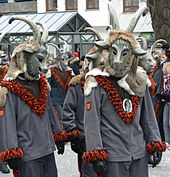
  • Parade costumes
  • Ballet costumes
  • Super Hero
  • Circus Performers

and probably more I haven’t even thought of yet!

Image result for people in costumes in a play

Why Should I Teach Costume Design?

Here are some reasons for you:

  • Costumes are one of the most popular components of theatre.
  • An actor need not speak. A costume can share something about the character. The time period, tone of the production, personality or job of the character can all be conveyed through a costume.
  • Costume design involves multi -step procedures. The student learns to site specific examples while attending to the precise details of a description.
  • Students determine the meaning of symbols, key terms and phrases as they are used in a specific context relevant to grade appropriate texts and topics.

You may not know there are several important steps a costume designer must go through before the costume hits the stage.

1.) Analysis: The first step is an analysis of the script, musical composition, choreography, etc. Costume parameters for the show are established and a rough costume plot is created. A costume plot outlines which character is in which scene, when the actors change, and what costumes are mentioned in the script.

2.) Design Collaboration: This is a time when all of the designers meet with the director. There must be a clear understanding of where the show is headed. The designers get on the same page with the director in terms of themes for the show and what message they want the audience to get from the show.

3.) Costume Research: Now, the costume designer gathers research. Costume designers usually begin with world of the play research where they find research to establish the world where the play takes place. This helps the designers establish the rules of the world and then in turn understand the characters better. The designer will then go into broad research about each character to try to establish their personalities though their costume.

4.) Preliminary Sketching and Color Layout: Costume designers begin by creating preliminary sketches. beginning with very quick rough sketches the designer can get a basic idea for how the show will look put together and if the rules of the world are being maintained. The Costume designer will then go into more detailed sketches and will figure out the specific costumes and colors for the character. Sketches help see the show as a whole without them having to spend too much time on them.

5.) Final Sketches: Once the Costume Designer and the Director agree on the costumes and the ideas are fully flushed out, the designer will create final sketches. These are called renderings and are usually painted with watercolors or acrylic paints. These final sketches show what the designer wants the character to look like and the colors of the costume.

Image result for people in costumes in a play

Here’s a little history for you:

Costume design has a very long history. The ancient Greek playwright Aeschylus, who lived in the 5th century B.C., created specific costumes for actors to wear when performing his tragedies. In the Middle Ages & Renaissance, scenery and costumes became increasingly important elements of stage plays. Want a free costume design lesson? Click here.

They helped capture a mood, create an exciting colorful event, and entertained audiences. But there wasn’t one cohesive idea of what costume had to be. In Shakespeare’s time, people performed in contemporary dress. In his own company, Shakespeare’s performers provided their own costumes.

In the 16th century, some traveling theatrical troops performed a style of theater called commedia dell’arte. It had costumes that represented stock characters, such as the serving girl, the doctor, and the harlequin. Everyone in the audience understood what these characters stood for by looking at their costumes.

From the 1770s through the 1870s, a desire for greater accuracy in costume design began to take hold due to an increase in stage performances and traveling theatrical troupes, and because more people had become familiar with the costumes of cultures around the world.

Into the 19th century, costume design became an increasingly specialized art,           and two main ideas filtered into it. One was historical accuracy, or capturing the sense of a time period.

The other was concept-driven, in which costumes captured a vision that might not have connections to a known historical time and place. Think about movies and television today, and you can probably name several productions that fall into either category.

Did you know the use of metaphor through costume design is super cool?  I love this part! 

The Metaphor is used to assist the designer in developing a specific tone, mood, style, or feel for the play.

Metaphor is “A figure of speech in which a word … that ordinarily designates one thing is used to designate another, thus making an implicit comparison…“

For example: “All the world’s a stage,…” (William Shakespeare’s, As You Like It, Act II, scene 7). In less poetic terms — the world is a stage. (Note: A simile would add the word “like:” The world is like a stage.)

For example, after an analysis of Moliere’s The Giver, the designer may decide that Harpagon’s home, the primary set, is a gold coin. The metaphor — home is a gold coin — can suggest to the designer a color (gold), a shape (round), a texture (metallic)… How these elements are used depends on the designer’s creativity.

Think of the elements in Wizard of Oz—tornado, bicycle, ruby slippers, hour glass

How could you use these elements in the design of Dorothy’s house?

Here’s a Lesson You’d Never Expect

I have several costume design lessons you might be interested in.

Costume Design studies through:

Costume Design with Fairy Tales

Fairy Tale Characters

Costume Design with Super Heroes

Circus Performers

Super Heroes

Halloween Characters

Costume Design with Nutcracker Characters


Nutcracker Ballet Characters  

Here's a Lesson You'd Never Expect

Holiday Parade Characters

Costume Design with Newspaper

Each is a two day student-centered study of the history of costume design, including giving students an opportunity to create their own designs and much more.  If you are looking for a unit, this five day costume design unit works well with high school students.

Costume Design Unit for High School


I hope you’ll give them a look see.

I’d love to hear about your experiences with costumes.  I have a few crazy ones, like the time I decided to dress as a stalk of celery…..but I’ll keep that story for another time.

Contact me at dhcbaldwin@gmail.com or DeborahBaldwin.net

MTI Senior Musicals: A Baby Boomer's Dream Come True


Share this:

  • Click to share on Tumblr (Opens in new window) Tumblr
  • More
  • Click to share on X (Opens in new window) X
  • Click to share on Facebook (Opens in new window) Facebook
  • Click to share on Pinterest (Opens in new window) Pinterest
  • Click to share on LinkedIn (Opens in new window) LinkedIn
  • Click to email a link to a friend (Opens in new window) Email
  • Click to share on Reddit (Opens in new window) Reddit
  • Click to share on Pocket (Opens in new window) Pocket
  • Click to share on Telegram (Opens in new window) Telegram
  • Click to share on WhatsApp (Opens in new window) WhatsApp

Like this:

Like Loading...

Filed Under: arts education, drama education, Education, youth theatre Tagged With: circus performers, costume design, elementary, fairy tales, Halloween costumes, high school, Middle school, Nutcracker Ballet, super heroes lesson plan

Research Says Fun is Good for Everyone

October 6, 2018 By dhcbaldwin Leave a Comment

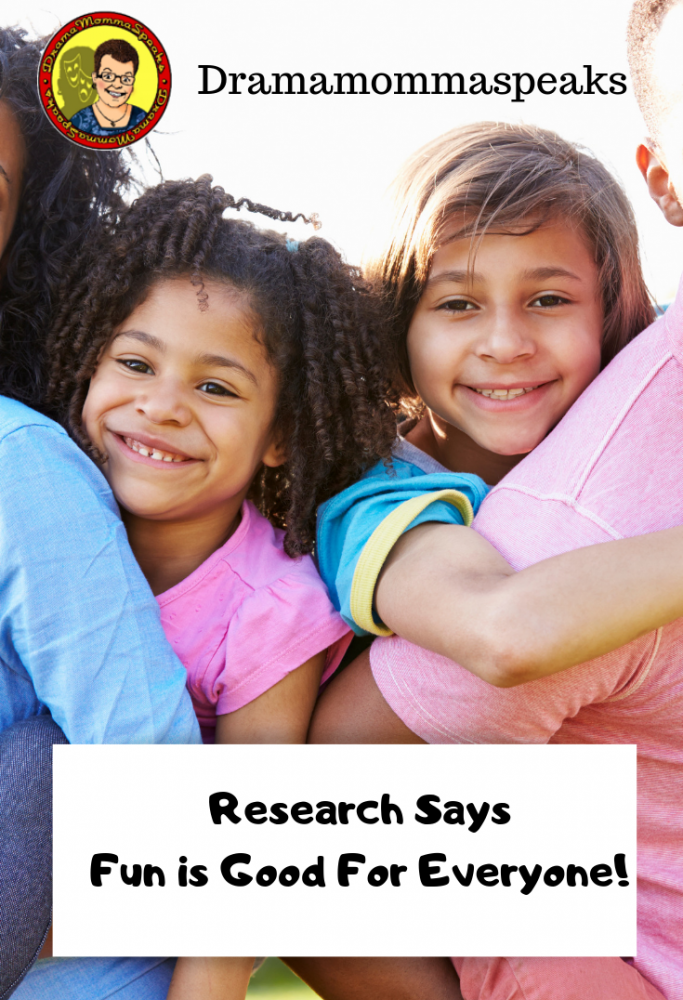
Research Says Fun is Good for Everyone

Fun is good for you, but I bet you all ready knew that.

In third grade, I dressed as a pilgrim for Halloween.

That was pretty unusual even in 1964.

My grandparents were missionaries in Japan and my mother was born and raised there.  Mom didn’t know much about Halloween and couldn’t see the fun in it very much.  (Huh?)  Consequently, Halloween wasn’t very important to her.

Her idea of a costume was to put together whatever we had.

Sounds logical, right?

Prior to my third grade year of school, my sister traveled with the Girl Scouts to England the summer and brought back a Pilgrim hat.

Mom took one look at me and I knew what it mean:  Voila, my  Halloween ostume.

While everyone else was purchasing their dime store costumes for Halloween, I was relegated to the pilgrim outfit.  It was always that way for me, but that’s probably why I look at things uniquely.  

Ugh.

Costume Design with Halloween Characters

Recently, I got to thinking about that experience and decided it might be really fun for students to learn about costume design by designing their own costume for Halloween. I mean, when have you ever done that?

Here is the product:


This is a one or two day lesson studying costume design through Halloween characters.

Costume Design with Halloween Characters

This two-day lesson on costume design is focused on Halloween characters and gives the students an opportunity to be costume designers. Suitable for students in grades 5 to 9, the product is broken in to two class periods, although it could be used for a one day exploration of the subject.

  • Students will learn about:
  • The History of Costume Design
  • The Rationale for Teaching Costume Design
  • Costumes Notes for Students
  • The History of Halloween and Halloween Costumes
  • Procedure
  • Materials List
  • Source & Video Link List
  • A Warm-Up—Engaging and Creative
  • Fairy Tale Character List
  • Two Assignments–one designing and one creative writing
  • Student Examples

Comprehensive? You bet.

Pumpkin Everything Season

What is the deal with fall?  Everyone is so crazy about it!

I was looking around on the internet and found this information on inverse.com:

“According to neuroscientist Dr. John McGann, the hype is less about turning the volume up on reality than stirring a virtuous cycle of happy memories. Our love of fall smells is less about the smells themselves and more about association. And when it comes to making memories, the scent of spiced desserts and firewood is pretty likely to override the reek of rotting pumpkin.”

I love this time of year as does my younger daughter. I lovingly call this season, “Pumpkin Everything Time.” I was just teasing her about the Starbucks Pumpkin Latte being available now.  We’re both quite excited!

I enjoy how people give in to fun while enjoying themselves from Halloween through New Years.  They decorate their houses two and three times,  go trick or treating with their kids,  overeat at Thanksgiving trying to make every dinner invitation extended to them, wear funny sweaters at Christmas and promise ridiculous resolutions for the new year.

Know what I mean?

When I decided to blog on this product, I thought it might be interesting to see how fun helps us.

I found a great article, ” Why Adults Need Playtime, Too” on Verywellmind.com

“Hobbies and fun activities can bring added joy and happiness to life, and can be a great way to relieve stress as well. In fact, many hobbyists have told me that they’d originally started learning about their area of interest as a coping mechanism for stress, and that their hobbies continue to be a great source of relaxation and stress relief. Some people are even able to turn their hobbies into careers at some point, and end up with a lifestyle where their work is their play.

Another benefit of fun is the lift in mood that it can bring. Beyond merely bringing positive feelings to your life, doing things that get you into a better mood can actually make you more resilient toward stress.  This is something that has been researched as part of psychology’s broaden-and-build theory; activities that raise our level of positive affect, or increase our good mood, can lead us to be more aware of resources in our lives that can help us to remain strong in the face of stress.

Finally, having fun with others can bring a sense of connection that strengthens relationships and builds social support.  Bonding with others while having fun is good for you, and for those close to you.  It’s more than a frivolous pursuit; it’s important for your overall wellbeing.”

We can all use more of that, huh?

I hope you’ll check out my product at: Costume Design with Halloween Characters

There are several others I have created, too.  Here’s a new one:  Costume Design with Nutcracker Ballet Characters

Costume Design with Nutcracker Characters

Or this one:

Teachers are crazy for this one:

Costume Design with Fairy Tales

I’d love to hear how this works for you.  Do contact me at dhcbaldwin@gmail.com or DeborahBaldwin.net

author's signature

I have several other lessons on costume design.  You can find them here:  Here’s a Lesson You’d Never Expect: Costume Design

Fairy Tale Lessons for Drama Class (This lesson is super popular!)

Share this:

  • Click to share on Tumblr (Opens in new window) Tumblr
  • More
  • Click to share on X (Opens in new window) X
  • Click to share on Facebook (Opens in new window) Facebook
  • Click to share on Pinterest (Opens in new window) Pinterest
  • Click to share on LinkedIn (Opens in new window) LinkedIn
  • Click to email a link to a friend (Opens in new window) Email
  • Click to share on Reddit (Opens in new window) Reddit
  • Click to share on Pocket (Opens in new window) Pocket
  • Click to share on Telegram (Opens in new window) Telegram
  • Click to share on WhatsApp (Opens in new window) WhatsApp

Like this:

Like Loading...

Filed Under: arts education, drama education, Education, youth theatre Tagged With: costume design, Halloween, Nutcracker Ballet

Like Halloween? Then You’ll Enjoy This Costume Sale

September 30, 2017 By dhcbaldwin Leave a Comment

A group of costumes hung on a rack signifying a costume sale

Like Halloween? Then You’ll Enjoy This Costume Sale

Do you like Halloween like I do?  Tomorrow, it’s almost October! Yippee! Have you found a theater’s costume sale you can peruse?

October is one of my most favorite months–the leaves begin to change to scarlet and gold, pumpkins are everywhere. And probably one of most favorite things is the air is crisp. No more muggy hot Kansas weather!

When our daughters were children, we had a rule: you couldn’t talk about Halloween until September 1st. No drawing pictures of what your costume should be, negotiating for some extravagant costume piece, and NO buying Halloween candy.

A Rare Peek Inside the RSC’s Costume Sale

Recently,  I ran on to an article in the New York Times about the Royal Shakespeare Company’s costume sale. Wow, that would have been a neat thing to see. I was in England in August and visited Stratford in Avon where the sale was held. If only I had visited a bit later…

Read on.

Ball Gowns, Lace Ruffs and Fairy Wings: Theater History for Sale

By Holly Williams

Like Halloween? Then You'll Enjoy This Costume Sale


STRATFORD-UPON-AVON, England — Have you ever wanted to step into the shoes of a great Shakespearean actor? Over the weekend, shoppers here in Shakespeare’s birthplace, which is also the home of the Royal Shakespeare Company, had a chance to walk away with a piece of theatrical history. This  legendary company held a sale of 15,000 costumes and other items.

By the time the sale opened at 9 a.m. Saturday, a line snaked down the street; the first fans had arrived at 5 p.m. the previous day, camping out to secure a spot. Such patience was rewarded, and customers emerged clutching treasures, from the sublime — period ball gowns, lace ruffs, fairy wings — to the ridiculous — gold lamé lion tails and grotesque pig suits.

The Royal Shakespeare Company has the largest costume department in British theater, and it employs 30 members of staff, including experts in armor and millinery. The sale was raising money for the company’s Stitch in Time campaign, to renovate its costume workshop and to finance specialist apprenticeships. Around a third of its stock — items too worn or too specific to be reused — was on sale at bargain prices: from 50 pence, or 67 cents, for a fan to 30 pounds, or roughly $40, for a velvet cloak.

Like Halloween? Then You’ll Enjoy This Costume Sale

Like Halloween? Then You'll Enjoy This Costume Sale


The life-span of Royal Shakespeare Company costumes are recycled across productions and for up to 100 performances.  This is among what makes them special, and every item has a sewn-in label identifying the actor who wore it last, and in which show. Beady-eyed rummagers could pick up Anita Dobson’s grubby underskirt from “The Merry Wives of Windsor,” or Joanna Vanderham’s silver gown from “Othello.” One happy shopper claimed to have found a dress worn by Jane Asher.

It can be bittersweet, however. “What makes this so emotional for someone like me — I put on my first R.S.C. costume in 1966 — are the name tags,” said the British actor Patrick Stewart, who fronted the Stitch in Time campaign. “I already found one item worn by a dear friend of mine, long gone.”

Indeed, among the armor, I came across a breastplate with “Tim Pigott-Smith” written on a label; the British actor died in April.

Like Halloween? Then You’ll Enjoy This Costume Sale

Even stars of Mr. Stewart’s caliber are not immune to feeling awe when taking on the mantle (at times literally) of acting giants. “I was once given a jacket which I did not really like,” Mr. Stewart said, adding that he had then seen from the label that it had been worn by Paul Scofield, a British actor who died in 2008.

“So of course I wore it,” he said. “Although it had to be cut down, because Paul was a much taller actor than I was, in every sense.”

Performers often highlight how vital costumes are, and by trying on a vast crinoline (used in the “Tempest”) and an absurdly heavy cloak (“Henry VIII”) I can understand why: They completely change the way you move and hold yourself.
“There were times when the costume had a significant impact on the work I would do on that character,” Mr. Stewart said, recalling the transformative effect of a luxurious pale gray three-piece suit worn for a modern-dress “Merchant of Venice” in 2011 — “which I should have stolen because it fitted me so well.”
I unearthed a kitsch, frothy wedding dress from the same production, worn by Susannah Fielding as Portia. Indeed, a whole rail of wedding dresses were available to make wedding days extra special — once they’ve had a good clean, at least.

Like Halloween? Then You'll Enjoy This Costume Sale


Costume Treasures in Everyday Life

Outside, members of the public emerged enchanted with their hauls. Jenkin Van Zyl, whose parents drove up from London so that he could fill their car, went on quite a spree: “I only wear theater costumes,” he said. “So I just came to top up, but I didn’t realize how cheap and amazing the sale was going to be. I spent £800.”
Shelley Bolderson from Cambridge, England, also wears costumes in her daily life. She said she had been delighted to find a coat made from pages of a book, created for the dancing satyrs in the 2009 production of “The Winter’s Tale.”

“I just hope it won’t dissolve in the rain,” she said.

Like Halloween? Then You'll Enjoy This Costume Sale

From the Stage to the Classroom: Lessons That Last

The sale is also a godsend for amateur theater groups. Miriam Davies, from Stamford, England, is a costume designer for a company specializing in Shakespeare.
“You can’t really miss something like this,” she said. “Having R.S.C. costumes is a special thing — it’s history.”

Lots of theater companies have costume sales prior to Halloween.  Their costumes are worth the money they ask for them.  Trust me on this.

If you don’t know me, I am a retired drama teacher and director having done both for thirty-eight years. 

Several years ago because of this experience, I decided to sell drama education lessons on Teacherspayteachers.com.

I have several costume design lesson plans available if you are interested.

One is focused on Halloween characters:

Costume Design with Halloween Characters

Like Halloween? Then You'll Enjoy This Costume Sale

Or, if you want to just go whole hog on Halloween, check out this bundle!

Bundle: Drama Lessons Bundle

Halloween Drama Class Units, Scripts Lessons Improvisation Acting Bundle!

What’s your favorite Halloween costume you have worn?  Once I was a piece of celery…but that’s another blog post to be sure.

I’ve love to hear from you.  Contact me at dhcbaldwin@gmail.com

Deborah Baldwin, Dramamommaspeaks

Share this:

  • Click to share on Tumblr (Opens in new window) Tumblr
  • More
  • Click to share on X (Opens in new window) X
  • Click to share on Facebook (Opens in new window) Facebook
  • Click to share on Pinterest (Opens in new window) Pinterest
  • Click to share on LinkedIn (Opens in new window) LinkedIn
  • Click to email a link to a friend (Opens in new window) Email
  • Click to share on Reddit (Opens in new window) Reddit
  • Click to share on Pocket (Opens in new window) Pocket
  • Click to share on Telegram (Opens in new window) Telegram
  • Click to share on WhatsApp (Opens in new window) WhatsApp

Like this:

Like Loading...

Filed Under: drama education, theatre, youth theatre Tagged With: costume design, drama education, Drama teacher resources, Halloween, Royal Shakespeare Company, Shakespeare costumes, Theater in the classroom

« Previous Page

Footer

Follow Us

logo3.png

FOLLOW US

Facebook X-twitter Pinterest Instagram Envelope Rss

Goodreads: read

Malibu Rising
Malibu Rising
by Taylor Jenkins Reid
People We Meet on Vacation
by Emily Henry
The Last Thing He Told Me
by Laura Dave
Faking It
Faking It
by Cora Carmack
Losing It
Losing It
by Cora Carmack

goodreads.com
Copyright © 2024 · Wellness Pro on Genesis Framework · WordPress.com.Log in
 

Loading Comments...
 

    %d