• Skip to primary navigation
  • Skip to main content
  • Skip to footer

Join Me in my new Facebook Group! https://www.facebook.com/groups/417126059784261

Menu
  • Meet Deb – The Heart Behind DramaMommaSpeaks
    • Work with Me! 
    • Photo Gallery of DramaMommaSpeaks
    • Directorial Credits
  • I Give Book Talks! 
    • Book Talk Through Skype
    • Books
  • Freebies!
  • Bumbling Bea
  • Teaching Resume
  • Acting Resume
  • Contact Me
  • Blog
    • Drama Education
    • Arts Education
    • Youth Theatre
    • Middle Grades
    • Musical Theatre
    • Teaching
  • Meet Deb – The Heart Behind DramaMommaSpeaks
    • Work with Me! 
    • Photo Gallery of DramaMommaSpeaks
    • Directorial Credits
  • I Give Book Talks! 
    • Book Talk Through Skype
    • Books
  • Freebies!
  • Bumbling Bea
  • Teaching Resume
  • Acting Resume
  • Contact Me
  • Blog
    • Drama Education
    • Arts Education
    • Youth Theatre
    • Middle Grades
    • Musical Theatre
    • Teaching

elementary school

Readers Theater: The Secret Tool for Social Studies

November 7, 2025 By dhcbaldwin Leave a Comment

Readers Theater: The Secret Tool for Social Studies

I wanted to write “Readers Theater: The Secret Tool for Social Studies” because so many teachers are searching for new ways to keep students engaged in social studies. When most teachers hear “Readers Theater,” they picture ELA fluency, reading  or drama class, or a fun break from routine. But Readers Theater is far more powerful than that—especially in the social studies classroom.

Social studies is filled with people, decisions, and moments that shaped the world. Readers Theater brings those stories to life.

Readers Theater: The Secret Tool for Social Studies

Why It Works

Personally, I believe Readers Theater is one of the most useful teaching tools we teachers have at our disposal. First, Readers Theater requires no costumes, sets, and maybe most importantly–no memorization. (I’m aware that I am repetitive here, but not having to memorize lines could be the single greatest asset of Readers Theater.) Talking about making it easy on the teacher! Plus, students remain seated and bring characters to life using only their voices. Stay seated, you say?  Plus, everyone faces forward.  Consequently, there is not much opportunity for shenanigans.  Since the pressure of performance is removed, even shy or reluctant learners can participate successfully.

It’s simple, low-prep, and high-engagement—just what teachers need when the curriculum feels heavy.

Readers Theater: The Secret Tool for Social Studies


✅ 1. Readers Theater Builds Historical Empathy

As we know, understanding history is more than memorizing dates. I remember when I was in social studies class, I had a difficult time with all of the facts.  Students learn why people behaved as they did, how they felt, and what values shaped their choices.

Here’s a tip:  When students “step into” a historical figure’s role—even just by reading lines—they connect emotionally with the past. That’s powerful. 

  • What did enslaved families risk on the Underground Railroad?

  • How did immigrant children feel arriving at Ellis Island?

  • What was it like to hear Lincoln’s words at Gettysburg?

Readers Theater turns history from a timeline into a human experience.

Readers Theater: The Secret Tool for Social Studies


✅ 2. It Gives Voice to Multiple Perspectives

Good social studies teaching includes multiple viewpoints. Readers Theater makes that visible and audible.

A script can feature:

  • Leaders and everyday citizens

  • Soldiers, nurses, and workers–Veterans Day One Act

  • Children’s voices from different cultures–check out Magic Lake (a Peruvian story about a little girl who saves the prince)

  • Opposing sides of an issue–It Could Always Be Worse is an excellent example of being grateful

Students begin to recognize that history isn’t one story—it’s many. I find that learning that other cultures have the same issues that I have makes me feel better about my particular issue at the time.

Readers Theater: The Secret Tool for Social Studies
My ESL Drama Club in Smithton Middle School, 2001

✅ 3. It Supports ELLs and Struggling Readers

Because students read aloud together, Readers Theater:

  • Encourages repeated reading (which boosts comprehension)

  • Builds vocabulary naturally

  • Strengthens speaking and listening skills

  • Reduces anxiety—no memorization, no performing alone

ELL students in particular benefit from hearing fluent reading modeled by classmates while having the chance to participate at their comfort level. About twenty years ago, I sponsored an ESL Drama Club.  What a tremendous experience that was.  We performed a Readers Theater script by Aaron Shepherd. 
Readers Theater: The Secret Tool for Social Studies


✅ 4. It Turns Primary Sources Into Something Students Can Understand

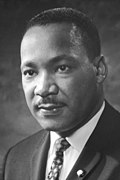
Primary documents are rich—but intimidating. Once a student is intimidated, they can’t learn.  Readers Theater helps teachers “translate” them into accessible language without losing meaning. For example, a student could learn about Martin Luther King through a Readers Theater script.  

A script can simplify:

  • Speeches

  • Letters

  • Newspaper accounts

  • Diaries

  • Oral histories

Additionally, if a teacher uses the Readers Theater script for a performance, such the Martin Luther King holiday, students begin to internalize content instead of just decoding it. I know that when my teachers used Readers Theater in our classes, I remembered the information much more easily.

Readers Theater: The Secret Tool for Social Studies


✅ 5. It Encourages Collaboration and Critical Thinking

Social studies is filled with cause and effect, motives, and outcomes. Readers Theater takes those ideas off the page and puts them into dialogue, letting students hear history instead of just reading about it.

After a script, students can discuss:

  • Who had power in the situation?

  • What choices did characters have? Li Chi The Serpent Slayer is a fantastic Chinese folk tale about a girl volunteering herself to save her village.

  • What might you have done differently?

  • What bias or point of view appears in the story?

Readers Theater: The Secret Tool for Social Studies

How Readers Theater Turns Passive Readers into Powerful Thinkers

Suddenly, they’re not just reading history—they’re interrogating it. When students interrogate information—asking questions, challenging assumptions, and discussing why events happened—they are no longer passive receivers of content. They become active thinkers. That shift builds confidence.

  • They learn that their ideas and questions matter.
    When students are encouraged to question the text, they begin to trust their own reasoning. Without a doubt, trusting one’s self is monumentally important.

  • They discover they can figure things out on their own.
    Instead of waiting for the teacher to supply answers, they explore possibilities and defend their thinking. For that reason, their sense of ownership becomes a heady experience.  One experience a students doesn’t easily forget!

  • They practice speaking up.
    Discussing motives, cause and effect, and different perspectives helps students find their voice and participate more boldly. Using Readers Theater as the vehicle for your teaching is a sly way to engage students. Personally, I think it is magical.

  • They realize there is not always one “right answer.”
    In social studies, interpretation is part of learning. When students see that they can contribute, analyze, and debate, their confidence grows. Additionally, as confidence grows, a teacher may discover that the most reluctant student feels comfortable speaking up.  Readers Theater is non-threatening.

Additionally, interrogating information isn’t just academic—it’s empowering. Readers Theater makes this even more accessible because students hear viewpoints aloud, react to them, and respond in real time. As a result, that experience helps them feel capable, engaged, and confident in the classroom. And…it’s effortless teaching, I promise you.


✅ Ideas for Using Readers Theater in Social Studies

  • Biographies (Harriet Tubman, Cesar Chavez, Sojourner Truth, Eleanor Roosevelt)

  • World cultures and holidays ( Día de (los) Muertos–Day of the Dead)

  • Indigenous stories and oral traditions (How the Bee Got Its Singer-a Cherokee Creation Myth)

  • Immigration experiences

  • Civil Rights Movement

  • World War II home front

  • Constitutional Convention debates

  • Historical folktales and legends ( The Fall of the Spider Man–a Canadian Folk Tale)

Short scripts can be used during:

  • Introduction to a Unit

  • Stations

  • Friday fun days

  • Sub plans

  • Intervention groups

  • Literacy centers

  • Class performance days


✅ Final Thoughts

I hope you’ll consider including Readers Theater scripts into your social studies curriculum. Social studies should never feel like a silent subject. It should be full of voices, stories, and perspectives.

Readers Theater does exactly that—bringing history to life in a way that is meaningful, accessible, and unforgettable.

How have you used Readers Theater in your social studies classroom?  I’d love to hear about it.  Feel free to email me at DhcBaldwin@gmail.com

   Have you heard the news?  We’re Live! Radio Theater #101 was awarded a 5 star review of excellence.  Get your copy here! We’re Live! Radio Theater #101

Share this:

  • Click to share on Tumblr (Opens in new window) Tumblr
  • More
  • Click to share on X (Opens in new window) X
  • Click to share on Facebook (Opens in new window) Facebook
  • Click to share on Pinterest (Opens in new window) Pinterest
  • Click to share on LinkedIn (Opens in new window) LinkedIn
  • Click to email a link to a friend (Opens in new window) Email
  • Click to share on Reddit (Opens in new window) Reddit
  • Click to share on Pocket (Opens in new window) Pocket
  • Click to share on Telegram (Opens in new window) Telegram
  • Click to share on WhatsApp (Opens in new window) WhatsApp

Like this:

Like Loading...

Filed Under: arts integration, drama education, drama integration, Education, Education, elementary, English Language Learners, excellence in teaching, gifted and talented, middle grades, multiculturalism, readers theater, reading skills, Teacherspayteachers, Teaching, teaching strategies Tagged With: elementary school, listening skills, Middle school, multiculturalism, readers theater, social studies, speaking skills

Ten Ways to Teach Reluctant Students in Your Theater Class

October 5, 2022 By dhcbaldwin 1 Comment

At least once a week, I read of a teacher asking help with, “My beginning theater class is open to all students in the school. However, it has become a dumping ground with students completely disinterested in theater and the study of it. At the same time, I have students who are sincerely interested in the subject in the same class.  What do I do?” Today, I’m going to talk about Ten Ways to Teach Reluctant Students in Your Theater Class.

I know this challenge all too well myself.  Several times in my career, I had students placed in my classroom because the administration thought I demonstrated skill in reaching all students and could reach these students as well.

Do you have any idea how heavy the weight of responsibility for teaching to reluctant students is? Teaching is difficult enough and a theater class poses its own challenges that not everyone is aware of. For instance, when one acts they must share their feelings, real feelings.  That’s can be scary for even the most ardent theater student.

Ten Ways to Engage Reluctant Students in Your Theater Class

Simply put, you need to outsmart your reluctant students.  Remember, you are the professional here.  You’ve got what it takes to be successful (albeit tiring). Wonder how I got to where I am today? Check out: How Theatre Saved My Life

Teach Reluctant Students

  •  You need to survey each and every class to discover whether they are interested in theater or not.  This is true of anyone who teaches any electives from industrial education to art as well as theater. By surveying the students (through a questionnaire on-line or hard copy) you’ll find out their interest level (because you will ask it) and what they hope to learn in the class.
  • After you’ve studied the students’ questionnaire, you can now shape your lessons accordingly. Does this take more time than what you would usually do?  Yes.  Is it worth it?  Yes!  It is better to know your audience (because that’s what they are, essentially) than not and spend most of the year frustrated with their lack of engagement.
  • Use a game as a warm-up. Most students love a game so I recommend playing one at the beginning of each class.  For some students, it is the delight of their day (although they may never share this with you) and it lifts the burden for you always having to teach a concept.  Let the game teach them.  Also, playing a game makes class fun no matter the outcome.  Start with something simple like the Ball Game (Don’t know it? pick it up here).  The Ball Game can be played with students of any grade level. Games give students an opportunity to get to know one another without the stress of a face to face conversation. As the quarter progresses the games you can select games which are more difficult. By the last month of the semester, you should have no problem using an improvisation exercise as a warm-up.
  • Minimize your students’ worries.  Through the questionnaire, you should have a better grasp about what they think theater is as opposed to what it actually is. They may think theater is standing on a stage, wearing a costume (the student may dislike), wearing makeup (even the boys), memorizing gobs of lines and speaking at a volume for the entire class to hear. 

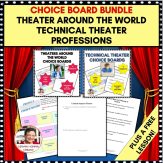
         Let’s not start there if that’s the case.  Let’s do some theater appreciation instead.  Show them video clips of theaters  around the world and either have a class discussion of each theater or give them questions to answer. Here is what I  mean:  Theaters Around the World.

Ten Ways to Engage Reluctant Students in Your Theater Class

Teaching Reluctant Students

  • Study technical theater with them--set, sound, stage properties, stage makeup or costume design.  Many students just need a backdoor into the subject. Technical theater is nonthreatening.  Most assignments are meant to be completed individually and not with a group.  This helps those students who do not speak English as their first language, especially.  I really enjoy teaching technical theater. Through its study, I usually find a student who no one knew very well that turns out to be a fabulous artist! Their creativity and talent can shine in technical theater and suddenly the other student take note of them.  It’s awesome. Here are a few technical theater units which may help you: Technical Theater Units or begin with Set Design, the Rendering
  • Reader’s theater is a good choice for your class.  Readers theater is successful in a class with various levels of interest, because there is no line memorization, no costumes, etc. Everyone sits together on the stage, so there’s that “safety in numbers” thing. Plus, if you wait until near the end of the second quarter, readers theater should not be difficult for your reluctant ones.  (Read my article in One Classroom Over about reader’s theater) You’ve given them plenty of time to adjust to the class. Here’s a funny script for them:  The Brave Little Tailor Unit.  Great for grades 5 to 7.
  • Radio theater is a super choice, too. Personally, I think radio theater has everything a play does!  That’s the reason I suggest it to teachers. Radio theater is highly imaginative from the many character voices actors create to the sound effects. Plus, it is a super tool for strengthening reading skills! It is easy to keep everyone involved, because they are on the stage the entire length of the piece. It can be as simple or as theatrical as you like.  And yet again–no line memorization! This is another unit I would teach near the end of the semester or year. If you are interested in radio theater, check out: Radio Theater Units and Lessons  Don’t know how to direct one?  Go here and pick up all of the training you need: How to Direct Radio Theater
  • Use movement exercises instead of acting ones.  Movement takes no sound and no verbal reaction.  Students like the physical activity, too. The Magic Circle is a good exercise to use for movement.  (Don’t know it?  Pick it up here)
  • Turn down your classroom lights. You won’t believe how dimming the lights will ease students’ anxieties. You just want the classroom light to be dim–light enough you can everyone but no so dark you can’t keep an eye out for any inappropriate behavior.
  • Play some classical music in the background.  Classical music works because there are no lyrics for the students to notice. It can express mood without anyone saying anything.  I think of it like a comforting blanket. In those awkward moments in a game, acting exercise or lesson they can help ease any anxiety that rears its ugly head.

Want some additional tips from me?  Check out Double Casting a Show? Here’s Advice

Ten Ways to Engage Reluctant Students in Your Theater Class

Advice for the Core Subject Teachers

Many of the suggestions I’ve made above work strictly in a theater classroom. Some of them will work for you as well.

Here are a couple of other suggestions for you:

Sometimes our students just need space away from others.  Offer that space in your classroom if a student needs it.  You want them to feel safe and accepted in your classroom. I say as long as they are focused on their work, this is acceptable.

Giving students choices is always a great idea, too.  Remember you have worked out the choices ahead of time so you are comfortable with whether they select once choice over another.  Choice Boards are super for this.  Here are some of mine as an example. This bundle is very popular with teachers: Choice Boards

Ten Ways to Teach Reluctant Students in Your Theater Class

You can even pick up a sample of them right here.

Or pick up a technical theater unit for high school students here: Technical Theater Units, High School

So, there you have it!  Teaching is a wonderful profession when everyone is treated with respect. Even the reluctant students can learn that respecting your art form is possible and believe it or not–enjoyable!  I discovered that once my students knew I had their back and understood them feigning disinterest in theater, I could work with them.  Lots of times, it’s just noise on their part.  Remember that–it’s just noise.

I’d love to know what you’ve found is successful with reluctant students in your classroom?  Contact me at DhcBaldwin@gmail.com.


Share this:

  • Click to share on Tumblr (Opens in new window) Tumblr
  • More
  • Click to share on X (Opens in new window) X
  • Click to share on Facebook (Opens in new window) Facebook
  • Click to share on Pinterest (Opens in new window) Pinterest
  • Click to share on LinkedIn (Opens in new window) LinkedIn
  • Click to email a link to a friend (Opens in new window) Email
  • Click to share on Reddit (Opens in new window) Reddit
  • Click to share on Pocket (Opens in new window) Pocket
  • Click to share on Telegram (Opens in new window) Telegram
  • Click to share on WhatsApp (Opens in new window) WhatsApp

Like this:

Like Loading...

Filed Under: acting, arts education, arts integration, drama education, drama integration, Education, elementary, excellence in teaching, High School, middle grades, reading skills, theater, youth theatre Tagged With: acting exercises, classroom behavior management, elementary school, ELL student, engaging students, high school, Middle school, movement exercises, radio theater, readers theater, reluctant student, Teaching, warm ups and games

The Reasons Teaching Multiculturalism in the Classroom is Vitally Important

March 19, 2019 By dhcbaldwin 10 Comments

The Reasons Teaching Multiculturalism is Vitally Important

The Reasons Teaching Multiculturalism in the Classroom is Vitally Important

I thought the reasons teaching multiculturalism in the classroom is vitally important was a good subject to blog about today.

My Teaching Journey with Multiculturalism

Multiculturalism is here to stay. I am thrilled by that statement! I am very fortunate in having traveled to many countries around the globe.  This wanderlust came from my mother who was born in Japan (my grandparents were missionaries there) and continued her whole life. That’s one of the reasons I enjoy multiculturalism in the classroom!

I enjoy people from other cultures very much.  I find immigrants and visitors very interesting.  They are far more fascinating than someone who lives near me and has never stepped past the U.S. border.

About ten years ago, I taught drama in a middle school in Missouri. During that time I was charged with teaching the students about drama and its many components.  Since there was no set curriculum (Hallelujah!) I loved that I could create lessons and units as I deemed fit.


A Perfect Arts Integration Project

At the end of each six week session, I would produce a small class play with my students. I mean, that’s what theater is all about, right?

This was the late 1990’s I think, multiculturalism was a big trend in education.  Desperate to find scenes or plays about the topic, I began to research and adapt multicultural folk tales into short class plays.  I needed them to be about fifteen minutes in length and suitable for other classes and my students’ parents to attend. If you are interested, here is a readers theater unit about an Incan legend, the Magic Lake

There are many reasons we need to continue to teach multiculturalism.  First and foremost, the United States is a melting pot and that makes us unique in many respects. But that isn’t enough of a reason, is it?

Students study culture through plays

I ran on to an article on Ascd.org, a professional organization for school administrators and educators. I think it says it best.

“People coming from Asia, the Middle East, Latin America, Eastern Europe, and Africa differ greatly from earlier generations of immigrants who came     primarily from western and northern Europe. These unfamiliar groups, cultures, traditions, and languages can produce anxieties, hostilities, prejudices, and racist behaviors among those who do not understand the newcomers or who perceive them as threats to their safety and security.

These issues have profound implications for developing instructional programs and practices at all levels of education that respond positively and constructively to diversity.

Incorporating Multicultural Education

First, Irvine and Armento (2001) provide specific examples for incorporating multicultural education in the classroom by  planning language arts, math, science, and social studies lessons for elementary and middle school students and connecting these lessons to general curriculum standards.

One set of lessons demonstrates how to use Navajo rugs to explain the geometric concepts of perimeter and area. In addition,  students learn how to calculate the areas of squares, rectangles, triangles, and parallelograms. Isn’t this terrific? 

These suggestions indicate that teachers need to use systematic decision making approaches to accomplish multicultural curriculum integration. In practice, this means developing intentional and orderly processes for including multicultural content.

The Reasons Teaching Multiculturalism is Vitally Important

Other Benefits of Teaching with Multiculturalism

Creating learning goals and objectives that incorporate multicultural aspects, such as ―Developing students’ ability to write persuasively about social justice concerns. Using a frequency matrix to ensure that the teacher includes a wide variety of ethnic groups in a wide variety of ways in curriculum materials and instructional activities.

Introducing different ethnic groups and their contributions on a rotating basis. Talk about beneficial aspects of multiculturism in education! It is suggested to include several examples from different ethnic experiences to explain subject matter concepts, facts, and skills.  Additionally, showing how multicultural content, goals, and activities intersect with subject’s specific curricular standards. Here is another exciting unit. This time about an Inuit creation myth, adapted into a one act play, Sedna.

More Benefits

Virtually all aspects of multicultural education are interdisciplinary. As such, they cannot be adequately understood through a single discipline. For example, teaching students about the causes, expressions, and consequences of racism and how to combat racism requires the application of information and techniques from such disciplines as history, economics, sociology, psychology, mathematics, literature, science, art, politics, music, and health care.

Theoretical scholarship already affirms this multiculturism in education; now, teachers need to model good curricular and instructional practice in elementary and secondary classrooms. Furthermore, putting this principle into practice will elevate multicultural education from impulse, disciplinary isolation, and simplistic and haphazard guesswork to a level of significance, complexity, and connectedness across disciplines.”

The Reasons Teaching Multiculturalism is Vitally Important

Aren’t these excellent ideas for multiculturalism?

Here is another….Theater is a fabulous vehicle to use in one’s teaching.  It’s even better with multiculturalism.  It is quite easy to teach about other cultures using plays and in fact, fun.  There isn’t a  jarring or obstructive shift in one’s teaching. I kid you not!

Here’s a Plan for You

For instance, let’s think multiculturism in education through teaching about the country of Japan.  One way to approach it from the basis of studying the country’s geography and culture.  Those are obvious methods.  Additionally, one could also study the Japanese art of origami but again, it’s a fairly traditional pedagogy.

However, a teacher could teach about Japan in a more unique way– present a play based on a Japanese folk tale.

“What?” you say, “That sounds really challenging and I have limited time to put together the unit.”

This is where I can help you. 🙂

The Reasons Teaching Multiculturalism in the Classroom is Vitally Important

Picture This in Your Classroom

You have your materials you need to teach the basics to the students (maps, articles, coloring pages, worksheets, etc.) Once you have spent the time you plan  for learning, segue to the play unit.

As I mentioned, I created several fifteen minute class plays.  Plus, there are reader’s theater versions as well.  You can incorporate them into your study of a culture or country today!

To date, there is one for Bulgaria, German, Japan, China, Alaska, India, Peru, Canada and one of the Jewish culture.  Keep checking back, because more multicultural plays are added every month.  These plays are written for fifth through eighth grade classes, however, I twice adapted Ojisan and the Grateful Statues–once for younger students (grades  2 to 4)  and another version for students (6-9). My newest offerings are from the Inca and Zuni indigenous people–The Magic Lake and Maidens of the Corn.  You can find them here: DramaMommaSpeaks

Check out here the one for lower elementary grades here: Ojisan and the Grateful Statues (Creative Dramatics Level) 

The Reasons Teaching Multiculturalism in the Classroom is Vitally Important

Or a large cast script with unit at:  The Little Girl and the Winter Whirlwinds 

Here are some others….

The Reasons Teaching Multiculturalism in the Classroom is Vitally Important

Abdullah’s Gold is a funny story about being grateful for what you have and spreading your wealth with others.

Saturday, Sunday and Monday is a very funny tale with plenty of roles for the whole gang.  My daughter remembers when she was a student of mine in middle school and we performed this play.  It’s such fun.

The Reasons Teaching Multiculturalism in the Classroom is Vitally Important

Sedna, an Inuit Tale is engaging, full of spectacle and dramatic. It is one of my favorites!


The Reasons Teaching Multiculturalism in the Classroom is Vitally Important

Li Chi the Serpent Slayer tells the story of a girl as the hero.

The Reasons Teaching Multiculturalism in the Classroom is Vitally Important

The Brave Little Tailor is a funny take on the Grimm Brother’s tale, complete with a song for the Giant.


The Reasons Teaching Multiculturalism in the Classroom is Vitally Important

It Could Always Be Worse is a Jewish folk tale full of funny moments and opportunities for your students to study improvisation as well. Or find it at:  It Could Always Be Worse Play and Unit

Here is a terrific multicultural musical lesson, too:  Once on this Island

The Reasons Teaching Multiculturalism in the Classroom is Vitally Important

I challenge you to be different. Only you know what your students need and how they’ll embrace multiculturalism in your classroom.  Plus, your students will benefit from it and so will you.

What multicultural materials do you use in your classroom?  I’d love to hear about them.

Contact me at dhcbaldwin@gmail.com or DeborahBaldwin.net

Deborah Baldwin


Share this:

  • Click to share on Tumblr (Opens in new window) Tumblr
  • More
  • Click to share on X (Opens in new window) X
  • Click to share on Facebook (Opens in new window) Facebook
  • Click to share on Pinterest (Opens in new window) Pinterest
  • Click to share on LinkedIn (Opens in new window) LinkedIn
  • Click to email a link to a friend (Opens in new window) Email
  • Click to share on Reddit (Opens in new window) Reddit
  • Click to share on Pocket (Opens in new window) Pocket
  • Click to share on Telegram (Opens in new window) Telegram
  • Click to share on WhatsApp (Opens in new window) WhatsApp

Like this:

Like Loading...

Filed Under: arts education, creative dramatics, drama education, excellence in teaching, teaching strategies, theater, theatre Tagged With: classroom plays, cultures, elementary, elementary school, indigenous people, Irvine and Armento, Middle school, multilculturalism

How to Make Your Drama Class More Successful–Lessons Learned from 38 Years of Teaching Drama-Elementary

December 8, 2016 By dhcbaldwin 5 Comments

How to Make Your Drama Class More Successful–Lessons Learned from 38 Years of Teaching Drama-Elementary

This is part one of two. Click here for post two and three:

https://dramamommaspeaks.com/2016/12/09/how-to-make-your-drama-class-more-successful-part-two/

https://dramamommaspeaks.com/2016/12/12/how-to-make-your-drama-class-more-successful-lessons-learned-from-38-years-of-teaching-part-three/


Novice drama teachers ask me what is my secret to success in the classroom. How do I make my drama classes so successful? Heck, I don’t know really.  I’m intense, have high expectations of all my students, energetic and enthusiastic about the subject matter.

I’m guessing those are innate descriptors of me, but not of everyone who teaches drama.  (Although I am acquainted with many drama teachers who are quite a lot like me.) But I have taught drama for thirty-eight years with students of all ages from all walks of life. Generally, I retain them, too.  How?  Smoke and mirrors folks, smoke and mirrors.

The first part of these series of blog posts are about teaching drama to elementary students.  If you want to remember the reason that you loved the theatre so much, teach a creative dramatics class.  In the words of a second grader, “I love drama class.  It’s awesome!” That pretty much sums up an elementary kid.

Here is a list of lessons I have learned from teaching drama for 38 years. I can’t believe it’s been that long.  Really?

img_0359These cast members of Aladdin, Kids who were hanging out during rehearsals.  I found that coloring pages worked wonderfully this last summer during camp.

Here is a bit of advice for a Creative Dramatics class (grades second through fifth)

  • Think of each class in 15 minute increments. If your class is about sixty minutes in length, you’ll need about three to four activities per class. This includes a warm up exercise at the beginning and cool down at the end.

  • Be flexible with your time allotments.  Sometimes the students will wear out quickly or want to play the game longer or practice their performance a little more. Or you have too many students absent from class that day and you are unable to move ahead on the lesson or rehearsal. This one is tough to learn.  Just because you have planned for three days on some unit of study doesn’t mean you are going to get them. 

  • At first, the students will wear out very quickly–want to get drinks, go to the bathroom, etc. if you are studying creative movement in particular. Over time, say several days, they will be able to go longer stretches of time. Usually, we take a bathroom/water break half way through class.

  • If students exhibits signs of wearing out too quickly, help them to temper their energy. Give them permission to slow down or rest for a second, but we stay on our feet so that this doesn’t become a crutch.

  • Use drama games, read aloud age appropriate books about theatre as filler or warm ups or cool downs at the end of class. Vary the exercises–do some that are for sitting down, a few physical execises and/or working in teams or individually.

  • It is my opinion, improvisation is something that young students do not fully understand.  Better to play games where they must think quickly or practice using one’s imagination than to jump head long into improvisation.  They could study how to create a story with a beginning, middle and end.  Your Language Arts teachers will thank you.  🙂

aristocats-kids


  • Avoid doing all the movement exercises with them, but allow them to discover the movements themselves. If you do all the movements for and with them, they stop creating and just imitate you instead. I believe in the “Suzuki Method of Acting” (my own title)–I model for them a few times and afterward encourage them through side coaching.

  • Steer clear of costumes for class performances. I know this seems like a mistake, but think of it this way: if one student brings a fantastic costume from home and the other students forget or their parent was unable to find one or is unable to purchase one, it makes for problems.  Collect costume pieces yourself and use those instead.  Or ask for donations for a “costumes box”.  It will fill up quickly!  Here’s a lesson about costume design for elementary grade level students: Costume Design for Little Red Riding Hood

  •  The use of props can become a crutch for a beginning student. However, if a wooden spoon can be used as a wand and then in another scene it is used as a sword, that’s a better choice.  By substituting one object for another, the students begin to think creatively.

  • The students love creating masks. I can recommend ones that work well.  (write me at dhcbaldwin@gmail.com or Deborah@DeborahBaldwin.net)

  • Have plenty of extra scripts, pencils and hi-lighters for the students to use. They lose their originals a lot.

  • If your students have never performed a script, you’ll need to teach them the fine art of hi-lighting their lines. Also, you’ll need to show them how to write blocking down in their script and the importance of notating.

  • Practice bowing!  There are several styles you can use, but take a bit of time and teach them how to bow.

  •  Practice applauding for one another. This isn’t that “everyone gets a trophy” philosophy, though. We practice applauding to show support for one another not the quality of the performance.  For some students, merely standing in front of their peers is frightening to them.

  • Practice stage etiquette, especially those manners we practice during rehearsals.  I stress teaching them to say, “thank you” when I give them a note.  Also, learning to stay quiet while others are rehearsing is tantamount with me.


  • Refrain from planning performances on shortened school days.  Some students have a difficult time with changes in the routine and will act up on those days.  Avoid parent/teacher conference days, school holiday performance or end of the year performance days for your class plays, too.

honk-jr


  • Lastly, have fun!  Above all, youngsters who are just beginning to act should enjoy themselves. This doesn’t mean you have to have chaos or unbridled silliness. On the contrary, having boundaries helps all involved. If the students are having a great time with you, they are learning.  Laughter encourages sustained learning and we laugh a lot in my classes. I find the more fun I have teaching my students, the happier we all are.  Don’t you?

I am certain there are more tidbits of advice I could extoll, but these come to mind first.

Read part two of this post.  It’s all about middle and high school drama class.

Contact me at dhcbaldwin@gmail.com  or Deborah@DeborahBaldwin.net

I’d love to hear from you.


Share this:

  • Click to share on Tumblr (Opens in new window) Tumblr
  • More
  • Click to share on X (Opens in new window) X
  • Click to share on Facebook (Opens in new window) Facebook
  • Click to share on Pinterest (Opens in new window) Pinterest
  • Click to share on LinkedIn (Opens in new window) LinkedIn
  • Click to email a link to a friend (Opens in new window) Email
  • Click to share on Reddit (Opens in new window) Reddit
  • Click to share on Pocket (Opens in new window) Pocket
  • Click to share on Telegram (Opens in new window) Telegram
  • Click to share on WhatsApp (Opens in new window) WhatsApp

Like this:

Like Loading...

Filed Under: arts education, drama education, Uncategorized, youth theatre Tagged With: acting, dancing, directing young actors, elementary school, singing

Footer

Follow Us

logo3.png

FOLLOW US

Facebook X-twitter Pinterest Instagram Envelope Rss

Goodreads: read

Malibu Rising
Malibu Rising
by Taylor Jenkins Reid
People We Meet on Vacation
by Emily Henry
The Last Thing He Told Me
by Laura Dave
Faking It
Faking It
by Cora Carmack
Losing It
Losing It
by Cora Carmack

goodreads.com
Copyright © 2024 · Wellness Pro on Genesis Framework · WordPress.com.Log in
 

Loading Comments...
 

    %d