• Skip to primary navigation
  • Skip to main content
  • Skip to footer

Join Me in my new Facebook Group! https://www.facebook.com/groups/417126059784261

Menu
  • Meet Deb – The Heart Behind DramaMommaSpeaks
    • Work with Me! 
    • Photo Gallery of DramaMommaSpeaks
    • Directorial Credits
  • I Give Book Talks! 
    • Book Talk Through Skype
    • Books
  • Freebies!
  • Bumbling Bea
  • Teaching Resume
  • Acting Resume
  • Contact Me
  • Blog
    • Drama Education
    • Arts Education
    • Youth Theatre
    • Middle Grades
    • Musical Theatre
    • Teaching
  • Meet Deb – The Heart Behind DramaMommaSpeaks
    • Work with Me! 
    • Photo Gallery of DramaMommaSpeaks
    • Directorial Credits
  • I Give Book Talks! 
    • Book Talk Through Skype
    • Books
  • Freebies!
  • Bumbling Bea
  • Teaching Resume
  • Acting Resume
  • Contact Me
  • Blog
    • Drama Education
    • Arts Education
    • Youth Theatre
    • Middle Grades
    • Musical Theatre
    • Teaching

Middle grade

Play Reading and Analysis–An Important Skill for Our Students

January 10, 2020 By dhcbaldwin Leave a Comment

Play Reading and Analysis–an Important Skill for Our Students

Deborah Baldwin teaching

I am a drama teacher.  Consequently, I eat, sleep and breath theater even now that I’m newly retired.

I listen to the Sirius Broadway station all day which keeps me abreast to upcoming productions and tours.

Because of my love for theater, I spend a lot of time on Pinterest.com pinning anything that pertains to theater–plays, musicals, set design, costume design, stage properties do it yourself creations, stage makeup, videos, lighting plots, show posters, etc.

I have A LOT of boards…………….:)

I see theater teachers in Facebook groups looking for play titles to read with their students, especially middle school.  If you are looking for a good one to study,  try Tim Kelly’s dramatization of The Adventures of Tom Sawyer.  Here is a study guide and set design unit for it:  Study Guide and Set Design Units Tom Sawyer

BUNDLE TOM SAWYER STUDY GUIDE AND SET DESIGN

Sorry, I digressed.

Strengthening Literacy through Play Reading

Back to literacy.

I looked for research concerning the reasons our students should read a play script and of course, ran on to balanced literacy.

“When students have a voice in the reading process, they’re learning to contribute to their own knowledge.  Because they can select the books (in my case, plays) they wish to read, they have greater control over what they want to learn. Students are much more likely to view reading as a priority when they have some ownership in the reading process.

However, this doesn’t mean students can make their independent reading choices willy-nilly.  There does have to be some structure involved. First of all, the independent reading selection must be at their reading level.  No “easy” books during independent reading. “At their reading level” means students should be able to read their selections with 95%-100% accuracy.”

I agree with everything mentioned above.

Reading a play can be an amazing, satisfying experience.  Once my students become accustom to reading a script aloud (which takes about one class period), they are invested.

woman reading book

Here are some of the reasons for our students to read a play:

  1.  The dialogue is terrific.  You can’t help but be engaged.  The playwright hones his script to be the most compelling experience he can create.  He certainly doesn’t want an audience member leaving the production.  When an audience members leaves, it’s not the same as turning off the television–EVERYONE sees the bored person leave.  Yikes! Also, if you are teaching students how to write dialogue, reading a script will help them immensely.
  2. There is no narration or superfluous information.  There might be someone who narrates, but again, the narration is short, concise and entices the audience.
  3. For many moments in the plot, stage directions are included.  If the play reader becomes lost, it is easy to find one’s place in the script merely by reading the directions.  The stage directions help a reader to visualize the action. They were either added to the script by the playwright or placed there in honor of the first company who produced it.
  4. Characters are well developed.  A well crafted play can be read without looking at each character’s printed name within the play.  A reader should be able to read down the middle of the script and know who is speaking and why.
  5. Each scene and act follows the traditional plot structure–a beginning (the conflict is unveiled), rising action and some sort of resolution.  Generally, an act is ended like a cliff hanger in a movie or book.  Or, it makes a thought provoking statement which enhances the theme and encourages the audience member to return after intermission.
  6. Generally, the plot concerns a short amount of time in the main character’s life.  If the script becomes too epic, the audience is lost and again they’ll quit listening.
  7. Everything that is published in the script is vitally important to its success on the stage. That means anything mentioned or used has been carefully chosen.
  8. I can’t think of a script I haven’t enjoyed reading.  Sure, I’d rather see the script in a live production but reading the script works for me almost as well.

Strengthening Literacy through Play Reading

So how do you find the scripts your students will enjoy?  I surveyed a group of drama teachers from all over the world and they helped me come up with a list of plays they think students should read.

For High School

  • Harvey
  • Arsenic and Old Lace
  • Still Life With Iris
  • To Kill a Mockingbird
  • Oslo
  • Inherit the Wind
  • Diary of Anne Frank
  • The Giver
  • The Effect of Gamma Rays on Man in the Moon Marigolds
  • Anne of Green Gables
  • Fences
  • Vanities
  • Yellow Boat
  • The Giver
  • Dark Road
  • Children’s Hour
  • Our Town
  • The Crucible
  • Raisin in the Sun
  • Antigone
  • The Doll’s House
  • Glass Menagerie
  • Dancing at Lughnasa
  • Death of a Salesman
  • Doubt
  • Proof
  • Harry Potter and the Cursed Child
  • The Heidi Chronicles
  • Last Night at Ballyhoo
  • The Miracle Worker

Strengthening Literacy through Play Reading

Most of these scripts can be purchased through one of the various script publishers.  If you don’t know where to start, try searching the nae of the script, such as “The Giver, the play version.”

If that gets you nowhere, you can try findaplay.com  This site used to be my favorite, but I’ve noticed not every script is listed there anymore.

Your students may find on-line versions to read, especially of the classics (our Town, The Crucible, Raisin in the Sun, The Doll’s House, etc.)  or check out your school or public library.

Sometimes you’ll find them in anthologies, especially if they were Tony Award Winners.  I believe this list includes only Tony Award winners.

I have a unit (two actually) which can help you teach about play analysis.  It is:  Play Reading and Analysis (PDF) 

and Play Reading and Analysis Google Classroom

Packed with questions and a rubric it contains:

  • Letter to Teacher
  • Project Assignment–What is Expected in the Assignment
  • Play Analysis Questions–as a Producer, Director and Designer
  • Play Titles–Vetted and Compiled from Drama Teachers Around the World
  • Rubric (FULLY EDITABLE)
  • Exit Slip prompts for 5 days–Questions are Provided for Each Day
  • Source Page

I hope you’ll check it out and use it.  It’s very different.


Or, if you’d like to get a heck of a deal, look into this bundle:  Drama Units and Lessons for High School Students

Until next time.

Deborah Baldwin, author

Contact me at dhcbaldwin@gmail.com or DeborahBaldwin.net

Share this:

  • Click to share on Tumblr (Opens in new window) Tumblr
  • More
  • Click to share on X (Opens in new window) X
  • Click to share on Facebook (Opens in new window) Facebook
  • Click to share on Pinterest (Opens in new window) Pinterest
  • Click to share on LinkedIn (Opens in new window) LinkedIn
  • Click to email a link to a friend (Opens in new window) Email
  • Click to share on Reddit (Opens in new window) Reddit
  • Click to share on Pocket (Opens in new window) Pocket
  • Click to share on Telegram (Opens in new window) Telegram
  • Click to share on WhatsApp (Opens in new window) WhatsApp

Like this:

Like Loading...

Filed Under: arts education, drama education, excellence in teaching, play reading, plays, Teacherspayteachers, theater, youth theatre Tagged With: 'tweens, drama education, drama lessons, high school, Middle grade, middle grades, play analysis, play reading, theater education, youth theater

Striking a Balance with Students in Their Middle School Years

October 26, 2018 By dhcbaldwin 6 Comments

Striking a Balance with Students in Their Middle School Years

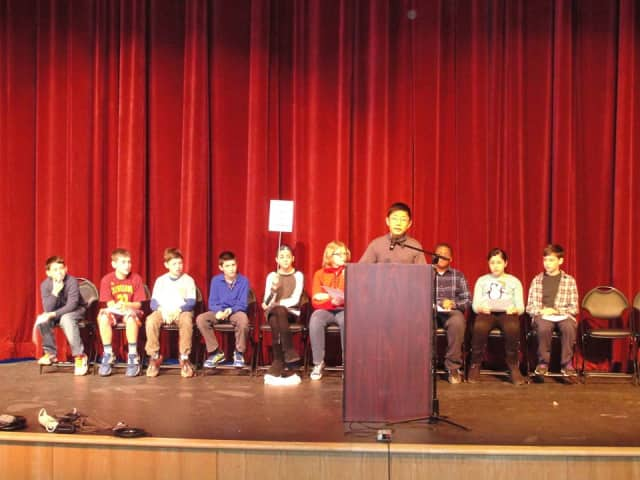
Today, let’s talk striking a balance with students in their middle school years. Middle School…near and dear to my heart. They can change on you in a split second and I love it!

Striking a Balance with Students in Their Middle School Years

My reasons for liking middle school

I always thought I’d teach high school.  Instead, I spent most of my career teaching middle school kids.  When I was in college we didn’t have middle schools yet.  They were created about ten years later.

I must say I think middle school is a brilliant idea.  I taught for the Columbia Public Schools in Columbia, Missouri and their middle schools were sixth and seventh grades.

Our building was HUGE!  It was to hold 600 and we were bursting at the seams with nearly l,000.  There were “temporary classroom” A.K.A. mobile trailers on three sides of the building.

I did the bulk of my speech communications teaching in Colorado, however.  I worked in a very unusual home school enrichment program. It too, was bursting at the seams.  I understand the program is so popular now, they are about have their own building and not lead the Nomad life anymore.  That’s super!  They so deserve it.

Striking a Balance with Middle School Students

I find teachers either ask too much or too little of middle grade students. Sometimes I had this challenge while teaching them.  It’s a hard balance to maintain. and an easy mistake to make.  Kids between the ages of eleven and fourteen change dramatically.  Just look at this young girl.

Striking a Balance with Students in Their Middle School Years

She’s probably a young sixth grader.  She wants so desperately to look grown up with her cute hat and spaghetti strap tank.  You know what gives her age away?  Her hair in braids.

Speech Class

Let’s take a speech class–either the teacher expects the students to make an outline, note cards and maybe even a power point or they expect the kids to just stand and make up the speech as they go along.

I taught for thirty-eight years and in that time, I perfected a simple but grade level appropriate rubric for speech making. It would be suitable for middle school students.

Although, this particular rubric was created for a special occasion speech, but it could easily be used for other types of speeches with a little tweaking.

I hope you’ll check it out at: rubric for special occasion speech

Why do our students need to make speeches?

I was perusing the internet to find some interesting information about speech making and ran on to this website, http://www.geraldgillis.com.  What I appreciate about Mr. Gillis’ post is that this was written by a lay person and not some fancy-dancy speech maker, you know?

Importance of Speaking Skills

Here is his post, The Importance of Speaking Skills

“Ability to inform, persuade, and direct. Business managers, educators, military leaders, lawyers, and politicians, among others, seek to develop their speaking skills to such a level that they are transformed into master communicators. Speaking clearly and confidently can gain the attention of an audience, providing the golden opportunity for the speaker to make the message known. Wise is the speaker who gains and then holds the attention of an audience, with well-chosen words in a well-delivered presentation, forming a message that is effective, informative, and understood.

• Ability to stand out from the rest. When one thinks of speaking skills, one tends to think of it as a common skill. Think again. The ability to stand before others and speak effectively is not an ordinary ability. Many people are deathly afraid of public speaking; others have little ability to form thoughts into sentences and then deliver those words in a believable way. The bad news is that at any given moment the world has precious few with the speaking talents of, say, Winston Churchill or John F. Kennedy. The good news is that a speaker whose skills are honed and developed with constant application and hard work can stand out.

• Ability to benefit derivatively. Well-developed verbal skills can increase one’s negotiation skills. Self-confidence is improved. A growing sense of comfort comes from speaking in front of larger and larger audiences. A reputation for excellence in speaking can accrue over time, thereby imparting a certain credibility to the speaker.

• Career enhancement. Employers have always valued the ability to speak well. It is, and always will be, an important skill, and well worth the effort in fully developing.

Striking a Balance with Students in Their Middle School Years

Speaking skills are important for career success, but certainly not limited to one’s professional aspirations. Speaking skills can enhance one’s personal life, thereby bringing about the well-rounded growth we should all seek.”

What experiences have you had with middle school students?  I bet they are interesting. I’d love to hear about them.

Here’s a tool which could come in handy most any day.  Conversation Starters

Here is a blog post about differentiation which could help you: Three Lessons to Engage Your Drama Class Using Differentiation

Comment on your most awkward moment at school.  I’d love to know.  Contact me at dhcbaldwin@gmail.com or DeborahBaldwin.net

Deborah Baldwin, Dramamommaspeaks


Share this:

  • Click to share on Tumblr (Opens in new window) Tumblr
  • More
  • Click to share on X (Opens in new window) X
  • Click to share on Facebook (Opens in new window) Facebook
  • Click to share on Pinterest (Opens in new window) Pinterest
  • Click to share on LinkedIn (Opens in new window) LinkedIn
  • Click to email a link to a friend (Opens in new window) Email
  • Click to share on Reddit (Opens in new window) Reddit
  • Click to share on Pocket (Opens in new window) Pocket
  • Click to share on Telegram (Opens in new window) Telegram
  • Click to share on WhatsApp (Opens in new window) WhatsApp

Like this:

Like Loading...

Filed Under: Education, excellence in teaching, middle grades, Speech Making Tagged With: Middle grade, middle grade students, middle graders, middle school drama, middle school students

A Great Review of Bumbling Bea

November 14, 2016 By dhcbaldwin Leave a Comment

Sometimes life is so surprising. A review from Readingwritings.blogspot

FIVE STARS

“When it comes to books where children are the protagonists, I make it a point to share the story with my daughters. If they loved listening to it, then it means the story is really awesome.

Bumbling Bea is a story about a little girl and her trials and tribulations in the world of drama. The plot revolves around the emotions and thoughts that occupy a child. I wish I could elaborate further but that would lead to loads of spoilers and that would be like doing injustice to the author. You need to read it to actually experience it.

The writing style is simple and appealing. It is easily understood by children except for a few words that exposes them to a different culture like Kabuki. However, besides being a great read, Deborah ensures that her story constantly generates mental images and tugs at heartstrings. The choice of words used reflect the effort that she must have put in to make this story both child-friendly and adult-friendly.
There are no antagonists in this story. In fact, through this story, Deborah manages to portray human emotions through children. Children are both expressive and innocent. Hence, through their characters Deborah gives a peek into their world and how everything turns out just fine in the end. She brings out subtly that there is a Bumbling Bea in all of us irrespective of our ages. Yet, if the inner child is still alive and kicking, the negativity can be taken care of.

To sum up, this book is an absolute must read if your inner child loves to read. And if you have children, this is an awesome read for them as well. It helps connect you with the kid residing within you.

P.S – Deborah you have a wonderful narrative style and I chose to read your book because of this reason. My review is unbiased and I hope there are more adventures in the life of Bumbling Bea!!!”

Lakshmi Iyer

Facebook Page: http://www.facebook.com/OneStopDestination

Blog: http://www.readingwritings.blogspot.com

Twitter: http://www.twitter.com/BloggerLakshmi

IndiBlogger: http://www.indiblogger.com/ReadingWritings

Google Page: http://www.plus.google.com/OneStopDestinationBlogspotIndia

You can purchase my book, Bumbling Bea on Amazon at https://www.amazon.com/Bumbling-Bea-Deborah-Baldwin/dp/1500390356/ref=tmm_pap_swatch_0?_encoding=UTF8&qid=&sr=

Share this:

  • Click to share on Tumblr (Opens in new window) Tumblr
  • More
  • Click to share on X (Opens in new window) X
  • Click to share on Facebook (Opens in new window) Facebook
  • Click to share on Pinterest (Opens in new window) Pinterest
  • Click to share on LinkedIn (Opens in new window) LinkedIn
  • Click to email a link to a friend (Opens in new window) Email
  • Click to share on Reddit (Opens in new window) Reddit
  • Click to share on Pocket (Opens in new window) Pocket
  • Click to share on Telegram (Opens in new window) Telegram
  • Click to share on WhatsApp (Opens in new window) WhatsApp

Like this:

Like Loading...

Filed Under: Book Reviews, Bumbling Bea, Goodreads Giveaway, Indie books, Indie Publishing, Readers Favorite, Uncategorized Tagged With: growing up, Middle grade, middle school girls, school issues, youth theatre

‘Tween Parenting 101

July 28, 2013 By dhcbaldwin 4 Comments

Bumbling Bea fans

Beatrice is a ‘tween. Do you remember those years? Are you ‘tween parenting?

In my book, Meanie Bea’ (there’s that title again), Beatrice’s parents are positive forces in her life.  That was on purpose.  In my thirty-five years of teaching, I can honestly say that most parents I have been acquainted with have tried to be good parents.

There are always some that don’t quite make the mark, but that’s true of any occupation.  I say “occupation” because being a parent is a full time job that never ends even when your child becomes an adult. Ask any grandma.

PhotoBumbling Bea fans

One of my most favorite photos of my students who are sisters. One was a teen ager at the time and other a ‘tween.  Their mom was very busy. 🙂

As a parent of two grown girls (who are wonderful human beings), I can honestly say that I am a good parent. I was as traditional as I  could be. That was on purpose! I volunteered at school, served as Girl Scout leader for two troops, several times I directed the Christmas pageant for church,  chaperoned on band busses, etc.  I sat through countless piano, choir and band recitals, quizzed spelling words over the breakfast table, helped with History Day projects, Civil War Days and tried to teach them to drive (my husband was better at that). We went camping, fishing, kite flying, made mud pies, jumped rope and read many books together.  I can even brag that I found the first Harry Potter book at the library before it was popular. You name it, I did it (and so did my husband—let’s not forget him).

I lived through tears, anxiety and sleepless nights…………and I would do it all over again.

People have complimented and congratulated us on the raising of our daughters. They have wondered what the secret is to raising successful children.  I don’t know about other people, but I have a few suggestions for anyone who might want to hear (and maybe some you don’t):

Be present in your child’s life even if they push you away.  IGNORE THEM WHEN THEY SAY TO GO AWAY. They don’t really mean it. Stay in the background and around them–other kids begin to see how great it is to have you available and pretty soon every kids wants to know you.

Teach your child responsibility, resilience, respect, compassion and love.  If they experience you hugging on them, guess what? Someday they will do the same for their children.

Model patience even if you are about to blow up on the inside.  This is one I really had to work at–patience doesn’t come easy for me.

Teach self respect and self discipline to your children.  It is so important that they learn to be comfortable with their authentic self.  In addition, I beg you to teach them self discipline.  A child of seven years of age does not have the life experiences to decide for themselves about quitting piano lessons or when they should go to bed at night.  If you model these two attributes, I promise your life will be less stressful.  Notice I didn’t say easy.  It is never easy raising any child.  Beware of the parent that says, “Oh, he’s such an easy child.”  Really?  Maybe the parent isn’t really paying attention to her child’s true behavior.

When my girls were disciplined at school by their teachers, I rarely stepped in or meddled in the siuation.  It was especially difficult when they had a teacher who was a friend of mine or my husband’s. We are both educators.  We know how parents can be with teachers sometimes–not very nice and not very supportive.  Please give your child’s teacher the benefit of the doubt and trust that you might not be getting the entire story from your child about what occurred. Give the child and teacher time to sort things out.  Chances are that, in time, the student and teacher’s relationship will work out for the best.

Remember, it is completely okay to say “no” to your child.  They don’t need every toy, game, and latest cell phone.  You aren’t to be their best friend.  You are to be their parent.  Later, when they are adults (or probably much sooner), their respect for you will lead to a lasting friendship.  Our daughters are two of my best friends.

Lastly, allow them to see you cry, be disappointed and make mistakes.  We all make mistakes every day. For instance, I just baked a lemon meringue pie and the silly meringue shrunk and fell flat. Oh well.  When I direct a youth theater production, one of the first things I tell my kids is that they will make mistakes.  I remind them, “Barring Armagaeddon tomorrow, the sun will rise, we’ll have oxygen to breathe and we’ll all try again. ” I’m a big fan of laughing at myself and I do my best not to take myself too seriously.

Beatrice’s father is a great example of a successful person.  He is funny, smart, loving and tuned in to his kids without lauding things upon them.  Her mother is the same way.   She allows Beatrice to make mistakes and learn from them, but she keeps a watchful eye on her and her brother, Edmund.

Now, before you stop reading this blog let me tell you something.  Our daughters had challenges (physical and emotional) that they had to deal with just like most young people.  They weren’t perfect by any means, typical tweens and teenagers, too.   They just kept trying and so did we.  And that’s about all any of us can do, you know?

Next time, let’s talk about the social pressures of being a ‘tween. This is a biggie for everyone.

Share this:

  • Click to share on Tumblr (Opens in new window) Tumblr
  • More
  • Click to share on X (Opens in new window) X
  • Click to share on Facebook (Opens in new window) Facebook
  • Click to share on Pinterest (Opens in new window) Pinterest
  • Click to share on LinkedIn (Opens in new window) LinkedIn
  • Click to email a link to a friend (Opens in new window) Email
  • Click to share on Reddit (Opens in new window) Reddit
  • Click to share on Pocket (Opens in new window) Pocket
  • Click to share on Telegram (Opens in new window) Telegram
  • Click to share on WhatsApp (Opens in new window) WhatsApp

Like this:

Like Loading...

Filed Under: Uncategorized Tagged With: 'tweens, Middle grade, parenting, parents

Footer

Follow Us

logo3.png

FOLLOW US

Facebook X-twitter Pinterest Instagram Envelope Rss

Goodreads: read

Malibu Rising
Malibu Rising
by Taylor Jenkins Reid
People We Meet on Vacation
by Emily Henry
The Last Thing He Told Me
by Laura Dave
Faking It
Faking It
by Cora Carmack
Losing It
Losing It
by Cora Carmack

goodreads.com
Copyright © 2024 · Wellness Pro on Genesis Framework · WordPress.com.Log in
 

Loading Comments...
 

    %d