• Skip to primary navigation
  • Skip to main content
  • Skip to footer

Join Me in my new Facebook Group! https://www.facebook.com/groups/417126059784261

Menu
  • Meet Deb – The Heart Behind DramaMommaSpeaks
    • Work with Me! 
    • Photo Gallery of DramaMommaSpeaks
    • Directorial Credits
  • I Give Book Talks! 
    • Book Talk Through Skype
    • Books
  • Freebies!
  • Bumbling Bea
  • Teaching Resume
  • Acting Resume
  • Contact Me
  • Blog
    • Drama Education
    • Arts Education
    • Youth Theatre
    • Middle Grades
    • Musical Theatre
    • Teaching
  • Meet Deb – The Heart Behind DramaMommaSpeaks
    • Work with Me! 
    • Photo Gallery of DramaMommaSpeaks
    • Directorial Credits
  • I Give Book Talks! 
    • Book Talk Through Skype
    • Books
  • Freebies!
  • Bumbling Bea
  • Teaching Resume
  • Acting Resume
  • Contact Me
  • Blog
    • Drama Education
    • Arts Education
    • Youth Theatre
    • Middle Grades
    • Musical Theatre
    • Teaching

reluctant student

5 Easy Drama Games for Emergency Sub Plans

May 31, 2023 By dhcbaldwin Leave a Comment

If you are reading this blog post, you are probably a. collecting materials for the next school for your theater class or b. sick as a dog and you need help fast!  Either way, you have come to the right place. I only offer sound teaching lessons (some made with Google slides)  or advice to teachers–no gimmicks!  Today, let’s talk about 5 easy drama games for emergency sub plans.

In some ways, I don’t want to divulge this secret I have.  The site I’m going to share with you is full of fabulous theater improv. games and exercises. But in the interest and support of theater teachers around the world, I would like to introduce Hoopla to you.

Who is Hoopla?

Hoopla is the United Kingdom’s first improvisation theatre, established for over twelve years.

From their website, “Hoopla is an improv comedy (also known as improvised comedy, impro and improvisation) company based in London, UK. Hoopla were founded in 2006 by Steve Roe and Edgar Fernando.

Hoopla run a selection of improv classes and courses across London and also an improv comedy club in London Bridge featuring a selection of groups from across the UK improv scene. Hoopla are the founders of the UK’s first ever improvised comedy club. Hoopla also do improv based corporate training.

Mission of Hoopla

The aim of Hoopla is to make improv fun and accessible for everyone from all backgrounds. We’re especially focused on teaching beginners improv and we love introducing people to improv for the first time in a fun, friendly and safe way.

Also, Hoopla encourages and supports a growing improv community with shows, courses, networking events, socials and more.”

Did you know I have the secret to boosting student engagement?  My new book, “We’re Live! Radio Theater #101” explains my journey to implementing this unique tool in the classroom. Check it out here

History of Hoopla

From their website, “Hoopla was founded in January 2006 by Steve Roe and Edgar Fernando, two old school friends who have known each other since they were 4 years old. Hoopla was originally based in Balham SW London, near to where Steve and Edgar grew up.

Originally it was just them and some school friends from their old GCSE drama group running a free workshop once a week, to have fun after work and keep the joy of drama and play in adult life. But it rapidly grew to friends of friends and then friends of friends of friends, and with word of mouth Hoopla soon became the UK’s biggest improv company.

Not surprisingly, Hoopla now teach 1000s of improv students a year in various venues around London and run shows five nights a week featuring improv groups from across the world. Don’t know much about improvisation?  Check out: What You Know About Improvisation In Theater And What You DON’T Know About Improvisation In Theater

5 Easy Drama Games for Emergency Sub Plans

In 2010 Hoopla’s shows moved to The Miller in London Bridge and with the help of the amazing staff there and a large community of improvisers the venue was converted to the UK’s first ever improv theatre.

Recently, the company is honored to have been involved in the huge rise of improv in the UK over the last decade and to be part of such a great improv community.”

The games I’ve included games would be best for middle school students and larger classes.  They take little to no set up and are easy to implement.  Here are several of their drama games that would work in a pinch if you needed something a substitute teacher could lead. 

5 Easy Drama Games for Emergency Sub Plans

1. Curveball Story ⚾️⚾️

Directions: 
This is played in pairs (trios work too). One person makes up a story. As they tell it, the other will call out random words that need to be incorporated into the story. Wait for the last word to be folded in before giving another.🌟

Variations
Similar to What If? where the other person says something like “what if it started raining?” “What if you jumped on a boat?” and they incorporate that into the story.

🌟Grades 3 and up would have gobs of fun with this warm-up. Use vocabulary words for the random “curve ball” or maybe characters from a book, or particular facts from a science lesson. Looking for additional warm up exercises?  Check out: Drama Class Exercises for the First Two Weeks of School

5 Easy Drama Games for Emergency Sub Plans

If you are looking for a lessons to begin the school year, check out: First Week of School Drama Class Lessons

2.  Book Club

Directions:
Two improvisers have a book each given to them from the audience and all their lines of dialogue come from those. The third person makes sense of those lines in the context of the scene. A location or relationship call-out helps at the beginning.

NOTE: I took quotes from Charlotte’s Web and Harry Potter and the Goblet of Fire to show you.

Example
Player A (No book): Thanks for helping me out today

Player B (Book): If I can fool a bug… I can surely fool a man. People are not as smart as bugs..

Player A (No book): Perhaps you are right. Go bugs!

Player B (Book): It is deeply satisfying to win a prize in front of a lot of people.

Players A (No book): I bet! So what will you do with the prize?

Third player enters

Player C (Book): It takes a great deal of bravery to stand up to our enemies, but just as much to stand up to our friends.

Player A (No book): Oh hi Kim! That’s a nice to thing to say after losing so terribly.

Player C (Book): Numbing the pain for a while will make it worse when you finally feel it.

Player A (No book): Well, that’s good know.

Player B (Book): Salutations are greetings; it’s my fancy way of saying hello.

Player A (No book): Wow, you win one game and now you think you are special!

Player B (Book): It matters not what someone is born, but what they grow to be.

Teaching Purpose
It’s fun! By the end, students learn how to accept and justify offers given. Got introvertive students?  Check out: Drama Games for the Introvertive Student

5 Easy Drama Games for Emergency Sub Plans

5 Easy Drama Games for Emergency Sub Plans

3. Car Journey 🚗🚕🚙( I renamed it, Family Vacation)

Everyone has stories of a family vacation or journey.  I think this is what makes this exercise so successful–it’s a universal theme! 

Directions:
Begin by having five people on stage in a car set-up.

Tell them they are on their way somewhere they don’t normally go (a convention, concert, festival, theme park, etc.).

They must be silent for the first 30 seconds of the scene.

Lastly, inform them that they cannot stop the car or get out.

Ideally they will establish relationship before any dialogue happens.

Variation
After you’ve done a few of these, ask the same casts to return to the stage and perform their return trips. They can swap places in the car.

With elementary students, you may need to get their creative juices flowing by asking them about what people talk about while they are traveling somewhere. 😊

I would think middle and high school students would have no trouble with this exercise.

Variation
After you’ve done a few of these, ask the same casts to return to the stage and perform their return trips. They can swap places in the car. (How fun would that be?)

If you choose to try this with elementary students, you may need to get their creative juices flowing by asking them about what people talk about while they are traveling somewhere. 😊
5 Easy Drama Games for Emergency Sub Plans

5 Easy Drama Games for Emergency Sub Plans

4. Columns/Pillars 👉👉

Description:
For this game you need 2 volunteers from the audience. They stand/sit at the front sides of the stage, and act as pillars for the players. 2 players do a scene, and whenever they need a word they tap one of the pillars on the shoulder.

The pillars say whatever comes to them, and the players then justify why that has been said. Some words fit perfectly, others will be completely random!

Example
Gary: Thanks for helping me fix this car, Denise.

Denise: No problem Gary, I’m glad I could (PILLAR) “help”.

Gary: I really appreciate it, you know I’m so nervous about the race tomorrow.

Denise: You shouldn’t be, you’re (PILLAR) “Batman”. The others don’t stand a chance!

Gary: I know, I’m just scared that if I don’t win I’ll also lose my (PILLAR) “cook”. He only wants to work for winners.

Denise: He does make great (PILLAR) “statues” out of chocolate. I’m sure you’ll win. Hand me the (PILLAR) “oats”.

Gary: I would never think to use oats to repair a car. You’re a genius.

⭐️Additional Tips for Playing

Give the pillars a chance to practice (e.g., “this morning for breakfast I had…”)
Repeat the word after the pillar has said it
Listen, and justify what has just been said

Remember to thank your lovely volunteers!

5 Easy Drama Games for Emergency Sub Plans

Are you looking for more warm up exercises?  Check out this category: Emergency Sub Plans

5.  Oracle

Directions:

The Oracle involves four people, set behind each other. (It will look a little like the photo above.) First, one person is at the front sitting on the floor, second one behind sits on a chair, the third one behind that standing and lastly, the fourth one stands on a chair. In this way, we can see all their faces. Oracle is a brilliant low stakes word-at-a-time short form game.

To begin, the host simply takes big life questions from the audience, like ‘Is there a God?’ and ‘Why are we here?’ or ‘Will the United States win the World Cup?’ and then asks the Oracle, who answers it a word at a time (per person). When Oracle is in action everyone’s arms wave to the side. If Oracle is in silent contemplation everyone’s hands are together in a kind of ‘prayer’ pose.

It’s funny, simple and daft. And being word at a time you can guess how wise oracle sounds. Sometimes very. Sometimes just plain ridiculous!

Example–

Audience question: What is love?

Player A: Love

Player B: is

Player C: hot

Player D: chocolate

Player A: on

Player B: a

Player C: rainy

Player D: day.

In this game listening and being obvious are important, as you follow what the previous person has said. You don’t have to make complete sense or try to be funny; just say the first thing that comes to you.

Or are you looking for Drama resources made with Google slides?

5 Easy Drama Games for Emergency Sub Plans

I hope these games/exercises work out well for you.  If you’d like more warm up exercises (and you can expect me to have many favorites over the 38 years of teaching and directing), check out my free collection of warm ups for middle school students.  You can pick it up here. Or maybe you are wanting something a little quieter and individual? Check out these word searches.

Did you know I have the secret to boosting student engagement?  My new book, “We’re Live! Radio Theater #101” explains my journey to implementing this unique tool in the classroom. Check it out here


A collection of theater warm-up exercises for middle schoolers.

What do you leave for your substitute to teach while you are absent?  I’d love to hear about it.  Feel free to email me at DhcBaldwin@gmail.com.

Dramamommaspeaks Blog Author Deborah Baldwin


Share this:

  • Click to share on Tumblr (Opens in new window) Tumblr
  • More
  • Click to share on X (Opens in new window) X
  • Click to share on Facebook (Opens in new window) Facebook
  • Click to share on Pinterest (Opens in new window) Pinterest
  • Click to share on LinkedIn (Opens in new window) LinkedIn
  • Click to email a link to a friend (Opens in new window) Email
  • Click to share on Reddit (Opens in new window) Reddit
  • Click to share on Pocket (Opens in new window) Pocket
  • Click to share on Telegram (Opens in new window) Telegram
  • Click to share on WhatsApp (Opens in new window) WhatsApp

Like this:

Like Loading...

Filed Under: acting, arts education, Back to School, drama education, drama integration, Education, English Language Learners, High School, middle grades, Musical Theatre, New Teacher, Teacherspayteachers, Teaching, teaching strategies, theater, theatre, youth theatre Tagged With: cooperative learning, emergency substitute plans, lesson plans for substitute, partner storytelling, reluctant student, shy student, storytelling, substitute lesson plans, theater games, warm up games

Ten Ways to Teach Reluctant Students in Your Theater Class

October 5, 2022 By dhcbaldwin 1 Comment

At least once a week, I read of a teacher asking help with, “My beginning theater class is open to all students in the school. However, it has become a dumping ground with students completely disinterested in theater and the study of it. At the same time, I have students who are sincerely interested in the subject in the same class.  What do I do?” Today, I’m going to talk about Ten Ways to Teach Reluctant Students in Your Theater Class.

I know this challenge all too well myself.  Several times in my career, I had students placed in my classroom because the administration thought I demonstrated skill in reaching all students and could reach these students as well.

Do you have any idea how heavy the weight of responsibility for teaching to reluctant students is? Teaching is difficult enough and a theater class poses its own challenges that not everyone is aware of. For instance, when one acts they must share their feelings, real feelings.  That’s can be scary for even the most ardent theater student.

Ten Ways to Engage Reluctant Students in Your Theater Class

Simply put, you need to outsmart your reluctant students.  Remember, you are the professional here.  You’ve got what it takes to be successful (albeit tiring). Wonder how I got to where I am today? Check out: How Theatre Saved My Life

Teach Reluctant Students

  •  You need to survey each and every class to discover whether they are interested in theater or not.  This is true of anyone who teaches any electives from industrial education to art as well as theater. By surveying the students (through a questionnaire on-line or hard copy) you’ll find out their interest level (because you will ask it) and what they hope to learn in the class.
  • After you’ve studied the students’ questionnaire, you can now shape your lessons accordingly. Does this take more time than what you would usually do?  Yes.  Is it worth it?  Yes!  It is better to know your audience (because that’s what they are, essentially) than not and spend most of the year frustrated with their lack of engagement.
  • Use a game as a warm-up. Most students love a game so I recommend playing one at the beginning of each class.  For some students, it is the delight of their day (although they may never share this with you) and it lifts the burden for you always having to teach a concept.  Let the game teach them.  Also, playing a game makes class fun no matter the outcome.  Start with something simple like the Ball Game (Don’t know it? pick it up here).  The Ball Game can be played with students of any grade level. Games give students an opportunity to get to know one another without the stress of a face to face conversation. As the quarter progresses the games you can select games which are more difficult. By the last month of the semester, you should have no problem using an improvisation exercise as a warm-up.
  • Minimize your students’ worries.  Through the questionnaire, you should have a better grasp about what they think theater is as opposed to what it actually is. They may think theater is standing on a stage, wearing a costume (the student may dislike), wearing makeup (even the boys), memorizing gobs of lines and speaking at a volume for the entire class to hear. 

         Let’s not start there if that’s the case.  Let’s do some theater appreciation instead.  Show them video clips of theaters  around the world and either have a class discussion of each theater or give them questions to answer. Here is what I  mean:  Theaters Around the World.

Ten Ways to Engage Reluctant Students in Your Theater Class

Teaching Reluctant Students

  • Study technical theater with them--set, sound, stage properties, stage makeup or costume design.  Many students just need a backdoor into the subject. Technical theater is nonthreatening.  Most assignments are meant to be completed individually and not with a group.  This helps those students who do not speak English as their first language, especially.  I really enjoy teaching technical theater. Through its study, I usually find a student who no one knew very well that turns out to be a fabulous artist! Their creativity and talent can shine in technical theater and suddenly the other student take note of them.  It’s awesome. Here are a few technical theater units which may help you: Technical Theater Units or begin with Set Design, the Rendering
  • Reader’s theater is a good choice for your class.  Readers theater is successful in a class with various levels of interest, because there is no line memorization, no costumes, etc. Everyone sits together on the stage, so there’s that “safety in numbers” thing. Plus, if you wait until near the end of the second quarter, readers theater should not be difficult for your reluctant ones.  (Read my article in One Classroom Over about reader’s theater) You’ve given them plenty of time to adjust to the class. Here’s a funny script for them:  The Brave Little Tailor Unit.  Great for grades 5 to 7.
  • Radio theater is a super choice, too. Personally, I think radio theater has everything a play does!  That’s the reason I suggest it to teachers. Radio theater is highly imaginative from the many character voices actors create to the sound effects. Plus, it is a super tool for strengthening reading skills! It is easy to keep everyone involved, because they are on the stage the entire length of the piece. It can be as simple or as theatrical as you like.  And yet again–no line memorization! This is another unit I would teach near the end of the semester or year. If you are interested in radio theater, check out: Radio Theater Units and Lessons  Don’t know how to direct one?  Go here and pick up all of the training you need: How to Direct Radio Theater
  • Use movement exercises instead of acting ones.  Movement takes no sound and no verbal reaction.  Students like the physical activity, too. The Magic Circle is a good exercise to use for movement.  (Don’t know it?  Pick it up here)
  • Turn down your classroom lights. You won’t believe how dimming the lights will ease students’ anxieties. You just want the classroom light to be dim–light enough you can everyone but no so dark you can’t keep an eye out for any inappropriate behavior.
  • Play some classical music in the background.  Classical music works because there are no lyrics for the students to notice. It can express mood without anyone saying anything.  I think of it like a comforting blanket. In those awkward moments in a game, acting exercise or lesson they can help ease any anxiety that rears its ugly head.

Want some additional tips from me?  Check out Double Casting a Show? Here’s Advice

Ten Ways to Engage Reluctant Students in Your Theater Class

Advice for the Core Subject Teachers

Many of the suggestions I’ve made above work strictly in a theater classroom. Some of them will work for you as well.

Here are a couple of other suggestions for you:

Sometimes our students just need space away from others.  Offer that space in your classroom if a student needs it.  You want them to feel safe and accepted in your classroom. I say as long as they are focused on their work, this is acceptable.

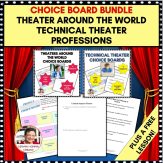
Giving students choices is always a great idea, too.  Remember you have worked out the choices ahead of time so you are comfortable with whether they select once choice over another.  Choice Boards are super for this.  Here are some of mine as an example. This bundle is very popular with teachers: Choice Boards

Ten Ways to Teach Reluctant Students in Your Theater Class

You can even pick up a sample of them right here.

Or pick up a technical theater unit for high school students here: Technical Theater Units, High School

So, there you have it!  Teaching is a wonderful profession when everyone is treated with respect. Even the reluctant students can learn that respecting your art form is possible and believe it or not–enjoyable!  I discovered that once my students knew I had their back and understood them feigning disinterest in theater, I could work with them.  Lots of times, it’s just noise on their part.  Remember that–it’s just noise.

I’d love to know what you’ve found is successful with reluctant students in your classroom?  Contact me at DhcBaldwin@gmail.com.


Share this:

  • Click to share on Tumblr (Opens in new window) Tumblr
  • More
  • Click to share on X (Opens in new window) X
  • Click to share on Facebook (Opens in new window) Facebook
  • Click to share on Pinterest (Opens in new window) Pinterest
  • Click to share on LinkedIn (Opens in new window) LinkedIn
  • Click to email a link to a friend (Opens in new window) Email
  • Click to share on Reddit (Opens in new window) Reddit
  • Click to share on Pocket (Opens in new window) Pocket
  • Click to share on Telegram (Opens in new window) Telegram
  • Click to share on WhatsApp (Opens in new window) WhatsApp

Like this:

Like Loading...

Filed Under: acting, arts education, arts integration, drama education, drama integration, Education, elementary, excellence in teaching, High School, middle grades, reading skills, theater, youth theatre Tagged With: acting exercises, classroom behavior management, elementary school, ELL student, engaging students, high school, Middle school, movement exercises, radio theater, readers theater, reluctant student, Teaching, warm ups and games

Drama Games for the Introvertive Student

March 16, 2021 By dhcbaldwin 6 Comments

Drama Games for the Introvertive Student

Drama Games for the Introvertive Student

Drama Games for the Introvertive Student

Is that possible?  Drama students can be shy? I know it’s tough to believe, because we are a noisy bunch. So let’s talk about drama games for the introvertive student.

For various reasons, the answer is a resounding “yes!”

Recently, I read a post from a teacher lamenting about this on a Drama Teachers Group Facebook.  Her shy students wouldn’t budge from their seats no matter what she tried–and these were fifth and sixth graders.

What Do You Do with Reluctant Students?

After teaching for thirty-eight some years, as you might imagine, I taught all types of students from the most enthusiastic class to the smallest and most shy. Honestly, I can figure out a class dynamic fairly fast, because of my experiences.

Do you need help?

Like adults, students are primarily afraid of the unknown.  Aren’t we all?  Additionally, I’ve had adults who desperately want to participate in a play but scare themselves off before they even sign up for an audition.  Students might have older siblings telling them embarrassing stories about their experiences in a drama class.

Drama Games for the Introvertive Student

Everyone Makes Mistakes

Or they’ve seen bloopers on Youtube.com and put themselves in place of the performers and suddenly “everyone” sees the mistakes.  Little do they know the performers actually shared their bloopers for the express purpose of getting likes. You never know what your students think a drama class looks like.

My advice is to dispel any myths about drama class which they might have accepted as truth. Myths of drama class are:  we always act, lines must always be memorized, classmates will laugh and ridicule our performance, we will be asked to do something embarrassing, etc.  Generally, students worry about their image at all times whether they are in a drama class or in the hallway.  The last thing the teacher wants to do is feed that anxiety.

The best way to de-mystify their worries is by starting very slowly.  Use drama games and exercises in which everyone can have success. Or if that seems too much for them, start with technical theater lessons first.

Drama Games for the Introvertive Student

Drama Games for Shy Students

Here are a few of my go-to games for the introvertive or reluctant student:

  1.  “Alliteration Name” Game--A lot of teachers use this game, however in drama class, we are a bit more expressive.  I expect students to come up with word which describes you realistically or unrealistically.  They must add a gesture of some kind and they can choose the rate of delivery for the line (fast or slow), add an accent and certainly choose some emotion to convey through the line.  I demonstrate first that gives the students an example of what their interpretation should look like.  If a student is stumped when their turn comes up, I direct them and even demonstrate an idea.  Usually, that’s all the reluctant needs.  Once they have a little success with the exercise, they see where they can fit into the class.
  2.  “Copy Me”–I like this game because it’s a simple premise: the student copies the tone, inflection and body position of the person before them.  Then they do their own version of the same line.  Suddenly, the worry about performing is minimized.  How hard is it to imitate someone?  We do it all the time whether we realize it or not.  We pick up vocal inflections, a person’s delivery and even their gestures.  Think you don’t?  Have you ever mocked someone or demonstrated to someone how something was said to you?  Yup.

Drama Games for the Introvertive Student

More Games and Exercises for Shy Students

  1.   “This is not a hanger”-–This exercise relies on a person’s imagination, however the challenge is very focused.  We just come up with something which is the same shape as a hanger.  It could be large (pyramid) or small (earring), used (an iron) or enjoyed (a martini.) You do need a hanger for the students to see.  Go around the class and when they are ready to participate, instruct them to say, “This is not a hanger, it’s a _____________.” There is only one rule– once that thing is suggested, no one can suggest it a second time.
  2.  “Lean and Leave”—This exercise strengthens the imagination and uses the body for demonstration.  Person A pretends to lean on something such as a wall and must be able to hold the position indefinitely. Person B goes to Person A and leans against Person A in some particular way. (For instance,  if Person A is pretending to lean on a wall with one hand, Person B might rest their elbow on the back of Person A.  Person A asks Person B, “Are you ready?” because Person B must be able to lean indefinitely without Person A there.  Person A steps away.  Person C goes to Person B and leans against them in another unusual way (for instance, they lean with their back against Person B).  Person B asks the same question of Person C and so forth. Everyone can participate in this exercise. It’s very engaging and different. I always challenge students to lean on different planes—high, medium or low, or putting their feet up on the other person and so on. I’m known to instruct the new leaning person to turn his head or bend an arm to show the difference in the look—just like those sculpture people.
  3.  “Tableau”—Though not a game, any student can have success with tableau.  Furthermore, it takes very little investment on the part of the student.  Students work in a group (that’s a real plus), they choose a story to demonstrate (for instance they show the beginning of the story, its middle and end) and there are no spoken lines. Ultimately, they merely freeze in place as part of the tableau. If the students are feeling comfortable, take this exercises a little farther by tapping each student and allowing them to say something as the character.  Again, keep it nice and friendly.

Drama Games for the Introvertive Student

Building Connections Through Play: Mind Meld & Drama Circles

  1. “Mind Meld”—The goal is for two people to say things together until they reach the same word. It begins by one person saying “one,” the second person saying “two,” and then both people counting to three together. They then say anything at all – a person, place, idea, concept, phrase: anything.
    Then we think what the common thing between those two things or associated with those two things would be. We repeat the one, two, three and try to use the two previously stated things to arrive at a third, common one. We keep trying each time until we say the same word.When we finally arrive at the same word we sing and dance to “It was a mind meld, it was a mind meld, it happens all the time, it was a mind meld.”Sometimes it is played with the same pair of people all the way through until they connect on a word. Sometimes the group can opt in and out and it is played between the team.
  2. Drama Circles—Drama circles are a wonderful way to involve your more shy or reluctant students.  Please your students in a circle (usually we sit on the floor).  Pass out a card to each student.  Each card tells them a part of a story.  Their job is to tell it to the rest of the circle.  You can even give one card for a small group who dramatize the story with movement, sound or tableaux.  Pick up this resource for an example: Drama Circle 
  3. Group Based Improvisation Exercises–Once your students appear comfortable with your class, you might try these improvisation exercises.  If it were me and this was the beginning of the year, I would try one the second week of classes.  Grab it here. 

If you are looking for more warm up exercises or games, check out my Instagram page @dramamommaspeaks

Drama Games for the Introvertive Student

Where Do I  Go From Here?

If you are seeking more advice from an experienced drama teacher and director, read some other posts of mine:

The Ultimate Guide for Drama Teachers: Creative Movement? Are you Kidding Me?

Three Lessons to Engage Your Drama Class Using Differentiation

Drama Lessons for Middle Grades from an Award Winning Drama Teacher

Come join my monthly newsletter!  I give advice, tips, suggestions, announce new drama resources I’ve created in the month and a FREE warm-up exercise.  You can join here  DramaMommaSpeaks newletter

Need a lesson you can use tomorrow, check out this one Drama Class: A Playwriting Unit or How to Help Your Students Feel Seen

Click here:  We’re Live! Radio Theater #101

Share this:

  • Click to share on Tumblr (Opens in new window) Tumblr
  • More
  • Click to share on X (Opens in new window) X
  • Click to share on Facebook (Opens in new window) Facebook
  • Click to share on Pinterest (Opens in new window) Pinterest
  • Click to share on LinkedIn (Opens in new window) LinkedIn
  • Click to email a link to a friend (Opens in new window) Email
  • Click to share on Reddit (Opens in new window) Reddit
  • Click to share on Pocket (Opens in new window) Pocket
  • Click to share on Telegram (Opens in new window) Telegram
  • Click to share on WhatsApp (Opens in new window) WhatsApp

Like this:

Like Loading...

Filed Under: acting, arts education, arts integration, creative dramatics, creative movement, Creativity, drama education, Education, elementary, excellence in teaching, High School, middle grades, performing arts, Teacherspayteachers, Teaching, teaching strategies, theater, theatre Tagged With: arts education, drama class, drama exercises, drama games, drama lessons, drama teaching, imaginative play, improvisation exercises, introvertive student, movement, reluctant student, storytelling, tableau

Footer

Follow Us

logo3.png

FOLLOW US

Facebook X-twitter Pinterest Instagram Envelope Rss

Goodreads: read

Malibu Rising
Malibu Rising
by Taylor Jenkins Reid
People We Meet on Vacation
by Emily Henry
The Last Thing He Told Me
by Laura Dave
Faking It
Faking It
by Cora Carmack
Losing It
Losing It
by Cora Carmack

goodreads.com
Copyright © 2024 · Wellness Pro on Genesis Framework · WordPress.com.Log in
 

Loading Comments...
 

    %d