• Skip to primary navigation
  • Skip to main content
  • Skip to footer

Join Me in my new Facebook Group! https://www.facebook.com/groups/417126059784261

Menu
  • Meet Deb – The Heart Behind DramaMommaSpeaks
    • Work with Me! 
    • Photo Gallery of DramaMommaSpeaks
    • Directorial Credits
  • I Give Book Talks! 
    • Book Talk Through Skype
    • Books
  • Freebies!
  • Bumbling Bea
  • Teaching Resume
  • Acting Resume
  • Contact Me
  • Blog
    • Drama Education
    • Arts Education
    • Youth Theatre
    • Middle Grades
    • Musical Theatre
    • Teaching
  • Meet Deb – The Heart Behind DramaMommaSpeaks
    • Work with Me! 
    • Photo Gallery of DramaMommaSpeaks
    • Directorial Credits
  • I Give Book Talks! 
    • Book Talk Through Skype
    • Books
  • Freebies!
  • Bumbling Bea
  • Teaching Resume
  • Acting Resume
  • Contact Me
  • Blog
    • Drama Education
    • Arts Education
    • Youth Theatre
    • Middle Grades
    • Musical Theatre
    • Teaching

writing skills

Scary Radio Plays for High School Students to Perform

January 18, 2024 By dhcbaldwin Leave a Comment

Blog post cover with scary hands reaching for the camera.

Adapting spooky radio plays for high school students to perform is a skill in which I excel. I’ve adapted short stories, folk tales and even original works for over thirty-eight years. In that time, I found that high school love to scare themselves and others.  However, before we do so, let’s talk about royalties.  There are no royalties to pay if you use my scripts.  I’d appreciate either a resource review or mention in your program if you produce this for the public.

Did you know I have the secret to boosting student engagement?  My new book, “We’re Live! Radio Theater #101” explains my journey to implementing this unique tool in the classroom. Check it out here or pick up a FREE sample here.

Now let’s get to the scoop-

Frankenstein’s Mystery

Scary Radio Plays for High School Students to Perform

Frankenstein’s Mystery is an electrifying radio play that resurrects Mary Shelley‘s timeless tale in a mesmerizing audio experience,  combining classic storytelling with the dynamic world of radio theater. This production offers a comprehensive package that not only delivers a riveting performance but also provides valuable resources for directors, actors, and educators. If you decide to perform for the public, there are no royalties to pay.

The Story:

Frankenstein’s Mystery begins where the original story leaves off. Victor Frankenstein brings to life his monster much to the surprise of his beautiful fiancé, Elizabeth, and a party of scientists and esteemed professors. Everyone is impressed and this makes Frankenstein proud.  However, there is one fatal flaw in the monster which Frankenstein hadn’t considered–the monster is lonely and will do anything to get a friend.

Scary Radio Plays for High School Students to Perform

The Product

A Note to the Director: Immerse yourself in the director’s guide, providing insights into the creative vision, thematic exploration, and directorial tips to bring the production to life.

Mary Shelley – A Short Bio: Gain a deeper understanding of Shelley, the prolific author whose works have inspired this radio play. Explore the background that shaped her literary contributions.

Adapted Specifically for the Classroom: Having taught and directed for over thirty-eight years, I know a teacher’s challenges when needing a script for a large number.

Sound Effects List and Suggestions: Access a curated list of live sound effects crucial for creating an immersive audio experience. Receive expert suggestions on how to effectively integrate these sounds to enhance the drama. Many a reluctant students has enjoy participating by using the live sound effects.  Need a lesson about sound effects? Check it out here.

Cover of free checklist of radio theater live sound effects.

More Handouts in the Radio Play Resource

Music Suggestions with Links: Elevate the auditory experience with carefully selected music suggestions accompanied by links. Explore the synergy between soundscapes and storytelling.

How to Stage a Radio Play with Floor Plan: Navigate the logistics of radio theater production with a detailed floor plan guide. Maximize the potential of your space while adhering to the unique requirements of staging a radio play.

Radio Theater Terms: Familiarize yourself with essential radio theater terminology, including terms like “up and under.” Enhance your understanding of the technical aspects that contribute to a seamless production.

20-Page Radio Play Script: Immerse yourself in a captivating script, meticulously crafted by an award-winning author. The script includes sound and music cues, providing a comprehensive framework for a compelling performance.

Corny Commercials: Inject humor and authenticity into the play with three corny commercials. Alternatively, customize the commercials by incorporating your students’ own creations, adding a personalized touch to the production.

“Frankenstein’s Mystery” is not just a radio play; it’s a complete theatrical package designed to empower directors, engage actors, and captivate audiences through the artistry of radio theater. Dive into a world where the lines between imagination and reality blur, and the power of sound reigns supreme.

The Monkey’s Paw

Scary Radio Plays for High School Students to Perform

How about a radio drama script adapted from W.W. Jacob’s class, gothic story, The Monkey’s Paw? 

This twenty-five script has 23 +roles (including crew) and was adapted especially for the classroom. Strengthen your students’ listening, speaking, and reading skills all at once. It’s a one stop shop!

“The Monkey’s Paw” is a horror short story by English author W. W. Jacobs, first published in the collection The Lady of the Barge in 1902. In the story, three wishes are granted to the owner of The Monkey’s Paw, but the wishes come with an enormous price for interfering with fate.

Like the Frankenstein resource, this resources everything you’d need to be successful.  Would it be nice to ease your burden knowing you’ve got a lesson which works every time?

The Cast of Amontillado

The Cask of Amontillado radio theater unit adapted by Deborah Baldwin

Adapted from Edgar Allen Poe’s classic, gothic story, The Cask of Amontillado, this script has 15 + roles (plus crew) and was written especially for the upper middle school classroom!

The Cask of Amontillado is a story of revenge, deceit, and murder, as Montresor tricks a drunk Fortunato by trapping him inside an ancient catacomb. Poe’s story uses irony in the writing elements of his characters and setting.

I like to include information in my resources which students may not be aware. This resource includes information about the catacombs.  If you’d like to learn more about how to use radio theater effectively, check out: Ten Facts About Radio Theater That Will Blow Your Mind

Scary Radio Plays for High School Students to Perform

Why do we like to frighten ourselves?

According to an article in Forbes.com, “You get an adrenaline rush. Experiencing fear triggers the body’s fight, flight or freeze response, leading to the release of adrenaline. This can be exhilarating and pleasurable for many people, as it can make them feel more alert and alive.”

“The gene associated with the reward neurons in the amygdala is involved in dopamine signaling — and dopamine is the neurotransmitter responsible for pleasure. It is not just dopamine and oxytocin that contribute to the post-scare high. People also experience a rush of endorphins following a scare.” Thanks to Medicalnewstoday.com for this bit of wisdom.

Scary Radio Plays for High School Students to Perform

Looking for something FREE from Dramamommaspeaks?  Pick up this handy  free checklist of live sound effects websites.

Still not convinced? 

Dramamommaspeaks

Read what others think:

This is such a wonderfully funny script! My students absolutely loved acting out this play as a class! Fun, engaging, and very well written!
— Madison M.
Rated 5 out of 5
Thank you for these fun activities. My students are really going to enjoy acting out this Radio Play. You are my one-stop shop for all things drama!
— Jodie N.
Rated 5 out of 5
This was a super resource (Radio Theater Unit)  that provided an engaging drama activity. I appreciated that all links were included! Different and engaging!
— Stacey W.
Rated 5 out of 5
I adapted this Bow Wow Blues Unit  for the last 2 weeks of class so we mostly worked with the sound effects, but they really liked it. It was especially helpful for my EL students because they can participate without anxiety. I plan to use the full unit next semester. Great resource!
— Mary Angela H.
Rated 5 out of 5
Lastly, I challenge you to surprise your students with a radio theater unit! I think you’ll be surprised by their engagement and enjoyment in using their imaginations.
What radio theater plays have you produced?  How did it work for you?  I’d love to hear from you.  Just email DhcBaldwin@gmail.com


Share this:

  • Click to share on Tumblr (Opens in new window) Tumblr
  • More
  • Click to share on X (Opens in new window) X
  • Click to share on Facebook (Opens in new window) Facebook
  • Click to share on Pinterest (Opens in new window) Pinterest
  • Click to share on LinkedIn (Opens in new window) LinkedIn
  • Click to email a link to a friend (Opens in new window) Email
  • Click to share on Reddit (Opens in new window) Reddit
  • Click to share on Pocket (Opens in new window) Pocket
  • Click to share on Telegram (Opens in new window) Telegram
  • Click to share on WhatsApp (Opens in new window) WhatsApp

Like this:

Like Loading...

Filed Under: acting, arts education, arts integration, drama education, drama integration, Education, English Language Learners, excellence in teaching, Play, plays, Radio Theatre, Reading Literacy, Teacherspayteachers, Teaching, teaching strategies, youth theatre Tagged With: gothic literature, horror, listening skills, Mary Shelley, radio theater, reading skills, writing skills

What is Kamishibai Storytelling?

July 16, 2017 By dhcbaldwin Leave a Comment

What is Kamishibai?

What is Kamishibai Storytelling?

Child, Girl, Grandma, Grandmother, Story, Storytelling

Several years ago, I taught four hundred sixth graders each year (yikes!) I was always searching for different drama lessons including storytelling styles.

Then, I ran on to Kamishibai storytelling.

According to Wikipedia.com,

“Kamishibai, sometimes called Paper Drama, is a form of Japanese street theatre and storytelling that was popular during the Depression of the 1930s and the post-war period in Japan until the advent of television during the twentieth century. Kamishibai was told by a kamishibaiya (kamishibai narrator) who travelled to street corners with sets of illustrated boards that he or she placed in a miniature stage-like device and narrated the story by changing each image. Kamishibai has its earliest origins in Japanese Buddhist temples where Buddhist monks from the eighth century onward used emakimono (“picture scrolls”) as pictorial aids for recounting their history of the monasteries, an early combination of picture and text to convey a story. ”

Because of these many years of teaching storytelling, I created an upper elementary/middle grade unit using Kamishibai.  It is one of my most successful units. It incorporates writing, reading, storytelling, drawing and performing.  How much better can you get than that?

Students enjoy it very much.

Storytelling, Storybook, School, Education, Kids

I think one of its strengths is the fact that reluctant performers feel safe storytelling in this manner.  By holding picture boards in front of them while the students tell the story, they feel protected from the audience.  Better yet, my students performed in tandem on their stories. It’s great cooperative learning.

What’s the importance of teaching storytelling to students?

I was looking around for information for this post.

Luckily, I ran on to a great blog post about storytelling at mensaforkids.org:

“You are surrounded by stories every day. The news on television, radio, and in the newspaper is nothing but stories. The Bible and other religious books are full of stories. The lessons teachers give in school are often stories. Songs tell stories. Pictures tell stories. Movies tell stories. Comedians make up their routines with stories. When you tell a friend about something that happened to you, you are telling a story. Can you think of the last story you heard? Think hard: it may be something you just heard a few minutes ago!

Some stories have lasted hundreds and even thousands of years and are still being told. Stories began with the oral tradition, meaning they were passed on by being heard and retold. Later, people began to write the stories down, but we still love to hear stories told out loud.”


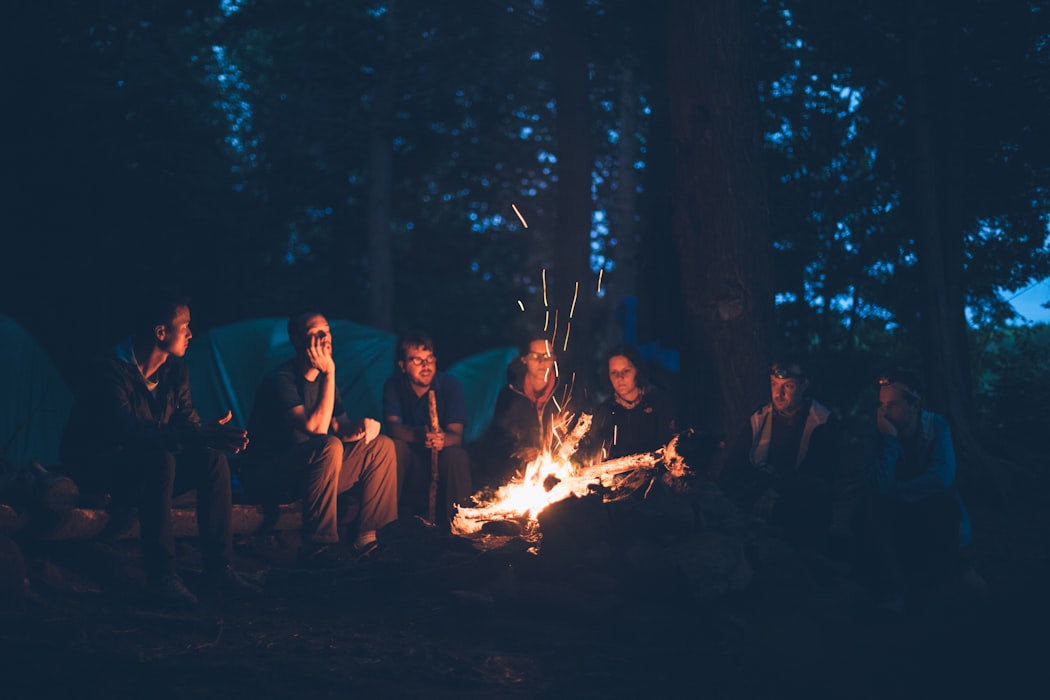
people having a bonfire

What is Kamishibai Storytelling?

“Stories are powerful. They can teach morals — the values that the author of the story thinks people should live by. They can teach history. They can entertain us. They can make us think about things in ways we’ve never thought of them before. They can make us laugh. They can make us cry. Telling stories is a large part of what makes people connected to each other.

Stories are a part of every culture. Stories about our country and its history help us feel proud of our nation. Stories about our ancestors teach us about where we came from and the things we have in common with other people around us.

A man named Robert Moss said that the Australian Aborigines think that the important stories are always seeking the right person to tell them, looking for the storyteller like an animal hunting its prey.”

Isn’t that great?

As adults, there are many times we must tell a story–when we have a car accident and must explain it to the police officer, explain to our children about a particular moment in their lives, asking a question of a company and explaining our problem to them, etc.

Over time, I perfected my Kamishibai storytelling unit.  It is one of my favorite units to teach because it allows the students a lot of creativity and imagination. As I mentioned previously, they must work cooperatively and finally share their story.

What is Kamishibai Storytelling?

This ONE WEEK unit  focuses on a Japanese form of storytelling called Kamishibai.  This unit is successful with third through seventh grade students and classes in language arts, reading, drama, world history, social studies and ESL.

Broken into eight class periods, the unit can be halted intermittently if need be.

The product includes:

  • What is Kamishibai storytelling (using its form as a model)
  • The History of Kamishibai
  • How to Analyze Illustrations Just Like Film Makers Do!
  • Effective Storytelling Techniques
  • Procedure
  • Teacher’s Script–What I Say and How I Say It!
  • Materials List–Most You Will Have in Your Classroom All Ready
  • Instructions How Create the Boards and the “Tricky Part”
  • Tips and Advice
  • Editable Storytelling Rubric
  • Sources

The best part? This storytelling style can be used with ANY story. Students are highly engaged and LOVE this unit!

Tips and Tricks of a Drama Teacher-- Drama Tools, That Is

Storytelling with Student Created Pictures

What is Kamishibai?

Storytelling Unit

You will find this unit and others pertaining to storytelling in my teacherspayteachers.com store at:  Dramamommaspeaks

Here is a storytelling rubric which I created.  It’s editable, so if you can give more points to the assignment or change the expectations if you’d like.

What is Kamishibai?

Storytelling Rubric 

What stories do you like to share with your family or friends?  I have several which come up ever so often when my family is together.  I know one about my brothers and sister nearly drowning when my father drove a car with them in it onto a frozen river.  It’s quite a funny, crazy story.

Contact me at dhcbaldwin@gmail.com or DeborahBaldwin.net

What is Kamishibai?


Share this:

  • Click to share on Tumblr (Opens in new window) Tumblr
  • More
  • Click to share on X (Opens in new window) X
  • Click to share on Facebook (Opens in new window) Facebook
  • Click to share on Pinterest (Opens in new window) Pinterest
  • Click to share on LinkedIn (Opens in new window) LinkedIn
  • Click to email a link to a friend (Opens in new window) Email
  • Click to share on Reddit (Opens in new window) Reddit
  • Click to share on Pocket (Opens in new window) Pocket
  • Click to share on Telegram (Opens in new window) Telegram
  • Click to share on WhatsApp (Opens in new window) WhatsApp

Like this:

Like Loading...

Filed Under: creative dramatics, Creativity, drama education, middle grades, storytelling, Teacherspayteachers, theater, theatre, Uncategorized, youth theatre Tagged With: communication skills, cooperative learning, Kamishibai Storytelling, listening skills, reading skills, storytelling, writing skills

Footer

Follow Us

logo3.png

FOLLOW US

Facebook X-twitter Pinterest Instagram Envelope Rss

Goodreads: read

Malibu Rising
Malibu Rising
by Taylor Jenkins Reid
People We Meet on Vacation
by Emily Henry
The Last Thing He Told Me
by Laura Dave
Faking It
Faking It
by Cora Carmack
Losing It
Losing It
by Cora Carmack

goodreads.com
Copyright © 2024 · Wellness Pro on Genesis Framework · WordPress.com.Log in
 

Loading Comments...
 

    %d