• Skip to primary navigation
  • Skip to main content
  • Skip to footer

Join Me in my new Facebook Group! https://www.facebook.com/groups/417126059784261

Menu
  • Meet Deb – The Heart Behind DramaMommaSpeaks
    • Work with Me! 
    • Photo Gallery of DramaMommaSpeaks
    • Directorial Credits
  • I Give Book Talks! 
    • Book Talk Through Skype
    • Books
  • Freebies!
  • Bumbling Bea
  • Teaching Resume
  • Acting Resume
  • Contact Me
  • Blog
    • Drama Education
    • Arts Education
    • Youth Theatre
    • Middle Grades
    • Musical Theatre
    • Teaching
  • Meet Deb – The Heart Behind DramaMommaSpeaks
    • Work with Me! 
    • Photo Gallery of DramaMommaSpeaks
    • Directorial Credits
  • I Give Book Talks! 
    • Book Talk Through Skype
    • Books
  • Freebies!
  • Bumbling Bea
  • Teaching Resume
  • Acting Resume
  • Contact Me
  • Blog
    • Drama Education
    • Arts Education
    • Youth Theatre
    • Middle Grades
    • Musical Theatre
    • Teaching

excellence in teaching

Five Winter Themed Drama Lessons You Should Try

December 21, 2022 By dhcbaldwin Leave a Comment

Evergreen branch with snowy rain drops close up.

The topic of five winter themed drama lessons you should try sounded like something I should blog about today. By the next time I blog, it will be 2024!  Wow, time has really flown this year. If you want something with a Christmas theme, check out: Drama Units Christmas Theme Bundle

I’m not a big fan of the whole new year’s celebration thing.  In my family, all we did was change the calendar to the next month. Exciting, huh?

However, I know teachers are always looking for thematic units to brighten up the winter months.  This post concerns new years and winter units using drama as the tool for discovery.

Five Winter Themed Drama Lessons You Should Try

A Story of Generosity

This is one of the only folk tales I’ve found to celebrate the new year. I like the story so much that I’ve created two short class plays of it!

This charming play, based on a Japanese folk tale Oji San and the Grateful Statues share the themes of New Year, multiculturalism, winter, kindness and forgiveness. Students strengthen their study of another culture, reading (fluency), speaking (diction) and listening skills (restating) while learning to work cooperatively. This is excellent and very suitable piece for a vocal music, social studies, reading, language arts or drama class.

Once upon a time, there was an older Japanese couple who make straw hats which they sell at the market every day.  It is a struggle for them to make ends meet, but they greet each day with gratitude and kindness to everyone.  On New Year’s eve the man goes to market and no one buys a hat. As he walks home, dejected and worried, beautiful snow begins to fall.  When he passes the stone statues which sit on the wall near his house, he notices that the snow is falling on their heads and decides to give the statues the unsold hats to protect them from winter’s harshness.

Ojisan and the Grateful Statues

Five Winter Themed Drama Lessons You Should Try

His wife doesn’t understand her husband’s actions, but forgives him.  In the night a knock at the door awakens the couple.  To their amazement, a large rice cake is sitting there, though they don’t know who left it.  Off in the distance, they see the statues slowly walking back to their place on the wall.  It’s such a sweet story.

Students will have an opportunity to dramatize a folk tale using many of the elements of drama, create straw hats, design snowflakes, sing an original song written in a pentatonic scale and use their imaginations to express emotion through movement.

Five Winter Themed Drama Lessons You Should Try

In all honesty, I’m all about arts integration–it’s my goal for every classroom to integrate drama into their learning to some degree.  Ojisan and the Grateful Statues is a perfect choice to use as an integration. Contact  your vocal music teacher and present the play together! Your students can sing and accompany the song with metallophones, xyllophones and percussion.

You can find Ojisan and the Grateful Statues here.

Five Winter Themed Drama Lessons You Should Try

Chinese New Year Celebration

Maybe you want something to celebrate the Chinese new year.  Although this story is not directly related, it is a super story to dramatize.  I have three lessons about–one is a readers theater, one is a play and one is an entire unit.

Li Chi The Serpent Slayer is based on an old Chinese folk tale about a young girl who lives with her family in a small village.  Every few years, a serpent terrorizes her village and drags off one of the young women for his dinner. Everyone is fearful. No one wants to fight the serpent, but Li Chi asks her parents if she can fight the serpent. Want to learn about some other multicultural plays? Check out: The Reasons Teaching Multiculturalism in the Classroom is Vitally Important

Li Chi the Serpent Slayer

Li Chi is a fierce young woman with a quick wit who is cunning and brave.  Her parents deny her this chance and forbid her to go. Even so, Li Chi slips out at night with her dog and climbs the mountain to the serpent’s cave.   This time instead of a girl dying at the feet of the serpent, Li Chi outsmarts it. Li Chi the Serpent Slayer is full of plot twists.   And it’s even more special because the main character is a female! With themes of bravery, love of family, love of community and several others The Little Girl and the Winter whirlwinds is one to beat!

You can find Li Chi the Serpent Slayer here:


Five Winter Themed Drama Lessons You Should Try

A Story of Courage

Here is another story, this time a Bulgarian folk tale which shares a delightfully, sweet story about a little girl who saves her village during the late months of winter. As with Ojisan, there are other version of this story as well. With roles for 25+ The Little Girl and the Winter Whirlwinds shares themes of winter, generosity and courage. Perfect choice for students studying the culture of Slavic countries and/or Europe in a social studies or a drama class. you can find it here:

The Little Girl and the Winter Whirlwinds

The story, a Bulgarian folk tale, of The Little Girl and the Winter Whirlwinds goes like this–A wicked Winter Witch decides to stop Spring from arriving on time and makes Winter the only season on Earth. She hides the Sun behind dark clouds and covers the Earth with heavy snow. One morning the people from a small mountain village awake and fing their houses buried under the snow up to the roofs.

The people decide that the best thing to do is to send someone to the highest mountain peak, where the good wizard Father Frost lived in his palace of ice and ask him for help. Surprisingly, the Little Girl volunteers to go because she has very little to hold her back.  She believes her warm heart and love for everyone will melt the snow and bring spring. She never considered all the obstacles that would she would meet along her way. Full of varied characters of sizes The Little Girl and the Winter Whirlwind is a lovely story.

Again, we’ve added music to this play and teachers seems to like this aspect.  Since this story ends as Spring arrives, it would be perfect for February or even March.

Since first blogging about this subject, I’ve created additional resources to celebrate winter in the classroom. 

The Great Santa Suit Snafu — A Winter Readers Theater Your Students Will Love

Looking for a lively winter activity that builds reading fluency and keeps your students engaged during the busiest time of year? The Great Santa Suit Snafu is a classroom-friendly Readers Theater script that brings humor, mystery, and teamwork together in one festive package. It includes twelve speaking roles with room for extras and sound effects crew.

The Story:  Only one day before Christmas Eve, the elves discover that Santa’s magical suit has shrunk! A frantic team of reindeer, elves, and Mrs. Claus tries everything—from sewing disasters to “unjingling” Jingle Bells—in an attempt to save Christmas. With witty characters, playful dialogue, and an upbeat ending, students will love performing this holiday comedy. (Even includes musical score to help you learn it!) I’ve even included the lyrics to Unjingling the Bells so you won’t have to work too hard to teach it!

Because Readers Theater requires no memorization, costumes, or special materials, it’s ideal for December lessons, substitute plans, or that energetic week before winter break. The script is written especially for upper elementary and middle school students, with clear character cues, accessible vocabulary, and plenty of comedic moments that make even hesitant readers want to participate.

Five Winter Themed Drama Lessons You Should Try

Sometimes, my husband and I get crazy ideas.  Rudolph the Rapping Reindeer is one of them.

The story:  Rudolph discovers a unique talent for rapping, bringing a fresh beat to the North Pole just before Christmas Eve. While Santa and the other reindeer are skeptical at first, Rudolph, with the help of the beatboxing elves Twinkle and Jingle, teaches the team to groove and find their rhythm.

Even Blitzen, who struggles to rap, taps out a steady beat with his hooves to keep everyone on track. The fun reaches its peak when Mrs. Claus surprises everyone by unleashing her own wild freestyle rap.

With teamwork and holiday cheer, Rudolph and the crew take flight, spreading joy and beats across the world in the most unforgettable sleigh ride yet.

This 10–12 minute holiday play is perfect for grades 4-6, with 12 speaking roles and room for a chorus.  It  combines humor, teamwork, and joyous fun with a unique musical twist!

Need a good laugh? 

Five Winter Themed Drama Lessons You Should Try

The February Doldrums

Want something fun for early February?  Get everyone out of the winter blahs with this fun musical. Best for high school students, Ground Hog Day is based on the film of the same name.  Laugh your way through the learning! You can find it here.

Ground Hog Day the musical is about Phil Connors, a cynical Pittsburgh TV weatherman, who is sent to cover the annual Groundhog Day event in the isolated small town of Punxsutawney, Pennsylvania, when he finds himself caught in a time loop, forced to repeat the same day again and again…and again. Note:  This musical because of language is more suitable for high school students. 

The music is great and the story line is funny. We’ve all thought about what it would be like to go back and do something differently, haven’t we? I know I have.

The unit includes everything a busy teacher would need in order to be successful:  themes of the musical, plot, synopsis, creative staff biographies, Broadway and musical trivia, student questions (with a teacher’s key) and several enrichment activities to secure the learning.

Five Winter Themed Drama Lessons You Should Try

Hello Spring!

One more unit that I think your students will find fun is Buddy and the Evergreen Trees.

Buddy is a little blue bird with a hurt wing. When winter comes, his selfish and thoughtless bird friends leave him behind. Consequently, Buddy is sad, very worried and hurt by their leaving. A group of evergreen trees hear him saying good bye to his supposed friends and decide they want to help him. They befriend Buddy and invite him to live in their tree limbs until winter passes. Buddy heals over the winter delighting in living in the snowy evergreen trees, his new friends. This story teaches the themes of winter, friendship, compassion and generosity. You can find it here. 
File:In the winter forest (5431146866).jpg

Hello Every Month!

Recently, I found this folk tale and thought it was would be a perfect readers theater unit.  Why? First, there are many speaking roles!  The story will remind you of Cinderella to some degree.  It has a parable that could lead to a class discussion topic.
The Twelve Months reader theater unit and  story concerns a young and beautiful girl (called Marushka in some variations) who is sent into the cold forest in the winter to perform impossible tasks by her evil stepmother. She must get spring violets, summer strawberries and fall apples in midwinter as presents to give her stepsister for her birthday. On her journey, she meets a group of magical people who are the personification of the twelve months of the year.
When she returns home with the strawberries, her step mother and sister don’t believe her.  Finally, the step sister becomes so engaged with anger, she decides that she will go up into the snowy mountains by herself.  Little did she know, her rudeness would come back to ruin her.
Five Winter Themed Drama Lessons You Should Try
As always, I hope your 2023 year begins with much promise, joy and lots of fun teaching moments.  Teaching and learning should be fun, I believe.  It’s my hope that if you pick up these units, I’ve helped you to do so.
Drama Readers Theater Scripts Folk Fantasy Fairy Tales Literature Toolkit
Save money!  Pick up this bundle here:  Drama Readers Theater Scripts
What units do you teach during the winter season?  Anything thematic?  I’d love to hear about it.  Contact me at DhcBaldwin@gmail.com with your ideas.
Click here:  We’re Live! Radio Theater #101
Happy New Year!
Five Winter Themed Drama Lessons You Should Try


Share this:

  • Click to share on Tumblr (Opens in new window) Tumblr
  • More
  • Click to share on X (Opens in new window) X
  • Click to share on Facebook (Opens in new window) Facebook
  • Click to share on Pinterest (Opens in new window) Pinterest
  • Click to share on LinkedIn (Opens in new window) LinkedIn
  • Click to email a link to a friend (Opens in new window) Email
  • Click to share on Reddit (Opens in new window) Reddit
  • Click to share on Pocket (Opens in new window) Pocket
  • Click to share on Telegram (Opens in new window) Telegram
  • Click to share on WhatsApp (Opens in new window) WhatsApp

Like this:

Like Loading...

Filed Under: arts education, arts integration, community theater, drama education, drama integration, Education, Education, elementary, excellence in teaching, middle grades, New Teacher, plays, Teacherspayteachers, Teaching, theater, youth theatre Tagged With: Bulgarian folk tale, gifted and talented, ground hog day, language arts, reading, social studies, the months of the year, upper elementary, winter

Ten Ways to Teach Reluctant Students in Your Theater Class

October 5, 2022 By dhcbaldwin 1 Comment

At least once a week, I read of a teacher asking help with, “My beginning theater class is open to all students in the school. However, it has become a dumping ground with students completely disinterested in theater and the study of it. At the same time, I have students who are sincerely interested in the subject in the same class.  What do I do?” Today, I’m going to talk about Ten Ways to Teach Reluctant Students in Your Theater Class.

I know this challenge all too well myself.  Several times in my career, I had students placed in my classroom because the administration thought I demonstrated skill in reaching all students and could reach these students as well.

Do you have any idea how heavy the weight of responsibility for teaching to reluctant students is? Teaching is difficult enough and a theater class poses its own challenges that not everyone is aware of. For instance, when one acts they must share their feelings, real feelings.  That’s can be scary for even the most ardent theater student.

Ten Ways to Engage Reluctant Students in Your Theater Class

Simply put, you need to outsmart your reluctant students.  Remember, you are the professional here.  You’ve got what it takes to be successful (albeit tiring). Wonder how I got to where I am today? Check out: How Theatre Saved My Life

Teach Reluctant Students

  •  You need to survey each and every class to discover whether they are interested in theater or not.  This is true of anyone who teaches any electives from industrial education to art as well as theater. By surveying the students (through a questionnaire on-line or hard copy) you’ll find out their interest level (because you will ask it) and what they hope to learn in the class.
  • After you’ve studied the students’ questionnaire, you can now shape your lessons accordingly. Does this take more time than what you would usually do?  Yes.  Is it worth it?  Yes!  It is better to know your audience (because that’s what they are, essentially) than not and spend most of the year frustrated with their lack of engagement.
  • Use a game as a warm-up. Most students love a game so I recommend playing one at the beginning of each class.  For some students, it is the delight of their day (although they may never share this with you) and it lifts the burden for you always having to teach a concept.  Let the game teach them.  Also, playing a game makes class fun no matter the outcome.  Start with something simple like the Ball Game (Don’t know it? pick it up here).  The Ball Game can be played with students of any grade level. Games give students an opportunity to get to know one another without the stress of a face to face conversation. As the quarter progresses the games you can select games which are more difficult. By the last month of the semester, you should have no problem using an improvisation exercise as a warm-up.
  • Minimize your students’ worries.  Through the questionnaire, you should have a better grasp about what they think theater is as opposed to what it actually is. They may think theater is standing on a stage, wearing a costume (the student may dislike), wearing makeup (even the boys), memorizing gobs of lines and speaking at a volume for the entire class to hear. 

         Let’s not start there if that’s the case.  Let’s do some theater appreciation instead.  Show them video clips of theaters  around the world and either have a class discussion of each theater or give them questions to answer. Here is what I  mean:  Theaters Around the World.

Ten Ways to Engage Reluctant Students in Your Theater Class

Teaching Reluctant Students

  • Study technical theater with them--set, sound, stage properties, stage makeup or costume design.  Many students just need a backdoor into the subject. Technical theater is nonthreatening.  Most assignments are meant to be completed individually and not with a group.  This helps those students who do not speak English as their first language, especially.  I really enjoy teaching technical theater. Through its study, I usually find a student who no one knew very well that turns out to be a fabulous artist! Their creativity and talent can shine in technical theater and suddenly the other student take note of them.  It’s awesome. Here are a few technical theater units which may help you: Technical Theater Units or begin with Set Design, the Rendering
  • Reader’s theater is a good choice for your class.  Readers theater is successful in a class with various levels of interest, because there is no line memorization, no costumes, etc. Everyone sits together on the stage, so there’s that “safety in numbers” thing. Plus, if you wait until near the end of the second quarter, readers theater should not be difficult for your reluctant ones.  (Read my article in One Classroom Over about reader’s theater) You’ve given them plenty of time to adjust to the class. Here’s a funny script for them:  The Brave Little Tailor Unit.  Great for grades 5 to 7.
  • Radio theater is a super choice, too. Personally, I think radio theater has everything a play does!  That’s the reason I suggest it to teachers. Radio theater is highly imaginative from the many character voices actors create to the sound effects. Plus, it is a super tool for strengthening reading skills! It is easy to keep everyone involved, because they are on the stage the entire length of the piece. It can be as simple or as theatrical as you like.  And yet again–no line memorization! This is another unit I would teach near the end of the semester or year. If you are interested in radio theater, check out: Radio Theater Units and Lessons  Don’t know how to direct one?  Go here and pick up all of the training you need: How to Direct Radio Theater
  • Use movement exercises instead of acting ones.  Movement takes no sound and no verbal reaction.  Students like the physical activity, too. The Magic Circle is a good exercise to use for movement.  (Don’t know it?  Pick it up here)
  • Turn down your classroom lights. You won’t believe how dimming the lights will ease students’ anxieties. You just want the classroom light to be dim–light enough you can everyone but no so dark you can’t keep an eye out for any inappropriate behavior.
  • Play some classical music in the background.  Classical music works because there are no lyrics for the students to notice. It can express mood without anyone saying anything.  I think of it like a comforting blanket. In those awkward moments in a game, acting exercise or lesson they can help ease any anxiety that rears its ugly head.

Want some additional tips from me?  Check out Double Casting a Show? Here’s Advice

Ten Ways to Engage Reluctant Students in Your Theater Class

Advice for the Core Subject Teachers

Many of the suggestions I’ve made above work strictly in a theater classroom. Some of them will work for you as well.

Here are a couple of other suggestions for you:

Sometimes our students just need space away from others.  Offer that space in your classroom if a student needs it.  You want them to feel safe and accepted in your classroom. I say as long as they are focused on their work, this is acceptable.

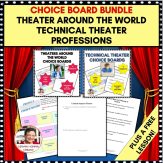
Giving students choices is always a great idea, too.  Remember you have worked out the choices ahead of time so you are comfortable with whether they select once choice over another.  Choice Boards are super for this.  Here are some of mine as an example. This bundle is very popular with teachers: Choice Boards

Ten Ways to Teach Reluctant Students in Your Theater Class

You can even pick up a sample of them right here.

Or pick up a technical theater unit for high school students here: Technical Theater Units, High School

So, there you have it!  Teaching is a wonderful profession when everyone is treated with respect. Even the reluctant students can learn that respecting your art form is possible and believe it or not–enjoyable!  I discovered that once my students knew I had their back and understood them feigning disinterest in theater, I could work with them.  Lots of times, it’s just noise on their part.  Remember that–it’s just noise.

I’d love to know what you’ve found is successful with reluctant students in your classroom?  Contact me at DhcBaldwin@gmail.com.


Share this:

  • Click to share on Tumblr (Opens in new window) Tumblr
  • More
  • Click to share on X (Opens in new window) X
  • Click to share on Facebook (Opens in new window) Facebook
  • Click to share on Pinterest (Opens in new window) Pinterest
  • Click to share on LinkedIn (Opens in new window) LinkedIn
  • Click to email a link to a friend (Opens in new window) Email
  • Click to share on Reddit (Opens in new window) Reddit
  • Click to share on Pocket (Opens in new window) Pocket
  • Click to share on Telegram (Opens in new window) Telegram
  • Click to share on WhatsApp (Opens in new window) WhatsApp

Like this:

Like Loading...

Filed Under: acting, arts education, arts integration, drama education, drama integration, Education, elementary, excellence in teaching, High School, middle grades, reading skills, theater, youth theatre Tagged With: acting exercises, classroom behavior management, elementary school, ELL student, engaging students, high school, Middle school, movement exercises, radio theater, readers theater, reluctant student, Teaching, warm ups and games

8 Must-Haves for Your Middle School Theater Scope & Sequence

September 21, 2022 By dhcbaldwin Leave a Comment

A group of middle school kids looking down at the camera.

8 Must-Haves for Your Middle School Theater Scope & Sequence

Today I’m going to talk about the eight things you should include in your Middle School Theater Scope and Sequence. Obviously, this is my point of view on the subject. If you are new to my blog, welcome! I’m quite flattered that you’d check me out.

8 Must-Haves for Your Middle School Theater Scope & Sequence

My First Teaching Experience with Middle School 

My first job was as an English teacher in a junior high school.  Bear in mind that I was certified in English, but had never taught it or even had any time as a student teacher. My student teaching was in theater which in the 1970s was almost unhear of in the mid-west.

Anyway,  I remember they gave me this HUGE book with all of the benchmarks or objectives I was to reach.  It was so full of jargon, I had to sit and translate it into layman’s English.  Finally, I got the hang of it.

When I began teaching middle school theater in the mid 90s (yikes), no one seemed to clear on what they wanted me to cover.  I came into the position with twenty years of teaching and directing outside the classroom, so I knew what to do in those circumstances.

However, teaching theater in a school was different than that. In the particular school I taught theater all those many years ago, I spent about a year trying out ideas until I perfected what I thought would be successful with the students. Looking for a free biography and one pager assignment about Lin Manuel Miranda?


8 Must-Haves for Your Middle School Theater Scope & Sequence

A Thirteen Year Middle School Teaching Adventure

For thirteen years,  I taught a pre-elective theater class to sixth grade students–all 450 of them.  (Yes you read that correctly.) I had twenty-five days to fill with the many subjects of theater which was great fun but also rather challenging.  My tendency was to perfect something when we found it to work, but the students and I just didn’t have the time to do so since they moved to the next pre-elective class.

After thirteen years of this teaching load, I had completely topped out on what I could teach them.  At this point, we moved to Colorado and I took a part time speech and theater middle school job–completely different and chaotic. But that’s a blog post for another day.

In 2017, I began my store on Teacherspayteachers.com.  My plan was to recoup the pension I lost by staying home with our daughters when they were very young.  I lost half of my pension when I made that decision, but to this day I have no regrets.  I know our daughters almost as well as they do themselves.

8 Must-Haves for Your Middle School Theater Scope & Sequence

My Middle School Scope and Sequence Curriculum

People purchase my middle school drama curriculum a lot.  I’m very glad I can help them, but it never dawned on me that maybe I should include a scope and sequence with the units. Here I am today providing that guidance for you.

I taught these lessons in this particular order beginning with the easiest concepts and progressing to the most challenging. This was a pass/fail course.  I gave a daily participation grade as well.

1. Tableau (1 day)–Tableau is a staple of theater and a non-threatening concept which beginning theater students can learn. Students learn how to make stage pictures (which is one of the basic of directing as well), however they don’t have to say anything. You can find my tableau lessons here: Tableau Lesson

2. Chanting (1 day)–Chanting, or a repeated word or phrase used to illicit an effect is the second component I teach novices.

Engaging Activities to Inspire Creativity and Collaboration

3. Costume Design (2 days)–Who doesn’t like costume design?  Depending upon the time of year, I like to teach about costume design with a thematic approach.  You’ll have to check out my Halloween Costume Design Lesson here.

4. Movement (2 days)–Just like tableau, students enjoy movement because there is no speaking.  Plus, it does a great job of giving students some physical exercise which they sorely need. You can find my lesson for movement here:  Movement

5.Kamishibai Storytelling (1 week)–Depending upon your assessments of you students and what they appear to engage with in your teaching, I like to use Kamishibai storytelling from time to time.  Have you never heard of Kamishibai?  Check it out here: Kamishibai Storytelling

8 Must-Haves for Your Middle School Theater Scope & Sequence
https://theconversation.com

6. Set Design (1 week)–Set Design units are super useful.  They incorporate not only designing the set, but building a model of it.  In addition, students work with a partner which is so good for teaching cooperative learning.

7. Performance (1 week) You can choose to direct your students in a short class play or a short radio theater play-I liked to switch it up every now and then with one or the other.  Word of caution–don’t have one class performing a play while the others are studying radio theater.  You will make yourself crazy.

8. Enrichment (1 day) If you need a substitute, or your school is having a day of shortened class periods, watching a video clip of theaters around the world or studying about a famous theater artist such as Lin Manuel Miranda does an excellent job of changing the pace or giving everyone a breather.

If you want a bundle of technical theater units for middle school, click here.

Or you want a REALLY BIG BUNDLE  of middle school drama units, click here.

Sometimes I’d throw in components such as stage properties or sound effects because quite frankly, I needed the change.

8 Must-Haves for Your Middle School Theater Scope & Sequence

Objectives I Met with This Scope and Sequence Theater Curriculum

Here are the National Core Arts Standards which I used.

Connecting

Conceiving and developing new artistic ideas and work.

  • Anchor Standard #1. Generate and conceptualize artistic ideas and work.
    Anchor Standard #2. Organize and develop artistic ideas and work.
    Anchor Standard #3. Refine and complete artistic work.

Performing

Performing (dance, music, theatre): Realizing artistic ideas and work through interpretation and presentation.

  • Anchor Standard #4. Select, analyze and interpret artistic work for presentation.
    Anchor Standard #5. Develop and refine artistic techniques and work for presentation.
    Anchor Standard #6. Convey meaning through the presentation of artistic work.

Responding

Understanding and evaluating how the arts convey meaning.

  • Anchor Standard #7. Perceive and analyze artistic work.
    Anchor Standard #8. Interpret intent and meaning in artistic work.
    Anchor Standard #9. Apply criteria to evaluate artistic work.

Objectives I Met with This Scope and Sequence Continued

8 Must-Haves for Your Middle School Theater Scope & Sequence

If you need Common Core Standards, here are a few of them which my guide completes.:

Grade 6

Key Ideas and Details:

CCSS.ELA-LITERACY.RL.6.1

CCSS.ELA-LITERACY.RL.6.2

CCSS.ELA-LITERACY.RL.6.3

Craft and Structure:

CCSS.ELA-LITERACY.RL.6.4

CCSS.ELA-LITERACY.RL.6.5

CCSS.ELA-LITERACY.RL.6.6

Integration of Knowledge and Ideas:

CCSS.ELA-LITERACY.RL.6.7
CCSS.ELA-LITERACY.RL.6.8
CCSS.ELA-LITERACY.RL.6.9

Range of Reading and Level of Text Complexity:

CCSS.ELA-LITERACY.RL.6.10

Are you looking for some information about how to design a lesson plan?  Check out this post: Why is it Important to Create a Lesson Plan?

Grade 7

Key Ideas and Details:

CCSS.ELA-LITERACY.RL.7.1.

CCSS.ELA-LITERACY.RL.7.2
CCSS.ELA-LITERACY.RL.7.3

Craft and Structure:

CCSS.ELA-LITERACY.RL.7.4.

CCSS.ELA-LITERACY.RL.7.5
CCSS.ELA-LITERACY.RL.7.6
CCSS.ELA-LITERACY.RL.7.7
CCSS.ELA-LITERACY.RL.7.8
CCSS.ELA-LITERACY.RL.7.9:

CCSS.ELA-LITERACY.RL.7.10

Did you know I have an Instagram account with virtually different information than my blog?  You can find it at: DramamommaSpeaks Instagram

Multicultural Folk Tales

A Word of Caution

In an effort to do a exemplary job at teaching, sometimes we teachers go overboard on what our students should learn. I’m not a big fan of scene study when students are in middle school or lower. Or even monologues. They simply do not understand it nor appreciate it. Unfamiliar with creative dramatics? Check out: Learn How to Teach Creative Dramatics in Your Lunch Hour

What I do encourage theater teachers of elementary and middle school to teach is using creative dramatics’ many facets. One could teach the components above, number one to five, and then apply them to a readers theater or short class play.  Here is one of my which would work well for this plan:  Inca Story The Magic Lake Readers Theater or The Brave Little Tailor play. 

I hope my guide helps you in your teaching of middle school theater class.  What do you like to include in your teaching? I’ve love to hear about it.  You can email me at DhcBaldwin@gmail.com.  Let’s chat!

Woman behind DramaMommaSpeaks

Share this:

  • Click to share on Tumblr (Opens in new window) Tumblr
  • More
  • Click to share on X (Opens in new window) X
  • Click to share on Facebook (Opens in new window) Facebook
  • Click to share on Pinterest (Opens in new window) Pinterest
  • Click to share on LinkedIn (Opens in new window) LinkedIn
  • Click to email a link to a friend (Opens in new window) Email
  • Click to share on Reddit (Opens in new window) Reddit
  • Click to share on Pocket (Opens in new window) Pocket
  • Click to share on Telegram (Opens in new window) Telegram
  • Click to share on WhatsApp (Opens in new window) WhatsApp

Like this:

Like Loading...

Filed Under: Arts, arts education, arts integration, creative dramatics, creative movement, drama education, drama integration, excellence in teaching, middle grades, reading skills, storytelling, Teacherspayteachers, theater, theatre Tagged With: common core standards, lesson plans, middle school drama, middle school theater, national core arts standards, scope and sequence, upper elementary theater

Seven Facts About Teachers’ Wishlists That’ll Keep You Up at Night

September 7, 2022 By dhcbaldwin Leave a Comment

Exhausted sleepless worried teacher

Seven Facts About Teachers’ Wishlists That’ll Keep You Up at Night

Seven Facts About Teachers' Wishlists That'll Keep You Up at Night

I thought it was time to talk of the seven facts about teachers’ wishlists that’ll keep you up at night. Two weeks ago, I experienced something I wasn’t aware was a big problem, but it is my friend.

As a former teacher myself, I remember the materials I purchased which I asked my admin to pay for.  Sometimes these materials may have seemed extravagant (such as the Cirque De Soleil book on Costumes) or merely for fun (such as the video of the live version of Come From Away) but they were not.

Theater teachers have an unusual skill set–we must be familiar with directing, acting, sing, dancing, music, set, costumes, props, lights, sound, box office, front of house and much more.  Because of this, we need different materials than some.

As I mentioned previously, I had an eye opening moment when I found out a business I am involved in was willing to fulfill some teacher’s wishlists for their classroom.  Hooray! Knowing this, I jumped on Facebook and posted that I had this resource for teachers needing materials for their classroom.  Within an hour, thirteen teachers had contacted me!  Thirteen!!! Plus, there were several more that I had to turn away–that killed me.

Luckily, I was able to fulfill these wishlists for these teachers or at least get them partially fulfilled.  It was very gratifying and of course they were all very appreciative as I expected they would be.

Our teachers are using their own hard earned money to purchase materials for their classrooms.

Now, I knew some of this occurred with most teachers because teachers are always on the search for materials which will engage their students and make it easier for them to learn.

Seven Facts About Teachers' Wishlists That'll Keep You Up at Night

Here are the facts

  1. The average teacher is spending about $560 out of pocket on their classrooms this year; up from $511 last year. CJOnline.com
  2. Just under half of teachers told us that supply lists provided to parents include items specifically for classrooms, but only one-quarter of teachers get most of what they need. Of course, parents are also dealing with higher school supply costs, and many of them may have been negatively impacted by the expiration of expanded child tax credits, which expired in December 2021. Savings.com
  3. Nearly one in four teachers say they’ll spend more than $750 of their own money during the 2022-23 school year.
  4. On average, elementary school teachers receive about $11 per student from their schools’ budgets, but they spend an additional $33 out of pocket on each student. And get this: one in four teachers said their schools didn’t allocate any funds for classroom items this year.
  5. In Kansas (for example where I live), public school teacher salaries increased by 16.6% but that’s misleading.
  6. In general teachers are bringing home on average $2,179 less per year than they did a decade ago, when adjusted for inflation. NEA.org
  7. Despite the fact that most people agree teachers are underpaid, they are still expected to dig into their own household budgets to provide items necessary for classroom instruction. And these costs are going up, slightly higher than the overall rate of inflation. ( I don’t know about you, but I bet business executives aren’t expected to bring their own tissues to their office.)

Seven Facts About Teachers’ Wishlists That’ll Keep You Up at Night

Seven Facts About Teachers' Wishlists That'll Keep You Up at Night

Why is this occurring?

According to an article in https://www.businessinsider.com:

“Teachers will often purchase supplemental materials to help students struggling to grasp the curriculum. These additional resources are not always subsidized by schools. Although they follow a curriculum, and create their own lesson plans,  for some students, this is not enough for them to truly grasp the material.

Supplemental materials don’t just include supplemental lessons. Sometimes tactile activities are needed to help kids learn lessons, or, in the case of kindergarten and preschool classrooms, learn motor skills.”

How can we help our teachers?

Seven Facts About Teachers' Wishlists That'll Keep You Up at Night

As a former teacher myself, I remember the materials my administrated purchased for me. Sometimes these materials  seemed extravagant (such as the Cirque De Soleil book on Costumes) or merely for fun (such as the video of the live version of Come From Away) but they were not.

Theater teachers have an unusual skill set–we must be familiar with directing, acting, sing, dancing, music, set, costumes, props, lights, sound, box office, front of house and much more.  Because of this, we need different materials than some.

As I mentioned previously, I had an eye opening moment when I found out a business I am a part of was willing to fulfill some teacher’s wishlists for their classroom.  Knowing this, I jumped on Facebook and posted that I had this resource for teachers needing materials for their classroom.  Within an hour, thirteen teachers had contacted me!  13!!!

Luckily, I was able to fulfill these wishlists for these teachers or at least get them partially fulfilled.  It was very gratifying and of course they were all very appreciative as I expected they would be.

This got me to thinking–we should make teaching easier for our teachers not lop on financial constraints on them. Looking for fundraising ideas for your next production? Check out Turn Your Theater Department Fundraising Into A High Performing Machine

I looked around the internet and was surprised to find several organizations which offer financial support to teachers.

Seven Facts About Teachers’ Wishlists That’ll Keep You Up at Night

Seven Facts About Teachers' Wishlists That'll Keep You Up at Night

1. Classful

Classful is a website designed to allow teachers to collect funding and donations for their classrooms (as well as a little extra for being fantastic educators!). The site places emphasis on the importance of the teaching profession and aims to empower and thank teachers for doing what is often under-appreciated work.

2. Apple

K-12 educators (and those in higher education) can get as much as $150 in Apple gift cards for purchasing certain models of iPads, MacBooks, and iMacs.

3. Target

Kindergarten through grade 12 and homeschool teachers can get a 15 percent discount on school supplies at Target through Sept. 10.

4. Michaels

Educators with a valid school ID can get 15 percent off their purchase at Michaels.

5. Association of American Educators classroom grant

Apply by October 8 for a $500 grant which can be used to purchase books, software, calculators, math manipulatives, art supplies, audio-visual equipment, lab materials, and more.

6. AdoptAClassroom.org Spotlight Fund grants

This organization offers grants in several categories for educators. STEM teachers, art teachers, and teachers of color can apply for unique grants, as well as teachers who need support to make their classrooms more inclusive for students of all types.

7. Funds for Teachers

Funds for Teachers aims to invest in teachers’ professional development and growth with a view to boosting student success rates, improving teacher practice, and generally strengthening schools and their communities.

Funds for Teachers allows users to write grant applications according to a template tailored for a specific state’s professional development requirements, as well as requirements for supplies or new technologies. Teachers can even take a look at successful grant proposals for inspiration.

Seven Facts About Teachers’ Wishlists That’ll Keep You Up at Night

Seven Facts About Teachers' Wishlists That'll Keep You Up at Night

8. National Endowment of the Humanities

If you work within a humanities discipline, the National Endowment of the Humanities could provide opportunities for you to travel in order to broaden your horizons and learn new things. Trips can be taken domestically or abroad and all expenses will be paid (including accommodation, air travel, daily meals, and excursions). Making the most of this opportunity could help to develop your teaching practice by opening you up to new ideas and cultures.

9. The National Endowment for the Arts

Are you an art teacher with some ideas for a new project to involve your students in? The National Endowment for the Arts could be a great place to seek funding. The organization offers a selection of fellowships and grants for people that teach arts-related subjects such as English, art, or creative writing.

10. GetEdFunding

GetEdFunding is an invaluable site that helps educators and schools identify the kinds of funding they need when finances get tight through a special grant-finding search tool. The site hosts thousands of grants for educational purposes including awards for outstanding educators, grants for teachers in need, opportunities for an array of public and private schools, grants for administrators, and special educational programs.

Teachers can also develop themselves professionally by browsing the site’s scholarly articles and selection of free webinars and videos. There is are also online communities that teachers can visit for support and a virtual teacher’s lounge to enjoy during a few minutes of precious downtime.

11. The National Education Association Foundation

Not to be confused with the National Endowment for the Arts, the National Education Association (NEA) Foundation is a public charity that was founded by teachers and for teachers to boost the caliber of public education for students across the country.

The organization offers grants to teachers,including teachers wishlists regardless of whether they are members of the NEA or not. Over the past decade or so, they have awarded over $7 million in funding to almost 4,500 public school teachers in order to enhance the quality of their teaching. The NEA also provides free scholarly resources and professional development advice online.

Seven Facts About Teachers' Wishlists That'll Keep You Up at Night
 

12. Teach.com

Teach.com is an online database offering teachers an array of helpful resources covering topics such as professional development and improving student attainment. It also offers a helpful guide to ways that teachers wishlists can source funding to improve their teaching practice and help students.

13. The McCarthey Dressman Education Foundation

The McCarthey Dressman Education Foundation offers grants to small groups of teachers to attend intensive professional development courses that will allow them to bolster student achievement in their schools.

14.  Donors Choose

Donors Choose is a site founded by Charles Best, a history teacher who channeled much of his salary into funding classroom supplies. He set the website up in the year 2000 with the aim of helping teachers to collect donations to fund their classrooms. In 2003, Oprah Winfrey plugged the site on her television show, and it attained instant popularity, with around $250,000 going straight to educators.

The site itself is very easy to use. Teachers can post projects that they feel their schools need such as field trips, extra classroom supplies, or new software. Users can then donate as much as they are able to the project. Donors Choose will then order the necessary supplies and ship them directly to the school.

An Idea Whose Time Has Come

Seven Facts About Teachers' Wishlists That'll Keep You Up at Night

In case you aren’t aware, I am an idea person.  Hence, I want to take this a step further for theater teachers but similar to Charles Best.

Part of my DramaMommaSpeaks business mission is to make theater user-friendly in the classroom while maintaining the integrity of the subject.  To my mind, this idea would be an extension of that mission.

I’m thinking about establishing a not-for-profit organization whose sole purpose is to provide funds for United States’ theater teachers wishlists in the classroom. (And if you don’t know me, if I think it and say it,  I usually do it!)

In the past, I’ve submitted and been granted not-for-profit status for a youth theater company in Columbia, Missouri called Performing Arts in Children’s Education. During that time, I allocated funds for students seeking scholarships to participate in our company. In addition, I also have seven years of experience writing program grants for a community theater, Columbia Entertainment Company.

Seven Facts About Teachers’ Wishlists That’ll Keep You Up at Night

Seven Facts About Teachers' Wishlists That'll Keep You Up at Night

My idea is to set up a website for teachers’ wishlists much like Donor’s Choose but only theater teachers may ask for donations for their classroom. I would publicize this website in social media and here on the blog.  Initially, I would foot the bill of creating the website. Of course, I’d have to find out any legal policies in administrating something like this, but that doesn’t deter me since I have past experience with both sides of the donor process-both as an administrator of a company and as a representative for a company seeking funds.

Like Donors Choose, a theater teacher could submit to this website an itemized teachers wishlist of their needs, a short description of the reasons for requiring help, their location, their school’s population, etc. This teacher could be teaching at any grade level and those who also teach musical theater classes could apply as well.

What do you think of my idea?  I’m pretty excited about it.  I can plan this idea out in the next few months and build the website in December.  Anyone want to help me or be involved?  If you’ve never checked out how theatre saved me, go to: About MeContact me at DhcBaldwin@gmail.com


Share this:

  • Click to share on Tumblr (Opens in new window) Tumblr
  • More
  • Click to share on X (Opens in new window) X
  • Click to share on Facebook (Opens in new window) Facebook
  • Click to share on Pinterest (Opens in new window) Pinterest
  • Click to share on LinkedIn (Opens in new window) LinkedIn
  • Click to email a link to a friend (Opens in new window) Email
  • Click to share on Reddit (Opens in new window) Reddit
  • Click to share on Pocket (Opens in new window) Pocket
  • Click to share on Telegram (Opens in new window) Telegram
  • Click to share on WhatsApp (Opens in new window) WhatsApp

Like this:

Like Loading...

Filed Under: acting, arts education, arts integration, creative dramatics, drama education, drama integration, Education, elementary, excellence in teaching, High School, middle grades, Musical Theatre, performing arts, Teaching, theater, theatre, youth theatre Tagged With: Donors choose, funds for the classroom, national endowment association, not for profit donation websites for teacher, teach.com, Teaching, wishlist for the classroom

The Best Advice You Could Ever Get About Selecting Plays For Youth Theater

August 25, 2022 By dhcbaldwin Leave a Comment

The Best Advice You Could Ever Get About Selecting Plays For Youth Theater

The Best Advice You Could Ever Get About Selecting Plays For Youth Theater

The Best Advice You Could Ever Get About Selecting Plays For Youth Theater

I’m a member of several Facebook groups for theater teachers.  Other than enjoying reading their posts (which are hysterical sometimes), I am touched by their many questions and how they help each other. During this time of year teachers are looking for plays for young actors–youth theater plays to produce with their students or study in a class.

I can feel their frustration with selecting or even finding a script. Who better to receive advice from than those who has been in their shoes?  That’s me. Here’s the best advice you could ever get about new plays for youth theater

We theater teachers are a different bunch.  Selecting a play for students to read which appeals to most of them is a real challenge. A lot of theater teachers have students dropped on to their rosters who are not interested in theater and that’s another issue. Or a teacher finds a script but it’s juvenile or too mature.  Or they lack merit, or quite frankly, they are just plain stupid. Plus, reading a play written for adults isn’t always the most appropriate for students. And…not everyone wants to read Shakespeare which seems to be a go-to when a teacher/director just can not think what else to do.  That’s an entirely different blog post for another time.

My Background

Since I taught and directed for over thirty-eight years, I’ve had plenty of experience with this problem.  If you want to see my employment resume, go to: Teaching Resume. When I began directing and teaching in the late 1980s, I couldn’t find plays for young actors. I’d pad scripts with extra characters to give students a line or two.  Was it copyright infringement?  Probably, but the play catalogues didn’t carry youth theater scripts at all. If I’m guilty of anything it’s guilty of trying to educate our youth. I rest my case!

The Best Advice You Could Ever Get About Selecting Plays For Youth Theater

The Best Advice You Could Ever Get About Selecting Plays For Youth Theater

Finally, out of sheer desperation, I co-developed a national playwriting contest for youth theater plays in 1988.  You can read more about it here: Start a Playwriting Contest Using 20 Questions (part one) and Start a Playwriting Contest Using 20 Questions (part two).

It is my opinion that the youth theater play market became popular in the mid 1990s when Music Theater International unveiled its junior musical category.  Suddenly, theater and vocal music teachers had musicals to perform instead of having to use full length musicals written primarily for adults. With the rise of MTI’s junior musicals popularity, playwrights could see a reason to create scripts for our youth. Now we have many playwrights writing for our youth.

Having taught and directed for all those years and experienced this issue firsthand, I have a good finger on the pulse of what our theater teachers need or require. I know what works and what doesn’t.

I’m so pleased with the number of people who read my blog each day keeping my little blog in the top 5 of the most popular in theater education.  As I’ve mentioned before, I’m here to help.

What’s My Advice?

Although it may easiest just to produce a play you’ve directed in the past, my advice is to try a new playwright.  Be daring and select something that is best for your students even if the community isn’t familiar with it.  That’s the only way people can learn about–you be the first!

When we began our playwriting contest I mentioned above, we didn’t have many playwrights interested in participating.  After several years, the word got out and many plays were entered in the contest.  We’d bring the winner to Columbia, MO and they’d have an opportunity to see their new script performed by our theater school. It was a wonderful way for our community to experience new works and help the playwrights as well.

Consequently, I thought it would be useful to give some playwrights a platform in which to share their scripts.  Here are several plays which I suggest you give a look and perhaps you will want to produce them:

The Best Advice You Could Ever Get About Selecting Plays For Youth Theater

The Losers’ Club

The Losers’ Club, published by Eldridge Publishing by Jonathan Turner Smith

One Act (High School Level)

Duration: 40 minutes

Cast: 8 m, 6 w

A group of outcast high sclhool students in a small Texas town have formed “The Losers’ Club.” On homecoming evening, these 12 students kidnap the star football player, Joe Taylor, and homecoming queen nominee, Tawny Harris, who have ignored, bullied, and ridiculed members of the club for years. Lead by Trenton, a 17-year-old Goth, the club members put the condescending Joe and Tawny on trial for “crimes committed against their fellow students.”

Each member of the “jury” details how he or she has been harassed by Joe, Tawny, and their friends, and how their lives have been affected by the abuse. What is revealed in the testimonies and the result of the trial is a surprise to all. An excellent play to serve as a catalyst for realistic discussions about bullying in schools across America.

The Best Advice You Could Ever Get About Selecting Plays For Youth Theater

Back to the 80s!

Back to the 80s! published by Playscripts.com publishing by Dean O’Carroll

Parody  (High School and above)
Duration: 60 – 70 minutes
15 W, 7 M,  (11-116 actors possible: 5-99 W, 1-111 M)
Set: Flexible.
(65 productions)

Hold on to your hoverboards, we’re taking a trip Back to the 80s! When modern teen Mary Fitzfry gets sent back in time by an eccentric professor, she finds herself in the middle of a totally tubular cavalcade of 80s pop culture. There’s a lot of familiar faces, from the teens in breakfast-time detention to the guys chasing ghosts and dancing zombies, but the biggest surprise of all is Mary’s own protective mom as a teen. Turns out she’s actually kind of rad – but thanks to Mary’s time travel, she’s in trouble.

Can Mary make things right? This adventure takes you from the mall where everything happens, to a suburban sitcom street, to a cave under the high school – and you can choose who to feature from a flexible throng of characters to bring your audience maximum nostalgia. A hilarious parody to make all ages cheer “I love the 80s!”

The Best Advice You Could Ever Get About Selecting Plays For Youth Theater

The Best Advice You Could Ever Get About Selecting Plays For Youth Theater

The Kingdom of Academia

The Kingdom of Academia published by Brookly Publishers by Autumn Owens

Type: One Act (Middle School and up)
Genres: Comedy, Ensemble Cast
Themes: Science & Math, Personifications, Royalty
Duration: 30 minutes
Speaking Cast: 2 females, 1 male, 14 either (17 total cast)
Flexibility: 0-20 extras, gender flexible
All is well in The Kingdom of Academia – a royal land ruled by the much-loved King and Queen and inhabited by loyal subjects like Art, Geography, History, and Philosophy. But when the Board of Education sends Math to become a new subject of Academia, the Kingdom’s peace and unity are threatened as subjects riot against this new addition. The King and Queen, having failed their own math classes as young students, turn a deaf ear to Math’s pleas to join the Kingdom.
It’s up to Math and his newfound friends, Science and the Princess, to convince Academia that Math isn’t so boring and confusing after all. Just when it seems that Academia might have a change of heart, the notorious Board of Education arrives on the scene, offering to take Math back. Will the King and Queen seize the opportunity to send Math home, or can Math persuade the Kingdom that he counts after all?
The Best Advice You Could Ever Get About Selecting Plays For Youth Theater

It’s Her Say

Published by Stage Partners

Type:  Drama/Comedy (Middle School and up)

Short Play Collection.

Durations:  Each play is 10-20 minutes.

 Speaking Cast:  10-20 actors, flexible casting

It’s Her Say, a collection of short plays that focus on the female experience, can be used in the classroom for scene study or licensed for production. Ranging from historical fictionto social consciousness to shifting friendships to horror comedy, each play is written by a female-identifying theatre teacher who knows exactly what young performers are capable of and what kind of work they are eager to perform. This collection includes the following short plays:

Some Things Never Changeby Jane Best
I Said Run.by Rachel Bublitz
The Women’s Land Armyby Stephanie Buckley
Beauty Kweenzby Diana Burbano
Talk to Me About Homeby Eugenie Carabatsos
The Bootby Emily Hageman
Angela and Angie and Cynthiaby Patty MacMullen
The Stakeout by K. Alexa Mavromatis
The Un-Help Desk by Emily McClain
Girl, Period by Stephanie Shearer

(These plays can be licensed together or separately. If you license the whole collection, you have permission to pick and choose which plays to perform.)

I hope you take my advice and check out these plays in the near future.  This has been such a successful experience that I plan to blog again about this subject suggesting other plays suitable for our students!  Make sure you are following me so you’ll know when I’ve blogged again. Join here:

What is one of your favorite youth theater plays?  I’d love to discuss it with you.  Contact me at DhcBaldwin@gmail.com

Woman behind DramaMommaSpeaks


Share this:

  • Click to share on Tumblr (Opens in new window) Tumblr
  • More
  • Click to share on X (Opens in new window) X
  • Click to share on Facebook (Opens in new window) Facebook
  • Click to share on Pinterest (Opens in new window) Pinterest
  • Click to share on LinkedIn (Opens in new window) LinkedIn
  • Click to email a link to a friend (Opens in new window) Email
  • Click to share on Reddit (Opens in new window) Reddit
  • Click to share on Pocket (Opens in new window) Pocket
  • Click to share on Telegram (Opens in new window) Telegram
  • Click to share on WhatsApp (Opens in new window) WhatsApp

Like this:

Like Loading...

Filed Under: directing experiences, drama education, Education, excellence in teaching, High School, middle grades, performing arts, plays, Producing plays and musicals, theater, youth theatre Tagged With: new youth theater scripts, playwrights, playwriting, youth theater

The Five Reasons Your Students Will Love Set Design

August 10, 2022 By dhcbaldwin 2 Comments

The Five Reasons Your Students Will Love Set Design

The Five Reasons Your Students Will Love Set Design

One of the things I appreciate about the subject I teach is its varied subjects within it. However as we know, not all students think the same way as I. I thought you might appreciate the five reasons your students will love set design–or at least that’s my hope.

If you are teaching theater and have reluctant students, I’d suggest teaching them about set design.  I’ve yet to find a group of students who did not enjoy learning about it.

Many students love theater, but they are unwilling to perform and consequently they quit studying it and take another class instead.  The reason?  They just can’t find a place for themselves within it.  Technical theater is a wonderful place for inclusion!

The Five Reasons Your Students Will Love Set Design

The Five Reasons Your Students Will Love Set Design

Truthfully, I think teaching set design is crucial for a student’s studies in theater arts. Let’s face it–a set design can make or break a production. Understanding its value and encouraging your students to appreciate it too will not only enrich their learning, but make them a more rounded arts person.

Think about it.  The audience sits and looks at the set for the entire performance.  Sometimes the set doesn’t change.  That’s a loooong time to imagine the place.

I could wax poetic about my love for teaching set design.  I am that much of a cheerleader for it.  But here are some reasons your middle and high school students will love set design:

  1.  It’s highly creative–The sky is the limit when one is learning about set design.
  2.  It’s immediately gratifying–When you design a set and create a model of it (either with paper or through a set design software app.) you can watch your idea take shape right in front of you
  3.  Themes and motifs can be explored effortlessly–your ELA teacher will appreciate that you teach these concepts to your students
  4.  It’s a great way to learn cooperatively–If you have your students work in pair or teams, the design process is eye opening to them.  As in life, everyone has an idea. They should all be heard and incorporated into the design if at all possible.  Students learn to listen, adjust their opinions and consider others.
  5.  Set design skills can carry over into other subjects such as math or social studies.  What a terrific way to apply what you learn.  Design a set, measuring, ratios, etc. come into use.  Researching a local such as France for a set design can be a super integration for a social studies or geography class.

The Challenges of Set Design

The Five Reasons Your Students Will Love Set Design

For Your Gifted Students

I used to challenge my students who needed something more difficult to design their set using a turntable in the center.  Wow, that’s a great challenge!  Not only is it tough to build, but will it work sufficiently?

Or what about a staircase?  Students quickly learn that designing a staircase to scale is much more complex than just label a rectangle a set of stairs.  Once a model is built the student sees the error of their measurements and that’s helpful, too.

How about a bridge?  Again, it’s easy to design but difficult to execute.

A Little Trivia Break

  • Did you know Judy Dench wanted to be a set designer when she was young?
  • Or that Maurice Sendak (author of Where the Wild Things Are) became a set designer after his career as an author? (Me neither!)
  • How about the fact that real-life historical locations provided inspiration for the Hamilton musical set design? While the set isn’t literal, it draws inspiration from actual places. “One of the cool things about Hamilton is almost every single location is one that you can research and find actual visual support for, whether it’s on the internet or in history books, or if the actual location still exists,” says David Korins, the set designer. “We did a lot of research in my office, getting everything from what the Schuyler Home actually looked like to what it looked like in New York City in 1781 and 1776. And we put it all up on a big huge board on a wall in my office, and we picked and chose.”
  • If you want more information about the history of set design, check out this blog post, Past Present and Future Set Design 

The Five Reasons Your Students Will Love Set Design

Teaching students that “less is more” can be easily demonstrated through set design.  In the photo above, you see a simple set from the 2018 revival of Carousel.  It contains a cyclorama with a cloudy night sky projected upon it and four miniature sail boats are part of the ground row.  The rest of the set is wood pallets. Students understand this concept that’s why it’s one of the five reasons students love set design.  Isn’t it effective? If you are need advice concerning selecting a production, check out this blog post: Critical Steps in Selecting a Play or Musical: Budget & Royalties

Permit me to brag a little

This is Brandon Davis.  He was a student of mine when he was in middle school.  He’s really made a great name for himself as a set designer.  When I had Brandon in my drama class in sixth grade, he was quiet, creative and loved theater.  You can see his work below and  at www.brandonptdavis.com


If you aren’t aware, I have a store with Teacherspayteachers.com.  In it, I sell drama education resources. In this particular case, let’s discuss my set design unit.

There are two–one for middle school and another a bundle of technical theater units  for high school.


The Five Reasons Your Students Will Love Set Design      The Five Reasons Your Students Will Love Set Design

The Five Reasons Your Students Will Love Set Design

Here is my middle school design unit description:

During this eight-day unit over set design students learn about the history of set design, famous designers, develop a critical eye about what makes up an award- winning set design, create a ground plan for a fairy tale story of their choosing and draw a rendering. If you’d like a free lesson concerning set design, click here. Set Design, the Rendering

Here’s a added benefit–the students must work with ratios and measuring. (Hello math class!) The first two assignments are completed individually, but then the fun begins! The students are paired up to create a model working together towards the goal. There is even room for parents to celebrate the end of the unit with your students.

Included in the unit:

  • An overview of the unit for the teacher
  • Rationale for teaching design
  • History of scenic design
  • Set designer’s responsibilities
  • Teacher’s Script–what I say and how I say it!
  • Warm-up for day one
  • Procedures for each day (8)
  • Lecture notes including links
  • Information about the message color conveys
  • Rendering examples
  • Stage curtain sheets for rendering–one vertical, one horizontal
  • Step-by-step directions for model building including photo examples
  • Cheat sheet for various set pieces
  • Assignment sheet for each step of the design process
  • Exit slip prompts for 4 days
  • Grade sheet EDITABLE in a separate folder
  • Source page

The Five Reasons Your Students Will Love Set Design

High School Set Design and Others

As you would expect, my high school unit is more challenging.  It includes studying three styles of theater–modernism, expressionism, surrealism.  After reading a play of their choosing, the students select one style and design the set for that production.   They build a model of their design or use software to design it in three dimensions.

Additionally if you want to take this idea even further, I have a theater artist biography and one pager assignment available. I  have several planned, but for now I can offer you Ming Cho Lee.

The Five Reasons Your Students Will Love Set Design

If you are looking for advice a production’s design, check out this blog post: Critical Steps in Producing a Play or Musical: Set Design

In particular, I appreciate this quote from  George C. Wolfe, playwright and director of Angels in America: Millenium Approaches who said:

“I love working with a set designer because, in many respects, you meet the set designer before you meet the actors. So it’s a chance for me as a director to figure out what I’m thinking and to explore how the space is going to actually be activated.”

I hope I’ve convinced you to teach design to your students.  Maybe your students will become a set designer as mine did!

If you want more advice concerning set design, check out: Critical Steps in Producing a Play or Musical: Set Design

Need something for a substitute?  Check out Exploring Theater Professions Video and Class Discussion Lesson.

What technical theater lessons have your students enjoyed learning?  I’d love to know.  Contact me at DhcBaldwin@gmail.com

The Five Reasons Your Students Will Love Set Design


Share this:

  • Click to share on Tumblr (Opens in new window) Tumblr
  • More
  • Click to share on X (Opens in new window) X
  • Click to share on Facebook (Opens in new window) Facebook
  • Click to share on Pinterest (Opens in new window) Pinterest
  • Click to share on LinkedIn (Opens in new window) LinkedIn
  • Click to email a link to a friend (Opens in new window) Email
  • Click to share on Reddit (Opens in new window) Reddit
  • Click to share on Pocket (Opens in new window) Pocket
  • Click to share on Telegram (Opens in new window) Telegram
  • Click to share on WhatsApp (Opens in new window) WhatsApp

Like this:

Like Loading...

Filed Under: arts education, Creativity, drama education, drama integration, e-learning, Education, excellence in teaching, Teacherspayteachers, teaching strategies, youth theatre Tagged With: high school, Middle school, reluctant performers, set design, technical theater, theater class

« Previous Page
Next Page »

Footer

Follow Us

logo3.png

FOLLOW US

Facebook X-twitter Pinterest Instagram Envelope Rss

Goodreads: read

Malibu Rising
Malibu Rising
by Taylor Jenkins Reid
People We Meet on Vacation
by Emily Henry
The Last Thing He Told Me
by Laura Dave
Faking It
Faking It
by Cora Carmack
Losing It
Losing It
by Cora Carmack

goodreads.com
Copyright © 2024 · Wellness Pro on Genesis Framework · WordPress.com.Log in
 

Loading Comments...
 

    %d