• Skip to primary navigation
  • Skip to main content
  • Skip to footer

Join Me in my new Facebook Group! https://www.facebook.com/groups/417126059784261

Menu
  • Meet Deb – The Heart Behind DramaMommaSpeaks
    • Work with Me! 
    • Photo Gallery of DramaMommaSpeaks
    • Directorial Credits
  • I Give Book Talks! 
    • Book Talk Through Skype
    • Books
  • Freebies!
  • Bumbling Bea
  • Teaching Resume
  • Acting Resume
  • Contact Me
  • Blog
    • Drama Education
    • Arts Education
    • Youth Theatre
    • Middle Grades
    • Musical Theatre
    • Teaching
  • Meet Deb – The Heart Behind DramaMommaSpeaks
    • Work with Me! 
    • Photo Gallery of DramaMommaSpeaks
    • Directorial Credits
  • I Give Book Talks! 
    • Book Talk Through Skype
    • Books
  • Freebies!
  • Bumbling Bea
  • Teaching Resume
  • Acting Resume
  • Contact Me
  • Blog
    • Drama Education
    • Arts Education
    • Youth Theatre
    • Middle Grades
    • Musical Theatre
    • Teaching

drama integration

Five Tips for Writing an Engaging Book Review

July 11, 2024 By dhcbaldwin Leave a Comment

photo of hands holding a cell phone with 5 stars in front of that--concerning how to write a book review

How to Write an Engaging Book Review

Sometimes I select topic for the blog which I know very little about in hope that I can learn something new and share it here with you.  However, I know a lot about this particular subject.  I’ve written two books,  one a fiction--“Bumbling Bea” and a non-fiction, “We’re Live! Radio Theater #101.   If you think writing the book is challenging, just wait until you try to obtain reviews of the book! Today, I want to discuss five tips for writing an engaging book review.

Writing a fiction or non-fiction book review can be both enjoyable and rewarding. By sharing your thoughts and insights, you can help others decide whether the book is worth their time. If you’d like to know more about Bumbling Bea, check out: Surprising Bumbling Bea Reviews and a FREE Chapter

According to BrightLocal.com ,a website that tracks local searches, citations and monitors on-line reviews, the percentage of consumers ‘always’ or ‘regularly’ reading online reviews has held fast over the last three years (75% in 2024 against 76% in 2023).

Five Tips for Writing an Engaging Book Review

Five Tips for Writing an Engaging Book Review

Here are five essential tips to guide you through writing an effective and engaging book review.

1. Summarize the Content
When starting your review, it’s important to provide an overview of the book’s main topics and arguments. To begin with, explain the subject matter and the scope of the book without revealing too much detail. This summary should be short and give your readers a clear understanding of what the book is about and what they can expect to learn from it.

An example for my new book, “We’re Live! Radio Theater #101”   In “We’re Live!  Radio Theater #101” Deborah Baldwin explores her journey from being a frazzled teacher to an enthusiastic one by using a unique teaching tool–drama integration, in this case radio theater.   Through compelling stories, history and research, Baldwin delves into the subject with passion and an expansive knowledge of the subject.

2. Assess the Author’s Expertise
Next, the reviewer should evaluate the author’s qualifications and expertise on the topic. Mention any relevant background information or credentials that establish their authority and credibility. Additionally, this helps readers understand why the author is a reliable source of information.

Example: “We’re Live! Radio Theater #101, Baldwin brings a wealth of knowledge and first hand experience to this unique teaching tool.  Additionally, her extensive tips as as video clips to demonstrate the qualities of a good radio theater show production and lend significant credibility to the book’s insights.”

Is the Book Well Organized?

3. Analyze the Structure and Organization
It’s important for the reviewer to discuss how the book is organized. First, are there clear and logical sections? Does the structure enhance the reader’s understanding of the topic? Also, comment on the flow and readability of the text. A  well-organized book can significantly impact the reader’s experience.

Example: “The book is divided into eleven chapters from rationale of teaching with radio theater to a three-week unit for teachers to use to teach their own students about the subject. in addition, the book includes video clips, diagrams, checklists, a do-it-yourself live sound effects, etc.  Plus, she gives step by step directions on how to adapt a story into a radio play.   One of the most important items it includes is a video demonstrating the hand signals one uses when directing radio theater! This clear structure helps readers easily navigate through different aspects of habit formation and change, making complex concepts more digestible.”

Speak to the Author’s Experience

4. Evaluate the Research and Evidence
Examine the quality and depth of the research. Most importantly, are the arguments well-supported by evidence? Does the author cite reputable sources? Remember to consider the balance and fairness of the presentation of information.  This research is crucial for the credibility of non-fiction work.

Example: “Baldwin’s arguments support a wealth of research. She includes studies from experts in the drama integration and  leading experts. Furthermore, she meticulously cites her sources, providing a robust foundation for her claims.”

5.  Reflect on the Impact and Relevance
Finally, remember to share your personal thoughts on the book’s impact and relevance. Furthermore, how does it contribute to the field or topic? Is it thought-provoking, informative, or groundbreaking? Additionally, offer your personal perspective on the book’s strengths and any areas where it may fall short.

Example: “We’re Live! Radio Theater #101″  is not only informative but also incredibly practical. Baldwin’s insights into the importance of teacher’s scripts and warm up exercises are applicable to both the core class teacher and theater arts ones, too.   Not surprisingly, this book is a jam packed with information for the reader to consider and reflect upon. It even includes a reflection sheet at the end of each chapter.  In conclusion, it is a valuable read for anyone looking to understand and improve their teaching habits.”

Five Tips for Writing an Engaging Book Review

Just be Yourself

If all of these suggestions seems daunting, you can just write, “Great book!  I can’t wait to use it in my classroom.” Honestly, although these five suggestions are worthwhile, but it isn’t required that you go to such lengths if you are reviewing a book.  That’s up to you.

When I was researching this topic, I happened upon a site, Buildbookbuzz.com with a  terrific explanation of the reasons readers don’t review books:

  • The process is intimidating. They don’t know how or where to start, or what they should even share in a review.
  • They think writing a review will take too much time.

Now I have a PDF for book reviewers to use when they review my books.  Talk about helpful.

Five Tips for Writing an Engaging Book Review

Two Excellent Examples of Book Reviews

Below, I’ve quoted two strong reviews written about my new book.  I hope they help you!

Here is a recent review of “We’re Live! Radio Theater #101” by Douglas P. :

Great Tool for the Teacher Toolbox


“We’re Live! Radio Theatre 101” is a valuable tool that has now been added to my teacher toolkit. As a Theatre and English teacher, I now have the knowledge to incorporate Radio Theatre into my classes. Baldwin includes many resources in her work to assist with getting teachers started using radio theatre. Her passion for this art shines through in her stories and writing and provided the motivation I needed to start planning out a unit and production for my classroom. Baldwin also provides ideas on how to incorporate radio theatre across the curriculum and embrace AI technology with this historical art form. Truly, a great tool that you won’t regret taking a look at!
Here is another review of We’re Live! Radio Theater #101 this time by Tiffaney W.:
Engaging, Entertaining, Enlightening
I enjoyed learning about the history of radio theater. The author shares her own personal love affair with theater and then gives practical tips of preparing students for productions. I love the tongue twisters, games, and tips on sound effect creation. It’s like the author predicted my questions and prepared answers. The scripts and QR codes are valuable, and I appreciate the modern recommendation of using AI to develop scripts, too. Wow! What a detailed resource…I feel I’m radio-ready! Let the Action begin!

In conclusion, writing a book review involves more than just summarizing the content. By assessing the author’s expertise, analyzing the book’s structure, evaluating the research, and reflecting on its impact, you can provide a comprehensive and engaging review. Happy reading and reviewing!

Do you review a book?  Do  you worry about what to say?  I’d love to hear about it.  Email me at DhcBaldwin@gmail.com


Share this:

  • Click to share on Tumblr (Opens in new window) Tumblr
  • More
  • Click to share on X (Opens in new window) X
  • Click to share on Facebook (Opens in new window) Facebook
  • Click to share on Pinterest (Opens in new window) Pinterest
  • Click to share on LinkedIn (Opens in new window) LinkedIn
  • Click to email a link to a friend (Opens in new window) Email
  • Click to share on Reddit (Opens in new window) Reddit
  • Click to share on Pocket (Opens in new window) Pocket
  • Click to share on Telegram (Opens in new window) Telegram
  • Click to share on WhatsApp (Opens in new window) WhatsApp

Like this:

Like Loading...

Filed Under: arts integration, Book giveaway, Book Reviews, Bumbling Bea, drama education, drama integration, Education, Education, Teacherspayteachers, Teaching, teaching strategies, theater, theatre Tagged With: arts integration, book review, drama integration, radio theater in the classroom

How to Excite Students With Drama Integration

March 30, 2023 By dhcbaldwin Leave a Comment

students with their hands raised in front of a chlkboard

Today, I want to blog about “How to Excite Students With Drama Integration”–one of my favorite subjects! I have an Instagram Profile which I maintain regularly. My followers are comprised of teachers who see the importance of drama but are unconfident using it. They are looking for a teaching method concerning how to excite students with drama integration.

Usually that’s not what they mention, however.  It’s more implied by statements such as “I just can’t get my students to do anything.” Or “They are too busy being too cool for school.”  Or, “They are completely checked out in my class.”

No one wants to say aloud what they are really thinking, “Help someone!”  I can tell by the number of likes I receive and my checking out their own IG account posts, these teachers want to use this fabulous tool with their students. They aren’t convinced they can do it with success. I’m here to tell you that you can!

How to Excite Students With Drama Integration

While we are on this subject….Did you know I have the secret to boosting student engagement?  My new book, “We’re Live! Radio Theater #101” explains my journey to implementing this unique tool in the classroom. Check it out here

How to Excite Students with Drama Integration

How to Excite Students With Drama Integration

I’m continually seeking the perfect magic words to get these teachers to cross the bridge from belief to action.  Understanding these are very busy people with far too much on their plate, I know it’s difficult to take a few minutes and consider strategies for student engagement.

Here I sit smiling at them through my IG profile.  Drama integration has been a part of my life since I was ten years old and in fourth grade when I played Queen Isabella.  That was in 1966!  My teacher engaged me right from the beginning by our class performing a short play about the meeting between Queen Isabella and Christopher Columbus. ( I always thought it was so funny because the boy who played Christopher was named Christopher himself!)

But I digress…

If you are someone searching for a way to integrate drama into your classroom, you came to the right blog.  I could give you my opinion, but sometimes we learn better from people of which we are unfamiliar.  Let’s see what other teachers and researchers  discovered.

How does drama help in the classroom?

How to Excite Students With Drama Integration

Drama encourages them to think and act creatively, thus developing critical thinking and problem-solving skills that can be applied in all areas of learning. Through drama, children are encouraged to take responsible roles and make choices – to participate in and guide their own learning.

How does drama help in the classroom?

Drama stimulates them to think and act creatively, thus developing critical thinking and problem-solving skills that can be applied in all areas of learning. Through drama, children are nurtured to take responsible roles and make choices – to participate in and guide their own learning. Check out this resource to use in your language arts class: You can find it on Teacherspayteachers.com at: The Cask of Amontillado radio play script.  Don’t know how to teach radio theater? Check out my Made by Teachers Store: Radio Theater Unit  or in my TPT store: Radio Theater Unit

Drama in the Reading Classroom

Plays inherently come with built-in strategies to help students read better. The acting out of play dialogue compels readers to work more closely with the text to interpret it and project meaning into the experience. As a result, students show improvement in vocabulary, comprehension, and retention.
Researching the drama integration subject, I ran on to Jane Udalla’s article, “The Effect of Drama Based Instruction on Reading Comprehension which states, “Drama-based activities can help struggling readers to “feel” the story, because students report being able to experience the emotions of the characters. Consequently, the students make personal connections to the text and characters while experiencing comparable emotions.  As you would expect, this experience inside the story changed students’ ability to comprehend.” Because it is made real to them, the story reading stays with them.

How to Excite Students With Drama Integration

Drama in the social studies classroom

Language Arts Teacher, Michelle Pieczura states in her article Decidedly Dramatic! The Power of Creative Drama in Social Studies, “Creative dramatics, a highly effective method for integrating arts education into core curriculum. It produces a positive and lasting impact on student learning, in terms of creative and critical thinking, language development, listening, comprehension, retention, cooperation, and empathy and awareness of others.
Creative dramatics not only has the power to bring curriculum to life, but also to stimulate active involvement in the development of conceptual understandings.” Personally, I think social studies is a fabulous place for a drama integration.
If you would like more information about how to integrate drama into social studies, check out my post: The Reasons Teaching Multiculturalism in the Classroom is Vitally Important or peruse my Teacherspayteachers.com product–Multicultural Readers Theater Units or check out The Magic Lake in my Payhip store.

Drama in the math classroom

How to Excite Students With Drama Integration
I know it’s difficult to believe, but drama can also make a math classroom sizzle with excitement! Here is one example.  In the article, The Effects of Drama on At-Risk Students, by  Patrick Kariuki and Steven G. Humphrey stating, “In a higher education classroom, a teacher used stories of mythology to help students understand statistical problems.
This teacher reasoned that storytelling is effective because it allowed him to share with students certain symbols– such as myths that everyone could understand. Furthermore, it also placed unfamiliar concepts in a more familiar setting. If you are intrigued by this idea, check out how to use Native American folk tales: 370 Million Indigenous People Want You to Know About Their Cultures

Outside help for your school

Photo Gallery of DramaMommaSpeaks

Maybe you would like to provide a full-scale musical production at your school as a way to engage students more fully? The Jump Start Theatre program is your answer.

The Jumpstart Theatre Program

The JumpStart Theatre program creates sustainable theatre arts programs in middle schools where there previously were none.  Participating schools are chosen through a rigorous application process and receive training, materials.  Plus there is  budget support to produce their first full-scale musical production. The support continues for three years until the program becomes self-sustaining.

Non-theatre teachers are equipped with skills and resources to produce their school’s first musical through a proven combination of bootcamp style training and hands-on mentoring. The Educational Theatre Foundation operates JumpStart Theatre through a national network of regional theatre company partners who are selected based on their track-record of success in running educational programs for children. In my opinion, this is just wonderful! 

JumpStart Theatre partners are:  Alliance Theatre, Atlanta, Ga.; La Jolla Playhouse, La Jolla, Calif.; Mountain City Center for the Arts, Frostburg, MD; Stages St. Louis, St. Louis, MO; and The Children’s Theatre, Cincinnati, OH.

How to Excite Students With Drama Integration

Drama Integration through Radio Theater

Here’s how I can help you. A fabulous way to use drama in your classroom is through radio theater.  Now. hear. me. out! Radio theater, now in existence for 100 years, is the predecessor to podcasts. (Ask your students if they know what a podcast is–they will!) I understand the actress Amy Poehler is starting a podcast series, Say More with Dr? Sheila. It will feature 30 comedic episodes spread across three seasons, starring Poehler as a couples therapist with questionable methods and credentials. Each ten-episode season will focus on a central character and distinct theme; however, characters will make crossover appearances across stories and seasons.

The great part of that news is that if one actor does this, more will come!

Harry Potter is entering the podcast scene

Recently, it was announced a brand-new co-production of the original Harry Potter stories, will revisit the beloved listening experience for the first time ever. Scheduled for late 2025, these full-cast audio productions will bring these iconic stories to life as never heard before, offering immersive audio entertainment through high-quality sound design in Dolby Atmos, stunning scoring, a full range of character voices, and real-world sound capture.

Some people would rather just jump in to learn about this incredible tool by experiencing it  on their feet. In that case, I have radio play scripts available (The Invisible Man, The Monkey’s Paw, Cask of Amontillado, Bow Wow Blues, The Frozen Pirate, It Could Always Be Worse, The Brave Little Tailor, etc.) You can find them here:  Dramamommaspeaks Products

How to Excite Students with Drama Integration

As teachers we know that teaching strategies play an important role in classroom instruction. Without the use of a strategy, teachers would be aimlessly projecting information that doesn’t connect with learners or engage them. Luckily, these strategies help learners participate, connect, and add excitement to the content being delivered. That, my friend, is where drama integration comes in!

I hope you’ll consider integrating drama into your classroom. I am always here to help you should you need me or need a sympathetic ear.  Just email me at DhcBaldwin@gmail.com Want to check out my new teacher guidebook, “We’re Live! Radio Theater #101?  It’s available on Amazon and in my Dramamommaspeaks store.

How to Excite Students with Drama Integration

Share this:

  • Click to share on Tumblr (Opens in new window) Tumblr
  • More
  • Click to share on X (Opens in new window) X
  • Click to share on Facebook (Opens in new window) Facebook
  • Click to share on Pinterest (Opens in new window) Pinterest
  • Click to share on LinkedIn (Opens in new window) LinkedIn
  • Click to email a link to a friend (Opens in new window) Email
  • Click to share on Reddit (Opens in new window) Reddit
  • Click to share on Pocket (Opens in new window) Pocket
  • Click to share on Telegram (Opens in new window) Telegram
  • Click to share on WhatsApp (Opens in new window) WhatsApp

Like this:

Like Loading...

Filed Under: arts education, arts integration, creative dramatics, Creativity, drama integration, Education, elementary, excellence in teaching, High School, middle grades, reading skills, Teacherspayteachers, teaching strategies Tagged With: arts integration, cooperative learning, drama integration, listening skills, radio theater, reading skills, speaking skills

The Easiest Way to Boost Student Engagement

July 28, 2022 By dhcbaldwin Leave a Comment

Let’s talk about the easiest way to boost student engagement.

When I was a little girl, I spent a lot of time playing outside under a forsythia bushes. Usually, I pretended I was an orphan. (I have no idea why.)  I’d scrape a place in the dirt for my “kitchen” and another place for my “bed”.  Usually, I did this in the freezing cold of early spring. I’d play out there for hours until my toes nearly froze solid finally giving in and heading to the warm confines of our big old house.

As you can tell, I am a naturally imaginative person.  Are you?  I bet so.  In fact, all of us are to some extent. and the only thing that really holds us back is a mindset that we aren’t so. 

Although I have one friend who says she has a terrible imagination and  thinks would be a terrible actress because she freezes on a stage. (That, for your information, has nothing to do with being imaginative.)  She says the same thing about her singing and dancing.

That’s a real pity in my book. Had she learned through drama integration when she was a student, I think she would see how creative she really is.

The Easiest Way to Boost Student Engagement

I feel badly for her when she says this, because she is very creative!  She is an excellent cook and has a beautiful decorated home.  However even with those talents, she doesn’t think she’s creative.

She asked me what I think about when I perform a character who sings. That’s an easy answer for me, “I pretend I’m the character and I imagine the audience is a place where I could sing without anyone around or anyone who would judge me.” That is one of the reasons I love theater as much as I do–it’s a heady feeling to know people are accepting you as you share a little bit of yourself (your psyche) with them. 

The Easiest Way to Boost Student Engagement

What is Drama Integration?

What is drama integration?

As I was crafting this blog, I wanted to use other peoples’ defense about drama integration so you know it’s just not me who thinks this.  I ran onto Prague Youth Theater’s site and it says,

“Using drama to teach ‘core’ subjects such as maths, science and English can not only boost students’ speaking, listening and comprehension skills, it can also encourage children to have a more confident and curious approach to learning, which can be especially beneficial to those who may struggle with aspects of the curriculum.

Using drama activities and methods in teaching can contribute to an exciting learning environment, and can make even the scary or boring aspects of learning more approachable and engaging. It might mean that teachers place a larger emphasis upon ‘doing’ rather than memorizing, allowing students to engage with the subject in a more collaborative and hands-on manner through reading scripts, storytelling and acting out historical events or even scientific and geographical processes!”

If nothing else, using drama in one’s teaching can make learning fun and more engaging!
What skills does drama integration learning nurture in your class?

  • Test scores increase
  • Classroom engagement intensifies
  • Teacher effectiveness increases
  • 21st century life skills are developed
  • Students’ innate abilities are unleashed
  • Creativity permeates each subject

What else can drama integration do? 

Engagement: Drama integration facilitates personal motivation to learn through problem

solving, and strengthens best practices in teaching as a result of increased student

investment.

Collaboration: Participation in drama integration practice promotes learning partnerships

that evolve through respectful relationships that value the strengths of each individual.

Agility: Learners are engaged in rigorous drama integration practice that teaches flexibility,

embraces change, and invites multiple perspectives.

Knowledge Construction: Drama integration is relevant to the learner as it promotes and

supports the use of critical thinking skills and inquiry.

Congruence: Effective drama integration practice upholds deliberate alignment between

academic content and the arts.

The Easiest Way to Boost Student Engagement

Integrity: Mindful synthesis of arts and content learning promotes best practices in drama

integration, which hold true to the art form(s).

Insight: Best practices in drama integration embrace the symbiotic relationships between

ideas, content and the arts.

Skillful assessment: Mindfully designed authentic evaluation of content, process and

product in drama integration ensures that all levels of learning are synthesized, transferred

and applied through art to relevant and related academic concepts.

Resiliency: Drama integration learning experiences foster healthy risk-taking through personal growth, transformation, and empowerment.

Visionary Leadership: Confident leadership, demonstrated through collaboration, communication, and consistency, facilitates arts integration practice that is transformational to a learning community. It teaches growth mindset, too. Check out my blog post about growth mindset here. The Easiest Way to Boost Student Engagement

Drama Integration Ideas in the Core Subjects

“Okay” you say, “but how do I use it in my social studies classroom?”

If it’s drama you want to incorporate, a really easy way is to read a readers theater script of the subject you are teaching.  For instance, if you are teaching about Nigeria, you could incorporate a Nigerian folk tale.  Or if it’s the Civil War, create a radio play of a particular moment in the Civil War.  Talk about immersion!

Maybe it’s a math class and you want to integrate drama into the lesson.   Maybe the students are given a particular math concept and they create an improvisation working the definition into the scene?

Not many people think about this–when you approach the learning through the arts, students are relaxed and don’t feel the pressure of “I have to learn this right now and it has to be perfect.”  By applying arts into the learning, it gives students an opportunity to sort of live with the learning concept.  I promise, they will remember the concept much better if you apply the arts. Even the most challenged student will have success because the arts allow for differentiation so easily.

Here’s another way to integrate drama into your classroom. The Reasons Teaching Multiculturalism in the Classroom is Vitally Important

The Easiest Way to Boost Student Engagement

My tips to boost student engagement 


After thirty-eight years of teaching theater to thousands of students, grades 2 to 12, I have learned through trial and error how to create a “special sauce” to boost student engagement.

I don’t think anyone who teaches much more than three years doesn’t master how to reach students, but my methods are different and what makes my lessons unique as well.

Here’s a tip when integrating drama.  When you are teaching, you need to do more than check off a list of activities which originate from theater.  You need to study it!

I can help you with that.  I have an on-line course which teaches you how to use drama integration in your classroom.  In particular, I share how using a partiular genre of theater can reach many students of any grade level.

You may wonder what makes it magical.  I wish I could share that with you here, but that would spoil all the fun. Huh?

The Easiest Way to Boost Student Engagement

Check out this page for more information: 3 Little Known Secrets to Boost Student Engagment in the Classroom When You’re Tried Everything Else. 

In this one hour FREE webinar, I’ll share three of my tips and the reasons they work every time.  If you didn’t catch that–I said EVERYTIME!

You’re in luck, because I have one webinar left–Wednesday, July 28 at 7:00 p.m. I’m sure I’ll have more in the near future, so check back here or better yet, join my email list!

Want a free drama integration lesson now? Pick up this FREE drama integration here.

Are you considering if you want to integrate drama into your teaching?  I’m here to help! Email me to set up a fifteen minute FREE session to ask me questions, problem solve or for me to just listen.

How do you engage your students?  I’d love to hear from you.  Comment here or email me at DhcBaldwin@gmail.com

The Easiest Way to Boost Student Engagement


Share this:

  • Click to share on Tumblr (Opens in new window) Tumblr
  • More
  • Click to share on X (Opens in new window) X
  • Click to share on Facebook (Opens in new window) Facebook
  • Click to share on Pinterest (Opens in new window) Pinterest
  • Click to share on LinkedIn (Opens in new window) LinkedIn
  • Click to email a link to a friend (Opens in new window) Email
  • Click to share on Reddit (Opens in new window) Reddit
  • Click to share on Pocket (Opens in new window) Pocket
  • Click to share on Telegram (Opens in new window) Telegram
  • Click to share on WhatsApp (Opens in new window) WhatsApp

Like this:

Like Loading...

Filed Under: acting, arts education, arts integration, drama education, drama integration, Education, elementary, excellence in teaching, middle grades, theater, theatre, youth theatre Tagged With: arts integration, drama integration, elementary teacher, high school teacher, middle school teacher, teacher advice, teacher tips, veteran teacher

The Essential Drama Integration Guide for Come From Away the Broadway Musical

September 15, 2021 By dhcbaldwin 3 Comments

Twin towers fencing with notes stuck to it after 911

The Essential Drama Integration Guide to Come From Away the Broadway Musical

The Essential Drama Integration Guide for Come From Away the Broadway Musical

Have you used drama integration to reach your students? This would be a good place to begin. Use my drama integration Come From Away the Broadway Musical.

What is Drama Integration?

Through participation in theatre, students develop speaking and listening skills. Students collaborate with others in accomplishing common goals. Though many classroom teachers do not have a drama teacher to collaborate with, drama is a natural place to begin arts integration.

The story behind Come From Away is one which can easily be used in any classroom studying September 11th. Rather than just studying the story, how about teaching the historical moment through a theatrical production?

Why is The Musical Titled “Come From Away”?

“Come from away” is a term used in Canada’s Atlantic provinces for someone who has moved to the area from somewhere else. I’m a come from away myself, from Ontario, though my mother was born here.

The first reason to teach with this musical, and foremost in my opinion, if the story. It is just plain fascinating and begins with an explanation of  Operation Yellow Ribbon.

The Essential Drama Integration Guide for Come From Away the Broadway Musical News - Mirror Online

Operation Yellow Ribbon was commenced by Canada to handle the diversion of civilian airline flights in response to the September 11 attacks in 2001 on the United States. Canada’s goal was to ensure that potentially destructive air traffic be removed from United States airspace as quickly as possible, and away from potential U.S. targets.

Instead of U.S. soil, those aircraft headed into the U.S. were place on the ground in Canada, at military and civilian airports in the Canadian provinces of Newfoundland, Newfoundland and Labrador, and British Columbia (and also several in New Brunswick, Alberta, Manitoba, Ontario and Quebec) where any destructive potential could be better contained and neutralized. None of the aircraft proved to be a threat, and Canada and Canadians hosted thousands of passengers stranded in Canada until U.S. airspace was reopened.

The Essential Drama Integration Guide to Come From Away the Broadway Musical

Canada began the operation after the U.S. Federal Aviation Administration (FAA), implementing Security Control of Air Traffic and Air Navigation Aids (SCATANA), grounded all aircraft across the United States, an unprecedented action. The FAA then worked with Transport Canada to reroute incoming international flights to airports in Canada.

During the operation, departing flights—with the exception of police, military, and humanitarian flights—were cancelled, marking the first time that Canadian airspace had been shut down. In total, as a result of Operation Yellow Ribbon, 255 aircraft were diverted to 17 different airports across the country. 45,000 people were displaced.

I told you it was fascinating! Come From Away is placed in Gander, Newfoundland.

The Essential Drama Integration Guide for Come From Away the Broadway Musical

Gander is a town located in the northeastern part of the island of Newfoundland in the province of Newfoundland and Labrador.  Located on the northeastern shore of Gander Lake, it is the site of Gander International Airport, once an important refueling stop for transatlantic aircraft, and still a preferred emergency landing point for aircraft facing on-board medical or security issues. At the time of the 911 attack, its population was 6,000.

Most of the streets in Gander are named after famous aviators, including Alcock and Brown, Amelia Earhart, Charles Lindbergh, Eddie Rickenbacker, Marc Garneau and Chuck Yeager.

The Essential Drama Integration Guide for Come From Away the Broadway Musical

Come From Away the Broadway Musical

Some musicals are developed with each creative team member responsible for particular parts of the show from playwriting to directing to choreography.  Others are more collaborative in nature.  The path of the musical, Come from Away  to  becoming a Broadway musical was fairly traditional once it was conceived.

However, its conception was the unique aspect and perhaps that why audiences love it so much.  In this particular case, the composer and lyricists are also the playwrights.  This doesn’t occur very often.

The Essential Drama Integration Guide to Come From Away the Broadway Musical

What is equally fascinating is the creative team’s personal connection to the story.  The setting is in their home province of  Newfoundland, Canada.  The team didn’t realize there was a story to be told until ten years later when they were approached to write the show.

The musical has been received by audiences and critics as a cathartic reminder of the capacity for human kindness in even the darkest of times and the triumph of humanity over hate.

DID YOU KNOW ONLY 14 STATES TEACH ABOUT 911?

Fourteen.

That’s a crying shame, but I’m out to change all that!

DramaMommaSpeaks Come From Away Drama Integration Guide

The Essential Drama Integration Guide for Come From Away the Broadway Musical

My Drama Resources

As you may be aware, I create drama education resources for teachers in my store, DramaMommaSpeaks.  Currently, my Come From Away unit is very popular with vocal music, language arts and theater teachers.

This 46 page, two-day product includes:

  • Letter to Teacher
  • Warm Up–MY Version of a Popular Physical Warm Up
  • Teacher’s Script–What I Say and How I Say it!
  • Photos of Gander, Newfoundland where the story takes place and the airstrip which became the connector between strangers
  • Plot of the Musical
  • Synopsis of the Musical
  • A Brief Description of the Operation Yellow Ribbon and 9/12, what occurred the day after the 9/11 attacks
  • Separate File of Photos for Teacher’s Use in Lecture
  • History about the Origination of the Production
  • Information on the Director, Christopher Ashley
  • Information on the Writing Team co-composers & playwrights David Hein and Irene Sankuff
  • A Shortened Lesson on: What are the Tony Awards?
  • List of Tony Awards
  • New York City Map with Competing Theaters Labeled
  • Student Note Page
  • Teacher Note Page Key
  • Trivia about Come From Away and Broadway Musicals with Some Surprising Facts!
  • Lyrics from “Welcome to the Rock”–Good for Class Discussions or as a Jumping Off Point
  • Extension Activities–Terrific Suggestions of Ways to Secure the Learning and Enrich the Experience, Individual and Group
  • Sources & Links to Video Clips from the Show
  • And More!

Looking for a Theater Curriculum Scope and Sequence  for Middle School?  Check out mine:  Drama Units Scope and Sequence. 

Comprehensive? You bet. If this interests you, perhaps my Hamilton lesson will too.  Check out this blog post here.

The Essential Drama Integration Guide for Come From Away the Broadway Musical

The Essential Drama Integration Guide for Come From Away the Broadway Musical

Come From Away Movie

The Come From Away movie was released recently.  You can find it on Apple TV.  Of course, it would be wonderful if your students could view the movie.  If not, you’ve got my complete lesson to answer any and all questions pertaining to this terrific musical.

It isn’t often that a historical moment is still pertinent twenty years later, but here we are. 

If you direct productions, you’ll enjoy this musical for its ensemble feel. The story is told by every character with most playing more than one role. That’s always a nice challenge for performers and such fun, too.  The set is simple, containing chairs, a table or two and few stage properties.  The music is clever and sounds a bit like Irish folk music to me.

DramaMommaSpeaks Come From Away Drama Integration Guide

I think once its released to amateurs, every community theater, in the country will produce it.  Wow!

A note to social studies and language arts teachers–don’t shy away from this musical because it is just that. Integrate drama into your classroom and your students will love you for it, I promise. Some of the best teaching is done when you break out of your routine and teach through a different medium.

I hope you’ll consider teaching your students about the musical, Come From Away.  As I said, it’s one of most popular products (in the top four!) so there is some reason everyone desires this lesson.  See for yourself.

Where were you when 911 occurred?  I was the first person in my school building to hear the news.  What an unforgettable experience to be sure.

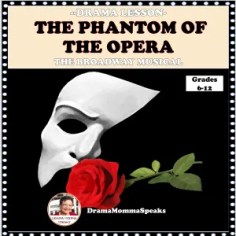
phantom of the opera mask and red rose

Interested in another Broadway musical?  Check out: Phantom of the Opera

I’d love to hear about your memories of 911.  Contact me at DhcBaldwin@gmail.com or DeborahBaldwin.net

Want a FREE guide and drama integration lesson for grades 6 to 8?  Go here: FREE guide and drama integration

woman behind DramaMommaSpeaks


Share this:

  • Click to share on Tumblr (Opens in new window) Tumblr
  • More
  • Click to share on X (Opens in new window) X
  • Click to share on Facebook (Opens in new window) Facebook
  • Click to share on Pinterest (Opens in new window) Pinterest
  • Click to share on LinkedIn (Opens in new window) LinkedIn
  • Click to email a link to a friend (Opens in new window) Email
  • Click to share on Reddit (Opens in new window) Reddit
  • Click to share on Pocket (Opens in new window) Pocket
  • Click to share on Telegram (Opens in new window) Telegram
  • Click to share on WhatsApp (Opens in new window) WhatsApp

Like this:

Like Loading...

Filed Under: American experiences, arts education, arts integration, community theater, drama education, e-learning, Education, excellence in teaching, Musical Theatre, performing arts, Teacherspayteachers, youth theatre Tagged With: 911, Broadway, Come From Away, drama integration, Gander, language arts project, musical theater, Newfoundland, operation yellow ribbon, social studies project, theater class project, Tony award winning

Footer

Follow Us

logo3.png

FOLLOW US

Facebook X-twitter Pinterest Instagram Envelope Rss

Goodreads: read

Malibu Rising
Malibu Rising
by Taylor Jenkins Reid
People We Meet on Vacation
by Emily Henry
The Last Thing He Told Me
by Laura Dave
Faking It
Faking It
by Cora Carmack
Losing It
Losing It
by Cora Carmack

goodreads.com
Copyright © 2024 · Wellness Pro on Genesis Framework · WordPress.com.Log in
 

Loading Comments...
 

    %d