• Skip to primary navigation
  • Skip to main content
  • Skip to footer

Join Me in my new Facebook Group! https://www.facebook.com/groups/417126059784261

Menu
  • Meet Deb – The Heart Behind DramaMommaSpeaks
    • Work with Me! 
    • Photo Gallery of DramaMommaSpeaks
    • Directorial Credits
  • I Give Book Talks! 
    • Book Talk Through Skype
    • Books
  • Freebies!
  • Bumbling Bea
  • Teaching Resume
  • Acting Resume
  • Contact Me
  • Blog
    • Drama Education
    • Arts Education
    • Youth Theatre
    • Middle Grades
    • Musical Theatre
    • Teaching
  • Meet Deb – The Heart Behind DramaMommaSpeaks
    • Work with Me! 
    • Photo Gallery of DramaMommaSpeaks
    • Directorial Credits
  • I Give Book Talks! 
    • Book Talk Through Skype
    • Books
  • Freebies!
  • Bumbling Bea
  • Teaching Resume
  • Acting Resume
  • Contact Me
  • Blog
    • Drama Education
    • Arts Education
    • Youth Theatre
    • Middle Grades
    • Musical Theatre
    • Teaching

Teaching

Unlocking Creativity: Teaching Storytelling in the Classroom

January 3, 2024 By dhcbaldwin Leave a Comment

Stick person telling a story from a book.

“Unlocking Creativity: Teaching Storytelling in the Classroom” is not just a title, it’s an invitation to explore strategies that make teaching this timeless skill an enriching and transformative experience for both educators and students alike. Let’s dive into the art of storytelling and discover how it opens doors to boundless creativity within the classroom.

Did you know I have the secret to boosting student engagement?  My new book, “We’re Live! Radio Theater #101” explains my journey to implementing this unique tool in the classroom. Check it out here

Unlocking Creativity: Teaching Storytelling in the Classroom

Understanding the Basics of Storytelling:

In my experience, I’ve found that students enjoy storytelling.  In a theater class, it is much lesson threatening than performing a monologue. Consequently, I always include a storytelling unit in my yearly lesson plans. When you begin teaching storytelling to your students, first introduce the fundamental elements of a story. Although your students may be aware of these elements, sometimes a quick review of the key components is necessary.  Reiterate stories which have  characters, setting, plot, conflict, and resolution. Use examples from literature, movies, or real-life situations to illustrate these concepts.  This makes the learning more relatable to your students. Or use storytelling as a warm up exercise for several days.  Check out:  Storytelling Postcard Stories in my TPT store, or my Payhip store.

Unlocking Creativity: Teaching Storytelling in the Classroom

Immersive Storytelling Activities for Early Finishers:

Engage your students in interactive activities that immerse them in the world of storytelling. One idea is to create a storytelling corner in your classroom.  Your early finishers will appreciate this. Encourage them to collaborate on developing and sharing their stories. Again, a reminder of a story’s components  could be useful, especially if students are working independently.  Generally, students need your help in the fleshing out of the story–that is describing settings, characters, and emotions. 

Essentially, you each them the five C’s, Circumstance, Curiosity, Characters, Conversations, and Conflicts that captivate audiences’ interest. The circumstance is all about establishing the scene. A storyteller must provide essential information to their audience including — when, where, and why.

In addition, after a teacher finishes teaching storytelling the culminating activity could be a storytelling day. If you’d like a one week lesson which teaches  storytelling, check out this one at ( Teacherspayteachers.com ) or at my Payhip store).

Unlocking Creativity: Teaching Storytelling in the Classroom

Utilize Technology:

Embrace technology as a tool to enhance storytelling experiences. Platforms like digital storytelling apps, interactive whiteboards, or podcast creation tools can make the process more dynamic. Students can explore multimedia elements to enhance their narratives, including images, music, and sound effects. There are a plethora’s worth of apps. for storytelling whether your students are in lower elementary or high school.  If you are looking for a site where your students can generate stories on line, check out Boomwriter, Nawal, Storybird.

Unlocking Creativity: Teaching Storytelling in the Classroom


Encourage Freewriting Sessions:

Foster a love for writing by incorporating freewriting sessions into your lessons. Set aside dedicated time for students to let their imaginations run wild without worrying about grammar or structure. This practice helps them discover their unique voice and allows creativity to flow freely.  The Writing Process, expresses it, “ increases the flow of ideas and reduces the chance that you’ll accidentally censor a good idea. Additionally, it helps to increase fluency second-language learners—i.e., the ability to produce written language easily as opposed to accuracy.”

Unlocking Creativity: Teaching Storytelling in the Classroom

Showcase Diverse Stories:

Introduce a variety of stories from different cultures, genres, and perspectives. Exposing students to diverse narratives  only helps to broaden their understanding of the world.  Additionally, it inspires them to explore various storytelling styles. Teachers can encourage discussions about the cultural and emotional aspects of these stories. Plus, it is such fun!  If you are ready to embark on reader’s theater  or play production as vehicles for storytelling, check out my blog post, The Reasons Teaching Multiculturalism in the Classroom is Vitally Important

Have you introduced your students to Kamishibai storytelling?  Check it out here

Unlocking Creativity: Teaching Storytelling in the Classroom

Incorporate Storytelling in Different Subjects

I strongly urge you to integrate storytelling into various subjects, not just drama class or language arts. Whether it’s creating historical narratives, science fiction stories, or math-related scenarios, connecting storytelling to different subjects makes learning more holistic and enjoyable. One of our biggest challenges in this great big world is understanding one another, especially our cultures.  If you’d like to learn more about integrating drama into core classes, check out: How to Excite Students With Drama Integration

Unlocking Creativity: Teaching Storytelling in the Classroom

Peer Feedback and Collaboration:

I find it you foster a collaborative environment where students can share their stories with peers, reluctant students are less disinterested in your class. Implement peer feedback sessions, emphasizing constructive criticism and positive reinforcement. This not only improves storytelling skills but also enhances communication and teamwork. Here’s a way to incorporate Kamishibai storytelling in the elementary classroom: Storytelling| Student Created Pictures Unit for Upper Elementary. 

Dramamommaspeaks blog

Celebrate Student Achievements:

Another way to create opportunities for students is to showcase their storytelling prowess. Whether through class presentations, storytelling festivals, or publishing a class anthology, celebrating their achievements builds confidence and reinforces the value of storytelling. Pick up a FREE speech rubric here:  Free Speech Communications Editable Persuasive Speech Rubric. 

Unlocking Creativity: Teaching Storytelling in the Classroom

Guest Speakers and Storytelling Experts:

Invite storytellers, authors, or professionals to share their experiences with your students. Guest speakers can provide valuable insights, tips, and inspiration.  Plus they can reinforce the idea that storytelling is a skill with real-world applications. If you pick up a copy of this storytelling unit, I included links to professional storytellers’ performances. 


Dramamommaspeaks Blog

Assessment through Reflection:

Choosing what a teacher wants to focus on in storytelling is important.  My advice is to focus on creativity, clarity, and emotional impact. Encourage your students to reflect on their own storytelling journey, identifying areas of growth and setting goals for improvement. This reflective process reinforces the learning experience and encourages a growth mindset.

In conclusion, teaching storytelling in the classroom is more than imparting a set of skills. It’s about nurturing creativity, empathy, and effective communication. By implementing these strategies, we empower our students to become confident storytellers. It  equips with the tools they need to navigate the complexities of the world with imagination and resilience. I encourage you to embrace the power of storytelling, and watch your students’ narratives unfold into vibrant tapestries of expression and understanding.

Recently, my daughter asked me to record the story of the time I saw my father’s ghost walking in a hospital’s hallways.  I was flattered that she remembered the story and wanted to share it with others.  Do you think people would like to hear this story? It’s a true story.

How have you used storytelling in your classroom?  I’d love to hear about it.  You can contact me at DhcBaldwin@gmail.com.

Woman behind DramaMommaSpeaks

Share this:

  • Click to share on Tumblr (Opens in new window) Tumblr
  • More
  • Click to share on X (Opens in new window) X
  • Click to share on Facebook (Opens in new window) Facebook
  • Click to share on Pinterest (Opens in new window) Pinterest
  • Click to share on LinkedIn (Opens in new window) LinkedIn
  • Click to email a link to a friend (Opens in new window) Email
  • Click to share on Reddit (Opens in new window) Reddit
  • Click to share on Pocket (Opens in new window) Pocket
  • Click to share on Telegram (Opens in new window) Telegram
  • Click to share on WhatsApp (Opens in new window) WhatsApp

Like this:

Like Loading...

Filed Under: arts education, arts integration, creative dramatics, drama education, drama integration, Education, Education, elementary, English Language Learners, excellence in teaching, Free Products, High School, middle grades, plays, readers theater, Reading Literacy, reading skills, storytelling, Teacherspayteachers, Teaching, teaching strategies, theatre Tagged With: arts integration, creativity, drama education, drama units, elementary, ELL students, high school, Kamishibai Storytelling, Middle school, reluctant students, storytelling postcard stories, storytelling unit, successful teaching methods, Teaching

Overcoming Fear and Anxiety When Speaking English As A Second Language

March 16, 2023 By dhcbaldwin Leave a Comment

English language learners posing after a theater performance

Overcoming Fear and Anxiety When Speaking English As A Second Language

Overcoming Fear and Anxiety When Speaking English As A Second Language

One of the most valuable aspects of theater class is how it can be integrated into core subjects.  Today, I want to speak about overcoming fear and anxiety when speaking English as a second language. Personally, I think the best way is by taking a theater class. Let me explain.

If you are unfamiliar with the term, “ESL”, simply put it means English as a second language learner.  “ELL’ means the same thing, but we also have World language learner. 

Since I taught theater classes for over thirty-eight years, my teaching experience is vast.  Not only have I taught middle school students for a large portion of my career, but I worked with elementary and high school as well.

However, my favorite grade level is middle school.  If you’d like more information about my reasons, go to: Striking a Balance with Students in Their Middle School Years. 

When I taught a pre-elective drama class in Missouri, the ELL students were integrated into my class. There are many funny experiences of these sweet students trying valiantly to learn English and still be a child.  (Sometime ask me about the time I sat two girls together from warring tribes, the Tsuti and Hutus, without understanding their tribes were mortal enemies. Yikes!)

Did you know I have a new book, We’re Live! Radio Theater #101 which teaches you how to engage students with a unique tool?  Check it out here.

Overcoming Fear and Anxiety When Speaking English As A Second Language

Overcoming Fear and Anxiety When Speaking English As A Second Language

A sidenote:  My grandparents were missionaries in Japan where my mother was raised until she was eighteen years old.  When I was a child, my mother gave free boarding to international college students because she said, “They make me feel like I’m home in Japan.” Because I was raised around these people, I am very comfortable with people of all different nationalities and find them extremely interesting and generally quite friendly.

Being the observant person that I am, I noticed the ELL students were petrified to speak in front of their peers and did not fraternize with the native speakers.  I thought this was sad, but understandable.  Neither knew each other and neither was willing to be the first to extend a friendly hand. (Truly, it should be the native speaker.)

One year, I was looking for something different to offer after school as part of my career ladder responsibilities.  Remembering the native speakers and the ELL students sitting apart in the cafeteria not speaking to one another, I approached the ELL teacher about me sponsoring an after-school drama club specifically for them.  She jumped at the idea!

It seemed simple enough, right?

Three ELL Drama Club Problems to Overcome

Overcoming Fear and Anxiety When Speaking English As A Second Language

I planned to have six weeks of drama club and then a performance at the end.

The first problem:  The students would need transportation to take them home from school since they had no other means of travel.  We applied for money from the state for this and they came through handsomely.

The second problem:  How do inform the students and their parents about the club?  Easy.  Mrs. Zumwalt would take care of that for me.  (I must say, co-teaching with another teacher from my school was fabulous.) She took care of communication with parents and the students, while I planned the weekly activities.

The third problem:  What were my goals for the club? I knew that ELL students needed to overcome their fear and anxiety about speaking aloud.  The best way I knew to do this was by integrating drama.  Obviously, I wanted to strengthen their speaking of English.  But what else?  Drama games are always a hit with all of my students and I noticed the ELL students enjoyed them when we played them in class.  For particular games I used, see: Drama Games for the Introvertive Student, but I needed many more.

Readers Theater Resources on the Internet

Overcoming Fear and Anxiety When Speaking English As A Second Language

I took to the internet and looked for websites that shared particular games that ELL teachers used in their classroom, hoping to find some which integrated drama. Although this was many years ago, I looked at sites such as Fluentu.com.  I ran on to several books which were helpful, too–Enlivening Instruction with Drama and Improv: A Guide for Second Language and World Language Teachers . The ESL / ELL Teacher’s Survival Guide: Ready-to-Use Strategies, Tools, and Activities for Teaching English Language Learners of All Levels.

Generally, I relied on my go-to drama games and exercises that are successful with all students.  I always suggest to new teachers that they purchase a copy of Viola Spolin‘s book, Theatre Games for the Classroom.  IIt is an excellent source for creative dramatics exercises to use in any elementary and middle school classroom.

My plan included ending the club with a production of some sort.  I turned to Aaron Shepherd’s readers theater website, Aaron Shepard’s RT page as I was familiar with his work. His script, The Legend of Lightning Larry which is still one of my favorites.

I selected readers theater because students read from a script rather than memorize lines and sit together when they perform (safety in numbers, you know). Both attributes would help the students as they slowly overcame their fear and anxiety when speaking English.

If you are unfamiliar with the strengths of using readers theater in your classroom, check out: The Reasons Reader’s Theater is Successful with Our Students.

Overcoming Fear and Anxiety When Speaking English As A Second Language

The day arrived to perform the play.  I was very excited, but very naïve.  I thought the students’ parents and siblings would attend.  Parents attended every other time my students performed in my class.  We sent out invitations both through email and hard copies. We baked cookies, had punch ready and decorated.

No one attended.

Why?  Transportation issues.  I never occurred to me that transportation could be an issue, but of course it could be!

The important thing, however, is that the students had a blast doing the play.  The local newspaper came out and photographed the students performing.  Just think of how wonderful that would be for an immigrant to be acknowledged in their community’s newspaper!

The next year, we participated in the school’s diversity celebration. Using a book titled All the Colors of the Earth  and a song from the movie, Making an American quilt,  the students performed a movement piece to it using multi-color flags.  I narrated most of the poem and one student echoed me in several places in the poem.  It was a tremendous success! The student body and teachers applauded for them.  It makes me cry just to think about it now.

ESL Drama Club of Smithton Middle School

My Advice

If you are on the hunt for drama activities for ELL, ENL or World Languages students, I hope you’ll check out the materials I’ve mentioned above.  However, if you want to purchase from someone who is a veteran teacher and has first hand experience teaching creative dramatics to students, I’m your gal.

Earlier I mentioned readers theater scripts.  I have adapted several multicultural folk tales into readers theater scripts. Here are a few.  You can check them all out at: Dramamommaspeaks Readers Theater Units

I hope my experiences are helpful to you. If you have any questions or need advice, please don’t hesitate to email me. You can find me at DhcBaldwin.net or DhcBaldwin@gmail.com

Dramamommaspeaks Blog Author Deborah Baldwin

Share this:

  • Click to share on Tumblr (Opens in new window) Tumblr
  • More
  • Click to share on X (Opens in new window) X
  • Click to share on Facebook (Opens in new window) Facebook
  • Click to share on Pinterest (Opens in new window) Pinterest
  • Click to share on LinkedIn (Opens in new window) LinkedIn
  • Click to email a link to a friend (Opens in new window) Email
  • Click to share on Reddit (Opens in new window) Reddit
  • Click to share on Pocket (Opens in new window) Pocket
  • Click to share on Telegram (Opens in new window) Telegram
  • Click to share on WhatsApp (Opens in new window) WhatsApp

Like this:

Like Loading...

Filed Under: acting, American experiences, arts education, arts integration, creative dramatics, drama education, drama integration, Education, elementary, English Language Learners, excellence in teaching, foreign students, immigrants, middle grades, readers theater, Reading Literacy, reading skills, Teacherspayteachers, Teaching, teaching strategies, theater, world language, youth theatre Tagged With: creative dramatics, elementary, english as second language, immigrants, Middle school, Teaching, We're Live! Radio Theater #101

Ten Ways to Teach Reluctant Students in Your Theater Class

October 5, 2022 By dhcbaldwin 1 Comment

At least once a week, I read of a teacher asking help with, “My beginning theater class is open to all students in the school. However, it has become a dumping ground with students completely disinterested in theater and the study of it. At the same time, I have students who are sincerely interested in the subject in the same class.  What do I do?” Today, I’m going to talk about Ten Ways to Teach Reluctant Students in Your Theater Class.

I know this challenge all too well myself.  Several times in my career, I had students placed in my classroom because the administration thought I demonstrated skill in reaching all students and could reach these students as well.

Do you have any idea how heavy the weight of responsibility for teaching to reluctant students is? Teaching is difficult enough and a theater class poses its own challenges that not everyone is aware of. For instance, when one acts they must share their feelings, real feelings.  That’s can be scary for even the most ardent theater student.

Ten Ways to Engage Reluctant Students in Your Theater Class

Simply put, you need to outsmart your reluctant students.  Remember, you are the professional here.  You’ve got what it takes to be successful (albeit tiring). Wonder how I got to where I am today? Check out: How Theatre Saved My Life

Teach Reluctant Students

  •  You need to survey each and every class to discover whether they are interested in theater or not.  This is true of anyone who teaches any electives from industrial education to art as well as theater. By surveying the students (through a questionnaire on-line or hard copy) you’ll find out their interest level (because you will ask it) and what they hope to learn in the class.
  • After you’ve studied the students’ questionnaire, you can now shape your lessons accordingly. Does this take more time than what you would usually do?  Yes.  Is it worth it?  Yes!  It is better to know your audience (because that’s what they are, essentially) than not and spend most of the year frustrated with their lack of engagement.
  • Use a game as a warm-up. Most students love a game so I recommend playing one at the beginning of each class.  For some students, it is the delight of their day (although they may never share this with you) and it lifts the burden for you always having to teach a concept.  Let the game teach them.  Also, playing a game makes class fun no matter the outcome.  Start with something simple like the Ball Game (Don’t know it? pick it up here).  The Ball Game can be played with students of any grade level. Games give students an opportunity to get to know one another without the stress of a face to face conversation. As the quarter progresses the games you can select games which are more difficult. By the last month of the semester, you should have no problem using an improvisation exercise as a warm-up.
  • Minimize your students’ worries.  Through the questionnaire, you should have a better grasp about what they think theater is as opposed to what it actually is. They may think theater is standing on a stage, wearing a costume (the student may dislike), wearing makeup (even the boys), memorizing gobs of lines and speaking at a volume for the entire class to hear. 

         Let’s not start there if that’s the case.  Let’s do some theater appreciation instead.  Show them video clips of theaters  around the world and either have a class discussion of each theater or give them questions to answer. Here is what I  mean:  Theaters Around the World.

Ten Ways to Engage Reluctant Students in Your Theater Class

Teaching Reluctant Students

  • Study technical theater with them--set, sound, stage properties, stage makeup or costume design.  Many students just need a backdoor into the subject. Technical theater is nonthreatening.  Most assignments are meant to be completed individually and not with a group.  This helps those students who do not speak English as their first language, especially.  I really enjoy teaching technical theater. Through its study, I usually find a student who no one knew very well that turns out to be a fabulous artist! Their creativity and talent can shine in technical theater and suddenly the other student take note of them.  It’s awesome. Here are a few technical theater units which may help you: Technical Theater Units or begin with Set Design, the Rendering
  • Reader’s theater is a good choice for your class.  Readers theater is successful in a class with various levels of interest, because there is no line memorization, no costumes, etc. Everyone sits together on the stage, so there’s that “safety in numbers” thing. Plus, if you wait until near the end of the second quarter, readers theater should not be difficult for your reluctant ones.  (Read my article in One Classroom Over about reader’s theater) You’ve given them plenty of time to adjust to the class. Here’s a funny script for them:  The Brave Little Tailor Unit.  Great for grades 5 to 7.
  • Radio theater is a super choice, too. Personally, I think radio theater has everything a play does!  That’s the reason I suggest it to teachers. Radio theater is highly imaginative from the many character voices actors create to the sound effects. Plus, it is a super tool for strengthening reading skills! It is easy to keep everyone involved, because they are on the stage the entire length of the piece. It can be as simple or as theatrical as you like.  And yet again–no line memorization! This is another unit I would teach near the end of the semester or year. If you are interested in radio theater, check out: Radio Theater Units and Lessons  Don’t know how to direct one?  Go here and pick up all of the training you need: How to Direct Radio Theater
  • Use movement exercises instead of acting ones.  Movement takes no sound and no verbal reaction.  Students like the physical activity, too. The Magic Circle is a good exercise to use for movement.  (Don’t know it?  Pick it up here)
  • Turn down your classroom lights. You won’t believe how dimming the lights will ease students’ anxieties. You just want the classroom light to be dim–light enough you can everyone but no so dark you can’t keep an eye out for any inappropriate behavior.
  • Play some classical music in the background.  Classical music works because there are no lyrics for the students to notice. It can express mood without anyone saying anything.  I think of it like a comforting blanket. In those awkward moments in a game, acting exercise or lesson they can help ease any anxiety that rears its ugly head.

Want some additional tips from me?  Check out Double Casting a Show? Here’s Advice

Ten Ways to Engage Reluctant Students in Your Theater Class

Advice for the Core Subject Teachers

Many of the suggestions I’ve made above work strictly in a theater classroom. Some of them will work for you as well.

Here are a couple of other suggestions for you:

Sometimes our students just need space away from others.  Offer that space in your classroom if a student needs it.  You want them to feel safe and accepted in your classroom. I say as long as they are focused on their work, this is acceptable.

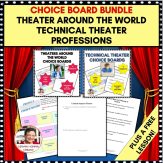
Giving students choices is always a great idea, too.  Remember you have worked out the choices ahead of time so you are comfortable with whether they select once choice over another.  Choice Boards are super for this.  Here are some of mine as an example. This bundle is very popular with teachers: Choice Boards

Ten Ways to Teach Reluctant Students in Your Theater Class

You can even pick up a sample of them right here.

Or pick up a technical theater unit for high school students here: Technical Theater Units, High School

So, there you have it!  Teaching is a wonderful profession when everyone is treated with respect. Even the reluctant students can learn that respecting your art form is possible and believe it or not–enjoyable!  I discovered that once my students knew I had their back and understood them feigning disinterest in theater, I could work with them.  Lots of times, it’s just noise on their part.  Remember that–it’s just noise.

I’d love to know what you’ve found is successful with reluctant students in your classroom?  Contact me at DhcBaldwin@gmail.com.


Share this:

  • Click to share on Tumblr (Opens in new window) Tumblr
  • More
  • Click to share on X (Opens in new window) X
  • Click to share on Facebook (Opens in new window) Facebook
  • Click to share on Pinterest (Opens in new window) Pinterest
  • Click to share on LinkedIn (Opens in new window) LinkedIn
  • Click to email a link to a friend (Opens in new window) Email
  • Click to share on Reddit (Opens in new window) Reddit
  • Click to share on Pocket (Opens in new window) Pocket
  • Click to share on Telegram (Opens in new window) Telegram
  • Click to share on WhatsApp (Opens in new window) WhatsApp

Like this:

Like Loading...

Filed Under: acting, arts education, arts integration, drama education, drama integration, Education, elementary, excellence in teaching, High School, middle grades, reading skills, theater, youth theatre Tagged With: acting exercises, classroom behavior management, elementary school, ELL student, engaging students, high school, Middle school, movement exercises, radio theater, readers theater, reluctant student, Teaching, warm ups and games

Seven Facts About Teachers’ Wishlists That’ll Keep You Up at Night

September 7, 2022 By dhcbaldwin Leave a Comment

Exhausted sleepless worried teacher

Seven Facts About Teachers’ Wishlists That’ll Keep You Up at Night

Seven Facts About Teachers' Wishlists That'll Keep You Up at Night

I thought it was time to talk of the seven facts about teachers’ wishlists that’ll keep you up at night. Two weeks ago, I experienced something I wasn’t aware was a big problem, but it is my friend.

As a former teacher myself, I remember the materials I purchased which I asked my admin to pay for.  Sometimes these materials may have seemed extravagant (such as the Cirque De Soleil book on Costumes) or merely for fun (such as the video of the live version of Come From Away) but they were not.

Theater teachers have an unusual skill set–we must be familiar with directing, acting, sing, dancing, music, set, costumes, props, lights, sound, box office, front of house and much more.  Because of this, we need different materials than some.

As I mentioned previously, I had an eye opening moment when I found out a business I am involved in was willing to fulfill some teacher’s wishlists for their classroom.  Hooray! Knowing this, I jumped on Facebook and posted that I had this resource for teachers needing materials for their classroom.  Within an hour, thirteen teachers had contacted me!  Thirteen!!! Plus, there were several more that I had to turn away–that killed me.

Luckily, I was able to fulfill these wishlists for these teachers or at least get them partially fulfilled.  It was very gratifying and of course they were all very appreciative as I expected they would be.

Our teachers are using their own hard earned money to purchase materials for their classrooms.

Now, I knew some of this occurred with most teachers because teachers are always on the search for materials which will engage their students and make it easier for them to learn.

Seven Facts About Teachers' Wishlists That'll Keep You Up at Night

Here are the facts

  1. The average teacher is spending about $560 out of pocket on their classrooms this year; up from $511 last year. CJOnline.com
  2. Just under half of teachers told us that supply lists provided to parents include items specifically for classrooms, but only one-quarter of teachers get most of what they need. Of course, parents are also dealing with higher school supply costs, and many of them may have been negatively impacted by the expiration of expanded child tax credits, which expired in December 2021. Savings.com
  3. Nearly one in four teachers say they’ll spend more than $750 of their own money during the 2022-23 school year.
  4. On average, elementary school teachers receive about $11 per student from their schools’ budgets, but they spend an additional $33 out of pocket on each student. And get this: one in four teachers said their schools didn’t allocate any funds for classroom items this year.
  5. In Kansas (for example where I live), public school teacher salaries increased by 16.6% but that’s misleading.
  6. In general teachers are bringing home on average $2,179 less per year than they did a decade ago, when adjusted for inflation. NEA.org
  7. Despite the fact that most people agree teachers are underpaid, they are still expected to dig into their own household budgets to provide items necessary for classroom instruction. And these costs are going up, slightly higher than the overall rate of inflation. ( I don’t know about you, but I bet business executives aren’t expected to bring their own tissues to their office.)

Seven Facts About Teachers’ Wishlists That’ll Keep You Up at Night

Seven Facts About Teachers' Wishlists That'll Keep You Up at Night

Why is this occurring?

According to an article in https://www.businessinsider.com:

“Teachers will often purchase supplemental materials to help students struggling to grasp the curriculum. These additional resources are not always subsidized by schools. Although they follow a curriculum, and create their own lesson plans,  for some students, this is not enough for them to truly grasp the material.

Supplemental materials don’t just include supplemental lessons. Sometimes tactile activities are needed to help kids learn lessons, or, in the case of kindergarten and preschool classrooms, learn motor skills.”

How can we help our teachers?

Seven Facts About Teachers' Wishlists That'll Keep You Up at Night

As a former teacher myself, I remember the materials my administrated purchased for me. Sometimes these materials  seemed extravagant (such as the Cirque De Soleil book on Costumes) or merely for fun (such as the video of the live version of Come From Away) but they were not.

Theater teachers have an unusual skill set–we must be familiar with directing, acting, sing, dancing, music, set, costumes, props, lights, sound, box office, front of house and much more.  Because of this, we need different materials than some.

As I mentioned previously, I had an eye opening moment when I found out a business I am a part of was willing to fulfill some teacher’s wishlists for their classroom.  Knowing this, I jumped on Facebook and posted that I had this resource for teachers needing materials for their classroom.  Within an hour, thirteen teachers had contacted me!  13!!!

Luckily, I was able to fulfill these wishlists for these teachers or at least get them partially fulfilled.  It was very gratifying and of course they were all very appreciative as I expected they would be.

This got me to thinking–we should make teaching easier for our teachers not lop on financial constraints on them. Looking for fundraising ideas for your next production? Check out Turn Your Theater Department Fundraising Into A High Performing Machine

I looked around the internet and was surprised to find several organizations which offer financial support to teachers.

Seven Facts About Teachers’ Wishlists That’ll Keep You Up at Night

Seven Facts About Teachers' Wishlists That'll Keep You Up at Night

1. Classful

Classful is a website designed to allow teachers to collect funding and donations for their classrooms (as well as a little extra for being fantastic educators!). The site places emphasis on the importance of the teaching profession and aims to empower and thank teachers for doing what is often under-appreciated work.

2. Apple

K-12 educators (and those in higher education) can get as much as $150 in Apple gift cards for purchasing certain models of iPads, MacBooks, and iMacs.

3. Target

Kindergarten through grade 12 and homeschool teachers can get a 15 percent discount on school supplies at Target through Sept. 10.

4. Michaels

Educators with a valid school ID can get 15 percent off their purchase at Michaels.

5. Association of American Educators classroom grant

Apply by October 8 for a $500 grant which can be used to purchase books, software, calculators, math manipulatives, art supplies, audio-visual equipment, lab materials, and more.

6. AdoptAClassroom.org Spotlight Fund grants

This organization offers grants in several categories for educators. STEM teachers, art teachers, and teachers of color can apply for unique grants, as well as teachers who need support to make their classrooms more inclusive for students of all types.

7. Funds for Teachers

Funds for Teachers aims to invest in teachers’ professional development and growth with a view to boosting student success rates, improving teacher practice, and generally strengthening schools and their communities.

Funds for Teachers allows users to write grant applications according to a template tailored for a specific state’s professional development requirements, as well as requirements for supplies or new technologies. Teachers can even take a look at successful grant proposals for inspiration.

Seven Facts About Teachers’ Wishlists That’ll Keep You Up at Night

Seven Facts About Teachers' Wishlists That'll Keep You Up at Night

8. National Endowment of the Humanities

If you work within a humanities discipline, the National Endowment of the Humanities could provide opportunities for you to travel in order to broaden your horizons and learn new things. Trips can be taken domestically or abroad and all expenses will be paid (including accommodation, air travel, daily meals, and excursions). Making the most of this opportunity could help to develop your teaching practice by opening you up to new ideas and cultures.

9. The National Endowment for the Arts

Are you an art teacher with some ideas for a new project to involve your students in? The National Endowment for the Arts could be a great place to seek funding. The organization offers a selection of fellowships and grants for people that teach arts-related subjects such as English, art, or creative writing.

10. GetEdFunding

GetEdFunding is an invaluable site that helps educators and schools identify the kinds of funding they need when finances get tight through a special grant-finding search tool. The site hosts thousands of grants for educational purposes including awards for outstanding educators, grants for teachers in need, opportunities for an array of public and private schools, grants for administrators, and special educational programs.

Teachers can also develop themselves professionally by browsing the site’s scholarly articles and selection of free webinars and videos. There is are also online communities that teachers can visit for support and a virtual teacher’s lounge to enjoy during a few minutes of precious downtime.

11. The National Education Association Foundation

Not to be confused with the National Endowment for the Arts, the National Education Association (NEA) Foundation is a public charity that was founded by teachers and for teachers to boost the caliber of public education for students across the country.

The organization offers grants to teachers,including teachers wishlists regardless of whether they are members of the NEA or not. Over the past decade or so, they have awarded over $7 million in funding to almost 4,500 public school teachers in order to enhance the quality of their teaching. The NEA also provides free scholarly resources and professional development advice online.

Seven Facts About Teachers' Wishlists That'll Keep You Up at Night
 

12. Teach.com

Teach.com is an online database offering teachers an array of helpful resources covering topics such as professional development and improving student attainment. It also offers a helpful guide to ways that teachers wishlists can source funding to improve their teaching practice and help students.

13. The McCarthey Dressman Education Foundation

The McCarthey Dressman Education Foundation offers grants to small groups of teachers to attend intensive professional development courses that will allow them to bolster student achievement in their schools.

14.  Donors Choose

Donors Choose is a site founded by Charles Best, a history teacher who channeled much of his salary into funding classroom supplies. He set the website up in the year 2000 with the aim of helping teachers to collect donations to fund their classrooms. In 2003, Oprah Winfrey plugged the site on her television show, and it attained instant popularity, with around $250,000 going straight to educators.

The site itself is very easy to use. Teachers can post projects that they feel their schools need such as field trips, extra classroom supplies, or new software. Users can then donate as much as they are able to the project. Donors Choose will then order the necessary supplies and ship them directly to the school.

An Idea Whose Time Has Come

Seven Facts About Teachers' Wishlists That'll Keep You Up at Night

In case you aren’t aware, I am an idea person.  Hence, I want to take this a step further for theater teachers but similar to Charles Best.

Part of my DramaMommaSpeaks business mission is to make theater user-friendly in the classroom while maintaining the integrity of the subject.  To my mind, this idea would be an extension of that mission.

I’m thinking about establishing a not-for-profit organization whose sole purpose is to provide funds for United States’ theater teachers wishlists in the classroom. (And if you don’t know me, if I think it and say it,  I usually do it!)

In the past, I’ve submitted and been granted not-for-profit status for a youth theater company in Columbia, Missouri called Performing Arts in Children’s Education. During that time, I allocated funds for students seeking scholarships to participate in our company. In addition, I also have seven years of experience writing program grants for a community theater, Columbia Entertainment Company.

Seven Facts About Teachers’ Wishlists That’ll Keep You Up at Night

Seven Facts About Teachers' Wishlists That'll Keep You Up at Night

My idea is to set up a website for teachers’ wishlists much like Donor’s Choose but only theater teachers may ask for donations for their classroom. I would publicize this website in social media and here on the blog.  Initially, I would foot the bill of creating the website. Of course, I’d have to find out any legal policies in administrating something like this, but that doesn’t deter me since I have past experience with both sides of the donor process-both as an administrator of a company and as a representative for a company seeking funds.

Like Donors Choose, a theater teacher could submit to this website an itemized teachers wishlist of their needs, a short description of the reasons for requiring help, their location, their school’s population, etc. This teacher could be teaching at any grade level and those who also teach musical theater classes could apply as well.

What do you think of my idea?  I’m pretty excited about it.  I can plan this idea out in the next few months and build the website in December.  Anyone want to help me or be involved?  If you’ve never checked out how theatre saved me, go to: About MeContact me at DhcBaldwin@gmail.com


Share this:

  • Click to share on Tumblr (Opens in new window) Tumblr
  • More
  • Click to share on X (Opens in new window) X
  • Click to share on Facebook (Opens in new window) Facebook
  • Click to share on Pinterest (Opens in new window) Pinterest
  • Click to share on LinkedIn (Opens in new window) LinkedIn
  • Click to email a link to a friend (Opens in new window) Email
  • Click to share on Reddit (Opens in new window) Reddit
  • Click to share on Pocket (Opens in new window) Pocket
  • Click to share on Telegram (Opens in new window) Telegram
  • Click to share on WhatsApp (Opens in new window) WhatsApp

Like this:

Like Loading...

Filed Under: acting, arts education, arts integration, creative dramatics, drama education, drama integration, Education, elementary, excellence in teaching, High School, middle grades, Musical Theatre, performing arts, Teaching, theater, theatre, youth theatre Tagged With: Donors choose, funds for the classroom, national endowment association, not for profit donation websites for teacher, teach.com, Teaching, wishlist for the classroom

The Reasons I Offer Customized Theatre Lesson Bundles

December 1, 2021 By dhcbaldwin 2 Comments

A FRAZZLED TEACHER

The Reasons I Offer Customized Theatre Lesson Bundles

Recently, I’ve helped several theatre teachers organize their curriculum.  Some states have standards which they press upon their school systems and boy, can you feel it.  Not so for two wonderful teachers I worked with last week. So, let’s talk about the reasons I offer customized theatre lessons bundles. (Ironically, this is the number one mistake people make with me–they don’t ask for customized bundles!)

There’s Amy

One teacher, we will call her Amy,  emailed me desperate for help.  Amy was hired (yes, it’s November) to take over for another theatre teacher who had been out most of the school year. The students survived many substitutes and now finally, they’d have a real theatre teacher. She didn’t really know what she was walking into when she arrived her first day.

Amy knew she’d be teaching middle school students and see them every day for the rest of the year. However, she didn’t know the demographics, number of students in each class (or at least didn’t mention them to me) or seem to know just about anything else you’d like to know when you begin teaching a class.

The Reasons I Offer Customized Theatre Lesson Bundles

The Reasons I Offer Customized Theatre Lesson Bundles

To top it all off, she was given no curriculum or materials.  Now, you would think this was unusual. It isn’t.  You would not believe how many schools I’ve taught for and I began my classes with no school materials having to use only mine instead. (Pssst.  That’s why I have so many prepared.)

I offer customized bundles in my teacherspayteachers.com store (DramaMommaSpeaks) and Amy knew that.  We chatted several times about what she was needing and I put together a bundle specifically for her and I created a plan of teaching them.

Customized Bundles

Customized Bundles are the way to go, friend, irregardless of how many resources you want.  You always receive some sort of discount-10 to 30%.  With large bundles, I give you a free resource I pick especially for you, too.

The Reasons I Offer Customized Theatre Lesson Bundles

(This is not Amy or Joan.)

Then there’s Joan

Another teacher, we will call her Joan, emailed at just about the same time as Amy. Her scenario was different.  She was hired with a provisional license and agreed to take additional college hours to complete the license.  Joan was a mother of two small children as well.

Joan asked to Zoom with me as soon as possible. That’s how much she needed the help.  She used several of my lessons in her classes all ready and the students liked them.

Joan was a bit older, had previously worked as an actress and youth theatre teacher.  She knew her stuff, but in this particular case her materials just weren’t working as well as she’d like them to.  She thought of mine. Want a Creative Dramatics lesson for FREE?

The Reasons I Offer Customized Theatre Lesson Bundles

Joan’s plight

Joan had the most ridiculously disjointed teaching load of which I’ve ever heard.  The core teachers decided how much time their students would spend with the “specials” not the administration. Every teacher wanted a different amount of time. (Can you imagine?)

Her schedule was all over the place.  For instance, at the second level one teacher wanted her once a week, another teacher wanted her twice a week and another three times a week. What is that?

I advised her to speak to her principal about this and request that if she stays next year her schedule needs to be be more uniform. Oh and I forgot to tell you–she starts with kindergarten and first next semester (but of course, only next semester.)

Let’s just make this even more difficult for Joan.

Joan needed materials for second through eighth and she really need my help in organizing the rest of the year for her.  I organized a customized bundle for her with about twenty lessons.  If she follows my plan I included, she can teach all of them the components of theatre before the end of the year and get everyone on the same page.  It sounded like she’d been jumping around and trying different things which may have worked but weren’t very comprehensive.  That’s okay.  It’s not earth shattering.

The students still learn no matter what you teach them.  That’s obvious but man, does that drive a teacher to distraction if they are usually an organized person.

I could write an entire blog post about how the arts are treated in schools, but I’m not going to do so today.  I can say if you are in a similar situation to Joan, either go to your principal and complain about the teaching load or look for another job.  The only way this situation will change is if you are the squeaky wheel.  Also by doing so, you may help the other “specials” teachers in your building.  Maybe you can meet with the principal as a group?

Deborah Baldwin teaching

Some Sage Advice

Amy didn’t know how to begin her first classes. I could help her there, too. There are certain processes you should follow when you begin teaching. In this case, we are obviously teaching theatre so ours are a bit different.

Here are my suggestions for Amy to teach her students:

  1.  Write a teacher’s letter introducing yourself to the students and their parents
  2.  Quiz your students assessing  how much the students all ready knew.
  3.  Begin with a week of theatre games to see how comfortable the students are in front of each other
  4. Post your expectations around the room and discuss them with your class (involve them in writing them if you feel comfortable doing so)
  5.  Give time each day for the students to share about themselves.  Do this while taking roll.  I like to ask one question each day. Require a quick answer.  For instance, possible questions–what is your favorite candy? your favorite movie?
  6. Be consistent!  If you begin the class with a warm-up and end with a cool down, do the same thing every day as much as possible.  Students thrive with consistency.
  7. Remember that you know more than the students do just by the fact that you have life experiences to bring to the lessons you teach.

The Reasons I Offer Customized Theatre Lesson Bundles

Here are some other teaching tips: You Should Use These Effective Teaching Methods, Part One and Part Two 

8. Find out if you have a budget and how much of it is for particular materials if it is allocated (such as textbooks, art supplies, etc.)

9. If you haven’t done so already, ask for any IEPs or 504 plans which are used in core classes with your students.  You have a right to know about a student’s learning challenges and behavior modifications just as much as a core class teacher.

10. Locate the copier–find out if you can copy as much as you need or you have a limit

11.Locate the computer room incase you want to take the students there to do on line quizzes or lessons

12. Find a teacher friend–that takes a bit of time but there should be someone there who you can eat lunch with (not by yourself in your room) and vent to.  Some of my best friends are my teacher friends even after all these year and now retired.

13. Take time for yourself every day when you arrive home.  Take a walk around the block.  Nap, read or paint.  Do something every day which is just for yourself.  Don’t be like my husband (also a teacher) and retire from your career and realize you have no hobbies or leisure skills because you wouldn’t take the time for yourself.  That’s one of his biggest regrets I only recently found out.

I hope these two teacher scenarios and tips help you as you plan your class.   Remember, you can do this–you just need a process, a procedure, to follow and know the steps to follow.

If you want to check out my customized bundles, go to: DramaMommaSpeaks

Or maybe you just want something pre-selected for you?  In that case, pick up: Bundle Set Design and Choice Boards (Theater Around the World)  or pick up my newest bundle of middle school drama lessons. 

The Reasons I Offer Customized Theatre Lesson Bundles

Please feel free to email me at DhcBaldwin@gmail.com if you have any questions or you, too want a customized bundle.

woman behind DramaMommaSpeaks


Share this:

  • Click to share on Tumblr (Opens in new window) Tumblr
  • More
  • Click to share on X (Opens in new window) X
  • Click to share on Facebook (Opens in new window) Facebook
  • Click to share on Pinterest (Opens in new window) Pinterest
  • Click to share on LinkedIn (Opens in new window) LinkedIn
  • Click to email a link to a friend (Opens in new window) Email
  • Click to share on Reddit (Opens in new window) Reddit
  • Click to share on Pocket (Opens in new window) Pocket
  • Click to share on Telegram (Opens in new window) Telegram
  • Click to share on WhatsApp (Opens in new window) WhatsApp

Like this:

Like Loading...

Filed Under: acting, Arts, arts education, creative dramatics, drama education, Education, excellence in teaching, New Teacher, Teacherspayteachers, Teaching, teaching strategies, theater, theatre, youth theatre Tagged With: drama education, drama lessons, drama units, new teacher, school, teacher newbie, Teaching

The Lessons I Learned from Working as a Drama Teacher

May 10, 2018 By dhcbaldwin 4 Comments

In a past post, I spoke on my advice concerning teaching a drama class.  But I haven’t reflected on the lessons I learned about myself personally through working as a drama teacher. Let’s discuss The Lessons I Learned from Working as a Drama Teacher.

The Lessons I Learned from Working as a Drama Teacher


Personal Discovery

After thirty-eight years of teaching drama to students of all ages, including adults, here are the lessons I have learned. Perhaps they’ll give you some insight about yourself:

1. It is better to take the time to become well acquainted with my students than to hurry into a lesson.  People love to talk about themselves, so I give them a chance to do so. I learned to be patient.

2. I am punctual.  I like to be a bit early to engagements rather than late.  In the theatre, I was taught, “If you are early, you are on time.  If you are on time, you are late.  And if you are late, you are in trouble.”  Works  for me.

3. I’m organized. i know this about myself.   I like to have all the materials I may or may not need at quick access.

4. I over plan my lessons, so that there is more than enough material to cover in case my students zip through an activity or exercise. This helps me keep my anxiety at bay.

5. I still wear a watch to keep track of the time. By doing so, I don’t become nervous that I’m running out of time for finishing a lesson–keeps my mind free of at least that concern.

6. I carry a water bottle and a beloved large cup of coffee.  I replenish the water bottle many times during a day.  Water and coffee help me to center myself if I find I’m unfocused.  Also, I carry snacks.

7. I dress nicely, but casually.  My mother always wondered my reasons for not wearing a dress to teach.  It’s  simple–I like to sit on the floor with my students, no matter the age.  I find it gives the classroom a kind of closeness that chairs can’t provide.

8. I have to have comfortable shoes.  So, I invest in a good pair of expensive Danskos clogs from time to time.  They are sturdy, last a long time and have enough heel to make me appear taller. 🙂

9. I use my intuition and observation skills during class.  I’m aware of a class’ energy, dynamics and body language.  If a group of lethargic kids enter the classroom, I take the time to re-energize them through a game or merely telling a funny story.  Or, if they arrive too wound up, I will take the time to calm them down.

10. At the same time I am organized, I do enjoy moments of improvisation–those times where the class takes  off in a different direction than where I thought it would go.  It is quite easy to become perfunctory in one’s teaching, especially if one teaches the same subject many times in a day.  Off balance moments keep me alive in the classroom, so to speak.

The Lessons I Learned from Working as a Drama Teacher


11. Over my many years of teaching, I found students and parents to be much the same. It is the time in which we live and societal norms that make for the changes in their attitude towards their education and its importance in their lives and future.  When I first began my career, parents were very uninvolved in their children’s education. That was in 1979.  Then I became a parent in 1983.  I stayed home full time with our daughters for twelve years. 

12. When I returned to the classroom a parent’s behavior toward a teacher was quite different.  The parents only believed their children and NOT the teacher, an adult peer to the parents.  Times change, however. Recently, I heard someone complaining about the damages of over gifting of trophies to the losing team. He mentioned that over praising children makes for lack of self esteem instead of the opposite. Aha!

13. Theatre is created through an emotional person displaying other emotions. This is not an easy task, especially for kids. Early on, I learned to model the emotion for them which gave them a starting point. Sometimes, the student just needs you to go first.

14. I have believed in and lived my life by the quote, “People of integrity expect to be believed.  If they are not, time will prove them right.”  There are moments in my career when I know I did or said the right  thing even if no one else agreed with me.  I hold myself to a high standard and expect students to do so, too.  Sometimes parents or my administrators seem threatened by this. I hold my ground and it pays off in the end.  I may never receive an apology from the accuser, but at least I can live with myself for doing what was right at the time.

15. I rarely raise my voice with a class anymore.  I find that our students do not

respond well to this.  I use a call and echo response technique instead.

16. I like to be on top of my game when I teach.  Teaching a group of different personalities each day is stressful enough.  need to be rested.  I don’t grade papers on a weekend or spend my vacation thinking about the next semester.  There is plenty of time for that later.  If I am given professional time off, I use it for myself. Trust me, I learned this lesson the hard way–wearing out myself to the point of nearly ruining my health.

17. There are some school related details I just don’t remember–deadlines for grades to be in, fire drill   dates,  turning in a class materials list, etc.  Usually, I find another teacher who can keep all of this straight for me. They don’t know I turn to them for this information, but I do.

 18. When I am feeling bored, I usually entertain myself with a store bought lunch or new piece of music or new acting exercise to teach.

19. I use humor A LOT. I lifts my mood.😊If you like to teach with humor AND have your students enjoy the lesson, too.  Check out this bundle:  Funny Radio Plays and Unit

The Lessons I Learned from Working as a Drama Teacher

20. I enjoy team teaching.  I retired from formal public school teaching.  Several years ago, I team taught with three different vocal music teachers in musical theatre classes for six years. Although it took a while for me to adjust to another person’s style of teaching, I discovered that having another teacher in the classroom completely changes the dynamics and refreshes me more than it frustrates me. This really surprised me!

21. I try not to knee jerk at a student’s behavior.  Sometimes I achieve success at this and other times not so much. I still have to remind myself that kids make random behavior choices. Most of the time they are unaware of the consequences of their behavior.  I am very protective of my students, their  learning time as well as mine to teach.  Even after all these years, I remind myself that not all behavior is a direct attack at me.

22. I like to teach!  I think that’s one of the reasons I enjoy directing as well.  It is a kind of teaching.  There is nothing more fulfilling than seeing the “aha” moment in a student’s eyes when they understand and appreciate what I am instructing.

23. I am a better person having been a teacher.  It has brought out the best in me and shown me my weaknesses as well.  I impress myself by how much I know about theatre and can quickly become overwhelmed by how much I don’t.  I think that’s a good sign, though.

So, there you have it–the lessons I learned from working as a drama teacher. After all these years, I can still say I have room for improvement. Not everyone cansay that about their chosen occupation.  Can you?

The Lessons I Learned from Working as a Drama Teacher


I’d love to hear from you about what you have learned from your teaching experiences. Contact me at dhcbaldwin@gmail.com.  I’d love to hear from you!

If you’d like to read about more of my teaching experiences, check out these posts:

https://dramamommaspeaks.com/2016/12/08/how-to-make-your-elementary-drama-class-more-successful-lessons-learned-from-38-years-of-teaching-drama-part-one/

https://dramamommaspeaks.com/2016/12/09/how-to-make-your-drama-class-more-successful-part-two/

https://dramamommaspeaks.com/2016/12/12/how-to-make-your-drama-class-more-successful-lessons-learned-from-38-years-of-teaching-part-three/

or check out my drama education products at:  Dramamommaspeaks Store

author's signature

Share this:

  • Click to share on Tumblr (Opens in new window) Tumblr
  • More
  • Click to share on X (Opens in new window) X
  • Click to share on Facebook (Opens in new window) Facebook
  • Click to share on Pinterest (Opens in new window) Pinterest
  • Click to share on LinkedIn (Opens in new window) LinkedIn
  • Click to email a link to a friend (Opens in new window) Email
  • Click to share on Reddit (Opens in new window) Reddit
  • Click to share on Pocket (Opens in new window) Pocket
  • Click to share on Telegram (Opens in new window) Telegram
  • Click to share on WhatsApp (Opens in new window) WhatsApp

Like this:

Like Loading...

Filed Under: arts education, drama education, Teaching, teaching strategies, youth theatre Tagged With: parents, self care, self discovery, students, Teaching, teaching skills, teaching strategies

Next Page »

Footer

Follow Us

logo3.png

FOLLOW US

Facebook X-twitter Pinterest Instagram Envelope Rss

Goodreads: read

Malibu Rising
Malibu Rising
by Taylor Jenkins Reid
People We Meet on Vacation
by Emily Henry
The Last Thing He Told Me
by Laura Dave
Faking It
Faking It
by Cora Carmack
Losing It
Losing It
by Cora Carmack

goodreads.com
Copyright © 2024 · Wellness Pro on Genesis Framework · WordPress.com.Log in
 

Loading Comments...
 

    %d